


Qatar Smart Entrance Speed Gate Turnstiles for Modern Access
2025-10-27


Qatar stands on the world stage as a nation defined by visionary ambition, rapid modernization, and architectural statements that blend cultural heritage with futuristic design. Propelled by the National Vision 2030 and the legacy of hosting global events like the FIFA World Cup 2022, the country has invested heavily in creating state-of-the-art infrastructure, smart cities like Lusail, and iconic buildings that demand the highest standards of technology, security, and user experience.
In this context of progress and prestige, managing the flow of people into and within these advanced facilities is a critical undertaking. The entrances to Qatar's gleaming corporate towers, luxurious hotels, advanced healthcare facilities, governmental buildings, and educational institutions are key touchpoints that must reflect the nation's commitment to both security and seamless efficiency. Traditional access control methods are simply insufficient for this demanding environment.
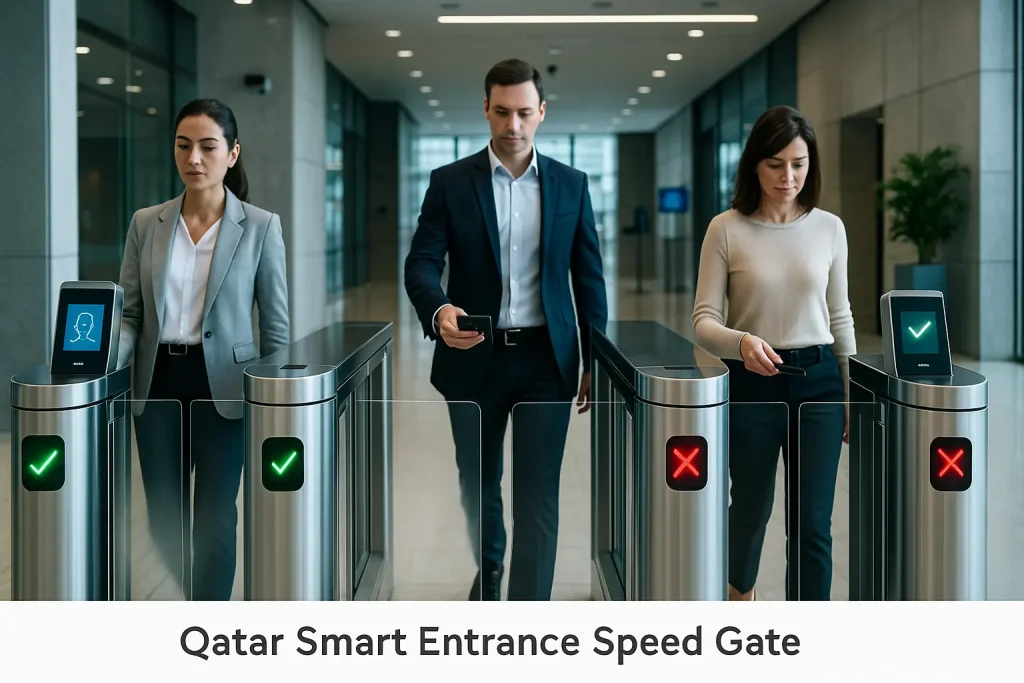
This necessitates the implementation of sophisticated Qatar smart entrance speed gate turnstile solutions. These are not merely automated barriers; they represent intelligent, connected systems specifically engineered to meet the unique requirements of the Qatari market. They must deliver high-speed performance, incorporate cutting-edge technology (often including biometrics), withstand challenging climatic conditions, adhere to local security and safety regulations, and integrate flawlessly into the nation's burgeoning smart building and smart city ecosystems. This guide provides an expert, comprehensive exploration of these vital systems tailored for Qatar's modern access needs.
What Defines a "Qatar Smart Entrance Speed Gate Turnstile"?
A Qatar smart entrance speed gate turnstile is an advanced automated pedestrian barrier system specifically designed, configured, and implemented to align with Qatar's National Vision 2030 goals, meeting high standards for technological innovation, robust security, aesthetic excellence, environmental resilience, and smart city integration within its modern built environment.
While utilizing core speed gate technologies found across global Regional Markets, solutions deployed in Qatar are often characterized by specific adaptations reflecting the nation's priorities:
- "Smart" Integration: Deep connectivity with Building Management Systems (BMS), security platforms, and potentially broader smart city initiatives (like those in Lusail or Msheireb Downtown Doha).
- Advanced Technology Adoption: Strong inclination towards incorporating technologies like facial recognition, advanced mobile credentials, and AI-driven sensor logic.
- Premium Aesthetics: Emphasis on high-quality materials, bespoke design elements, and flawless integration with often luxurious architectural interiors.
- Climate Hardening: Engineering to ensure reliable operation despite Qatar's extreme heat, humidity, and occasional dust storms.
- Security & Compliance: Adherence to specific security directives from the Ministry of Interior (MOI) and safety codes from Qatar Civil Defence (QCD).
It represents the physical manifestation of intelligent, secure, and efficient access control designed for Qatar's forward-looking infrastructure.
Why Are Smart Speed Gates Essential for Modern Qatari Facilities?
Smart speed gates are essential in Qatar due to the nation's rapid development creating high-density modern buildings, a strong governmental focus on security and safety (especially post-World Cup), the need to efficiently manage flows of residents and international visitors, demanding environmental factors, and the national drive towards creating technologically advanced "smart" environments aligned with Vision 2030.
The specific drivers within Qatar are compelling:
- Supporting Vision 2030: Qatar's national strategy emphasizes sustainable development, economic diversification, and creating a technologically advanced society. Smart, efficient, and secure building infrastructure, including access control, is fundamental to this vision.
- Security Imperative: As a prominent nation in the region hosting international organizations and events, maintaining a high level of security is paramount. Smart gates provide a reliable, automated first line of defense for critical facilities.
- Managing High-Density, High-Profile Buildings: Doha's skyline is increasingly defined by skyscrapers and large complexes (commercial, residential, hospitality). Efficiently managing thousands of daily movements requires high-throughput automation.
- Enhancing User Experience: In a competitive market for talent, tourism, and investment, providing seamless, modern, and hassle-free experiences is crucial. Smart, often touchless, access gates contribute significantly to this positive perception.
- Climate Resilience: Standard systems may falter in Qatar's harsh climate. Solutions must be specifically engineered or chosen for durability and reliability in local conditions.
- Operational Efficiency: Automating access control optimizes staffing needs, reduces queues, and provides valuable data for managing complex facilities effectively – crucial for large developments like Education City or Hamad International Airport expansions.
How Does a Smart Entrance Gate Operate in the Qatari Context?
In Qatar, a smart entrance gate typically verifies identity using advanced credentials like facial biometrics, secure mobile apps, or encrypted smart cards (potentially linked to the Qatar ID). It communicates instantly with integrated access control platforms (often cloud-enabled) for authorization, opens high-speed barriers, utilizes intelligent sensors tuned for local conditions, and feeds data into smart building or security management systems.
The process emphasizes speed, security, and connectivity:
- Approach & Credential: User approaches the gate. Presentation might involve:
- Facial Scan: Looking at an integrated camera (high adoption potential in Qatar).
- Mobile Credential: Using a smartphone app (BLE for hands-free or NFC tap).
- Secure RFID: Tapping a high-frequency smart card or potentially a Qatar ID card if enabled for access.
- Rapid Validation: Secure communication (IP-based, encrypted) with the Access Control System (ACS). Cloud platforms are increasingly common, aligning with smart city infrastructure trends.
- Authorization & Smart Integration: The ACS validates permissions. If integrated, it might simultaneously trigger elevator calls, personalized environmental settings, or notifications via building apps.
- Gate Actuation: High-speed, quiet motors drive premium barriers (often flap types for speed or elegant swing types). Clear visual indicators guide the user.
- Intelligent Sensor Monitoring: Sophisticated sensor arrays, potentially using AI, track passage, prevent tailgating with high accuracy (tuned for local attire/luggage norms), and ensure user safety.
- Secure Closure & Data Feed: Barriers close swiftly. The transaction data (anonymized where appropriate) is logged and potentially fed into building analytics or security dashboards in real-time.
My Experience: "Integrating speed gates with the building systems in a new smart tower in Lusail was a fascinating project. Beyond just access, the client wanted the gate passage event to trigger personalized welcome messages on digital signage and pre-call elevators via destination dispatch. This required deep API-level integration between the ACS, the gates, the elevators, and the BMS. It showcased Qatar's ambition to create truly connected, intelligent environments, demanding more than the basic functionality sometimes sufficient in other Regional Markets."
Key "Smart" Technologies Driving Qatari Speed Gate Solutions
Qatar's focus on innovation means its speed gate solutions often incorporate the latest technologies, emphasizing biometrics, seamless mobile access, cloud connectivity, AI-enhanced sensors, and high-level integration capabilities.
Advanced Biometrics (Especially Facial Recognition)
- Alignment with Smart Vision: Facial recognition offers the "frictionless" experience sought in Qatar's high-tech developments. Acceptance and governmental support often facilitate easier deployment compared to regions like Europe (e.g., contrasting with
Europe commercial building speed gate solutionprivacy constraints). - Performance: AI-driven facial recognition provides the speed and accuracy needed for high-volume environments like airports, stadiums, or major office complexes.
Seamless Mobile Credentials (BLE & NFC)
- Convenience: High smartphone penetration makes mobile access a highly desirable feature for tenants, residents, and employees. "Hands-free" BLE access is particularly appealing.
- Security: Modern mobile platforms offer robust encryption and leverage phone-based security features.
Cloud-Based Access Control Platforms (ACaaS)
- Scalability: Ideal for managing large, multi-building campuses (like Education City) or property portfolios from a central, accessible platform.
- Integration & Updates: Cloud platforms offer easier integration via APIs and ensure the system is always running the latest, most secure software version automatically. This aligns well with Qatar's rapid development cycles.
AI-Powered Sensor Logic
- Accuracy: AI enhances the ability of sensors to reliably detect tailgating while minimizing false alarms caused by luggage, strollers, or traditional Qatari attire (Thobe, Abaya) – a crucial factor for smooth operation.
- Predictive Capabilities: AI can monitor gate performance for predictive maintenance alerts and analyze flow data for operational insights, supporting the efficiency goals of smart buildings.
Open APIs for Deep Integration
- Ecosystem Approach: Smart buildings require systems to communicate. Speed gates in Qatar often need robust APIs to connect seamlessly with BMS, VMS, elevator systems, security platforms, and potentially even national ID databases or smart city dashboards.
Popular Gate Types and Design Trends in Qatar
Reflecting Qatar's investment in iconic architecture and premium experiences, swing barrier gates with high-end finishes are very popular for their elegance. Flap barriers are used where maximum throughput is essential. Customization with luxury materials and sophisticated lighting is a defining trend.
- Swing Barriers (The Prestigious Choice): Often favored in luxury hotels, high-end residential towers, corporate HQs, and government ministries. Their smooth, quiet operation and the ability to integrate premium materials (stone tops, architectural metal finishes) align well with prestigious interior designs. They also offer straightforward ADA/accessibility compliance.
- Flap Barriers (The Efficiency Choice): Ideal for high-traffic locations like metro station links, airport terminals (complementing the
airport speed gate system), large office building main entrances, and event venues where processing speed is critical. Their modern aesthetic also fits well with contemporary Qatari architecture. - Bespoke Design & Materials: Qatar projects frequently demand customization beyond standard options. This can include:
- Premium Materials: Use of marble, granite, Corian, architectural bronze, or specific wood veneers for top lids and cladding.
- Custom Finishes: PVD coatings (gold, rose gold, black), specialized paint finishes, or unique stainless steel textures.
- Integrated Lighting: Sophisticated, often programmable, LED lighting for status indication, aesthetic accentuation, and wayfinding is common. The
Qatar smart entrance speed gate turnstileis often expected to be a visually striking element.
- Optical Turnstiles: Optical turnstiles might be considered for maximum openness in highly monitored environments like exclusive lounges or hotel lobbies, but the preference often leans towards the tangible security and advanced feel of barrier gates.
Security & Compliance Considerations in Qatar
Security is paramount. Qatar smart entrance speed gate turnstile solutions must provide high levels of physical security, reliable anti-tailgating, integrate with national security systems where required (e.g., MOI directives for certain facilities), and comply strictly with Qatar Civil Defence (QCD) regulations for fire safety and emergency egress.
- Physical Robustness & Anti-Tailgating: Gates need sturdy construction and highly accurate sensor systems to prevent unauthorized access. Taller barriers might be specified for enhanced security.
- MOI Security Directives: Certain types of facilities (e.g., critical infrastructure, government buildings, major public venues) may be subject to specific security system requirements mandated by the Ministry of Interior, potentially including integration with central monitoring platforms or specific credential standards. Working with knowledgeable local partners is key.
- QCD Fire Safety Compliance: Non-negotiable. Gates must integrate with the fire alarm control panel and be configured to fail-safe (open automatically) during an emergency to allow unimpeded evacuation, meeting QCD standards. This must be certified.
- Data Security & Privacy: While perhaps less stringent than Europe's GDPR, Qatar has its own data protection laws. Systems handling personal data (especially biometrics) must ensure secure storage, encrypted transmission, and appropriate user consent mechanisms.
Addressing Qatar's Climate: Engineering for Resilience
Qatar's extreme climate – intense summer heat routinely exceeding 45°C (113°F), high humidity, and airborne dust/sand – poses significant challenges for sensitive electronics and mechanics. Speed gates must be specifically engineered or selected for resilience.
My Experience: "On a project installing gates in a semi-outdoor walkway connecting buildings in Education City, we faced direct afternoon sun and fine dust. Standard indoor units wouldn't last. We had to specify IP65-rated enclosures, use 316L stainless steel for corrosion resistance, ensure all electronics had extended high-temperature ratings, and implement a more frequent preventative maintenance schedule focused on sensor cleaning and seal integrity. You simply cannot 'copy-paste' a solution designed for a temperate climate like the UK speed gate turnstile access control market and expect it to work reliably long-term in Qatar."
Key Environmental Adaptations:
- High-Temperature Operation: Components certified for operation in high ambient temperatures (e.g., 50°C+).
- IP Rating: High Ingress Protection ratings (IP54 minimum, higher preferred) to seal against dust and moisture.
- Corrosion Resistance: Use of 316L stainless steel and appropriate coatings.
- Cooling: Internal heat sinks or active cooling (fans) for electronics within pedestals exposed to high heat loads.
- Dust Filtration: Potential use of filters on ventilation points.
- UV Resistance: Materials and finishes resistant to degradation from intense sunlight.
Integration with Qatar's Smart Infrastructure
Aligning with Qatar National Vision 2030, speed gates are expected to be integral components of the nation's smart building and smart city infrastructure. This requires open connectivity, data sharing capabilities (respecting privacy), and integration with platforms managing various aspects of urban life.
- Smart Building Integration: Seamless communication with BMS for energy optimization (based on occupancy from gates), integration with smart elevators (destination dispatch), and connection to unified security platforms are often standard requirements in new Qatari developments.
- Smart City Platforms (e.g., TASMU): In designated smart zones like Lusail or Msheireb, gate systems might need to provide anonymized flow data or integrate with broader city management dashboards related to transportation, security, or resource management.
- Interoperability: Emphasis on using open standards (APIs, common protocols like MQTT for IoT) to ensure systems from different vendors can communicate effectively within the smart ecosystem.
Installation, Local Support, and Lifecycle Management
Successful deployment in Qatar necessitates experienced local installation partners familiar with Qatari regulations and construction practices. Given the advanced technology and critical function, readily available, expert local technical support and a clear lifecycle management plan are essential.
- Local Expertise & Compliance: Installers must be certified and deeply familiar with QCD fire codes, MOI security requirements (if applicable), and local electrical/building standards.
- Logistics & Project Management: Coordinating installation within large, complex construction projects common in Qatar requires strong project management and logistical capabilities.
- 24/7 Local Support: For critical infrastructure (airports, metro, hospitals, major towers), access to fast, qualified technical support within Qatar is non-negotiable to minimize downtime. Reliance on remote support alone is often insufficient.
- Lifecycle Planning: Given the pace of technological change and Qatar's focus on maintaining state-of-the-art facilities, planning for future upgrades (leveraging
modular speed gate designwhere possible) and eventual system replacement is important.
Future Trends: AI, Biometrics, Vision 2030 Alignment
The future for Qatar smart entrance speed gate turnstile solutions involves deeper AI integration for predictive capabilities, potentially broader and more seamless biometric adoption, alignment with evolving National Vision 2030 digital initiatives, and potentially incorporating health and sustainability features.
- AI Beyond Security: AI will increasingly be used not just for sensor accuracy but for optimizing passenger flow in real-time, predicting maintenance needs, and providing sophisticated operational analytics aligned with smart city goals.
- Frictionless Biometrics: Expect continued strong interest and deployment of facial recognition and other touchless biometrics, potentially integrating with national digital identity frameworks for seamless verification across services.
- Digital Twin Integration: Gate systems could become key data feeds for building "digital twins," providing real-time occupancy and flow data for advanced simulation and management.
- Sustainability Features: Aligning with Vision 2030's sustainability pillar, demand may grow for gates with lower energy consumption, sustainable materials, and features supporting green building certifications.
The Final Verdict: Intelligent Gateways for a Visionary Nation
The Qatar smart entrance speed gate turnstile is a critical enabling technology for realizing the nation's vision of a modern, secure, efficient, and technologically advanced future. These systems are far more than mere barriers; they are intelligent, connected gateways engineered to meet the unique demands of Qatar's ambitious infrastructure, challenging climate, and high expectations for performance and aesthetics.
By embracing cutting-edge technologies like AI and biometrics, prioritizing robust environmental hardening, ensuring deep integration within the smart building ecosystem, and adhering strictly to local regulations, Qatar can continue to implement world-class access control solutions. These intelligent gates serve not only to secure prestigious facilities but also to enhance the daily experience of residents and visitors, embodying the spirit of innovation and progress that defines modern Qatar, setting a standard potentially distinct from even other advanced hubs like Singapore smart speed gate turnstile system installations or those found across the wider Middle East fast access speed gate market.
