


India’s Pedestrian Speed Gate Access Control Market
2025-10-27


India stands today as one of the world's fastest-growing major economies, a nation undergoing profound transformation. Rapid urbanization, massive infrastructure development (including smart cities), a burgeoning digital economy, and a growing awareness of security needs are reshaping the landscape of its cities and commercial hubs. In this dynamic environment, managing the flow of millions of people into and within modern buildings – corporate IT parks, bustling metro stations, expanding airports, secure government offices, and new residential complexes – presents a significant and escalating challenge.
Traditional methods of access control, often reliant on manual security guards, logbooks, or basic locks, are proving increasingly insufficient. They struggle to cope with the sheer volume of people, lack the necessary efficiency, offer limited security against threats like tailgating, and fail to provide the data required for modern facility management. This creates a critical need for advanced, automated solutions tailored to the unique Indian context.
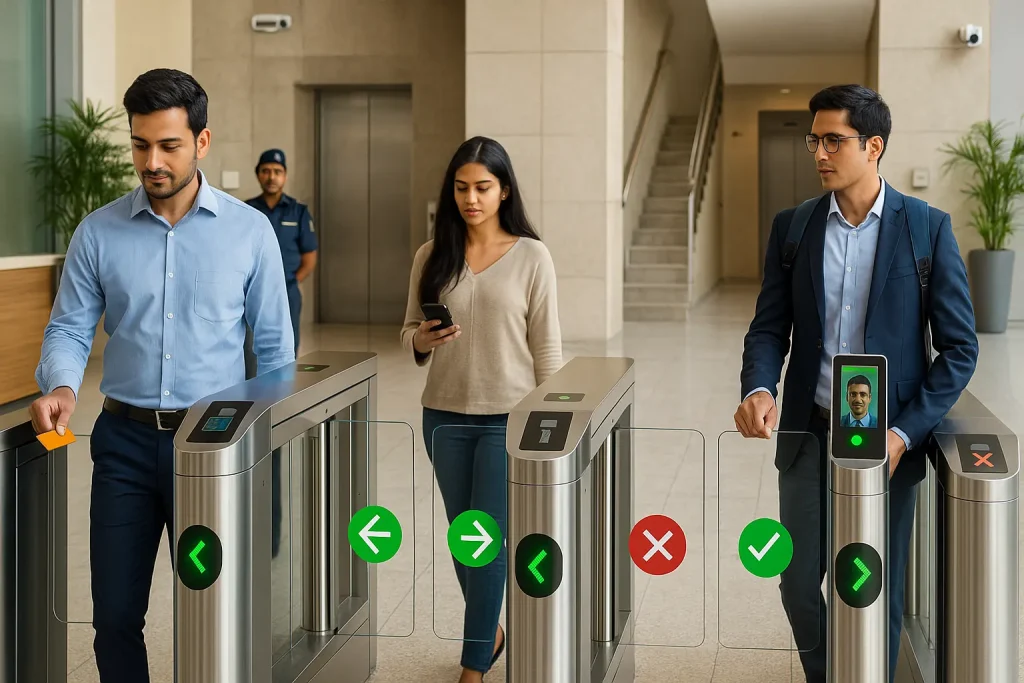
Enter the domain of India pedestrian speed gate access control. This technology, encompassing automated turnstiles and speed gates integrated with electronic access systems, is rapidly moving from a niche product to an essential infrastructure component across various sectors in India. However, the Indian market possesses distinct characteristics – from cost sensitivities and infrastructure realities to specific security concerns and evolving regulatory landscapes – that demand careful consideration. This guide provides an expert, comprehensive exploration of pedestrian speed gate access control solutions within the unique context of India.
What Defines "India Pedestrian Speed Gate Access Control"?
India pedestrian speed gate access control refers to automated physical barrier systems (like turnstiles and speed gates) integrated with electronic verification methods (cards, biometrics, mobile) specifically implemented to manage pedestrian flow and enhance security within buildings and facilities across India, considering local market dynamics, infrastructure, cost factors, and emerging trends.
While leveraging globally established speed gate technologies seen across diverse Regional Markets, solutions deployed in India often need to address specific local nuances:
- High Volume & Throughput: Systems must efficiently handle extremely high pedestrian density common in Indian cities and workplaces.
- Cost Sensitivity: While changing, budget considerations often play a significant role, influencing technology choices and feature prioritization.
- Infrastructure Adaptation: Solutions may need to account for potential power fluctuations or varying network quality in certain areas, emphasizing robustness and reliable offline functionality.
- Diverse User Base: Systems must be intuitive and easy to use for a wide range of individuals with varying levels of technological familiarity.
- Local Support & Manufacturing: Increasing emphasis on reliable local service networks and potentially domestically manufactured or assembled components ("Make in India").
- Evolving Compliance: Adapting to India's developing standards for building safety, accessibility, and data privacy (like the Digital Personal Data Protection Act).
It's about applying modern access control principles pragmatically to meet the specific security and operational realities of the Indian environment.
Why is Demand for Speed Gates Surging Across India?
The demand for pedestrian speed gate access control in India is surging due to rapid urbanization creating denser work environments, heightened security awareness post-major incidents, the "Digital India" initiative fostering technology adoption, the need to replace inefficient manual guarding, and the desire to project a modern image in new commercial developments.
Key drivers fueling this growth include:
- Urbanization & Infrastructure Boom: Cities like Mumbai, Delhi (NCR), Bengaluru, Hyderabad, Chennai, and Pune are experiencing massive commercial and residential development. Modern high-rises and large IT/corporate campuses require automated systems to manage thousands of daily entries efficiently.
- Heightened Security Concerns: Increased awareness of security threats (both physical and logical) drives demand for more robust physical entry controls beyond simple doors. Preventing unauthorized access and tailgating is a major focus, especially in IT parks, financial institutions, and government buildings.
- Replacing Manual Guards: While security manpower is relatively inexpensive compared to Western countries, the sheer scale of operations in large facilities makes manual checking inefficient, prone to error, and difficult to scale consistently. Automation offers reliability and frees guards for more critical tasks. The cost-effectiveness compared to a
USA speed gate turnstiledeployment must consider local labor costs, but efficiency gains remain compelling. - Digital India & Tech Adoption: Government initiatives and a tech-savvy corporate sector encourage the adoption of modern technologies, including smart access control integrated with employee databases and potentially national ID systems (like Aadhaar in specific, regulated contexts).
- Modernization & Corporate Image: New Grade-A office spaces and commercial developments aspire to global standards. Sleek, efficient speed gates are increasingly seen as a standard feature, projecting a modern, secure, and professional image to tenants and visitors. This mirrors trends seen globally, from a
New York speed gate turnstile systemto aSingapore smart speed gate turnstile system. - Data for Operations: Facility managers recognize the value of accurate entry/exit data for optimizing operations, managing occupancy, and ensuring safety compliance (e.g., emergency mustering).
How Do Speed Gate Systems Operate in the Indian Context?
In India, speed gate systems typically validate credentials like RFID smart cards (MIFARE is common) or increasingly, QR codes/mobile apps, via readers integrated into the gate. These communicate with an Access Control System (often locally hosted but cloud adoption is growing) for authorization, triggering barrier opening. Sensors ensure single passage, crucial in high-density environments.
The operational flow adapts established principles to Indian realities:
- Credential Presentation: User presents their credential. Common types in India include:
- RFID Cards/Fobs: 13.56 MHz MIFARE (Classic, DESFire) is prevalent in corporate and metro systems. Older 125 kHz Prox still exists but is declining due to security risks.
- QR Codes: Gaining popularity, especially for visitor management and integration with apps.
- Mobile Credentials (NFC/BLE): Growing adoption, particularly in tech companies and new developments, leveraging India's massive smartphone penetration.
- Biometrics (Fingerprint/Face): Used, especially fingerprint (often linked to Aadhaar for specific government/attendance systems), but adoption for general access varies due to cost, environmental factors (dust affecting fingerprint readers), and evolving privacy awareness.
- Validation: Reader communicates with the Access Control System (ACS). While cloud adoption is rising, robust on-premise solutions remain common due to perceived reliability or concerns about internet connectivity in some areas. Secure protocols (like OSDP) are becoming more important.
- Permission Check: ACS verifies against user database and permissions. Integration with HR Management Systems (HRMS) for automated employee provisioning/de-provisioning is a key feature for large Indian corporates.
- Gate Actuation: If authorized, the ACS commands the gate to open. Robust motors capable of handling high traffic volumes and potential power fluctuations are preferred. Visual indicators (lights) are standard.
- Passage Monitoring: High-density sensor arrays are critical in India's often crowded environments to reliably detect tailgating attempts while minimizing false alarms from bags, traditional attire, or close pedestrian proximity.
- Secure Closure & Logging: Gate closes promptly and securely. Event logged in the ACS, with data handling needing to align with India's Digital Personal Data Protection (DPDP) Act.
My Experience: "When implementing speed gates for a large IT park in Bangalore, throughput and reliability were the absolute top priorities. We used flap barriers known for speed and specified controllers with robust offline capabilities due to occasional power grid issues. Sensor tuning was also critical – we had to adjust sensitivity to reliably detect tailgating without constantly alarming due to the sheer density of people moving during shift changes. It's a different 'character' of crowd flow than you might see in a typical Europe commercial building speed gate solution."
Key Features for the India Pedestrian Speed Gate Access Control Market
Solutions targeting India need to prioritize robustness and durability (for high traffic, dust, power issues), cost-effectiveness, high throughput capability, reliable local service and support, and increasingly, integration with mobile/digital platforms alongside traditional card systems.
- Durability & Reliability:
- Robust Construction: Gates need sturdy mechanics to withstand millions of cycles in potentially crowded, less-controlled environments.
- Dust Resistance: Good sealing (IP ratings) is important, especially for sensors, given environmental dust in many cities.
- Power Fluctuation Tolerance: Components (power supplies, controllers) should ideally handle voltage variations or integrate well with UPS backup systems. Reliable offline operation is crucial.
- Cost-Effectiveness: While premium solutions exist, the market often demands competitive pricing. Finding the right balance between features, durability, and cost is key. This might mean simpler designs or prioritizing core functionality over high-end aesthetics compared to markets like the
UAE. - High Throughput: Essential for managing density. Fast barrier speeds and quick validation cycles are critical.
- Local Support Network: Availability of trained technicians and spare parts within India is vital for minimizing downtime. Long waits for international support are often unacceptable. The "Make in India" initiative may also favour providers with local manufacturing or assembly presence.
- Credential Flexibility: Support for secure RFID (MIFARE) is standard. Strong support for QR codes and mobile credentials (NFC/BLE) is increasingly necessary. Biometric options (especially fingerprint) are relevant but need robust readers suitable for Indian conditions.
- Basic Compliance: Adherence to Indian standards (BIS where applicable), electrical safety norms, and basic accessibility principles is expected. Fire safety integration (aligned with National Building Code - NBC) is critical.
Popular Speed Gate Types in India
Tripod turnstiles remain highly prevalent across India due to their robustness, simplicity, and lower cost, especially in transit and industrial settings. Flap barrier speed gates are rapidly gaining popularity in modern corporate offices, IT parks, and metro systems for their speed and aesthetics. Swing barriers are used where aesthetics and accessibility are prioritized.
- Tripod Turnstiles (The Ubiquitous Workhorse):
- Why India uses them: Lowest cost, extremely durable, simple mechanics are easy to maintain locally. Very effective for basic single-file control in high-volume but less aesthetically demanding environments (factories, older metro stations, staff entrances).
- Limitations: Slow, requires push, lower security, dated look.
- Flap Barriers (The Modern Choice):
- Why India is adopting them: Offer the best throughput for managing density in modern environments like new metro lines (Delhi, Bangalore Metros heavily use them), large IT campuses, and Grade-A office lobbies. Their modern look aligns with new developments.
- Considerations: Higher initial cost and potentially more complex maintenance. Quality varies significantly in the market.
- Swing Barriers (The Corporate & Accessible Option):
- Why India uses them: Preferred in corporate HQs, hotels, and buildings prioritizing a more elegant aesthetic and smoother user experience. They are the standard for providing compliant accessible lanes alongside other gate types.
- Considerations: Slightly slower throughput than flaps, require more space.
- Optical Turnstiles: Less common in India due to the cost and the requirement for constant, attentive guard presence, which might negate the cost savings of automation in some scenarios. Explore via resources on Optical turnstiles.
- Full-Height Turnstiles: Used for perimeter security at industrial sites, critical infrastructure, or unmanned locations where maximum physical security is needed over speed.
The trend is clearly towards flap and swing barriers in new commercial and premium infrastructure projects, while tripods remain dominant in cost-sensitive or purely functional applications. The specific needs differ significantly from, say, the high-security focus often seen in a government facility access gate system.
Security Considerations in the Indian Context
Security focuses on preventing unauthorized access and tailgating in high-density environments, managing diverse user types (employees, visitors, contractors), integrating effectively with prevalent CCTV surveillance, and ensuring system reliability against potential tampering or environmental challenges.
- Tailgating in Crowds: Preventing unauthorized passage is harder when crowds are dense. High-accuracy sensors and robust gate construction are crucial. Alarms must be clear and trigger prompt response.
- CCTV Integration: India has widespread CCTV deployment. Integrating gate alarms (tailgating, forced entry) to automatically trigger recording and alert monitoring staff is a common and effective security layer.
- Visitor Management: Handling large numbers of visitors efficiently and securely is key. Gates integrated with VMS systems using QR codes or temporary passes are increasingly important.
- Robustness Against Tampering: Gates in public or semi-public areas need to be reasonably resistant to casual vandalism or attempts to force entry.
- Reliable Authentication: Migrating away from easily cloned 125 kHz Prox cards to secure MIFARE DESFire or mobile credentials significantly enhances the system's core security.
Navigating Compliance and Standards in India
While evolving, key compliance considerations include adherence to the National Building Code (NBC) for fire safety and egress, Bureau of Indian Standards (BIS) certifications where applicable for hardware, basic accessibility principles, and the emerging framework of the Digital Personal Data Protection (DPDP) Act for data handling.
- Fire Safety (NBC): Gates forming part of escape routes must integrate with the building's fire alarm system and fail-safe (open) to allow free egress, following principles outlined in the NBC. Ensuring sufficient clear width during emergency opening is critical. Local fire officer approval is often required.
- BIS Certification: Electronic and electrical components may require Bureau of Indian Standards certification for safety and quality assurance. Using BIS-certified components can be advantageous.
- Accessibility: While perhaps not as stringently enforced nationwide as ADA in the US, awareness is growing. Providing accessible lanes (typically wider swing gates) is becoming standard practice, especially in new public and large commercial buildings, following guidelines related to the Rights of Persons with Disabilities Act.
- Digital Personal Data Protection (DPDP) Act: This recent legislation introduces rules for processing personal data. Access control systems logging identifiable entry/exit information fall under its purview. Key considerations include:
- Consent: Obtaining clear consent for collecting access data.
- Purpose Limitation: Using data only for stated security/operational purposes.
- Data Minimisation: Collecting only necessary data fields.
- Security Safeguards: Implementing technical measures (encryption, access controls) to protect the stored log data.
- Breach Notification: Procedures for reporting data breaches. Biometric data processing under DPDP requires even stricter compliance, likely involving explicit consent and enhanced security, making its widespread use for general access still cautious compared to secure cards or mobile. This contrasts with potentially easier biometric adoption in places like Singapore smart speed gate turnstile system deployments.
Installation, Maintenance & Support: The India Reality
Successful deployment hinges on competent installation accounting for local infrastructure realities (power, network), robust hardware designed for the environment, and, crucially, a reliable, accessible local service and support network capable of providing timely maintenance and spare parts across India's vast geography.
- Installation Expertise: Requires technicians skilled in electrical work (following Indian standards), network cabling, mechanical mounting (potentially on varied floor types), and software integration. Local knowledge is invaluable.
- Infrastructure Challenges: Installers must be prepared to deal with potential power quality issues (requiring stabilizers or UPS), variable network reliability in some areas (necessitating robust offline gate functionality), and challenges of working in existing, often congested, buildings.
- Hardware Robustness: Given the high traffic, dust, heat, and potential power issues, specifying durable, industrial-grade components (motors, power supplies, sensors) is crucial for longevity, perhaps even more so than in milder climates like New Zealand.
- The Tyranny of Distance (Support): India is vast. My Strongest Advice: Do not choose a vendor without a proven, widespread, and responsive local service network. Waiting days or weeks for a technician or a spare part to arrive from overseas is unacceptable when a critical lobby gate is down. Prioritize vendors with established Indian operations or highly capable, well-stocked local partners. The availability of reliable support often outweighs minor differences in initial hardware cost.
Modular speed gate designcan also simplify and speed up repairs if local technicians are trained on module swapping.
Future Trends for Speed Gates in India
The future of India pedestrian speed gate access control involves rapid growth driven by smart city projects and digitalization, wider adoption of mobile and QR code credentials leveraging smartphone penetration, increasing integration with IoT platforms, a potential rise in cost-effective biometric solutions, and growing influence of the "Make in India" initiative.
- Smart Cities & Infrastructure Growth: Massive government investment in smart cities and infrastructure (metros, airports, commercial hubs) will continue to drive demand for automated access control.
- Mobile & Digital First: With extremely high smartphone usage, expect rapid growth in mobile credentials (NFC/BLE) and QR code-based access (especially for visitors and public services), potentially leapfrogging traditional card systems in some new deployments.
- IoT Integration: Gates will increasingly become connected sensors within larger IoT platforms, providing data for building automation, security analytics, and operational efficiency. Cloud adoption will likely accelerate.
- Cost-Effective Biometrics: As technology matures and costs decrease, reliable fingerprint or potentially facial recognition solutions tailored for Indian conditions and complying with DPDP may see wider adoption, particularly where identity verification is critical (e.g., linked to attendance or specific secure zones).
- "Make in India": Growing emphasis on domestic manufacturing or assembly could influence vendor choices and potentially lead to more customized, cost-effective solutions tailored specifically for the Indian market's unique requirements.
The Final Verdict: Securing India's Future Flow
India pedestrian speed gate access control is rapidly transitioning from a niche technology to an essential component of modern infrastructure across the nation. Driven by the imperatives of security, efficiency, and modernization in the face of unprecedented growth, these systems are crucial for managing the flow of people in India's dynamic urban environments.
Success requires navigating a unique landscape characterized by high volumes, cost considerations, infrastructure variability, and an evolving regulatory framework. By prioritizing robust and reliable hardware, embracing flexible and secure credential technologies (especially mobile and smart RFID), ensuring compliance with local standards (NBC, DPDP), and demanding strong local support, organizations across India can implement effective speed gate solutions. These intelligent gateways are vital tools for securing facilities, streamlining operations, and supporting India's ambitious journey towards a smarter, safer, and more connected future, distinguishing its needs from other rapidly developing Asia-Pacific speed gate access control solution markets like Vietnam or Malaysia.
