


Asia Pacific Speed Gate Access Control Solutions
2025-10-27


The Asia Pacific (APAC) region is a breathtaking mosaic of contrasts – a dynamic engine of global growth encompassing hyper-modern megacities and rapidly developing nations, ancient cultures alongside cutting-edge technological hubs, and diverse economies ranging from manufacturing powerhouses to global financial centers. This sheer diversity, coupled with rapid urbanization and infrastructure development, creates a unique and complex landscape for managing the secure and efficient movement of people within its buildings and facilities.
From the dense corporate towers of Singapore and Hong Kong, the sprawling IT parks of India, and the futuristic developments in South Korea and Japan, to the burgeoning urban centers in Vietnam, Malaysia, Indonesia, and beyond, the need for advanced access control is surging. Traditional methods are often overwhelmed by the scale, speed, and security demands of modern APAC environments.
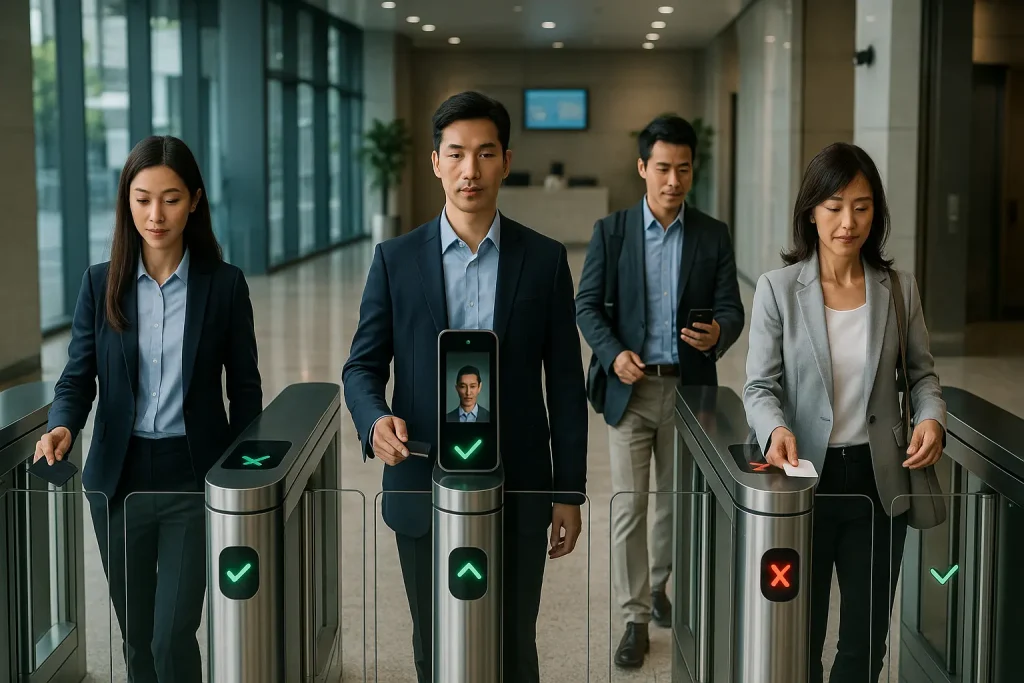
This necessitates tailored solutions: the Asia Pacific speed gate access control solution. This term represents more than just hardware; it signifies an approach to automated pedestrian barriers that acknowledges and adapts to the vast spectrum of requirements across this dynamic region. It involves balancing state-of-the-art technology with cost-effectiveness, ensuring robust performance in diverse climates, navigating a patchwork of national regulations, and integrating with varying levels of technological infrastructure. This guide provides an expert, comprehensive exploration of speed gate solutions within the specific, multifaceted context of the Asia Pacific.
What Defines an "Asia Pacific Speed Gate Access Control Solution"?
An Asia Pacific speed gate access control solution is an automated pedestrian barrier system (speed gates, turnstiles) specifically designed, configured, deployed, and supported to meet the diverse security needs, operational demands, technological landscapes, regulatory environments, climatic conditions, and economic considerations prevalent across the vast and varied Asia Pacific region.
Unlike a standardized global product, an effective APAC solution recognizes that this is not a monolithic market. While sharing core speed gate technologies seen in other Regional Markets, successful deployment in APAC requires adaptability and nuance, often characterized by:
- High-Density Performance: Capability to efficiently manage extremely large pedestrian volumes common in APAC's megacities and transport hubs.
- Technological Diversity: Support for a wide range of credentials, from basic RFID and QR codes prevalent in some developing markets to advanced mobile and biometric systems adopted in tech-leading hubs.
- Value Engineering: Balancing performance and features with varying levels of cost sensitivity across different economies within the region.
- Climate & Infrastructure Resilience: Designs robust enough to withstand diverse climates (tropical heat/humidity, monsoons, dust) and potential infrastructure challenges (power fluctuations, network variability).
- Navigating Diverse Regulations: Adherence to a complex mix of national standards for safety, security, accessibility, and data privacy (which vary significantly country by country).
- Strong Local Presence: The critical importance of reliable, accessible in-country or in-region technical support and spare parts.
It's about providing flexible, robust, and contextually appropriate access control for one of the world's most dynamic and diverse regions.
Why is Demand for Speed Gates Exploding Across APAC?
Demand is exploding due to unprecedented urbanization creating denser living and working environments, rapid economic growth fueling modern infrastructure development (offices, factories, transit), heightened security awareness, the widespread adoption of digital technologies (especially mobile), and the move away from inefficient manual security processes.
The drivers are powerful and widespread across the Asia Pacific speed gate access control solution market:
- Mega-Urbanization: APAC is home to many of the world's largest and fastest-growing cities. Managing pedestrian flow in these hyper-dense environments is a fundamental challenge requiring automation.
- Economic Engine: The region's role as a global center for manufacturing, technology, finance, and trade necessitates modern, secure facilities. Speed gates are becoming standard infrastructure in new Grade-A commercial properties and industrial parks.
- Security Modernization: Governments and private sectors across APAC are investing heavily in upgrading security infrastructure in response to evolving threats and the need to protect valuable assets and ensure public safety.
- Digital Leapfrogging: High smartphone penetration in many APAC countries is driving rapid adoption of mobile credentials (NFC/BLE) and QR code-based access, often bypassing older card technologies. Systems must support these digital-first preferences. Consider the advanced needs of a Singapore smart speed gate turnstile system.
- Efficiency Drive: Businesses are focused on optimizing operations. Automating lobby access reduces queues, improves punctuality (critical in manufacturing), and allows security staff to be used more effectively.
- Infrastructure Investment: Massive investments in public transport (metros, high-speed rail) and airports across the region inherently require automated fare collection and access control gates on a huge scale. Compare the needs here to those for a USA speed gate turnstile in a corporate setting.
How Do Speed Gate Systems Operate in the Diverse APAC Context?
In APAC, speed gate systems validate a wide array of credentials – secure RFID cards, ubiquitous QR codes/mobile apps, and varying levels of biometrics – communicating with Access Control Systems (ranging from basic local servers to sophisticated cloud platforms). Fast barriers (often flaps or tripods depending on budget/need) open upon authorization, while sensors manage passage, adapting to high-density crowds and diverse environmental conditions.
The operational flow reflects the region's diversity:
- Credential Presentation: Highly varied depending on the country and application:
- RFID Cards: Secure 13.56 MHz (MIFARE) common in corporate/transit, but lower-cost 125 kHz Prox might still be found in budget-sensitive projects despite security risks.
- QR Codes: Extremely popular due to smartphone prevalence and ease of integration with local apps (payment, visitor management). Reliable, fast scanning is crucial. A key feature for solutions like a Malaysia entrance speed gate for office building.
- Mobile (NFC/BLE): Strong growth, especially in technologically advanced hubs and multinational corporations.
- Biometrics: Adoption varies significantly. Fingerprint is common (sometimes linked to national IDs or attendance), while facial recognition is growing rapidly in some countries (like China, Singapore) but faces caution elsewhere due to cost or privacy concerns.
- Validation: Communication with the ACS. This ranges from simple on-premise panels in smaller facilities to enterprise-level servers in large corporations, and increasingly, scalable cloud platforms, particularly favoured by regional or global companies. Network reliability can be a factor influencing choice in some areas.
- Permission Check & Privacy: ACS verifies permissions. Data handling must comply with national data protection laws (e.g., PDPA in Singapore/Malaysia, DPDP Act in India, PIPL in China, etc.), which vary significantly across APAC regarding consent, storage, and cross-border transfer. Implementing a solution for India pedestrian speed gate access control requires different privacy considerations than one for Australia speed gate turnstile access control.
- Gate Actuation: Motors drive barriers. Robustness against power fluctuations and suitability for high cycle counts are key. Flap barriers are popular for speed; tripods for cost/durability.
- Passage Monitoring: Sensor arrays track passage. My Experience: "Tuning sensors for APAC often means dealing with extremely close following distances in queues. The logic needs to be highly sensitive to catch tailgaters but also intelligent enough to avoid constant false alarms in dense crowds or during monsoon downpours affecting external gates. It requires specific firmware adjustments and careful on-site calibration."
- Secure Closure & Logging: Gate closes promptly. Event logged securely, adhering to local data regulations.
Key Features for the Asia Pacific Speed Gate Market
An effective Asia Pacific speed gate access control solution needs a blend of high throughput capability, robustness (climate, power), credential flexibility (supporting cards, mobile, QR), cost-effectiveness, adherence to diverse national compliance standards, and strong local/regional support.
- High Throughput & Reliability: Essential for managing density. Gates must be fast (high PPM) and durable enough to handle millions of cycles in demanding environments without frequent failures.
- Environmental Resilience: Critical. Designs need high IP ratings for dust/moisture, components rated for high temperatures/humidity, and potentially enhanced corrosion resistance for coastal areas across Southeast Asia and Oceania. Compare this need to the climate requirements for a UK speed gate turnstile access control system.
- Credential Versatility: Ability to integrate readers supporting secure RFID (MIFARE), high-performance QR code scanning, NFC/BLE mobile access, and potentially specific biometric modalities (like fingerprint common in India, or facial in China/Singapore) is key to addressing diverse market needs.
- Cost-Value Balance: While premium projects exist (e.g., Singapore HQs, luxury hotels), many sectors prioritize reliable core functionality at competitive price points. Offering tiered solutions is often necessary.
- Compliance Navigation: Vendors must understand and offer solutions meeting varying national standards for electrical safety (e.g., SIRIM in Malaysia, BIS in India, CCC in China), fire safety egress, accessibility, and data privacy (PDPA, DPDP, PIPL, etc.). A one-size-fits-all compliance approach is impossible.
- Robust Offline Functionality: Given potential network instability in some areas, gate controllers must operate reliably and securely even when temporarily disconnected from the central server, caching credentials and logging events locally.
- Strong Local/Regional Support: Absolutely vital across APAC's vast geography. Availability of trained technicians, spare parts inventory within the region (or ideally, in-country), and support in local languages significantly impacts usability and long-term satisfaction.
Popular Gate Types Across the APAC Region
The APAC market utilizes the full spectrum of gate types, with choices often driven by application, budget, and local trends. Tripod turnstiles remain widespread due to cost and durability. Flap barriers are rapidly growing in modern urban centers for speed. Swing barriers offer aesthetics and accessibility.
- Tripod Turnstiles (The Volume Player):
- Why APAC uses them: Lowest cost, extremely robust, simple to maintain locally. Ideal for factories, mass transit (older systems), staff entrances, construction sites, and budget-driven projects across Southeast Asia, South Asia, and parts of China.
- Limitations: Slowest speed, basic security, dated look.
- Flap Barrier Speed Gates (The Modern Choice):
- Why APAC is adopting them: Highest throughput for managing density in new metro lines (across China, India, SE Asia), modern office towers (Singapore, Hong Kong, Seoul, Sydney), airports, and IT parks. Sleek look aligns with modernization goals. Essential for solutions like a Vietnam high-speed pedestrian turnstile gate in a new development.
- Considerations: Higher cost, requires quality manufacturing for reliability.
- Swing Barrier Speed Gates (The Aesthetic & Accessible Choice):
- Why APAC uses them: Preferred for corporate HQs, hotels, government buildings, and universities where aesthetics, quiet operation, and seamless integration of wider accessible lanes are important. Common in developed markets like Australia speed gate turnstile access control and premium projects elsewhere. A Melbourne smart speed gate building entrance might favor swings for design.
- Considerations: Require more space, slightly lower peak speed than flaps.
- Optical Turnstiles: Niche use in highly staffed, prestigious corporate lobbies (e.g., in Tokyo, Sydney, Singapore) for maximum openness. Explore via resources on Optical turnstiles.
- Full-Height Turnstiles: For perimeter security at industrial sites, critical infrastructure, data centers, or unmanned locations across the region.
The specific mix varies greatly. A solution for a Malaysia entrance speed gate office building might differ significantly from one for a high-security facility needing elements similar to a government facility access gate.
Enhancing Security in the Diverse APAC Landscape
Speed gates provide a crucial physical security layer across APAC, preventing unauthorized access and tailgating in high-density environments, enforcing access policies consistently (important for large workforces), integrating with prevalent CCTV systems, and generating audit trails necessary for security management and evolving compliance needs.
- Controlling Access in Crowds: Gates create order and a verifiable checkpoint in environments where manual checks are easily overwhelmed. Sensor-based anti-tailgating is critical.
- Consistency Across Large Sites: Essential for ensuring uniform security policy enforcement across sprawling industrial parks, multi-building campuses, or nationwide branch networks common in APAC.
- CCTV Synergy: Integration of gate alarms with widespread CCTV networks allows for immediate visual verification and recording of security events, a common practice across the region.
- Visitor Management: Securely managing the high flow of visitors, contractors, and delivery personnel using integrated VMS and temporary credentials (often QR codes) is a key security benefit.
- Auditability: Providing digital logs helps investigate incidents and meet internal security policies or external regulatory requirements (which vary greatly across APAC countries).
Boosting Efficiency in APAC's Dynamic Economies
High-speed gates are powerful tools for enhancing operational efficiency in APAC's fast-paced business and urban environments. They maximize throughput to prevent queues, optimize staffing, support punctuality crucial in manufacturing and logistics, and contribute to the modern, efficient image vital for attracting investment and talent.
- Managing Unparalleled Density: Automated gates are the only viable way to handle the extreme peak loads seen in megacities across China, India, Indonesia, and other high-population centers without causing gridlock.
- Optimizing Labor Costs: Automation reduces reliance on manual guards for routine checks, allowing security budgets to be allocated more effectively towards technology and higher-skilled response personnel. This ROI calculation varies based on local labor costs across the region.
- Supporting Industrial & Business Operations: Ensuring employees can enter factories or offices quickly at shift start times is crucial for productivity. Smooth visitor access facilitates business meetings.
- Modern Infrastructure: Implementing efficient, modern access control is often a key requirement for achieving Grade-A status for commercial properties, attracting premium tenants. This is a common driver across many Regional Markets.
Navigating the Patchwork of APAC Compliance & Standards
Compliance across APAC is complex, involving a diverse array of national standards for electrical safety, fire codes, building regulations, accessibility, and rapidly evolving data privacy laws. A successful Asia Pacific speed gate access control solution must be adaptable or certified for multiple key markets.
- Electrical Safety: Requires adherence to national standards and certification bodies (e.g., BIS in India, CCC in China, SIRIM in Malaysia, Safety Mark in Singapore, RCM in Australia/NZ). CE marking is often accepted but may need local augmentation.
- Fire Safety: Critical. Gates in escape routes must fail-safe according to national fire codes (e.g., NBC in India, SCDF Fire Code in Singapore, relevant MS in Malaysia, BCA in Australia). Integration and certification processes vary significantly.
- Accessibility: Standards and enforcement levels differ widely. Compliance is generally highest in developed economies like Australia, New Zealand, Singapore, Japan, South Korea, requiring dedicated accessible lanes. Requirements are developing elsewhere.
- Data Privacy: A major area of divergence. Countries like Singapore (PDPA), India (DPDP Act), China (PIPL), Australia/NZ (Privacy Act), Japan (APPI), South Korea (PIPA) all have distinct laws governing personal data, especially sensitive data like biometrics. Consent, data localization, and cross-border transfer rules impact system design and cloud hosting choices significantly. "My Experience: You absolutely cannot assume GDPR compliance is sufficient for all of APAC. Each major country has its own nuances. For a multi-country rollout, we often need legal counsel in each jurisdiction to ensure our data handling configurations (logging, retention, biometric consent) are fully compliant locally."
Installation, Support & Logistics Across a Vast Region
Deploying and supporting speed gates across the geographically vast and diverse APAC region presents significant logistical challenges. Success hinges on strong local or regional partnerships, availability of skilled technicians familiar with local conditions, robust supply chains for spare parts, and designs suited for varying infrastructure quality.
- Local Expertise is Paramount: Installation requires technicians who understand local codes, language, business practices, and potential site challenges (power quality, network issues, climate impact). Relying solely on remote support is often unworkable.
- The Criticality of Local/Regional Support: My Strongest Advice: For any significant deployment in APAC, prioritize vendors with established service centers or highly capable, factory-trained partners within the region (ideally in-country). Response times are critical. Waiting weeks for a part or expert from Europe or the USA is unacceptable. This factor often outweighs small differences in hardware cost.
Modular speed gate designcan greatly aid serviceability if local partners are stocked with modules. - Supply Chain & Logistics: Managing shipping, customs clearance, and timely delivery across APAC requires experienced logistics.
- Robustness & Maintainability: Given the potential challenges in accessing support quickly everywhere, choosing hardware known for durability and ease of basic maintenance is often wise.
Future Trends Shaping APAC Speed Gate Solutions
The future in APAC involves continued explosive growth driven by urbanization and infrastructure projects, a massive shift towards mobile and digital credentials (leapfrogging cards in many areas), increasing smart city integration, diverse adoption patterns for biometrics (rapid in some countries, cautious in others), and the rise of regional manufacturing and innovation.
- Mobile & QR Code Dominance: Extremely high smartphone penetration will make mobile apps and QR codes the primary credentials in many APAC markets, demanding high-performance optical scanners on gates.
- Smart Cities & IoT: Gates will become key data sensors within ambitious smart city projects across the region (e.g., India's Smart Cities Mission, ASEAN Smart Cities Network), feeding data into urban management platforms. Cloud connectivity will be crucial.
- Biometrics Divergence: Expect continued rapid adoption of facial recognition in countries like China and Singapore, while India may focus on Aadhaar-linked biometrics (primarily fingerprint), and other nations proceed more cautiously based on cost and privacy regulations. A single APAC strategy is unlikely.
- AI for Efficiency & Security: AI will be crucial for managing extreme density – improving sensor accuracy in crowds, enabling predictive flow management, and enhancing security analytics.
- Regional Manufacturing & Innovation: Growth of capable manufacturers and integrators within APAC countries will lead to more localized, potentially cost-effective solutions tailored for specific market needs, influencing the broader landscape of Regional Markets.
The Final Verdict: Diverse Solutions for a Dynamic Continent
The Asia Pacific speed gate access control solution market is arguably the most dynamic and diverse in the world. Characterized by explosive growth, immense scale, technological leapfrogging, and a complex tapestry of economic levels, cultural norms, and regulatory environments, it demands flexibility, adaptability, and deep local understanding.
From the high-tech, high-speed demands of a Singapore smart speed gate turnstile system to the robust, value-driven needs for India pedestrian speed gate access control, and the specific compliance required for Australia speed gate turnstile access control, a one-size-fits-all approach is doomed to fail. Success requires vendors and implementers to offer a range of solutions, prioritize robustness and local support, navigate complex compliance, and embrace the region's rapid adoption of digital and mobile technologies. These intelligent gateways are crucial infrastructure, enabling secure and efficient movement across the vibrant and rapidly evolving landscape of the Asia Pacific.
