


Choosing the Right Automatic Turnstile for Your Facility
2025-10-09


Automatic Turnstile selection is more than a hardware purchase; it's a strategic decision that shapes safety, visitor flow, and lifetime operating cost.

Why The Right Automatic Turnstile Choice Matters
Speaking from the perspective of IRONMAN Intelligent - a national high-tech enterprise founded in 2014 in Shenzhen, China - we've spent years refining high-end pedestrian turnstile equipment across R&D, manufacturing, sales, and service. With 12 years of industry experience and an annual shipment volume of 100,00 units, we see the same pain points repeat across facilities of all sizes. Peak-hour tailgating leads to compliance risk. Inconsistent ID checks frustrate staff and guests. Noise disrupts quiet spaces like libraries and executive lobbies. Maintenance windows stretch longer than planned, and every extra minute creates queues and complaints.
A well-specified Automatic Turnstile addresses these issues at the root. It aligns lane speed with real traffic patterns, pairs the right verification method to the right user type, and fits your interior design rather than fighting it. It also sets you up for future change. Centralized or cloud-based platforms allow role-based permissions and reporting. Modular construction reduces downtime by making motors, panels, or arms fast to replace. Trust is reinforced when your equipment carries the certifications decision-makers ask about - ISO9001; FCC; CE; 3C; ROHS - because governance and procurement teams notice these details.
Before you shortlist models, map who uses your entrance (employees, visitors, passengers), what they carry (bags, strollers, wheelchairs), and when surges occur. Then match your automatic turnstile access control configuration - RFID, biometrics, or QR - with single-direction or bidirectional modes that reflect your real world.
Match Automatic Turnstile Types To Real Scenarios
Speed Gate And Sliding Gate: Premium Look, Quiet Performance
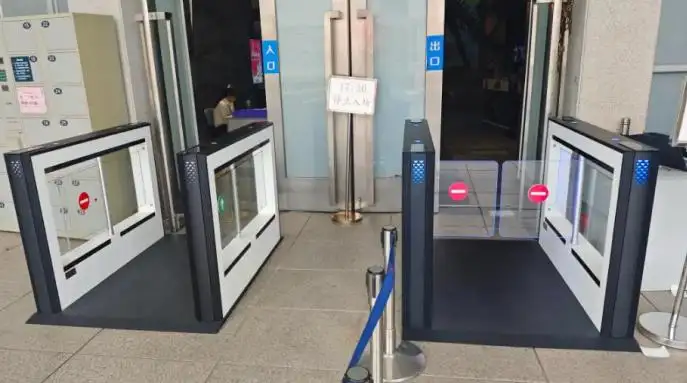
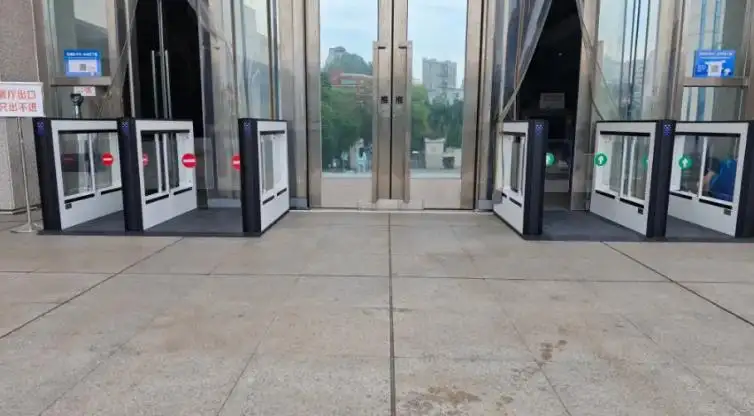
Executive lobbies, government halls, and transit nodes demand high throughput without visual clutter. Speed gates deliver this balance. Precision motors move wings quickly and smoothly. Safety sensors stop motion the moment an obstacle is detected. Tempered glass or acrylic panels create a clean, contemporary line, and lane indicators guide pedestrians intuitively.
If floor space is tight or sound carries, sliding gates shine. Panels glide horizontally, saving clearance while keeping noise low - ideal for offices and residential complexes. Both categories integrate easily with RFID, fingerprint, or facial recognition and support single or bidirectional flow. From the administrator's view, they connect to centralized platforms for entry logs and role-based access. From the technician's view, modular parts make service predictable and quick.
- Use when: high speed, low noise, premium finishes are priorities
- Benefits: anti-tailgating alarms, cloud compatibility, quick maintenance cycles
Swing Barrier And Flap Barrier: Flexible Lanes For Busy Sites
When accessibility and comfort matter, swing barriers offer wide, unobstructed lanes. Travelers with luggage, wheelchair users, and parents with strollers move through without stress. Operation is quiet, fitting libraries, schools, and open-plan offices.
Where continuous flow is the goal, flap barriers lead the way. Retractable wings and responsive motors keep people moving in metro stations, airports, and tall office towers. Advanced safety logic stops or reverses on contact, while anti-pinch designs support a comfortable passage.
Both options adapt to your environment. Schools often choose bidirectional modes for quick entry and exit. Airports lean into one-way flow at security. Either way, administrators select RFID, biometrics, or QR codes to match site policy and user habits. Centralized logs, remote configuration, and modular spares keep uptime high and queues short.
- Choose swing barriers for: accessibility, quiet operation, modern aesthetics
- Choose flap barriers for: fast flow management, anti-pinch comfort, heavy use
Tripod, Full Height, And AB Entrance Gate: When Control Is Non-Negotiable
Tripod turnstiles balance cost and control. Their compact footprint fits small factories, schools, and tight entrances. Stainless steel housings handle daily wear, while smooth rotation supports consistent entry. Verification options include RFID, barcodes, and biometrics, with single-direction or bidirectional modes as needed.
For strict perimeter control, full height turnstiles provide a physical barrier that prevents climbing and tailgating. Heavy-duty steel and weather-resistant coatings withstand outdoor conditions. Clear LED indicators and strong locking help guide each person through one at a time - ideal for industrial plants, stadiums, and restricted zones.
Where two-way efficiency and guidance are essential, the AB entrance gate manages pedestrian movement with precision motors and intelligent control panels. Obstacle detection protects users, and optional emergency modes support rapid evacuation planning. All three categories integrate with access control, time attendance, and alarm systems, and all benefit from modular construction that reduces downtime.
- Tripod: compact, economical, reliable
- Full height: maximum security, outdoor durability
- AB entrance gate: dual-lane throughput, smart obstacle detection
Implementation Playbook And Next Steps
Great outcomes start with a careful plan. Use this short, practical checklist to turn goals into a resilient deployment:
- Traffic Study: Measure peak periods, lane occupancy, queue length, and accessibility requirements.
- Verification Mix: Pick RFID, fingerprint, facial recognition, or QR based on user profiles and privacy policies.
- Direction & Modes: Define single/bidirectional passage, tailgating thresholds, and emergency egress.
- Integration: Confirm compatibility with centralized or cloud platforms for logs, permissions, and audits.
- Serviceability: Prefer modular assemblies so motors, wings, or panels can be swapped quickly.
- Materials & Aesthetics: Choose stainless steel with tempered glass or acrylic finishes to match your brand.
At IRONMAN Intelligent, we design and build Automatic Turnstile solutions that unite rapid throughput, intelligent verification, and contemporary design. Our experience across corporate campuses, government facilities, transit hubs, and residential environments informs each recommendation we make. We map policies and user journeys to lane counts, passage widths, and verification types. Then we validate that plan against your maintenance model and growth roadmap so your pedestrian entrance control systems stay secure today and remain adaptable tomorrow.
Call To Action - Ready To Specify Your Automatic Turnstile?
Share your peak throughput data, preferred verification methods, and site photos. We'll propose the right lane configuration, recommend integration options, and outline a clear, modular deployment path - from planning to go-live - so your entrance works smoothly on day one and every day after.
