


Poort van de draaipoort van de gymzaal: Welk type poort past bij jouw sportschoolformaat, Lidmaatschapsmodel, en Spits verkeer
2026-04-03


Voor de meeste ingangen van de sportschool, De juiste poort voor de draaipoort van de gym komt neer op twee beslissingen: Poorttype en kwalificatie. Flapbarrières zijn geschikt voor premium en grote commerciële sportscholen met 40–60 ppm per baan. Zware driepoot-draaipoorten zijn geschikt voor budgetsportscholen en kleinere fitnessstudio's met 25–35 ppm per rijstrook.
Een sportschoolpoort is niet zomaar een toegangscontroleproduct — het is een systeem voor de bescherming van lidmaatschapsinkomsten. Elke niet-lid die zonder geldig legitimatiebewijs door een ongecontroleerde sportschoolingang loopt, vermindert het verlies van het ledenbestand van de faciliteit. Formule voor het aantal rijstrookjes tijdens de spitsuren: Totaal aantal leden in de klasrush ÷ venster van 10 minuten ÷ gate PPM = benodigde rijstroken.
Deze gids geeft gymeigenaren, Fitnessfaciliteitsbeheerders, en franchise operations directors een vergelijkingstabel voor poorttypes op basis van sportschoolspecifieke criteria, een gymzaal-achtige scenario-matchingsectie, Planning tijdens de spitsuren, Opties voor lidmaatschapscertificaten, Overzicht van softwareintegratie, en 24/7 Vereisten voor onbemand gym. Begin met het volledige Ironman fitness-toegangsconfiguratie-assortiment op deLeverancier van de leverancier van draaihekken bij de ingang van de sportschool.
Typen sportschoolpoortpoorten — vergeleken op basis van sportschoolspecifieke criteria
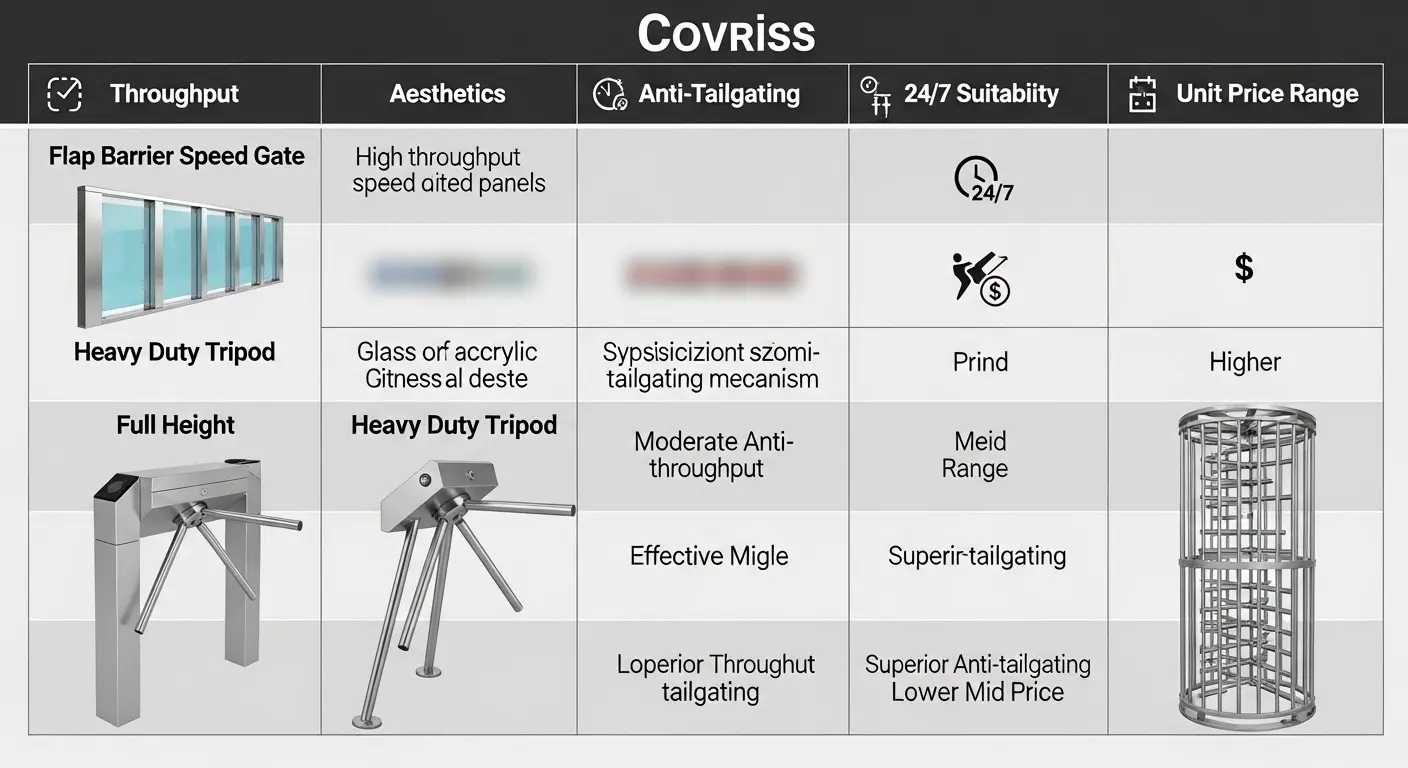
Vier poorttypes dekken de vereisten voor de hoofdtoegang van de gymzaal. Elke school past bij een ander sportschoolformaat en budget. De onderstaande tabel vergelijkt ze op basis van de criteria die van belang zijn voor een gymspecificatie.
| Poorttype | Doorvoer | Esthetica | Anti-tailgating | 24/7 Geschiktheid | Beste sportschooltype | Eenheidsbereik |
|---|---|---|---|---|---|---|
| Flap Barrière | 40–60 ppm | Hoog — glas of acryl | Sensor + alarm | Ja (+ Batterij-backup) | Premium sportschool, Grote ketting | $450–$3.000 |
| Snelheidspoort | 50–80 ppm | Hoogste — glazen kolom | Sensor + alarm | Ja (+ Batterij-backup) | Luxe fitnessclub | $1,300–$8.000 |
| Zwaar statief | 25–35 ppm | Functioneel | Mechanische één-per-cyclus | Ja | Budgetsportschool, Middelgroot | $200–$1.400 |
| Volledige hoogte | 15–20 ppm | Industrieel | Fysieke kooi | Ja | Buitensportcomplex | $600–$4.000 |
Flap Barrier en Snelheidspoort — Premium en Grote Commerciële Sportscholen
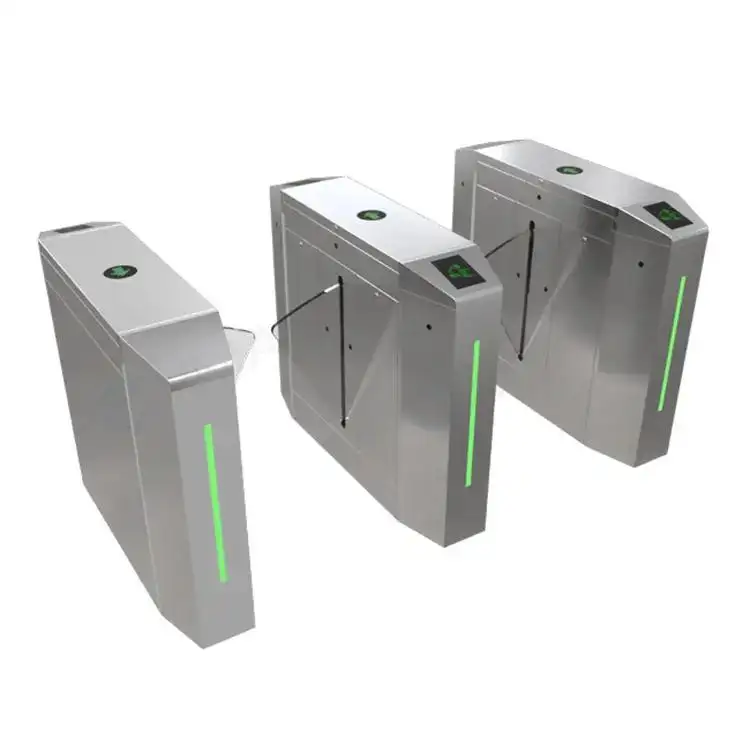
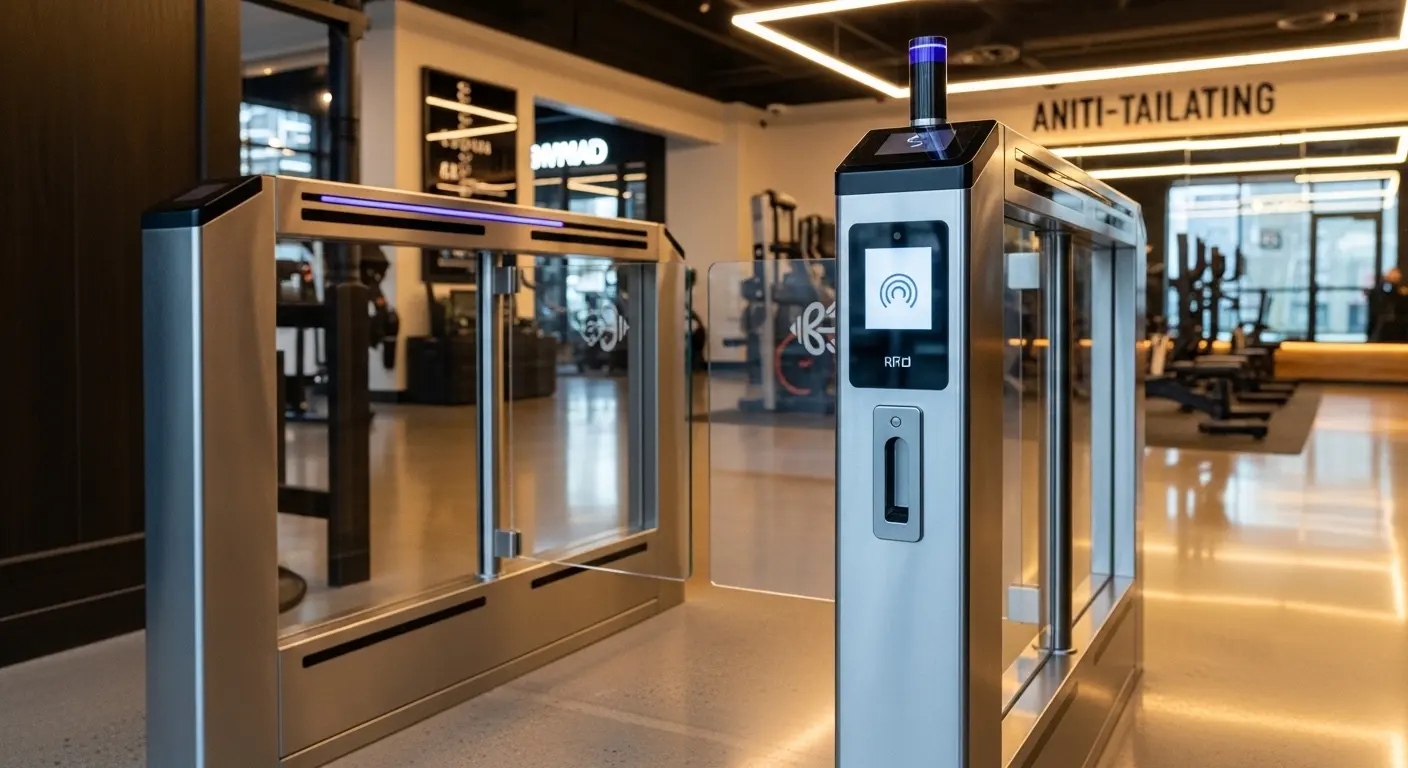
Flapbarrières zijn de standaard poort van de turnstile van de sportschool voor premium en grote commerciële sportscholen. Met 40–60 ppm per rijstrook, Ze halen de pre-class rush zonder bottleneck op. Het glazen of acryl flappaneel heeft een moderne uitstraling die past bij het ontwerpconcept van de meeste fitnessmerken.
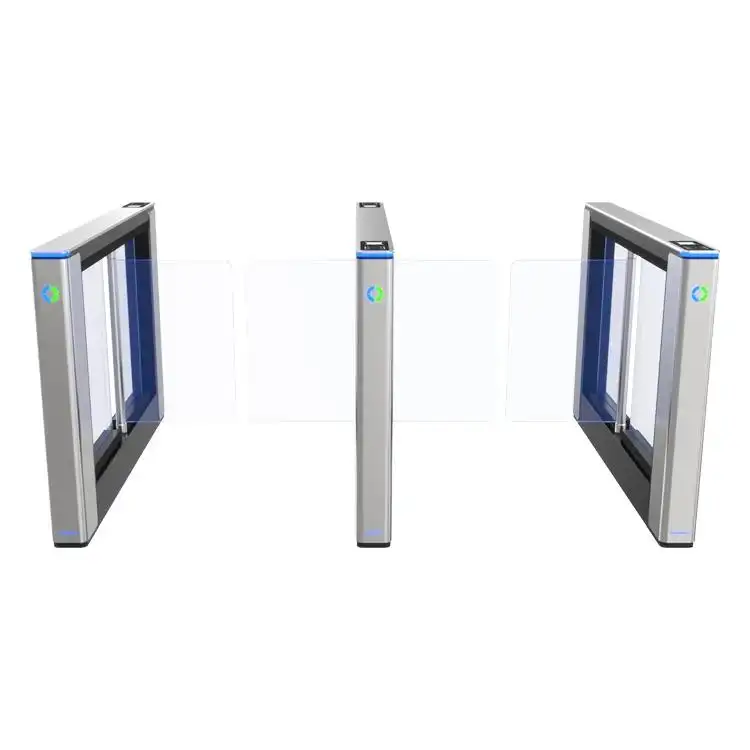
Snelheidspoorten van 50–80 ppm passen bij luxe sportscholen en luxe fitnessclubs waar de poort deel uitmaakt van de merkomgeving. Met $1.300–$8.000 per rijstrook, Ze vertegenwoordigen het premium niveau van toegang tot de sportschool.
Statief en volledige hoogte — Budgetsportscholen en sportcomplexen
Zware driepoot-draaipoorten zijn geschikt voor budgetsportscholen en standaard commerciële faciliteiten voor $200–$1.400 per rijstrook. Ze bieden mechanische anti-tailgating, directe compatibiliteit met RFID-lidmaatschapskaarten, en weinig onderhoud. Voor de Ironman slimme gym-implementatie die deze configuratie gebruikte, zie deSlimme sportschool toegangscontrole casestudy.
Draaipoorten op volle hoogte horen thuis bij buitensportcomplexen en perimeters van universiteitssportfaciliteiten — hun industriële profiel en lagere doorvoersnelheid zijn niet geschikt voor de hoofdingang van een commerciële binnensportschool.
Poort van de draaipoort van de sportschool per type — welke poort hoort waar
Het type toegangspoort moet aansluiten bij het format van de sportschool en de ledenbeleving — niet alleen bij het aantal medewerkers. De onderstaande tabel geeft een directe aanbeveling per type sportschool.
| Gymtype | Aanbevolen poort | Rijstroken | Geloofsbrief | Belangrijke vereiste |
|---|---|---|---|---|
| Boetiek fitnessstudio | Flapbarrière | 1–2 | RFID-kaart of mobiele NFC | Merkesthetiek, Ledenervaring |
| Grote commerciële sportschool | Flapbarrière | 2–4 | RFID-kaart, QR-code | Doorvoer, Softwareintegratie |
| Budgetketen-gym | Zwaar statief | 2–4 | RFID-kaart | Lage kosten, betrouwbaar, Mechanische anti-tailgating |
| 24/7 Onbemand gymzaal | Flapbarrière of statief | 1–3 | RFID-kaart, Mobiele app | Fouttolerant, Batterij-backup, Afstandsmonitoring |
| Sportcomplex | Volledige hoogte + Flapbarrière | 2–6 | RFID, biometrisch | Multi-zone, Buitenduurzaamheid |
Boetiekstudio's en grote commerciële sportscholen
Boetiekfitnessstudio's hebben een sportschoolpoort nodig die past bij de merkomgeving. Een glazen klep bij de ingang van de studio versterkt de premium ligging van de faciliteit. Gebaseerd op onze ervaring met sportschooluitzendingen, Boetiekstudio's die een statief over een klep hadden geplaatst, kregen feedback van leden over de ingang in de eerste 30 Dagen van gebruik — Het visuele verschil tussen een schoon glazen paneel en een mechanische arm is merkbaar in een merkgevoelige ruimte.
Grote commerciële sportscholen hebben bovenal doorvoer nodig tijdens piekuren. Voor het werk (06:00–08:00) en na het werk (17:00–19:30) ramen duwen 40–80 leden door de ingang naar binnen 10 minuten in een typische gym met 500–800 leden. Twee flap barrièrebanen bij 50 ppm elk handvat 100 Inschrijvingen per minuut — voldoende voor de meeste pieklasten in commerciële sportzalen.
Budgetsportscholen en 24/7 Onbemande faciliteiten
Budget-gyms in ketens specificeren zware driepoot-draaipoorten vanwege hun combinatie van lage kosten per baan, Mechanische anti-tailgating, en RFID-compatibiliteit. Statussen vereisen minder onderhoud dan klepbarrières. Ze werken ook betrouwbaar zonder batterijbackup op de meeste binnensportschoolposities.
24/7 Onbemande sportscholen stellen de hoogste eisen aan betrouwbare geautomatiseerde poortbediening. Er is geen personeel om handmatig een gate-storing te overrulen 03:00. Voor de 24/7 Specificatie-eisen voor onbemand gym, zie de speciale sectie hieronder. Voor Ironman's 24/7 Configuraties van de sportschoolpoort, Bezoek deLeverancier van de leverancier van draaihekken bij de ingang van de sportschool.
Poort van de sportschool en bescherming van de inkomsten van het lidmaatschap
De belangrijkste businesscase van een sportschoolpoort is de bescherming van lidmaatschapsinkomsten — niet toegangscontrole in de algemene zin. Elke niet-lid die een sportschool binnenkomt zonder direct te betalen, vermindert de opbrengst van de ledenbasis van de faciliteit.
Drie punten voor inkomstenlekken Een sportschoolpoort sluit
Freerider tailgating: Een niet-lid volgt een betalend lid door de ingang terwijl hun bevoegdheid wordt bevestigd. Een sportschoolpoort met sensor-gebaseerde anti-tailgating detecteert een tweede lichaam voordat de poort wordt gereset, en activeert een alarm. Dit sluit de kloof op hardwareniveau, zonder toezicht van het personeel.
Gedeelde lidmaatschapsgegevens: Twee personen gebruiken één lidmaatschapskaart in afwisselende diensten. Een biometrisch diploma (Vingerafdruk- of gezichtsherkenning) Bij de turnstile koppelt de turnstile het instapevenement aan een geverifieerde identiteit. De kaart kan niet gedeeld worden omdat de identiteit bij de poort wordt bevestigd.
Niet-drukke toegangsgaten buiten de piektijd: In bemande sportscholen, De vroege ochtend- en late avonddiensten zijn wanneer de freerider het hoogst is — de aandacht van het personeel is verdeeld. Een draaihekhek werkt volgens dezelfde anti-tailgatingstandaard bij 06:00 zoals het doet bij 18:00, zonder enige personeelsaanwezigheid bij de poortpositie.
De bemande check-in gap
Gebaseerd op onze analyse van de toegang tot toegangscontrole van de sportschool, Sportscholen die overstapten van handmatige receptie naar een poort met toegangspoort en integratie van lidmaatschapssoftware 100% Bevoegdheidsverificatie voor alle inschrijfevenementen. Een bemande incheckactie aan de receptie behaalt doorgaans 60–75% validatie tijdens piekuren — wanneer baliemedewerkers gelijktijdige taken beheren naast het inchecken van gasten. Een draaihekpoort sluit automatisch die validatiekloof van 25–40%.
Planning van de doorvoersnelheid tijdens de spitsuur voor poorten van de turnstile van de sportschool
Het onderspecificeren van het aantal rijstroken creëert het belangrijkste operationele faalpunt tijdens piekuren — een wachtrij bij de ingang van de sportschool tijdens de pre-les drukte is een directe ervaring van leden.
Spits Uur Rijstrookaantalformule:
Lanes = Totaal aantal leden in de klasrush ÷ venster van 10 minuten ÷ Gate ppm
Voorbeeld 1 — Boutique studioklas rush, 30 Leden, 10-Minuutvenster, flap barrière bij 50 ppm:
30 ÷ 10 = 3 Binnenkomsten/minuut. 3 ÷ 50 = 0.06 Rijstroken →1 Flapperbarrièrebaan voldoende is.
Voorbeeld 2 — Grote open piek van de sportschool, 150 Leden, 15-Minuutvenster, flap barrière bij 50 ppm:
150 ÷ 15 = 10 Binnenkomsten/minuut. 10 ÷ 50 = 0.2 Rijstroken →1 Rijstrook met één reservebaan voor redundantie.
| Gymmaat | Leden van de Peak | Raam | Poorttype | Rijstroken |
|---|---|---|---|---|
| Winkel (80 Leden) | 30 | 10 Min | Flapbarrière | 1 |
| Middelgrote sportschool (400 Leden) | 80 | 15 Min | Flapbarrière | 1–2 |
| Grote gymzaal (800 Leden) | 150 | 15 Min | Flapbarrière | 2 |
| Budgetketen (1,000 Leden) | 120 | 10 Min | Driepoot | 2 |
| Sportcomplex | 200 | 15 Min | Snelheidspoort | 2–3 |
Gebaseerd op onze analyse van de gym-inzet, De meeste operators overschatten hun piekbelasting. Bevestig het daadwerkelijke piekinschrijfpercentage uit de inloggegevens van de receptie voordat je het aantal rijstrook specificeert. Een klasse van 25 Leden die aankomen 10 Minutes vereist veel minder baancapaciteit dan een algemene avondpiek in de open sportschool.
Lidmaatschapsbewijs en software-integratie voor sportschoolpoorten
De keuze van de credential en integratie van lidmaatschapssoftware moeten bij het bestelmoment worden bevestigd — niet als een retrofit na de installatie. Elk type credential heeft een ander anti-tailgating risicoprofiel en een ander integratieprotocol.
| Soort kwalificatie | Beste sportschooltype | Anti-tailgating risico | Integratieprotocol |
|---|---|---|---|
| RFID-lidmaatschapskaart | Alle sportschooltypes — standaard | Gemiddeld (deelbaar) | Wiegand 26/34-bit |
| QR-code (mobiel of gedrukt) | Grote gymzaal, Franchiseketen | Laag (wegwerp-QR) | TCP/IP / REST API |
| Mobiele NFC | Premium sportschool, App-gebaseerd | Laag (Telefoon is privé) | TCP/IP / Bluetooth |
| Biometrisch (vingerafdruk, gezicht) | 24/7 sportschool, Premium gym | Nul (identiteitsverbonden) | Wiegand of TCP/IP |
Voor de Column Speed Gate-implementatie met aangepaste lidmaatschapssoftwareintegratie die wordt gebruikt in een premium sportschool, zie deCasestudy van de draaipoort bij kolomsnelheidspoort. Voor een volledig aangepaste fitness-snelheidspoortconfiguratie, zie deAangepaste snelheidspoort casestudy.
De meeste grote sportschoolmanagementplatforms (ABC Fitness, Geestlichaam, Gympass/Wellhub, Gladiator) integreer met een sportschoolpoort via TCP/IP REST API voor QR/NFC-inloggegevens, of via Wiegand voor RFID-kaartgegevens. Bevestig het integratieprotocol van je platform met de gate-leverancier voordat je een bestelling plaatst.
24/7 Vereisten voor de poort van de draaipoort van de gymzaal zonder bemand
Een poort van de turnstile van de gymzaal voor een 24/7 Onbemand gym moet zonder enige personeelstussenkomst functioneren gedurende de volledige 24-uurscyclus. Standaard specificaties voor bemande sporthalpoorten zijn niet voldoende voor een onbemand terrein.
Vijf specifieke vereisten 24/7 Onbemande sporthalpoorten
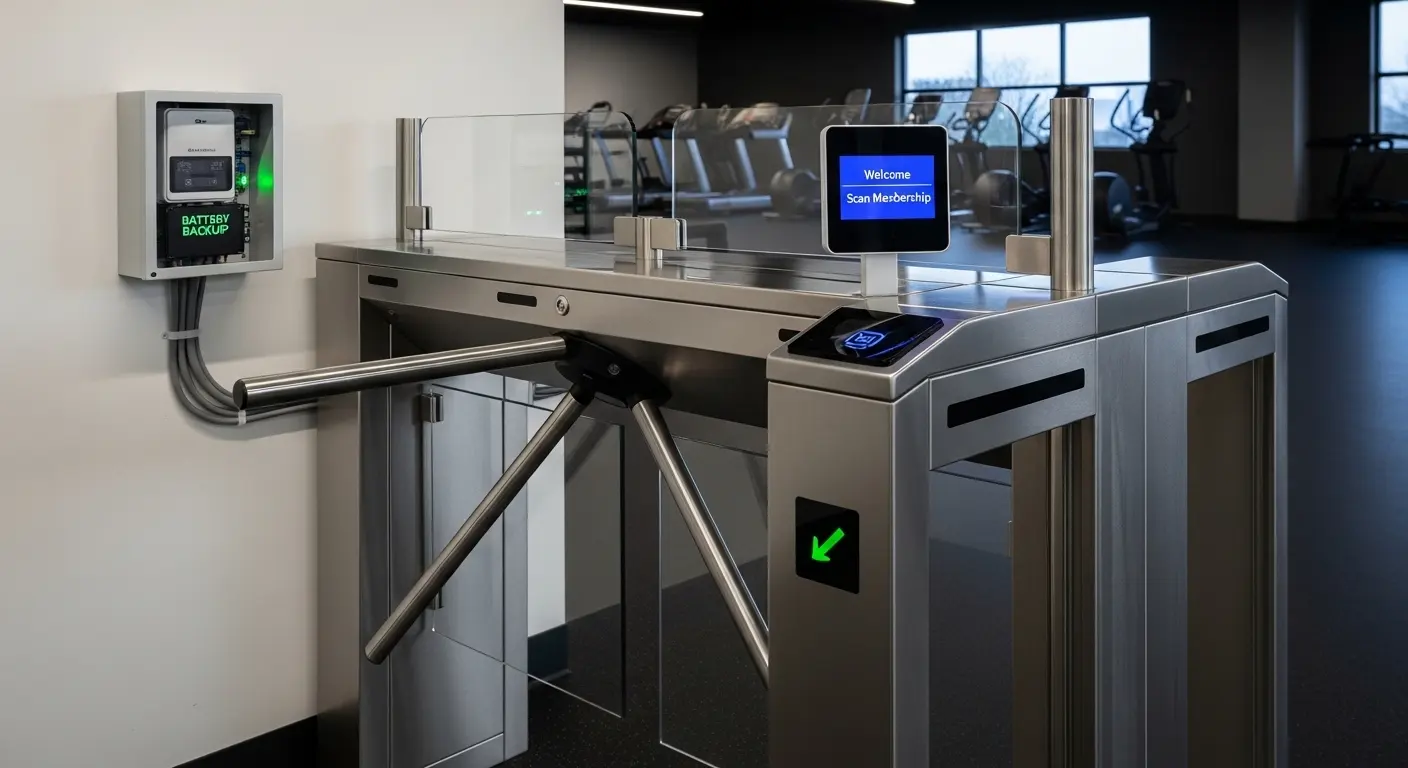
Failsafe open bij stroomstoring of brandalarm: De poort trekt zich in en blijft open op de uitgangsroute tijdens een noodgeval. Volgens NFPA 101 Life Safety Code, De barrière mag een persoon niet opsluiten tijdens een noodgeval. Specificeer nooit een failsafe-slothek voor een onbemand fitnesscentrum.
Batterij-backup (4–8 uur): Een UPS-batterijbackup houdt de poortbediening en alarmfunctie tijdens een netstroomstoring. Dit is een specificatieregel — het is niet een standaardfunctie op elk poortmodel. Bevestig het bij het bestelpunt.
Afstandsmonitoring via TCP/IP of GSM: De poortcontroller is verbonden met het monitoringsplatform van de sportschool. Elk alarm, Poging tot geforceerde binnenkomst, of stroomgebeurtenis activeert onmiddellijk een waarschuwing voor het remote monitoringteam — de enige toezicht op een onbemand terrein.
Anti-tamper kast: De behuizing van de poortkast moet bestand zijn tegen pogingen tot geforceerde toegang tijdens onbemande uren. Specificeer een versterkte roestvrijstalen kast met een tamperdetectiesensor naar het monitoringsplatform.
Audit trail export naar lidmaatschapsplatform: Elke invoergebeurtenis registreert een tijdstempel, Identiteit van het diploma, en de poortpositie voor het sportschoolbeheersysteem. Dit is het enige beschikbare bewijsspoor voor een post-incident beoordeling op een onbemand terrein.
Een fabrieks-directe offerte krijgen voor het hekje van de draaipoort van uw sportschool
Vier items zijn voldoende voor een volledige fabrieks-directe gespecificeerde offerte binnen 12 Openingstijden.
- Definieer je type en opzet van je sportschool: Studio Shop / Grote commerciële gymzaal / Budgetketen / 24/7 onbemand / Sportcomplex + Dagelijks aantal leden en piekinschrijvingen
- Bereken je rijstrookaantal: Pas de formule voor piekuren toe — Piekleden ÷ 10-minuten venster ÷ gate ppm = rijstroken; bevestig of je één of twee rijstroken plus een brede ADA-toegangsweg nodig hebt
- Bevestig het type credential en softwareintegratie: RFID-kaart / QR / NFC / Biometrisch — Bevestig het integratieprotocol van je sportschoolbeheerplatform voordat je bestelt
- Dien je projectbrief in: Bezoek de Leverancier van de leverancier van draaihekken bij de ingang van de sportschool — ontvang een fabrieks-directe offerte binnen 12 Openingstijden, met CE, ISO9001, FCC, en RoHS-certificeringsdocumenten inbegrepen
Veelgestelde vragen
Q1: Welk type draaihek is het beste voor een ingang van een sportschool?
Voor een premium of grote commerciële sportschool, Een flap barrier is de beste poort voor de draaipoort van de gym — 40–60 ppm doorvoer verzorgt de pre-les rush, En het glazen of acrylpaneel past bij de merkomgeving van de meeste fitnessfaciliteiten. Voor een budgetsportschool of middelgrote commerciële faciliteit, een zware statiefdraaipoort levert mechanische anti-tailgating en RFID-kaartcompatibiliteit tegen $200–$1.400 per rijstrook — de laagste kosten per rijstrook van alle sportschoolgate-opties. Voor een luxe fitnessclub waar de toegangspoort deel uitmaakt van de ledenbelevingsbrief, Een snelheidspoort van 50–80 ppm en een slank glazen kolomprofiel is de juiste specificatie. Draaipoorten op volle hoogte zijn niet geschikt voor commerciële binneningangen van commerciële sportzalen — hun doorvoer is te laag en hun profiel past niet bij een omgeving gericht op leden.
Q2: Hoe beschermt een poort van een sportschool de inkomsten van het lidmaatschap??
Een sportschoolpoort beschermt de inkomsten van het lidmaatschap door fysiek drie soorten ongeautoriseerde toegang te stoppen: Freerider tailgating (een niet-lid volgt een betalend lid door de poort), Gebruik van gedeelde lidmaatschapskaart (Twee mensen die om de beurt op één kaart zitten), en buiten de piekuur onbemande ingangsopeningen wanneer er geen personeel bij de receptie aanwezig is. Een poort met sensor-gebaseerde anti-tailgating detecteert een tweede lichaam voordat de barrière wordt gereset—waardoor een alarm wordt geactiveerd en de toegang wordt geweigerd. Een poort met biometrische credentialvalidatie (Vingerafdruk- of gezichtsherkenning) Koppelt elk intree-evenement aan een geverifieerde identiteit, waardoor kaartdelen onmogelijk wordt. Gebaseerd op onze implementatieanalyse, Sportscholen met een handmatige receptie valideren ongeveer 60–75% van de inschrijvingen tijdens piekperiodes. Een poort met een draaipoort sluit die validatiekloof tot 100% automatisch.
V3: Welk legitimatiebewijs moet een poort van een sportschoolpoort gebruiken?
Voor de meeste sportscholen, een RFID-lidmaatschapskaart (Wiegand 26/34-bit) is het standaardinlogificatie — lage kosten per kaart, Directe compatibiliteit met alle grote sportschoolbeheerplatforms, en hoge operationele betrouwbaarheid. Voor sportscholen met een app-gebaseerd lidmaatschapsmodel, mobiele NFC- of QR-codegegevens verwijderen de vereiste fysieke kaart. QR-codes — eenmalig gebruik, gegenereerd door het lidmaatschapsplatform en verzonden naar het telefoonnummer van het lid — hebben het laagste frauderisico van alle niet-biometrische inloggegevens. Voor 24/7 Onbemand sportscholen en premium faciliteiten waar identiteitsverificatie belangrijk is, Biometrische kwalificaties (Vingerafdruk- of gezichtsherkenning) bieden de hoogste anti-tailgatingbescherming ten koste van de GDPR/VK-compliance-eisen voor biometrische gegevensopslag en toestemming van leden.
Q4: Hoeveel turnstiles in de gym heb ik nodig voor een pre-les rush?
Gebruik deze formule: Totaal aantal leden dat aankomt in de klasdrukte ÷ venster van 10 minuten ÷ gate PPM = rijstroken. Voor een boutique studio met 30 leden die aankomen voor een les in 10 minuten en een flap barrière bij 50 ppm: 30 ÷ 10 = 3 Inzendingen/minuut ÷ 50 = 0.06 Rijstroken — één flap barrièrebaan regelt dit comfortabel. Voor een grote commerciële sportschool met 150 Leden die aankomen in 15 minuten bij 50 ppm: 150 ÷ 15 = 10 Inzendingen/minuut ÷ 50 = 0.2 Rijstroken — één rijstrook met één reserve voor de top. De meeste gyms hebben minder lanes nodig dan ze verwachten. Bevestig je werkelijke piek inschrijfpercentage aan de hand van de bestaande incheckgegevens bij de receptie voordat je een bestelling plaatst.
V5: Kan een poort met een draaipoort van de sportschool werken zonder personeel? (24/7 onbemand)?
Ja — een sportschoolpoort speciaal voor 24/7 Onbemande operatie moet vijf specifieke kenmerken bevatten: fail-safe open modus (Poort trekt zich in bij stroomstoring of brandalarm), Batterijreserve van 4–8 uur, externe monitoring via TCP/IP of GSM, Een anti-tamper kast met een tamperdetectiesensor, en een volledige audittrack geëxporteerd naar het lidmaatschapsbeheerplatform van de sportschool. Een standaard specificatie voor bemande gympoorten bevat standaard niet alle vijf. Specificeer elk als een regelitem op het orderpunt. De failsafe-open-eis (volgens NFPA 101 Life Safety Code) is verplicht voor elke onbemande fitnessfaciliteit — een failsafe-slot met gesloten poort kan een lid binnen opsluiten tijdens een stroomstoring of noodgeval.
V6: Hoeveel kost een poort met een draaipoort van een sportschool?
De kosten van een sportschoolpoortpoort variëren van $200–$1.400 voor een zware statief-draaipoort, $450–$3.000 voor een flap barrier, en $1.300–$8.000 voor een snelheidspoort per rijstrook. Draaipoorten van volledige hoogte voor buitensportcomplexen variëren van $600 tot $4.000. De meeste single-site gyms vereisen 1–3 banen, waardoor de totale geïnstalleerde kosten ongeveer $1.000–$15.000 bereiken, afhankelijk van het type poort, Aantal rijstroken, Specificatie van de credentiallezer, en de complexiteit van lidmaatschapssoftware. Fabrieksrecht-prijsstelling van een OEM-fabrikant haalt de distributeursopslag van de eenheidsprijs af — neem contact op met het Ironman-team voor een projectspecifieke specificatieofferte.
Drie beslissingen die de specificatie van de draaipoort van de sportschool bepalen
Gate-type afgestemd op het fitnessschoolformat en merkpositionering, Piekurenrijstroken berekend op basis van echte ingangsgegevens, en integratie van lidmaatschapssoftware bevestigd bij het besteladres — deze drie beslissingen bepalen of een sportschoolpoort de inkomsten van het lidmaatschap beschermt, Cleart de pre-class rush, en werkt betrouwbaar gedurende de 24-uurscyclus.
Ironman produceert fabrieksmatige sportschoolpoorten voor boutique fitnessstudio's, Grote commerciële sportscholen, Budgetketens, 24/7 Onbemande sportscholen, en sportcomplexen in de overal 50+ Landen. Dien je type sportschool in, Aantal leden, en spitsureninvoergegevens via deLeverancier van de leverancier van draaihekken bij de ingang van de sportschool voor een volledig fabrieksrecht, gespecificeerde offerte binnen 12 Openingstijden.
