


Intelligent Access Gates: The Future of Smart Entry Systems
2025-10-27


For decades, the concept of "access control" was simple and "dumb." It was a clunky, mechanical turnstile or a door with a basic access badge reader. It was a purely reactive system, a "lock" that only knew "if key, then open."
That era is over. The modern facility demands more. It demands a system that is as smart, connected, and data-driven as the business itself.
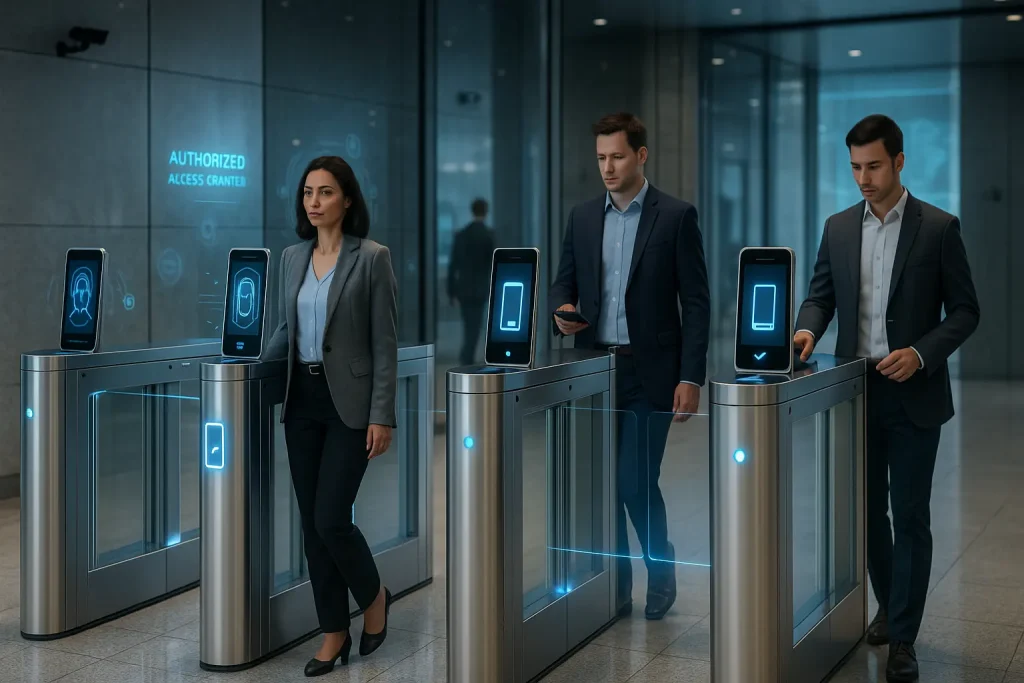
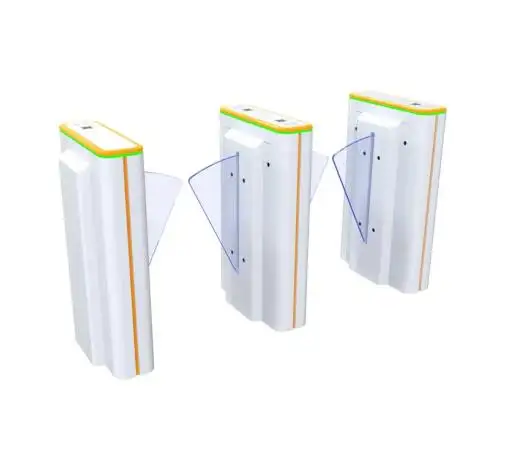
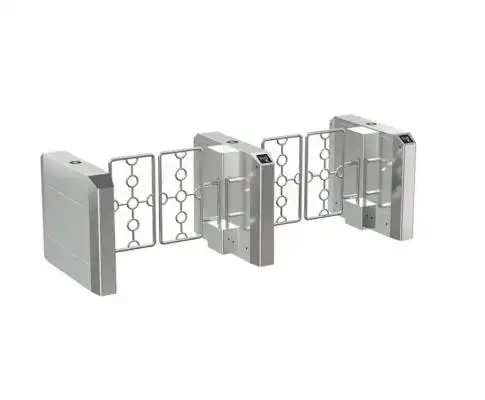
This is the new paradigm of the intelligent access gate. This is not just a barrier; it's a "sentinel." It's a data-gathering,-thinking, and-learning "node" on your building's network. It's an active component of your security and your building's operations, a core part of comprehensive smart-access-solutions.
This guide is an expert, comprehensive look at this transformative technology. We'll explore what makes a gate "intelligent," how it moves beyond a simple "open/close" function, the critical benefits it provides, and how it is becoming the new standard for modern entry systems.
What Exactly Is an Intelligent Access Gate?
An intelligent access gate is an advanced pedestrian barrier that uses onboard processors, sophisticated sensors, and network connectivity to make real-time decisions. Unlike a traditional gate, it doesn't just "react" to an "open" signal; it actively analyzes passage, detects anomalies, communicates with other building systems, and "learns" from its environment.
A "dumb" gate is a simple "muscle" connected to a central "brain" (the access control panel). It does nothing until it's told.
An intelligent access gate has its own local "brain." It can process information and make decisions on its own. For example, its onboard sensors can identify the complex shape of two people trying to sneak through (tailgating) and make an independent decision to sound an alarm and close the barriers, all while simultaneously reporting this "anomaly" to the central security platform.
What Makes an Access Gate "Intelligent"? The Three Pillars
"Intelligent" isn't just a marketing buzzword. It refers to a specific set of technological capabilities. The "intelligence" of a gate is built on three pillars: advanced sensor technology, deep connectivity, and the power of AI and machine learning.
Pillar 1: Advanced Sensor Technology (The "Eyes")
An intelligent gate sees the world in high fidelity. A simple automatic gate might have 2-4 sensors, which are only for safety (to prevent the barrier from closing on a person). An intelligent gate has a dense array of sensors for security.
- High-Density "Light Curtains": We're talking 20, 40, or even 60+ pairs of infrared beams. These beams cross-hatch the lane, creating a high-resolution 3D "profile" of what is passing through.
- 3D and Imaging Sensors: Some high-end gates use 3D imaging or "Time-of-Flight" (ToF) sensors. These can accurately measure the size, shape, and volume of an object in the lane.
- Sensor Fusion (The "Smartest" Part): The gate can "fuse" data from multiple sensor types. It might combine its IR "light curtain" with an overhead video camera. The IR sensors detect motion, and the video analytics identifies the object (e.g., "human" vs. "rolling luggage").
Pillar 2: Deep Connectivity (The "Voice")
An intelligent gate is a "connected" device, a node on the "Internet of Things" (IoT). It's not a silo; it's a "team player." This connectivity is often managed through a cloud-based-access-control-gate platform.
- Real-Time Data Transmission: The gate is constantly communicating. It sends rich data packets to the central "brain": "Passage authorized," "Passage completed," "Tailgating attempt detected," "Motor torque is 10% high."
- Remote Management & Diagnostics: This is a game-changer. As an integrator, I can tell you that in the old days, a "finicky" gate meant dispatching a technician. With an
intelligent access gate, I can log in remotely from my office, see that "Sensor 14B is dirty," and tell the on-site staff to wipe it off. This saves hours of downtime. - Over-the-Air (OTA) Updates: The gate's "brain" (its firmware) can be updated remotely with new security patches and features, just like your smartphone.
Pillar 3: AI and Machine Learning (The "Brain")
This is what truly separates "smart" from "intelligent." The gate doesn't just collect data; it learns from it.
- Eliminating False Alarms: This is the most practical use. A "smart" gate might alarm if you pull a rolling suitcase (it sees two objects). An "intelligent" gate's AI has been trained on thousands of "suitcase passages" and knows the difference between a person with luggage (a valid event) and two people walking too closely (a security breach).
- Behavioral Analytics: The AI can detect anomalous behavior. It can flag "a person loitering near the gate for 5 minutes" or "a person who badged in but then immediately badged back out." This is "predictive" security, not just "reactive."
- Predictive Maintenance: The AI learns the "normal" operating signature of its own motors. It can detect a 5% increase in motor vibration or a 10% rise in the time it takes to open. It can then automatically file a maintenance ticket before the part fails, preventing a costly emergency shutdown.
"Intelligent Gate" vs. "Automatic Gate": What's the Real Difference?
An "automatic" gate simply reacts. An "intelligent" gate thinks, connects, and learns. It's the difference between a simple light switch and a true smart-home system.
An automatic gate receives a simple "open" signal (from a card reader or a push-button) and performs a "dumb" action: it opens its barriers, waits a set time, and closes them. It has basic safety sensors, but no security sensors.
An intelligent access gate is a data-driven device. It is constantly analyzing its lane. It makes decisions on its own.
Here is a clear comparison:
| Feature | "Dumb" Gate | "Automatic" Gate | "Intelligent" Access Gate |
| Primary Function | Mechanical barrier (e.g., tripod) | Opens/closes on a simple signal | Thinks, processes, and communicates |
| Sensors | None | Basic safety sensors (2-4 beams) | High-density security sensors (20-60+ beams) |
| Logic | None | Simple "if-then" (if signal, then open) | Onboard processor, AI, and analytics |
| Security | Low (can be jumped) | Low (cannot detect tailgating) | High (Actively detects & blocks tailgating) |
| Connectivity | None | Siloed (not on network) | Fully networked (Cloud, IoT, API) |
| Data | None | None | Rich, actionable data (flow, alarms, maintenance) |
| Maintenance | Reactive (when it breaks) | Reactive | Predictive (AI-driven alerts before it breaks) |
| Integration | None | Limited (e.g., to a button) | Full integration (Video, HVAC, Elevators) |
What Are the Core Benefits of an Intelligent Access Gate?
The benefits go far beyond just security. An intelligent gate provides massive ROI in operational efficiency, building intelligence, and user experience.
How Do Intelligent Gates Provide "Proactive" Security?
An intelligent gate moves your security posture from "reactive" to "proactive." It is designed to detect and deter the breach before it happens, or as it happens.
- Unbeatable Tailgating Detection: This is its #1 job. The high-density sensors and AI logic are designed to stop the single most common physical security breach.
- Behavioral Alarms: As mentioned, the AI can flag "loitering" or "duress" (e.g., a person being forced through). This gives security a "heads-up" to a developing situation, not just an "after-the-fact" alert.
- Real-Time Lockdown: Because it's connected, the gate can be part of a campus-wide lockdown. A single "panic" button can instantly lock down every
intelligent-access-gatein the building, in both directions.
How Do They Create Operational Efficiency and ROI?
This is the "money" benefit that CFOs love. The gate stops being a "cost center" and becomes a "business intelligence tool."
- True Occupancy Data: The gate provides a 100% accurate, real-time count of who is in your building (and on what floor). This data is gold. It can be fed to your Building Management System (BMS) to automate HVAC and lighting. Why heat and light a floor that the access system knows is empty?
- Staffing Optimization: The gate is a "force multiplier." It automates the low-skill, repetitive job of "badge checking" with 100% accuracy. This allows you to re-allocate your expensive guard staff to high-value human tasks: roving patrols, visitor assistance, and threat response.
- Predictive Maintenance: As an integrator, I've seen clients forced into a 3-day lobby shutdown because a motor on their only ADA-compliant gate burned out unexpectedly. An
intelligent access gatewould have sent an alert a month earlier, allowing for a 30-minute, after-hours parts swap. The ROI on preventing that one shutdown is massive.
How Do They Create a "Frictionless" User Experience?
An intelligent gate is smart enough to be secure and fast. It's the key to a "frictionless" building.
- High-Speed, No-Pause: It's designed for high throughput. The high-speed motors and fast processing mean no "pauses" or "lags" after a credential tap.
- "Frictionless" Credentials: It's the platform that enables next-gen credentials. It can host a facial recognition camera, allowing users to just walk through. It can host a Bluetooth (BLE) reader, authenticating an employee's phone while it's still in their pocket. This "hands-free" experience is the pinnacle of modern access.
What Are the Key Technologies Integrated into an Intelligent Gate?
An intelligent gate is a "chassis" for other smart technologies. It integrates them into one seamless package.
- Biometrics (Facial, Iris, Fingerprint): The gate becomes the platform for the biometric scanner, allowing it to verify "who you are," not just "what you have." The AI in the gate can even fuse its own sensor data with the biometric data for a higher-security, two-factor check.
- Mobile Credentials (Bluetooth & NFC): The gate's readers are "smart" enough to talk to your smartphone, turning it into a highly secure, encrypted key.
- Cloud Connectivity: This is the link to the
cloud-based-access-control-gate. This platform is the "central brain" that manages all the "local brains" of the gates, pushing down new rules, users, and firmware updates. - Video and Audio (Sensor Fusion): The gate can have a VMS camera and a microphone built-in. This allows a guard to "check in" on an alarm, see the live video, and even talk to the person in the lane ("Sir, you are in a restricted area. Please turn back.").
- Elevator Destination Dispatch: The gate "talks" to the elevator system. When you're authenticated, the gate tells the elevator to call a car for your specific floor. This is the definition of a seamless, intelligent building journey.
How Do You Plan for and Implement an Intelligent Access Gate System?
Implementing an intelligent access gate is a strategic project that involves IT, Security, HR, and Facilities. It's not just a hardware swap.
Step 1: Define Your "Why" (The Use Case)
What problem are you actually trying to solve?
- My Anecdote: I've seen clients buy the most expensive, AI-powered gates on the market... for a low-traffic employee-only exit. They bought "tech for tech's sake" and wasted a fortune.
- Your "Why" should be specific:
- "I need to solve my 9 AM bottleneck" (Priority: Throughput).
- "I need to stop tailgating at my data center" (Priority: High-Security Sensors).
- "I need occupancy data for my smart building" (Priority: Connectivity & Cloud Platform).
Step 2: The Infrastructure Audit (The "Bones")
An intelligent gate is a high-performance network device. Your building must have the "bones" to support it.
- Network: These gates need a stable, high-speed network connection (often PoE++ for power and data). Is your network ready?
- Latency: If your "brain" is in the cloud, what's your network latency? A 2-second lag from "tap" to "cloud decision" will kill your "high-speed" gate.
- Power: These high-speed motors draw significant power.
- My "Retrofit" Anecdote: A client in a historic building bought beautiful new intelligent gates, only to find the 30-year-old wiring in the floor couldn't support the gigabit data or PoE power. The "simple" gate install turned into a $100,000 lobby-wide floor trenching and rewiring project. Audit your infrastructure first.
Step 3: Prioritize "Open API" Platforms
This is the single most important technical decision you will make.
- A "Closed" System (The Trap): The vendor locks you in. You can only use their gates, their readers, their software. You are trapped in their ecosystem forever.
- An "Open" System (The Future): The vendor builds on an "Open API." This means they are designed to integrate with other best-in-class products. You can use their "brain" with a different company's smart lock and another company's
intelligent-access-gate. - Expert Advice: Always choose an open platform. It future-proofs your investment and prevents you from being held hostage by a single vendor.
Step 4: Address the Data, Privacy, and HR Component
An intelligent gate "sees" a lot. This is a human and legal challenge, not just a technical one.
- You must have a clear, written policy, created with HR and Legal.
- What data is being collected? Where is it stored? Who can see it? When is it deleted?
- This is non-negotiable for biometrics, which are protected by laws like GDPR in Europe and BIPA in Illinois. You need clear, "opt-in" consent from employees.
What Are the Challenges or Risks to Consider?
These systems are powerful, but they come with new responsibilities. The main risks are data privacy, network security, and the complexity of integration.
- Data Privacy & Compliance: As mentioned, this is the #1 hurdle. If you collect biometric or behavioral data, you must protect it as a "crown jewel" asset.
- Network Security Risk (IoT Hacking): This is my #1 concern as an integrator. If your
intelligent-access-gateis on your network, it's a target for hackers. If a hacker can "spoof" that "open" signal, they have the keys to your kingdom. Mitigation is critical: Your gates must be on a separate, firewalled VLAN (Virtual LAN), they must use encrypted communication, and their firmware must be patched regularly. - Integration Complexity: A system that "talks" to your elevators, your video, and your HVAC is complex. If one part of that "chain" fails, it can be difficult to diagnose. This is why choosing a high-quality integrator and an open-API platform is so essential.
What Is the True Future of the Intelligent Access Gate?
The true future of the intelligent access gate is for it to "disappear," becoming an invisible, predictive, and personalized "ambient" perimeter that authenticates users passively and securely.
- The "Invisible" Gate: The physical barriers may remain, but the interaction will be gone. Technologies like Ultra-Wideband (UWB) or next-gen Bluetooth will "sense" your phone or wearable with inch-level precision. As you approach, the system will perform a secure, long-range handshake, and the gates will just open. You will never break your stride.
- The "Personalized" Gate: The system will be the "check-in" for your entire building experience. When it authenticates "you" (not just your card), it will trigger your personal preferences: call an elevator to your floor, set the hot-desk you booked to your preferred temperature, and route your calls.
- The "Predictive" Sentinel: The AI will move from "detecting" tailgating to "predicting" threats. It will fuse data from all sources (lobby cameras, social media, weather, traffic) to understand the context of the building, and it will be able to alert security to a potential threat before it even reaches the door.
The Final Verdict: From "Gate" to "Guardian"
The intelligent access gate is a fundamental shift in building management. It's the point where physical hardware, high-speed connectivity, and artificial intelligence converge. It moves beyond the "dumb" role of a reactive barrier and becomes a "smart," proactive "guardian" for your facility.
This technology is the core of all modern smart-access-solutions. It provides not only unparalleled security but also a rich stream of data that makes your entire building more efficient, more user-friendly, and more cost-effective. This is no longer "future tech"—it is the new, definitive standard for any facility that is serious about its security and its future.
