


Malaysia Office Building Entrance Speed Gates
2025-10-27


Malaysia stands as a vibrant and rapidly developing nation in the heart of Southeast Asia, a key player in global trade and technology. Its major cities, particularly Kuala Lumpur with its iconic skyline, Cyberjaya as a burgeoning tech hub, and other growing urban centers like Penang and Johor Bahru, are home to increasingly sophisticated office buildings, corporate campuses, and multi-national headquarters. As these modern workspaces evolve, so too does the need for advanced solutions to manage the secure and efficient flow of people – employees, visitors, and contractors.
The traditional methods of controlling building entry – manual security guards logging visitors, basic key card systems on doors – often struggle to keep pace with the demands of modern Malaysian offices. They can create bottlenecks during peak hours, offer limited protection against determined intruders or casual tailgaters, lack the data needed for smart facility management, and fail to project the technologically advanced image desired by many corporations.
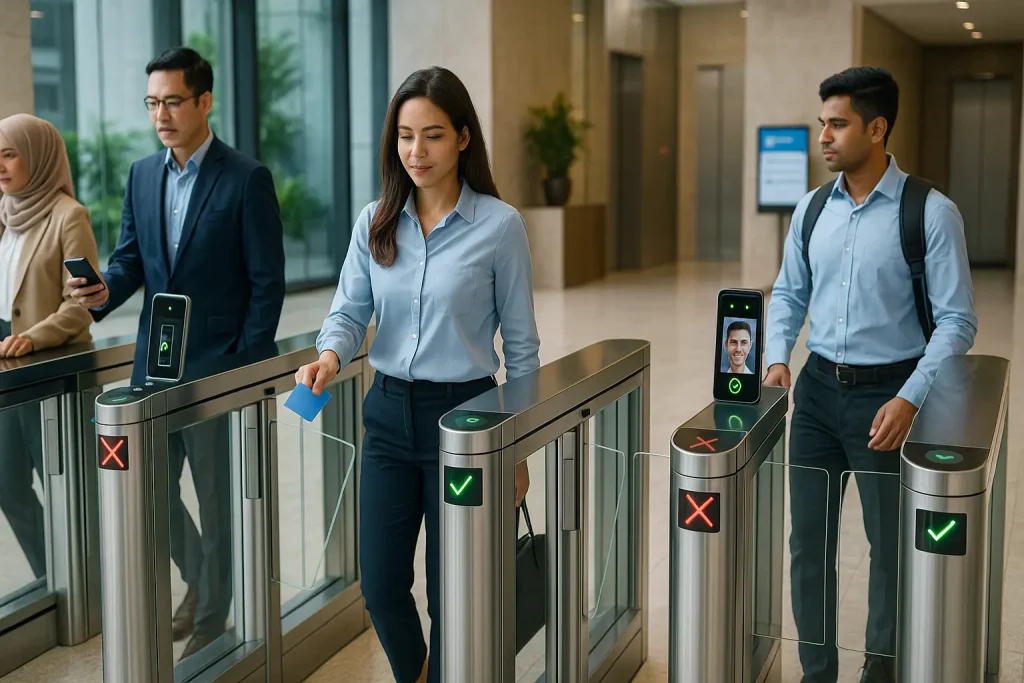
This is where the Malaysia entrance speed gate for office building applications becomes a critical technology. More than just a physical barrier, it represents an intelligent, automated system designed to streamline access, enhance security, and integrate seamlessly into the modern Malaysian workplace. However, deploying these systems effectively requires understanding the specific context – balancing technological adoption with cost considerations, addressing the tropical climate, navigating local regulations, and meeting the operational needs of businesses in Malaysia. This guide offers an expert, comprehensive look into these essential systems tailored for the Malaysian office environment.
What Defines an "Entrance Speed Gate for a Malaysian Office Building"?
An entrance speed gate for a Malaysian office building is an automated pedestrian barrier system, typically a speed gate or turnstile, configured and implemented to meet the specific security, operational, aesthetic, climatic, and regulatory requirements common in corporate facilities across Malaysia.
While utilizing core speed gate technologies found globally across diverse Regional Markets, solutions tailored for Malaysia often need to strike a particular balance:
- Cost-Effectiveness & Value: While premium solutions exist, the market often seeks reliable performance and essential security features at a competitive price point, reflecting broader trends in some Asia-Pacific speed gate access control solution segments.
- Reliability in Climate: Designs must ensure consistent operation despite Malaysia's high heat, humidity, and frequent heavy rainfall impacting lobby environments.
- High Throughput Capability: Essential for managing dense traffic flows common in large office towers and IT parks, particularly during peak commute times.
- Modern Credential Support: Increasing demand for systems supporting secure RFID (MIFARE is common), mobile credentials (NFC/BLE), and QR codes for visitor management, reflecting Malaysia's digital adoption.
- Compliance: Adherence to Malaysian standards, including fire safety regulations (Bomba requirements), accessibility guidelines, occupational safety and health (DOSH), and data privacy (PDPA).
- Local Support: Availability of responsive, skilled technical support within Malaysia is crucial.
It's about deploying smart, efficient access control that is practical, reliable, and suitable for the specific operational realities of Malaysian businesses.
Why Are Speed Gates Becoming Essential in Malaysian Offices?
Speed gates are becoming essential in Malaysian offices due to the growth of modern, high-density office developments, increased security awareness, the need for greater operational efficiency to manage large workforces, the desire to project a modern corporate image, compliance requirements, and the limitations of traditional manual security methods.
The drivers mirror global trends but have a distinct Malaysian flavour:
- Modernisation of Workspaces: New Grade-A office towers in KLCC, TRX, Cyberjaya, and other business districts demand modern amenities, including sophisticated access control, to attract premier tenants. Old-fashioned systems are no longer acceptable.
- Security Enhancement: Protecting valuable corporate assets, sensitive data, and ensuring employee safety are key priorities. Speed gates provide a crucial physical control layer, particularly effective against unauthorized entry and tailgating – a common vulnerability.
- Efficiency & Throughput: Managing the morning influx and evening exodus of hundreds or thousands of employees in large buildings requires automation. Speed gates process people significantly faster than manual checks, preventing frustrating queues.
- Replacing Manual Guards: While security personnel remain vital, automating the repetitive task of checking every ID at the entrance allows guards to focus on higher-level security monitoring, visitor assistance, and incident response, leading to more efficient use of resources. This efficiency focus is key, similar to drivers seen in developing hubs needing an India pedestrian speed gate access control solution.
- Visitor Management: Handling visitors professionally and securely is crucial. Speed gates integrated with Visitor Management Systems (VMS) streamline the process, enhance security, and create a positive first impression.
- Data & Compliance: Automated systems provide accurate, auditable logs of entry and exit, essential for security investigations, time/attendance verification (in some cases), and demonstrating compliance with internal or external regulations, including aspects of Malaysia's Personal Data Protection Act (PDPA).
How Does a Speed Gate System Operate in a Malaysian Office Lobby?
In a Malaysian office lobby, a speed gate system typically reads an employee's secure RFID card or mobile credential, or a visitor's QR code. This data is validated against an access control system (often locally managed but increasingly cloud-connected). If authorized, the gate barriers open rapidly, sensors monitor the single passage for safety and security, and the gate closes automatically, logging the event.
The process is designed for speed and seamless integration into the daily work routine:
- Credential Presentation: User approaches the gate and presents their credential:
- RFID Card/Fob: Tapping a 13.56 MHz MIFARE card is very common in Malaysian corporate environments. Older 125 kHz Prox might exist but is insecure.
- Mobile Credential: Using NFC tap or BLE 'hands-free' access via smartphone app – adoption is growing rapidly.
- QR Code: Frequently used for visitors, scanned at an integrated optical reader.
- Biometrics (Selective): Fingerprint or facial recognition might be used in higher-security areas or specific companies, but adoption requires careful consideration of PDPA compliance.
- Validation: The reader communicates securely (OSDP preferred for new installs) with the Access Control System (ACS). While cloud ACS is growing, robust on-premise or hybrid solutions remain popular, sometimes due to perceived network reliability considerations or data residency preferences.
- Permission Check & PDPA: The ACS verifies the credential against its database, checking permissions based on role, time zone, and location. Data logging practices must align with Malaysia's PDPA principles (Notice, Consent, Purpose, Security).
- Open Command: Authorized command sent securely to the gate controller.
- Gate Actuation: Reliable motors activate the barriers (swing or flap types are common in offices). Clear green/red LED indicators guide the user.
- Passage Monitoring: Sensor arrays track passage, crucial for preventing tailgating in busy Malaysian lobbies. Safety beams ensure user protection.
- Secure Closure & Logging: Gate closes promptly. Access event logged securely in the ACS.
My Experience: "Integrating visitor management via QR codes is a huge focus for many Malaysian office projects I've consulted on. They want a system where a guest can be pre-registered, receive a code on their phone, scan it at the gate for seamless entry, and have their host automatically notified. This requires tight integration between the VMS platform, the ACS, and the QR readers on the gates themselves. Getting this workflow smooth is key to replacing manual logbooks."
Key Features for a Malaysia Entrance Speed Gate Solution
Solutions for Malaysian offices need to prioritize reliability in a tropical climate, high throughput capacity, cost-effectiveness, strong support for secure RFID and mobile credentials, compliance with local fire safety (Bomba) and PDPA regulations, and crucially, dependable local technical support.
- Climate Resilience:
- Heat & Humidity: Components (especially electronics) must be rated for high ambient temperatures and humidity common in Malaysia. Good ventilation and sealing (IP ratings) are important.
- Thunderstorms: Robust power supplies and surge protection are advisable due to frequent electrical storms.
- High Throughput & Reliability: Gates need fast operation cycles and durable mechanics (quality motors, robust construction) to handle high traffic and ensure longevity with minimal downtime.
- Cost-Value Balance: While high-end options exist, the market often seeks solutions offering essential security features and reliable performance at a competitive price point. Value engineering is often key.
- Credential Flexibility: Strong support for MIFARE RFID is essential. Excellent performance with NFC/BLE mobile credentials and reliable QR code scanning for visitors is increasingly required. Biometric options should be PDPA-compliant.
- Compliance Focus:
- Bomba (Fire Dept.): Mandatory integration with the fire alarm system for fail-safe emergency egress, meeting requirements of the Uniform Building By-Laws (UBBL) and Fire Services Act. Certification/approval is required.
- PDPA (Personal Data Protection Act): System features must support compliant data handling (consent, purpose limitation, security, retention).
- DOSH (Dept. of Occupational Safety & Health): Gates must be safe for users, avoiding pinch points or unsafe closing forces.
- Accessibility: Consideration for accessible routes for persons with disabilities ("Orang Kurang Upaya" - OKU) is important, aligning with Malaysian standards (MS 1184).
- Local Support: Availability of skilled technicians based in Malaysia for installation, commissioning (sensor tuning!), troubleshooting, and maintenance is critical for minimizing downtime. Long waits for overseas support are often impractical. The value of good local service cannot be overstated.
Popular Speed Gate Types for Malaysian Office Lobbies
Flap barrier speed gates are very popular in modern Malaysian office buildings, especially in high-density IT parks and towers, due to their speed and contemporary look. Swing barriers are also widely used, particularly where aesthetics, wider passage, or a quieter operation are desired. Tripod turnstiles may still be used for secondary or more budget-conscious applications.
- Flap Barriers (The Efficiency Choice):
- Why Malaysia uses them: Offer the highest throughput (PPM), essential for managing peak flows in busy KLCC towers, Cyberjaya campuses, or large multi-national corporation offices. Their modern, high-tech appearance aligns well with new developments. Many Malaysia entrance speed gate for office building projects opt for flaps.
- Considerations: Require quality mechanisms for reliability in high-cycle environments.
- Swing Barriers (The Elegant & Accessible Choice):
- Why Malaysia uses them: Preferred for corporate headquarters, banks, hotels, and lobbies where a more elegant aesthetic and smoother, quieter operation are desired. They are the standard choice for creating compliant accessible (OKU) lanes.
- Considerations: Slightly lower peak throughput than flaps, require more physical space.
- Tripod Turnstiles (The Budget/Robust Choice):
- Why Malaysia uses them: Still seen in some office building staff entrances, factory access points, or older buildings due to their lower cost, extreme durability, and simple maintenance.
- Considerations: Slower, less secure, dated appearance generally makes them unsuitable for primary Grade-A office lobbies.
- Optical Turnstiles: Less common for main entrances due to the requirement for constant guard supervision, though might be used in exclusive, highly staffed corporate lounges or reception areas. See more on Optical turnstiles.
Enhancing Security in the Malaysian Office Context
Speed gates significantly enhance office security in Malaysia by providing a physical deterrent, reliably preventing unauthorized tailgating (a major vulnerability in busy lobbies), enforcing access policies consistently across large workforces, and generating crucial audit trails for security management and compliance.
- Physical Control & Tailgating Prevention: Gates create a necessary checkpoint. Sophisticated sensors detect and alarm on attempts to follow an authorized person, drastically reducing unauthorized entry compared to open lobbies or simple doors.
- Consistent Policy Enforcement: Ensures only employees with the correct permissions can access specific floors or zones, applied automatically 24/7 – vital for large Malaysian companies with complex organizational structures.
- Visitor Security: Integrated with VMS, gates ensure visitors are properly registered and only access permitted areas for the approved duration, enhancing overall building security.
- Audit Trails for Accountability: Secure, timestamped logs provide irrefutable evidence for investigating security incidents (e.g., theft, unauthorized access attempts) and demonstrating due diligence. This data must be managed according to PDPA.
Boosting Efficiency & Experience in Malaysian Workplaces
In Malaysia's competitive business environment, speed gates improve operational efficiency by handling high traffic volumes swiftly, reducing lobby congestion, enabling better use of staff resources, and contributing to a modern, streamlined workplace experience valued by employees and tenants.
- High Throughput for Peak Times: Essential for avoiding queues during the morning rush, lunch breaks, and evening departures common in Malaysian office culture, ensuring employees get to/from their desks efficiently. This contrasts with the potentially different peak patterns in other Regional Markets.
- Optimized Staffing: Automating entry checks allows receptionists ("penyambut tetamu") or security guards ("pengawal keselamatan") to focus on higher-value tasks like guest assistance, security patrols, or managing deliveries, improving service quality and potentially reducing overall staffing costs.
- Modern Workplace Image: Sleek, efficient speed gates contribute to the perception of a modern, well-managed, and technologically advanced company – important for attracting talent and corporate tenants in Malaysia's key business districts.
- Integration Benefits: Connecting gates to elevator systems or building apps can further streamline the journey from entrance to desk, enhancing the overall employee/tenant experience.
Navigating Malaysian Compliance: Bomba, PDPA, DOSH, Accessibility
Compliance with Malaysian regulations is mandatory. Key areas include fire safety requirements enforced by Bomba (Fire and Rescue Department), data privacy under the Personal Data Protection Act (PDPA) 2010, occupational safety governed by DOSH, and accessibility guidelines (MS 1184).
Bomba Fire Safety Requirements
- Critical Egress: Gates forming part of an escape route ("laluan keluar") must integrate with the building's fire alarm system (conforming to relevant MS standards like MS 1745) and fail-safe (open automatically) upon alarm activation or power loss.
- Clear Width & Certification: Must provide sufficient clear width for evacuation based on occupancy load (as per UBBL - Uniform Building By-Laws). The integration and operation often require inspection and approval from Bomba. "My Experience: Getting Bomba approval for fire system integration is a formal process in Malaysia. Detailed plans, component certifications (often needing SIRIM approval), and witnessed testing demonstrating reliable fail-safe operation are typically required. Never treat this lightly."
Personal Data Protection Act (PDPA) 2010
- Data Governance: Governs the processing of personal data, including access logs linked to individuals and especially biometric data. Key principles include Notice, Choice (Consent), Purpose Limitation, Security, Retention, and Access.
- Biometrics: Use requires clear notice, explicit consent, justification of purpose, secure storage (often specified within Malaysia), and defined deletion policies. Widespread deployment for general access needs careful legal review, making secure cards/mobile often preferred.
DOSH (Department of Occupational Safety and Health)
- User Safety: Gates must be installed and maintained to be safe for users, avoiding hazards like pinch points, excessive closing force, or electrical risks, aligning with the Occupational Safety and Health Act 1994.
Accessibility (MS 1184)
- Equal Access: Malaysian Standard MS 1184 provides guidelines for accessibility in the built environment. Gate installations must include compliant wider lanes (OKU lanes) with appropriate clearances and user interfaces for people with disabilities.
Installation & Maintenance: The Importance of Local Expertise
Successful deployment requires skilled technicians familiar with Malaysian building practices, electrical standards (Suruhanjaya Tenaga requirements), and safety regulations. Given the climate and high usage, reliable local maintenance and support are absolutely critical for ensuring long-term performance and minimizing costly downtime.
- Qualified Local Installers: Essential for compliant electrical wiring, fire system integration, secure mechanical mounting, and proper network setup. Look for experienced providers with a good track record in Malaysia.
- Climate Considerations: Installers must account for humidity and heat, ensuring proper sealing, ventilation (where needed), and component selection suitable for the Malaysian environment.
- The Criticality of Local Support: My Strongest Advice: Prioritize vendors with a strong, established service presence within Malaysia. Having access to trained technicians who can respond quickly (within hours, not days) with readily available spare parts is arguably the most important factor for long-term satisfaction. Relying on remote support from Singapore, Europe, or the US for urgent issues is often impractical and costly due to delays.
Modular speed gate designcan significantly aid local serviceability if technicians are trained on module replacement.
Future Trends for Malaysian Office Gates
The future involves continued adoption of mobile credentials leveraging Malaysia's high smartphone penetration, growth in cloud-based access control for flexibility, increasing integration within smart building ecosystems, potential for more AI-enhanced features (within PDPA bounds), and a growing influence of cost-effective yet reliable technology solutions.
- Mobile & QR Dominance: Expect mobile credentials (NFC/BLE) and QR codes (especially for visitors) to become increasingly standard, potentially reducing reliance on physical cards over time.
- Cloud Growth: Cloud ACS platforms offer scalability and remote management benefits attractive to growing Malaysian businesses and multinational corporations with local offices.
- Smart Building Integration: Deeper integration with BMS, VMS, elevator systems, and tenant experience apps will become more common in new Grade-A developments.
- AI for Practical Benefits: AI likely focused on improving sensor accuracy (reducing false alarms in busy/humid conditions), enabling predictive maintenance, and providing anonymized flow analytics, rather than highly sensitive behavioral monitoring, given PDPA.
- Value-Driven Innovation: Continued demand for solutions that offer advanced features and reliability at competitive price points suitable for the broader Malaysian market, potentially favouring robust designs over the ultra-high-end customization seen in places like Dubai.
The Final Verdict: Smart, Secure Gateways for Malaysia's Growth
The Malaysia entrance speed gate for office building is rapidly evolving from a niche product into an essential component of modern facility infrastructure across the nation. Driven by the need for enhanced security, greater operational efficiency, and a modern corporate image in Malaysia's dynamic economy, these intelligent systems offer a powerful solution.
Success hinges on selecting solutions that are not only technologically capable (supporting high throughput, secure credentials, smart integration) but also robust enough for the local climate, strictly compliant with Malaysian regulations (Bomba, PDPA, DOSH, Accessibility), and backed by reliable, responsive local support. By balancing innovation with pragmatism and compliance, Malaysian businesses can implement smart entrance gate systems that provide secure, efficient, and welcoming access, supporting their growth and contributing to the nation's ongoing development, setting a specific course within the diverse landscape of Asia-Pacific speed gate access control solution options.
