


Melbourne Smart Speed Gates for Building Entrances
2025-10-27


Melbourne. Consistently ranked among the world's most liveable cities, Victoria's capital is a thriving hub of culture, commerce, education, and innovation. Its distinctive urban fabric blends grand Victorian-era architecture with striking contemporary towers, housing a diverse and growing population. Within this dynamic environment, the entrances to Melbourne's commercial buildings, government centres, universities, and residential complexes are critical interfaces, demanding sophisticated solutions to manage the secure, efficient, and welcoming flow of people.
The traditional approaches to access control – manual checks, basic key systems – are increasingly insufficient for the demands of modern Melbourne. They struggle with the density of the CBD and inner suburbs, offer limited security against evolving threats, fail to provide the necessary data for smart facility management, and often clash with the city's renowned design sensibilities.
This necessitates the adoption of intelligent, integrated systems: the Melbourne smart speed gate building entrance solution. This represents more than just an automated barrier; it's a connected, data-aware technology specifically tailored for the Melbourne context. It must deliver high throughput efficiently, provide robust security, comply meticulously with Victorian and national regulations (BCA/NCC, WHS, DDA, Privacy Act), integrate seamlessly with smart building technologies, and often, meet high aesthetic standards appropriate for the city's architectural landscape. This guide provides an expert, comprehensive exploration of these vital systems within the unique framework of Melbourne.
What Defines a "Melbourne Smart Speed Gate Building Entrance"?
A Melbourne smart speed gate building entrance is an advanced automated pedestrian access control system specifically designed, certified, and implemented to meet the high standards of performance, compliance, technological integration, and design expected in modern facilities within Melbourne and Victoria. Key characteristics include efficiency, reliability, adherence to local codes (BCA via VBA, WorkSafe Vic), accessibility (DDA/AS 1428), privacy compliance (Privacy Act), and seamless smart building connectivity.
While part of the broader Australia speed gate turnstile access control landscape and utilizing technologies seen across global Regional Markets, solutions deployed in Melbourne often require specific attention to:
- Compliance Rigour: Meticulous adherence to the National Construction Code (NCC/BCA) as administered by the Victorian Building Authority (VBA), specific WorkSafe Victoria requirements, stringent application of the Disability Discrimination Act (DDA) via AS 1428, and the federal Privacy Act.
- Smart Building Integration: High expectation for seamless connectivity with Building Management Systems (BMS), elevator destination dispatch, Visitor Management Systems (VMS), reflecting Melbourne's sophisticated commercial property market.
- Aesthetic Sensitivity: Need for designs that complement both Melbourne's rich architectural heritage and its bold contemporary buildings, often requiring high-quality materials and finishes.
- Reliability & Quality: Strong emphasis on durable, well-engineered solutions with proven reliability and excellent local support, reflecting a market that values long-term performance.
- Efficiency Focus: Systems must efficiently manage high pedestrian densities common in the CBD, Docklands, Southbank, and major transport interchanges.
It signifies intelligent access control engineered for the specific operational tempo, regulatory environment, and design ethos of Melbourne.
Why Are Smart Speed Gates Essential for Melbourne Buildings?
Smart speed gates are essential in Melbourne to manage high pedestrian density efficiently, enhance security in key commercial and public spaces, ensure mandatory compliance with strict Victorian and national regulations, support the city's smart building initiatives, optimize operational costs in a high-value market, and provide the modern, seamless user experience expected in Australia's cultural capital.
Melbourne's specific context drives the need:
- Managing CBD & Urban Density: Melbourne's CBD and surrounding precincts experience intense pedestrian traffic, particularly during commute times linked to its extensive tram and train network. Automated high-throughput gates are crucial for preventing lobby gridlock.
- Security for Diverse Sectors: Securing headquarters of major banks, corporate offices, government departments, world-class universities, and sensitive research facilities requires robust physical access control beyond basic measures.
- Victorian Regulatory Landscape: Strict enforcement of BCA (by VBA), WorkSafe Victoria regulations, DDA accessibility standards, and the Privacy Act necessitates compliant, auditable access control solutions. Non-compliance carries significant risks.
- Smart Building Leadership: Melbourne is a leader in sustainable and intelligent building design (e.g., Green Star rated buildings). Smart gates that integrate with BMS for energy efficiency and operational analytics are increasingly standard.
- Operational Efficiency & Tenant Experience: In Melbourne's competitive commercial leasing market, providing efficient, secure, and modern amenities like smart speed gates is key to attracting and retaining premium tenants. It enhances the daily experience for thousands of occupants.
- Event & Public Venue Management: The city hosts numerous major events. Smart gates provide efficient and secure access control for stadiums, convention centers, and cultural institutions.
How Do Smart Speed Gates Operate in a Melbourne Facility?
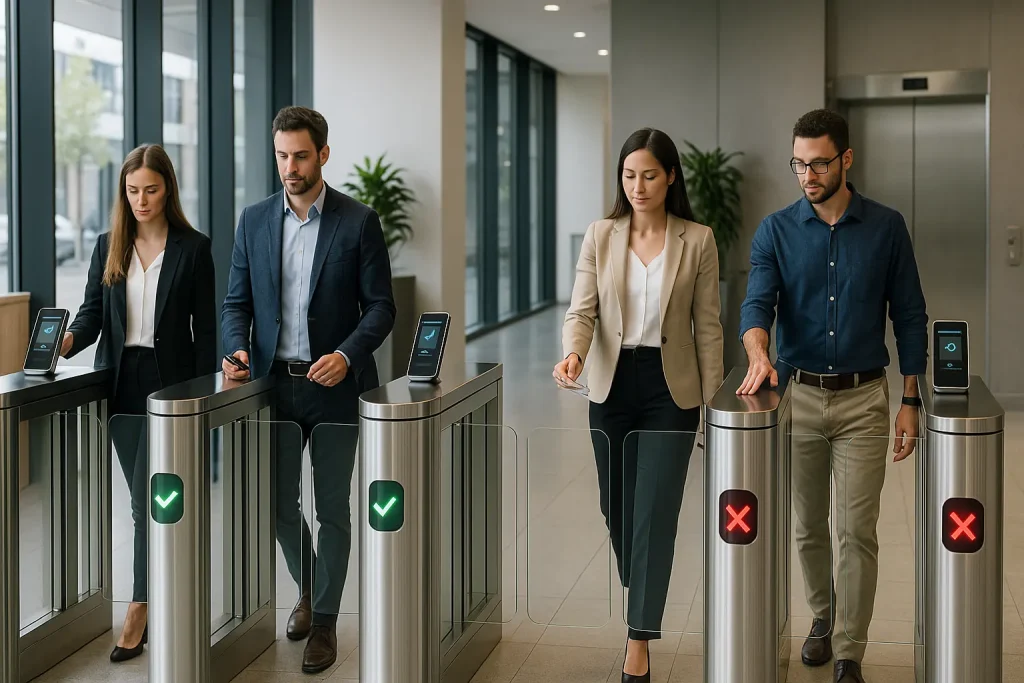
In Melbourne, a smart speed gate typically validates credentials like secure RFID cards or mobile apps via integrated readers. This connects securely to an access control system (often cloud-hosted within Australia) for authorization, adhering to Privacy Act principles. If approved, high-quality motors rapidly open aesthetic barriers (often glass swings or flaps). Advanced sensors ensure safe, single passage before closing and logging the event for security and building analytics.
The typical flow emphasizes seamlessness, compliance, and integration:
- Credential Presentation: User presents credential – 13.56 MHz secure RFID (MIFARE DESFire, iCLASS) is common, with strong growth in mobile credentials (NFC tap or BLE hands-free) reflecting Melbourne's tech-savvy population.
- Secure Validation: Reader communicates via secure OSDP protocol with the Access Control System (ACS). Cloud platforms hosted onshore (addressing data sovereignty preferences common across Oceania entrance speed gate solution providers) are frequently used for scalability and integration.
- Permission Check & Privacy Compliance: ACS verifies permissions. Data logging practices must strictly adhere to the Australian Privacy Principles (APPs) under the Privacy Act. Biometric usage requires careful justification and explicit consent procedures.
- Integrated Command: Authorized command sent to the gate. Simultaneously, commands might be sent to call an elevator (destination dispatch is common in Melbourne high-rises) or notify a host via VMS.
- Gate Actuation: High-quality, quiet brushless DC motors activate the barriers (often elegant swing barriers chosen to complement Melbourne's architecture). Clear visual indicators guide the user.
- Passage Monitoring: High-density sensor arrays track passage, reliably detect tailgating, ensure correct direction, and incorporate safety features meeting Australian WHS standards.
- Compliant Closure & Logging: Gate closes securely after safe passage. Event logged with appropriate security, adhering to Privacy Act requirements for data retention and access.
My Experience: "Retrofitting speed gates into a heritage-listed building lobby on Collins Street was a masterclass in balancing technology with aesthetics and compliance. We used slimline swing gates with custom bronze finishes to match the existing architectural details. Cabling had to be routed incredibly carefully to avoid damaging original features. We also worked closely with the heritage consultant and the access consultant to ensure the final installation was both beautiful and fully DDA compliant within the constraints of the space. It highlighted Melbourne's unique blend of respecting the past while embracing the future."
Key "Smart" Features for Melbourne Building Entrances
A Melbourne smart speed gate building entrance solution typically emphasizes seamless integration (BMS, elevators, VMS), robust compliance features (BCA/DDA/WHS/Privacy), strong support for mobile and secure RFID credentials, high reliability, and often, sophisticated aesthetic options suitable for the city's diverse architecture.
- Deep Integration Capabilities:
- BMS/GBS: Open APIs or standard protocols (BACnet/IP) for sharing real-time occupancy data to optimize HVAC and lighting (supporting NABERS and Green Star ratings).
- Elevator Destination Dispatch: Essential in high-rise CBD towers for efficiency.
- Visitor Management Systems (VMS): Seamless integration for automated visitor check-in via QR codes or mobile credentials.
- Rigorous Compliance Features:
- BCA/DDA Compliant Design: Readily available, fully compliant accessible lane options (AS 1428). Documented fire safety integration (fail-safe).
- WHS Safety Features: Multiple layers of safety sensors, safe force limitation, pinch point protection.
- Privacy Act Alignment: Configurable logging, secure data handling, support for compliant biometric deployment (if used).
- Advanced Credential Support: High-performance readers supporting secure 13.56 MHz RFID and the latest mobile access protocols (NFC, BLE) are standard. OSDP support is crucial for secure communication.
- Reliability & Quality Engineering: Emphasis on durable construction (quality stainless steel, robust motors/mechanics) designed for high-cycle counts and long-term performance. Proven reliability is highly valued.
- Aesthetic Flexibility: Options ranging from minimalist stainless steel and glass (common in modern Docklands developments) to designs incorporating stone, wood, or custom finishes suitable for heritage refurbishments or premium corporate fit-outs.
- Sustainability: Growing interest in low power consumption modes and use of sustainable/recyclable materials.
Popular Gate Types in Melbourne Lobbies: Design & Functionality
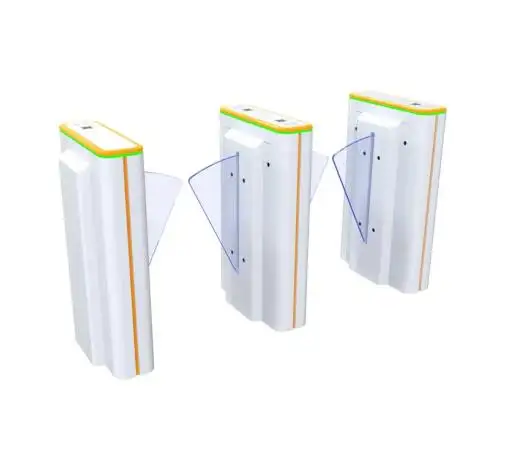
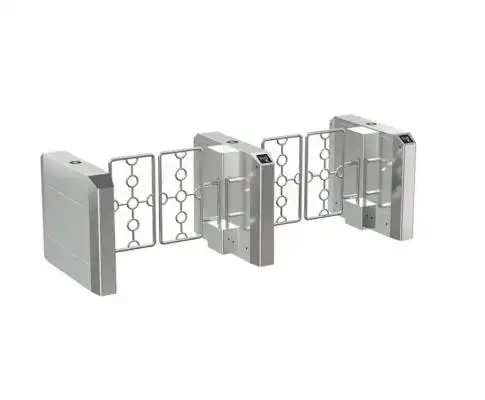
Swing barrier gates are widely popular in Melbourne's corporate and institutional lobbies, appreciated for their elegant aesthetics, quiet operation, and suitability for both modern and heritage contexts, especially for DDA compliance. Flap barriers are deployed in high-traffic zones like transport hubs or large campuses where speed is paramount.
- Swing Barriers (The Melbourne Mainstay): Their sophisticated look, smooth movement, and ability to blend with diverse architectural styles make them a frequent choice for CBD office towers, government buildings, universities, and cultural institutions. They provide the most straightforward solution for creating wide, aesthetically consistent DDA-compliant lanes.
- Flap Barriers (The Throughput Engine): Essential for managing peak loads at major railway stations integrated into commercial complexes (e.g., Southern Cross Station links), large corporate campuses with concentrated arrival times, or airport terminals. Their speed maximizes efficiency. This mirrors their use in other high-density global hubs requiring solutions like a Singapore smart speed gate turnstile system.
- Optical Turnstiles (The High-End Option): Used selectively in prestigious, fully staffed corporate headquarters or exclusive venues where maintaining an entirely open lobby aesthetic is a primary goal, relying on constant human supervision for security. Explore via resources on Optical turnstiles.
- Tripod/Full-Height: Generally confined to non-public areas, industrial sites, sports venues, or transport platforms, not typically chosen for the main entrance of a modern Melbourne commercial building due to aesthetic and speed limitations.
Enhancing Security: A Melbourne Perspective
Smart speed gates significantly enhance security in Melbourne facilities by providing a reliable physical barrier, actively preventing tailgating attempts common in busy lobbies, ensuring consistent enforcement of access policies critical for risk management, and generating secure, privacy-compliant audit logs for accountability.
- Physical Control & Tailgating Prevention: Gates establish a crucial automated checkpoint, far superior to relying solely on doors or intermittent human checks, especially against tailgating in high-density CBD environments. Advanced sensors are key to effectiveness.
- Consistent Policy Enforcement: In multi-tenant buildings or large organizations common in Melbourne, automated gates ensure access rules are applied accurately 24/7, restricting access to sensitive floors or areas based on verified credentials.
- WHS & Risk Mitigation: Controlling access helps manage occupational health and safety risks by limiting entry to authorized personnel in specific zones (e.g., plant rooms, labs) and contributing to overall site security.
- Privacy-Compliant Audit Trails: Provides essential, secure data for investigating security incidents, demonstrating compliance with regulations (like those governing financial services in Melbourne's CBD), while adhering to the Australian Privacy Act's stringent requirements.
Boosting Efficiency & Experience in Melbourne's Workplaces
Smart speed gates are vital for optimizing flow and efficiency in Melbourne's dynamic commercial landscape. They maximize throughput to eliminate lobby queues, enable smarter allocation of valuable front-of-house staff, support flexible work patterns, and contribute to the sophisticated, seamless experience expected in the city's premier buildings.
- Managing CBD Congestion: Essential for handling the concentrated pedestrian flows during peak commute times, particularly around major train stations (Flinders Street, Southern Cross) and tram interchanges, ensuring smooth entry into adjacent office towers.
- Optimizing Staff Resources: Automation frees reception or security personnel from routine credential checking, allowing them to provide higher-value concierge services, manage visitor interactions more effectively, and focus on proactive security – crucial in Melbourne's service-oriented economy.
- Supporting Modern Workstyles: Facilitates efficient access for employees with flexible hours and enables streamlined, automated visitor management vital for collaborative workplaces and client-facing businesses prevalent in Melbourne.
- Premium Tenant Experience: A fast, reliable, aesthetically pleasing entrance system is a key differentiator in Melbourne's competitive commercial property market, enhancing tenant satisfaction and contributing to the building's overall value proposition. It signals a modern, well-managed facility.
Navigating Melbourne & Victorian Compliance: BCA, WHS, DDA, Privacy
Compliance is non-negotiable and requires thorough understanding of the National Construction Code (BCA) enforced by the Victorian Building Authority (VBA), Victorian Work Health and Safety (WHS) regulations, the federal Disability Discrimination Act (DDA) applied via AS 1428, and the Australian Privacy Act.
NCC/BCA (Victorian Implementation)
- Fire Safety & Egress (Part D): Critical. Gates in required egress paths must reliably fail-safe (open) upon fire alarm activation (integration certified to AS standards) and provide adequate clear width based on occupancy load calculations reviewed by VBA or relevant building surveyors.
- Accessibility (Part D3 & AS 1428.1): Mandatory provision of compliant accessible routes. Requires gates meeting AS 1428.1 for width, circulation space, controls, and signaling. Access Consultants are essential for certification in Victoria. "My Experience: For a large Melbourne project, the Access Consultant flagged that the proposed standard swing gate opening speed was slightly too fast for the DDA lane according to their interpretation of AS 1428. We had to work with the manufacturer to implement a specific 'DDA mode' with adjusted speed and hold-open timing, which then required re-testing and documentation for the building surveyor's approval. Attention to detail is crucial."
Work Health and Safety (WHS) Act (Victoria)
- Duty of Care: Requires ensuring gates are safe for use, minimizing risks through safe design (e.g., finger guards, force limits), proper installation, safety sensors, clear signage, and regular maintenance, enforced by WorkSafe Victoria.
Disability Discrimination Act (DDA) 1992
- Equal Access: Underpins the requirement for non-discriminatory access via compliant accessible gate lanes.
Privacy Act 1988 & APPs
- Data Handling: Governs collection and handling of personal information (access logs). Requires transparency, security, purpose limitation, and adherence to Australian Privacy Principles. Biometric data requires heightened justification and explicit consent.
Installation, Maintenance & Local Support in Melbourne
Successful deployment requires installation by licensed, experienced technicians familiar with Victorian codes and Melbourne CBD logistics. Given the critical function, reliable, responsive Melbourne-based maintenance and support are essential for ensuring maximum uptime and system longevity.
- Qualified Local Installers: Must hold relevant Victorian electrical licenses (ESV) and cabling registrations. Experience working in Melbourne CBD high-rises (managing site access, heritage considerations) is invaluable. Familiarity with BCA/WHS/DDA compliance is critical.
- Site Specifics: Retrofitting into Melbourne's mix of heritage and modern buildings requires careful site surveys to plan cabling, mounting, and integration without compromising structural or aesthetic integrity.
- Quality & Reliability: Melbourne clients typically expect high-quality, durable solutions. Meticulous installation and commissioning (including sensor tuning for local conditions) are key.
- The Importance of Melbourne Support: My Strongest Advice: For any significant Melbourne installation, prioritize vendors with a dedicated, well-resourced service team based in Melbourne. Relying on support from Sydney or overseas leads to unacceptable delays when a critical CBD lobby gate fails during the morning rush. Fast response times (within hours) and local spare parts inventory are non-negotiable.
Modular speed gate designcan significantly assist local teams in performing rapid repairs.
Future Trends: Smart Integration, AI, Sustainability in Melbourne
The future for Melbourne smart speed gate building entrance solutions involves deeper integration into the city's sophisticated smart building ecosystem, leveraging AI for practical benefits (within privacy norms), continued strong adoption of frictionless mobile credentials, and an increasing focus on sustainability (aligning with Green Star).
- Holistic Smart Building Integration: Gates become central hubs, seamlessly linking access events with elevator dispatch, BMS (for NABERS/Green Star energy optimisation via occupancy data), VMS, security platforms, and tenant experience apps. Open APIs are crucial.
- Pragmatic AI: AI enhancing sensor accuracy (fewer false alarms), enabling predictive maintenance for higher reliability, and providing anonymized flow analytics for optimizing building operations, always implemented respecting Australian privacy expectations.
- Frictionless Mobile Dominance: BLE/UWB mobile credentials offering hands-free access will likely become the preferred standard for convenience and security. Facial recognition adoption will remain cautious, requiring clear justification and robust privacy compliance. This differs from trends potentially seen in less privacy-focused Regional Markets.
- Sustainability (Green Star Focus): Strong demand for energy-efficient gates (low standby power), use of sustainable/recycled materials, durable designs supporting repairability, and responsible end-of-life management, aligning with Melbourne's leadership in green building practices.
The Final Verdict: Intelligent Gateways for Australia's Cultural Capital
The Melbourne smart speed gate building entrance solution is a critical element for managing secure and efficient pedestrian access within one of Australia's most dynamic and sophisticated urban environments. These intelligent systems are specifically tailored to meet Melbourne's high demands for performance, navigate its rigorous regulatory landscape (BCA/WHS/DDA/Privacy), integrate seamlessly with advanced building technologies, and complement its renowned architectural character.
By prioritizing compliance, leveraging smart and secure credentials (especially mobile), demanding high-quality engineering and reliability, ensuring deep integration capabilities, and securing responsive local support, Melbourne facilities can implement intelligent gate solutions that provide exceptional long-term value. These systems serve as smart, compliant, and efficient gateways, essential for the smooth operation and security of buildings across Victoria's vibrant capital, forming a key part of the broader Oceania entrance speed gate solution landscape.
