



New York Speed Gate Turnstile Systems for Smart Buildings
2025-10-27


New York City. It's a vertical metropolis, a global epicenter of finance, culture, and commerce, pulsating with an energy unlike anywhere else. Its iconic skyline is defined by towers housing millions of square feet of prime real estate, where thousands converge daily. Managing the secure and efficient flow of people within these high-density, high-stakes environments is a monumental challenge, demanding the most sophisticated solutions available.
In this context, basic locks or manual security checks are simply not viable. The sheer volume of people, the expectation of seamless experiences in Class-A properties, and the heightened security awareness in a post-9/11 world necessitate advanced technological interventions. This is where the New York speed gate turnstile system plays a critical, indispensable role.
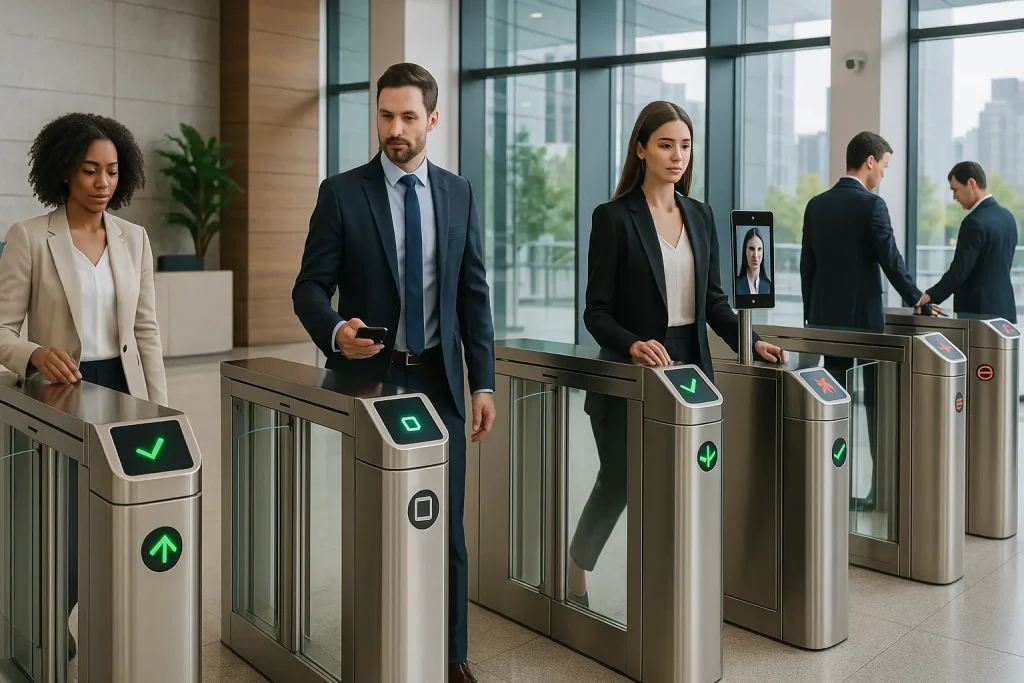
More than just an automated barrier, a speed gate system designed for the unique pressures of NYC is a fusion of high-performance engineering, intelligent software, robust security features, and often, high-end aesthetic design. It's a key component of the modern New York smart building, tasked with managing extreme pedestrian density while upholding stringent security protocols and integrating seamlessly into complex building operations. This guide provides an expert, in-depth exploration of these vital systems, tailored specifically for the challenges and opportunities of the New York City market.
What Defines a "New York Speed Gate Turnstile System"?
A New York speed gate turnstile system is an advanced pedestrian access control solution specifically configured and implemented to meet the unique demands of NYC's high-density, high-security, and technologically advanced built environment. Key characteristics include high throughput capabilities, robust construction, adherence to strict NYC building codes and ADA regulations, sophisticated aesthetic options, and deep integration with smart building technologies.
While drawing from global speed gate technologies seen across diverse Regional Markets, a system destined for a New York City installation requires specific considerations that differentiate it. It's not just a standard USA speed gate turnstile; it's often pushed to the limits in terms of:
- Throughput: Handling extreme peak loads common in NYC transit hubs and office towers.
- Durability: Withstanding constant, heavy usage 24/7.
- Compliance: Navigating the complex web of NYC Department of Buildings (DOB), Fire Department (FDNY), and accessibility regulations.
- Aesthetics: Meeting the high design expectations of prestigious Manhattan addresses.
- Smart Integration: Connecting seamlessly with the sophisticated building management, elevator, and visitor systems prevalent in modern NYC towers.
Why Are These Systems Essential for NYC Buildings?
Speed gate turnstile systems are essential in New York City due to the unparalleled pedestrian density, the critical need for robust security in a high-profile environment, the stringent requirements of local building codes (especially fire safety/egress), the operational demands of Class-A properties, and the expectation of sophisticated technology in the city's premier commercial spaces.
The "character" of NYC necessitates this technology:
- Managing Unrivaled Density: NYC buildings often accommodate thousands of occupants. Managing morning arrivals, lunch rushes, and evening departures without causing gridlock requires extreme throughput capabilities that only automated gates can provide. Manual systems are simply overwhelmed.
- Heightened Security Imperative: As a global center and potential target, NYC facilities demand rigorous security. Speed gates provide a crucial physical layer, preventing unauthorized access and tailgating far more reliably than open lobbies.
- Strict NYC Building & Fire Codes: The FDNY and DOB have specific, often complex, requirements regarding emergency egress, fire alarm integration, and accessibility that must be met. Speed gate systems must be designed and installed for full compliance.
- Class-A Expectations: Tenants and visitors in premium NYC office towers expect modern, efficient, and aesthetically pleasing environments. Sleek, fast, and reliable speed gates are now a standard amenity, not a luxury. A dated or inefficient entry system reflects poorly on the building's prestige.
- Operational Efficiency: Automating lobby access allows building management to optimize staffing (security/reception), reduce queues, and provide a smoother experience, critical in the competitive NYC real estate market.
How Do Speed Gates Work Within a New York Smart Building Context?
In an NYC smart building, speed gates act as intelligent endpoints. They validate credentials (often mobile or smart card) against a central system (frequently cloud-based), open rapidly, use sensors to monitor passage and prevent tailgating, and crucially, communicate data back to integrated systems like elevator destination dispatch, visitor management platforms, and building automation systems.
The integration is what makes it "smart":
- Credential Presentation: Employee approaches with smartphone (BLE/NFC) or taps secure RFID card. Visitor scans a QR code received via email.
- Validation (Often Cloud): Reader communicates securely with the Access Control System (ACS), increasingly hosted in the cloud for flexibility and scalability common in large NYC portfolios.
- Multi-System Handshake: If authorized, the ACS doesn't just tell the gate to open. It might simultaneously:
- Tell the Elevator Destination Dispatch system to call a car for the user's specific floor.
- Notify the Visitor Management System (VMS) that a pre-registered guest has arrived.
- Log the entry event for occupancy tracking within the Building Management System (BMS).
- Gate Actuation & Passage: The New York speed gate turnstile system barriers open instantly. Sensors track the single passage.
- Data Feedback: The gate confirms passage completion and logs the event, contributing real-time data to the building's operational intelligence.
My Experience: "Implementing destination dispatch integration is almost standard now in new NYC Class-A builds or major renovations. The efficiency gain is huge. Tenants badge at the gate, see 'Elevator D' light up, and walk straight to a waiting car already programmed for their floor. It shaves minutes off commute times and significantly reduces elevator congestion – a massive win in a tall building."
Key Technologies Powering NYC Speed Gate Systems
NYC systems leverage cutting-edge technology focused on speed, security, and integration. This includes high-speed brushless motors, advanced multi-beam sensor arrays (often with AI), multi-credential readers supporting mobile and secure RFID, robust IP-based controllers, and open APIs for deep smart building integration.
- Motors & Mechanics: Brushless DC motors are essential for the required speed, quiet operation, and extreme reliability (millions of cycles) needed to handle NYC traffic volumes. Robust internal mechanisms are needed to withstand constant use.
- Sensor Packages: High-density infrared "light curtains" (often 30-60+ beams) are standard for accurate tailgating detection and safety. Increasingly, AI algorithms analyze sensor data to intelligently differentiate luggage or strollers from unauthorized persons, crucial for minimizing false alarms in busy lobbies. Some systems incorporate "sensor fusion," combining IR data with overhead video analytics for even higher accuracy.
- Credential Readers: Must be multi-technology to handle the diverse ecosystem:
- Secure RFID: 13.56 MHz (iCLASS, MIFARE DESFire) is the baseline for secure cards. Legacy 125 kHz Prox support might be needed for transitions but is insecure for new deployments.
- Mobile (BLE/NFC): Essential for meeting modern user expectations. Readers must reliably support both major mobile platforms (iOS and Android).
- QR Code Scanners: Vital for seamless visitor management integration.
- Biometrics (Selective): Facial recognition is gaining interest for frictionless access, but NYC's privacy-aware environment necessitates careful implementation with clear opt-in policies.
- Controllers & Connectivity: IP-based controllers communicating over secure networks are standard. Support for OSDP provides encrypted reader-to-panel communication. Connectivity to cloud-based access control platforms is increasingly common, offering scalability and remote management vital for large NYC property portfolios.
"Smart" Integrations: Beyond Simple Access
In the context of a New York speed gate turnstile system, the "intelligence" truly shines through its integration capabilities, transforming it from a standalone barrier into a vital node in the building's operational network.
Elevator Destination Dispatch
- The NYC Need: Moving thousands of people vertically in supertall buildings efficiently is critical. Traditional elevator systems bog down during peak times.
- The Integration: When a user validates at the speed gate, the system instantly communicates their identity and destination floor (from their profile) to the elevator control system, which assigns the optimal car and displays it to the user (e.g., "Take Elevator B"). Users never press a call button.
- The Benefit: Groups passengers going to the same floor zones, drastically reduces wait times and travel times, increases elevator capacity, and saves energy. It's a hallmark of a truly smart NYC building.
Integrated Visitor Management Systems (VMS)
- The NYC Need: High visitor volume (clients, couriers, contractors) requires a secure and efficient check-in process that doesn't overwhelm lobby staff or create queues.
- The Integration: Visitors are pre-registered online by their host. The VMS automatically sends them a time-limited QR code or mobile credential. Upon arrival, the visitor scans their code at the designated speed gate lane for self-service entry. The system simultaneously notifies the host of their arrival (e.g., via Slack, Teams, or email).
- The Benefit: Streamlines visitor check-in, enhances security (vetting occurs beforehand), reduces lobby congestion, frees up reception staff, and provides a professional, high-tech welcome.
Video Surveillance (VMS) Integration
- The NYC Need: Enhanced situational awareness and rapid incident verification in a high-security environment.
- The Integration: Speed gate alarms (tailgating, forced entry, emergency exit) automatically trigger linked CCTV cameras to record, bookmark the event, and potentially display the live feed on the security operator's screen.
- The Benefit: Allows security to instantly see what caused an alarm, enabling faster, more accurate response and providing crucial evidence for investigations.
Building Management System (BMS) Integration
- The NYC Need: Optimizing energy usage and building operations based on actual occupancy.
- The Integration: Real-time entry/exit counts from the speed gates feed into the BMS.
- The Benefit: Enables intelligent automation – dimming lights or adjusting HVAC on floors with low or no occupancy, providing accurate data for space utilization planning, and enhancing emergency mustering lists.
Popular Gate Types for NYC Lobbies: Balancing Form and Function
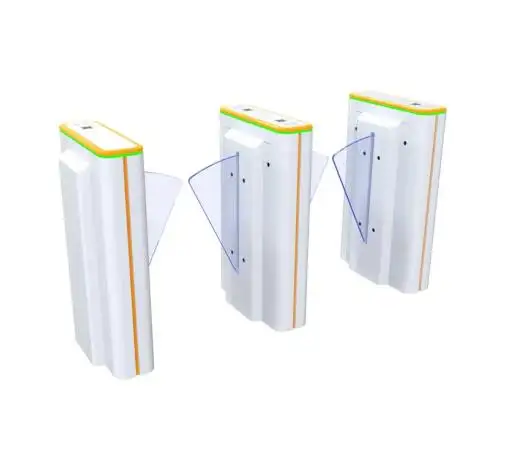
Given the premium placed on aesthetics and the need to manage high density, swing barrier speed gates are frequently the top choice for prestigious NYC lobbies. Flap barriers are used where maximizing throughput is the absolute priority. Optical turnstiles find use in select Class-A spaces with dedicated security.
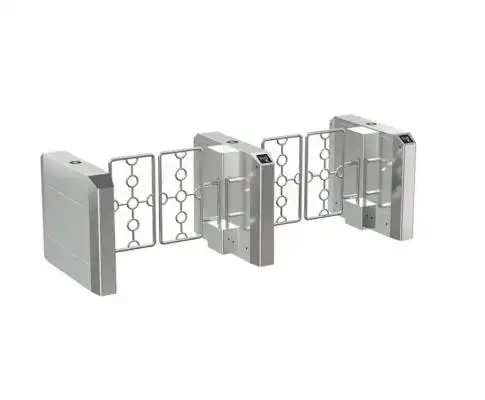
- Swing Barriers (The Elegant Choice): Their smooth, controlled motion, quieter operation, and availability in sophisticated finishes (premium stainless steel, custom tops) align well with the design expectations of high-end Manhattan office towers. They also offer the most straightforward implementation for wide ADA lanes. Many high-profile
USA speed gate turnstileinstallations utilize this type. - Flap Barriers (The Speed Choice): In locations with extreme peak loads – perhaps ground floors directly connected to subway lines or massive corporate HQs – the slightly higher throughput of flap barriers might be prioritized. Their modern, retracting motion also fits well in contemporary designs.
- Optical Turnstiles (The Minimalist Choice): In lobbies where maintaining an completely open visual feel is paramount and where budget allows for constant, attentive security personnel, barrier-free optical systems offer the highest speed but rely entirely on alarms and guard response for security. More details on this approach can be found via resources about Optical turnstiles.
Security in the City: How Gates Address NYC's Unique Challenges
In a city with a complex security landscape, speed gates provide essential layers of defense. They offer reliable anti-tailgating, consistent enforcement crucial in high-turnover environments, auditable data vital for compliance and investigation, and a necessary physical deterrent at the building's perimeter.
- Anti-Tailgating is Non-Negotiable: Preventing unauthorized piggybacking is paramount. NYC systems demand high-accuracy sensors and logic tuned to minimize false alarms while catching breaches.
- Consistency in High-Turnover: With frequent employee and tenant changes, automated enforcement ensures policies are applied consistently, unlike manual checks which can vary. Access can be revoked instantly for departing personnel.
- Audit Trails for Accountability: Detailed logs are crucial for investigating incidents and demonstrating compliance, particularly important in regulated industries prevalent in NYC (finance, legal).
- Visible Deterrence: Modern, functioning speed gates act as a clear signal that the building is secured, deterring opportunistic threats common in dense urban environments.
Navigating New York City Regulations: Compliance is Key
Implementing a New York speed gate turnstile system requires navigating a complex regulatory environment, including stringent NYC Department of Buildings (DOB) codes, specific Fire Department (FDNY) requirements for emergency egress, and federal ADA mandates. Non-compliance can lead to costly fines and project delays.
My Experience: "Working in NYC means compliance isn't just a checkbox; it's a major project component. FDNY, in particular, has very specific requirements for how fire alarm integration must function for emergency egress through turnstiles – often requiring dedicated emergency exit gates or specific 'breakaway' capabilities. You absolutely need an integrator deeply familiar with NYC codes."
Key NYC Compliance Considerations:
- FDNY Egress Requirements: Specific rules govern how turnstiles must fail-safe (open) upon fire alarm activation, required clear passage widths for egress routes, and potentially the need for dedicated, clearly marked emergency exit gates adjacent to turnstile banks. These often exceed standard national codes.
- NYC Building Code: Dictates installation standards, electrical requirements (often requiring licensed NYC electricians), and accessibility features beyond basic ADA.
- ADA: Federal requirements for accessible routes remain fully applicable and rigorously enforced.
- Union Labor: Depending on the building and project scope, installation may require the use of union electricians and technicians, impacting labor costs and scheduling.
Engaging architects, consultants, and integrators with specific, proven NYC experience is critical to navigate this complex landscape successfully.
Installation & Maintenance: The NYC Logistics Challenge
Installing and maintaining speed gates in NYC presents unique logistical hurdles: restricted delivery times, limited street access, working within occupied high-rise buildings (often after hours), high labor costs, and the need for extremely rapid maintenance response to minimize disruption in 24/7 operations.
- Logistics: Getting large, heavy gate components into a high-rise lobby often requires careful planning around freight elevator access, street closures (potentially needing city permits), and after-hours work.
- Working in Occupied Spaces: Installation or major maintenance frequently must occur overnight or on weekends to avoid disrupting tenants. This requires meticulous planning and coordination.
- Existing/Historic Buildings: Retrofitting gates into older buildings with potentially uneven floors, limited power/data infrastructure, or historic preservation constraints requires specialized expertise.
- Rapid Maintenance Response: In NYC, a malfunctioning lobby gate during morning rush is a major crisis. Service Level Agreements (SLAs) with maintenance providers typically demand very fast (e.g., 2-4 hour) on-site response times, requiring providers with a strong local presence and parts inventory. Features like
modular speed gate designcan significantly speed up repairs.
Aesthetics Matter: Designing for the NYC Skyline
In a city defined by iconic architecture and high-end design, the aesthetic integration of speed gates is crucial. Systems for premier NYC properties often feature premium materials, custom finishes, slim profiles, and sophisticated lighting to complement world-class lobby designs.
- Material Quality: High-grade brushed or polished stainless steel (often 304 or 316) is standard. Customization with architectural bronze, stone, or wood top lids is common. Barrier glass is often low-iron for maximum clarity, potentially with custom etching.
- Slim & Minimalist: Design trends favor sleek, narrow pedestals that minimize visual impact and maximize usable lobby space – a precious commodity in NYC.
- Lighting Integration: Subtle LED pathway lighting, clear green/red status indicators, and sometimes custom architectural lighting integrated into the gate design enhance both function and ambiance.
- Bespoke Solutions: For landmark projects, fully custom gate designs are sometimes commissioned to perfectly match the architect's vision, showcasing the pinnacle of Design & Technology.
The Future: AI, Frictionless Flow, and the Connected NYC Building
The future of New York speed gate turnstile system solutions involves deeper integration with AI for predictive flow management, truly frictionless access via advanced biometrics and mobile credentials, and becoming central data hubs within the hyper-connected NYC smart building ecosystem.
- AI-Optimized Flow: AI will analyze real-time data from gates, elevators, and even external factors (subway delays, weather) to predict lobby congestion and dynamically adjust elevator dispatch or provide alternate routing guidance to occupants via integrated screens or apps.
- Frictionless Biometrics & Mobile: Expect continued growth in facial recognition (implemented with robust privacy controls) and long-range mobile credentials (UWB, BLE) enabling true "walk-through" experiences, essential for managing NYC's pace.
- Cyber-Physical Security: As gates become more connected, cybersecurity becomes paramount. Expect increased focus on encrypted communications, secure firmware updates, and integration with building cybersecurity platforms.
- Data as a Service: The rich occupancy and flow data generated by gates will become increasingly valuable for building owners, feeding into platforms that optimize everything from energy usage and cleaning schedules to retail tenant analytics.
The Final Verdict: The Intelligent Gateway to the Global City
The New York speed gate turnstile system is more than just an access control device; it's a critical piece of infrastructure enabling the secure and efficient operation of the city's vertical landscape. Tailored to meet the unique demands of extreme density, high security, stringent regulations, and sophisticated design expectations, these intelligent systems are essential for modern NYC buildings.
By leveraging advanced technology, prioritizing compliance (especially ADA and FDNY), focusing on seamless smart building integration, and choosing experienced local partners, facilities in New York can implement speed gate solutions that provide robust security, optimize pedestrian flow, and enhance the prestigious image expected in this global hub. They are the intelligent gateways keeping the heart of the city moving safely and efficiently, distinct in their requirements from systems found in other major global centers like Dubai high-speed speed gate installations or those tailored for the specific needs of the UK speed gate turnstile access control market.
