



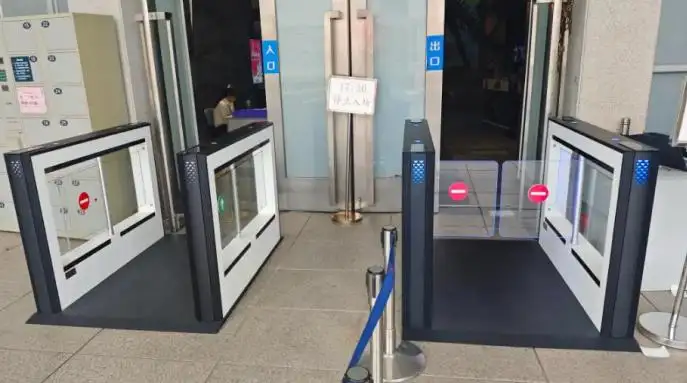
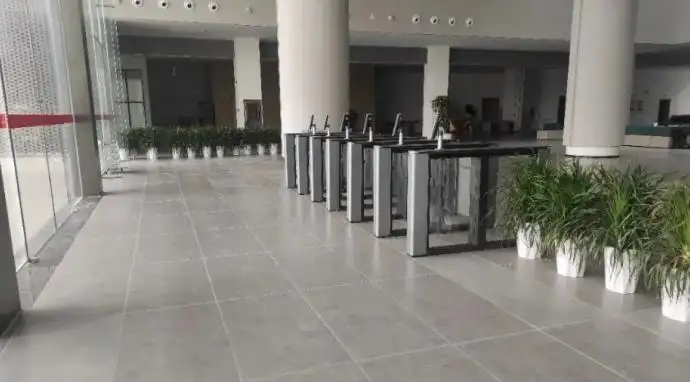
Oceania Entrance Speed Gate Solutions
2025-10-27


Oceania – a vast and diverse region dominated by the modern economies of Australia and New Zealand, alongside numerous Pacific Island nations. This part of the world is characterized by sophisticated urban centers, high standards of living, stringent regulatory environments, and a strong focus on safety, security, and quality infrastructure. Within this context, managing the flow of people into and within commercial buildings, government facilities, educational campuses, and transport hubs requires access control solutions that are not only technologically advanced but also meticulously tailored to local requirements.
The traditional methods of securing building entrances often fall short in meeting the demands of modern Oceania. Manual checks are inefficient, basic locks lack adequate security and auditability, and outdated barriers fail to meet contemporary expectations for design and user experience. As facilities across the region modernize and security awareness grows, the need for intelligent, automated solutions becomes increasingly apparent.
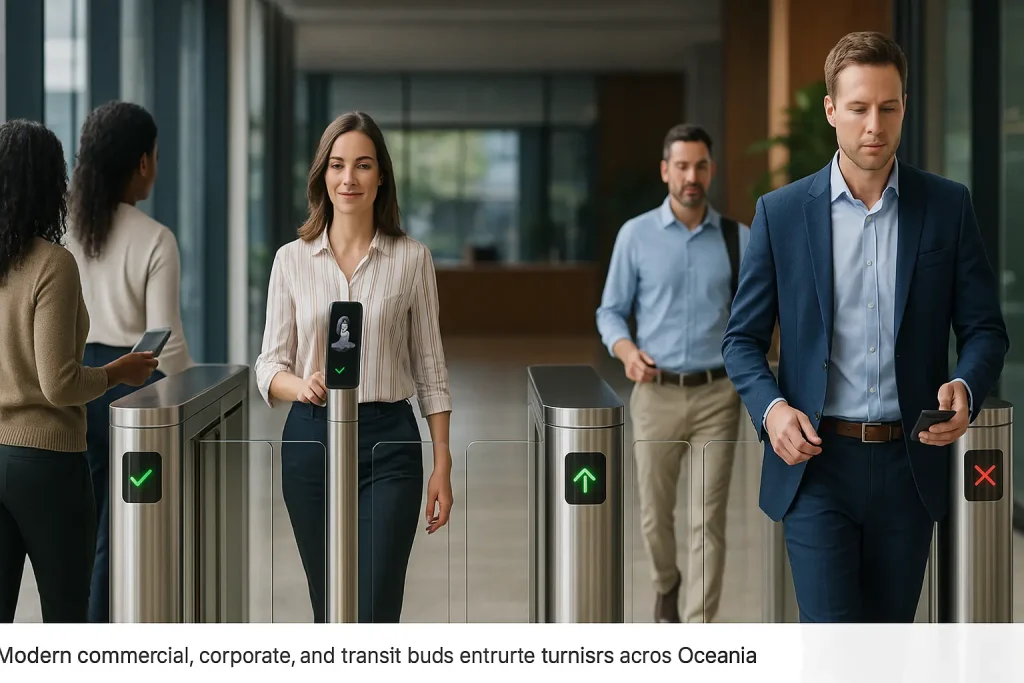
This is the essential role of the Oceania entrance speed gate solution. This represents a holistic approach to pedestrian access control, encompassing advanced speed gates and turnstiles specifically designed, certified, and implemented to navigate the unique regulatory, technological, environmental, and operational landscape of Australia, New Zealand, and surrounding areas. This guide provides an expert, comprehensive exploration of these vital systems, focusing on the specific considerations crucial for successful deployment across Oceania.
What Defines an "Oceania Entrance Speed Gate Solution"?
An Oceania entrance speed gate solution is an automated pedestrian barrier system specifically engineered, configured, and supported to meet the distinct requirements of facilities in Australia, New Zealand, and potentially developed Pacific nations. Key defining characteristics include strict adherence to regional compliance standards (BCA/NZBC, WHS/HSWA, DDA/Accessibility, Privacy Acts), robustness for diverse climates, integration with prevalent technologies, emphasis on reliability, and strong local service networks.
While leveraging global speed gate innovations seen across various Regional Markets, solutions tailored for Oceania must address specific local factors that differentiate it:
- Rigorous Compliance Framework: Uncompromising adherence to the National Construction Code (NCC/BCA) in Australia, the New Zealand Building Code (NZBC), specific Work Health & Safety (WHS/HSWA) legislation, comprehensive Disability Discrimination Act (DDA) / Accessibility requirements (AS 1428 / NZS 4121), and robust Privacy Acts in both major countries.
- Emphasis on Quality & Durability: A market expectation for high-quality engineering, durable materials resistant to local conditions (e.g., coastal salinity), and long operational lifespans with reliable performance.
- Technological Alignment: Strong support for secure RFID credentials, rapidly growing mobile access (NFC/BLE), prevalent cloud-based ACS platforms (often requiring local data hosting), and a generally cautious but considered approach to biometrics due to privacy regulations.
- Geographical Challenges: The need for reliable hardware and strong, geographically dispersed local support networks to service installations across vast distances or potentially remote locations.
- Aesthetic Considerations: Often favouring clean, modern, and durable designs that integrate well into contemporary architectural styles prevalent in Australian and New Zealand cities.
It signifies applying advanced access control technology with a deep understanding of the specific legal, technical, operational, and cultural context of the Oceania region.
Why Are Speed Gates Essential Across Oceania?
Speed gates are essential in Oceania (primarily Australia and New Zealand) to manage pedestrian flow efficiently in major urban centers, enhance physical security for valuable assets and personnel, ensure mandatory compliance with stringent national safety and accessibility regulations, provide auditable access records vital for risk management and compliance, and meet the high expectations for modern, technologically integrated building infrastructure.
The drivers for adoption across Australia and New Zealand are clear and compelling:
- Managing Urban Density: Cities like Sydney, Melbourne, Auckland, Brisbane, and Perth experience significant pedestrian traffic, particularly during peak commute hours. Automated high-throughput gates are crucial for preventing lobby congestion and ensuring smooth operations.
- Robust Security Needs: Protecting corporate headquarters, financial institutions, government buildings, critical infrastructure, data centers, and educational campuses requires effective physical security layers beyond basic locks. Speed gates provide controlled access and reliable tailgating prevention.
- Compliance is Non-Negotiable: Both Australia and New Zealand have comprehensive and rigorously enforced regulations regarding building safety (fire egress), workplace health and safety, disability access, and data privacy. Failure to comply can result in significant legal consequences, fines, and project delays. Speed gates offer a controllable and auditable solution when implemented correctly.
- Operational Efficiency: Automating lobby access optimizes the deployment of security and reception staff (important in high-labor-cost economies), reduces queues enhancing productivity, and provides valuable data for facility management.
- Modern Building Standards: In sophisticated commercial property markets, modern, secure, and efficient amenities are expected. Sleek, reliable speed gates are increasingly viewed as standard infrastructure for Class-A buildings, contributing to tenant attraction and retention. This sets a high bar for any Oceania entrance speed gate solution.
How Do Speed Gate Systems Operate in Oceania Facilities?
In typical Australian or New Zealand facilities, speed gate systems validate credentials like secure RFID smart cards or mobile apps via integrated readers. This connects securely to an Access Control System (often cloud-hosted locally) adhering to regional Privacy Act principles. Upon authorization, high-quality motors open premium barriers (like glass swings or flaps). Advanced sensors ensure safe, single passage before closing and securely logging the event.
The process prioritizes compliance, reliability, and user experience:
- Credential Presentation: User presents credential – 13.56 MHz secure RFID (MIFARE DESFire, iCLASS) is standard for cards. Mobile credentials using NFC tap or BLE hands-free are rapidly gaining popularity.
- Secure Validation: Reader communicates via secure OSDP protocol with the Access Control System (ACS). Cloud platforms (ACaaS) hosted within Australia or New Zealand are strongly preferred to address data sovereignty concerns under local Privacy Acts.
- Permission Check & Privacy Compliance: ACS verifies permissions. All data collection, storage, and processing must comply with the Australian Privacy Principles (APPs) or New Zealand's Information Privacy Principles (IPPs). Biometric data use requires explicit consent and robust justification/security.
- Integrated Command: Authorized command sent to the gate. Integration with elevator destination dispatch is common in high-rise buildings in major cities.
- Gate Actuation & Safety: High-quality, reliable motors activate barriers (often elegant swing barriers favored for aesthetics and DDA). Operation must comply with WHS/HSWA safety standards and relevant AS/NZS norms. Clear visual indicators guide users.
- Passage Monitoring: Advanced sensor arrays track passage, reliably detect tailgating, verify direction, and incorporate multiple safety layers to prevent closure on users, crucial for meeting duty-of-care obligations.
- Compliant Closure & Logging: Gate closes securely after safe passage. Event logged with appropriate security and retention policies aligned with Privacy Act requirements.
My Experience: "Specifying readers for an Oceania project requires careful consideration of both current and future needs. While secure RFID is the baseline, almost every client now asks for mobile credential readiness (BLE/NFC). We also increasingly discuss OSDP for enhanced reader-to-panel security, moving away from vulnerable Wiegand. While biometrics are technically possible, the privacy compliance hurdles in both Australia and New Zealand mean it's usually reserved for very specific high-security, opt-in scenarios, unlike the broader adoption seen in some Asian markets like Singapore."
Key Features Tailored for the Oceania Market (Australia & NZ)
An effective Oceania entrance speed gate solution must prioritize rigorous compliance (NCC/NZBC, WHS/HSWA, DDA/Accessibility, Privacy), robustness and durability (suitable for diverse climates including coastal), seamless integration with secure credentials (RFID/Mobile) and local tech infrastructure, high reliability, and strong local/regional support.
- Stringent Compliance Framework:
- Building Codes (NCC/BCA & NZBC): Mandatory adherence regarding fire safety (egress paths, fail-safe operation), structural integrity, and materials. Compliance must be demonstrable to local authorities/certifiers.
- Work Health & Safety (WHS Act - AU / HSWA - NZ): Gates must be inherently safe, minimizing risks through design, installation, safety sensors, and maintenance, meeting legislative duty-of-care requirements.
- Accessibility (DDA - AU / NZ Legislation & NZS 4121): Non-negotiable requirement for fully compliant accessible routes, meeting detailed standards (AS 1428.1 / NZS 4121) for dimensions, clearances, controls etc. Access Consultants are commonly involved.
- Privacy Acts (AU & NZ): Systems must support compliant data handling practices according to APPs (AU) and IPPs (NZ), especially regarding access logs and any potential biometric data.
- Electrical Safety (RCM Mark - AU / NZ Requirements): Essential product certification.
- Robustness & Environmental Suitability:
- Durable Construction: High expectation for quality materials (304/316L stainless steel), robust mechanics, and long operational life.
- Climate Adaptation: Designs need to withstand conditions ranging from humid coastal environments (Sydney, Auckland) to hot, dry inland areas or cooler southern regions. Appropriate IP ratings and material selection are key. Corrosion resistance (using 316L SS) is often recommended for coastal installations.
- Technology Alignment:
- Secure Credentials: Excellent support for 13.56 MHz encrypted RFID (MIFARE DESFire, iCLASS) and high-performance NFC/BLE mobile access readers.
- Cloud Preference (Local Hosting): Strong trend towards cloud ACS platforms, but with a significant preference or requirement for data to be hosted within Australia or New Zealand data centers.
- Cautious Biometrics: Use requires strong justification, compliance with strict privacy laws (requiring consent, PIAs), making it less common for general access than secure cards/mobile.
- Reliability & Local Support: Proven product reliability is highly valued. Responsive, skilled technical support available within Australia and New Zealand is critical due to geography and the importance of minimizing downtime.
Popular Speed Gate Types in Australia & New Zealand
Swing barrier gates are extremely popular across Australia and New Zealand, particularly in corporate and institutional settings, due to their aesthetic flexibility and straightforward DDA/Accessibility compliance. Flap barriers are utilized where maximizing throughput is the absolute priority. Optical turnstiles serve niche high-end, staffed environments.
- Swing Barriers (The Dominant Choice): Their elegant appearance, quiet operation, ability to incorporate various finishes, and ease of creating aesthetically matched, compliant accessible lanes make them the most frequently specified type for office lobbies, government buildings, universities, and cultural institutions across Australia and New Zealand.
- Flap Barriers (The Speed Solution): Deployed in high-volume locations such as major transport interchanges connected to commercial hubs (e.g., in Sydney or Auckland), large corporate campuses with concentrated peaks, or potentially airport links, where processing speed is paramount.
- Optical Turnstiles (The Niche Aesthetic): Used selectively in prestigious, highly supervised environments (e.g., premium corporate HQs, exclusive clubs) where maintaining a completely open aesthetic is the primary driver, relying entirely on staff for security response. Explore via resources on Optical turnstiles.
- Tripod/Full-Height: Generally considered unsuitable for the main entrances of modern commercial or institutional buildings in Oceania due to aesthetics, speed limitations, and user experience concerns. Reserved for industrial, recreational, or perimeter security applications.
Enhancing Security: An Oceania Perspective
Speed gates are a cornerstone of modern physical security strategies in Australia and New Zealand. They provide a reliable physical deterrent, actively prevent tailgating (a critical vulnerability), ensure consistent enforcement of access policies vital for risk management and WHS compliance, and generate secure, privacy-compliant audit trails essential for accountability.
- Physical Control & Tailgating Prevention: Gates establish a crucial automated checkpoint, far more effective than relying on potentially distracted human guards or simple door locks, especially against tailgating in busy lobbies. Advanced sensor accuracy is key.
- WHS/HSWA & Risk Management: By controlling access to specific areas (plant rooms, labs, restricted floors), gates help organizations meet their duty of care under workplace safety laws and manage overall security risks effectively.
- Consistent Policy Enforcement: Essential in multi-tenant buildings or large organizations with complex access matrices. Automation ensures rules are applied correctly 24/7.
- Privacy-Compliant Audit Trails: Provide vital, secure data for investigating security incidents, demonstrating compliance with industry regulations or internal governance policies, while respecting individual privacy rights under Australian and New Zealand law. This careful balance distinguishes the region from potentially less privacy-focused Regional Markets.
Boosting Efficiency & Experience in AU & NZ Workplaces
In the efficiency-focused and high-standard environments of Australia and New Zealand, speed gates are vital for optimizing pedestrian flow, enhancing the occupant experience, and enabling smarter resource allocation.
- Managing Urban Flow: Crucial for preventing lobby congestion during peak hours in major CBDs like Sydney, Melbourne, Auckland, Brisbane, Perth, ensuring smooth transitions for thousands of commuters and office workers.
- Optimizing Staff Resources: Automating routine access validation allows highly skilled (and relatively high-cost) front-of-house staff (concierge, security) to focus on providing premium visitor assistance, managing deliveries, proactive security monitoring, and enhancing the overall building experience.
- Supporting Modern Work Environments: Facilitates efficient access for employees with flexible schedules and enables streamlined, automated visitor management, aligning with the modern, agile work practices common in both countries.
- Enhancing Property Value & Appeal: In competitive commercial property markets, sophisticated, reliable, and aesthetically pleasing entrance systems like smart speed gates are key features that attract and retain high-value tenants. They signal a modern, secure, and well-managed building. This is a common driver for implementing a high-quality Oceania entrance speed gate solution.
Navigating Oceania Compliance: BCA/NZBC, WHS/HSWA, DDA/Accessibility, Privacy
Compliance is non-negotiable and requires deep familiarity with the specific requirements in Australia and New Zealand. This includes the National Construction Code (BCA) / NZ Building Code (NZBC) for fire safety/egress and accessibility, specific WHS/HSWA legislation, the DDA / NZ accessibility standards, and the respective Privacy Acts.
Building Codes (BCA & NZBC)
- Fire Safety & Egress: Mandatory fail-safe integration with fire alarm systems is critical, ensuring gates open automatically and provide sufficient clear width for evacuation according to specific clauses in BCA Section D (AU) or NZBC Clause F6/AS1 (NZ). Certification and testing are essential.
- Accessibility (BCA Part D3 / AS 1428.1 & NZBC Clause G / NZS 4121): Requires fully compliant accessible routes. Gate lanes must meet stringent requirements for width, circulation space, controls, signage, and potentially luminance contrast, often requiring input from qualified Access Consultants. "My Experience: DDA/Accessibility compliance is taken very seriously by building certifiers in both Australia and NZ. Simply providing a wider lane isn't enough; the entire user interaction, including approach, reader placement, opening time, and exit clearance, must meet the standards (AS 1428.1 / NZS 4121). We always recommend engaging an Access Consultant early in the design phase for Oceania projects."
Workplace Safety (WHS Act - AU / HSWA - NZ)
- Duty of Care: Requires inherently safe gate design, installation, operation (e.g., safe speeds/forces, reliable safety sensors), and maintenance to minimize risks to users. Risk assessments are standard practice.
Privacy Acts (AU & NZ)
- Data Handling: Govern collection, use, storage, security, and disclosure of personal information (access logs). Key principles include transparency, consent (especially for sensitive info like biometrics), purpose limitation, data security, and individual access/correction rights. Compliance with APPs (AU) and IPPs (NZ) is mandatory.
Installation, Maintenance & Support: The Oceania Challenge
Successful deployment across Australia and New Zealand demands installation by licensed, experienced technicians familiar with local codes and conditions. Given the vast distances and the critical nature of access control, reliable local or strong regional maintenance and support capabilities are paramount for ensuring uptime and system longevity.
- Qualified Local Installers: Essential for compliant electrical work (licensed electricians required), fire system integration, secure mounting (considering local conditions like wind loads or coastal environments), and correct sensor calibration. Look for experience and relevant industry certifications (e.g., security licenses).
- Geographical Spread: Supporting installations across major cities and potentially regional centers in Australia and New Zealand requires a vendor with a well-established, geographically dispersed service network or highly capable local partners.
- The Criticality of Local Support: My Strongest Advice: Do not underestimate the importance of local support in Oceania. Relying solely on remote support from Asia, Europe, or North America (e.g., USA) is often completely inadequate when a critical gate fails in Perth, Auckland, or even a regional center. Prioritize vendors with dedicated technicians and spare parts inventory within Australia and New Zealand. Fast response times are crucial for business continuity.
Modular speed gate designcan significantly benefit serviceability if local support teams are properly equipped. - Quality & Reliability Focus: The market generally expects durable, high-quality systems. Meticulous installation and a proactive preventive maintenance plan are key to achieving the expected long-term reliability.
Future Trends for Speed Gates in Oceania
The future in Australia and New Zealand involves strong continued growth in mobile credentials, increasing adoption of cloud-based ACS (with local hosting emphasis), deeper smart building integration focusing on efficiency and occupant wellness, pragmatic use of AI within strict privacy limits, and a significant focus on sustainability.
- Mobile Credentials as Standard: High smartphone penetration will likely make mobile access (BLE/NFC) the dominant credential type, offering convenience, security, and easier management.
- Cloud with Data Sovereignty: Cloud ACS platforms will grow, but strong preference/requirement for data to be hosted within Australian or New Zealand data centers will remain a key factor due to Privacy Act considerations.
- Integrated Smart Buildings: Gates will become crucial data points for optimizing building performance (energy via BMS integration based on occupancy), enhancing security (VMS links), improving flow (elevator dispatch), and contributing to overall tenant/occupant experience platforms.
- Privacy-Centric AI: AI will likely focus on practical benefits like enhancing sensor accuracy (reducing false alarms), enabling predictive maintenance, and providing anonymized flow analytics for operational insights, rather than widespread biometric surveillance, reflecting strong privacy sensitivities similar to Europe but perhaps stricter in practice than parts of Asia (e.g., Vietnam).
- Sustainability & Wellness: Growing demand for energy-efficient gates, use of sustainable/recyclable materials (contributing to Green Star/NABERS ratings), designs supporting repairability, and potentially integration with building wellness features (like touchless operation).
The Final Verdict: Smart, Compliant Gateways for Oceania
The Oceania entrance speed gate solution, particularly for Australia and New Zealand, represents a sophisticated application of global access control technology, meticulously adapted to meet the region's stringent regulatory demands, high expectations for quality and safety, and modern technological landscape. These intelligent systems are essential for securing facilities, managing pedestrian flow efficiently, ensuring compliance, and enhancing the user experience in the region's dynamic commercial, institutional, and public spaces.
Success hinges on a deep understanding of local compliance (BCA/NZBC, WHS/HSWA, DDA, Privacy Acts), prioritizing robust and reliable engineering suitable for local conditions, embracing secure and convenient credentials (especially mobile), ensuring seamless integration capabilities, and securing strong, responsive local support. By focusing on these key elements, organizations across Oceania can implement smart speed gate solutions that provide lasting security, efficiency, and value, serving as compliant and intelligent gateways for their modern facilities. This distinguishes the approach needed from that in vastly different Regional Markets, such as the high-volume, cost-sensitive dynamics often seen in India or the specific security postures relevant to the Middle East.
