


Smart Access Solutions: Intelligent, Connected, and Automated Entry Systems
2025-10-27


For decades, the foundation of building security has been a simple, flawed object: the metal key. This evolved into the plastic card, but the principle remained the same. We relied on a "token"—an object that could be lost, stolen, forgotten, or intentionally shared. This is "dumb" access: a reactive, siloed system that only knows if a key is valid, not who is using it, why they are there, or what is happening in the building around them.
This old model is no longer good enough. Today, facilities demand a system that is as intelligent as the businesses they protect.
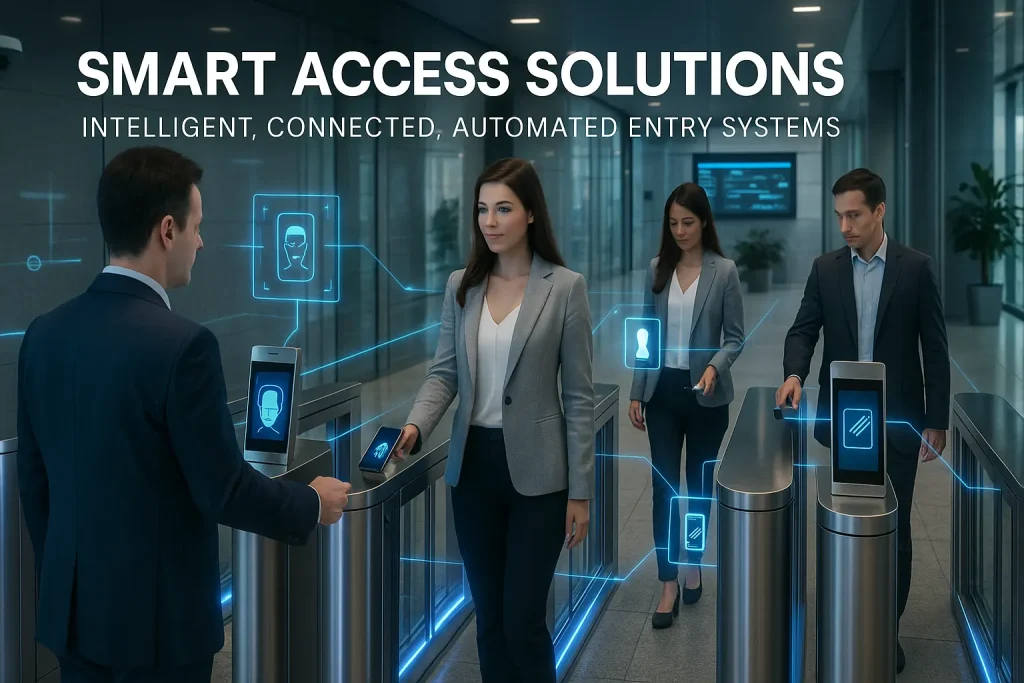
This is the new paradigm of Smart Access Solutions. This isn't just an upgrade; it's a fundamental re-imagining of what a "door" is. It's an ecosystem that is intelligent (it thinks and learns), connected (it communicates), and automated (it acts on its own). It moves access control from a "dumb lock" to the "central nervous system" of the entire smart building.
This guide is a comprehensive, practical exploration of this transformative technology. We'll explore what "smart" truly means, how these connected systems work, the critical benefits they offer, and how you can implement a solution that is truly intelligent.
What Are "Smart Access Solutions"?
Smart access solutions are a connected ecosystem of hardware (like gates and locks) and software (like cloud platforms) that uses data, AI, and automation to manage entry, verify identity, and optimize building flow. This approach moves beyond simple "lock and key" security to create a responsive, data-driven environment.
This system is built on three pillars that separate it from old-fashioned access control:
- It Is Intelligent: A smart system doesn't just follow a static "if-then" rule. It uses sophisticated sensors, biometrics, and even AI to make real-time decisions. It doesn't just know a card is valid; it can verify that the person is valid, or detect that two people are trying to enter with one card.
- It Is Connected: This is the "Internet of Things (IoT)" for your building. Every door, every reader, and every
intelligent access-gateis a "node" on the network. They all communicate with each other and with a central platform, allowing for unified management, real-time data, and integrations with other building systems. - It Is Automated: A smart system automates workflows that used to be manual and error-prone. It can pre-register a visitor, send them a temporary mobile credential, notify their host upon arrival, and log their exit, all with zero human intervention from your front desk.
How Do Smart Access Solutions Work? The Core Components
Smart solutions work by integrating (1) intelligent hardware like sensors and gates, (2) advanced credentials like mobile phones or biometrics, and (3) a central "brain," often a cloud platform. This "brain" collects data from the hardware, makes intelligent decisions, and sends commands back to the hardware to grant or deny access.
Let's break down this powerful ecosystem.
Component 1: The "Brain" (The Central Management Platform)
This is the most critical part. In the old days, this was a single, locked-down server in an IT closet. In a smart solution, this "brain" is almost always in the cloud. A cloud-based access-control-gate platform is the heart of the modern system.
- What it does: It stores all user identities, permissions (who can go where, and when), and rules. It collects real-time event logs from every door and gate.
- Why it's "Smart": Because it's in the cloud, it can be managed from anywhere in the world via a web browser or app. It can be updated instantly with new security patches and features, and it can easily connect to other cloud-based apps.
Component 2: The "Enforcers" (Intelligent Hardware)
This is the physical hardware that enforces the "brain's" decisions. This isn't just a simple electric strike on a door.
- Smart Locks: Wi-Fi or Bluetooth-enabled locks on individual offices or server rooms.
- Video Intercoms: Smart intercoms that can call an employee's mobile phone, allowing them to see and grant access to a visitor remotely.
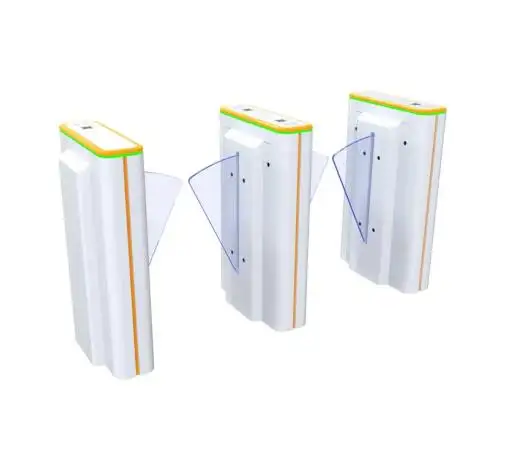
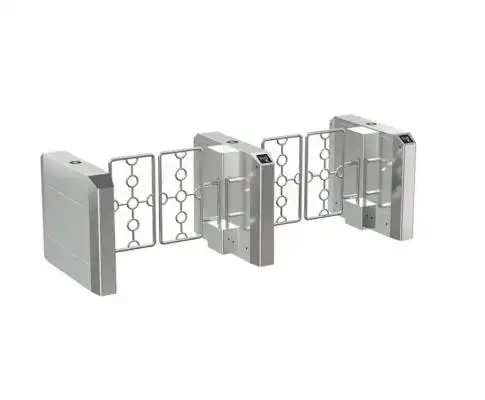
- Intelligent Access Gates: This is the high-throughput solution for lobbies. An
intelligent access-gateis a modern speed gate or turnstile that is packed with its own sensors to detect tailgating, manage direction, and communicate its status to the cloud.
Component 3: The "Keys" (Modern Credentials)
This is the end of the "dumb" plastic card. Smart solutions use smart credentials that are more secure, more convenient, and multi-functional.
- Mobile Credentials: Your smartphone becomes your key. This uses Bluetooth (for a "hands-free" experience where your phone stays in your pocket) or NFC (to "tap" your phone like a card).
- Biometrics: The ultimate in identity verification. This includes facial recognition (for a truly frictionless, walk-through experience), fingerprint scanners, or iris readers.
- Encrypted Smart Cards: For facilities that still prefer a physical card, these are high-frequency (13.56 MHz) "smart" cards with high-level encryption. They can't be cloned for $20 like old prox cards.
"Dumb" Access vs. "Smart" Access: What's the Real Difference?
"Dumb" access is reactive and static; it only knows if a key is valid. "Smart" access is predictive, adaptive, and data-driven. It knows who, when, where, and why and can change rules, grant temporary access, or trigger alarms based on real-time data from multiple sources.
The difference is night and day. As someone who has replaced decades-old systems, I can tell you the leap is from a simple "lock" to a full-fledged "management platform."
Here is a clear comparison:
| Feature | "Dumb" Access Control (e.g., Prox Card) | "Smart" Access Solutions |
| "Brain" | On-premise server or panel with a static "if-then" list. | Cloud-based access-control-gate platform with AI and analytics. |
| Credentials | Unencrypted 125 kHz card (easily cloned). | Mobile (BLE/NFC), Biometrics, Encrypted Smart Cards. |
| Hardware | A simple electric lock. | An intelligent access-gate with sensors, smart locks, video. |
| Management | Manual. Must be on-site or use a clunky VPN. | Remote, global management via web/app. |
| Data | A basic, siloed "event log" (who/when). | Rich analytics (live occupancy, flow patterns, predictive insights). |
| Updates** | Manual, requires a technician on-site. | Automatic, over-the-air (OTA) cloud updates for security. |
| Integration | Closed, proprietary. Does not talk to other systems. | Open API. Integrates with elevators, HVAC, video, HR systems. |
What Are the Key Benefits of a Smart Access Solution?
The key benefits are enhanced security (through biometrics and AI), unparalleled convenience for users ("frictionless" access), deep operational insights from data analytics, and massive long-term cost savings through automation and remote management.
Unprecedented Security (Beyond the Key)
A smart system is fundamentally more secure because it's proactive, not just reactive.
- True Identity Verification: It moves from "what you have" (a card) to "who you are" (a biometric). This single shift eliminates the risk of lost, stolen, or shared credentials.
- Real-time Threat Response: The "connected" nature means you can lock down an entire campus, or just one door, from your mobile phone in seconds. AI can also detect an
intelligent-access-gatebeing forced open, or someone loitering in a restricted area, and automatically trigger an alarm and send a video snapshot to security. - Always Up-to-Date: The
cloud-based access-control-gateplatform receives automatic security patches, just like your smartphone. Your building is never left vulnerable to the latest discovered exploits.
A "Frictionless" User Experience
This is the "character" of a smart solution. It's designed around the user, not the lock.
- The "Hands-Free" Journey: Imagine walking from your car to your desk without ever touching a key or card. Your phone (using Bluetooth) or your face (using biometrics) is your key. The parking garage, the lobby
intelligent-access-gate, the elevator, and your office door all unlock seamlessly as you approach. - Automated Visitor Management: This is a huge pain point intelligent access gate platform is a goldmine. You can see real-time, 100% accurate occupancy data for every floor or the entire building. This is invaluable for emergency mustering (who is actually in the building?) and for optimizing energy use (why heat a floor that only has 10 people on it?).
Predictive Flow Management
The system learns your building's rhythm. It knows that 85% of your employees arrive between 8:45 AM and 9:15 AM. It can use this data to automatically place more elevators in the lobby at 8:45 AM, before the rush even starts, dramatically improving flow.
Predictive Maintenance: The intelligent-access-gate itself is smart. It counts its own cycles and monitors its own motor torque. It can automatically send an alert to a technician before a part fails, (e.g., "My motor torque is 15% above normal; I need service"). This ends costly, unexpected downtime.
Massive Cost Savings & Scalability
This is a long-term benefit that often outweighs the initial investment.
- Reduced Staffing Costs: As mentioned, you automate the low-skill, repetitive tasks, allowing you to re-allocate expensive guard staff to high-value roles. This is a massive, ongoing operational saving.
- Zero Administration Overhead: With a
cloud-based access-control-gate, managing credentials is a breeze. Onboarding a new employee? They can get a mobile credential sent to their phone before their first day. An employee leaves? You can revoke their access from your phone in two seconds, from anywhere in theworld. There's no need to collect physical cards or re-key locks. - Infinitely Scalable: A cloud platform is almost infinitely scalable. You can add a new door, a new gate, or an entire new building to your system with a few clicks. With old on-premise systems, this would require new servers, new wiring, and massive project costs.
How Do These "Intelligent Integrations" Actually Work?
Smart access solutions get their "intelligence" from their ability to "talk" to other building systems via APIs (Application Programming Interfaces). This connectivity is what turns siloed systems into a single, automated ecosystem.
How do smart access systems automate visitor management?
A smart access system integrates directly with your Visitor Management System (VMS). When a host pre-registers a guest, the VMS automatically "talks" to the access control "brain" and provisions a temporary credential (like a QR code), valid only for that guest, at that time, and only for the specific areas they need (e.g., lobby and 3rd-floor meeting room).
This automated workflow is a game-changer for a professional lobby:
- Before Visit: A host invites a visitor via Outlook/Google Calendar. The VMS "sees" this, and a visitor profile is automatically created.
- Morning of Visit: The visitor automatically receives an email with their QR code, directions, and a welcome message.
- Arrival: The visitor skips the security line, scans their QR code at the
intelligent-access-gate, and is granted access. - Notification: The moment they scan, the system's "brain" pings the VMS, which in turn pings the host employee via Slack or Teams: "Your 10:00 AM guest, Jane Doe, has just arrived in the lobby."
- After Visit: At the end of their scheduled time, the QR code automatically expires and is useless.
This entire process is automated, secure, professional, and gathers a perfect log of every visitor.
How do smart gates integrate with elevator systems?
This is a high-level integration called "Elevator Destination Dispatch." The intelligent-access-gate "talks" to the elevator control system. When you badge at the lobby gate, the system identifies you, knows your "home floor" is the 14th floor, and automatically calls an elevator for you, assigning it to a specific car.
The user experience is seamless:
- An employee taps their card at the lobby gate.
- The gate's screen (or a separate screen) flashes: "Please proceed to Elevator C."
- The employee walks to Elevator C, which is already waiting. When they get in, the button for the 14th floor is already illuminated. They never have to touch a button.
This integration dramatically improves elevator efficiency, reduces wait times, and groups people going to the same floors, saving energy and time.
How do they integrate with video surveillance (VMS)?
This is a critical security integration. A smart access "brain" is linked to the building's Video Management System (VMS). This "bookmarks" access events on the video timeline. If an incident occurs, you can see exactly what happened.
- "Dumb" System: A guard sees an "Access Denied" alert. They then have to manually rewind video footage from four different cameras to try and find the event.
- "Smart" System: A guard sees an "Access Denied" alert at the
intelligent-access-gate. They click the alert, and the system instantly pulls up a 10-second video clip from the camera pointed at that gate, showing the person who tried to badge. This is "actionable data," not just raw data.
What Are the Core Technologies Driving Smart Access?
Smart access solutions are not one single technology. They are an ecosystem of innovations that have matured and converged.
The Cloud (The "Connected" Pillar)
This is the single biggest enabler. A cloud-based access-control-gate platform means your "brain" is no longer a server in a closet; it's a secure, scalable, and globally accessible platform. This is what enables remote management, automatic updates, and easy integration with other cloud apps (like your HR or visitor systems).
Mobile Credentials (The "Convenient" Pillar)
The smartphone is the new key. Using Bluetooth (BLE) for "hands-free" access or NFC to "tap" your phone, mobile credentials have made access far more convenient and secure. A mobile credential is an encrypted app, protected by your phone's own biometrics (Face ID, fingerprint), making it far more secure than a plastic card.
Biometrics (The "Identity" Pillar)
This is the ultimate in security, as it verifies "who you are," not "what you have." Modern, AI-powered facial recognition, in particular, has become a key part of smart access. When integrated into an intelligent-access-gate, it allows for a completely "frictionless" experience: users are identified as they approach and walk through without ever stopping.
AI and Machine Learning (The "Intelligent" Pillar)
AI is the "secret sauce" that makes the system truly "smart."
- In Biometrics: AI powers the facial recognition algorithms, allowing them to be accurate even with masks, hats, or bad lighting.
- In Sensors: AI-powered "sensor fusion" in an
intelligent-access-gatecan combine data from IR sensors and a video camera. This allows it to see the difference between a person with a suitcase (allowed) and two people tailgating (alarm), all but eliminating false alarms. - In Analytics: AI analyzes flow patterns to predict bottlenecks before they happen, or analyzes user behavior to predict a potential security threat (e.g., "This user's card has been used at 3 AM at the server room, which is a 99% deviation from their normal behavior. Flag for review.").
How Do You Plan and Implement a Smart Access Solution?
Implementing a smart system is a strategic project that involves IT, Security, HR, and Facilities. It's not just a hardware swap.
Step 1: Define Your "Why" (The Use Case)
What problem are you actually trying to solve? Don't buy tech for tech's sake.
- Problem: "Our 9 AM lobby line is a disaster." Solution: Your priority is a
intelligent-access-gatesystem with a focus on high throughput. - Problem: "We have high employee turnover and are wasting a fortune on re-keying." Solution: Your priority is a
cloud-based access-control-gatewith mobile credentials to automate onboarding/offboarding. - Problem: "Our data center is our 'crown jewel' and needs higher security." Solution: Your priority is a multi-factor system (e.g., card + biometric) for that specific area.
Step 2: Audit Your Existing Infrastructure (The "Bones")
A smart system is data-heavy. Your building must have the "bones" to support it.
- Network: Do you have a stable, high-speed network? Do you have Wi-Fi or hardwired (PoE) drops near your doors?
- Existing Hardware: Are your existing door locks "dumb" electric strikes, or are they "smart"-ready? Can you retrofit, or do you need to replace them?
- My "Retrofit" Anecdote: I've seen a client spend a fortune on a cutting-edge cloud "brain," only to find their 30-year-old door wiring was so degraded it couldn't support the new IP readers. They had to re-wire the entire building, doubling their project cost. Audit your "bones" first.
Step 3: Prioritize an "Open" Platform (The API)
This is the single most important technical decision you will make.
- A "Closed" System: The vendor locks you into their proprietary hardware and software. You can only use their readers, their gates. You are trapped.
- An "Open" System: The vendor builds on an "open API." This means they are designed to integrate with other best-in-class products. You can use their "brain" with a different company's smart lock and another company's
intelligent-access-gate.
Always choose an open platform. It future-proofs your investment and prevents you from being held hostage by a single vendor.
Step 4: Address the Big Question: Security & Data Privacy
A smart system collects a lot of data. You must address the privacy concerns of your employees from day one. This is an HR and legal conversation.
- Transparency is Key: You must have a clear, written policy.
- What data is being collected?
- Where is it being stored (e.t., secure, encrypted cloud)?
- Who can access it?
- When is it deleted (e.g., when an employee leaves)? This is especially critical for biometric data, which is protected by laws like GDPR in Europe and BIPA in Illinois.
What Is the Future of Smart Access?
The future of smart access is "frictionless," predictive, and completely personalized. The "door" as we know it will disappear, replaced by an "intelligent perimeter" that authenticates you without you ever breaking stride.
- Frictionless, Invisible Access: New technologies like Ultra-Wideband (UWB)—the same tech in Apple's AirTags—will allow for hyper-accurate, long-range presence detection. Your phone (or a wearable) will securely authenticate you as you approach a door, and it will just open. The entire "tap" or "scan" interaction will be gone.
- The Personalized Building: The smart access system will be the "key" to a personalized building experience. When you're authenticated at the
intelligent-access-gate, the system will trigger a cascade of personal preferences: your elevator will be called, your hot-desk will be logged, and the lights and temperature at that desk will adjust to your pre-set preferences. - Predictive AI Security: The system will move from "reactive" (alarming on a breach) to "predictive." The AI will analyze flow, video, and user data to say, "The behavior of these three individuals in the lobby matches a known pattern for a coordinated intrusion attempt. Alerting security before they've even tried a door."
The Final Verdict: From a "Dumb Lock" to a "Smart Brain"
Smart access solutions represent a fundamental shift in how we secure and manage our buildings. They are the convergence of cloud computing, mobile technology, AI, and advanced hardware.
This is no longer about just "locking a door." It's about creating a responsive, intelligent, and connected environment. An intelligent-access-gate is no longer just a barrier; it's a data-gathering, flow-managing, and automated "welcome" for your employees. By moving from a "dumb" and "reactive" past to a "smart" and "predictive" future, these solutions are not just a security upgrade; they are a core business intelligence tool that enhances efficiency, experience, and safety.
