


What You Can Expect From A Speed Gate Turnstile Supplier With RFID in 2026?
2026-02-19


Speed Gate Turnstile Supplier With RFID is no longer just about "opening a gate." , in 2026 the real question is deeper: what RFID capability are you actually buying? RFID is not "just a card." It is an identification technology, a data handshake, and a rules engine trigger that must work smoothly with gates, sensors, and your access platform. From IRONMAN Intelligent's manufacturing perspective, a commercial speed gate becomes truly valuable when RFID is implemented as a stable, fast, and expandable access layer—not a fragile add-on.
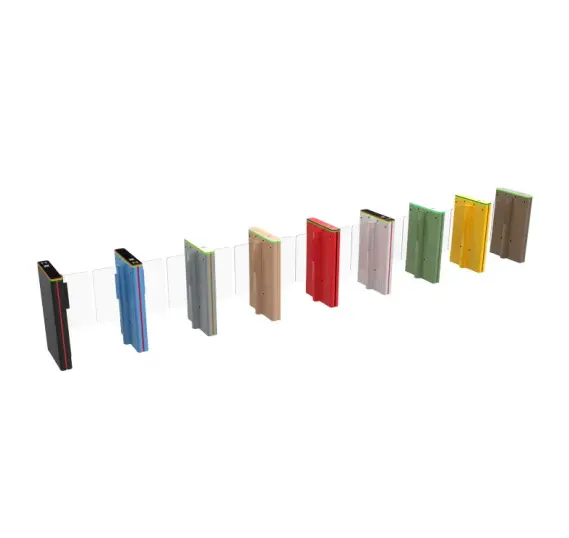
Below is a practical, beginner-friendly guide to what you should expect from a Speed Gate Turnstile Supplier With RFID when RFID performance and system integration are your priority.
1) RFID in 2026: It's a Full Access Workflow, Not a Reader on a Cabinet
Many projects start with a simple request: "We need RFID." But RFID success depends on the full workflow around it. A good gate system should support a clean sequence:
user presents credential → 2) reader captures ID → 3) controller verifies permission → 4) gate opens → 5) sensors confirm passage → 6) event is recorded.
If any step is slow or inconsistent, you get queues, tailgating risk, and user complaints. That is why a professional Speed Gate Turnstile Supplier With RFID should focus on RFID-to-gate timing, not only hardware appearance.
From IRONMAN Intelligent's view, "RFID-ready" means the gate platform is engineered to keep verification fast, keep barrier response smooth, and keep lane logic stable during peak traffic.
2) What "Good RFID Performance" Looks Like at the Gate Lane
RFID is widely used because it is fast and familiar. But in real entrances, the goal is not just reading a card. The goal is keeping movement continuous and controlled.
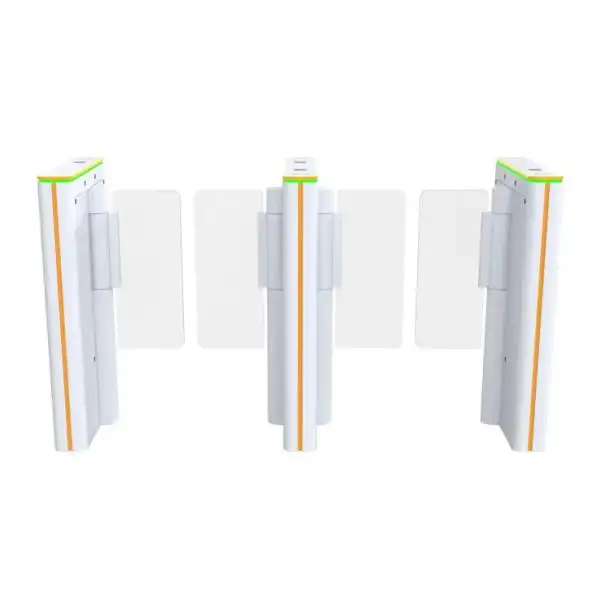
A commercial speed gate designed for modern sites should support high throughput while still enforcing rules. For example, the IM.LB.08 Speed Gate is built for busy commercial environments and supports a throughput target of up to 50 people per minute when the overall system is configured correctly. This matters because RFID often becomes the bottleneck if the lane is not tuned for real usage.
In practice, you should expect RFID-focused improvements like:
✓ Fast, predictable open/close response so users do not hesitate
✓ Clear entry permission feedback so people know when to walk
✓ Low false-stop behavior so queues do not form at peak time
A supplier that understands RFID will talk about "flow behavior," not just "RFID supported."
3) RFID + Sensors: The Real Security Is in Anti-Tailgating Logic
RFID verifies a credential. It does not physically prevent two people from walking together. That is why sensors and lane logic are essential.
A reliable speed gate uses precision detection sensors to make sure the lane behavior matches the RFID authorization event. In 2026, buyers should expect anti-tailgating to be treated as part of the RFID solution:
• The system should allow one authorized person per verification
• It should detect a second body entering without authorization
• It should trigger alarms or deny passage based on your policy
This is where a capable Speed Gate Turnstile Supplier With RFID adds real value: they help you configure the "RFID event" and the "sensor event" to behave as one workflow, not two disconnected features.
You also want practical safety performance:
✓ Anti-pinch / obstruction protection to reduce injury risk
✓ Automatic stop or retract behavior when the lane is blocked
Security that annoys users fails in daily operation. RFID + sensors should feel strict and smooth.
4) RFID Integration: Expect Standard Interfaces and Clean System Mapping
In most projects, RFID readers and access control platforms already exist. Your speed gate must integrate cleanly. A professional supplier should support common control and communication options so your system can trigger the gate reliably.
The IM.LB.08 platform supports typical integration interfaces such as RS485, TCP/IP, Wiegand, and dry contact, which helps align with many access controllers and visitor systems. In practical terms, this reduces integration risk and avoids "custom-only" wiring that is hard to maintain later.
What you should ask a Speed Gate Turnstile Supplier With RFID to provide is not just a wiring diagram, but a clear mapping:
✓ which signal opens the lane
✓ how long the open signal should remain
✓ how the system confirms passage completion
✓ how alarms and forced entry events are output
This is how RFID becomes predictable across shifts, contractors, and future expansions.
5) RFID Experience Depends on Hardware: Cabinet Size, Lane Width, and Materials
RFID projects often fail for simple physical reasons: the entrance is too tight, users queue too close, or the lane layout creates confusion. That is why cabinet design and lane width matter.
For tight commercial lobbies, the IM.LB.08 concept uses an ultra-short cabinet and compact dimensions of 600 × 120 × 980 mm (customization accepted). Passage widths can be customized up to ≤ 1000 mm, which supports accessibility planning and reduces shoulder-to-shoulder crowding that can increase tailgating attempts.
Durability also affects RFID consistency. If the cabinet vibrates, shifts, or wears prematurely, sensors drift and alignment issues appear. That is why the housing structure matters. This platform uses 1.5 mm thickness SGCC, supporting rigidity and long-term stability.
A good supplier translates those specs into operational benefits:
• Stable lane geometry → more consistent sensor behavior
• Cleaner user spacing → fewer accidental "double entries"
• Robust housing → lower maintenance interruptions
6) Reliability, Emergency Mode, and Long-Term ROI Are Part of RFID Procurement
RFID access lanes are used every day. So you should evaluate lifecycle reliability, not just initial installation.
For long-term usage planning, commercial speed gate platforms may be designed for high cycle life; the IM.LB.08 target service life is ≥ 5 million cycles, supporting long-term ROI in busy environments. In addition, emergency behavior must be predictable. In power failures or alarm conditions, a well-designed system should switch to a safe mode that supports evacuation flow.
RFID systems also benefit from simple routine maintenance. A practical supplier will recommend periodic checks (commonly every few months) focused on:
• Sensor area cleanliness
• Wiring and signal stability
• Mechanical movement smoothness
• Reader and controller communication health
This keeps RFID access consistent and reduces "random failures" that frustrate users.
CTA (Call-to-Action)
Looking for a Speed Gate Turnstile Supplier With RFID that integrates cleanly with your system? Send IRONMAN Intelligent your RFID credential details, controller interface preference (Wiegand/TCP/IP), passage width need (≤ 1000 mm), and peak-time traffic goal (≤ 50 people/min per lane). We will suggest an IM.LB.08 configuration and provide integration notes plus a production-ready quotation.
