


Sydney High-Speed Pedestrian Turnstile Gates
2025-10-27


Sydney. Australia's iconic harbour city is a vibrant, global metropolis – a major financial hub, a center for innovation, and a magnet for international business and tourism. Its dynamic Central Business District (CBD) and surrounding commercial precincts like Barangaroo, North Sydney, and Parramatta are home to world-class architecture, housing thousands of workers in high-density, high-value environments. Managing the secure and efficient movement of people within these prestigious and often complex buildings is a critical challenge, demanding state-of-the-art solutions.
The traditional methods of controlling building access simply cannot cope with the scale, speed, and security expectations of modern Sydney. Manual sign-ins cause frustrating delays, basic locks offer minimal protection against determined intrusion or casual tailgating, and older, purely functional barriers detract from the sophisticated aesthetics expected in prime properties.
This imperative for advanced solutions brings the Sydney high-speed pedestrian turnstile gate into sharp focus. This represents more than just an automated barrier; it's an intelligent access control system specifically engineered and implemented to thrive within Sydney's unique context. It must deliver exceptional throughput to manage CBD density, provide robust security, seamlessly integrate with modern technologies, adhere strictly to New South Wales (NSW) and national regulations (including accessibility and safety), withstand potential coastal environmental factors, and complement the city's high standards of architectural design. This guide provides an expert, comprehensive exploration of these essential systems tailored for the Sydney landscape.
What Defines a "Sydney High-Speed Pedestrian Turnstile Gate"?
A Sydney high-speed pedestrian turnstile gate is an automated access control barrier specifically designed, configured, certified, and installed to meet the distinct demands of Sydney's commercial, institutional, and public facilities. Key characteristics include high throughput capability, robust security features, compliance with NSW building codes (BCA), WHS laws, DDA accessibility standards, integration with prevalent technologies, and often, premium aesthetic finishes suitable for Class-A properties.
While leveraging core technologies found in the broader Australia speed gate turnstile access control market and across global Regional Markets, solutions destined for Sydney often require specific emphasis on:
- Extreme Throughput: Engineered to handle the intense peak pedestrian loads common in Sydney CBD high-rises and major transit interchanges.
- Stringent Compliance: Meticulous adherence to the National Construction Code (NCC/BCA) as implemented in NSW, specific Work Health and Safety (WHS) regulations, the Disability Discrimination Act (DDA) via AS 1428, and the federal Privacy Act.
- Aesthetic Integration: High importance placed on design quality, premium materials (like 316 stainless steel near harbour areas), and seamless integration into prestigious lobby environments.
- Technological Sophistication: Strong expectation for integration with modern credentials (mobile, secure RFID), cloud-based access control platforms, visitor management systems, and potentially smart building technologies like elevator destination dispatch.
- Local Expertise & Support: Reliance on experienced providers with a strong Sydney presence for compliant installation and responsive maintenance.
It signifies a solution where performance, compliance, and design converge to meet the specific needs of Australia's largest city.
Why Are High-Speed Gates Essential for Sydney Buildings?
High-speed gates are essential in Sydney due to the extreme pedestrian density in the CBD requiring high throughput, the critical need for robust security in a major financial and commercial hub, mandatory compliance with complex NSW building and safety regulations, the operational efficiencies demanded by high property/labour costs, and the expectation of sophisticated, modern amenities in premier properties.
Sydney's unique pressures make these systems indispensable:
- Managing Unrivaled Density: Buildings in the Sydney CBD and surrounding hubs often accommodate thousands. High-speed gates (capable of 30-40+ PPM per lane) are the only practical way to manage morning arrivals, lunch rushes, and evening departures without crippling congestion. Manual systems would be completely overwhelmed. This need for speed might even exceed that seen in other major Australian cities requiring a Melbourne smart speed gate building entrance.
- Securing High-Value Assets: As a global financial centre and corporate headquarters location, Sydney buildings house significant assets and sensitive data. Robust physical access control, particularly reliable anti-tailgating provided by speed gates, is a fundamental security requirement.
- Navigating Complex NSW Compliance: Adherence to the NCC/BCA (especially fire egress and accessibility sections enforced by NSW authorities), the NSW WHS Act, and DDA is non-negotiable. Speed gates offer a controllable, auditable method for achieving compliance when correctly specified and installed.
- Operational Efficiency & ROI: In a high-cost environment like Sydney, automating lobby access optimizes staffing (security/concierge), reduces queues (improving tenant/employee productivity), and enhances overall building operational efficiency, delivering a tangible return on investment.
- Maintaining a World-Class Image: Sydney's skyline is globally recognized. The entrances to its landmark buildings must reflect this status. Sleek, modern, reliable high-speed gates contribute significantly to a building's prestige and tenant appeal, far surpassing outdated alternatives.
How Does a Sydney Speed Gate System Typically Operate?
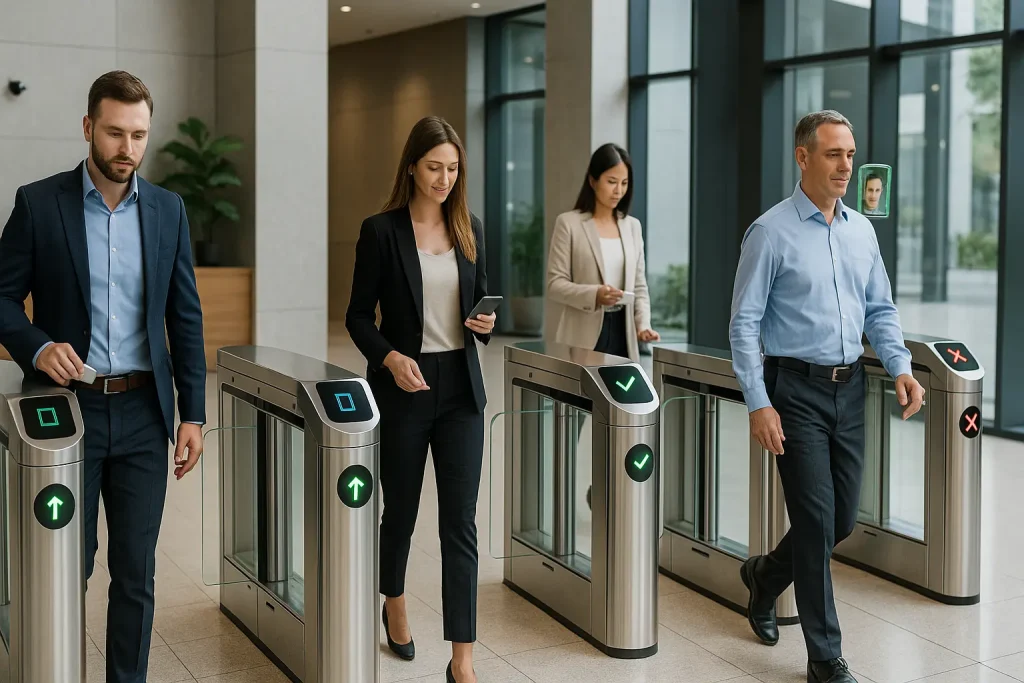
In a typical Sydney office or commercial building, a high-speed gate system validates credentials – commonly secure RFID cards or mobile apps – via integrated readers connected to a central Access Control System (often cloud-based, hosted locally). If authorized, brushless DC motors rapidly open premium barriers (like glass swings or flaps). Advanced sensors monitor passage, ensure safety and single entry (anti-tailgating), and comply with Australian standards before closing securely.
The process prioritizes speed, security, and seamless integration:
- Credential Presentation: User presents credential – 13.56 MHz secure RFID (MIFARE DESFire, iCLASS) is common, with rapid growth in mobile credentials using NFC tap or BLE hands-free via smartphone apps.
- Secure Validation: Reader communicates securely (OSDP strongly recommended over legacy Wiegand) with the Access Control System (ACS). Cloud-based platforms hosted within Australia (addressing data sovereignty preferences common in the Oceania entrance speed gate solution market) are increasingly popular for scalability and remote management.
- Permission Check & Privacy: ACS verifies permissions. Data logging must comply with the Australian Privacy Act 1988 and APPs. Use of biometrics requires stringent justification and compliance procedures.
- Integrated Command: If authorized, ACS sends encrypted "open" command. In many Sydney high-rises, this simultaneously triggers Elevator Destination Dispatch, directing the user to a specific elevator car.
- Gate Actuation: High-quality, quiet brushless DC motors activate the barriers (often elegant swing barriers in premium CBD lobbies, or fast flaps where throughput is extreme). Clear Green/Red LED indicators provide intuitive guidance.
- Passage Monitoring (Compliant): High-density sensor arrays track passage, robustly detect tailgating attempts, verify direction, and incorporate safety features compliant with Australian WHS requirements and relevant AS/NZS standards. Sensor logic is often tuned for busy corporate environments.
- Secure Closure & Logging: Gate closes promptly once safe passage is complete. The event is securely logged in the ACS according to configured privacy and retention policies.
My Experience: "Integrating speed gates with destination dispatch elevators is almost a standard requirement for new premium-grade towers in the Sydney CBD now. The efficiency gains are massive during peak hours. Tenants badge at the gate downstairs, look up at the integrated screen that says 'Lift C', and walk straight to a waiting elevator programmed for their floor. It makes a huge difference to the tenant experience and the building's overall vertical transportation efficiency. Getting that integration right requires close collaboration between the security integrator, the elevator contractor, and the gate manufacturer from the early design stages."
Key Technologies Driving Sydney Speed Gate Systems
Sydney's market embraces modern, reliable, and integrated technologies. Key elements include high-performance mechanics, advanced sensor packages (often AI-enhanced), strong support for mobile and secure RFID credentials, robust IP connectivity (often cloud-based), and open APIs for deep smart building integration.
- High-Performance Mechanics: Brushless DC motors for speed, quietness, and longevity (millions of cycles) are standard for quality installations. Robust construction using high-grade stainless steel (316L often recommended near the harbour for corrosion resistance) is crucial.
- Advanced Sensors & AI: High-density IR sensor arrays are essential for reliable anti-tailgating in busy lobbies. AI algorithms are increasingly used to improve accuracy, reduce false alarms (e.g., distinguishing trolleys or briefcases), and potentially enable predictive maintenance analytics.
- Mobile & Secure RFID: Dominant credential technologies. Readers must offer excellent performance with both BLE/NFC mobile access and encrypted 13.56 MHz smart cards. Legacy 125 kHz Prox is strongly discouraged for security reasons.
- Cloud Access Control (ACaaS): Very popular for managing large or multi-site portfolios common among Sydney property owners and tenants, offering scalability, remote management, and easier integration (often hosted within Australia).
- Open Standards & APIs: OSDP for secure reader communication is best practice. Open APIs are critical for integrating the access control system (and therefore the gates) with VMS, elevator dispatch, BMS, and tenant experience platforms prevalent in Sydney's smart buildings.
Popular Gate Types for Sydney Building Entrances
Swing barrier speed gates are highly favoured in Sydney's corporate environment for their elegant aesthetics, quiet operation, and suitability for DDA-compliant accessible lanes. Flap barriers are deployed where maximizing passenger throughput is the absolute priority. Optical turnstiles serve niche roles in prestigious, fully staffed lobbies.
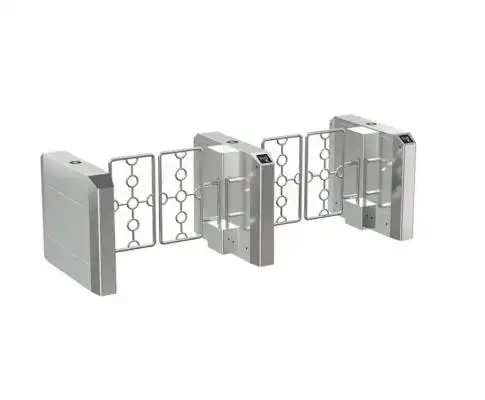
- Swing Barriers (The CBD Standard): Their sophisticated appearance, smooth motion, and ability to incorporate premium materials make them the go-to choice for many Class-A office towers and corporate headquarters in Sydney CBD, Barangaroo, North Sydney etc. They blend security with a welcoming feel and handle accessibility requirements seamlessly.
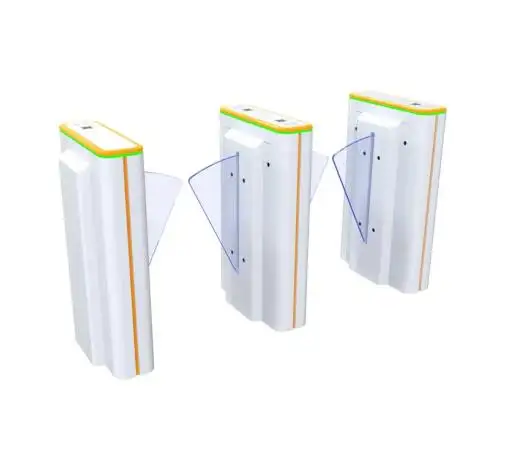
- Flap Barriers (The Throughput Choice): Ideal for managing extreme peak loads at major transit interchange connection points (e.g., Wynyard Walk, Parramatta Square) or within very large corporate campuses where processing speed is the overriding factor. Their modern look also suits tech-focused environments. Many high-volume Sydney high-speed pedestrian turnstile gate applications utilize flaps.
- Optical Turnstiles (The Open Look): Used selectively in iconic building lobbies or exclusive corporate floors where maintaining an unobstructed view and a highly prestigious feel is paramount, and where dedicated concierge or security staff provide constant visual supervision. Explore the concept via resources on Optical turnstiles.
Enhancing Security: A Sydney Perspective
A Sydney high-speed pedestrian turnstile gate significantly bolsters security by providing a reliable physical barrier against unauthorized access, actively preventing tailgating (critical in high-density CBD environments), ensuring consistent enforcement of complex access rules common in multi-tenant towers, and generating essential, privacy-compliant audit logs.
- Physical Control in Crowded Spaces: Gates create an essential automated checkpoint, managing flow and preventing casual intrusion in lobbies that see thousands of daily movements.
- Reliable Tailgating Prevention: Advanced sensors are crucial for detecting unauthorized followers, a major vulnerability in busy environments where human guards can be easily overwhelmed or distracted. This is a core security function.
- Granular Access Enforcement: Ensures tenants, employees, contractors, and visitors only access authorized floors and areas based on permissions managed centrally by the ACS, vital for security in multi-tenant high-rises.
- Privacy-Compliant Audit Trails: Provides secure, timestamped logs crucial for security investigations and demonstrating compliance with regulations or corporate governance policies, all while adhering to the Australian Privacy Act.
Boosting Efficiency: Streamlining Flow in Sydney's Hubs
High-speed gates are indispensable for optimizing pedestrian flow and operational efficiency in Sydney's demanding commercial real estate market. They maximize throughput to eliminate lobby queues during peak hours, allow for smarter allocation of valuable lobby staff, support the dynamic nature of modern work, and contribute to a seamless, premium building experience.
- Conquering CBD Congestion: Essential for preventing bottlenecks during the concentrated morning and evening commutes in dense areas like the CBD, ensuring tenants and employees can access their workspaces quickly and efficiently.
- Optimizing Staffing ROI: Automating routine credential checks allows concierge, reception, or security personnel to focus on high-value interactions – guest assistance, security monitoring, managing deliveries, enhancing the tenant experience – which is critical in Sydney's high-cost labor market.
- Supporting Flexibility: Facilitates smooth access for employees with varied schedules and enables efficient, automated visitor management, aligning with modern, agile work practices common in Sydney businesses.
- Premium Building Experience: A fast, reliable, aesthetically pleasing entrance system is a key component of the overall tenant experience, contributing to tenant attraction and retention in Sydney's competitive property landscape. This efficiency is expected, much like in other global hubs featuring systems like a New York speed gate turnstile system.
Navigating Sydney & NSW Compliance: BCA, WHS, DDA, Privacy
Compliance is non-negotiable and requires careful attention to the National Construction Code (BCA) as adopted in NSW, state-specific Work Health and Safety (WHS) regulations, the federal Disability Discrimination Act (DDA) interpreted via Australian Standards (AS 1428), and the Australian Privacy Act.
NCC/BCA (NSW Implementation)
- Fire Safety & Egress (Section D): Critical. Gates in required exit paths must reliably fail-safe (open) upon fire alarm activation (integration tested and certified), providing sufficient clear width based on occupancy load calculations under BCA Part D1. Specific interpretations or additional requirements may apply under NSW legislation or by local councils/certifiers.
- Accessibility (Section D3 & AS 1428): Mandatory provision of compliant accessible routes. Requires gates meeting AS 1428.1 standards for width, circulation spaces, controls, and signaling. Access Consultants are typically involved in certifying compliance for Sydney projects. "My Experience: In Sydney, engaging an Access Consultant early is vital. They review the gate specifications and lobby layout against AS 1428 and provide a report needed for the building certification. We once had to relocate a proposed gate bank slightly because the initial position didn't allow for the required maneuvering clearance in front of the DDA gate – catching this early saved significant rework."
Work Health and Safety (WHS) Act (NSW)
- Duty of Care: Requires ensuring the gates are designed, installed, and maintained to be safe for all users. This includes preventing crushing/impact hazards, ensuring electrical safety, providing clear signage, and conducting risk assessments.
Disability Discrimination Act (DDA) 1992
- Equal Access: Underpins the requirement for accessible gate lanes, ensuring non-discriminatory access for people with disabilities.
Privacy Act 1988 & APPs
- Data Handling: Governs the collection and handling of personal information (including access logs). Requires transparency, data security, purpose limitation, and adherence to the Australian Privacy Principles. Biometric data collection requires heightened scrutiny, explicit consent, and Privacy Impact Assessments (PIAs).
Installation, Maintenance & Local Support in Sydney
Successful deployment in Sydney demands installation by licensed, experienced technicians familiar with NSW codes and CBD logistics. Given the critical nature of lobby access, robust, responsive local maintenance and support capabilities are essential for ensuring maximum uptime and system longevity.
- Qualified Local Installers: Must hold relevant NSW electrical/cabling licenses and certifications. Experience working in high-rise CBD environments (managing deliveries, site access, working hours) is crucial. Familiarity with integrating systems according to BCA/WHS/DDA is vital.
- CBD Logistics: Installing large gates in occupied CBD towers often requires careful planning for after-hours work, freight lift coordination, and potentially temporary pedestrian management.
- Environmental Factors: While generally mild, coastal proximity means specifying corrosion-resistant materials (like 316 stainless steel) is often wise for longevity, especially for entrances exposed to harbour breezes.
- The Critical Need for Sydney Support: My Strongest Advice: For any major Sydney installation, prioritize vendors with a dedicated, well-resourced service team based in Sydney. Relying on support from Melbourne, Brisbane, or overseas is often inadequate when a critical CBD lobby gate fails at 8:30 AM. Fast response times (e.g., within 2-4 hours) and local spare parts inventory are non-negotiable for business continuity.
Modular speed gate designcan greatly speed up repairs if the local team is equipped with modules.
Future Trends: AI, Frictionless Access, Sustainability in Sydney
The future for Sydney high-speed pedestrian turnstile gate solutions involves deeper AI integration for optimizing flow and security, a continued push towards frictionless mobile and potentially biometric access (within privacy frameworks), greater emphasis on sustainability (aligning with Green Star ratings), and seamless integration into holistic smart building platforms.
- AI for Smart Operations: AI enhancing sensor accuracy, enabling predictive maintenance, and providing sophisticated analytics on lobby usage patterns to optimize building services and tenant experience.
- Frictionless & Mobile Dominance: Continued growth of BLE/UWB mobile credentials for seamless entry. Facial recognition adoption will likely proceed cautiously, requiring strong privacy safeguards and opt-in models, potentially slower than in markets like Singapore.
- Sustainability (Green Star): Increasing demand for gates contributing to Green Star building ratings through low energy consumption, use of sustainable/recycled materials, and designs supporting longevity and repairability.
- Holistic Smart Building Integration: Gates becoming central data points and actuators within integrated platforms managing security, energy, elevators, visitor experiences, and space utilization across Sydney's sophisticated commercial properties.
The Final Verdict: Intelligent Gateways for Australia's Global City
The Sydney high-speed pedestrian turnstile gate is a critical infrastructure component for managing secure and efficient access within Australia's premier global city. These intelligent systems are specifically tailored to meet the intense demands of Sydney's high-density commercial environment, navigating its complex regulatory landscape (BCA/WHS/DDA/Privacy), embracing cutting-edge technology, and complementing its world-class architecture.
By prioritizing compliance, focusing on seamless integration (especially with mobile, cloud, and smart building tech), demanding high-quality engineering and reliability, and ensuring robust local support, Sydney facilities can implement speed gate solutions that deliver exceptional performance and lasting value. These intelligent gateways are essential for maintaining security, optimizing flow, and enhancing the user experience in the fast-paced, sophisticated heart of Sydney, representing a key aspect of the broader Australia speed gate turnstile access control market.
