


Vietnam High-Speed Pedestrian Turnstile Gates
2025-10-27


Vietnam stands today as one of Southeast Asia's most dynamic and rapidly evolving nations. Fueled by strong economic growth, significant foreign direct investment, and ambitious infrastructure projects, its major cities like Ho Chi Minh City (HCMC) and Hanoi are undergoing dramatic transformations. Modern skyscrapers, sprawling industrial parks, state-of-the-art manufacturing facilities, expanding airports, and new urban rail systems are reshaping the landscape, bringing with them a pressing need for advanced solutions to manage the secure and efficient movement of people.
In this context of rapid development and increasing density, traditional methods of controlling access – relying on manual security checks, basic locks, or simple barriers – are quickly becoming inadequate. They struggle to handle the sheer volume of pedestrian traffic, offer limited security against modern threats, lack the efficiency demanded by fast-paced environments, and fail to integrate with the smart technologies being adopted across the country.
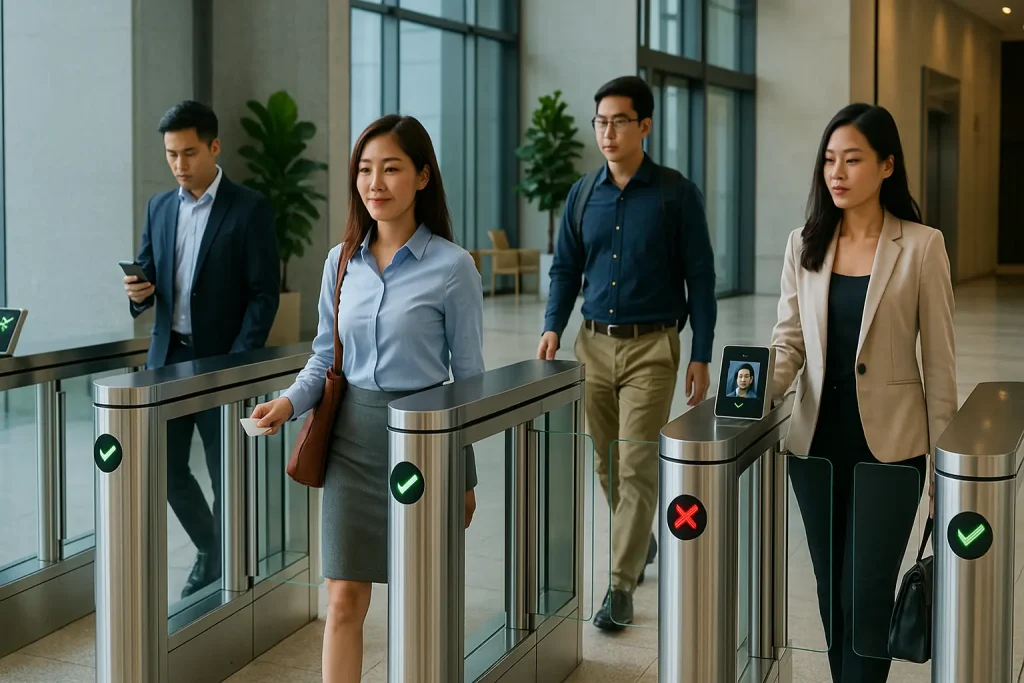
This growing need is being met by the Vietnam high-speed pedestrian turnstile gate. These systems represent a significant leap forward, moving beyond simple barriers to become intelligent, automated solutions for managing flow. Tailored to address Vietnam's unique combination of high-density urban areas, growing security awareness, specific environmental conditions, and evolving technological infrastructure, these gates are becoming essential components of modern Vietnamese facilities. This guide provides an expert, comprehensive exploration of these vital systems within the specific context of Vietnam.
What Is a High-Speed Pedestrian Turnstile Gate?
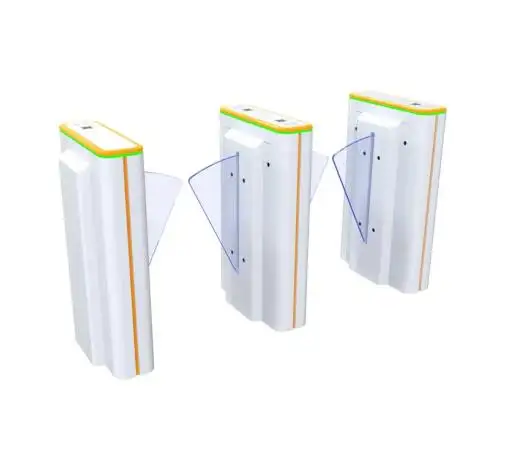
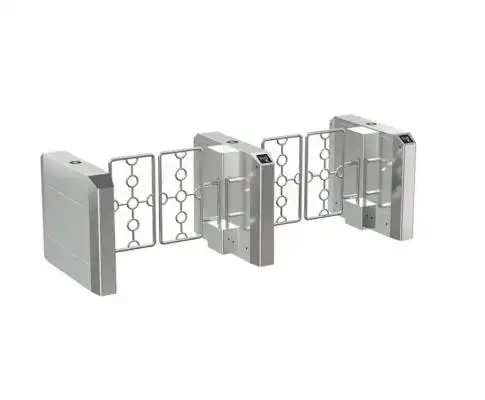
A high-speed pedestrian turnstile gate is an automated physical barrier, typically utilizing motorized flaps or swing arms (often glass), designed to process people through a checkpoint quickly while verifying authorization via an integrated electronic access control system. Its core purpose is to maximize throughput (people per minute) safely and securely.
These systems are engineered for speed and efficiency. Unlike traditional, slower turnstiles (like mechanical tripods), high-speed gates use powerful motors, sophisticated sensors, and rapid credential validation to allow authorized individuals to pass through with minimal delay, often without breaking stride. They aim to complete the entire cycle – credential read, authorization, barrier opening, passage monitoring, barrier closing – in just a few seconds, making them ideal for managing large crowds during peak hours.
Why Specifically "Vietnam High-Speed Pedestrian Turnstile Gate"?
Referring specifically to a Vietnam high-speed pedestrian turnstile gate highlights the need for solutions adapted to Vietnam's unique market conditions. This includes handling high pedestrian density, offering value-driven technology, ensuring reliability in a tropical climate, integrating with local systems, complying with Vietnamese regulations, and being supported by capable local service networks.
While the core technology is global, its successful application in Vietnam requires specific considerations that differ from other Regional Markets. A solution designed for, say, the specific compliance needs of the USA or the high-end aesthetic demands of the UAE might not be the perfect fit without adaptation. Key factors shaping the Vietnamese context include:
- Rapid Urbanization & Density: Managing large crowds efficiently in HCMC and Hanoi is paramount.
- Developing Infrastructure: Systems need robustness against potential power fluctuations and varying network quality.
- Cost Sensitivity vs. Tech Adoption: Balancing the desire for modern technology with often budget-conscious decision-making.
- Tropical Climate: High heat, humidity, and rainy seasons demand environmentally resilient hardware.
- Local Compliance: Adherence to Vietnamese fire safety, building codes, and potentially data privacy regulations.
- Local Support: The critical need for accessible, skilled technical support within Vietnam.
Why Are These Gates Becoming Essential in Vietnam?
High-speed pedestrian turnstile gates are becoming essential in Vietnam due to rapid economic development leading to modern, high-density buildings (offices, factories, residential), increased focus on security and safety in public and private spaces, the expansion of mass transit systems requiring automated fare collection, the drive for operational efficiency, and the limitations of traditional manual security methods.
The drivers behind adoption in Vietnam are strong and multifaceted:
- Modern Infrastructure Development: New Grade-A office towers, large-scale manufacturing plants (a key part of Vietnam's FDI growth), international airports, and urban rail projects (like HCMC Metro) inherently require automated access control for efficiency and security.
- Enhanced Security Needs: As businesses and infrastructure become more valuable, protecting assets, data, and personnel from unauthorized access, theft, and other risks becomes a higher priority. Preventing tailgating is a key benefit.
- Managing High Traffic Volumes: Vietnam's densely populated cities experience significant pedestrian congestion. Automated gates are the only practical way to manage entry/exit for thousands of employees during shift changes or commuters during rush hour. Manual checks are simply too slow.
- Operational Efficiency & Cost Savings: Automating access reduces the reliance on potentially large numbers of security guards for routine checks, allowing personnel to be deployed more effectively for monitoring and response. This optimizes operational costs.
- Improved User Experience & Image: Modern, fast, and reliable speed gates project an image of efficiency and security, enhancing the experience for employees, tenants, and visitors, aligning with Vietnam's modernizing trajectory. This is becoming an expected standard in new developments.
- Data for Management: Automated systems provide valuable data on building occupancy and traffic flow, helping facility managers optimize operations and resource allocation.
How Do High-Speed Turnstile Gates Operate?
These gates operate by reading a credential (like an RFID card, QR code, or potentially a biometric), validating it against an access control database in real-time, and if authorized, rapidly opening motorized barriers (flaps or wings). Integrated sensors track the individual's passage to ensure safety and prevent tailgating before the barriers automatically close.
The sequence is engineered for speed:
- Credential Presentation: User presents their credential to the reader integrated into the gate. Common types in Vietnam include:
- RFID Cards/Fobs: Secure 13.56 MHz MIFARE is widely adopted in corporate settings. Lower-cost 125 kHz Prox might still be used in some legacy or budget-sensitive applications, but carries security risks.
- QR Codes: Gaining significant traction, especially for visitor management and integration with mobile apps, leveraging Vietnam's high smartphone penetration.
- Mobile Credentials (NFC/BLE): Growing interest, particularly among multinational corporations and tech companies operating in Vietnam.
- Biometrics (Fingerprint/Face): Used in specific high-security or time-and-attendance linked scenarios, but cost and potential environmental factors (dust/humidity affecting readers) are considerations.
- Validation: The reader communicates with the Access Control System (ACS) – this could be a local server (common) or increasingly a cloud platform. The ACS verifies the credential against its database and programmed permissions.
- Open Command: If authorized, the ACS sends an "open" signal to the gate's controller.
- Rapid Barrier Actuation: High-speed brushless DC motors (preferred for reliability and speed) activate, retracting flaps or swinging wings open, typically in under a second. Visual indicators (green lights) signal permission.
- Passage Monitoring: An array of infrared sensors tracks the user through the lane, confirming direction and ensuring only one person passes per valid credential. Safety beams prevent closure if someone is obstructed.
- Secure Closure & Logging: Once the user is safely clear, the barriers close quickly to prevent unauthorized follow-through. The event is logged in the ACS for audit purposes.
My Experience: "When deploying speed gates for a large manufacturing facility near HCMC, managing the shift change was the biggest challenge. Thousands of workers needed to enter and exit within a very short window. We opted for high-speed flap barriers paired with reliable MIFARE card readers, focusing on robust mechanics and controllers with excellent offline capabilities to handle potential network hiccups during peak load. We also conducted extensive user training with visual aids to ensure everyone understood the 'tap-and-go' process quickly to maximize throughput."
Key Technologies Relevant to the Vietnamese Market
While adopting global trends, the specific technology mix often emphasizes reliability, cost-effectiveness, and suitability for the local environment. Secure RFID, QR codes, and robust sensor packages are key, with growing interest in mobile access.
- Secure RFID (MIFARE): 13.56 MHz MIFARE Classic or DESFire cards offer a good balance of security, reliability, and cost-effectiveness, making them a popular choice for employee access in many Vietnamese companies. Avoid insecure 125 kHz Prox for new systems.
- QR Code Technology: Leveraging Vietnam's very high smartphone penetration, QR codes are a highly practical and cost-effective solution, especially for visitor management, temporary access, or integration with existing apps. High-performance barcode scanners integrated into gates are crucial.
- Mobile Credentials (NFC/BLE): Growing demand, particularly from multinational corporations and in new Grade-A office developments aiming for a modern, convenient user experience. Bluetooth Low Energy (BLE) for hands-free access is appealing but requires compatible readers and phones.
- Robust Sensor Packages: Given the potential for crowding, reliable anti-tailgating sensors that minimize false alarms are essential. Systems need to function accurately despite close following distances or users carrying bags.
- Reliable Controllers with Offline Capability: Essential for ensuring continuous operation despite potential network instability or power fluctuations common in rapidly developing infrastructure. The gate must function securely even if momentarily disconnected from the central server.
- Biometrics (Considered Selectively): Fingerprint readers are sometimes used, particularly when linked to time and attendance, but can face reliability challenges in dusty or humid industrial environments. Facial recognition offers speed but involves higher costs and requires navigating Vietnam's evolving data privacy regulations (Decree 13 on Personal Data Protection).
Popular Gate Types in Vietnam: Balancing Cost, Speed, and Durability
The Vietnamese market utilizes a mix of gate types, often balancing budget with performance needs. Tripod turnstiles remain common due to cost and robustness. Flap barrier speed gates are increasingly adopted for speed in modern facilities. Swing barriers offer aesthetics and accessibility.
- Tripod Turnstiles (The Budget Workhorse):
- Why Vietnam uses them: Lowest initial cost, simple and extremely durable mechanics, easy to maintain with local expertise. Very effective for basic access control and flow management in factories, older buildings, staff canteens, or budget-conscious projects.
- Limitations: Slowest throughput, requires physical push, lower security profile, dated appearance.
- Flap Barrier Speed Gates (The Modern Efficiency Choice):
- Why Vietnam is adopting them: Offer the highest speed (essential for new metro lines, airports, large IT parks, modern office towers in HCMC/Hanoi). Their sleek, modern look aligns with new architectural developments. Touchless operation enhances user experience. Many Vietnam high-speed pedestrian turnstile gate projects choose flaps for these reasons.
- Considerations: Higher cost, require quality manufacturing for reliability under heavy use.
- Swing Barrier Speed Gates (The Aesthetic & Accessible Choice):
- Why Vietnam uses them: Preferred where aesthetics are more important (corporate HQs, hotels) or where wider, compliant accessible lanes are needed. Offer a good balance of speed, security, and a more 'welcoming' feel.
- Considerations: Generally slightly slower than flaps, require more space.
- Optical Turnstiles: Less common in Vietnam due to the cost and the necessity of constant guard supervision, which can be a significant ongoing operational expense. Explore via resources on Optical turnstiles.
- Full-Height Turnstiles: Used for perimeter security at industrial sites, ports, or unmanned facilities where preventing intrusion is the absolute priority over speed.
The trend clearly shows a shift towards flap and swing barriers in new, higher-end developments, while tripods remain a practical choice for many other applications across the country.
Enhancing Security: Key Considerations for Vietnam
Speed gates significantly enhance security by providing a physical barrier against unauthorized entry, using sensors to deter common tailgating tactics prevalent in crowded environments, enforcing access rules consistently across large sites, and generating valuable audit logs for accountability.
- Physical Control in Dense Areas: Gates create an essential checkpoint, preventing casual walk-ins, especially important in busy urban centers or large industrial zones.
- Tailgating Prevention: Sensor technology is crucial for detecting and alarming on unauthorized followers, a common vulnerability where manual checks are easily overwhelmed. Sensor accuracy and reliability are key evaluation points.
- Consistent Policy Enforcement: Ensures rules are applied uniformly 24/7, vital for large factories or office complexes with multiple shifts and varying access permissions.
- Visitor Management: Integrating gates with VMS provides a secure and auditable process for managing visitors, contractors, and deliveries – a major improvement over manual logbooks.
- Audit Trail: Digital logs provide evidence for security investigations and help enforce workplace policies (e.g., verifying attendance in some contexts, though privacy rules apply).
Boosting Efficiency & Throughput in Vietnam's Growth Centers
High-speed gates are vital tools for managing the intense pedestrian flows generated by Vietnam's rapid economic growth and urbanization. They drastically increase throughput compared to manual methods, reduce congestion, support efficient operations (like manufacturing shift changes), and contribute to a modern, productive environment.
- Handling Peak Loads: Essential for preventing chaos during morning arrivals at large office parks in HCMC or Hanoi, or during shift changes at major factories in Binh Duong or Bac Ninh. High PPM rates keep people moving.
- Optimizing Staffing: Automating entry checks allows security personnel ("bảo vệ") to focus on more critical tasks like monitoring CCTV, patrolling, responding to incidents, or providing assistance, leading to more effective security coverage.
- Improving Punctuality & Productivity: Reducing entry delays ensures employees and workers can get to their stations on time, supporting the efficient operations valued in manufacturing and corporate sectors.
- Modern Facility Image: Fast, reliable, automated access contributes to the image of a modern, well-managed facility, important for attracting international investment and corporate tenants. This efficiency stands out compared to potentially less developed infrastructure in some neighbouring Regional Markets.
Navigating Compliance and Standards in Vietnam
While specific national standards for speed gates may be less developed than in the EU or US, compliance with fundamental Vietnamese regulations is essential. Key areas include fire safety (PCCC requirements), general building codes, electrical safety standards (TCVN), basic accessibility considerations, and the evolving framework for data privacy (Decree 13).
Fire Safety (PCCC - Phòng cháy chữa cháy)
- Critical Egress: This is paramount. Gates forming part of an escape route ("lối thoát nạn") must integrate with the building's fire alarm system and reliably fail-safe (open automatically) upon alarm or power loss to allow free passage, adhering to Vietnamese fire safety regulations and standards (TCVN related to fire safety in buildings).
- Approval Process: Integration methods and fail-safe operation often require approval from the local fire police authority as part of the building's overall fire safety plan. "My Experience: Getting fire approval for gate integration in Vietnam often involves demonstrating reliable fail-safe operation through testing and providing clear documentation of the system's design and components. Working with local installers familiar with PCCC requirements is crucial."
Building Codes & Electrical Safety (TCVN)
- Installation must comply with relevant Vietnamese building codes regarding structural mounting, clearances, and electrical installations (adhering to TCVN standards for low-voltage systems). Using components certified to international standards (like CE) is common practice and provides assurance.
Accessibility
- While dedicated accessibility laws might be less comprehensive or stringently enforced than ADA in the
USA, providing accessible routes is increasingly considered best practice, especially in new public and large commercial developments. Incorporating at least one wider gate lane is advisable.
Data Privacy (Decree 13 on Personal Data Protection)
- Evolving Landscape: Vietnam's Decree 13 provides a framework for personal data protection, including rules on consent, processing purposes, data security, and cross-border transfer.
- Implications for Gates: Systems logging identifiable access events or using biometrics fall under this decree. Key considerations include:
- Transparency & Consent: Informing users about data collection and obtaining consent where necessary (especially for biometrics).
- Data Security: Implementing measures to protect stored access logs and biometric templates.
- Purpose Limitation: Using data solely for legitimate security and operational purposes. The practical application is still evolving, but designing systems with privacy principles in mind is increasingly important.
Installation, Maintenance & Support: The Vietnam Context
Successful deployment in Vietnam relies heavily on competent local installation expertise familiar with site conditions and regulations. Given the climate and potential infrastructure issues, choosing robust, easily maintainable hardware and ensuring reliable local technical support are arguably the most critical factors for long-term success.
- Local Installation Skill: Essential for navigating local codes, dealing with potential site challenges (uneven floors, power quality), and ensuring proper integration. Training local teams is vital.
- Climate & Infrastructure Resilience: Specify hardware proven to withstand high heat, humidity, and potential power surges. Robust offline functionality for controllers is highly recommended.
- The Absolute Need for Local Support: My Strongest Advice: Vietnam's geography and logistics mean relying on remote support from Singapore, Europe, or North America is often completely impractical for timely repairs. Prioritize vendors with established, well-trained service teams within Vietnam (HCMC, Hanoi, Da Nang) and readily available spare parts. A slightly cheaper gate with poor local support will quickly become a very expensive problem when it fails during peak hours.
Modular speed gate designcan simplify repairs if local technicians are stocked with common modules. - Maintenance Strategy: Regular preventive maintenance, focusing on cleaning sensors (dust/humidity), checking mechanisms, and verifying safety features, is crucial for ensuring longevity in the Vietnamese environment.
Future Trends for Speed Gates in Vietnam
The future for Vietnam high-speed pedestrian turnstile gate solutions involves continued strong growth driven by infrastructure development and FDI, wider adoption of mobile and QR code credentials leveraging high smartphone penetration, increasing integration into smart factory and smart building platforms, a potential rise in cost-effective biometric options (PDPA permitting), and growing influence from the local manufacturing/assembly sector.
- Sustained Market Growth: Continued investment in industrial parks, commercial real estate, public transit, and smart city projects will fuel demand.
- Mobile & Digital Leapfrogging: Vietnam's digitally savvy population will likely drive rapid adoption of mobile credentials (NFC/BLE) and QR codes, potentially bypassing slower transitions seen elsewhere.
- Smart Factory/Building Integration: As Vietnam embraces Industry 4.0 and smart building concepts, gates will become more integrated, sharing data with Manufacturing Execution Systems (MES), BMS, and security platforms via APIs and IoT protocols.
- Cost-Effective Biometrics: If reliable, climate-resilient, and PDPA-compliant biometric solutions (likely fingerprint or basic facial) become available at competitive price points, adoption could accelerate, particularly where identity verification is key.
- Local Capabilities: Growth of local system integrators and potentially domestic assembly or manufacturing could lead to more tailored and cost-effective solutions for the Vietnamese market.
The Final Verdict: Enabling Vietnam's Efficient Future
Vietnam high-speed pedestrian turnstile gates are rapidly becoming essential infrastructure, enabling the secure and efficient management of people within the nation's fast-growing modern facilities. They are critical tools for addressing the challenges of urbanization, enhancing security, improving operational efficiency, and supporting Vietnam's ambitious development goals.
Success requires a nuanced approach – selecting technology that balances performance with cost-effectiveness, ensuring robustness against the local climate and infrastructure realities, strictly adhering to Vietnamese regulations (especially fire safety), and, above all, securing reliable local installation and maintenance support. By embracing smart, contextually appropriate solutions, Vietnam can continue to build facilities that are not only architecturally impressive but also safe, efficient, and ready for the future, marking its unique path within the diverse Asia-Pacific speed gate access control solution landscape, distinct from neighbours like Malaysia or hubs like Singapore.
