


Railway Station Turnstiles: Speed and Safety in Passenger Access
2025-10-27


Railway stations are dynamic, high-energy environments, crucial arteries of urban and intercity travel. During peak hours, they transform into rivers of humanity, with thousands of passengers converging, rushing to catch trains, navigating platforms, and validating fares. Managing this intense flow safely, securely, and efficiently is one of the greatest logistical challenges faced by transit authorities worldwide.
For decades, the primary methods involved manual ticket checks by conductors or station staff – a process inherently slow, labor-intensive, and susceptible to errors and fare evasion. As passenger volumes surged and security concerns grew, a more robust, automated solution became essential.
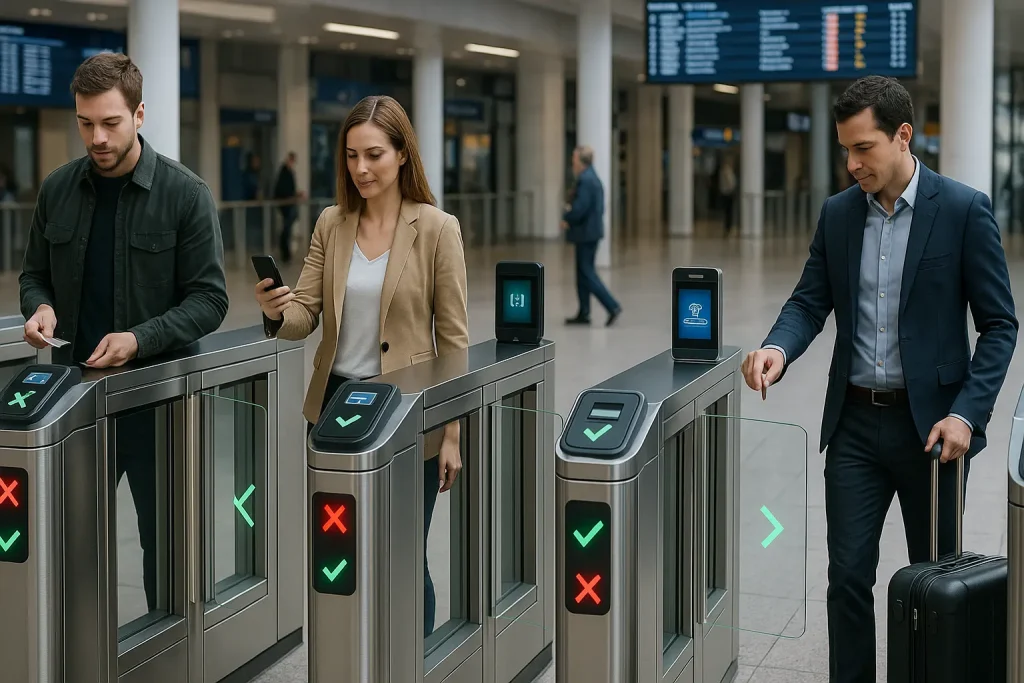
This is the vital role played by the railway station pedestrian turnstile. Far from being a simple gate, it's a specialized piece of engineering designed for the unique rigors of the public transit environment. It must be incredibly fast, exceptionally durable, highly secure against fare evasion, and seamlessly integrated with complex automated fare collection (AFC) systems. It's the unsung workhorse that keeps passengers moving and transit systems financially viable. This guide provides an expert, in-depth look at these critical systems, exploring their function, technology, types, and the crucial balance they strike between speed and safety.
What Is a Railway Station Pedestrian Turnstile?
A railway station pedestrian turnstile is a robust, automated physical barrier designed specifically to control passenger access within a railway or metro station environment. Integrated with an Automated Fare Collection (AFC) system, it validates tickets or passes before granting entry or exit, ensuring fare compliance and managing passenger flow onto platforms.
These turnstiles are a distinct category within the broader landscape of access control for buildings. Unlike the aesthetically focused gates found in an office building pedestrian turnstile setup, or the document-centric systems like an airport speed gate system, the railway station pedestrian turnstile prioritizes durability, speed (throughput), and fare validation accuracy above all else. They are built to withstand constant, heavy use by millions of passengers, often in semi-exposed environments, while processing transactions in fractions of a second.
Why Are Turnstiles Essential Infrastructure for Railway Stations?
Turnstiles are essential because they automate fare collection, significantly reduce fare evasion, control access to paid or secure platform areas, manage high passenger volumes efficiently (especially during peak hours), and enhance overall station safety by ensuring orderly flow and preventing overcrowding on platforms.
The implementation of automated turnstiles provides numerous critical benefits for transit operators and passengers alike:
- Automated Fare Collection (AFC): This is their primary function. They eliminate the need for manual ticket checks at the platform entrance, drastically reducing staffing costs and speeding up entry.
- Fare Evasion Prevention: By creating a mandatory checkpoint, turnstiles significantly reduce revenue loss due to passengers attempting to travel without a valid ticket.
- Access Control & Security: They clearly delineate paid areas (platforms) from unpaid areas (station concourse), preventing unauthorized individuals from accessing platforms and potentially enhancing safety. This differs from the identity verification focus of, say, a government facility access gate.
- High Throughput Management: During rush hour, thousands need to pass through entry points quickly. Automated turnstiles are designed to process passengers much faster than manual checks, preventing dangerous queues and platform congestion.
- Data Collection: Every passage is logged, providing valuable data on passenger flow patterns, station usage times, and ticket types, which can inform scheduling and operational planning.
How Do Railway Turnstiles Work? The Validation Process
Railway turnstiles work by reading a passenger's fare media (ticket, smart card, mobile app) via an integrated reader. This data is instantly sent to the station's AFC system for validation. If the fare is valid, the AFC system sends an "open" command to the turnstile, which unlocks or opens its barriers for passage.
This validation "handshake" happens incredibly quickly, often in less than half a second, to maintain flow. Here’s a typical sequence using a smart card:
- Approach: Passenger approaches the turnstile with their transit smart card (e.g., Oyster, MetroCard, Suica).
- Tap/Scan: Passenger taps their card on the designated RFID reader integrated into the turnstile cabinet.
- Data Read & Transmission: The reader instantly captures the card's unique ID and potentially other data (like stored value or pass type) and sends it securely to the station's local AFC server or central system.
- AFC Validation (The "Brain"): The AFC system checks: Is this card valid? Does it have sufficient fare/a valid pass for this journey/entry? Are there any blocks on the card?
- Command to Gate: If valid, the AFC system sends an "Authorize Passage" command back to the turnstile's internal controller. It might also send a command back to the card reader display (e.g., "Show remaining balance").
- Barrier Actuation: The turnstile controller receives the command and unlocks its mechanism (for tripod) or activates its motor (for speed gates) to open the barrier.
- Passage & Reset: The passenger passes through. Sensors detect their passage, and the barrier automatically closes/re-locks, ready for the next passenger.
This seamless integration between the physical turnstile hardware and the complex AFC software is crucial for efficient operation.
Key Components of a Railway Turnstile System
A railway turnstile system comprises the robust physical turnstile mechanism itself, integrated fare media readers (supporting various ticket types), connections to the Automated Fare Collection (AFC) system for validation, and passenger guidance indicators (lights and displays).
- The Turnstile Mechanism: This is the core physical hardware, designed for extreme durability. Common types include:
- Tripod Arms: Simple, robust, lower cost.
- Flap Barriers: Motorized glass/polycarbonate wings retracting for faster passage.
- Full-Height Rotors: For maximum security, often at unmanned entrances.
- Fare Media Readers: These are integrated into the turnstile cabinet and must support the specific technologies used by the transit system:
- RFID/NFC Readers: For contactless smart cards and mobile payments/apps.
- Barcode/QR Code Scanners: For paper tickets or mobile tickets.
- Magnetic Stripe Readers: For older ticket types (less common now).
- AFC System Integration: Secure data connections (often wired Ethernet) linking the turnstile controller and readers back to the station-level or central AFC servers. This system holds the fare rules and performs the validation.
- Passenger Interface: Clear visual cues are essential:
- Status Lights: Green arrow for "proceed," red 'X' for "stop."
- Displays: Often showing fare deducted, remaining balance, or error messages ("Insufficient Fare," "Seek Assistance").
- Sensors: Infrared beams or other sensors detect passenger passage, prevent closing on a person (safety), and potentially detect tailgating attempts (security).
Types of Turnstiles Predominantly Used in Railway Stations
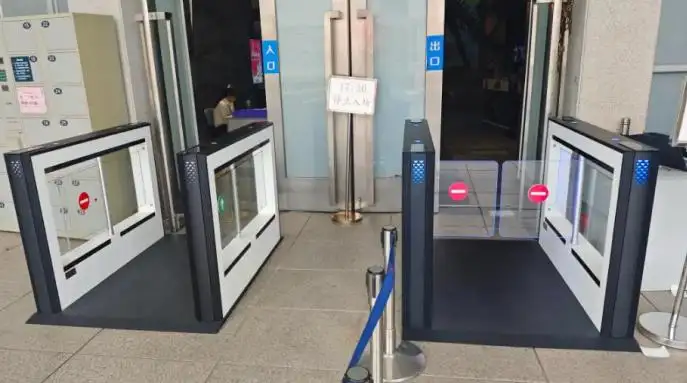
The most common types are tripod turnstiles (due to their robustness and cost-effectiveness) and flap barrier speed gates (increasingly popular for their higher throughput and modern feel). Full-height turnstiles are sometimes used for unmanned or high-security access points.
Choosing the right type involves balancing cost, speed, security, and space.
1. Tripod Turnstiles (The Durable Workhorse)
- Description: Three rotating arms block passage until unlocked by a valid fare. Requires a physical push.
- Pros:
- Highly Durable & Reliable: Relatively simple mechanism withstands heavy use and abuse. Lower maintenance costs.
- Cost-Effective: Generally the least expensive option upfront.
- Effective Flow Control: Enforces single-file passage well.
- Cons:
- Slower Throughput: The physical push and rotation limits speed (typically 20-30 PPM).
- Less Secure: Can be jumped over or crawled under relatively easily (higher fare evasion risk).
- Aesthetic: Can look dated or industrial compared to speed gates.
- Railway Use: Still the most common type globally due to its proven reliability and cost, especially in older systems or less busy stations.
2. Flap Barrier Speed Gates (The High-Speed Modernizer)
- Description: Motorized glass or polycarbonate "wings" retract into the pedestal upon validation, allowing faster, touchless passage.
- Pros:
- Much Higher Throughput: Can process 35-45+ PPM, significantly reducing queues during rush hour.
- Improved User Experience: Touchless, faster passage feels more modern and convenient.
- Enhanced Security Features: Integrated sensors provide better detection against tailgating compared to basic tripods.
- Aesthetics: Sleeker, more modern appearance suits contemporary station designs.
- Cons:
- Higher Cost: More expensive upfront and potentially higher maintenance due to motorized parts.
- Potential Reliability Issues: More complex mechanism could be prone to more faults if not high quality.
- Railway Use: Increasingly the standard for new installations or major refurbishments in busy urban metro systems where speed and efficiency are paramount. They offer a passenger experience closer to an airport speed gate system.
3. Full-Height Turnstiles (The High-Security Option)
- Description: Floor-to-ceiling rotating barriers, providing a complete physical enclosure.
- Pros: Highest Security: Virtually impossible to bypass without authorization. Excellent for preventing fare evasion at unmanned locations.
- Cons: Lowest Throughput: Very slow passage. Visually imposing. Highest cost. Can be claustrophobic.
- Railway Use: Typically reserved for unmanned station entrances/exits, staff access points, or perimeter control where security is the absolute priority over speed.
4. ADA Accessible Gates (The Essential Lane)
- Description: Wider swing gates (or sometimes specialized wide flap barriers) designed for wheelchairs, strollers, and luggage.
- Requirement: Mandatory alongside any bank of standard turnstiles to comply with accessibility laws. Often bidirectional.
My Experience: "Choosing the right mix is critical. A busy downtown station might benefit hugely from replacing old tripods with flap barriers to handle rush hour. But for a remote, unmanned suburban stop, a pair of robust full-height turnstiles might be the only practical way to prevent rampant fare evasion."
Enhancing Passenger Flow: The Throughput Challenge
Railway station turnstiles are critical for managing the immense surges in passenger traffic characteristic of peak commute times. High-throughput designs, like flap barriers combined with fast contactless validation, are essential to process passengers quickly, minimize queues, and prevent platform overcrowding.
- The Rush Hour Problem: A single train arriving can disgorge hundreds of passengers needing to exit simultaneously. Conversely, hundreds may queue to enter just before a departure. Manual checks would lead to gridlock. Automated turnstiles are the only scalable solution.
- Speed is Key: The transaction speed – the time from presenting the fare media to the barrier opening – is paramount. Contactless smart cards and mobile NFC/QR codes, combined with fast gate mechanisms, aim for sub-second validation times.
- Queue Reduction = Safety: Long queues spilling back into concourses or blocking platforms are not just inconvenient; they are safety hazards. Efficient turnstiles keep people moving and prevent dangerous crowding.
- Optimizing Lane Configuration: Transit planners use passenger flow data (often gathered from turnstile logs) to determine the optimal number of entry, exit, or reversible lanes needed for different times of day.
Improving Security and Safety in Stations
Beyond fare collection, turnstiles play a vital safety and security role by controlling access to platform areas, deterring casual trespassers, providing data for security monitoring, and enabling emergency procedures like station lockdowns or controlled evacuations.
- Fare Evasion Deterrence: The physical barrier is a significant deterrent against opportunistic fare evasion, protecting vital revenue streams for the transit authority. Even simple tripods significantly reduce unpaid entries compared to open platforms.
- Controlled Platform Access: Turnstiles ensure only ticketed passengers can access potentially dangerous platform areas, reducing risks associated with overcrowding, unauthorized personnel, or individuals intending harm.
- Integration with Security Systems: Turnstile alarms (e.g., forced passage, tailgating attempt) can be integrated with station CCTV systems to automatically alert security personnel and record the event.
- Emergency Egress: Turnstiles must be designed to fail-safe or have easily accessible emergency release mechanisms to allow rapid, unimpeded exit during evacuations (e.g., fire alarm). This is a critical life-safety requirement.
- Crowd Management: By regulating the flow rate onto platforms, turnstiles can help prevent dangerous overcrowding during major events or service disruptions.
Seamless Integration with Ticketing & Fare Collection Systems (AFC)
The railway station pedestrian turnstile is merely the physical front-end of a complex Automated Fare Collection (AFC) system. Seamless, real-time integration is crucial for reading diverse fare media, applying complex fare rules, and ensuring accurate transaction processing.
- Supporting Multiple Media: Modern AFC systems, and thus the turnstile readers, must handle a variety of fare types:
- Contactless Smart Cards (Stored Value or Period Passes)
- Mobile Apps (NFC or QR Codes)
- Paper Tickets (Barcodes or Magnetic Stripes)
- Bank Cards (Contactless EMV payments)
- Complex Fare Logic: The AFC system contains the intricate rules (zone-based fares, time-based transfers, peak/off-peak pricing, concession fares) and applies them instantly during validation.
- Data Synchronization: Turnstile transactions must be reliably transmitted to the central AFC system for revenue accounting, reporting, and "hotlisting" (blocking lost or stolen cards).
- Reliability: The integration must be robust. If the connection between the turnstile and the AFC server fails, the gate needs a clear offline mode (e.g., allow passage but flag for later reconciliation, or deny passage) defined by the operator's policy. Downtime equals lost revenue and passenger chaos.
Durability and Reliability: Built for the Toughest Environments
Railway turnstiles operate in demanding conditions – extreme passenger volumes, potential vandalism, vibration from trains, and often exposure to weather. They must be constructed from highly durable materials with robust mechanisms designed for millions of cycles and easy maintenance access.
- Heavy-Duty Construction: Unlike an
office building pedestrian turnstilein a climate-controlled lobby, railway hardware often uses heavier gauge stainless steel (e.g., 304 or even marine-grade 316 for outdoor locations), reinforced internal components, and vandal-resistant fastenings. - High MCBF (Mean Cycles Between Failure): Look for components rated for many millions of cycles. The motors, locking solenoids, and sensors must be industrial grade.
- Environmental Protection: Gates installed in semi-outdoor locations or near platforms need appropriate IP (Ingress Protection) ratings against dust and moisture. Internal heating elements might be needed in cold climates.
- Ease of Maintenance: Given the sheer number of units in a large system, components must be designed for quick diagnosis and replacement to minimize downtime. Modular designs are preferred.
- My Experience: "I've seen cheap, office-grade speed gates installed in a busy station concourse fail within six months under the constant pounding of passenger traffic and luggage impacts. Railway applications demand genuinely robust, purpose-built hardware. Cutting corners here leads to disaster."
ADA Compliance and Accessibility is Non-Negotiable
Every turnstile installation in a public railway station must include clearly marked, fully compliant accessible gates to ensure equal access for passengers using wheelchairs, mobility aids, strollers, or carrying bulky luggage, meeting ADA or equivalent local regulations.
- Wider Passage: Accessible lanes require a significantly wider clear passage (often 900mm / 36 inches or more).
- Appropriate Mechanism: Swing gates are the most common solution for accessible lanes, providing ample space and controlled movement. Specialized extra-wide flap barriers are also sometimes used.
- User Interface: Controls (like card readers or buttons) must be reachable from a seated position. Clear audio and visual signals are essential.
- Safety Sensors: Enhanced sensor coverage is needed to ensure the barrier doesn't close prematurely on a slower-moving user or someone with assistive equipment.
Providing equitable access is not just a legal requirement; it's fundamental to public transportation service.
Challenges in Implementing Railway Turnstiles
Implementation, especially in existing stations, poses significant challenges, including high initial costs, complex integration with legacy AFC systems, the need for potentially disruptive station modifications, passenger education during rollout, and ensuring sufficient throughput capacity.
- High Capital Cost: A bank of robust, high-throughput turnstiles represents a major investment for any transit authority.
- Integration Complexity: Tying new gates into existing (sometimes decades-old) AFC software and station networks can be technically demanding.
- Station Retrofitting: Older stations often lack the space, power, or data infrastructure needed for modern gates. Installation may require significant civil works (cutting floors, running conduits) while keeping the station operational – a logistical nightmare.
- Passenger Education: Introducing a new ticketing system or gate type requires extensive public communication campaigns to ensure passengers understand how to use the new system smoothly.
- Throughput Planning: Accurately predicting future passenger growth and installing enough lanes to handle peak loads without creating new bottlenecks is crucial but challenging. Under-provisioning is a common, costly mistake.
The Future: Towards Frictionless Fare Validation
The future points towards faster, more seamless validation methods. Mobile ticketing (NFC/QR) is becoming dominant. Biometrics are being piloted. The ultimate goal is a "frictionless" experience where passengers might simply walk through, validated passively by long-range readers or AI-powered video analytics.
- Mobile Dominance: Smartphones are rapidly replacing physical smart cards. Turnstiles increasingly need high-performance QR scanners and NFC readers as primary interfaces.
- Biometric Pilots: Some systems are experimenting with facial recognition or palm vein scanning for subscription pass holders, potentially offering a faster, hands-free option. Privacy and enrollment remain significant hurdles for widespread public adoption.
- "Be-in/Be-out" Concepts: Future systems might use Bluetooth, UWB, or GPS tracking via a passenger's phone to automatically detect when they enter and exit the transit system, calculating the fare without requiring any interaction at a physical gate (though gates might remain for enforcement).
- AI-Powered Video Analytics: Cameras above gate lines could potentially use AI to visually confirm that each person passing through has successfully validated a fare (e.g., correlating a green light flash with one person passing), adding a layer of security against sophisticated fare evasion.
The Final Verdict: The Indispensable Guardian of Rail Transit
The railway station pedestrian turnstile is far more than a simple gate. It is a critical piece of infrastructure, the indispensable guardian ensuring the financial viability, operational efficiency, and basic safety of modern rail transit systems. Balancing the relentless demand for speed during rush hour with the absolute necessity of accurate fare collection and secure platform access is its core, challenging function.
From the rugged simplicity of the tripod to the high-speed elegance of the flap barrier, these automated systems are essential for managing the complex flow of millions. As technology advances towards more frictionless and intelligent solutions, the humble turnstile will continue to evolve, remaining the steadfast, reliable checkpoint at the heart of the passenger journey. Its robust presence is a key differentiator from the needs of a typical commercial building entrance gate or the highly specialized requirements of a secure government facility access gate.
