


Airport Speed Gate Systems: Enhancing Passenger Flow and Safety
2025-10-27


The modern airport is a marvel of logistics, a complex ecosystem designed to move millions of people safely and efficiently across vast distances. But at the heart of this complex operation lies a fundamental tension: the need for rigorous security screening versus the demand for rapid, seamless passenger flow. Delays at any checkpoint—check-in, security, boarding—can ripple through the system, causing missed flights, frustrated travelers, and operational chaos.
For decades, this process relied heavily on manual checks by airline staff and security personnel. While necessary, this approach is inherently slow, resource-intensive, and prone to human error. In an era of increasing passenger volumes and heightened security concerns, airports worldwide are turning to technology to solve this critical challenge.
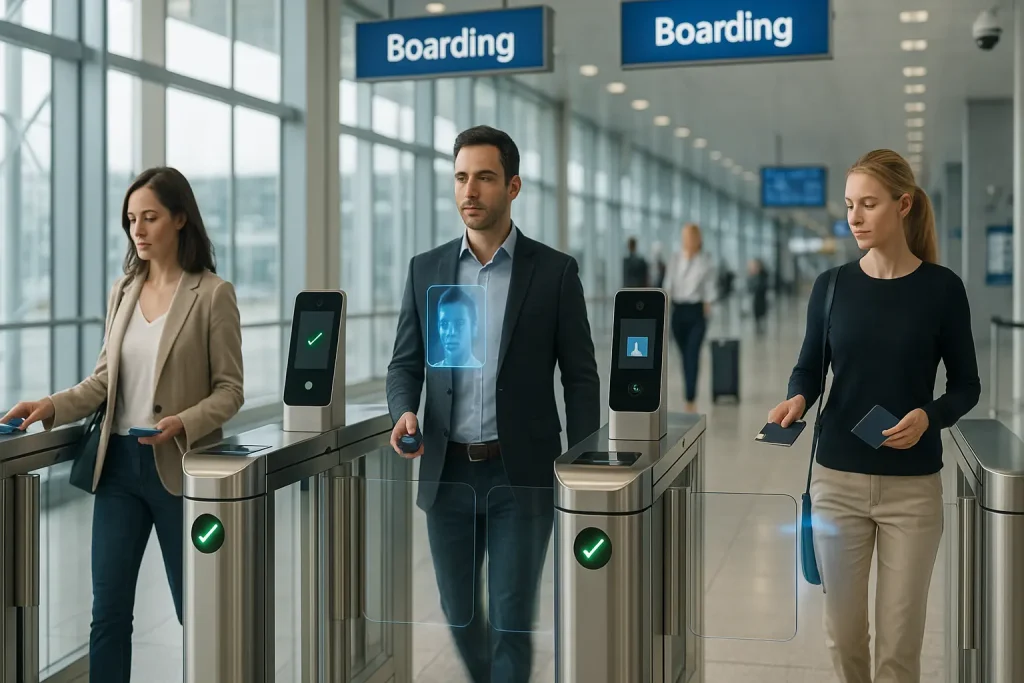
Enter the airport speed gate system. This is far more than just a simple barrier; it's a sophisticated, automated solution specifically engineered for the unique, high-stakes environment of air travel. It represents the crucial intersection of advanced physical security, high-speed automation, biometric identification, and complex data integration. These systems are the gatekeepers of the modern passenger journey, designed to enhance both flow and safety simultaneously.
This guide provides a definitive, expert look into the world of airport speed gate systems. We'll explore how they work, the specialized technologies they employ, their critical role at various airport touchpoints, and how they are shaping the future of air travel.
What Is an Airport Speed Gate System?
An airport speed gate system is a specialized type of automated pedestrian barrier designed for the high-volume, high-security demands of airports. It integrates physical gates with technologies like barcode scanners, biometric readers, and passport validators to verify passenger identity and travel documents, controlling access to secure areas like departure lounges or aircraft.
Unlike the turnstiles you might find in an office building pedestrian turnstile setup, which prioritizes aesthetics and quiet operation, or even the robust barriers needed at a railway station pedestrian turnstile, airport gates are built to meet incredibly stringent requirements for speed, reliability, and security integration. They are not standalone units; they are critical endpoints connected to complex airport and airline IT infrastructure, including Departure Control Systems (DCS), immigration databases, and biometric identity platforms. Their core purpose within the broader framework of effective access control for buildings is to automate and secure passenger checkpoints, ensuring only authorized individuals proceed.
Why Are Speed Gates Absolutely Critical in Airports?
Speed gates are critical because they are the only technology capable of efficiently balancing the extreme throughput demands of passenger processing with the non-negotiable security requirements mandated by aviation authorities. They automate manual checks, reduce queues, enhance security accuracy, and improve the overall passenger experience.
The airport environment presents a unique "perfect storm" of challenges:
- Extreme Volume: Major airports handle tens or even hundreds of thousands of passengers daily. Processing this volume manually is simply not feasible.
- Peak Congestion: Traffic isn't evenly distributed; it comes in massive waves dictated by flight schedules. The system must handle these intense peaks without collapsing into gridlock.
- Stringent Security: Airports are high-risk environments. Every passenger must be meticulously verified against travel documents and security watchlists at multiple points. There is zero tolerance for error, a level often exceeding even that required for a typical commercial building entrance gate.
- Passenger Experience: In a competitive industry, traveler satisfaction is paramount. Long queues and stressful checkpoints damage an airport's reputation and revenue.
An airport speed gate system is the technological linchpin that addresses all these challenges simultaneously, automating processes that are too slow, too resource-intensive, or too prone to error for humans alone.
How Do Airport Speed Gates Work? The Passenger Journey
Airport speed gates work by electronically reading a passenger's credential (boarding pass or biometric), verifying this against airline and security databases in real-time, and then opening a physical barrier if authorized. Integrated sensors monitor the passenger's passage to prevent tailgating before closing.
The exact process varies depending on the checkpoint (e.g., pre-security, lounge access, boarding, immigration), but a typical boarding gate scenario looks like this:
- Approach: The passenger approaches the gate, often part of a bank of multiple lanes.
- Scan Credential: The passenger scans their credential. This could be:
- The barcode on a paper or mobile boarding pass.
- Their face (using an integrated facial recognition camera).
- (Less commonly at boarding) A fingerprint or iris scan.
- Data Transmission & Verification: The gate reader instantly sends the scanned data (barcode info or biometric template) to the airline's Departure Control System (DCS) and potentially other security databases.
- The "Brain's" Decision: The DCS verifies: "Is this passenger booked on this flight? Is their seat confirmed? Are there any security flags?" This happens in milliseconds.
- Authorization Signal: If valid, the DCS sends an "Allow Passage" command back to the specific gate lane.
- Barrier Actuation: The gate's high-speed motor activates, typically retracting sleek "flap" barriers into the pedestal.
- Passage & Sensor Monitoring: The passenger walks through. The gate's internal sensor array tracks their progress, confirming it's a single person moving in the correct direction.
- Anti-Tailgating Check: If a second person attempts to follow without scanning, the sensors detect this violation, trigger loud audible and visual alarms, and often close the barriers.
- Barrier Closing: Once the authorized passenger clears the final sensor, the barriers close immediately, securing the lane for the next passenger.
This entire automated cycle takes only a few seconds, dramatically faster than manual checks and crucial for maintaining flow.
Key Components Specific to Airport Speed Gate Systems
While sharing core technology with other high-end speed gates, airport systems incorporate specialized components to meet aviation requirements: robust construction for 24/7 use, advanced sensor arrays, integrated document/biometric readers, and specific software interfaces.
- Heavy-Duty Construction: Airport gates operate almost continuously under high stress. They require extremely durable chassis (often thicker stainless steel), high-cycle motors (brushless DC), and robust barrier materials designed for millions of passages without failure. Reliability is paramount, exceeding the demands of even a busy campus access control gate.
- Advanced Sensor Arrays: Given the security context, airport gates employ the most sophisticated sensor packages available. This includes high-density infrared "light curtains" for precise anti-tailgating and direction sensing, often supplemented by pressure mats or overhead sensors to detect jumping or crawling attempts. Accuracy is non-negotiable.
- Integrated Credential Readers: This is a key differentiator. Airport gates feature integrated readers specific to travel:
- Barcode Scanners: High-speed omnidirectional scanners for paper and mobile boarding passes (QR, Aztec codes).
- Biometric Scanners: Facial recognition cameras are increasingly standard. Fingerprint or iris scanners may be used at immigration/border control eGates.
- Passport/ID Readers (eGates): Specialized gates, particularly at border control, integrate Machine Readable Zone (MRZ) scanners and chip readers for electronic passports.
- Specialized Software Integration: The gate's "local brain" must communicate seamlessly and securely with complex, industry-specific backend systems like airline DCS, airport operational databases (AODB), and government immigration platforms, often using protocols like CUTE or CUPPS. This integration is far more complex than typical access control for buildings.
Types of Speed Gates Predominantly Used in Airports
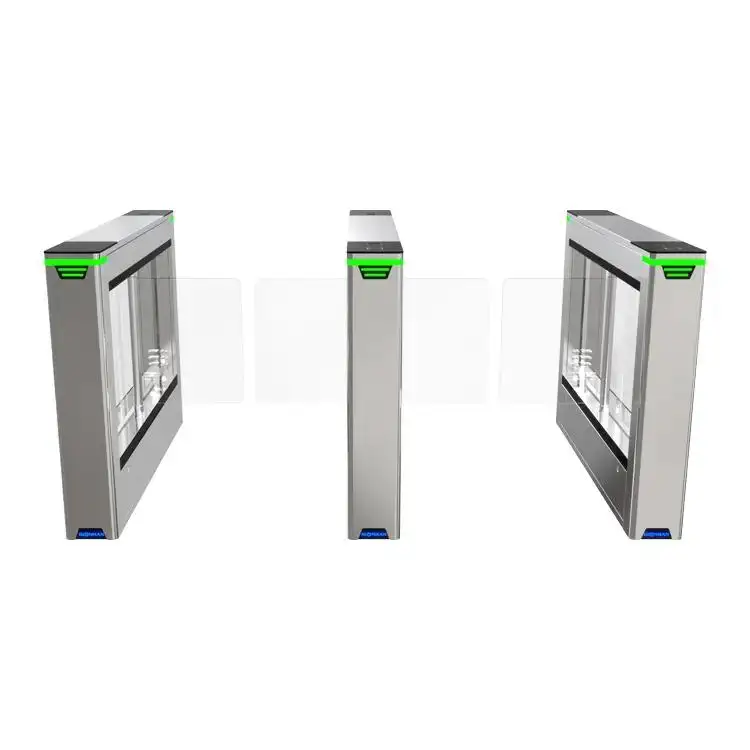
The most common type is the flap barrier turnstile due to its extremely high speed and relatively small footprint, ideal for processing large queues quickly in areas like boarding. Swing barriers and specialized eGates with integrated document readers are also used.
Flap Barrier Gates (The Throughput King)
- How They Work: Glass or acrylic "wings" retract rapidly into the pedestal.
- Why Airports Love Them:
- Maximum Speed: Offers the highest possible PPM, crucial for boarding flights with hundreds of passengers in a short window.
- Compact Footprint: The retracting motion requires minimal side clearance, allowing more lanes to fit in a given space.
- Intuitive: Passengers find the "disappearing barrier" easy to understand.
- Common Uses: Boarding gates, lounge access, pre-security ticket checks.
Swing Barrier Gates (Less Common, Specific Uses)
- How They Work: Glass panels pivot outward.
- Why Airports Use Them Less: Generally slightly slower than flap barriers and require more side clearance.
- Potential Uses: Sometimes seen for staff access points or potentially wider ADA lanes where the smoother swing motion might be preferred, though flaps are also common for ADA. These might resemble gates found in a standard commercial building entrance gate, but built to higher durability standards.
Specialized eGates (Border Control & Security)
- How They Work: Often resemble taller swing or sliding gates but incorporate dedicated passport readers, fingerprint scanners, or facial recognition cameras specifically for immigration or high-security checks. They often feature more robust construction and advanced anti-tampering features, similar in security focus to a government facility access gate.
- Common Uses: Automated border control (ABC gates), potentially access to secure staff areas. These are distinct from typical boarding gates.
Enhancing Passenger Flow: The Throughput Imperative
Airport speed gates are fundamentally designed to maximize passenger throughput, processing individuals significantly faster than manual checks. By automating validation and passage, they drastically reduce queue lengths at critical checkpoints like boarding and security, leading to smoother journeys and fewer delays.
- Quantifying the Speed: A manual boarding pass check can take 10-15 seconds per passenger. An automated gate can process a passenger in 2-5 seconds. This difference, multiplied by hundreds of passengers per flight, translates into significant time savings.
- Queue Reduction: Faster processing directly reduces queue length and wait times. Shorter queues mean less stress for passengers, less congestion in gate areas, and a lower likelihood of flight delays caused by slow boarding.
- Self-Service Empowerment: Automated gates empower passengers to manage their own passage through checkpoints, reducing reliance on staff and aligning with traveler preferences for self-service options.
- Optimizing Gate Agent Roles: By automating the repetitive task of scanning every boarding pass, gate agents are freed to handle exceptions – passengers needing assistance, seat changes, last-minute upgrades – improving overall service quality.
Bolstering Airport Security: Automation and Accuracy
Beyond speed, airport speed gates provide significant security enhancements. They automate identity verification against secure databases, physically prevent tailgating with high accuracy, integrate with security watchlists, and create an immutable digital audit trail for every passage.
- Automated Verification: The system electronically verifies credentials against airline and potentially government databases in real-time, eliminating the risk of human error in visually checking documents or spotting fraudulent passes.
- Physical Tailgating Prevention: The integrated high-density sensor arrays are far more reliable than human observation at detecting and preventing unauthorized individuals from following authorized passengers. This is a critical security layer.
- Integration with Watchlists: At certain checkpoints (especially immigration eGates), the system can check passenger identities against national and international security watchlists, flagging individuals requiring secondary inspection. This capability is vital for national security.
- Immutable Audit Trail: Every transaction – successful or failed – is logged digitally with timestamps, passenger details (where permissible), and lane identification. This data is crucial for security investigations, audits, and operational analysis.
Integrating with Complex Airport Infrastructure
An airport speed gate system does not operate in isolation. It must seamlessly and securely integrate with a complex web of existing airport and airline IT systems, including Departure Control Systems (DCS), Common Use platforms (CUTE/CUPPS), biometric identity management systems, and government databases.
- Departure Control System (DCS): This is the airline's core system managing flight manifests, seat assignments, and passenger status. The gate must query the DCS in real-time to validate boarding passes.
- Common Use Terminal Equipment (CUTE) / Common Use Passenger Processing Systems (CUPPS): These platforms allow multiple airlines to share physical infrastructure like check-in counters and gates. Speed gates must be compatible with these common-use standards.
- Biometric Identity Management: Airports increasingly use centralized platforms to manage passenger biometric data (e.g., facial templates captured at check-in). Gates integrate with these platforms for verification at subsequent touchpoints.
- Government Immigration/Border Control: eGates at border control integrate directly with secure government databases to verify passport validity, visa status, and watchlist flags.
This deep integration requires robust APIs, secure network connections, and close collaboration between gate manufacturers, airlines, airport authorities, and government agencies, far exceeding the typical integration needs for standard access control for buildings.
The Rise of Biometrics in Airport Gates: Towards a Seamless Journey
Biometrics, particularly facial recognition, are rapidly becoming the standard for airport speed gates. This technology allows passengers to use their face as their boarding pass and ID, enabling a faster, touchless, and more secure journey through multiple airport checkpoints.
- How it Works: Passengers typically enroll by linking a photo (taken at check-in or via a mobile app) to their travel documents. At subsequent checkpoints (bag drop, security, lounge, boarding gate), cameras integrated into speed gates recognize their face and grant passage without needing to show a passport or boarding pass repeatedly.
- Benefits:
- Speed: Facial recognition is incredibly fast, enabling true "walk-through" experiences.
- Convenience: No need to fumble for documents at every step.
- Security: Biometrics provide a higher level of identity assurance than visual checks.
- Touchless: Enhances hygiene, a major post-pandemic consideration.
- IATA One ID: This is a global initiative by the International Air Transport Association promoting the use of biometric identity management for a seamless, end-to-end passenger journey. Airport speed gates are the key physical enablers of this vision.
- Privacy Considerations: Implementing biometrics requires robust data protection policies, transparent passenger consent mechanisms, and secure data storage to address legitimate privacy concerns.
Improving the Overall Passenger Experience
Ultimately, the goal of an airport speed gate system is to create a less stressful, more efficient, and more positive travel experience. By reducing queues, speeding up processing, and enabling self-service, these systems contribute significantly to passenger satisfaction.
- Reduced Wait Times: This is the most tangible benefit for passengers. Less time spent standing in line means more time relaxing, shopping, or dining.
- Predictability: Automated systems offer more consistent processing times compared to fluctuating manual checks, making journey times more predictable.
- Empowerment: Self-service gates give passengers a greater sense of control over their journey.
- Modern Feel: Sleek, efficient gates contribute to the perception of a modern, well-run airport.
ADA Compliance and Accessibility in Airport Gates
Airport speed gates must accommodate all travelers. This necessitates providing wider lanes compliant with ADA (Americans with Disabilities Act) and similar international regulations, often featuring specific sensor logic and timing adjustments for passengers with reduced mobility, families with strollers, or those with bulky luggage.
- Wider Lanes: At least one gate in any bank must be significantly wider (e.g., 900mm or more) to allow passage for wheelchairs and mobility devices.
- Sensor Tuning: The sensors in ADA lanes are often tuned to allow for slower passage times and accommodate the different profiles of wheelchairs or strollers without triggering false alarms.
- Clear Signage: Easily understandable visual cues (lights, symbols) are crucial for guiding all passengers, including those with visual or cognitive impairments.
Challenges and Considerations for Implementation
Implementing an airport speed gate system is a major undertaking with significant challenges, including the high cost of specialized hardware, complex integration with legacy systems, the need for robust maintenance in a 24/7 environment, passenger education, and ongoing cybersecurity concerns.
- Cost: Airport-grade gates with integrated biometrics and specialized readers represent a significant capital investment.
- Integration Complexity: Connecting gates securely and reliably to diverse airline, airport, and government systems is a major technical hurdle requiring specialized expertise.
- Maintenance: Gates operate non-stop in demanding conditions. A robust, rapid-response maintenance plan is essential to minimize downtime, which can have immediate operational impacts.
- Passenger Education: Introducing new processes (especially biometrics) requires clear communication and on-site assistance to help passengers adapt smoothly.
- Cybersecurity: As connected devices, speed gates and the systems they link to are potential targets. Robust network security, encryption, and regular patching are critical.
The Future: AI, Frictionless Travel, and Total Integration
The future of airport speed gates lies in even greater intelligence, seamlessness, and integration. AI will optimize flow dynamically, biometrics will enable completely frictionless "walk-through" journeys, and gates will become data hubs connected to every aspect of the passenger's trip.
- AI-Driven Flow Management: AI will analyze real-time passenger density data (from gates, cameras, Wi-Fi) and predict bottlenecks before they occur, potentially dynamically re-routing passengers or adjusting gate configurations.
- Fully Frictionless Biometric Journey: The goal of IATA One ID – using your face as your single token from check-in to boarding – will become the norm. Gates will authenticate passengers passively as they approach.
- Integration with Baggage & Operations: Your passage through a gate could trigger real-time updates to your baggage status or alert operations about your progress toward the flight.
- Advanced Threat Detection: Gates may integrate sensors beyond simple passage detection, potentially including thermal screening or even trace detection technologies as part of a multi-layered security approach.
Final Verdict
The airport speed gate system is far more than just an automated turnstile. It is a critical piece of infrastructure, the intelligent gateway that enables modern airports to function. By masterfully balancing the immense pressure for speed with the absolute necessity of security, these systems are essential for processing millions of passengers efficiently, safely, and with an ever-improving travel experience.
As technology evolves, these gates will become even smarter, faster, and more integrated, paving the way for a future of truly seamless, secure, and personalized air travel. They are not just controlling access; they are actively shaping the entire passenger journey.
