


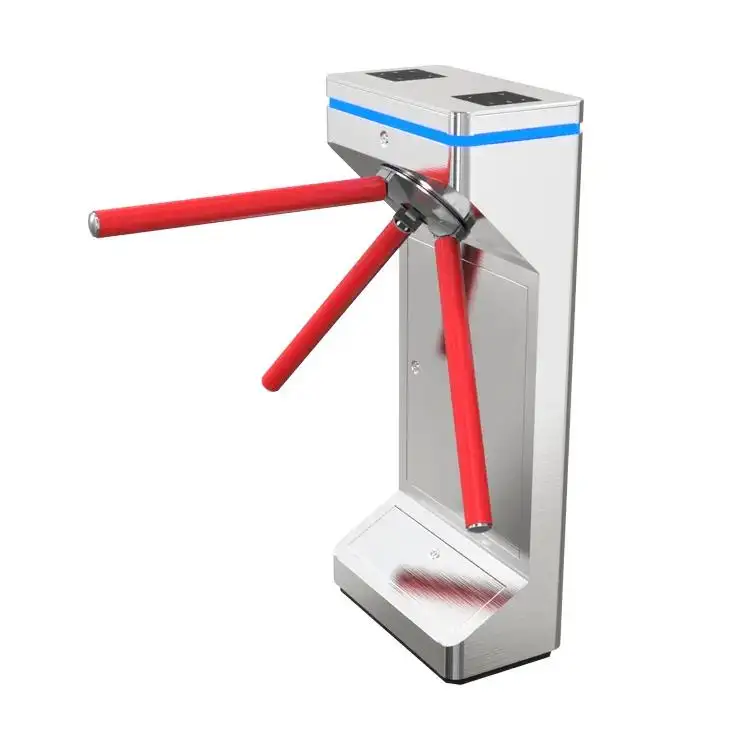
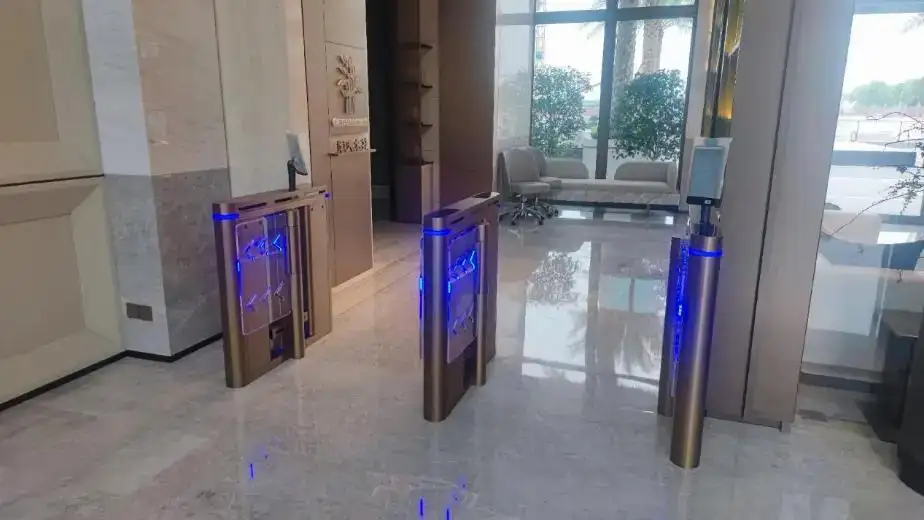
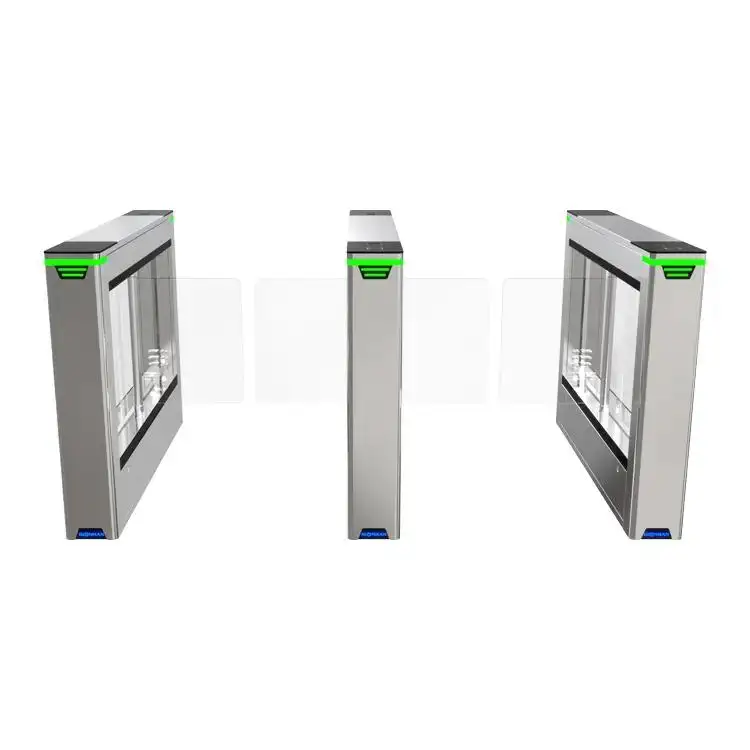
Anti-Climb Swing Barrier Gate: The blend of wide access and heightened security
2026-07-27


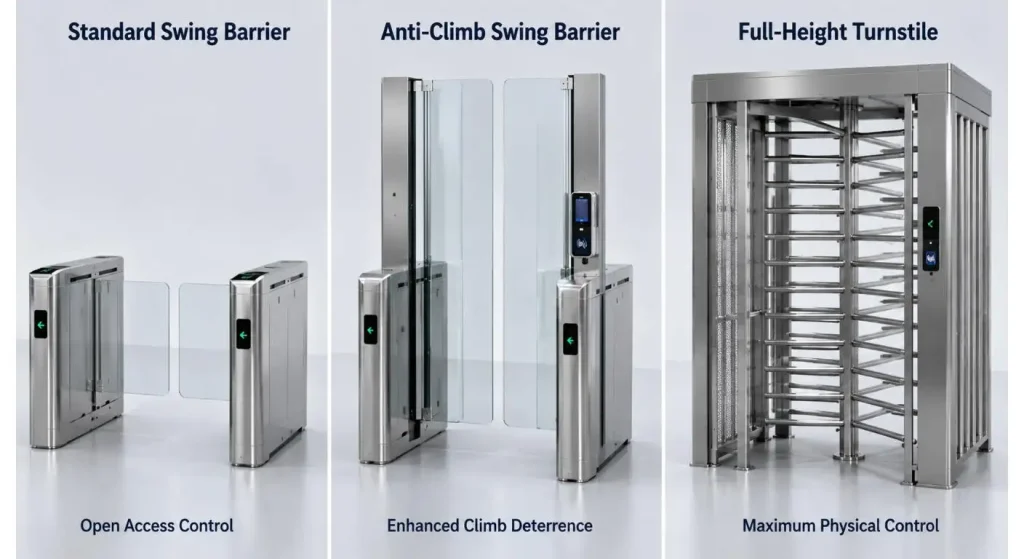
Anti-climb swing barrier gate is a helpful barrier in between extremes. It is bigger and more comfortable to pass through than several small turnstiles, provides more physical obstacle than a simple waist-high swing gate.

This guide is designed for security consultants, system integrators, factories, schools, warehouses, residential communities, office parks and/or public buildings who are seeking greater pedestrian access combined with anti clumping features.
Projects select an Anti-Climb Swing Barrier Gate for a variety of reasons
A typical swing barrier is usually used due to its quiet operation, natural appearance of being open, and because it can be used alongside wheelchairs, luggage, service carts or equipment-carriers. Its loophole is also precariously visible—an unobstructedly short barrier offers little protection if it is a site where there is a concern with climbing or bypassing.
A turnstile free up takes up more space and alters user experience as opposed to a full-height turnstile which does form a full physical boundary. It takes up more space, is more constrictive and can't be used if the building owner prefers an open front but has also a staffed top-gate.
A swing barrier gate that is anti-climb will typically be used in situations where all of the following are needed:
- Wider pedestrian passage
- Stronger physical deterrence
- Control and detection of access and passage automated
Is not an alternative to all high security entrances. Rather, it is a practical solution for locations with a requirement for increased control than a low swing barrier could offer that do not necessarily have an engineering requirement for a
Begin by thinking about how anyone could circumvent entry to the building
It's a variety of issues that different characteristics can't address.
| Security Risk | Main Control | Supporting Measure |
| Climbing over | Taller reinforced panel | Remove nearby footholds |
| Crawling under | Controlled bottom clearance | Check finished-floor level |
| Tailgating | Infrared sensor logic | Alarm and security response |
| Side bypass | Continuous wall or railing | Close cabinet-side gaps |
| Forced pushing | Strong mechanism and alarm | CCTV or guard intervention |
| Invalid credential | Access controller | Reader and software permissions |
Stop focusing on the obstacle's height at the top of the barrier
Usually the first specification buyers ask of is height. Sure it does but it can't be just it.
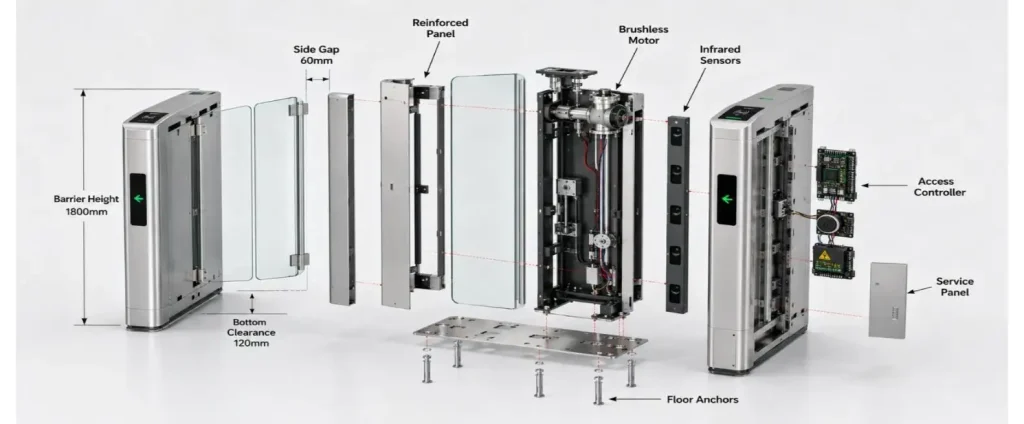
The panel is intended as a component of a larger mechanical assembly comprised of the frame, motor, transmission, cabinet, hinges and fasteners, the control board and the floor anchors. Its shape is important as well. Handholds and footholds could be easily provided by horizontal rails, exposed brackets, decorative bars or areas of low wall near by.
Please check with the manufacturer:
- The snow does not accumulate higher than the barrier.The snow tends not to pile up over top of the barrier.
- The type of changes a panel can undergo to close and opening it.
- B: Pass underneath the barrier
- The amount of distance between the panel and the cabinet.
- A key variable will be the “dist” – the distance to the walls or railings nearby.
- Wavelength
- Ability to operate vehicle selected for study.Motor skill for the panel chosen.
- The following requirements are for foundation and floor-anchors:
- A means to gain access to the enclosed fasteners and service panels.
Ironman Anti-climbing swing turnstile info includes reinforced barriers, sensor operation and RFID, biometric, mobile and QR access. The above mentioned features are helpful but the completed structure needs to be compared to the entrance drawing.
Customization should also be mentioned as it will have an impact on the gate. Increasing the panel size, changing panels' material components, or widening the lane can add to the motor, and cabinet load. Such alterations could call for a new testing method, foundation and/or mechanism.
Maintain a security boundary
The most prevalent design error is made near the gate and not within.
The barrier can be rather high and supported, but someone can easily step between the cabinet and the wall. The failure is not of the product. Failure to plan the boundary.
Overall, the yellow line should extend across the entire entrance to the building. This can be achieved through fixed glass panels, metal railings, fencing, controlled/operated doors or a WeGuarded Reception boundary.
Furniture also needs to be taken into consideration. It is important there should not be a easy jumping-off place like a bench, planter, waste bin, display stand, temporary barrier or stored materials next to the panel.
layout review should not only be within the dimensions of the turnstile footprint, but all the turnstile space between wall-to-wall. Also now is a good opportunity to affirm:
- Camera coverage
- Guard visibility
- Queue direction
- Reader position
- Alarm location
- Maintenance access
- Emergency movement
A reputable manufacturer will seek full clues to the entrance plan prior to confirming the plan of the product.
Choose Access Method: Around Real Users
The gate can be used with a variety of technology such as RFID cards and credentials, QR codes, fingerprints, facial recognition, PIN terminals and more.
This will vary depending on the type of users, and their usage mechanisms, of the entrance.
Working in a factory setting, employees might prefer to use cards as the gloves, dirt and worn fingerprints on the cards may impact the use of biometrics. QR codes may be given to the visitors for the duration of their visit. Since it is a restricted laboratory, cumbersome card-plus-biometric verification may be needed. A temporary credential in addition to a security-desk release may be necessary for a residential community.
The people who are interested in the relevant reading and control could be reviewed by access control equipment. Software options must also be checked if you're involved in a project that would need software integration to the turnstile gate as well.https://www.ironmanturnstile.com/turnstile-gate-sdk-api/.
Before production, define:
- This product contains Reader model/dimensions.
- The height and angle at which the mounts are installed.Mounting height and angle.
- Opening signal
- Communication protocol
- Access to the room, outside areas and various other entrances
- Offline operation
- Alarm output
- Event records
- Software responsibilities
It is not an approved drawing or purchase order to indicate that it is compatible with access control. The reader, controller, software and gate logic - the software together with the reader and controller - should all be tested together.
Wider passages are usually countered by stronger structure
The main driver towards deciding on a swing barrier gate is that it opens up the opportunity to make a wider lane. This can enhance the accessibility for wheelchair users, visitors with luggage, staff who carry equipment and/or service carts used in the building.
But with a wider or taller panel, comes the need for more design concerns. The manufacturer should examine the load of the motors, opening space, closing speed, the area that the sensors cover, cabinet stability, and wind exposure.
| Project Need | Main Consideration | Detail to Verify |
| Wheelchair passage | Clear lane width | Review the complete accessible route |
| Luggage and carts | Longer passage time | Check full-lane sensor coverage |
| Outdoor installation | Wind and drainage | Confirm panel and motor suitability |
| Higher security | Smaller surrounding gaps | Compare with full-height options |
| Busy entrance | Fast validation and reset | Test actual pedestrian flow |
Please note, per the U.S. Access Board, turnstiles would not be considered part of an accessible route if applicable to U.S. projects. This may then necessitate an adjacent accessible gate/door if the entry design calls for this feature. Not simply because it's wide enough can be interpreted as a statement that it is now accessible. Be sure to double check the official instructions on how to use the entrance, doors and gates.
Security, access and user friendliness should be the overarching design priorities not just at the end of the design process.
Don't leave a stone unturned or avoid all abuse
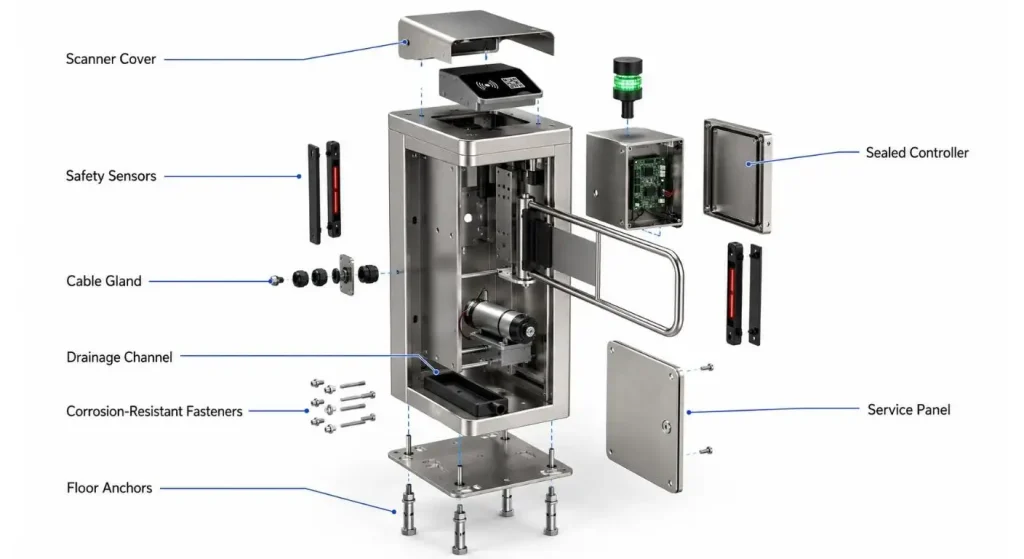
An anti-climb swing barrier is frequently used in factories, schools, warehouses, residential compounds and outside campus doors. In these areas, the gate may be exposed to the elements, cleaning materials, fluctuations in temperature, damage from accidents or intentional abuse.
Examine each individual component individually:
- Stainless-steel cabinet
- Barrier panel
- External reader
- Controller compartment
- Cable entries
- Fasteners
- Internal drainage
- Floor anchoring
- Motor and transmission
- Emergency controls
A general 'outdoors' description does not indicate parts that are protected!
Read the IEC, which states that the rating is a way of measuring the level of protection that an electrical enclosure can provide dust and water. For both tests, ask the class what enclosure was tested and do they think adding reader holes, displays, cable glands and/or other custom changes would have an impact on the tested configuration. For IEC's overview of the IP ratings see here: See the IEC overview of IP ratings.
For a short swing arm, tall panels are going to cause more wind resistance than a short swing arm. Manufacturer should verify at unexposed sites, that the size of the panel, motor, cabinet, anchors, and the foundation selected is appropriately suited to local conditions..
Perform the Test with the Real Project Configuration
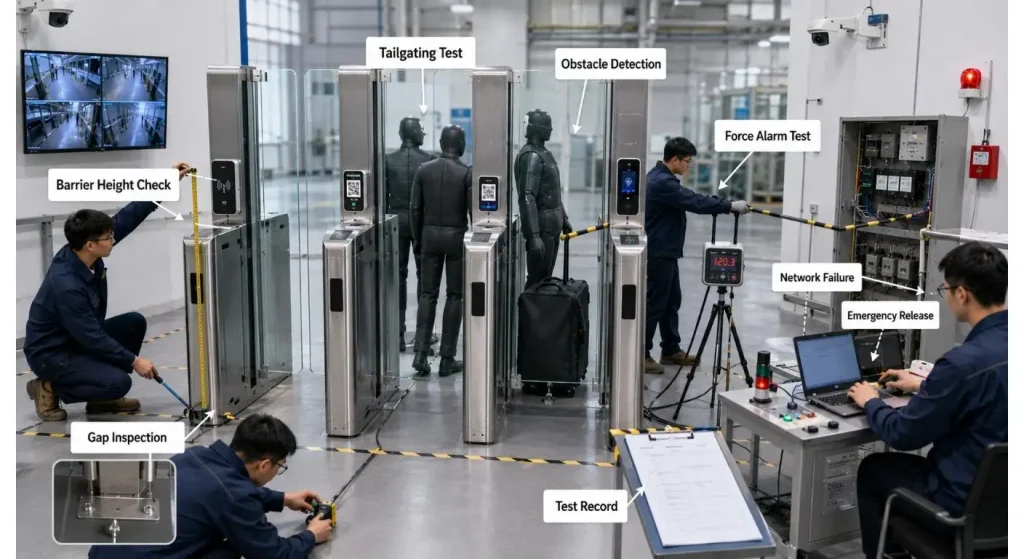
Ideally, the completed dimension of the panel; the reader (or device); the controller; the sensor configuration; and the software signals should be used to perform factory acceptance testing.
Recommended tests include:
- Old and incorrect cards; expired cards
- This will require one permission and a one-person pass.
- Tailgating
- Wrong-direction movement
- Obstacle detection
- Passage timeout
- Release the control for a closed panel.Release the control control one panel.
- Alarm output
- Network interruption
- On/Off Power Button, Handle Power Loss
- Set the alarm or emergency unit input data.Program the data for the alarm or emergency unit.
- Remote security release
- Repeated operating cycles
- Event recording
Climbing resistance should be measured using safe fixtures, test objects, measuring tools and procedures. Never ask employees to demonstrate live climbing if it could be unsafe for them.
Ask for test videos, inspection records, approved drawings and drawings for wiring, software versions and serial numbers, photographs of the packaging and a recommended parts list.
When the showroom sample is not the same as the final product, because of different panels, readers, lane width or controller, testing a showroom sample is insufficient.
Conclusion
When a project calls for making a large and easy swing gate but more physically challenging than a low swing gate, an anti-climb swing barrier gate can be beneficial. Its actual performance, however, relies on a host of factors more than just the panel's height.
How they integrate and work together is of critical importance for the barrier, access control, sensors, surrounding boundary, foundation, emergency logic to the site supervision.
A known manufacturer will verify the complete entry, describe what the product will protect and won't protect, compile an inventory of all interfaces and validate the gates approved setup prior to shipment.
FAQs
Q1. What are the features that make an Anti-Climb Swing Barrier more secure?
It has a taller panel to help deter casual climbing. The overall security relies on the staff response along with sensors, barriers around the perimeter, and anchors.
Q2. Will Anti-Climb Swing Gate detect tailgating?
Yes, with appropriate passage logic and sensors. The single high panel is not able to detect two person passage.
Q3. Can It be as Secure as a Full-Height Turnstile?
Usually not. It is more robust than a regular swing gate, but less solid than a full height turnstile.
Q4. Can it be used for wide or accessible lanes?
Wider panels won't necessarily have more powerful motors, different sensors, and sturdier anchors. The entire accessible route should also be compliant with local requirements.
Q5. Which of the following should be checked for the dimensions?
Check the panel height, passage width, bottom clearances, side gaps, and cabinet spacing and anchor locations. All dimensions should be on the approved drawing.
