


Why Automatic Pedestrian Access Gate Beats Manual Control
2025-09-24


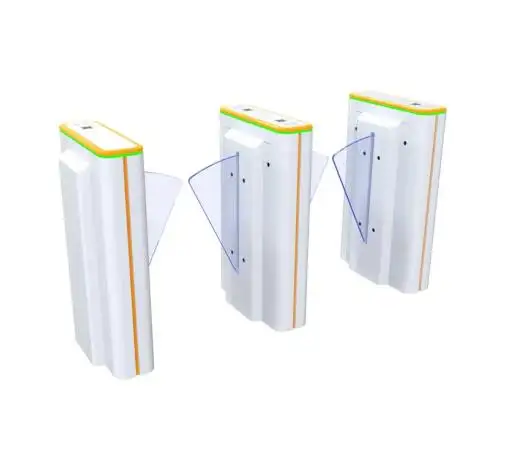
Automatic Pedestrian Access Gate is the modern answer to crowded lobbies, rising labor costs, and uneven security - and at IRONMAN Intelligent, we design it to be simple to deploy, safe to operate, and scalable as your sites grow.
❓ Why Automatic Pedestrian Access Gate Beats Manual Control
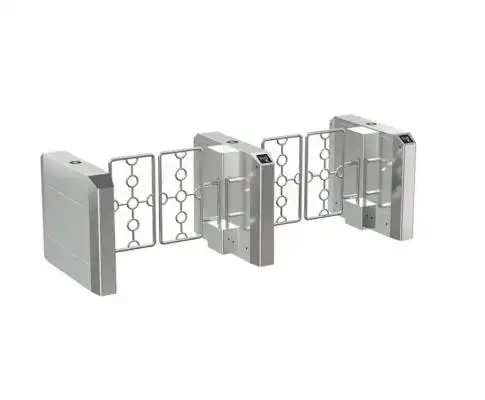
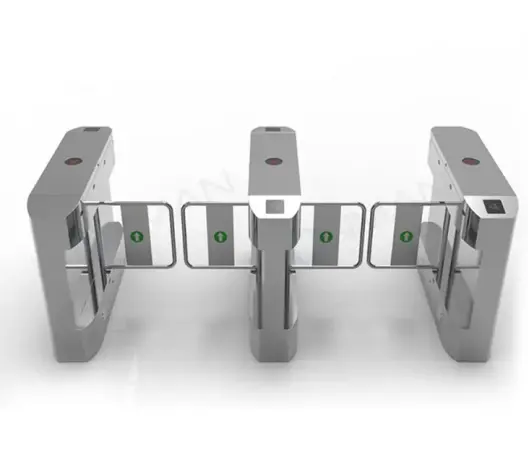
Manual checkpoints struggle when real people and real schedules collide. Peaks appear at 8:30 a.m., a tour group arrives unannounced, a guard rotates off shift, and the line slows to a crawl. An Automatic Pedestrian Access Gate solves these everyday frictions by applying the same rules with the same precision, lane after lane, hour after hour. At IRONMAN Intelligent, our stainless steel swing barrier solution blends tough materials with smart authentication so that visitors move with confidence and teams monitor with clarity - indoors, outdoors, and even in semi-outdoor corridors exposed to dust or rain.
1) From Pain Points to Proof of Flow
What holds manual control back? Inconsistent checks, fatigue, and limited visibility during rush hours. The consequences show up as longer queues, skipped audits, and avoidable disputes. We built our stainless steel swing barrier gate to remove those weak points and replace them with predictable flow and verifiable records.
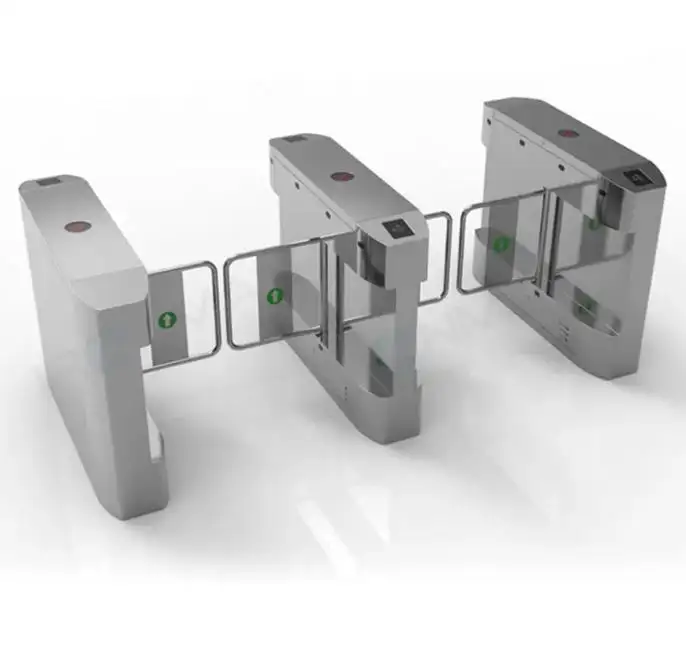
Durability you can feel. The cabinet is crafted from SUS304 stainless steel to resist corrosion, scratches, and day-to-day bumps. It's a practical choice for high-traffic areas because it keeps looking and performing like new. The passage width is customizable from 600 to 1200 mm, allowing smooth entry for luggage, strollers, and wheelchair users without squeezing the lane. Brushless motors with soft-start and soft-stop logic keep movement quiet and steady, while six pairs of sensors watch the lane and stop the arm instantly if an obstacle appears. Swing arms in tempered glass or acrylic complement modern interiors without sacrificing strength.
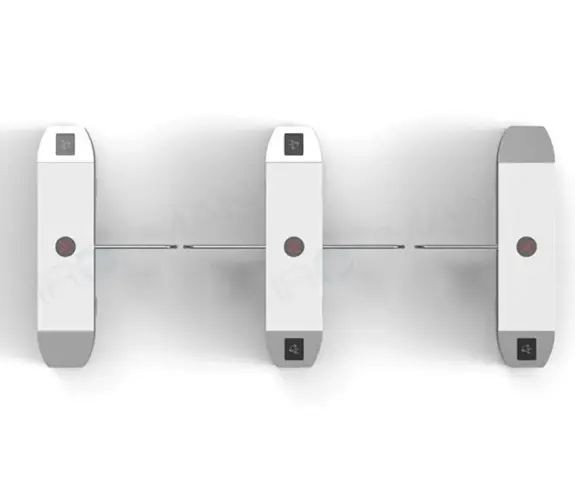
Access control without complexity. Your team can choose the credential that fits each environment - RFID card, face recognition, mobile NFC, or QR code. Direction (one-way or two-way), dwell time, and anti-tailgating rules are easy to set. With Wiegand, RS-485, TCP/IP, Relay, and RS232 connectivity, the gate integrates into common third-party platforms. Centralized software aggregates logs, applies role-based permissions, and offers real-time monitoring across buildings or regions, so managers see the whole story instead of a single doorway.
✅ Immediate advantages vs. manual control
- Consistent verification at every entry, every time
- ≤ 30 persons/minute passing speed to keep queues short
- Real-time anti-pinch with ~0.1 s rebound for safety
- Audio-visual alarms plus remote platform sync for incidents
- Anti-tailgating and dwelling detection to block common loopholes
✅ Daily fundamentals that reduce friction
- Dimensions: 1200x280x980 mm
- Material: SUS304 (top cover 1.2 mm; body 1.0 mm)
- Sensors: 6 pairs for precise detection
- Drive: Brushless motor (24-36 VDC)
- Power: AC220V ±10%, 50/60 Hz
- Passage width: 600-1200 mm (customizable)
2) Reliability, Safety, and Compatibility - The Stack That Keeps You Running
Security is only as strong as its weakest moment. A guard can blink; a rule can be misheard. An Automatic Pedestrian Access Gate reduces those single-point failures by embedding protection into the lane itself.
Safety that reacts before you do. If the arm meets resistance, the system automatically rebounds in about 0.1 seconds to avoid pinching. Attempts to intrude trigger sound-and-light alerts and sync to the monitoring platform for fast response. Anti-tailgating logic recognizes close-following behavior, and dwelling detection stops stalled lanes from causing backups.
Built for real environments. The gate operates from -35 °C to +75 °C and is engineered for water and dust resistance, so performance remains stable in heavy rain or gritty air. The cabinet's ISO 9227 salt spray test (2,000 hours) result speaks to long-term corrosion resistance, supporting outdoor and semi-outdoor placements where lesser builds fail early.
Maintenance that respects your calendar. The modular layout lets technicians swap arms, motors, or control boards in minutes rather than hours. Remote diagnostics track cycle counts, motor performance, and sensor health, allowing preventive maintenance before disruptions occur. Anti-interference design helps the system shrug off electromagnetic noise - a frequent issue in hospitals, labs, and dense office deployments.
✅ Integration and control options
- Supports RFID/Face/QR/NFC
- RS-485, Relay, Wiegand, TCP/IP; RS232 contact
- Passage modes: one-way, two-way, free passage (set on control panel)
- Automatic reset (default 10 s, adjustable)
- Power-off open for emergency egress
Global adaptability. With 100-240 V wide-range input, CE/FCC/ISO certifications, and 24/7 English support, IRONMAN Intelligent gates align with multinational standards and simplify global rollouts.
❓ Why Reliability Pays Off
Reliable automation curbs disputes and protects service levels. Sensor logic and tamper-evident logs create a consistent audit trail; investigations move faster; staff focus shifts from gatekeeping to customer care. The result is orderly entry, fewer delays, and a better first impression.
3) Measurable Business Impact
A gate does more than swing open. It sets the pace for your building. When an Automatic Pedestrian Access Gate enforces rules directly at the lane, outcomes become measurable and repeatable.
Throughput you can forecast. With a standard rate of ≤ 30 persons per minute (memory mode available), facilities can staff strategically - redeploying guards to roving patrols, visitor help desks, or incident response. Lines shrink, complaints drop, and the lobby feels calm even during surges.
Compliance you can audit. Every credential use creates a record. Role-based permissions and clear lane settings (direction, dwell time, temporary free-pass) help you support HR policies, vendor oversight, or campus safety reviews without adding complexity for operators. The data makes patterns visible - peak times, repeated denials, or chronic tailgating - so you can fix root causes, not symptoms.
Costs you can control. Long-life SUS304 housing, brushless drives, and modular components reduce unplanned downtime and parts waste. Simple service procedures cut technician time. And because access policies are enforced by the lane, teams spend less on overtime and temp staffing during events or seasonally high traffic.
Where it fits best. The IRONMAN Intelligent stainless steel swing barrier gate supports indoor, outdoor, and semi-outdoor pedestrian or bicycle passages across schools, office buildings, hotels, residential communities, factory parks, hospitals, corporate and public institutions, government auditoriums, and gyms. Different sites share the same logic and the same interfaces, making multi-location management far easier than a patchwork of manual posts.
Plan Your Upgrade from Manual Control
Whether you are redesigning a lobby, replacing aging turnstiles, or standardizing access across campuses, our team can help you pick lane width (600-1200 mm), select authentication methods, and connect to existing platforms through Wiegand, RS-485, TCP/IP, Relay, or RS232. We focus on practical details - traffic peaks, wheelchair routes, emergency exit rules - so your deployment is quick and low-risk.
Call to Action
Ready to turn bottlenecks into smooth, verifiable flow? Talk to IRONMAN Intelligent about an Automatic Pedestrian Access Gate plan tailored to your traffic patterns, compliance requirements, and architectural goals. Our engineers will review your layout, recommend lane counts, and map the integration path - so you launch stronger security with a better visitor experience from day one.
