


California High-Speed Pedestrian Turnstiles for Secure Access
2025-10-27


California. The Golden State is a global powerhouse of innovation, culture, and commerce. From the high-tech heartland of Silicon Valley and the bustling financial districts of Los Angeles and San Francisco to world-renowned universities and critical government centers, California's buildings pulse with activity. Managing the secure and efficient movement of people within these diverse, high-value, and often high-density facilities presents a unique set of challenges unlike anywhere else.
Simple locks and manual sign-in sheets are woefully inadequate for the demands of this dynamic environment. The state's unique combination of technological leadership, stringent regulatory landscape (including groundbreaking privacy laws), focus on accessibility, and high property values necessitates advanced, intelligent solutions for managing who goes where. This is the critical role fulfilled by the California high-speed pedestrian turnstile.
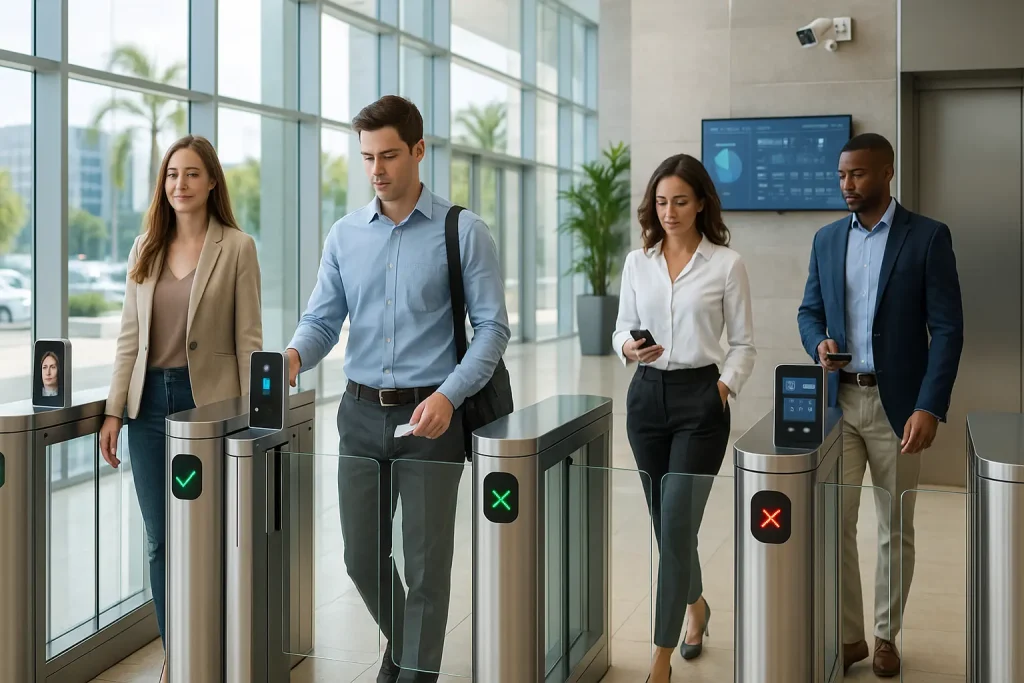
This isn't just a standard piece of access control hardware; it's a solution specifically engineered and adapted to thrive in California's distinct ecosystem. It must deliver exceptional speed to manage dense populations, robust security to protect valuable assets and intellectual property, seamless integration with cutting-edge technologies (especially mobile), unwavering compliance with strict state regulations like ADA and CCPA/CPRA, and often, a sophisticated aesthetic befitting premier properties. This guide provides an expert, comprehensive exploration of these essential systems tailored for the Golden State.
What Defines a "California High-Speed Pedestrian Turnstile"?
A California high-speed pedestrian turnstile is an automated access control barrier specifically designed and configured to meet the unique technological, regulatory (ADA, Title 24, CCPA/CPRA), security, and aesthetic demands prevalent in California's commercial, educational, and governmental facilities, emphasizing speed, compliance, and smart integration.
While sharing core technologies with high-speed turnstiles found globally across various Regional Markets, a system destined for California requires specific considerations. It's more than just a fast gate; it must navigate:
- Stringent Regulations: Uncompromising adherence to California's specific building codes, energy standards (Title 24), accessibility mandates, and pioneering data privacy laws (CCPA/CPRA).
- Tech-Forward Expectations: Seamless integration with mobile credentials, cloud platforms, and smart building technologies is often standard, driven by the state's innovation culture.
- High-Density Needs: Capable of efficiently managing large volumes of people common in tech campuses, urban high-rises, and major universities.
- Aesthetic Sensibilities: Often requires minimalist, high-tech, or architecturally integrated designs, particularly in Class-A properties.
- Potential Seismic Considerations: Must be installed securely to account for California's seismic activity.
Why Are High-Speed Turnstiles Essential in California?
High-speed turnstiles are essential in California due to the critical need to secure high-value intellectual property and assets, manage large concentrations of employees and visitors efficiently, ensure strict compliance with state-specific regulations (ADA, Title 24, privacy), uphold the tech-forward image prevalent in many industries, and provide auditable access logs.
California's unique environment creates specific pressures:
- Protecting Innovation & Assets: Securing research labs, data centers, corporate HQs (especially in tech and entertainment) requires robust physical access control beyond simple locks.
- Managing Density: Large tech campuses, downtown high-rises, and major universities need systems capable of handling thousands of entries/exits during peak times without creating frustrating queues. High throughput is non-negotiable.
- Compliance Culture: California has some of the strictest building, energy, accessibility, and data privacy regulations in the US. Access control systems must be compliant from day one to avoid legal and financial penalties.
- The "Silicon Valley Effect": There's an expectation of modern, seamless, technology-driven experiences, especially in corporate environments. Clunky or slow access control feels anachronistic.
- Operational Efficiency: Automating entry streamlines lobby operations, optimizes staffing, and provides valuable data for facility management in a high-cost labor market.
How Does the Technology Work in a California Context?
In California, high-speed turnstiles typically integrate readers supporting mobile credentials (BLE/NFC) and secure RFID cards, connecting to cloud-based access control platforms. Fast motors and sensors ensure high throughput, while system design and data handling must rigorously adhere to California's privacy regulations (CCPA/CPRA), especially concerning any biometric data.
The flow mirrors systems elsewhere, but with specific CA nuances:
- Credential Presentation: Strong preference for mobile credentials (tap or hands-free BLE) or secure 13.56 MHz RFID cards. Facial recognition adoption is cautious due to privacy laws.
- Validation: Reader securely communicates (OSDP preferred) with the Access Control System (ACS), very often a cloud-based platform for scalability and remote management favored by CA businesses.
- Permission Check & Privacy: The ACS verifies permissions based on roles (RBAC). If biometrics are used, stringent CCPA/CPRA protocols for consent, data storage, and deletion must be followed.
- Gate Actuation: Upon authorization, the high-speed motor opens the barriers (swing or flap).
- Passage Monitoring: High-density sensors track passage, ensuring single entry and safety, tuned for high traffic.
- Secure Closure & Logging: Gate closes rapidly; event logged securely in the ACS, with data handling respecting privacy regulations.
My Experience: "Specifying facial recognition for a lobby in San Jose requires a completely different approach than, say, for a project involving a Dubai high-speed speed gate. In California, the conversation starts with CCPA/CPRA compliance – clear notice, explicit opt-in consent, secure template storage, defined deletion policies. It's often easier and safer for clients to stick with secure mobile or card credentials unless there's a compelling high-security need for biometrics."
What Key Features are Crucial for California Installations?
Crucial features for a California high-speed pedestrian turnstile include strict adherence to ADA and Title 24, robust support for mobile and secure RFID credentials, features supporting CCPA/CPRA privacy compliance, high throughput capability, seismic installation considerations, and often, minimalist high-tech aesthetics.
Let's delve deeper into these California-specific requirements:
- Rigorous ADA Compliance: California often has stringent enforcement of accessibility standards, potentially exceeding basic federal ADA in specific interpretations or local codes. Flawless implementation of wide lanes, clear floor space, and reader accessibility is essential.
- Title 24 Energy Efficiency: California's Building Energy Efficiency Standards (Title 24) set requirements for energy consumption. Access control components, including turnstiles, may need to demonstrate low standby power consumption or integrate with building systems to power down during unoccupied periods to contribute to overall building compliance.
- CCPA/CPRA Privacy Compliance Features: This is unique and critical. If biometrics are used, the system (both hardware readers and backend software) must support:
- Explicit Consent Mechanisms: Securely logging user opt-in.
- Secure Template Storage: Encrypted, non-reversible biometric templates, not raw images.
- Data Minimization: Collecting only necessary data.
- Defined Deletion Policies: Ability to securely delete user data upon request or separation. This differs significantly from regions with less stringent data privacy laws, like perhaps those governing a Saudi Arabia pedestrian speed gate system.
- Advanced Credential Support: Dominance of smartphones necessitates excellent BLE and NFC reader performance. Support for secure 13.56 MHz RFID (iCLASS, DESFire) is standard for cards. Legacy 125 kHz Prox should be avoided.
- High Throughput Engineering: Motors, sensors, and logic must be optimized to handle the high density common in CA urban centers and large campuses (often 35-45+ PPM per lane).
- Seismic Installation: In many parts of California, building codes require equipment like turnstiles to be securely anchored or braced to withstand seismic activity. Installers must use appropriate hardware and methods.
What Types of Speed Gates are Popular in California?
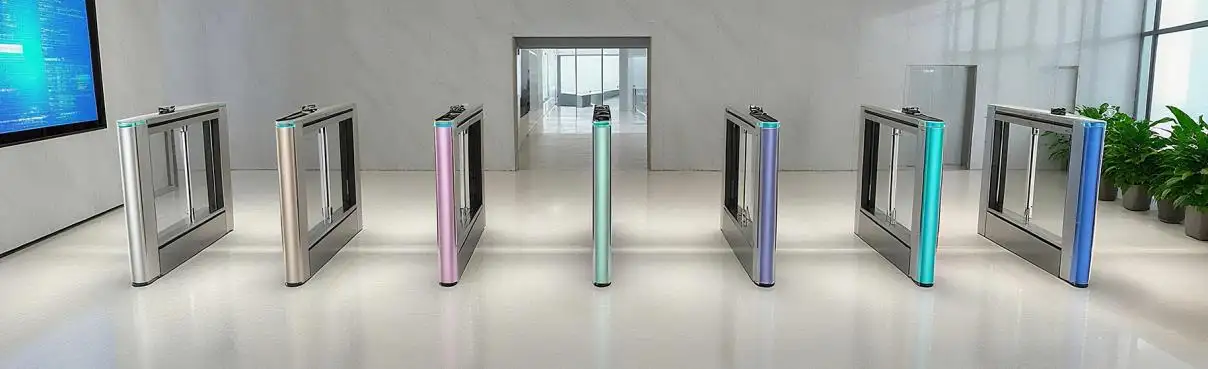
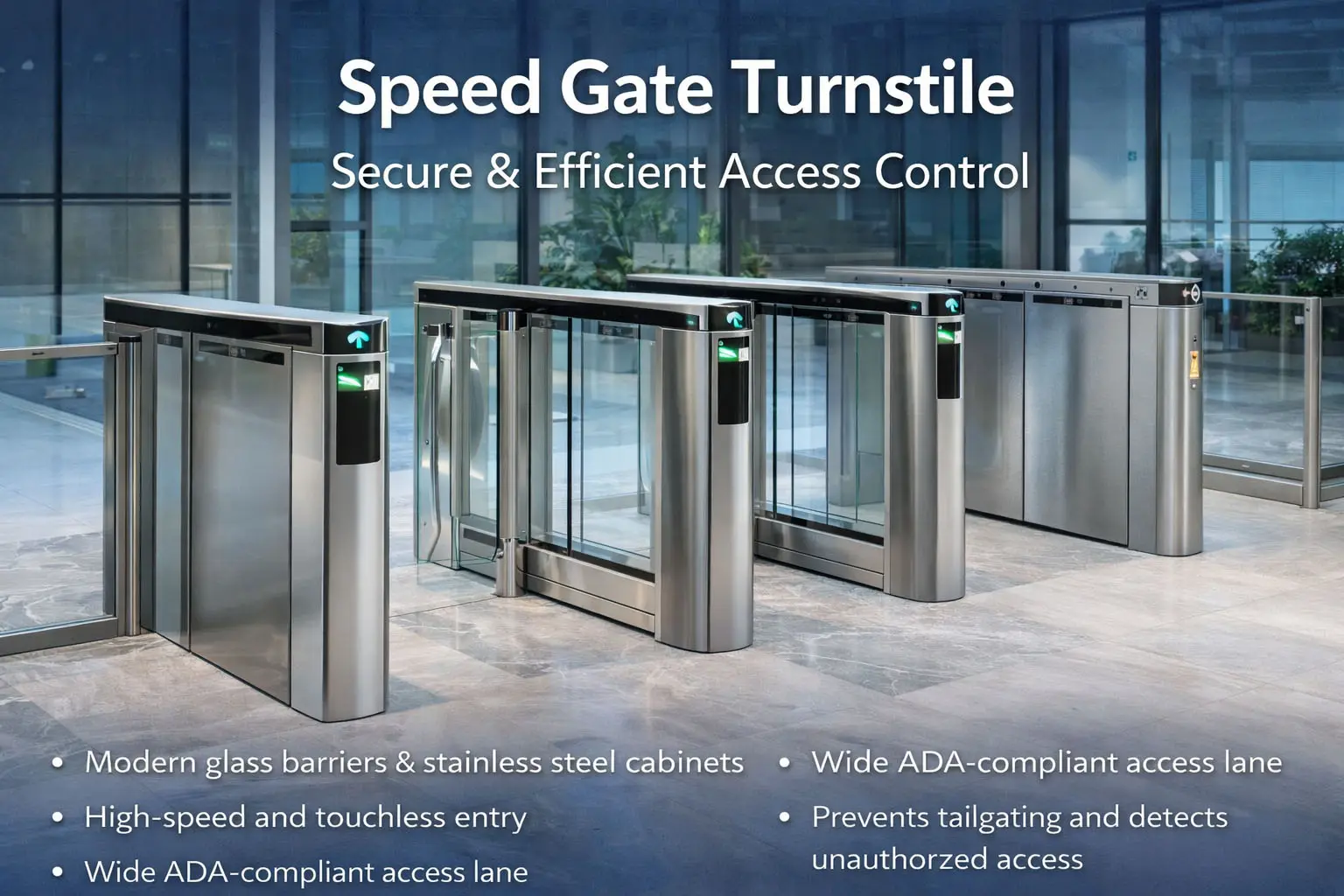
Flap barrier gates are highly popular, especially in tech campuses and high-traffic lobbies, due to their speed and modern aesthetic. Swing barrier gates are also widely used, particularly where ADA lanes are integrated or a more elegant look is desired. Optical turnstiles appear in prestigious, staffed lobbies.
- Flap Barriers (The Tech Favorite): Their high speed (often 40+ PPM) and sleek, retracting motion align well with the efficiency demands and modern aesthetics of Silicon Valley and other tech hubs. They are excellent for managing large rushes.
- Swing Barriers (The Elegant All-Rounder): Preferred in many corporate HQs, law firms, and financial institutions across California for their welcoming feel, quiet operation, and ease of creating aesthetically matched ADA lanes. They offer a great balance of speed, security, and design sophistication.
- Optical Turnstiles (The Minimalist Statement): Used in Class-A+ buildings in major cities (SF, LA) where maintaining a completely open lobby feel is a top design priority and where 24/7 high-level security personnel are present to monitor access and respond instantly to alarms. Learn more about Optical turnstiles.
Tripod and full-height turnstiles are generally confined to non-public areas, recreational facilities, or perimeter control on larger campuses, not typically appearing in primary commercial or office lobbies in California.
How Do These Turnstiles Enhance Security in California Facilities?
California high-speed turnstiles enhance security by providing a reliable physical deterrent against unauthorized entry, using advanced sensors to specifically prevent tailgating (crucial for protecting IP and data), enforcing granular access permissions consistently, and creating detailed digital audit trails vital for compliance and investigations in the state's regulated environment.
- Protecting High-Value Assets: In a state driven by intellectual property, R&D, and sensitive data, controlling physical access is the first line of defense. Gates prevent casual walk-ins and enforce access segmentation between public areas and secure zones.
- Defeating Tailgating: The sophisticated sensor arrays are critical for stopping unauthorized individuals from slipping in behind employees – a major risk in busy, seemingly open campus environments.
- Automated Policy Enforcement: Ensures that access rules (based on role, time, location) are applied consistently 24/7, vital in large organizations with complex permission structures.
- Compliance & Auditability: The automatic generation of detailed, timestamped access logs is essential for meeting security audit requirements (e.g., for data centers, financial services, healthcare tenants) and for investigating any security incidents thoroughly.
Boosting Efficiency: Managing Flow in California's Dynamic Workspaces
These turnstiles are crucial for managing the high density and dynamic schedules common in California workplaces. They handle large volumes efficiently (30-45+ PPM), eliminate lobby queues, support flexible work patterns, allow for optimized staffing, and deliver the seamless, tech-enabled experience expected by the state's workforce.
- Handling Density & Peaks: Whether it's a massive tech campus arrival or lunch rush in a downtown high-rise, high-speed gates prevent gridlock. This contrasts with potentially lower peak demands in less dense Regional Markets.
- Supporting Flexibility: As California companies embrace hybrid work, access systems need to manage fluctuating daily occupancy efficiently. Cloud-based systems integrated with gates allow easy remote credential management.
- Optimized Staffing ROI: Automating entry validation allows lobby staff (security/reception) to focus on higher-value tasks like visitor assistance, concierge services, or proactive security monitoring, optimizing labor costs.
- The "Frictionless" Expectation: Particularly in the tech sector, employees expect smooth, fast, technology-driven experiences. Slow or clunky access control feels outdated and diminishes the perception of a modern workplace. A well-implemented
California high-speed pedestrian turnstiledelivers this expected efficiency.
Navigating California Regulations: ADA, Title 24, and Privacy (CCPA/CPRA)
Compliance is non-negotiable and particularly complex in California. Systems must meet stringent state interpretations of ADA, potentially factor into Title 24 energy calculations, and rigorously adhere to the CCPA/CPRA regarding any personal or biometric data collected and processed by the system.
- ADA Enforcement: California's accessibility standards (often enforced via the California Building Code) are among the strictest. Ensuring proper lane widths, clear floor spaces, non-discriminatory operation, and compliant reader placement is absolutely critical. Assume rigorous inspection and enforcement.
- Title 24 Considerations: While a single gate's power draw might be small, in large installations, their cumulative energy consumption (especially in standby mode) can be a factor in overall building energy performance calculations under Title 24. Specifying energy-efficient components and "sleep modes" can be beneficial. "We often specify low-power consumption modes or integration with occupancy sensors for gates in California to help architects meet overall building energy targets."
- CCPA/CPRA - The Privacy Hurdle: This is a defining factor. Unlike regions with fewer restrictions, such as potentially the approach needed for a
Middle East fast access speed gate, California's privacy laws place strict controls on collecting and using biometric data (fingerprints, facial templates). Implementing biometric readers requires:- Explicit, Informed Consent: Users must opt-in, knowing exactly what data is collected, how it's stored/used, and how long it's kept.
- Secure Data Handling: Encrypted storage of non-reversible templates, strong cybersecurity measures.
- Deletion Rights: Procedures to securely delete data upon request or employee separation.
- No Sale/Sharing: Strict rules against selling or sharing biometric data. Failure to comply carries significant financial penalties. This often leads California facilities to favor secure mobile or smart card credentials over biometrics unless a very high-security need justifies the compliance burden.
Integration: The Key to Smart Buildings in California
Given California's role as a tech hub, seamless integration is not just desired; it's expected. California high-speed pedestrian turnstile systems must integrate flawlessly with cloud-based ACS, mobile credential platforms, sophisticated VMS, elevator destination dispatch (common in high-rises), and broader smart building automation systems via open APIs.
- Cloud & Mobile Native: Systems should be designed with cloud management and mobile access as primary considerations, reflecting market dominance.
- Open APIs are Essential: Facilitates connections to the diverse ecosystem of proptech solutions popular in California (visitor management, space booking, tenant experience apps, etc.).
- Elevator Integration: Destination dispatch is common in new towers in SF and LA, requiring proven integration between the turnstile authorization and elevator controls.
- Smart Building Synergy: Data from gates (occupancy, flow) should be easily shareable with BMS platforms to optimize energy, security monitoring, and space utilization analytics.
Installation and Seismic Considerations in California
Installation requires licensed contractors familiar with California's specific building codes, including potentially stringent seismic requirements for anchoring equipment in earthquake zones. Electrical work must comply with state and local codes (often exceeding national standards), and fire alarm integration is critical.
- Seismic Anchoring: In most of California, non-structural components like turnstiles must be properly anchored or braced to prevent them from shifting, overturning, or becoming hazards during an earthquake. This often requires specific anchor types and installation methods verified by a structural engineer. "It's not just about bolting it down; it's about using the right seismic-rated anchors installed correctly according to code. Cutting corners here is a serious safety risk."
- Electrical & Fire Codes: Installation must meet California Electrical Code and local FD requirements for fire alarm integration (fail-safe egress).
- Qualified Labor: Using experienced, licensed, and potentially unionized (depending on location/project) labor familiar with California codes is crucial for a smooth and compliant installation.
Future Trends: AI, Frictionless Access, and Sustainability in CA
The future for California high-speed pedestrian turnstile solutions involves leveraging AI for smarter security and flow analytics, pushing towards truly frictionless access (navigating privacy rules carefully), prioritizing sustainability in materials and energy use, and deeper integration into holistic smart building platforms.
- AI for Smarter Security & Flow: AI will enhance sensor accuracy (fewer false alarms), enable behavioral analytics (predicting issues), and potentially optimize lane usage dynamically based on real-time traffic.
- Frictionless (but Private) Access: Continued push for BLE, UWB, and facial recognition, but implementation will be heavily shaped by CCPA/CPRA evolution, likely favoring opt-in, highly transparent systems. The experience may differ from faster biometric adoption in places like
Singapore smart speed gate turnstile systeminstallations. - Sustainability Focus: Driven by Title 24 and general environmental awareness, expect increased demand for gates using recycled materials, low-power components, energy-saving modes, and designs facilitating end-of-life recycling.
- Holistic Integration: Gates become key sensors/actuators in comprehensive smart building platforms managing security, energy, space utilization, and tenant experience from a single pane of glass.
The Final Verdict: Smart, Secure, and Compliant Access for the Golden State
The California high-speed pedestrian turnstile is a critical enabling technology for the state's dynamic and demanding building environments. Successfully deploying these systems requires more than just advanced hardware; it demands a nuanced understanding of California's unique regulatory landscape (especially ADA, Title 24, CCPA/CPRA), its tech-forward culture, its high-density challenges, and its specific environmental considerations like seismic activity.
By prioritizing compliance, embracing modern credential technologies (especially mobile), leveraging cloud platforms, ensuring seamless integration, and focusing on both robust security and a frictionless user experience, facilities across California can implement intelligent gate solutions that are truly fit for purpose. These systems provide the secure, efficient, and compliant access control necessary to support the innovation, commerce, and education that define the Golden State, setting a benchmark often distinct from solutions deployed in other Regional Markets.
