


Dubai High-Speed Speed Gates for Building Entrances
2025-10-27


Dubai. The name itself evokes images of soaring skyscrapers, audacious architectural feats, and a relentless drive towards the future. It's a city built on ambition, a global hub where cutting-edge technology, luxurious design, and operational efficiency converge. Within this dynamic landscape, the entrances to its iconic buildings – the corporate towers, luxury residences, world-class hotels, and sprawling malls – are more than just doorways; they are statements of prestige, security, and technological prowess.
Managing the immense flow of people through these high-profile, high-traffic entrances requires solutions that are as advanced and sophisticated as the city itself. Traditional access methods fall short, unable to cope with the volume, security demands, or aesthetic expectations. This necessitates the deployment of state-of-the-art technology, specifically the Dubai high-speed speed gate for building entrance applications.

These systems are not merely functional barriers; they are integral components of Dubai's smart building ecosystem. Engineered for exceptional speed, uncompromising security, resilience against demanding environmental conditions, seamless integration with other technologies, and often featuring bespoke, luxurious designs, they represent the pinnacle of modern access control tailored for one of the world's most futuristic cities. This guide provides an expert, comprehensive exploration of these specialized speed gate solutions in the unique context of Dubai.
What Defines a "Dubai High-Speed Speed Gate"?
A Dubai high-speed speed gate is an advanced automated pedestrian barrier specifically designed and configured to meet the exceptionally high standards for speed, security, aesthetics, technological integration, and environmental resilience characteristic of premier building entrances in Dubai.
While part of the broader category of solutions for Regional Markets, specifically the Middle East, a gate destined for a high-profile Dubai installation often pushes the boundaries. Key defining characteristics typically include:
- Exceptional Speed & Throughput: Engineered to handle extremely high peak passenger volumes common in Dubai's bustling commercial and residential towers.
- Cutting-Edge Technology: High adoption rates of facial recognition, advanced mobile credentials (BLE), and deep smart building integration are expected.
- Premium Aesthetics & Customization: Emphasis on luxury materials, flawless finishes, bespoke designs, and sophisticated lighting integration to match Dubai's architectural ambitions.
- Environmental Robustness: Specifically designed or adapted to operate reliably in Dubai's climate of extreme heat, humidity, and airborne dust/sand.
- Advanced Security Features: Incorporating sophisticated anti-tailgating sensors, potentially enhanced by AI, and seamless integration with comprehensive building security platforms.
It's about delivering a solution where peak performance, stunning design, and intelligent operation converge – reflecting the very essence of Dubai's development philosophy.
Why Are High-Speed Gates Indispensable for Dubai Building Entrances?
High-speed gates are indispensable in Dubai due to the city's high-density vertical urbanism, the critical need for robust security in a global hub, the expectation of seamless, high-tech experiences, the demands of a harsh climate, and the operational efficiencies required to manage world-class properties.
Dubai's unique environment creates specific, intense pressures:
- Managing Vertical Density: Iconic skyscrapers house thousands of residents and workers. Efficiently moving this volume, especially during peak times, necessitates high-throughput automated access. Manual checks would lead to unacceptable congestion.
- Security in a Global Hub: As a major international center for business, tourism, and events, Dubai maintains a strong focus on safety and security. Advanced access control at building entrances is a fundamental requirement.
- The "Dubai Standard" of Experience: The city markets itself on luxury, efficiency, and cutting-edge technology. Building entrances must reflect this. Slow, cumbersome, or unattractive access control detracts significantly from the expected premium experience. A seamless, fast, often touchless entry is the expectation.
- Climate Challenges: Standard electronic and mechanical systems can struggle with Dubai's intense summer heat (often exceeding 45°C / 113°F), high humidity, and occasional dust storms. Gates must be specifically engineered for resilience.
- Operational Excellence: Managing prestigious properties demands efficiency. Automating lobby access optimizes staffing, reduces queues, enhances security posture, and provides valuable operational data, contributing to the smooth running expected of a premier Dubai high-speed speed gate for building entrance.
How Does a Dubai Speed Gate System Typically Operate?
A Dubai speed gate system typically utilizes advanced credentials like facial recognition or mobile apps for verification via a connected access control platform. High-torque motors drive premium barriers (often glass flaps or swings) rapidly, while intelligent sensors ensure secure, single passage, often integrating with elevator or building management systems.
The user journey emphasizes speed and often a touchless interaction:
- Approach: User approaches the gate, often featuring high-end finishes and lighting.
- Credential Presentation (Often Passive):
- Facial Recognition: User briefly looks towards an integrated camera. AI algorithms match their face against a database instantly.
- Mobile (BLE): User approaches with their smartphone (running an authorized app) in their pocket or bag; a long-range Bluetooth reader authenticates them automatically.
- Mobile (NFC) / Secure RFID: User taps their phone or a high-frequency smart card on the reader.
- Ultra-Fast Validation: The system communicates securely with the building's Access Control System (ACS) – frequently a sophisticated IP-based or cloud-enabled platform common in Dubai's smart buildings. Verification happens in milliseconds.
- Smart Building Integration: If authorized, the ACS sends the "open" command to the gate and may simultaneously trigger other actions (e.g., call an elevator via destination dispatch, adjust personalized settings).
- Rapid, Quiet Actuation: High-quality brushless DC motors open the barriers (commonly sleek flap barriers for speed, or elegant swing barriers in ultra-luxury settings) almost silently.
- Intelligent Passage Monitoring: Sophisticated sensor arrays, potentially enhanced with AI, track the user, accurately detect any tailgating attempts (even with flowing attire or luggage), and ensure safety.
- Secure Closure & Data Logging: Barriers close immediately after safe passage. The event is logged securely for auditing and operational analytics within the building's integrated systems.
Key Technologies Driving Dubai's Speed Gate Innovation
Dubai's market actively embraces and often demands the very latest in access control technology, pushing innovation in biometrics, mobile access, AI-driven sensors, and deep smart building integration.
Dominance of Facial Recognition
- Why Dubai?: Higher public and governmental acceptance compared to many Western regions, coupled with the desire for the ultimate "frictionless" experience, makes facial recognition a very popular choice, especially in new, high-profile developments.
- Performance: AI-powered systems offer impressive speed and accuracy, even in busy, variable lighting conditions common in grand lobbies.
- Implementation: Requires robust network infrastructure, powerful backend matching servers, and careful consideration of camera placement and enrollment processes.
Advanced Mobile Credentials (BLE Focus)
- Hands-Free Convenience: Bluetooth Low Energy (BLE) allowing "phone-in-pocket" authentication strongly appeals to the desire for seamless luxury and efficiency.
- Security: Modern mobile credential platforms offer strong encryption and leverage the smartphone's own security features.
- Ubiquity: High smartphone penetration makes this a natural fit for residents, tenants, and even registered visitors.
AI-Enhanced Sensor Technology
- The Need: Accurately distinguishing authorized users from potential tailgaters, while ignoring luggage, strollers, or traditional attire (like abayas or kanduras) without causing false alarms or unsafe closures, is critical in Dubai's diverse environment.
- The Solution: AI algorithms analyzing data from high-density IR sensors (and sometimes fused with video) provide the necessary intelligence and adaptability, learning typical passage patterns to improve accuracy over time.
Deep Smart Building Integration (Beyond Basic Access)
- The Expectation: In Dubai's smart buildings, the speed gate is rarely standalone. It's expected to be a fully integrated component.
- Common Integrations: Elevator Destination Dispatch, Visitor Management Systems (VMS), Building Management Systems (BMS) for occupancy data/HVAC control, integrated security platforms (VMS/PSIM), sometimes even parking systems. Open APIs are essential.
Premium Materials & Manufacturing
- Beyond Steel & Glass: While high-grade (often 316L) stainless steel and tempered glass speed gate barriers are standard, Dubai projects frequently demand more.
- Luxury Finishes: Architectural bronze, PVD coatings (gold, rose gold, black chrome), stone (marble, granite) or wood inlays for top lids, and bespoke metalwork are common requests to match opulent interiors. Precision manufacturing and flawless finishing are paramount.
Popular Gate Types & Design Philosophy in Dubai
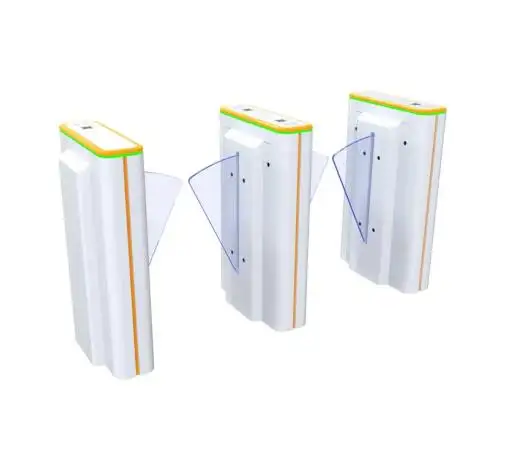
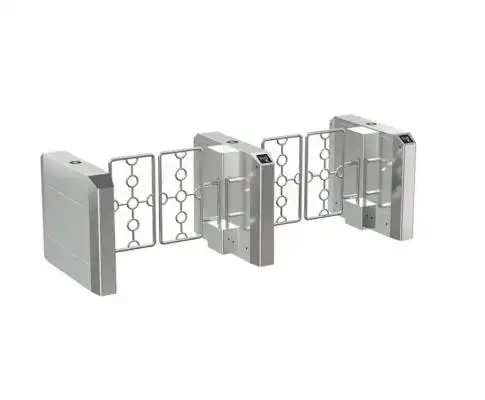
Flap barrier speed gates are extremely popular for their high speed and modern aesthetic, fitting well with Dubai's futuristic architecture. Swing barriers are used where elegance and a slightly more formal feel are desired. Customization and aesthetic integration are key design drivers.
- Flap Barriers (The Default Choice): Their rapid retracting motion delivers the highest throughput, essential for managing crowds in malls, metro links, and busy towers. Their high-tech look aligns well with Dubai's image. Many Dubai high-speed speed gate for building entrance installations utilize flaps.
- Swing Barriers (The Elegant Alternative): Chosen for luxury hotels, high-end residences, or prestigious corporate HQs where a smoother, quieter, and arguably more 'welcoming' barrier motion is preferred. They also lend themselves well to premium material customization.
- Design Philosophy: Integrated Luxury: Unlike more utilitarian approaches sometimes seen elsewhere (e.g., robustness focus for a
Germany high-throughput speed-gate-pedestrian-accesssystem in transit), Dubai often treats the speed gate as a design feature. It must complement, not clash with, often lavish lobby designs. Clean lines, hidden fixings, premium materials, and sophisticated lighting are expected. The level of aesthetic demand often exceeds even that of other major hubs likeNew York speed gate turnstile systeminstallations. - Optical turnstiles are sometimes considered for ultimate openness in highly staffed luxury environments, but the preference often leans towards the tangible security and advanced tech feel of barrier gates.
Addressing Dubai's Environmental Challenges: Heat, Humidity, Dust
Dubai's climate presents significant challenges. Speed gates must be engineered for flawless operation in sustained high temperatures (potentially exceeding 50°C / 122°F in direct sun/unconditioned spaces), high humidity, and environments prone to fine airborne dust and sand.
My Experience: "I've seen standard 'indoor' gates installed near poorly sealed entrances in Dubai fail rapidly. Dust ingress causes sensor faults, high heat leads to premature electronic failure, and humidity combined with any salinity causes corrosion even on standard stainless steel. For Dubai, specifying hardware with high IP ratings (at least IP54), using 316L grade stainless steel, ensuring adequate internal ventilation or cooling for electronics, and planning for more frequent sensor cleaning is absolutely essential for reliability."
Key Environmental Hardening Features:
- High Temperature Components: Electronics rated for extended operation at high ambient temperatures.
- IP Rating: Minimum IP54 recommended, higher for semi-exposed locations, to protect against dust and moisture.
- Corrosion Resistance: 316L stainless steel preferred, especially near coastal areas. Appropriate coatings on internal components.
- Sealed Enclosures: Gasketed panels and cable entries to prevent dust/sand ingress.
- Cooling Considerations: Passive heat sinks or potentially active cooling (fans) for critical electronics in enclosed pedestals operating in extreme heat.
Security & Compliance in the Dubai Context
Security is a paramount concern. Dubai systems require highly reliable anti-tailgating, robust physical construction, seamless integration with centralized security monitoring platforms (like Dubai Police SIRA regulations might mandate for certain buildings), and often support for Emirates ID integration in specific contexts.
- Zero Tolerance for Tailgating: Systems must use advanced sensors and logic for highly accurate detection.
- Integration with Security Platforms: Real-time alarm reporting and potentially video integration with building/city security command centers are often required. Compliance with Security Industry Regulatory Agency (SIRA) guidelines is essential for many projects.
- Emirates ID: While not typically used for primary physical access in commercial buildings, the capability to integrate readers compatible with the Emirates ID for identity verification might be required in government or specific high-security scenarios.
- Robustness: Physical resilience against tampering or forced entry attempts is expected.
Installation, Support, and Logistics in Dubai
Successful deployment requires experienced local installation teams familiar with Dubai's construction standards and regulations (Dubai Municipality, DEWA, Civil Defence). Given the critical nature of these systems, prompt, reliable local technical support and spare parts availability are non-negotiable.
- Local Expertise: Installers must understand local codes, particularly Dubai Civil Defence requirements for fire alarm integration and emergency egress.
- Coordination: Installation often involves complex coordination with multiple trades (electrical, data, flooring, security) in fast-paced construction environments.
- Logistics: Managing importation, customs, and timely delivery to site requires experienced logistics handling.
- 24/7 Support: For many Dubai facilities operating around the clock (hotels, residential towers, airports), access to rapid-response, qualified local technical support is crucial to minimize any downtime. Relying solely on remote support from other Regional Markets is often impractical. Look for vendors with a strong UAE presence or highly capable local partners.
Future Trends: AI, Biometrics Everywhere, Total Integration
The future for Dubai high-speed speed gate for building entrance solutions points towards ubiquitous adoption of frictionless biometrics, deeper AI integration for predictive security and hyper-personalized experiences, and becoming central nodes in Dubai's ambitious smart city framework.
- Facial Recognition as Standard: Expect facial recognition to become the default mode of access, moving beyond opt-in to become the primary method in many new developments, leveraging advanced AI for accuracy and liveness detection. This contrasts with more cautious approaches seen in the
USA speed gate turnstilemarket due to privacy laws. - AI-Driven Personalization & Prediction: AI won't just enhance security; it will personalize the journey. Gates might recognize residents/employees and trigger pre-set elevator calls, climate settings, or even personalized welcome messages on integrated displays. AI will also predict lobby congestion based on flight arrivals, events, or time of day, potentially adjusting gate parameters dynamically.
- Smart City Data Integration: Access data (anonymized) from major buildings could feed into city-wide platforms managing traffic flow, public transport coordination, and emergency response, aligning with Dubai's smart city goals.
- Beyond Access: Health & Safety Integration: Post-pandemic, gates might integrate contactless temperature screening or occupancy counting features more seamlessly as part of a holistic building health strategy.
The Final Verdict: The Intelligent, Elegant Gateway to Dubai
The Dubai high-speed speed gate for building entrance is a microcosm of the city itself – technologically advanced, aesthetically ambitious, security-conscious, and designed for peak performance. It's an essential component for managing access in Dubai's unique vertical landscape, meeting demands for speed, security, luxury, and smart integration that often surpass those in other global centers.
By prioritizing cutting-edge technology (especially biometrics and mobile), demanding premium design and materials, engineering for the harsh climate, and ensuring deep integration within the smart building ecosystem, Dubai facilities can deploy speed gate solutions that are truly world-class. These intelligent gateways are not just controlling entry; they are enhancing the experience, optimizing operations, and reflecting the innovative spirit of Dubai, setting them apart from solutions tailored for places like Singapore smart speed gate turnstile system hubs or those meeting the specific regulations of the UK speed gate turnstile access control market.
