


Germany’s High-Throughput Speed Gates for Pedestrian Access
2025-10-27


Germany stands as a global benchmark for engineering excellence, operational efficiency, and stringent quality standards. From its powerful industrial base and cutting-edge research centers to its meticulously planned public infrastructure and modern corporate headquarters, the nation places a high premium on systems that are reliable, secure, and function with precision. In this context, managing the flow of people into and within buildings requires solutions that meet these exacting demands.
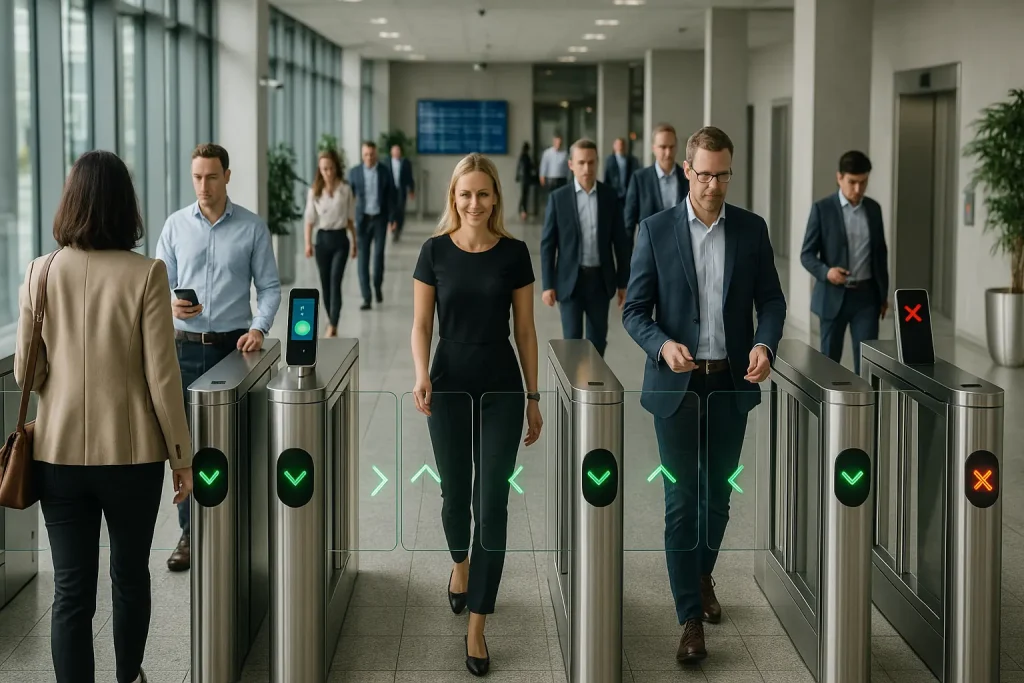
While basic access control methods exist, the need to manage large volumes of pedestrians quickly, securely, and in compliance with rigorous regulations necessitates advanced technology. This is the critical role fulfilled by Germany high-throughput speed gate pedestrian access systems. These are not merely automated barriers; they are sophisticated solutions engineered to handle significant traffic volumes efficiently while adhering to Germany's specific legal framework (including stringent data privacy rules like GDPR), safety standards (TÜV, DIN), and the high expectations for durability and performance characteristic of the German market.
Understanding the specific requirements and nuances of deploying high-throughput speed gates in Germany is vital for architects, security planners, facility managers, and technology providers operating in this demanding environment. This guide provides an expert, comprehensive exploration of these systems, focusing on the technology, benefits, critical compliance aspects, and implementation strategies tailored for German facilities.
What Defines "High-Throughput Speed Gate Pedestrian Access"?
High-throughput speed gate pedestrian access refers to automated barrier systems specifically engineered to process a large number of individuals per minute (PPM) through a controlled checkpoint, minimizing queues while maintaining security and safety protocols. The emphasis is on maximizing flow efficiency during peak periods.
This concept is crucial in environments where large groups need to enter or exit within short timeframes, such as:
- Busy corporate office lobbies during morning arrival.
- Public transportation hubs (S-Bahn, U-Bahn stations) during commute hours.
- Large manufacturing facilities during shift changes.
- University building entrances between classes.
- Entrances to stadiums or event venues.
A "high-throughput" gate is characterized by its ability to complete the entire validation-and-passage cycle very quickly – typically processing 30, 40, or even more people per minute per lane, significantly faster than traditional turnstiles or manual checks. This speed is achieved through a combination of fast mechanics, rapid credential validation, and intelligent sensor logic.
Why is High Throughput Particularly Important in Germany?
High throughput is particularly important in Germany due to the nation's emphasis on efficiency and punctuality in both business and public life, the high density of workers and commuters in major urban centers, the prevalence of large-scale industrial and corporate campuses requiring efficient shift changes, and the need to manage access smoothly within highly regulated public spaces.
The German context amplifies the need for speed and efficiency:
- Efficiency Culture: Punctuality and operational efficiency are deeply ingrained. Bottlenecks and queues at building entrances are seen not just as inconveniences but as significant productivity drains.
- Urban Density & Transit: Major German cities rely heavily on public transport. S-Bahn and U-Bahn stations, as well as the corporate buildings they serve, experience intense peak loads that demand rapid processing to prevent dangerous platform crowding and ensure timely commutes.
- Large Industrial Base: Germany's strong manufacturing sector often involves large facilities with thousands of employees arriving and departing simultaneously during shift changes. Efficient access control is vital for smooth operations.
- Regulatory Environment: While prioritizing throughput, solutions must still meet Germany's rigorous safety, security, and accessibility standards without causing undue delay. Finding this balance requires sophisticated technology.
Inefficient access control directly clashes with the operational tempo expected in many German professional and public environments.
How Do These Systems Achieve High Throughput?
High throughput is achieved through a synergistic combination of high-speed motors driving the barriers, rapid credential validation technologies (like contactless RFID or mobile NFC), and advanced sensor logic that allows barriers to close quickly and safely behind each user, minimizing the time each lane is occupied.
Achieving 30-40+ PPM requires optimizing every millisecond of the passage cycle:
- Fast Mechanics: Utilizing high-performance brushless DC motors that can open and close barriers (typically flaps or sometimes fast swings) in fractions of a second (e.g., 0.3 - 0.7 seconds). The engineering focus is on speed combined with durability for millions of cycles.
- Instant Credential Validation: The time taken to read the credential and get authorization is critical. This necessitates:
- Fast Readers: High-quality readers supporting modern, fast contactless standards like MIFARE DESFire (very common in Germany) or NFC for mobile credentials. Older, slower technologies create bottlenecks.
- Responsive ACS: The Access Control System (ACS) "brain" (whether local panel or cloud) must process the request and send the "open" command almost instantaneously. Network latency or slow controllers kill throughput.
- Intelligent Sensor Logic: This is the "secret sauce." High-density sensor arrays allow the gate controller to:
- Precisely track the user through the lane.
- Command the barriers to close the instant the user is safely clear, rather than waiting a fixed (and potentially slow) delay.
- Minimize the "tailgating gap" for security while maximizing the lane's availability for the next person.
My Experience: "Optimizing throughput for a major German transport hub involved intense collaboration between the gate manufacturer, the AFC (Automated Fare Collection) provider, and the transit authority. We weren't just timing the barrier speed; we were analyzing the entire transaction – from the moment the card entered the reader field to the moment the gate was ready for the next passenger. Shaving off even 100 milliseconds per transaction makes a massive difference when you're processing thousands per hour."
Balancing Speed with German Security & Safety Standards (TÜV, DIN)
Crucially, achieving high throughput in Germany cannot come at the expense of safety or security. Systems must rigorously adhere to German (and EU) standards, often verified by bodies like TÜV (Technischer Überwachungsverein) and conforming to relevant DIN (Deutsches Institut für Normung) and EN (European Norm) standards for mechanical safety, electrical safety, and emergency egress.
This balance requires sophisticated engineering:
- Mechanical Safety (e.g., DIN EN 16005 principles): Gates must be designed to prevent pinching, crushing, or impact injuries. This involves:
- Safe barrier edge designs (e.g., soft edges, rounded corners).
- Force limitation sensors/logic in motors to detect obstructions and stop/reverse.
- Precise speed control (smooth acceleration/deceleration).
- Electrical Safety (e.g., VDE, CE/UKCA marking): Compliance with stringent electrical safety standards is mandatory. Components must be properly rated, grounded, and installed according to German electrical codes.
- Emergency Egress (e.g., DIN EN 179, DIN EN 1125 principles): Absolutely critical. Gates must integrate reliably with the building's fire alarm system and fail-safe (automatically open and stay open) upon alarm activation or power loss to allow unimpeded escape routes. Specific requirements regarding push bars or panic hardware might apply depending on the location and occupancy load, subject to local Bauordnung (building regulations). Getting this integration certified is non-negotiable.
- TÜV Certification: While not always legally mandatory for the gate itself (CE/UKCA marking is often the primary requirement), having components or the entire system voluntarily certified by a recognized body like TÜV provides strong evidence of safety and quality, highly valued in the German market. "For many German clients, seeing a TÜV certification mark provides significant peace of mind. It signifies that the product has undergone rigorous independent testing for safety and reliability – characteristics highly prized here."
Security features, like anti-tailgating sensors, must also be highly reliable, minimizing false alarms which can disrupt flow and user confidence.
What Types of Gates Excel in High-Throughput German Environments?
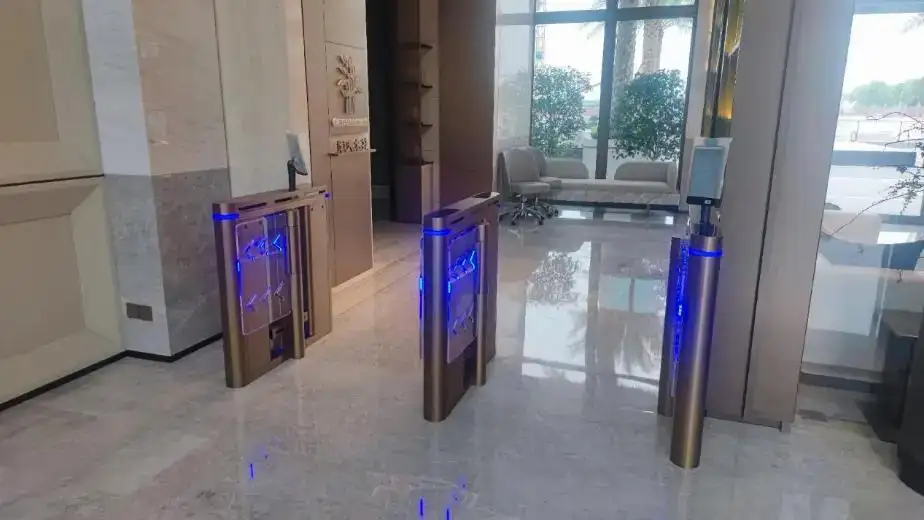
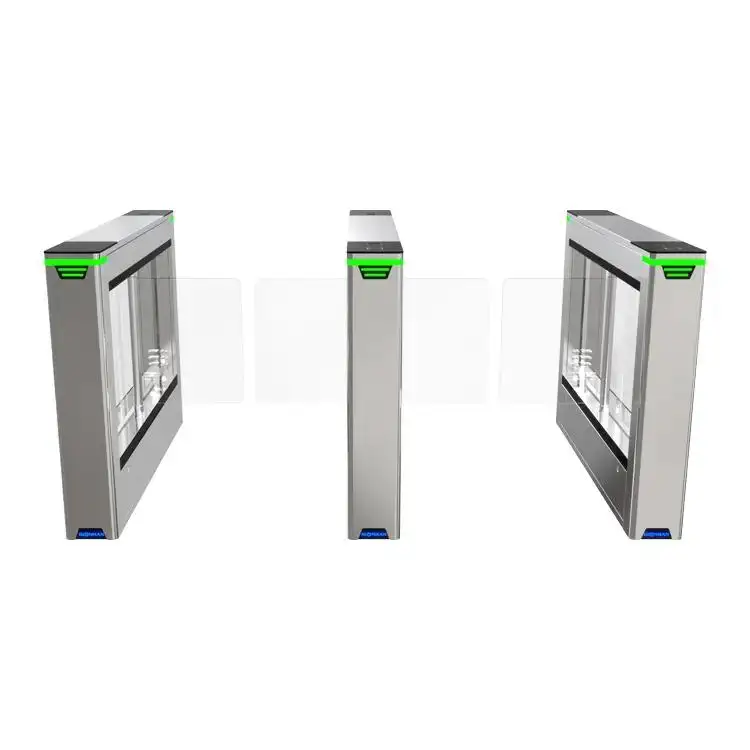
Flap barrier speed gates are the predominant choice for maximizing throughput in Germany due to their very fast opening/closing cycle and relatively compact footprint. Swing barrier gates are also used, especially where aesthetics or ADA/accessibility requirements are key factors, but may offer slightly lower peak throughput.
- Flap Barriers (The Speed King):
- Why Germany uses them: Unmatched speed (often 40+ PPM), essential for handling peak loads in busy U-Bahn/S-Bahn stations, large office lobbies (like in Frankfurt or Munich), and industrial shift changes. Their modern, efficient aesthetic often aligns with German design sensibilities.
- Considerations: High quality mechanics are crucial for reliability under constant use. Sensor accuracy must be high to prevent false alarms with bags etc.
- Swing Barriers (The Versatile Option):
- Why Germany uses them: Offer a good balance of speed (30-40 PPM), enhanced security feel (often taller barriers available), quiet operation, and are excellent for implementing compliant accessible lanes (Barrierefreiheit). Preferred in many corporate HQs or buildings where a slightly more formal aesthetic is desired. Many Europe commercial building speed gate solution deployments favor swing gates.
- Considerations: Require more physical space for barriers to swing. Might be fractionally slower than flaps at absolute peak.
- Optical Turnstiles (Niche Application):
- Why Germany might use them: For maximum openness in prestigious, continuously staffed lobbies (e.g., high-end corporate HQs) where physical deterrence is secondary to monitoring and guard response. Learn more via resources on Optical turnstiles.
- Considerations: Provide no physical security barrier; reliance on staff is absolute. Less common than barrier gates.
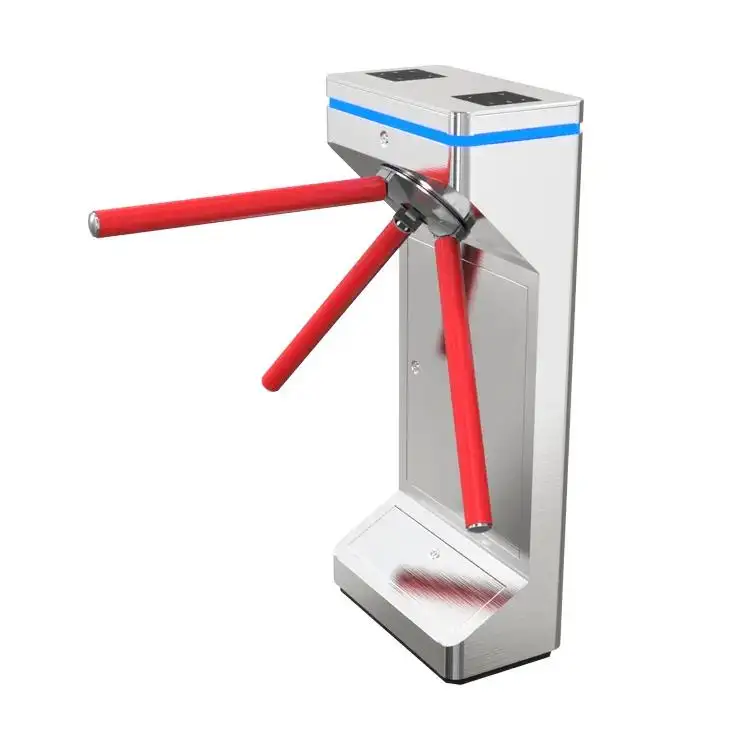
- Tripod/Full-Height Turnstiles: Generally considered too slow or industrial for primary high-throughput access points in modern German commercial or public transport settings. Used more for perimeter control, leisure facilities, or older installations.
Credential Technologies Supporting High Throughput in Germany
To achieve high throughput, gates must be paired with fast, contactless credential technologies. In Germany, this primarily means secure RFID/NFC smart cards (MIFARE standard is prevalent) and increasingly, mobile credentials using NFC or BLE. Biometrics face significant hurdles due to GDPR.
- Secure RFID/NFC (The Standard): 13.56 MHz contactless smart cards (MIFARE Classic, and more securely, DESFire EV1/EV2/EV3) are widely used for corporate access, public transport passes (like the Deutschlandticket infrastructure), and student IDs. The "tap-and-go" interaction is sub-second and highly reliable. Crucially, older 125 kHz Prox technology should be avoided due to major security flaws.
- Mobile Credentials (The Rising Star): Using smartphones via NFC (tapping like a card) or Bluetooth Low Energy (BLE for longer-range, hands-free access) is rapidly gaining popularity, especially in corporate environments. High smartphone penetration and user demand for convenience drive this trend.
- Biometrics (The GDPR Challenge): While technically feasible, the EU's General Data Protection Regulation (GDPR), rigorously enforced in Germany, places extremely strict limitations on processing biometric data. It requires explicit user consent, clear justification (necessity), robust data security, and defined deletion policies. This makes widespread deployment for general access control very difficult and legally risky. Biometrics are typically reserved for very high-security, opt-in scenarios, unlike perhaps in some Asian Regional Markets like Singapore smart speed gate turnstile system environments, or the Middle East. "My firm worked on a pilot for facial recognition access at a German corporate campus. The legal and HR hurdles around GDPR consent forms, data storage location, impact assessments, and employee council approvals were immense. In the end, they opted for a highly secure mobile credential solution instead to avoid the ongoing compliance burden."
- QR Codes: Primarily used for visitor management or temporary access, often integrated alongside primary credential readers.
Integrating Gates into Germany's Building & Security Ecosystem
Effective deployment requires seamless integration with existing or new Access Control Systems (ACS), adherence to German network security practices, potential links to building automation systems (like KNX), and mandatory connection to fire alarm control panels (Brandmeldeanlage - BMA).
- ACS Integration: Gates must communicate reliably with the chosen ACS platform (whether German providers like primion Technology, Interflex, or international players prevalent in Germany like Genetec, LenelS2). Open standards like OSDP are strongly recommended for secure reader-to-panel communication.
- Network Security: As connected devices, gates must be installed securely on the network, often on a separate VLAN, following German cybersecurity best practices (e.g., BSI Grundschutz recommendations). Secure remote access protocols are essential for management.
- Building Automation (Optional): In modern buildings using systems like KNX, access gate data (e.g., occupancy counts) can potentially be integrated to trigger lighting or HVAC adjustments, contributing to energy efficiency (EnEV compliance).
- Fire Alarm (BMA) Integration (Mandatory): Critical for life safety. Gates must receive a signal from the FACP (Brandmelderzentrale) via certified interfaces and reliably fail-safe (open) according to DIN VDE 0833 and local fire authority requirements. This integration requires certified professionals.
Installation, Compliance, and Maintenance: The German Way
Installation must be performed by qualified professionals ("Fachkräfte") adhering to stringent German electrical codes (VDE), building regulations (Landesbauordnungen), safety standards (DIN/EN), and potentially union rules. TÜV inspection/approval may be required. Reliability demands robust maintenance.
- Qualified Installation: Work must often be done by certified electricians and security technicians familiar with VDE regulations (e.g., VDE 0100) and specific integration protocols. Proper documentation ("Anlagendokumentation") is essential.
- Building Code Adherence: Installation must comply with the relevant state building code (Landesbauordnung) regarding escape routes, barrier-free access (DIN 18040), and potentially structural anchoring.
- TÜV / DEKRA Inspection: Depending on the facility type and local requirements, the final installation, particularly the emergency egress functionality, might require inspection and approval by a certified body like TÜV or DEKRA.
- Focus on Reliability & Maintenance: German clients typically expect high reliability and longevity. Choosing robust hardware with proven track records is key. Implementing a comprehensive preventive maintenance plan ("Wartungsplan") with a reputable local service provider is standard practice to ensure long-term performance and safety compliance. Features supporting diagnostics, like those found in
modular speed gate design, can be advantageous.
Challenges for High-Throughput Gates in Germany
While offering significant benefits, implementing these systems in Germany faces challenges, including navigating the complex regulatory landscape (especially GDPR for advanced features), the high cost associated with quality engineering and compliance, retrofitting challenges in older buildings, and ensuring user acceptance (particularly regarding data privacy).
- Regulatory Complexity: Balancing GDPR, DIN standards, VDE codes, local building rules, and potentially worker council ("Betriebsrat") agreements requires significant expertise.
- Cost Factor: The emphasis on high quality, certified components, and compliant installation means German projects may sometimes have higher initial costs compared to regions prioritizing lower upfront prices over longevity or compliance, perhaps differing from approaches seen in some Asia-Pacific speed gate access control solution markets.
- Retrofitting difficulties: Integrating modern gates and necessary cabling into older or historically protected buildings ("Denkmalschutz") can be complex and expensive, requiring careful planning and specialized techniques.
- User Acceptance & Privacy: Germans generally have a high sensitivity to data privacy. Introducing new access technologies, especially anything involving biometrics or extensive data logging, requires clear communication, transparency, and demonstrable GDPR compliance to gain user trust and acceptance.
The Future: AI, Integration, and Sustainable Efficiency
The future of Germany high-throughput speed gate pedestrian access lies in leveraging AI for smarter sensor logic and predictive analytics, deeper integration within Industry 4.0 and smart building concepts, continued adoption of secure mobile credentials, and a strong focus on energy efficiency and sustainability, all within the strict bounds of GDPR.
- AI for Accuracy & Efficiency: AI will enhance sensor performance (fewer false alarms, better differentiation) and enable predictive maintenance, aligning with Germany's focus on operational excellence. AI analyzing flow data could also optimize public transport scheduling or building resource allocation.
- Mobile & Secure RFID: Secure mobile credentials (NFC/BLE) and high-security RFID (DESFire) will remain the dominant technologies due to the GDPR hurdles facing widespread biometric deployment.
- Deep Integration (Industry 4.0 / Smart Building): Gates will become more integral data points within connected factory floors (managing worker access to zones) or smart office buildings (integrating with energy management, room booking, etc.). Open standards and APIs will be crucial.
- Sustainability: Increasing demand for gates with low standby power consumption (supporting EnEV goals), durable construction for long lifecycles, use of sustainable/recyclable materials, and designs facilitating easy repair rather than replacement (linking back to
modular speed gate designbenefits).
The Final Verdict: Precision Gateways for an Efficient Nation
Germany high-throughput speed gate pedestrian access systems are essential tools for managing flow in a nation that values efficiency, security, and quality. These systems are far more than simple barriers; they are precision-engineered solutions designed to meet the rigorous demands of German industry, public transport, and commercial facilities while navigating a complex regulatory landscape that prioritizes safety (TÜV/DIN) and data privacy (GDPR).
By prioritizing robust engineering, reliable high-speed operation, strict compliance, and seamless integration with secure credential technologies (primarily HF RFID and mobile), Germany can continue to implement world-class access control solutions. These intelligent gateways ensure that pedestrian flow is managed not just quickly, but safely, securely, and in a manner befitting Germany's reputation for technological excellence and operational discipline. The specific requirements clearly differentiate the German market from its European neighbors like France or the Netherlands, as well as vastly different environments such as Australia or New Zealand.
