


Energy Saving Pedestrian Access Gate | 2025 Eco-Smart Control
2025-10-19


What is an Energy Saving Pedestrian Access Gate?
An energy saving pedestrian access gate is an automatic access control system that is intended to control pedestrian entry but uses less power. These smart systems combine unlike the traditional gates:
- Low-energy gate motors
- IoT-enabled sensors
- Power-efficient microcontrollers
- Brushless DC motors
This new combination saves 40-60 percent of electricity, depending on the place of installation.
Why Access Control Energy Saving is Necessary?
- The world is experiencing a growing energy demand and sustainability issues. Business and residential buildings use a lot of power every day with the help of lighting, heating, and cooling systems, as well as electronic security systems.
- One of the easiest and most effective methods of decreasing this footprint is through the implementation of energy-efficient access control systems - such as eco-smart pedestrian gates. The International Energy Agency (IEA) states that 25 percent of the global energy efficiency would be enhanced in the case of low-power automation systems built into the public infrastructure to replace the existing ones.
Fast Access Gate: Smart and Secure Entry Control Solution
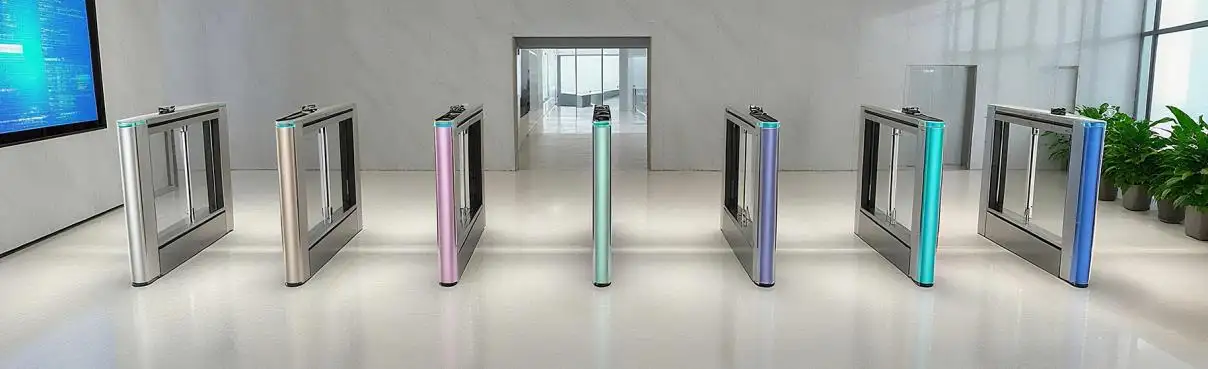
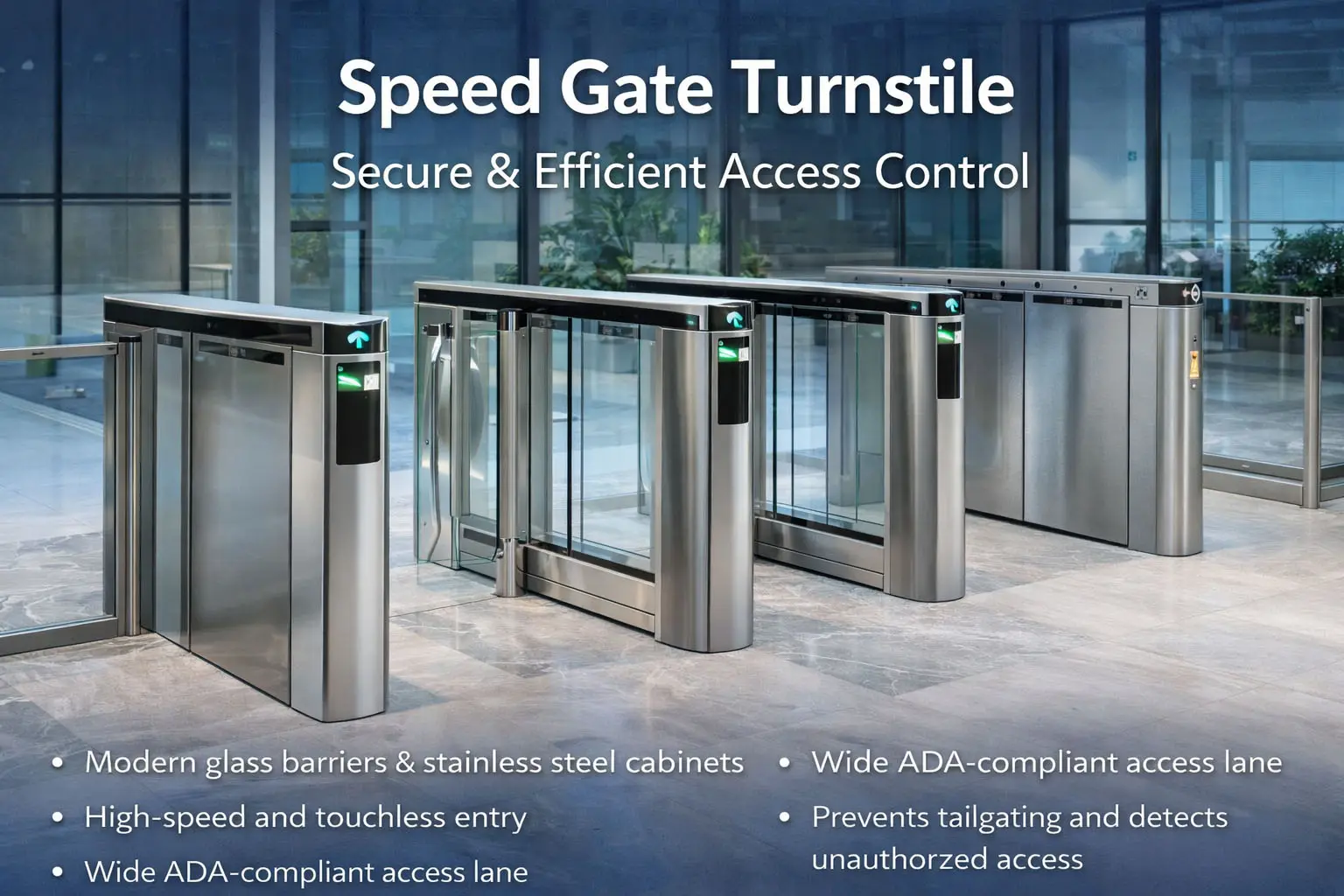
The fast access gate is an enhanced pedestrian access control system that has been designed to provide high speeds, safety, and sustainability in places with high traffic. It suits modern buildings, transportation terminals, and industrial facilities; hence, providing a rapid and safe transfer of people and saving energy-efficient functioning. The following are the main attributes and advantages that qualify it as a better alternative in terms of smart access control.
1. Rapid and Silent Operation
- Installed with a high-speed servo motor to provide smooth and quiet movement of the arms.
- Access cycle is less than one second, which means that there is constant movement of pedestrians.
- The motor technology of low power consumes less energy and offers efficiency in operation.
2. Bidirectional Access Capability
- Allows pedestrian movement in a single direction and two-way.
- Perfectly suited to smart campuses, metro stations, and corporate offices with a lot of traffic.
- The guarantee of maximum movement, minimum waiting time during the rush hours.
3. Multi-Credential Authentication Options
- Supported by RFID cards, QR codes, and biometric systems (fingerprint or facial recognition).
- Allows easy integration with other access control systems.
- Streamlines access control in intelligent buildings and research campuses.
4. Advanced Anti-Tailgating and Intrusion Detection
- Serves a variety of infrared sensors that allow for the identification of pedestrians.
- Removes tailgating, reverse entry, and unauthorized attempts at entry.
- Creates real-time alerts when there is abnormal behavior to improve real-time intervention.
5. Smart and Energy-Saving Power Management
- Embarks on smart control circuits to optimize energy.
- Standby mode saves electricity that is used when it is idle.
- In compliance with the green building guidelines on sustainable infrastructure.
Energy Saving Pedestrian Access Gates Uses
The pedestrian vestibule gates are energy-saving and can be used in a variety of industries, so it is a universal solution to sustainable access management:
- Commercial Buildings
Smart access turnstiles are used in offices and high-rise rises to allow the secure and smooth access of people into the building, which not only conserves energy but also improves the aesthetics of the building.
- Metro and Transport Hubs
Metro stations and airports have low-power pedestrian gates that are designed to address the high pedestrian traffic at minimal power use.
- Educational Institutions
In the case of schools and universities, the recyclable gate systems provide a secure system to operate and keep a sustainable, eco-friendly budget of energy costs.
- The Smart Campuses and Hospitals
The gates are energy-saving and provide quiet, hygienic, and reliable access control, particularly in health care and research centers.
Renewable Optimization and Integration of Power
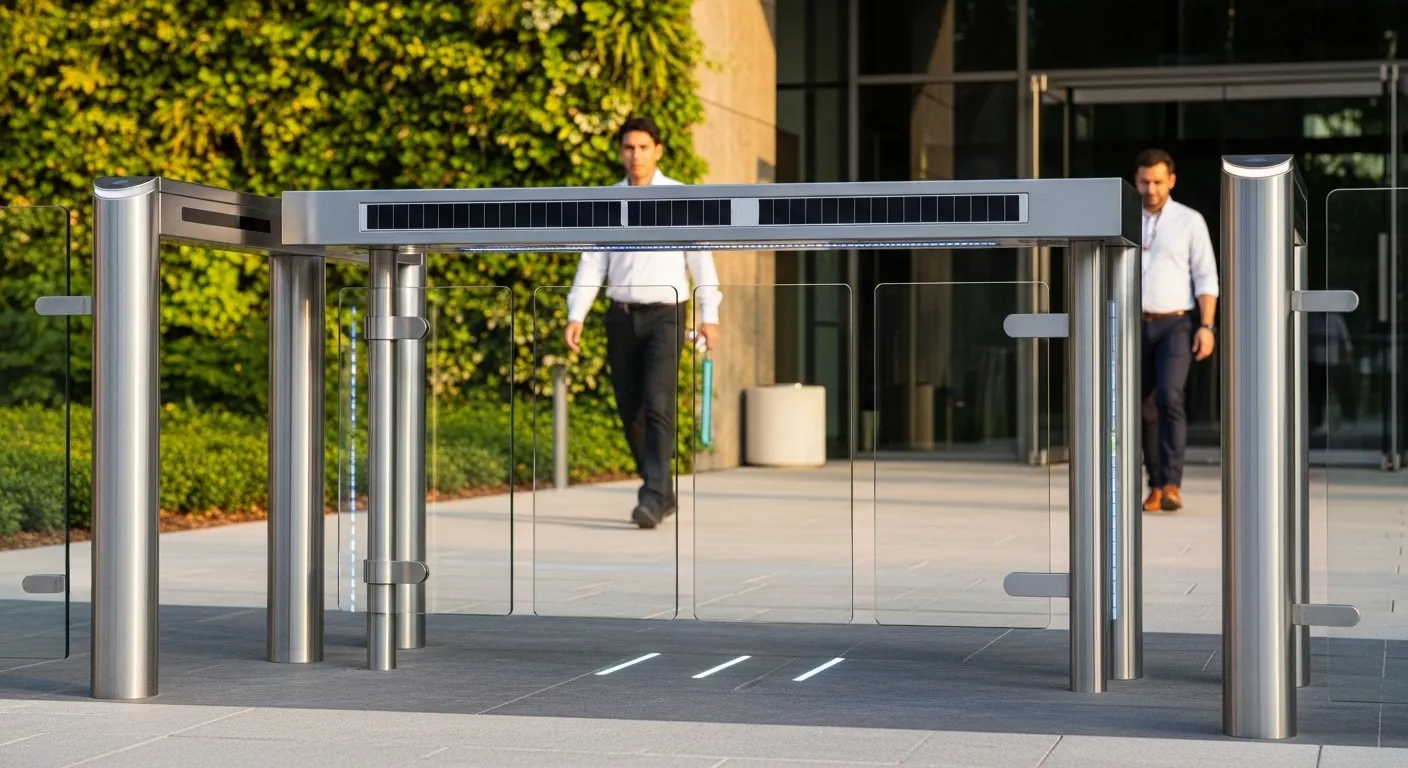
The newest models have an option of solar-powered integration that is a combination of photovoltaic panels and low-voltage control units. It makes them entirely off-grid and suitable for sustainable campuses, green buildings, and facilities in remote locations.
Energy Recovery System
More advanced gates use regenerative drives - using the kinetic energy to produce a second burst of electrical energy during each gate closure cycle to increase efficiency even more.
Smart City Implementation and Automation
These gates are important in automated entry management systems in smart city ecosystems. City authorities can: through IoT and cloud-connected connectivity, they can:
- Check the pedestrian traffic in real-time.
- Monitor energy consumption trends.
- Anticipate maintenance periods.
These characteristics are in line with the objectives of sustainable urban development (SDGs) and those of eco-smart infrastructure.
Security and User Experience All in One
- These gates do not sacrifice on security despite their concern with energy efficiency.
- They have anti-tail-gating sensors and emergency overrides, and quick response time - they make them safe in busy traffic.
- Simultaneously, they are comfortable and convenient with easy, silent, and easy maneuverability, thus offering convenience to all pedestrians.
Benefits of Pedestrian Access Gates That Save Energy
High energy saving pedestrian access gate will offer an influential combination of sustainability, intelligent technology, and protection. They are developed to reduce power consumption without affecting the performance or reliability. Below are the key advantages:
1. Low Energy Consumption
These gates are fitted with low-power motors, intelligent control systems, which save on electricity usage by up to 40-60 percent as compared to the traditional access systems.
2. Huge Productivity and Trustworthiness
The brushless DC motors used guarantee smooth, quiet, and long-lasting running and should be installed in high-traffic places like metro stations or office buildings.
3. Green-Build Design
The gates favor green building by providing sources of renewable energy, such as solar integration, and it also helps reduce carbon footprints.
4. Increased Security Integration
They are capable of being linked easily to RFID, biometric, or facial recognition systems, which provide a safe and intelligent access control.
5. Cost-Effective Operation
The maintenance requirements and long life of equipment are low, and this minimizes operation and servicing costs.
6. Smart Building Compatibility
It is a type of compatibility that handles intelligent building projects and devices connected to a network, which deals with smart building projects and devices that are connected to a network. These gates become part of the IoT-based building automation systems, allowing centralized control and optimization of energy.
7. User-Friendly Experience
They are designed to move fast and silently, plus ensure high levels of reliability, besides enhancing the movement of people even as they keep up security and sustainability.
Conclusion
More than an entry control device is an energy saving pedestrian access gate, which is a symbol of intelligent design and environmental responsibility. Fast access gate is a high-performance product in all respects in terms of speed, safety, as well as energy consumption, and durability. It has a smart design, ability to be used with a multi-format credential, and smart control capabilities, making it a perfect fit in smart cities, corporate settings, and secure facilities that seek to achieve a balance between sustainability, security, and convenience. Visit Ironman.
