



Commercial Building Speed Gate Solutions Across Europe
2025-10-27


Europe's commercial landscape is a vibrant tapestry, weaving together centuries of architectural heritage with cutting-edge modern design, bustling financial centers with innovative tech hubs, and diverse national cultures with unifying continental standards. Within this dynamic environment, the entrances to commercial buildings – from London's skyscrapers and Parisian headquarters to Berlin's innovation campuses and Amsterdam's efficient office parks – serve as critical interfaces, demanding solutions that are secure, efficient, compliant, and aesthetically appropriate.
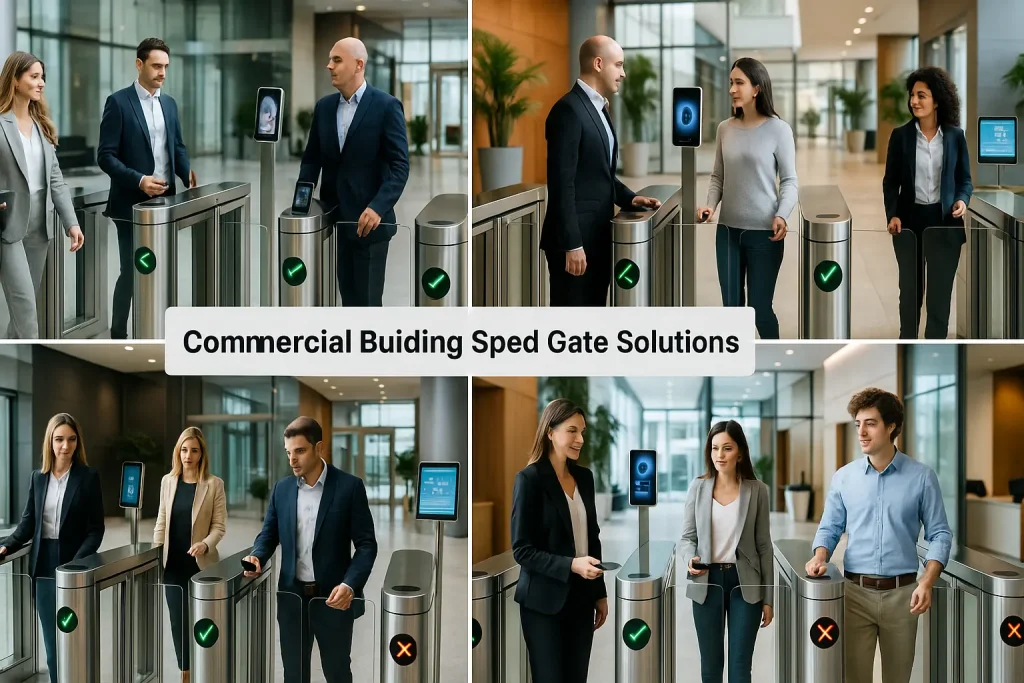
The traditional approach to lobby management often struggles to meet these multifaceted demands. Manual checks impede flow, basic locks offer insufficient security against modern threats like tailgating, and purely functional barriers can clash with sophisticated architectural visions. The need for smarter, more integrated solutions is clear. This is the domain of the modern Europe commercial building speed gate solution.
This signifies more than just installing automated turnstiles; it involves implementing intelligent, connected access control systems specifically tailored to navigate the complex European context. These solutions must deliver robust security and high throughput while meticulously adhering to stringent EU and national regulations (particularly GDPR, fire safety, and accessibility standards), integrating seamlessly with prevalent building technologies, and respecting diverse aesthetic preferences across the continent. This guide provides an expert, comprehensive exploration of these essential systems, focusing on their technology, benefits, critical compliance aspects, and implementation strategies within the unique European framework.
What Defines a "Europe Commercial Building Speed Gate Solution"?
A Europe commercial building speed gate solution is an automated pedestrian access control system designed, certified, and implemented to meet the specific regulatory framework (EU directives, EN standards, national laws like GDPR), technological infrastructure, security requirements, operational needs, and diverse aesthetic preferences found in commercial properties across Europe.
While drawing on global speed gate innovations seen across various Regional Markets, solutions deployed in Europe require specific tailoring beyond basic functionality. Key characteristics include:
- Rigorous Compliance: Unwavering adherence to EU-wide regulations (CE marking, GDPR) and specific national standards (e.g., fire codes like BS in the UK, DIN in Germany, NF in France; accessibility laws).
- Privacy-Centric Design: Features and implementation strategies that respect stringent data protection laws, particularly limiting the use of biometrics compared to other regions.
- Technology Alignment: Strong support for secure RFID (especially MIFARE) and rapidly growing mobile credential usage (NFC/BLE). Emphasis on open standards like OSDP for secure integration.
- Emphasis on Quality & Reliability: Reflecting European engineering standards, a focus on durable construction, proven reliability, and long-term performance is common.
- Aesthetic Versatility: Ability to offer designs ranging from minimalist to classic integration, suitable for both modern architecture and retrofitting into historic buildings common across Europe.
It's about applying advanced access control technology with a deep understanding of Europe's unique regulatory, technical, and cultural landscape.
Why Are Speed Gates Essential for European Commercial Buildings?
Speed gates are essential in European commercial buildings to enhance security in diverse urban environments, manage pedestrian flow efficiently (crucial in dense historic city centers and modern business parks), ensure mandatory compliance with strict EU and national safety/privacy laws, support modern operational practices (including smart building integration), and meet the high expectations for quality and design.
The drivers across Europe are compelling and often interconnected:
- Security & Risk Management: Protecting valuable assets, intellectual property, and ensuring employee/tenant safety in multi-tenant buildings or corporate HQs necessitates robust physical access control beyond simple locks.
- Managing Density & Flow: European cities often feature high-density commercial zones with significant pedestrian traffic during peak hours. Automated gates are vital for preventing lobby congestion and ensuring smooth movement. Consider the needs of a busy UK speed gate turnstile access control deployment in London versus a high-tech campus requiring a Germany high-throughput speed gate pedestrian access solution.
- Compliance is Non-Negotiable: Failure to meet stringent fire safety egress rules (EN standards), accessibility mandates, or GDPR requirements can result in significant legal penalties, operational disruptions, and reputational damage across the EU. Speed gates offer a controllable, auditable way to help achieve compliance.
- Operational Efficiency & Modernization: Automating lobby access reduces reliance on manual checks, optimizes staffing, provides valuable usage data, and projects a modern, efficient image crucial in competitive European markets.
- Smart Building Integration: Increasingly, speed gates are expected to be integral components of smart building ecosystems, sharing data with Building Management Systems (BMS/GTB/GTC) to optimize energy use and operations.
How Do These Systems Operate Within the European Framework?
European speed gate systems validate credentials – predominantly secure RFID smart cards (like MIFARE) or mobile credentials – against an access control system, adhering strictly to GDPR principles for data handling. Authorized passage triggers rapid barrier opening, with sensors ensuring safety and preventing tailgating according to EN safety standards, followed by secure closure and compliant logging.
The process emphasizes security, compliance, and efficiency:
- Credential Presentation: User presents credential – typically tapping a 13.56 MHz MIFARE DESFire card or using an NFC/BLE mobile app – at the integrated reader.
- Secure Validation: Reader communicates securely (OSDP strongly recommended) with the Access Control System (ACS). Both well-established on-premise solutions and increasingly popular cloud-based platforms (hosted ensuring GDPR compliance) are common across Europe.
- Permission Check & GDPR Compliance: ACS verifies permissions based on roles (RBAC). Crucially, the system must be configured to log only necessary data for security purposes, define clear retention periods, and protect this data according to GDPR. Biometric verification is rare for general access due to high compliance hurdles.
- Open Command: Authorized command sent securely to the gate controller.
- Gate Actuation (Safety First): High-quality motor activates barriers (swing or flap). Operation must comply with relevant EN safety standards regarding forces, speeds, and entrapment prevention. CE/UKCA marking is essential.
- Passage Monitoring: High-density sensors track passage, ensure single entry, and provide safety redundancy to prevent closure on users.
- Compliant Closure & Logging: Barriers close securely. Access event logged in the ACS, adhering to configured data minimization and retention policies.
My Experience: "Specifying a speed gate system for a multi-national client with offices across Europe requires navigating a patchwork of national implementations of EU directives. While CE marking provides a baseline, fire egress rules can have subtle but critical differences between, say, France and the Netherlands. Similarly, how GDPR is interpreted and enforced regarding access logs might vary slightly. You absolutely need partners with specific expertise in each target country within the overall Europe commercial building speed gate solution framework."
Key Features Tailored for the European Market
Solutions designed for Europe must prioritize robust compliance features (CE/UKCA, EN standards, GDPR), strong support for secure RFID (MIFARE) and mobile credentials, high-quality engineering for reliability, aesthetic flexibility for diverse architecture, and increasingly, sustainability aspects.
- Rigorous Compliance & Certification:
- CE Marking (and UKCA for UK): Mandatory declaration of conformity with relevant EU/UK health, safety, and environmental directives.
- EN Standards: Compliance with specific European Norms for machinery safety (EN ISO 13849), electrical safety (EN 60335/60950/62368), fire resistance/egress (parts of EN 1634, EN 179/1125 principles), and potentially EMC.
- GDPR-Aware Design: Features supporting data minimization, configurable logging, secure data transmission (OSDP), and integration with compliant ACS platforms are crucial. Biometric features require exceptional justification and built-in consent management tools.
- European Credential Ecosystem:
- MIFARE Dominance: Deep support for the MIFARE family (Classic, DESFire EV1/EV2/EV3) is essential, as it's widely used in corporate, public transport, and governmental applications across Europe.
- Mobile Credentials: Strong growth in NFC and BLE adoption requires high-performance, multi-technology readers.
- Engineering Quality & Durability: European markets often value longevity and reliability. Well-engineered gates with high-quality components (German motors, robust sensors), good build quality, and proven performance are typically preferred over cheaper, less durable alternatives.
- Aesthetic Versatility: The ability to offer designs that range from ultra-modern minimalist (suited for Scandinavian or Benelux markets, e.g., a Netherlands speed gate turnstile building lobby) to options that can be sensitively integrated into historic buildings (common in France, Italy, UK) is important. Customization is often required for high-profile projects demanding a unique France intelligent speed gate entrance system.
- Sustainability: Growing emphasis on energy efficiency (low standby power), use of recyclable materials, and adherence to environmental regulations (like RoHS, WEEE directives).
Popular Gate Types in European Commercial Lobbies
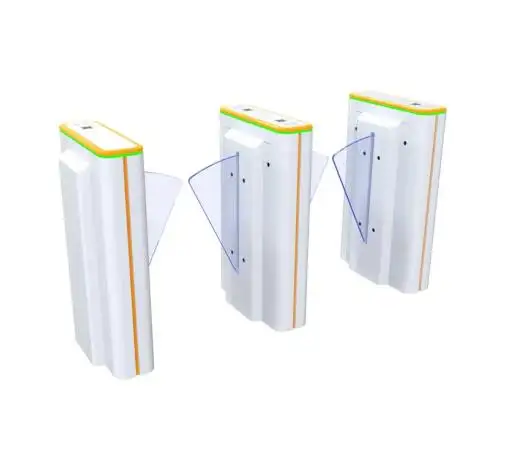
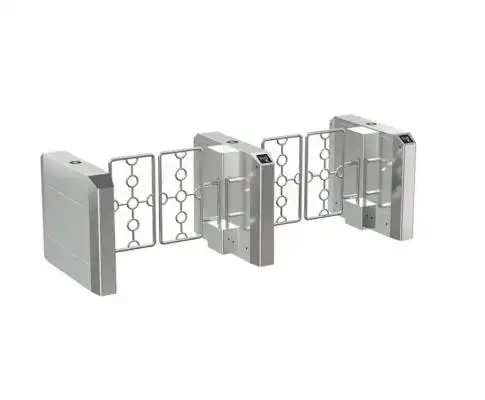
Swing barrier speed gates are extremely popular across Europe, favoured for their elegant appearance, quiet operation, and straightforward integration of accessibility lanes. Flap barriers are widely used where maximizing throughput is the primary concern, especially in transit-linked buildings. Optical turnstiles serve niche high-end, staffed environments.
- Swing Barriers (The Versatile Standard): Highly prevalent in corporate offices, public sector buildings, museums, and universities throughout Europe. Their balance of aesthetics, reliable security, user comfort, and ease of creating compliant accessible lanes makes them a default choice for many projects.
- Flap Barriers (The Speed Solution): Essential in high-traffic scenarios like major office complex entrances during peak hours, particularly in dense urban centers like London or Frankfurt, or where speed is paramount, similar to needs met by a Germany high-throughput speed gate pedestrian access solution in transit hubs.
- Optical Turnstiles (The Minimalist Option): Used selectively in prestigious, highly supervised corporate headquarters or luxury hotels where maintaining an entirely open visual aesthetic is key, relying on constant staff presence for security enforcement. Explore via resources on Optical turnstiles.
- Tripod/Full-Height Turnstiles: Generally considered inappropriate for the main lobby of modern European commercial buildings due to aesthetics and speed limitations. Reserved for secondary entrances, industrial sites, or leisure facilities.
Enhancing Security within the European Regulatory Context
European speed gate solutions enhance security by providing reliable physical access control, effectively preventing tailgating through advanced sensor technology, ensuring consistent policy enforcement, and generating secure, GDPR-compliant audit logs necessary for accountability and potential regulatory scrutiny.
- Tailgating Prevention: Addresses a universal vulnerability crucial for protecting corporate data and ensuring building safety, implemented with sensors tuned for European environments.
- Automated Policy Enforcement: Critical for managing complex access rights in multi-tenant buildings or large organizations, applied reliably 24/7.
- GDPR-Compliant Auditing: Systems must provide secure, tamper-evident logs, but configurations should allow for data minimization (logging only what's necessary) and defined retention periods to comply with GDPR's principles. This careful data handling is a key European requirement, potentially differing from practices in some Asia-Pacific speed gate access control solution markets.
- Deterrence & Professional Image: Modern, well-maintained gates project a professional image and deter casual intrusion attempts.
Boosting Efficiency in European Workplaces
Speed gates are vital tools for improving operational efficiency in European commercial buildings. They maximize pedestrian throughput (30-40+ PPM) to eliminate lobby queues common in dense cities, enable optimization of reception and security staff, and contribute to a smooth, modern user experience valued by European companies and their employees.
- Managing Urban Density: Essential for preventing bottlenecks in busy financial districts (London, Frankfurt), tech hubs (Amsterdam, Dublin, Berlin), and major corporate centers across the continent during peak commute times.
- Optimizing Staff Resources: Automation of routine checks allows highly skilled (and often highly paid) European staff to focus on guest services, complex security tasks, or facility management duties, improving overall operational ROI.
- Enhancing Workplace Experience: A seamless, efficient entry process contributes positively to employee satisfaction and the perception of a modern, well-run company – important factors in attracting and retaining talent across Europe. This aligns with the efficiency focus seen even in demanding Regional Markets globally.
Navigating European Compliance: GDPR, CE/UKCA, EN Standards, Accessibility
Compliance is the cornerstone of deploying speed gates in Europe. Systems must rigorously meet GDPR requirements for data privacy (especially concerning biometrics and logging), carry CE marking (or UKCA in the UK) demonstrating conformity with EU/UK directives, adhere to relevant harmonized EN safety standards (particularly for fire egress), and comply with national accessibility laws implementing EU directives.
GDPR (General Data Protection Regulation)
- The Foundation: Governs all processing of personal data. Access control logs (linking a person to a time/location) are personal data. Biometric templates are "special category" data requiring even stricter justification and explicit consent.
- Key Implications for Gates:
- Justification: Need a clear legal basis for processing access data (e.g., security, legitimate interest).
- Data Minimisation: Log only necessary information.
- Transparency: Inform users how their data is used.
- Security: Encrypt data transmission (OSDP) and storage.
- Retention Limits: Define and enforce how long logs are kept.
- Biometrics: Extremely difficult to justify for general access; requires DPIA, explicit consent, high security, clear necessity. Secure cards/mobile are the norm. "My strong advice to European clients is: unless you have an exceptionally high-security requirement explicitly demanding biometrics, stick with secure mobile or smart card credentials to avoid the significant legal and operational burden of GDPR biometric compliance."
CE Marking / UKCA Marking
- The Requirement: Mandatory mark indicating the product meets EU (or UK) safety, health, and environmental protection requirements applicable to it (e.g., Machinery Directive, Low Voltage Directive, EMC Directive). Essential for legal sale and installation.
EN Standards (European Norms)
- The Framework: Harmonized standards provide technical specifications to meet directive requirements. Key examples include:
- Safety: EN ISO 13849 (Safety of machinery - Safety-related parts of control systems), parts of EN 60335/62368 (Electrical safety).
- Fire Egress: Must integrate with fire alarms according to EN 54 series principles and allow escape conforming to EN 179 (emergency exit devices) or EN 1125 (panic exit devices) principles regarding unimpeded egress. National fire codes provide specific application rules.
Accessibility
- The Mandate: EU directives and national laws (implementing UN CRPD principles) require accessible environments. Speed gate installations must include compliant wider lanes, reachable controls, and clear signaling.
Integration within the European Smart Building Context
Integration is key for leveraging the full potential of speed gates in Europe's increasingly smart buildings. Systems need open connectivity (APIs, standard protocols like BACnet/IP, OSDP) to link seamlessly with European ACS platforms, building management systems (BMS/GTB/GTC), VMS, and potentially HR or booking platforms.
- Common European ACS: Integration with platforms popular in Europe (both local players like Siemens, Bosch, Nedap, Paxton and global ones) is essential.
- BMS/GTB/GTC Integration: High demand for sharing occupancy data from gates to optimize energy usage (HVAC, lighting) and building operations, aligning with EU energy efficiency goals (EPBD). BACnet/IP is a common protocol.
- Open Standards: Strong preference for non-proprietary solutions using open protocols (OSDP, APIs) to ensure flexibility, interoperability, and avoid vendor lock-in.
- Cloud & Hybrid Models: Growing adoption of cloud and hybrid access control architectures requires gates and controllers designed for secure, reliable cloud connectivity, ensuring GDPR compliance regarding data hosting location.
Installation & Maintenance: Quality, Compliance, and Local Support
Installation across Europe must be performed by qualified technicians adhering to stringent national electrical codes (e.g., VDE, BS 7671, NF C 15-100), safety regulations, and fire codes. Given the emphasis on quality and the diversity of the continent, reliable local maintenance support is crucial.
- Certified Professionals: Essential for compliant electrical work, critical fire alarm integration, and ensuring mechanical safety. National certifications are often required.
- Retrofitting Challenges: Integrating modern gates into Europe's many historic or older buildings requires careful planning regarding cabling, structural impact, and aesthetic sensitivity.
- Emphasis on Quality: European clients often prioritize long-term reliability and build quality. Installation must match this expectation.
Modular speed gate designcan facilitate long-term maintenance. - Pan-European Support Network: For multi-national deployments, choosing a vendor with a robust network of qualified local service partners across different European countries is vital for timely maintenance and support. Relying solely on support from outside the continent (e.g., from the USA or Asia) can lead to unacceptable delays.
Future Trends for European Speed Gate Solutions
The future in Europe involves accelerating adoption of secure mobile credentials, deeper smart building integration focused on sustainability and efficiency, AI deployment strictly within GDPR boundaries, and potentially increased standardization for greater interoperability.
- Mobile Credentials as Standard: NFC and BLE mobile access will likely overtake physical cards as the primary credential, driven by convenience and security.
- Sustainability & Energy Efficiency: Growing demand for gates with documented low energy consumption (supporting EU Green Deal objectives), use of sustainable materials, and enhanced durability/repairability.
- GDPR-Compliant AI: AI will primarily focus on enhancing sensor accuracy (reducing false alarms), enabling predictive maintenance, and providing anonymized flow analytics for operational insights, always prioritizing data privacy. Widespread AI-driven behavioral security monitoring faces significant hurdles.
- Interoperability & Openness: Continued push for open standards (OSDP, APIs) allowing users to mix-and-match best-of-breed components and integrate seamlessly with diverse smart building platforms.
- Seamless Journey Focus: Technologies enabling faster, more intuitive passage (e.g., improved BLE range, refined sensor logic) will be key, creating a better user experience without compromising security or privacy. This differs from the potential mass biometric adoption seen in regions like the Middle East.
The Final Verdict: Smart, Compliant Gateways for Europe's Commercial Heart
The Europe commercial building speed gate solution is a sophisticated blend of technology, design, and rigorous compliance, tailored for one of the world's most demanding and diverse Regional Markets. These intelligent systems are essential for securing modern European workplaces, managing pedestrian flow efficiently, and meeting the continent's high standards for safety, accessibility, data privacy (GDPR), and increasingly, sustainability.
By prioritizing compliance from the outset, leveraging secure and convenient credentials like MIFARE and mobile, demanding high-quality engineering and reliability, ensuring open integration capabilities, and partnering with knowledgeable providers across the continent, European businesses can implement speed gate solutions that provide lasting security and operational value. These intelligent gateways are crucial enablers for the smart, efficient, and compliant commercial buildings that define Europe's economic landscape, offering a distinct approach compared to solutions tailored for North America (e.g., a Texas entrance speed gate solution) or rapidly developing Asian hubs (like Vietnam high-speed pedestrian turnstile gate installations).
