


Facial Recognition Turnstile Systems For Office Building And Data Privacy Issues
2025-09-23


Facial Recognition Turnstile Systems For Office Building promise speed, safety, and a slick lobby experience. Tenants walk through. Visitors feel guided. Security teams see clear logs. But every scan raises a quiet question: where does the face data go, and who controls it? The benefits are real. So are the risks - tailgating, consent gaps, data retention, and vendor lock-in. Today we unpack the privacy trade-offs, the compliance traps, and the practical fixes that actually work.
The Everyday Challenges We See on Site
Speaking as the team behind IRONMAN Intelligent, we spend a lot of time in real buildings - headquarters, multi-tenant towers, and busy campuses. The story is consistent. Morning queues build up exactly when executives and clients arrive. Access cards get shared, lost, or cloned. Security staff juggle visitor lists, delivery traffic, and incident reports. Compliance teams want reliable logs and tamper-proof records. Tenants ask for a smooth, contactless journey but do not want their personal data mishandled. These are practical, human problems, and they shape the way we design Facial Recognition Turnstile Systems For Office Building environments.
Our approach starts with choice and clarity. Sites can run facial verification on its own or layer it with RFID cards, mobile NFC, or QR codes. That flexibility lets IT and facilities leaders match security levels to zones (for example, a lobby vs. a data floor) without redesigning the entire system. Real-time monitoring reduces uncertainty during peak periods, while role-based permissions ensure only the right people pass the barrier. All data in transit is encrypted. Those decisions make it easier to answer legal, HR, and union questions before a single device goes live.
Built for the Lobby - Engineered for the Long Run
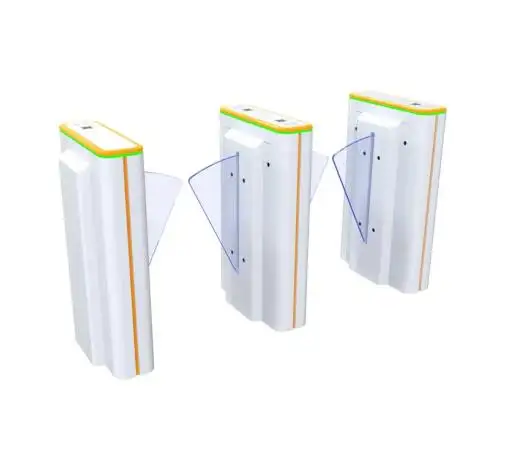
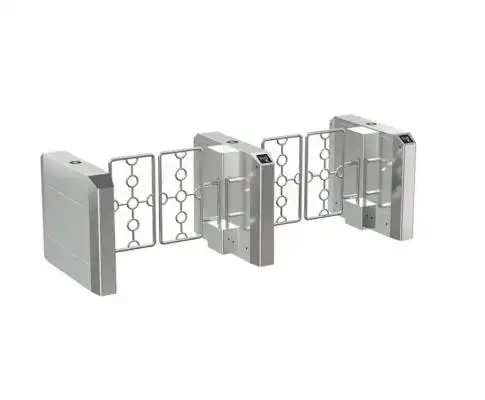
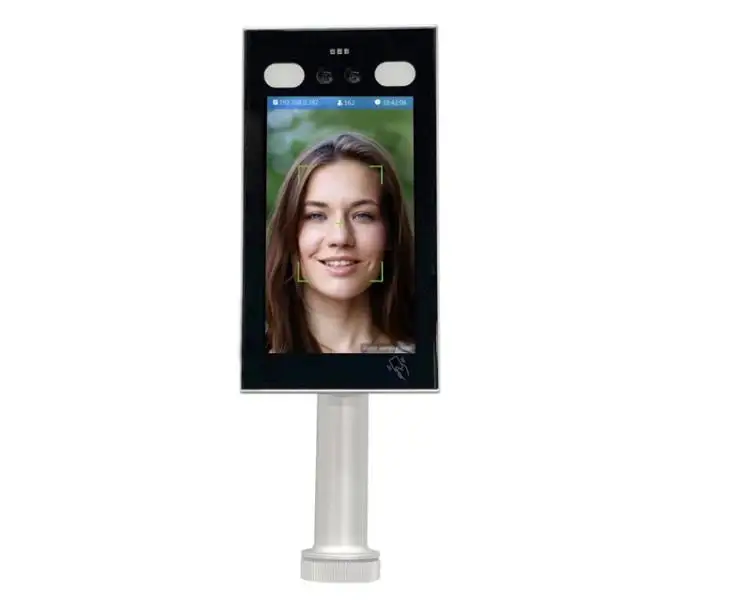
A turnstile is not a lab demo; it's a workhorse. Our industrial-grade construction handles dust, humidity, and temperature swings from −20 °C to +70 °C. That means you can place lanes in glass atriums, shaded outdoor entrances, or service corridors and still expect consistent performance. The swing arms - tempered glass or stainless steel - blend into modern architecture instead of fighting it, which matters when your reception doubles as a brand statement.
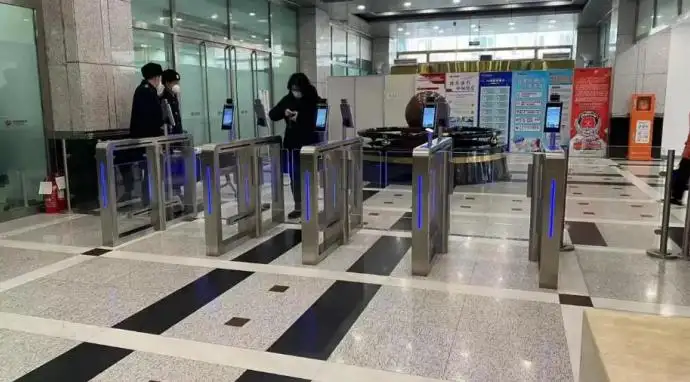
Speed is essential. The integrated recognition module verifies faces in less than a second (≤ 300 ms). A 7-inch high-definition display guides users with clear prompts, keeping the line moving even when first-time visitors arrive. Recognition works in varied lighting - bright lobby mornings, dim corridors, or backlit entries - so crews do not scramble to adjust settings every week. Liveness detection is supported to reduce spoofing attempts, and the recognition distance of 0-1.5 m can be tuned with lens options when a site needs either closer or slightly longer reach.
Behind the scenes, accuracy and uptime drive trust. The portrait database supports 10,000 people on the device, with the same number of stand-alone access records when required. Administrators can run blacklist, whitelist, and temporary-user policies without a maze of menus. Because our design is modular, technicians can swap recognition modules, control boards, or swing arms quickly, which keeps lanes online and maintenance costs predictable. Remote diagnostics track recognition accuracy, motor cycles, and device health so teams can plan service windows before an issue impacts tenants.
From an integration standpoint, Facial Recognition Turnstile Systems For Office Building must behave well in a mixed ecosystem. We support RFID, NFC, and QR code methods and comply with international standards to play nicely with existing security infrastructure. Protocols include TCP/IP, HTTP, DNS, NTP, FTP, and web socket. Interfaces include one RJ45 10M/100M adaptive Ethernet port, one relay output, and one Wiegand output. Centralized platforms allow role-based permissions across locations, plus unified reporting that security and compliance teams can actually use.
✅ What this means day to day
• Employees look at the display, verify, and proceed - no badge digging, no fumbling at the barrier.
• Automatic attendance records remove manual data entry and reduce disputes about time and presence.
• Security teams get real-time visibility and accurate logs for investigations and audits.
• Facility leaders can standardize processes across sites without retraining every front-desk team.
Privacy by design, not by promise
Privacy is the key conversation in any rollout of Facial Recognition Turnstile Systems For Office Building. We treat it as a design input, not a disclaimer. Before deployment, we help customers map data flows and define clear responsibilities. Who can enroll new users? Who can access logs? How long are records retained? These choices are documented and implemented, not left to chance.
Several safeguards support that stance. Liveness detection reduces the risk of spoofing. Encrypted communication protects data in transit. Role-based permissions limit exposure to sensitive information within the admin console. Multilingual interfaces make global operations easier without sharing credentials informally across regions. When a site needs to separate visitor processing from employee flows, we design those experiences so personal data remains compartmentalized.
The technology also helps people feel in control. The 7-inch display provides clear visual cues, and the system's sub-second response reduces awkward pauses. For tenants, the result is a lobby that feels professional and consistent. For property managers, it's a platform that reinforces trust instead of eroding it.
Where it Works - and Why
Our systems operate in a wide range of environments: office complexes and corporate buildings, exhibition centers, government agencies, schools and universities, residential communities, subway stations, airports, train terminals, stadiums, arenas, amusement parks, industrial facilities, detention centers, and hospitals. The common thread is high pedestrian volume, strict security, and the need for clean audit trails. In each case, biometric precision, durable engineering, and intelligent control come together to create safe, efficient movement.
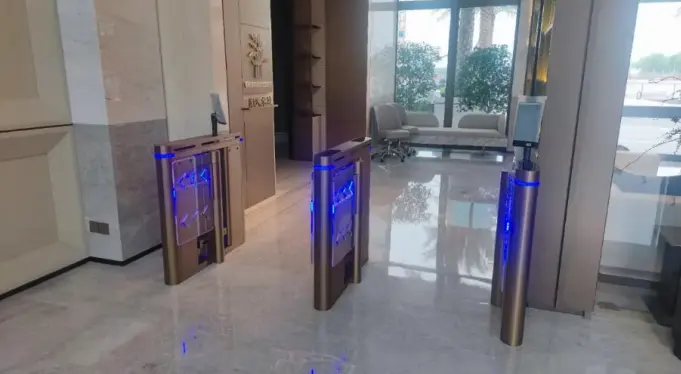
For a multi-tenant tower, that might look like fast morning ingress and tailgating prevention at the lanes, paired with visitor QR codes that expire after the meeting window. For a headquarters campus, it might mean badge-plus-face for sensitive labs while keeping standard facial verification in general offices. In every scenario, the goal is the same: match risk to control - without slowing people down.
Bottom Line
When you step back, Facial Recognition Turnstile Systems For Office Building deployments are not just about hardware. They are about confidence - knowing your lobby can process peak traffic, enforce policy, and document events, all while respecting the privacy of the people who work and visit there. With IRONMAN Intelligent, you get a solution that is fast, resilient, and adaptable. You also get a partner who will help you design policies that stand up to scrutiny from legal, HR, and the tenants who choose your property.
Call to Action: If you're ready to modernize your lobby with a privacy-first approach to biometric access, talk to IRONMAN Intelligent. Book a short demo and we'll share an integration plan aligned to your building, your risk profile, and your tenant expectations. We'll help you cut queues, reduce tailgating, and build lasting trust - one entry at a time.
