



Fast Access Turnstiles: Boosting Throughput and Security
2025-10-27


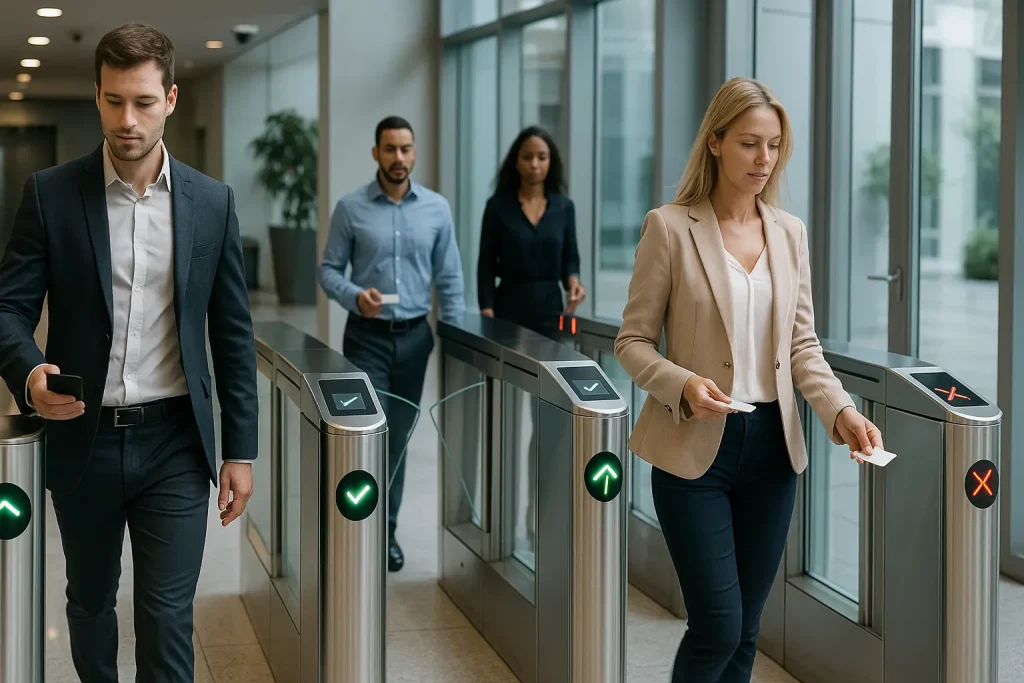
Walk into any major corporate headquarters, university, or government building at 8:55 AM on a Tuesday. You will almost certainly witness one of two scenes: a frustrating, time-wasting bottleneck of people waiting to be badged in, or a smooth, seamless flow of individuals passing through sleek, modern barriers without breaking their stride.
The difference isn't the number of people; it's the technology managing them. For decades, building security has been defined by a fundamental conflict: the trade-off between speed and safety. A high-security checkpoint is slow. A fast, open lobby is insecure. This is the daily paradox that facility managers and security directors have always battled.
The fast access turnstile is the definitive, modern solution to this paradox. This technology represents a massive leap beyond the clunky, three-armed contraptions of the past. It's not just a "turnstile"; it's a sophisticated, intelligent flow management system engineered to be both fast and secure.
This guide is a comprehensive, practical deep-dive into what a fast access turnstile is, the technology that makes it "fast," the critical benefits it provides for both throughput and security, and how to choose the right system for your facility.
What Is a Fast Access Turnstile?
A fast access turnstile is an advanced pedestrian barrier that uses sophisticated optical sensors and high-speed motorized barriers (like glass wings or flaps). It is specifically engineered to process a high volume of people quickly and safely while simultaneously integrating with an access control system to maintain a high level of security.
The "fast" in the name doesn't just refer to how quickly the glass panels move. It refers to the entire transaction—the time from which a person presents their credential to the second the lane is secure and ready for the next person. A fast access turnstile is designed to make this entire cycle happen in just a couple of seconds, often without the user even having to break their walking pace.
This is a world away from the traditional turnstiles you might see at a stadium. Those are often clunky, mechanical (requiring a physical push), and slow. A fast access turnstile is a core component of a modern speed gate system, designed to be an intelligent, electronic, and automated solution.
Here’s a clear comparison:
| Feature | Fast Access Turnstile (Speed Gate) | Traditional Tripod Turnstile |
| Primary Goal | High-speed throughput & anti-tailgating | Basic single-file access control |
| Typical Speed | Very High (30-40+ PPM) | Low (20-25 PPM) |
| User Experience | Touchless, seamless, "walk-through" | Physical push required, "clunky" |
| Security Level | High (detects tailgating, alarms) | Low (easy to jump over or crawl under) |
| Technology | Motorized, optical sensors, logic board | Mechanical or basic motor |
| Aesthetics | High-end (stainless steel, glass, lighting) | Industrial (painted or basic steel) |
| Common Use | Corporate lobbies, data centers, banks | Stadiums, gyms, factories, theme parks |
How Do These Turnstiles Achieve Such High Speed?
The speed is achieved through a synergy of high-performance components: high-speed motors, fast-reading credential systems (like RFID or biometrics), and intelligent logic controllers that open and close the barriers in perfect synchronization with a user's natural walking pace.
A fast access turnstile is a system where every component is optimized for speed. If any one of these parts is slow, the entire lane becomes a bottleneck.
1. High-Speed Brushless DC Motors
This is the "muscle" of the machine. Cheaper turnstiles use standard brushed motors that are noisy, generate heat, and wear out. A true fast access turnstile uses a brushless DC motor. These are engineering marvels designed for:
- Speed & Torque: They can actuate the glass barriers in as little as 0.3-0.5 seconds.
- Reliability: They are rated for millions of cycles, making them perfect for a high-traffic lobby.
- Quiet Operation: They are whisper-quiet, contributing to a more professional lobby environment.
2. Fast Credential Integration
The "fastest" motor in the world is useless if it's waiting for a slow "open" signal. The turnstile can only open as fast as the credential is read and validated. This "handshake" must be instant.
- Slow Reader = Slow Gate: I've seen clients pair a $20,000 turnstile with a 10-year-old, slow-reading access panel. The result? Users tap their card and have to pause for a full second before the gate opens. This pause, multiplied by 1,000 employees, defeats the entire purpose.
- Fast Readers = Fast Gate: Modern systems are paired with fast-reading RFID, NFC, or, for the ultimate speed, a biometric speed gate turnstile. Facial recognition can identify a user before they even stop, telling the gate to open as they approach.
3. Advanced Logic Controllers & Sensors
This is the "brain" and "eyes" of the turnstile. A high-density array of optical sensors (sometimes 20-40+ pairs) creates a "light curtain" inside the lane. This "light curtain" is monitored by the gate's local logic controller, which allows it to:
- Open Intelligently: It waits for the "open" signal from the main access panel.
- Track the User: It "watches" the person walk through the lane, ensuring it's just one person.
- Close Immediately: The instant the person clears the last sensor, the controller commands the motor to close. This rapid-close action is the key to high throughput, as it makes the lane secure and ready for the next person immediately.
How a Fast Access Turnstile Works: The User Journey
A user presents a credential, an access control system validates it and sends an "open" signal. The turnstile's barriers open automatically, optical sensors track the user's passage to ensure single entry, and the barriers close immediately after, ready for the next person.
From the user's perspective, it should feel seamless. Here is a step-by-step breakdown of what's happening in those two seconds.
- Approach & Present Credential: The user approaches the turnstile and presents their credential (e.g., taps their RFID card, scans their phone, or looks at a facial scanner).
- Validation (The "Handshake"): The reader sends the credential's data to the building's main high-speed access control system panel (the "central brain"). This panel checks the user's permissions in milliseconds: "Is this user allowed in this area at this time?"
- Barrier Actuation (The "Muscle"): If valid, the panel sends an "open" signal to the turnstile's logic board (the "local brain"). This board instantly activates the high-speed motor, and the barriers (flaps or wings) open. This is the automatic speed gate in action.
- Passage & Sensor Monitoring (The "Eyes"): The user walks through the lane. As they do, they pass through the "light curtain" of infrared sensors. The logic board tracks their progress, confirming their speed, direction, and that they are a single object.
- Anti-Tailgating Detection (The "Security"): If a second person tries to follow the first one, they will enter the sensor field before the barriers have closed. The logic board detects this unauthorized object, sounds a local audible alarm, and flashes red lights to alert security. This is the core function of an anti-tailgating speed gate.
- Rapid Closing (The "Speed"): The instant the authorized user clears the last sensor, the logic board commands the motor to close the barriers.
What Are the Primary Benefits of Fast Access Turnstiles?
The main benefits are a dramatic boost in pedestrian throughput, which eliminates lobby bottlenecks, and a massive increase in security by physically preventing tailgating. They also improve operational efficiency by re-tasking guards and enhance the building's modern image.
Benefit 1: Boosting Throughput (The "Speed")
This is the most visible benefit. A fast access turnstile is, by definition, a high-throughput speed gate. "Throughput" is measured in People Per Minute (PPM).
- Manual Security Guard: 10-15 PPM (at best, and this rate degrades with fatigue)
- Tripod Turnstile: 20-25 PPM
- Fast Access Turnstile: 30-40+ PPM
A single fast lane can process twice as many people as a manual guard. A bank of four lanes can handle over 120 people per minute, effectively solving the 8:55 AM rush hour problem. The economic cost of thousands of employees queueing for 5-10 minutes every day is staggering, both in lost productivity and in employee frustration.
Benefit 2: Boosting Security (The "Access Control")
This is the most critical benefit. Tailgating (or "piggybacking") is the #1 way unauthorized individuals breach physical security. A fast access turnstile is the only solution that reliably and physically prevents this.
A simple card reader on a wall can't stop 10 people from following one authorized person through a door. A busy guard can be distracted. A fast turnstile's optical sensors cannot. They are designed for one job: to enforce a "one person, one valid credential" rule, 24/7, without error. This is the entire purpose of an anti-tailgating speed gate.
Benefit 3: Operational Efficiency & ROI
This technology acts as a "force multiplier" for your security staff. It automates the low-skill, repetitive, and monotonous task of "badge checking." This frees up your highly-trained, high-cost security guards to do what humans do best:
- Manage exceptions (visitors, lost individuals, etc.)
- Respond to incidents (alarms, medical emergencies)
- Act as ambassadors and high-level observers
You can now secure your lobby with one guard managing a bank of four turnstiles, rather than needing three guards to check badges in three separate lines. The ROI from this staffing efficiency alone is often enough to justify the investment.
Benefit 4: Enhancing Corporate Image & User Experience
The lobby is the "handshake" of your building. It provides the first impression.
- A Bad Impression: A long line, a clunky metal bar to push, a frustrated guard. This feels dated, inefficient, and restrictive.
- A Good Impression: A sleek, quiet, glass-and-steel entrance speed gate system where employees glide through. This feels modern, high-tech, efficient, and professional.
This positive, frictionless experience is a daily benefit that improves employee satisfaction and wows visitors.
What Are the Main Types of Fast Access Turnstiles?
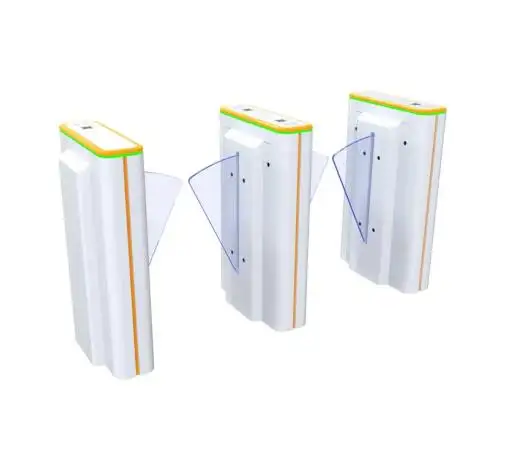
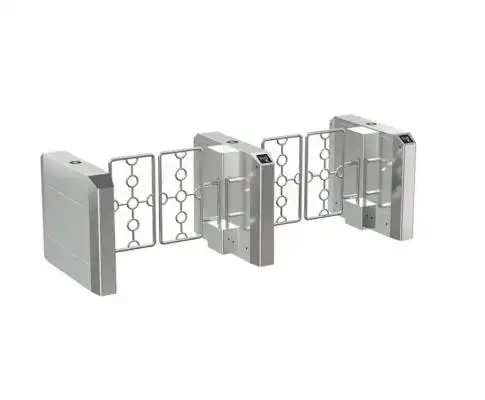
The main types are defined by their barrier movement: flap barriers (retracting wings for maximum speed), swing barriers (pivoting glass for aesthetics and security), and sliding gates (tall panels for high-security applications).
Choosing the right type depends on your specific goals for speed, security, and aesthetics.
1. Flap Barriers (The "Speedster")
- How They Work: Two "angel wing" style barriers (glass or acrylic) retract into the chassis of the turnstile.
- Pros: The fastest possible operation (highest PPM). The barriers disappear, creating a very open feel and minimal footprint.
- Cons: Barriers are often shorter, which can be seen as a lower psychological deterrent (though sensors will still alarm if someone jumps).
- Best For: High-traffic zones where speed is the #1 priority, like subway stations, convention centers, and massive corporate HQs.
2. Swing Barriers (The "Welcomer")
- How They Work: One or two taller glass "arms" pivot from the chassis and swing open in the direction of travel, like a futuristic saloon door.
- Pros: Very elegant, quiet, and "welcoming" motion. The taller glass (from waist-high to near full-height) offers a stronger physical and psychological deterrent. This is the easiest design to make in a wider, ADA-compliant version.
- Cons: The swinging arms require physical clearance space in front of or behind the pedestal.
- Best For: Class-A corporate lobbies, executive floors, and any building wanting to perfectly balance high-end aesthetics with strong security. This is the classic, modern
speed lane gate.
3. Sliding Gates (The "Fortress")
- How They Work: One or two tall glass panels slide open horizontally, like a miniature elevator door.
- Pros: Offers the highest level of security in the "speed gate" category. The tall, robust panels (often 4-6 feet high) are extremely difficult to climb, crawl under, or force open.
- Cons: Physically larger, more expensive, and slightly slower than flap or swing models due to the mass of the glass being moved.
- Best For: High-security areas like data centers, government facilities, financial institutions, and critical infrastructure control rooms.
How to Choose the Right Fast Access Turnstile System
To choose the right system, first conduct a "peak load" analysis to determine the number of lanes you need. Then, select the turnstile type (flap, swing, etc.) based on your specific security requirements, aesthetic goals, and ADA/accessibility needs.
Step 1: The Peak Load Analysis (The Most Critical Step)
This is the expert step that most people get wrong. Do not guess.
I've seen clients spend $50,000 on two beautiful swing gates for their 1,000-employee office. They still have a line every morning. Why? Because they bought for space and aesthetics, not data. Their "peak load" (the 15-minute morning rush) was over 100 people per minute, which requires at least four lanes, not two. They just moved the bottleneck.
- How to Do It Right:
- Stand in your lobby with a clicker (or use camera footage).
- Count every single person who enters during your absolute busiest 15-minute period (e.g., 8:45-9:00 AM).
- Divide that total by 15. This is your Peak People Per Minute (PPM).
- [Your Peak PPM] / 30 = Number of Lanes Needed (Always Round Up)(We use 30 PPM as a safe, realistic average throughput for one speed lane gate).
Step 2: Define Your Security Profile
What are you protecting? A gym or a bank vault? A friendly office trying to stop casual tailgating will be well-served by a standard swing barrier. A high-security data center will require a floor-to-ceiling sliding gate. This determines the type and height of the barrier.
Step 3: Plan for All Users (ADA & Deliveries)
This is a legal and practical requirement. You must have at least one wider (typically 32-36 inch) ADA-compliant lane for wheelchair access. This wider lane is also used for deliveries, rolling luggage, and any large items. This is almost always a swing-style gate and is a critical part of a complete entrance speed gate system.
Step 4: Consider the Aesthetics & Environment
The turnstile should look like it belongs in your lobby. High-end manufacturers offer customization:
- Top Lids: Can be matched to your lobby's materials (marble, wood, solid surface).
- Finishes: Brushed stainless steel, polished, or even powder-coated colors.
- Lighting: Integrated LED strips that glow green for "go" and red for "stop."
What's Involved in the Installation? (E-E-A-T Focus)
Installation is a construction project, not a simple delivery. It involves core-drilling the floor for power and data, securely bolting the units, and, most importantly, integrating with the building's access control and fire alarm systems for safety.
- The "Dusty" Work: These turnstiles are not battery-powered. They need conduits run under your lobby floor for both high-voltage (power for the motor) and low-voltage (data for the reader and "open" signal). This requires a general contractor to core-drill or trench your floor.
- The "Integration" Work (The "Handshake"): This is where expertise is crucial.
- Access Control: The integrator wires the card reader to the
high-s-peed access-control systempanel, and the panel's "output relay" to the turnstile. - Fire Alarm (Mandatory): This is a life-safety-critical link. The turnstile system must receive a signal from your building's Fire Alarm Control Panel (FACP). When the FACP alarms, it must force all turnstile barriers to open and stay open, allowing for free and fast egress. This is a common failure point in audits and a massive liability.
- Access Control: The integrator wires the card reader to the
The Future of Fast Access: What's Next?
The future is "frictionless" and predictive. Fast access turnstiles are integrating with AI-powered biometrics and long-range mobile credentials, allowing for a completely touchless "walk-through" experience and smarter, data-driven building management.
- The "Invisible" Credential: The
fast access turnstilewill remain, but the interaction will vanish. A biometric speed gate turnstile (using facial recognition) will identify you as you approach. Or, your phone (using Bluetooth or UWB) will authenticate you from your pocket. The barriers will simply open for you. - AI-Powered Security: The next generation of turnstiles will "fuse" the data from the IR sensors with data from an overhead video camera. An AI will analyze this combined data to move beyond simple tailgating. It will be able to detect "suspicious behavior" (someone loitering), "a person under duress," or "an abandoned object."
- The Smart Building "Check-in": The
entrance speed gate systembecomes the primary "check-in" for the entire smart building. Your valid passage will trigger a cascade of events: calling an elevator to your floor, turning on the lights at your hot-desk, and logging you into the building's management system.
The Final Verdict: Why a Fast Access Turnstile Is the New Standard
The fast access turnstile is the definitive solution to the age-old speed-versus-security paradox. It is the only technology that reliably boosts security by physically stopping tailgating while simultaneously boosting throughput and eliminating frustrating bottlenecks.
It's an investment that pays dividends in operational efficiency, freeing up valuable staff for more critical tasks. It enhances your corporate image by providing a modern, seamless, and professional experience for every employee and visitor. For any facility serious about its security and its people, moving beyond the bottleneck to a fast, automated access solution is no longer an upgrade—it's the new standard.
