


Folding Arm Parking Barrier Gate vs. Sliding Barrier: Key Differences
2025-09-24


Choosing the right barrier system can change how smoothly your parking facility runs. A Folding Arm Parking Barrier Gate offers compact movement and quick response, while sliding barriers promise full-width closure. Both have clear strengths, but also hidden drawbacks. The real question is - how do you decide which one fits your site best? Stay with us as IRONMAN Intelligent breaks down the differences that matter most.
Why Folding Arms Beat Sliding Barriers
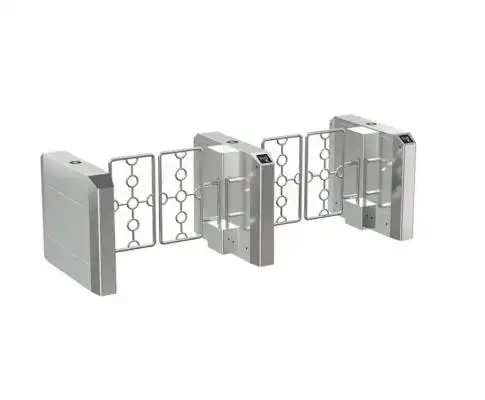
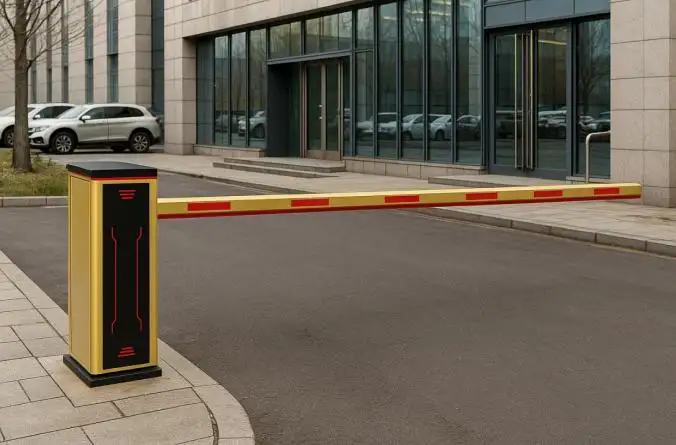
From IRONMAN Intelligent's manufacturing perspective, the decision comes down to space, uptime, and operational simplicity. A Folding Arm Parking Barrier Gate rises in a compact arc and needs minimal lateral clearance. That makes it ideal for tight entrances, curb-constrained lanes, and retrofit projects where expanding the roadway is not an option. Sliding barriers, by contrast, demand unobstructed tracks along the lane. Those tracks can collect debris, snow, or gravel, and they are vulnerable to misalignment-problems that increase maintenance and cause unexpected downtime.
Duty cycle matters more than many buyers expect. Our folding-arm units use a brushless drive and precision counterweights to deliver smooth, quiet movement even under continuous traffic. Typical lift times of 3-6 seconds minimize queues during peak periods and give facility operators predictable throughput. Sliding systems can be slower and more maintenance intensive in high-frequency environments, particularly where contaminants or thermal expansion affect the rail.
Safety and reliability are also decisive. Modern Folding Arm Parking Barrier Gate designs incorporate obstacle detection and automatic reverse, stopping the arm if an obstruction is sensed. With sealed electronics and corrosion-resistant coatings, the gate keeps working in heavy rain, dust, or coastal air. For toll plazas, shopping centers, and logistics hubs, that reliability translates into fewer interruptions and lower lifetime service costs.
There are scenarios where a sliding barrier is still the right tool-for example, when you need full-width perimeter closure or must secure irregular openings that folding arms cannot cover. But if your priorities are compact footprint, high cycle rates, and simple integration, folding arms typically provide superior lifecycle value.
Design Strengths
At IRONMAN Intelligent we design our parking barriers to withstand harsh environments and continuous use. The structural core combines aluminum alloy and steel to balance strength with weight reduction. Key specifications that guide site selection include number of cycles, environmental tolerance, and integration flexibility.
Our typical parking barrier characteristics include:
• Material: Aluminum alloy + steel for robust, lightweight structure
• Drive: 170W DC brushless motor for rapid, low-maintenance operation
• Cycle time: 3-6 seconds lift/lower for efficient throughput
• Dimensions: 400x300x1100 mm footprint for compact mounting
• Boom length: straight boom up to 6,000 mm where long spans are required
• Environmental: temperature range −30°C to +70°C, salt spray resistance (ISO 9227, 2,000 hours), and IP-level protection for dust and rain
Beyond hardware, control and integration define the system's value. Administrators can tune open/close speeds to match traffic patterns, and the gate integrates cleanly with license plate recognition (LPR), RFID, mobile apps, and central parking management platforms. That makes a Folding Arm Parking Barrier Gate a core device in an intelligent parking barrier system or broader parking access control solutions deployment. Role-based permissions, access logs, and remote diagnostics help teams manage security and perform predictive maintenance before failures occur.
While bullet points highlight features, the important point is how these elements work together: a sealed electronic cabinet reduces corrosion risk, the brushless motor extends service intervals, modular parts simplify field repairs, and remote monitoring notifies staff about cycle counts or abnormal behaviour. Together, they reduce total cost of ownership.
Practical Guidance for Selection and Deployment
Choosing the right boom profile and integration approach avoids costly mistakes. For open sites and high-speed toll lanes, a straight rod provides the fastest lift and best throughput. In constrained garages or under canopies, a curved arm avoids height obstructions and fits low-clearance environments. Consider the following when planning an upgrade:
• Assess peak vehicles per hour and duty cycle expectations.
• Measure lane width, approach angle, and clearance above the lane.
• Decide on authentication methods (LPR, RFID, card, mobile) and required integration with your parking software.
• Check environmental exposure-coastal salt, dust, or heavy rain influence material and sealing choices.
• Factor in remote monitoring and serviceability: modular components and remote diagnostics reduce downtime.
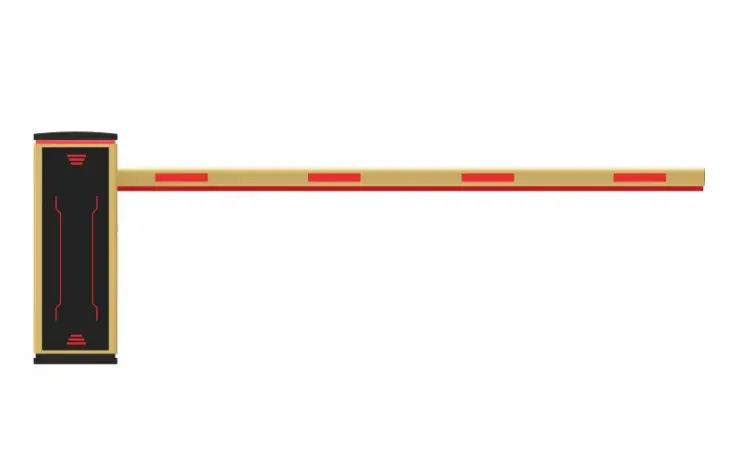
Operators who switch from sliding to folding arms often cite fewer rail jams, reduced sensitivity to track contamination, and faster mean time between failures. These improvements are especially visible during peak ingress and egress periods, where predictable, repeatable gate cycles keep traffic moving.
Deployment Support from IRONMAN Intelligent
We begin every project by mapping your lanes, traffic peaks, and integration needs. From there we recommend boom type, tune open/close profiles, and define the authentication stack. Our global-ready units run on AC220V ±10%, 50Hz, come with verified corrosion resistance, and are supported with 24/7 English service and international certifications.
If you want a migration path from legacy systems or a phased rollout across multiple sites, IRONMAN Intelligent can prepare a staged deployment plan that prioritizes high-impact entrances first and minimizes operational disruption.
Final Words
Ready to evaluate how a Folding Arm Parking Barrier Gate would perform at your facility? Contact IRONMAN Intelligent for a site assessment, performance projection, and tailored integration plan. Let's reduce queues, raise uptime, and modernize your parking access control today.
