


What a Parking Barrier Gate for Industrial Park Integrates: RFID & LPR(2026)
2026-01-27


Parking Barrier Gate for Industrial Park solutions are evolving fast, and in 2026 the winning formula is the tight integration of RFID and LPR. At IRONMAN Intelligent, we design and build barrier systems that make access control simple, safe, and scalable for busy industrial parks.
Why a Parking Barrier Gate for Industrial Park Needs Integrated Tech
Industrial parks handle mixed traffic all day: employee cars, delivery vans, heavy trucks, contractors, and visitors. The challenge is predictable: keep authorized vehicles moving, block unauthorized entry, and protect pedestrians near gates. A Parking Barrier Gate for Industrial Park must do three things well: identify who is coming, enforce the right, and do it safely under any weather.
That is why pairing RFID (for fast, touch-free identification) with LPR (license plate recognition for flexible verification) has become the standard. When both work together, throughput rises, tailgating drops, and the system adapts to every user type without slowing operations.
RFID Explained for Parking Operations
RFID is radio-frequency identification. Each authorized vehicle carries a passive tag. A reader at the lane detects the tag and grants access automatically. It is simple and fast.
How it helps an industrial park:
• Consistent speed. Staff vehicles pass without stopping, even in peak shift changes.
• Lower friction. No need to reach for cards or roll down windows in bad weather.
• Controlled permissions. Tags can be time-bound or zone-bound for specific gates.
• Resilience. If a user database is cached locally, RFID keeps working even when the network drops.
For fleets and daily commuters, RFID is the backbone of the Parking Barrier Gate for Industrial Park. It takes the routine load off the gate and prevents bottlenecks.
LPR Explained and When to Use It
LPR is license plate recognition. Cameras capture the plate, software matches it to approved lists, and the gate opens. No hardware on the vehicle is required.
Where LPR shines:
• Visitors and contractors who do not have tags.
• Logistics vehicles that change often or belong to third parties.
• Temporary passes, pre-registered deliveries, and event traffic.
Modern LPR handles varied angles, night lighting, and rain well, and it keeps a clean audit trail. Use LPR as the flexible layer over your RFID foundation. Together, they create a seamless experience: tags for daily users, plates for everyone else.
A Parking Barrier Gate for Industrial Park That Combines RFID & LPR
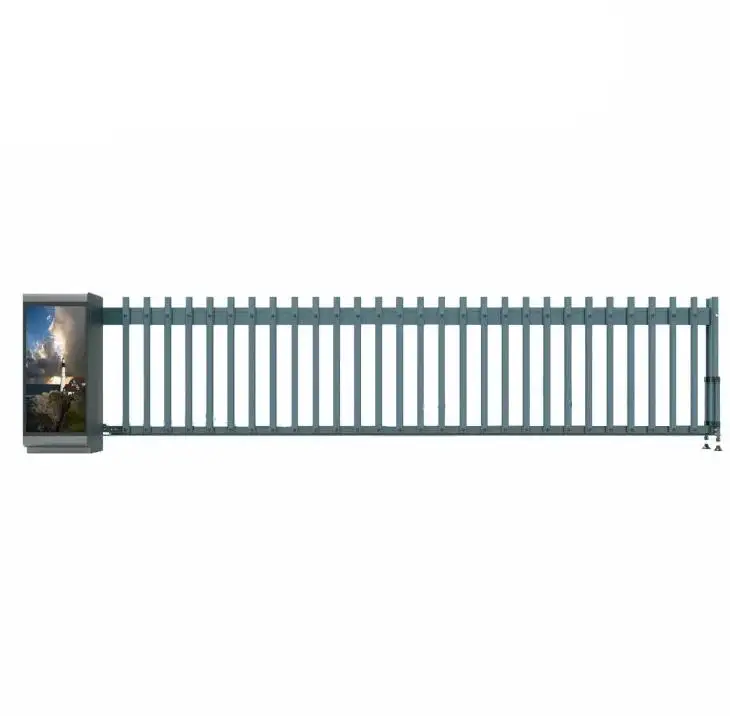
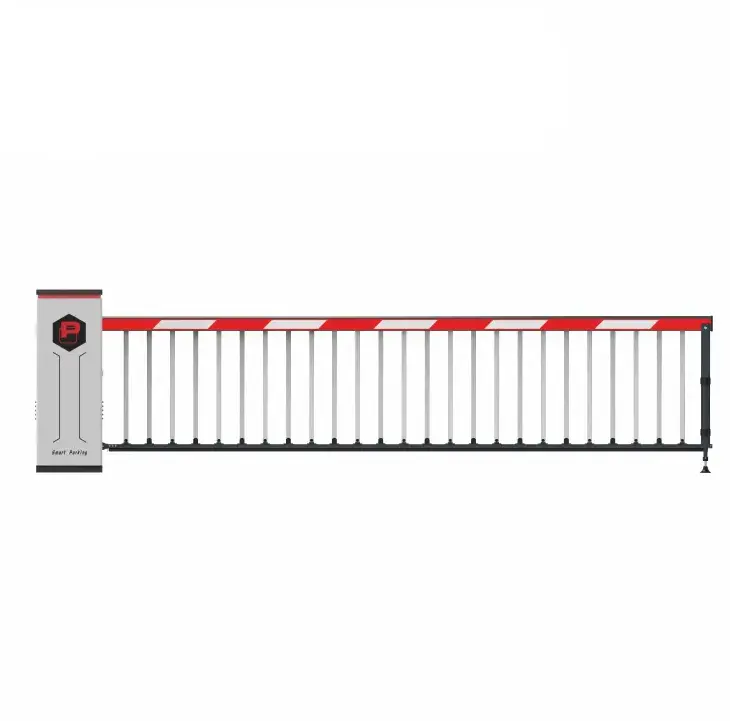
IRONMAN Intelligent integrates readers, cameras, and control boards inside a single fence-rod barrier system IM.D137Z. The result is a gate that identifies vehicles fast and enforces safe movement with mechanical certainty.
Key facts that matter to your operation:
• Drive system: 170W DC brushless motor. It is energy-efficient and designed for long life under frequent cycles.
• Lift time: 3 to 6 seconds. Variable open/close speed adapts to site conditions and reduces queue shock.
• Boom options: straight rod up to 6,000 mm; fence rod up to 5,000 mm. This covers wide lanes and truck routes.
• Anti-climbing fence rods: vertical rod clearance at 110 mm deters pedestrians and non-motorized vehicles from slipping through.
• Safety logic: smart detection prevents collisions, auto-reverse reacts instantly; anti-clip and soft-close deliver a safer experience for people and vehicles.
What this means for you:
• Effortless, hands-free access for authorized drivers via RFID tags.
• Smooth visitor handling through automated license plate authentication.
• Fewer risky behaviors at the gate because fence rods block walk-throughs.
• Real-time traffic and usage data inside your parking management software.
• Role-based permissions and reports for operations and security teams.
Built for Heavy Weather and Heavy Workloads
A Parking Barrier Gate for Industrial Park needs industrial-grade materials and seals. Our barrier uses an aluminum alloy and steel structure. It passed the ISO 9227 salt spray test for 2,000 hours, showing strong corrosion resistance. The system operates from -30°C to +70°C, with water and dust protection that keeps electronics stable in heavy rain or dusty yards.
Inside the enclosure, closed-circuit electronics and weather sealant prevent ingress. Outside, the mechanical design is optimized for high duty cycles. Modular construction makes maintenance quick: arms, motors, and control boards can be replaced without long downtime.
Global deployment is straightforward. The system runs on AC220V ±10%, 50Hz, carries CE and FCC certifications, and is supported by 24/7 English service. Whether your industrial park sits in a coastal climate or a dry inland zone, the gate keeps working.
From Plan to Live Operation: A Simple Path Forward
Roll-out is easier when you pair technology with clear policy. Here is a practical approach for an industrial park:
• Map lanes by traffic type. Use fence-rod arms near pedestrian crossings; straight rods for high-speed, open lanes.
• Issue RFID tags to employees and frequent drivers. Define role-based rules by department, shift, and gate.
• Set up LPR for visitors, contractors, and third-party logistics. Offer pre-registration to cut dwell time at the gate.
• Integrate the gate with your parking management and centralized monitoring platform. Use reports to spot peak loads.
• Calibrate safety sensors, set auto-reverse, and verify slow-close to keep pedestrians safe at shift change.
• Train guards on remote and mobile overrides for exceptions and emergencies.
Call to Action: Ask IRONMAN for a fixed-scope audit and live demo - see the lifecycle ROI of an RFID+LPR upgrade. We will size the boom, configure readers and cameras, and connect your gate to the software you already use. Let's turn access control into a quiet, safe, and data-driven part of your operations.
