


Regional Markets: Global Speed Gate Solutions Tailored for Every Region
2025-10-27


Speed gates have become ubiquitous symbols of modern access control. From the sleek lobbies of Manhattan skyscrapers and the bustling airports of Dubai to the secure government buildings in Canberra and the high-tech campuses in Singapore, these automated barriers manage the flow of people with increasing sophistication. However, while the core technology might seem universal, the reality is far more nuanced. Implementing effective speed gate solutions requires a deep understanding of diverse Regional Markets.
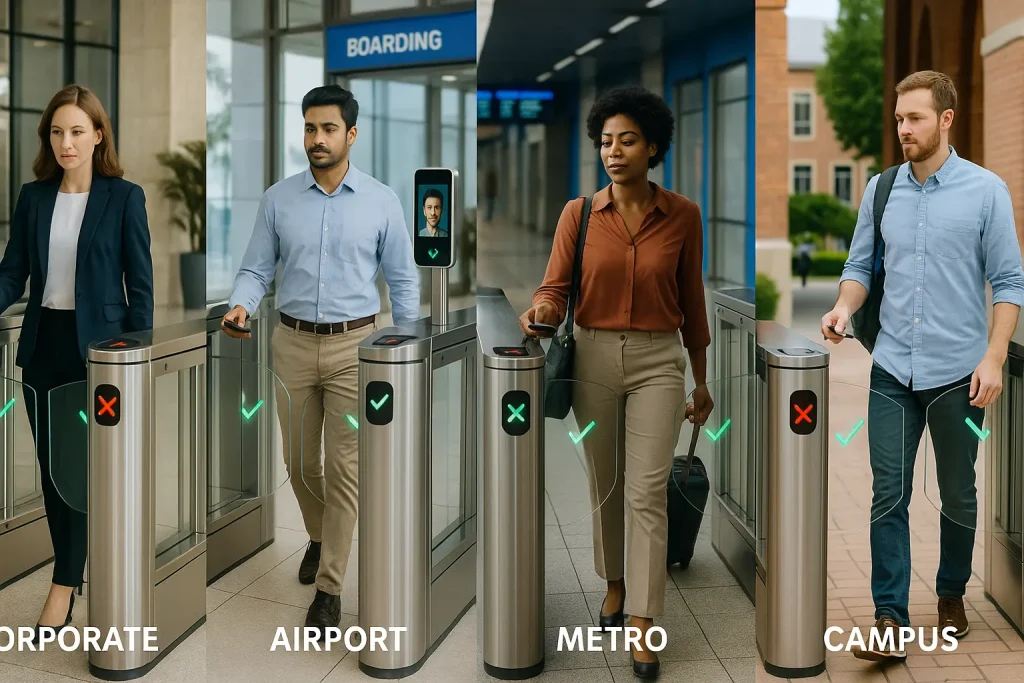
A one-size-fits-all approach simply doesn't work. Security regulations, aesthetic preferences, prevailing credential technologies, environmental conditions, and even cultural expectations vary significantly across the globe. What constitutes an ideal solution in London might be unsuitable or even non-compliant in Riyadh or Sydney. Successfully deploying speed gates on a global scale demands a strategy that blends cutting-edge technology with meticulous regional tailoring.
This guide provides an expert, comprehensive exploration into the world of speed gate solutions specifically adapted for different regional markets. We'll delve into the unique factors shaping demand and design across North America, the Middle East, Europe, Asia-Pacific, and Oceania, highlighting why understanding these local nuances is critical for architects, security consultants, facility managers, and manufacturers operating in a globalized world.
What Are Speed Gates in a Global Context?
Speed gates, in a global context, are automated pedestrian barriers used worldwide for access control, but their specific design, features, and integration must often be adapted to meet the unique regulatory, environmental, aesthetic, and technological requirements of different regional markets.
While the fundamental purpose – controlling passage, enhancing security, managing flow – remains consistent, the how can vary dramatically. Core technologies like high-speed motors, optical sensors, and integration with access control systems form the foundation everywhere. However, the specific implementation details – barrier height, materials, credential reader types, compliance certifications, even the very definition of "high security" – are shaped by local factors. Understanding these differences is key to specifying and deploying effective solutions, whether for a single international office or a global portfolio of properties.
Why is Tailoring Speed Gates for Regional Markets Crucial?
Tailoring speed gates is crucial because regional markets exhibit significant variations in security regulations (e.g., GDPR in Europe, PIV in US government), aesthetic priorities (minimalist vs. ornate), dominant credential technologies (mobile vs. card), environmental challenges (heat, humidity, dust), and budget expectations. A standardized global product often fails to meet these diverse local needs effectively.
Failing to account for regional differences can lead to numerous problems:
- Non-Compliance: Installing a system that doesn't meet local safety codes (like fire egress rules) or data privacy regulations (like GDPR concerning biometrics) can result in fines and legal issues.
- User Acceptance Issues: A design aesthetic popular in one region might feel out of place or even unwelcoming in another. Similarly, forcing a credential technology (e.g., biometrics) in a region with strong privacy concerns can lead to pushback.
- Operational Failures: Gates not designed for specific environmental conditions (e.g., extreme heat and dust in the Middle East, or salt spray near coastal areas) may experience premature failure and high maintenance costs.
- Integration Problems: Different regions favor different access control software platforms or credential types. Gates must be compatible with the locally prevalent technology infrastructure.
- Competitive Disadvantage: Manufacturers and integrators who understand and cater to local nuances gain a significant advantage over those offering generic solutions.
Key Factors Influencing Regional Speed Gate Requirements
Several key factors drive the need for regional customization, shaping everything from the physical hardware to the integrated software.
- Security Regulations & Standards: National or regional laws dictate safety requirements (especially emergency egress), data privacy rules (impacting biometric use), accessibility mandates (like ADA in the US), and specific certifications needed for certain sectors (e.g., government, transportation).
- Prevailing Security Threats: The perceived level and type of security threats in a region influence demand for features like higher barriers, more advanced anti-tailgating, or integration with threat detection systems.
- Dominant Credential Technologies: Is the market dominated by legacy prox cards, secure smart cards, rapidly adopting mobile credentials, or open to biometrics? The gate's integrated readers must align with local preferences and infrastructure.
- Aesthetic & Architectural Trends: Design preferences vary widely. Some regions favor minimalist, unobtrusive designs, while others might prefer more imposing or ornate styles, potentially incorporating luxury materials. Integration with local architectural styles is often key.
- Environmental Conditions: Extreme heat, cold, humidity, dust, salinity (in coastal areas), or even seismic activity can necessitate specific material choices, sealing (IP ratings), internal climate control, or reinforced construction.
- Economic Factors & Budget: Cost sensitivity varies. Emerging markets might prioritize basic, robust functionality, while developed economies might invest more in advanced features, aesthetics, and long-term TCO.
- Labor Costs & Maintenance Skills: In regions with high labor costs, features enabling remote diagnostics and modular, easy-swap repairs offer significant value. The availability of trained technicians also influences technology choices.
Speed Gate Solutions Across Major Regional Markets
Let's explore the specific nuances and trends shaping speed gate implementations in key regions around the globe.
North America (USA & Canada)
North America, particularly the US, is a large, mature market characterized by diverse applications, strong regulatory frameworks (especially ADA), and a rapid shift towards mobile credentials alongside established card systems.
- Common Applications: High prevalence in corporate offices (office building pedestrian turnstile), government buildings (requiring FIPS 201/PIV compliance, like certain government facility access gate setups), universities (campus access control gate), data centers, and increasingly, multi-family residential buildings.
- Technology Trends: Rapid adoption of mobile credentials (BLE/NFC). Significant legacy base of prox cards still exists but is migrating towards secure HF smart cards. Growing interest in facial recognition, balanced by privacy discussions. Cloud-based access control platforms are becoming dominant. General solutions like the USA speed gate turnstile must cater to this mix.
- Design & Aesthetics: Varies widely, from minimalist designs in tech hubs like California high-speed pedestrian turnstile installations to more traditional or robust looks in financial centers like New York speed gate turnstile system. Customization is common.
- Regulations: Stringent ADA requirements for accessible lanes are non-negotiable across the United States pedestrian speed gate access control market. UL certifications for electrical safety are standard. Specific state regulations (like privacy laws in California) can also impact system design, affecting solutions even in major hubs like a Texas entrance speed gate solution.
- My Experience: "When quoting a project in the US, the first questions are always about ADA compliance width and ensuring the readers support both the client's existing card tech and their future plans for mobile access. Integration with visitor management is also almost always a must-have."
Middle East (UAE, Saudi Arabia, Qatar)
This region is known for its ambitious construction projects, focus on luxury and high-tech aesthetics, and significant investment in security infrastructure, often driven by major events and government initiatives.
- Common Applications: High-end commercial towers, luxury hotels and residences, airports, government buildings, large-scale event venues, smart city projects.
- Technology Trends: Strong interest in cutting-edge technology. High adoption of biometrics (especially facial recognition) is more common due to different privacy landscapes. Integration with building management systems (BMS) and smart city platforms is key. Solutions like the UAE speed gate access control turnstile often feature advanced tech.
- Design & Aesthetics: Premium aesthetics are paramount. High-quality materials (premium stainless steel, stone, custom finishes), bespoke designs, and dramatic lighting integration are frequently requested, especially in hubs like Dubai high-speed speed gate installations. Gold or bronze finishes are sometimes popular.
- Environmental Factors: Extreme heat, humidity, and airborne dust/sand require robust sealing (high IP ratings), potentially internal cooling for electronics, and corrosion-resistant materials (like 316 stainless steel). This applies throughout the region, including for a Saudi Arabia pedestrian speed gate system or a Qatar smart entrance speed gate turnstile.
- Security Focus: Often a high emphasis on security features like taller barriers and sophisticated sensor packages, reflecting the region's security posture. General demand favors solutions like the Middle East fast access speed gate. The physical security market in the Middle East shows significant growth projections.
Europe (UK, Germany, France, Netherlands, etc.)
Europe is a diverse market blending high-tech adoption with strong data privacy regulations (GDPR), significant architectural heritage (posing installation challenges), and well-established public transport integration needs.
- Common Applications: Corporate offices, public transportation (metro/rail), government buildings, museums, universities, critical infrastructure.
- Technology Trends: Strong adoption of secure HF smart cards (MIFARE often dominant). Mobile credential adoption is growing but sometimes tempered by privacy focus. Biometrics face significant hurdles due to GDPR regulations, requiring explicit consent and robust data protection; usage is often limited to high-security opt-in scenarios. Cloud adoption is strong but requires GDPR-compliant hosting. Systems like the UK speed gate turnstile access control must navigate these factors.
- Design & Aesthetics: Varies – minimalist Scandinavian design influences some areas, while others require gates that blend into historic building interiors. Robustness is valued, particularly in public transit seen in Germany high-throughput speed gate pedestrian access. Emphasis on quality engineering is high. Consider the sleek needs of a France intelligent speed gate entrance system or the functional demands within a Netherlands speed gate turnstile building lobby.
- Regulations: GDPR significantly impacts data handling (especially biometrics), setting a high bar for consent and processing. CE marking for safety and electromagnetic compatibility is mandatory. Local building codes and fire regulations vary by country but are strictly enforced.
- My Experience: "Proposing facial recognition in Germany requires a completely different conversation than in Dubai. You have to lead with data privacy, encryption, consent management, and server location. Often, clients opt for secure mobile or smart card solutions to avoid the GDPR complexities." General needs are met by the versatile Europe commercial building speed gate solution.
Asia-Pacific (India, Singapore, Malaysia, Vietnam, etc.)
This vast and dynamic region exhibits huge diversity, from rapidly developing economies prioritizing basic infrastructure to hyper-modern smart cities deploying cutting-edge technology. High population density often drives demand for high-throughput solutions.
- Common Applications: Mass transit, corporate offices, manufacturing facilities, government buildings, residential complexes, retail centers.
- Technology Trends: Highly varied. Tech hubs like Singapore smart speed gate turnstile system often lead in adopting mobile and biometric solutions. Other markets like India pedestrian speed gate access control might prioritize robust, cost-effective RFID solutions capable of handling huge volumes. Local payment integrations (like QR code payment apps) are sometimes required. Needs differ between a modern Malaysia entrance speed gate office building and a high-traffic Vietnam high-speed pedestrian turnstile gate.
- Design & Aesthetics: Can range from purely functional and robust (especially in transit) to highly aesthetic in new corporate developments. Cost is often a significant factor.
- Environmental Factors: High humidity, monsoon seasons, and sometimes extreme heat require appropriate environmental sealing and material choices in many parts of the region.
- Volume: Managing extremely high pedestrian volumes is a common challenge, placing a premium on gate throughput and reliability. The general Asia-Pacific speed gate access control solution needs to be adaptable, reflecting significant urbanization and infrastructure growth trends.
Oceania (Australia & New Zealand)
This region typically features modern infrastructure, a strong focus on integration and compliance with established standards, and applications across corporate, government, and educational sectors.
- Common Applications: Office buildings, government facilities, airports, universities, sports stadiums, mining/resource sites (requiring very robust solutions).
- Technology Trends: Strong adoption of secure HF smart cards and increasing use of mobile credentials. Cloud-based management is popular. Biometrics are used but subject to privacy regulations similar to Europe. Emphasis on integration with VMS and building management systems. Solutions like the Australia speed gate turnstile access control need to be technologically current.
- Design & Aesthetics: Generally favors clean, modern, durable designs. High-quality stainless steel finishes are standard. Customization is common for high-profile projects in cities like Sydney high-speed pedestrian turnstile gate or Melbourne smart speed gate building entrance.
- Regulations: Strong adherence to local building codes, electrical safety standards (RCM mark), and accessibility requirements are essential. The general Oceania entrance speed gate solution must meet these standards, including specific requirements for a New Zealand speed gate turnstile system.
Global Trends vs. Persistent Regional Differences
While technology enables global trends like the shift to mobile credentials, cloud management, and AI-driven features, significant regional differences persist and likely always will.
Global Trends:
- Mobile-First Credentials: Smartphones becoming the preferred "key."
- Cloud Management (ACaaS): Centralized, remote management becoming standard.
- Integration Focus: Demand for open APIs and seamless connection to other systems.
- Data Analytics: Using access data for operational insights.
- Enhanced Sensors: AI improving anti-tailgating accuracy and reducing false alarms.
Persistent Regional Differences:
- Privacy Regulations: Huge impact on biometric adoption (e.g., Europe vs. Middle East).
- Security Posture: Varying levels of demand for high-security features based on perceived threats.
- Aesthetic Preferences: Cultural and architectural styles influence design choices.
- Legacy Infrastructure: Existing card technologies and building constraints shape upgrade paths.
- Cost Sensitivity: Budgets and economic conditions drive feature prioritization.
Successfully navigating regional markets requires acknowledging both the global technological trajectory and the enduring local realities.
Challenges of Deploying Speed Gates Globally
Manufacturers and integrators face numerous challenges when deploying solutions across diverse regional markets. These include navigating complex local regulations and certifications, managing logistics and supply chains, providing effective local technical support and training, adapting products to environmental conditions, and understanding cultural nuances in user interaction and acceptance.
- Compliance Maze: Obtaining the necessary safety certifications (CE, UL, RCM, etc.), data privacy adherence (GDPR, CCPA), and sector-specific approvals for each region is complex and costly.
- Logistics & Support: Establishing distribution channels, stocking spare parts locally (like for
modular speed gate designcomponents), and providing timely, language-appropriate technical support across time zones is a major operational hurdle. - Environmental Adaptation: Ensuring products are robust enough for Saudi Arabian heat, Singaporean humidity, or Canadian cold requires rigorous testing and often region-specific design modifications.
- Cultural Factors: User interaction patterns, aesthetic preferences, and attitudes towards security technology can vary, requiring sensitive product design and communication strategies, sometimes informed by cross-cultural usability insights.
Choosing the Right Partner for Global Speed Gate Solutions
When selecting a speed gate provider for multi-regional projects, prioritize vendors with demonstrated global experience, a strong understanding of diverse compliance landscapes, robust local support networks (either direct or through certified partners), and products designed with flexibility (like modular speed gate design) to accommodate regional adaptations.
Ask potential global partners:
- "What is your experience specifically in Region X, Y, and Z?"
- "How do your products meet compliance standards A, B, and C relevant to those regions?"
- "What local technical support resources do you have in those markets?"
- "Can you provide case studies of successful deployments similar to ours in those regions?"
- "How does your product architecture allow for regional customization (e.g., different readers, environmental hardening)?" The importance of reliable local support for global technology deployments cannot be overstated.
Choosing a partner with genuine global reach and regional expertise is crucial for mitigating risks and ensuring successful deployments across diverse regional markets.
The Final Verdict: Global Technology, Localized Solutions
Speed gates are a global technology, integral to modern Design & Technology in access control. However, their successful implementation hinges on a deep appreciation for the unique characteristics of diverse Regional Markets. From navigating the regulatory intricacies of Europe and meeting the high-aesthetic demands of the Middle East to managing the sheer volume in Asia-Pacific and ensuring ADA compliance in North America, a tailored approach is essential.
Manufacturers and integrators who embrace this complexity – designing flexible, adaptable systems like those featuring modular speed gate design and building strong local partnerships – are best positioned to deliver solutions that are not only technologically advanced but also truly effective and appropriate for the specific context in which they operate. The future of global access control lies in this intelligent blend of worldwide innovation and localized execution. The global physical access control market continues to show strong growth, highlighting the increasing need for these sophisticated, regionally-aware solutions, where customization remains a key factor in successful technology adoption.
