


Ворота турникета станции: Какой тип ворот подходит вашей станции, Система AFC, и требования к пропускной способности
2026-04-05


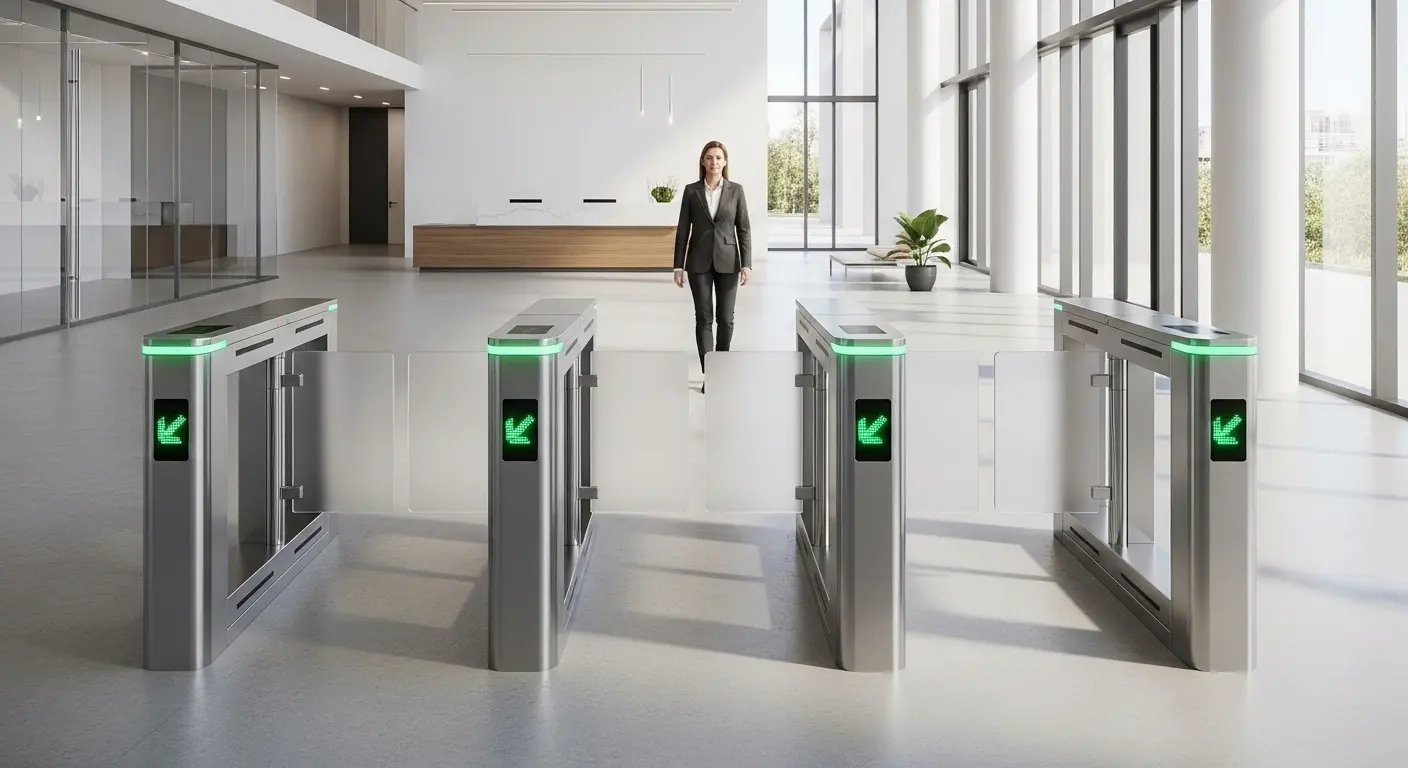
Для железнодорожной станции или платформы метро с большим трафиком, Правильные ворота турникета станции — это барьер с клапанами для стандартных полос оплаты проезда, а для премиум-класса — умный режим скорости, Конечные терминалы с высокой пропускной способностью. Оба обеспечивают 40–80 ppm на полосу, полная интеграция AFC с билетами, и устойчивость к открытой интеллектуальной собственности, адаптированную к среде транзитных станций. Согласно NFPA 101 Кодекс безопасности жизни, every station gate on a designated egress path must fail-safe open within 3 seconds on fire alarm or power loss.
В этом руководстве предоставляется сотрудникам по закупкам транспортных полномочий, station project managers, AFC system integrators, а EPC-подрядчикам — таблицу сравнения типов ворот по критериям, специфичным для транспорта, раздел сопоставления сценариев станции, a dwell-event throughput formula, an AFC integration matrix, outdoor IP rating guidance, Требования ADA, и прямой путь к прямой стоимости с завода. Start with the Ironman station gate range at the railway station pedestrian turnstile page.
Station Turnstile Gate Types — Compared on Transit-Specific Criteria
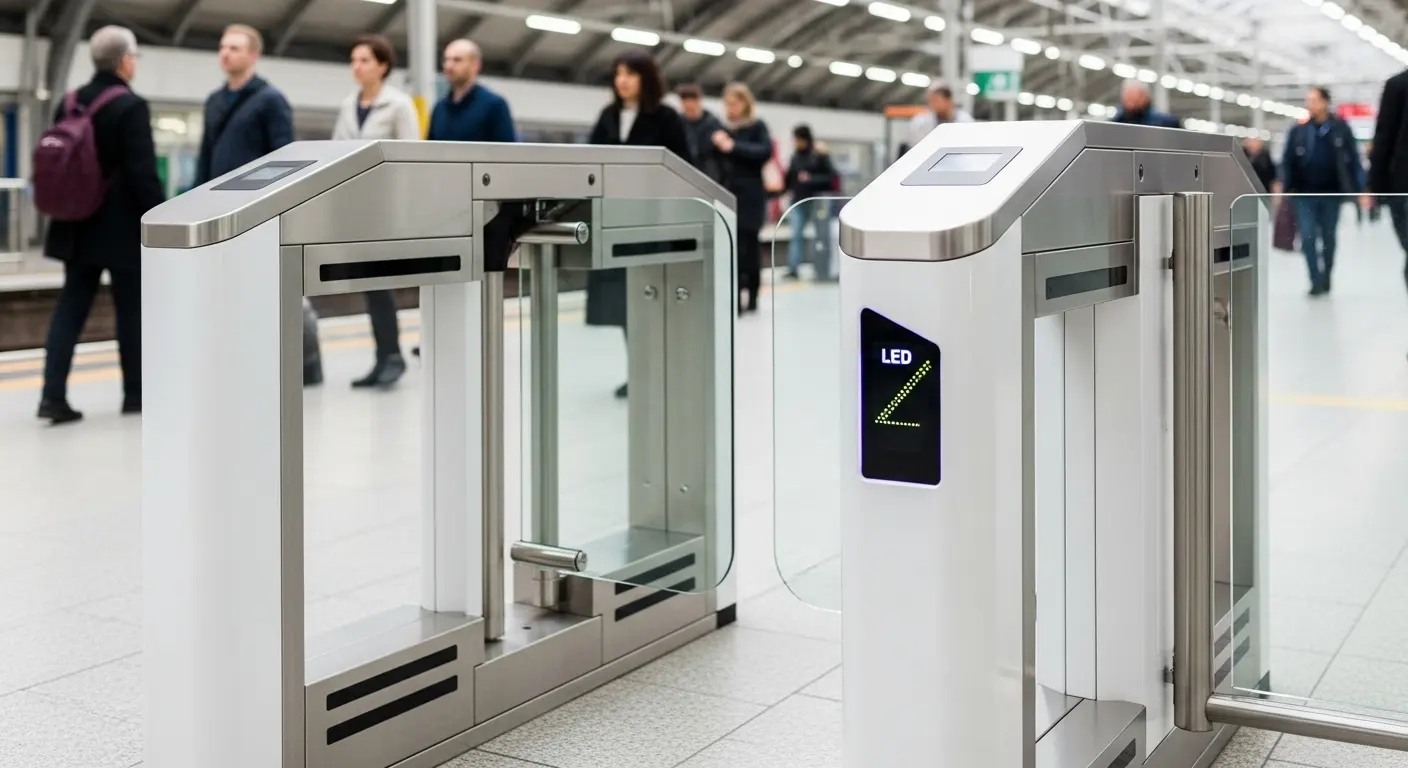
Five gate types cover the full range of station environments. Each fits a different station function, Грузопропускная способность, and outdoor resilience requirement. Таблица ниже сравнивает их по критериям, важным для спецификации транспорта.
| Тип ворот | Производительность | Интеграция с AFC | Outdoor IP | АДА / Широкий проход | Контроль за оплатой проезда | Best Station Context | Ареал подразделения |
|---|---|---|---|---|---|---|---|
| Барьер с закрылками | 40–60 ppm | RFID, QR, EMV, NFC | IP54 / IP65 opt. | Вариант с широкой полосой | Высокий | Railway platform, metro standard lane | $450–$3,000 |
| Умные ворота скорости | 50–80 ppm | RFID, QR, EMV, NFC, биометрический | IP54 | Вариант с широкой полосой | Умеренный | Premium terminus, high-throughput station | $1,300–$8,000 |
| Триногий турникет | 25–40 ppm | RFID, QR, штрихкод | IP54 | Separate ADA lane | Умеренный | Secondary entrance, BRT, budget retrofit | $200–$1,200 |
| Турникет во всю высоту | 20–30 ppm | RFID, биометрический | IP65 | Separate ADA lane | Максимум | Unmanned outdoor platform, периметр | $600–$4,000 |
| Стеклянные раздвижные ворота | 30–50 ppm | RFID, QR, NFC | IP54 | Вариант с широкой полосой | Умеренный | Premium mezzanine, city terminal | $800–$4,000 |
Flap Barrier and Smart Speed Gate — High-Volume Station Fare Lanes
The flap barrier is the standard station turnstile gate for high-volume railway and metro station fare lanes. При 40–60 ppm на полосу, it clears the peak passenger burst during a train dwell event without queue formation. Its sensor-based anti-tailgating triggers an alarm before a second person completes passage — combining physical and electronic fare enforcement above what a tripod arm delivers alone.
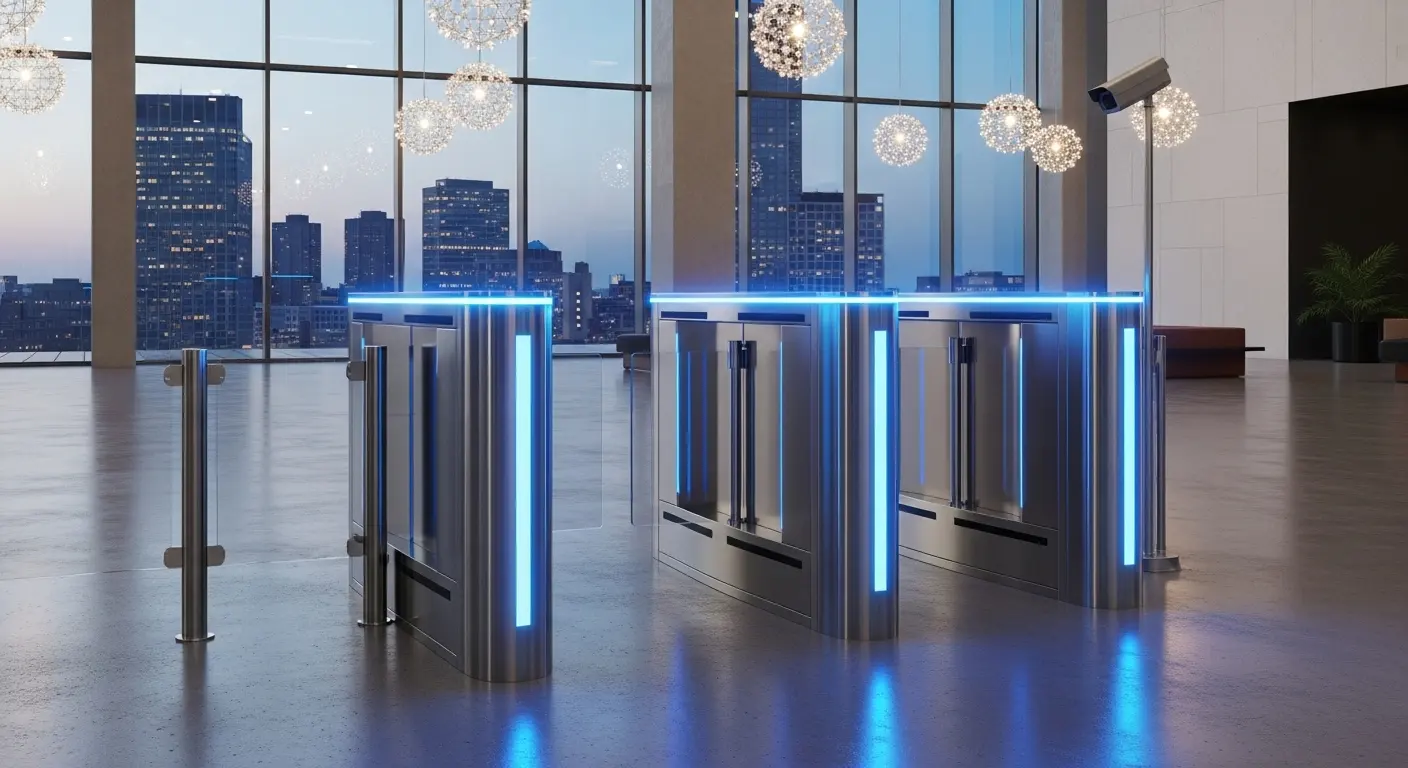
The smart speed gate suits high-throughput railway termini and premium city station environments. At 50–80 ppm and a 0.2-second unlock time, it processes peak passenger volumes faster than any other waist-height gate type. For the Ironman smart speed gate used in premium station deployments, см.smart speed gate turnstile page.
Tripod Turnstile and Full Height — Secondary and Outdoor Station Positions
Tripod turnstiles remain the most cost-effective station gate for secondary entrances, budget retrofit positions, and BRT standard lanes. At $200–$1,200 per lane and 25–40 ppm, they deliver RFID/QR AFC integration at the lowest per-lane capital cost. A separate ADA bypass lane is required alongside every tripod gate bank.
Full height turnstiles suit unmanned outdoor station positions — exposed platform perimeters, unstaffed secondary entrances, and fare barrier perimeters requiring physical access control. Their IP65 outdoor rating and physical cage profile eliminate jump-over at unattended positions. For the Ironman inclined octagonal tripod turnstile used in budget station deployments, см.inclined octagonal tripod turnstile page.
Station Turnstile Gate by Station Type — Which Gate Belongs Where
The station type and peak passenger load determine the gate specification — not just the transit line category. A high-volume railway terminus and a light rail stop in the same system require completely different gate types and lane counts.
| Тип станции | Рекомендуемые ворота | Дорожки | Требование к ключу |
|---|---|---|---|
| High-volume railway terminus | Барьер с закрылками | 4–10 + АДА | Максимальная пропускная способность, АФК, Анти-тейлгейтинг, АДА |
| Standard metro platform | Барьер с закрылками | 2–5 + АДА | Производительность, АФК, АДА |
| Терминал BRT | Tripod or flap barrier | 2–4 + АДА | Низкая стоимость, RFID/QR AFC, ADA bypass |
| Light rail stop | Tripod or flap barrier | 1–3 + АДА | Компактная площадь, RFID/QR AFC, АДА |
| Unmanned outdoor platform | Турникет на всю высоту | 1–2 | IP65, maximum perimeter control |
| Premium city terminal / mezzanine | Smart speed gate or glass sliding gate | 2–6 | Эстетика, Высокая пропускная способность, АФК |
| Вторичная школа / Вход в непиковое время | Tripod or inclined arc tripod | 1–2 | Низкая стоимость, АФК, ADA bypass |
High-Volume Railway Terminus and Metro Platforms
A high-volume railway terminus requires a minimum gate bank throughput of 200+ passengers per minute during peak dwell events. At 40–60 ppm per flap barrier lane, a bank of 4–5 lanes covers this requirement with one reserve lane for maintenance periods. Based on our railway station deployment analysis, the most consistent throughput failure in station gate installations is sizing for the average hourly entry rate rather than the peak dwell-event burst — where 80–150 passengers converge in a 60–90 second window.
Standard metro platforms with 100–200 ppm capacity need 2–4 flap barrier lanes plus one ADA wide-aisle lane at every gate bank. For the Ironman glass sliding gate used in premium city terminals, см.Страница стеклянных раздвижных ворот турникета.
BRT Terminals, Light Rail Stops, and Secondary Entrances
BRT terminals and light rail stops operate at lower peak loads than a mainline railway terminus. A tripod turnstile at 25–40 ppm handles the volume at most BRT and light rail fare positions at the lowest per-lane capital cost. Per ITDP BRT Guide data, retractable wing gates reach 60 PPM, while rotating arm tripods reach 25–40 ppm at the same position. Specify a flap barrier where a BRT station serves a major transfer hub with higher peak loads.
Secondary and off-peak station entrances need one to two tripod lanes plus one ADA bypass lane. The inclined arc tripod configuration suits tight station footprint positions where a standard tripod cabinet width exceeds the available aisle space. For the inclined arc tripod turnstile configuration, см.inclined arc tripod turnstile page.
AFC Integration for Station Turnstile Gates
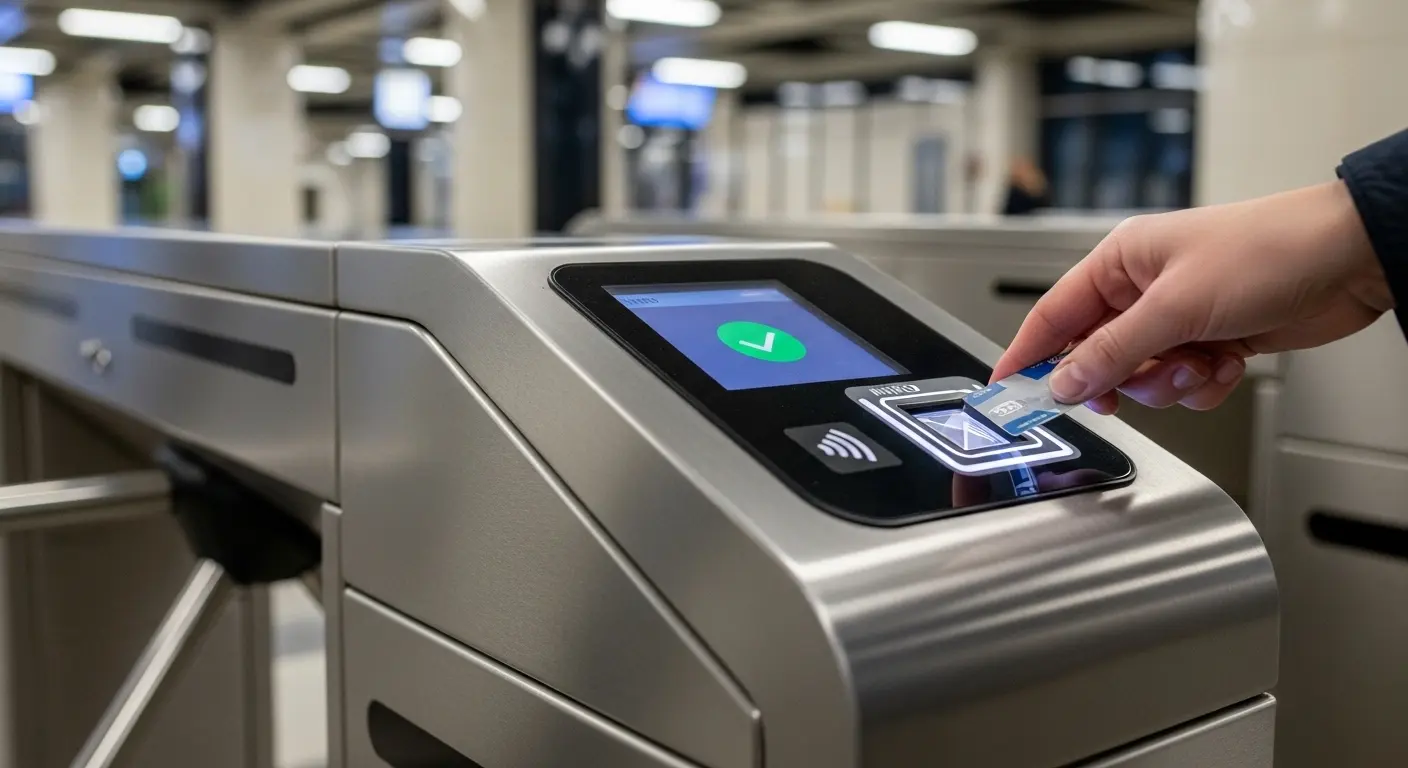
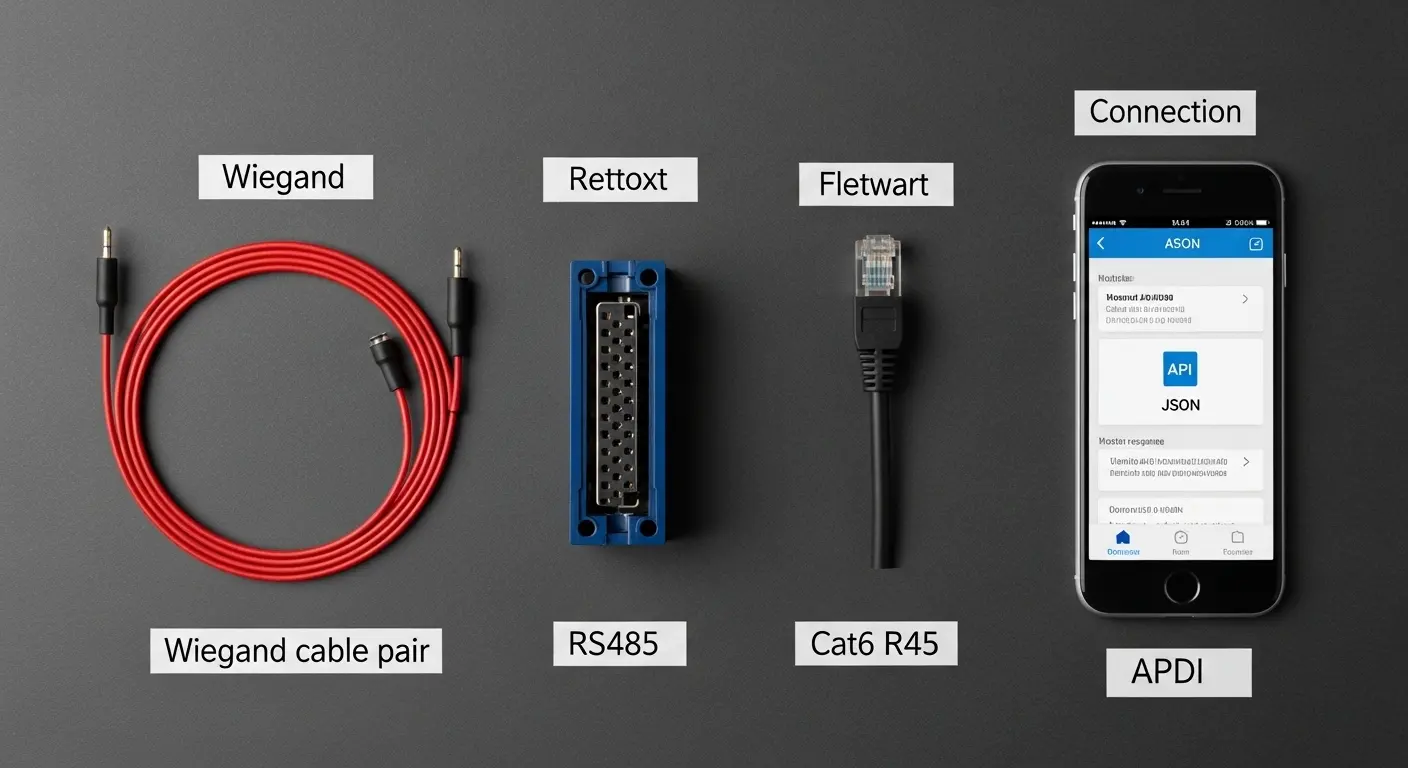
A station turnstile gate must accept the transit authority's ticketing credential from the specification stage — not as a post-installation configuration. Each AFC protocol requires specific reader hardware built into the gate unit at manufacture.
| Сертификат продажи билетов | Протокол | Аппаратное обеспечение считывателя | Совместимые типы затворов |
|---|---|---|---|
| RFID-транзитная карта | ISO 14443 / Виганд | 13.56 MHz reader | Барьер с закрылками, Speed Gate, тренога, Полный рост |
| QR-билет e-ticket (мобильные или печатные) | TCP/IP | 2Сканер штрихкодов D | Барьер с закрылками, Speed Gate, тренога |
| EMV contactless bank card | ISO 14443 | EMV contactless reader | Барьер с закрылками, Speed Gate |
| NFC мобильная оплата | ISO 18092 / HCE | Читатель NFC | Барьер с закрылками, Speed Gate |
| Распознавание лиц | TCP/IP | Модуль IP-камеры | Барьер с закрылками, Speed Gate |
| Legacy barcode / magnetic stripe | RS232 | Swipe / scan reader | Тренога (Только устаревшие системы) |
Based on our station deployment experience, the most consistent AFC specification gap is the lack of a dual-reader configuration — a 13.56 MHz RFID reader and a QR scanner in the same gate unit. This covers both transit card users and e-ticket users from one lane without separate channels for each credential type. Confirm both the AFC protocol and the required reader hardware before placing the gate order. For the Ironman anti-tailgating gate with multi-credential configuration, см.Страница с воротами турникета AB против хвоста.
Throughput Planning and Outdoor IP Rating for Station Gates
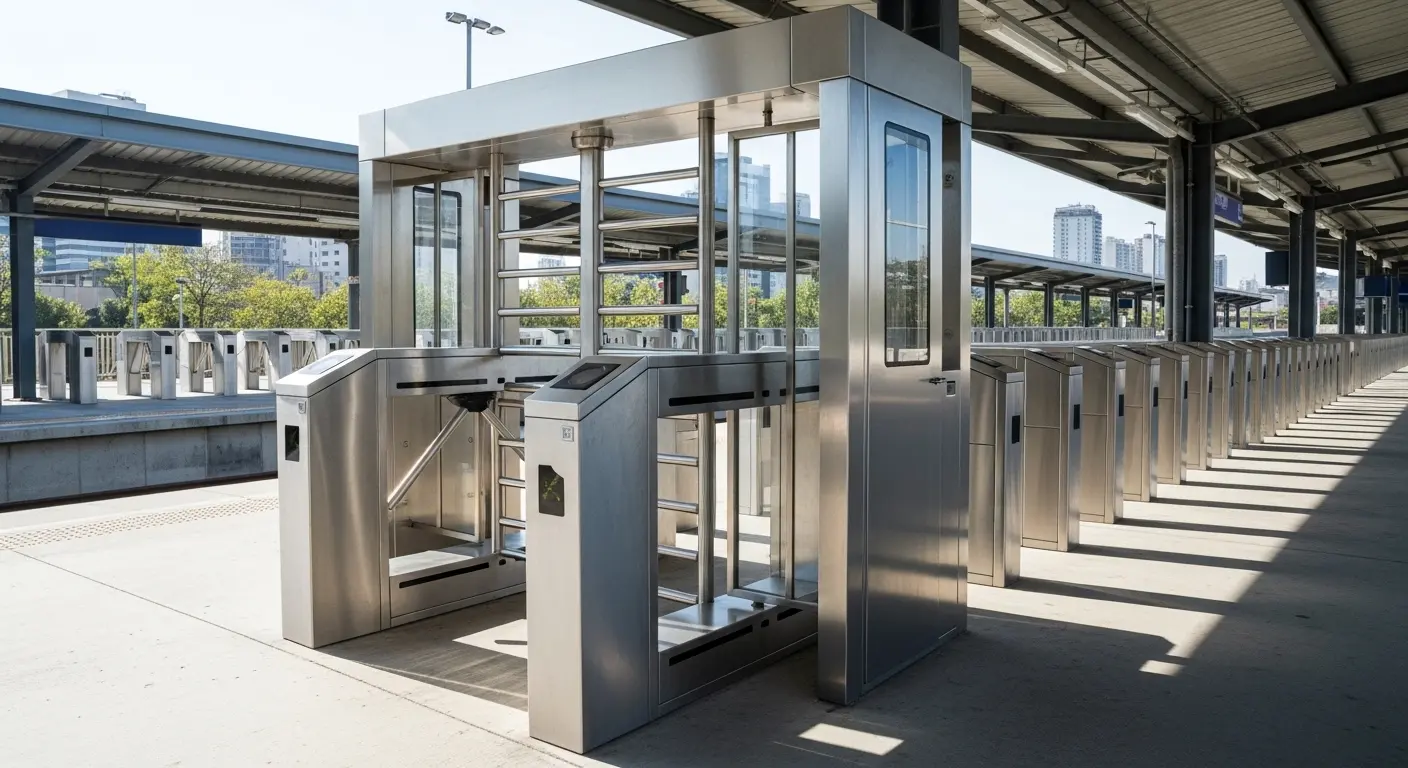
Two specification decisions cause the most rework in station gate projects: under-specifying lane count because of incorrect throughput calculations, and under-specifying the outdoor IP rating for the station's physical environment.
Dwell-Event Throughput Formula
Полосы = пассажиры на поезд ÷ окно пребывания (товары второго сорта) × 60 ÷ Gate ppm
Пример 1 — Railway terminus, 600-Пассажирский поезд, 90-Вторая резиденция, Барьер закрылка на 50 PPM:
600 ÷ 90 × 60 = 400 PPM. 400 ÷ 50 = 8 Полосы →8 Минимальные полосы для барьера с закрылками.
Пример 2 — Light rail stop, 150 Пассажиров, 60-Вторая резиденция, штатив в 35 PPM:
150 ÷ 60 × 60 = 150 PPM. 150 ÷ 35 = 4.3 Полосы →5 Минимум полос для штатив.
Размер для пика dwell-event — а не средний почасовой уровень входа. Average-rate sizing consistently under-specifies lane count for high-volume station deployments.
Outdoor IP Rating for Station Environments
| Station Environment | Minimum IP | Recommended IP | Rationale |
|---|---|---|---|
| Indoor enclosed station | IP42 | IP54 | Пыль, occasional splash |
| Semi-covered platform | IP54 | IP54 | Rain splash, wind-driven dust |
| Exposed outdoor platform | IP54 | IP65 | Прямой дождь, temperature cycling |
| Coastal / humid environment | IP65 | IP65 | Коррозия, Солёный воздух, высокая влажность |
| BRT street-level terminal | IP54 | IP65 | Full outdoor exposure |
In our experience with outdoor station gate deployments, every project where IP54 hardware was specified for a fully exposed platform required an upgrade to IP65 within 12 months — driven by condensation ingress into the gate controller from temperature cycling between day and overnight lows. Specify IP65 for any exposed outdoor station platform at the point of order.
ADA and Fail-Safe Requirements for Station Turnstile Gates
Соответствие требованиям ADA и NFPA 101 fail-safe egress are mandatory requirements for every station turnstile gate deployment — not optional additions.
ADA Accessible Gate Requirements
В соответствии со стандартами доступного проектирования ADA (США. Доска доступа), every station fare gate bank must include at least one accessible aisle with a minimum 32-inch (812 миллиметр) Чистая ширина. Предпочтительным современным транспортным вариантом является 48 inches or wider — accommodating wheelchair, коляска, and luggage access simultaneously. The ADA lane must be in the same gate bank — not at a separate station location. For station deployments serving government or civic transit functions, см.government facility access gate page.
NFPA 101 Аварийный выход
Согласно NFPA 101 Кодекс безопасности жизни, every station turnstile gate on a designated emergency egress path must retract to the fully open position within 3 seconds of fire alarm activation or mains power loss — and remain open for the full duration of the emergency. The fail-safe trigger must connect directly to the station's fire alarm control panel via a dry-contact input. A software-based command subject to network delay does not satisfy this requirement. Подтвердите интеграцию противопожарной панели и время отработки на этапе спецификации — до утверждения планировки.
Getting a Factory-Direct Quote for Your Station Turnstile Gate
Four items are sufficient for a full factory-direct quote within 12 Часы работы.
- Define your station type and peak load: railway terminus / metro platform / Терминал BRT / light rail stop / Вторичный вход + Пропускная способность поезда и окно пребывания за секунды
- Рассчитайте количество полос: Примените формулу Dwell-Event — пассажиры на поезд ÷ секунды пребывания × 60 ÷ ворота ppm = полосы; Добавить одну полосу с широким проходом ADA на каждый банк ворот
- Confirm AFC protocol and IP rating: RFID / QR / EMV / NFC — confirm the transit authority's ticketing protocol; confirm outdoor IP rating for the station's environmental exposure
- Submit your station brief: посетите solutions hub for a factory-direct station turnstile gate quote within 12 Часы работы, с CE, ISO9001, FCC, а также документы по сертификации RoHS включали
Часто задаваемые вопросы
Q1: What type of turnstile gate is best for a railway station?
For a high-volume railway station, a flap barrier is the best station turnstile gate for standard fare lanes — delivering 40–60 ppm per lane, Сенсорная антихвостовая система, and full AFC ticketing integration (RFID, QR, EMV, NFC). A smart speed gate at 50–80 ppm suits premium termini and high-throughput city stations where throughput is the primary operational concern. A tripod turnstile at 25–40 ppm suits secondary entrances and budget retrofit positions at $200–$1,200 per lane. A full height turnstile at 20–30 ppm suits unmanned outdoor platform perimeters where maximum physical access control and IP65 outdoor resilience are required. The correct gate type depends on the station function — not just the transit line category.
Q2: How does a station turnstile gate integrate with AFC ticketing systems?
A station turnstile gate integrates with AFC ticketing systems through specific reader hardware built into the gate unit: a 13.56 МГц ISO 14443 RFID reader for transit cards and EMV bank cards, a 2D barcode scanner for QR e-tickets, an ISO 18092 NFC-считыватель для мобильной оплаты, and a face recognition camera module for biometric verification. Most transit authorities now specify dual-reader configuration — RFID plus QR scanner — so one gate lane covers both transit card tapping and e-ticket scanning without separate lanes. Confirm the transit authority's AFC protocol and required reader hardware at the specification stage. Post-installation reader hardware changes typically add 3–6 weeks to commissioning and increase project cost by 8–15%.
Вопрос 3: What throughput does a station turnstile gate need to handle?
Используйте формулу dwell-event: Пассажиры поезда ÷ окно проживания (товары второго сорта) × 60 ÷ ворота ppm = полосы. For a 600-passenger railway train with a 90-second dwell and a flap barrier at 50 PPM, Минимальный уровень полос равен 8 Полос. For a 150-passenger light rail stop with a 60-second dwell and a tripod at 35 PPM, минимум — 5 Полос. Размер для пика dwell-event — а не средний почасовой уровень входа. Per ITDP BRT Guide data, retractable wing gates reach 60 PPM, while rotating arm tripods reach 25–40 ppm at the same position.
Q4: What IP rating does an outdoor station turnstile gate need?
For a semi-covered station platform with intermittent rain splash, IP54 is the minimum acceptable outdoor IP rating for a station turnstile gate enclosure. For a fully exposed outdoor platform — direct rain, temperature cycling, coastal or high-humidity environments — IP65 is the correct specification. In our outdoor station deployment experience, every project where IP54 hardware was specified for a fully exposed platform required an upgrade to IP65 within 12 months — driven by condensation ingress into the gate controller from day-to-night temperature cycling. Specify IP65 for any exposed outdoor station platform at the point of order.
Q5: What are the ADA requirements for a station turnstile gate?
В соответствии со стандартами доступного проектирования ADA (США. Доска доступа), every station fare gate bank must include at least one accessible aisle with a minimum 32-inch (812 миллиметр) Чистая ширина. The preferred transit specification for new construction is 48 inches or wider — accommodating wheelchair, коляска, and luggage access from one lane. The ADA lane must be part of the same gate bank, not at a separate station location. Tripod turnstiles and full height turnstiles require a separate ADA lane alongside the standard gate bank — flap barriers and smart speed gates are available in wide-lane configurations that satisfy the ADA requirement within the same unit.
Вопрос 6: What is the fail-safe requirement for a station turnstile gate?
Согласно NFPA 101 Кодекс безопасности жизни, every station turnstile gate on a designated emergency egress path must retract to the fully open position within 3 seconds of fire alarm activation or mains power loss, and remain open for the full duration of the emergency event. The fail-safe trigger must connect directly to the station's fire alarm control panel via a dry-contact input — a software command subject to network delay does not satisfy this requirement. A single-action manual override must also be accessible from both sides of the gate at all times. Confirm fire panel integration and fail-safe response time at the specification stage, before layout approval.
Three Decisions That Define Your Station Turnstile Gate Specification
Match gate type to station function and dwell-event peak load — not average hourly rate. Confirm AFC ticketing protocol and dual-reader configuration at the point of order. Specify IP65 for any exposed outdoor station platform from the start. These three decisions prevent the most common rework scenarios in station gate projects and ensure the gate system passes transit authority acceptance testing on the first attempt. Submit your station type, train load, dwell window, AFC protocol, and outdoor IP requirement to the solutions hub for a factory-direct station turnstile gate quote within 12 Часы работы.
