


Subway Turnstile Gate: Which Gate Type Fits Your Station, Throughput Requirement, and Fare Revenue Protection Brief
2026-04-04


For a high-volume subway station, the correct subway turnstile gate is a flap barrier for standard fare lanes and a wide-aisle paddle gate for ADA and emergency exit lanes. Flap barriers deliver 40–55 ppm per lane; wide-aisle paddle gates close the emergency exit fare evasion gap that accounts for more than half of all transit fare beats at most metro systems. Per NFPA 101 Life Safety Code, every gate on a designated egress path must fail-safe open on fire alarm activation or power loss.
This guide gives transit authority procurement officers, metro infrastructure project directors, system integrators, and EPC contractors a gate type comparison table on transit-specific criteria, a station scenario matching section, a peak-hour throughput formula, transit ticketing integration matrix, fare evasion enforcement comparison, ADA and fail-safe requirements, and a direct path to a factory-direct quote. Start with the Ironman transit gate range at the turnstile gate solutions hub.
Subway Turnstile Gate Types — Compared on Transit-Specific Criteria
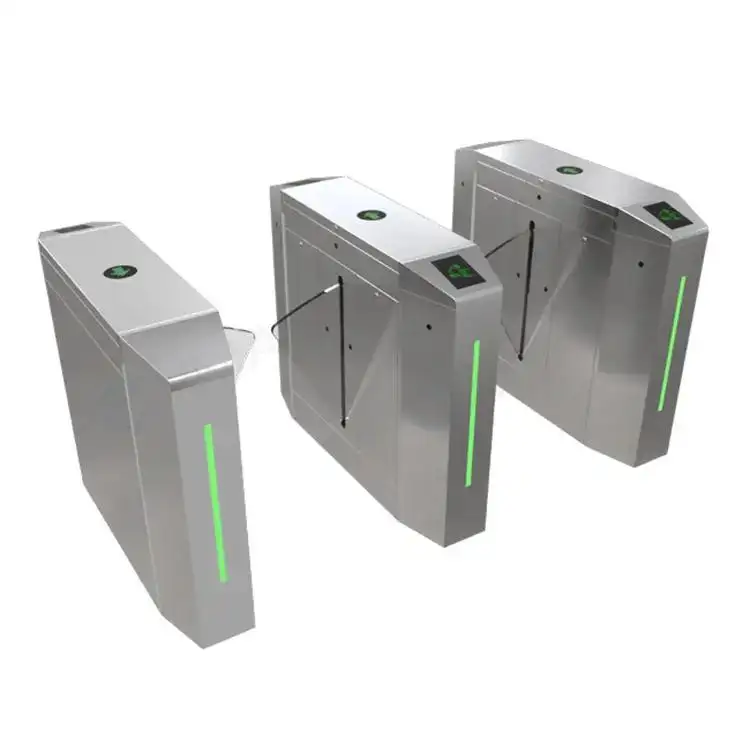
Five gate types cover the full range of subway station requirements. Each fits a different station type, throughput load, and fare enforcement brief. The table below compares them on the criteria that matter for a transit specification.
| Gate Type | Throughput | Fare Enforcement | ADA / Wide Aisle | Ticketing | Vandal Resistance | Best Station Type | Unit Range |
|---|---|---|---|---|---|---|---|
| Flap Barrier | 40–55 ppm | High — sensor + alarm | Wide lane variant | RFID, QR, NFC, EMV | High | High-volume platform, standard fare lane | $450–$3,000 |
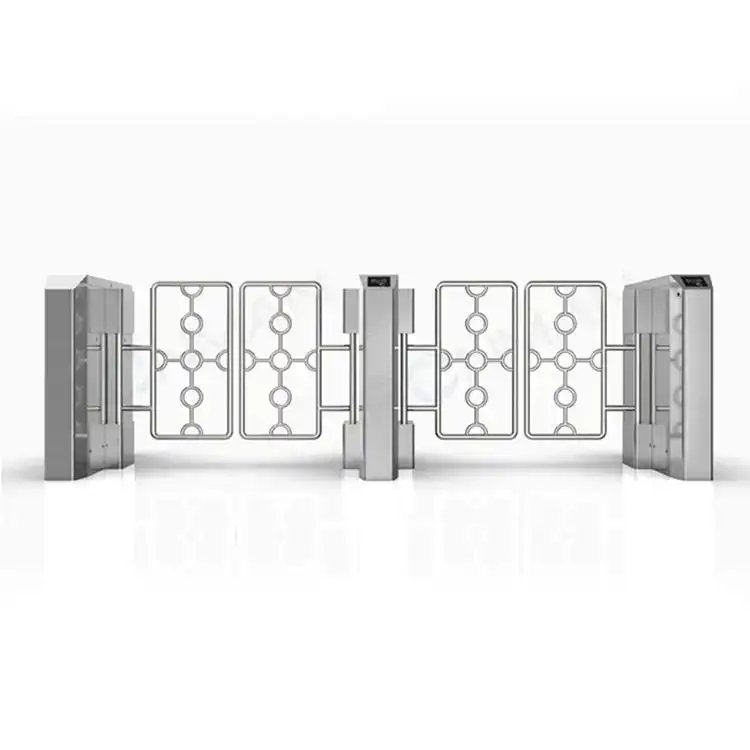
| Wide-Aisle Paddle Gate | 30–45 ppm | Highest — full door sweep | Built-in 48-inch+ | RFID, QR, NFC, EMV | Very High | ADA lane, emergency exit lane, primary entrance | $1,200–$6,000 |
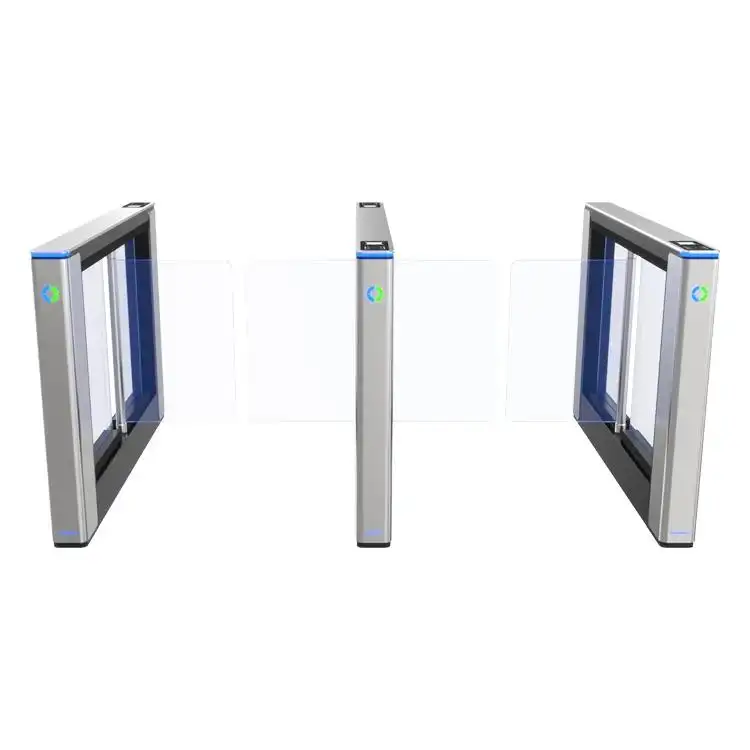
| Glass Speed Gate | 50–80 ppm | Moderate — sensor alarm | Wide lane variant | RFID, NFC, QR | Moderate | Premium station mezzanine | $1,300–$8,000 |
| Full Height Turnstile | 15–20 ppm | Maximum — physical cage | Separate ADA lane required | RFID, biometric | Highest | Outdoor BRT, unstaffed secondary entrance | $600–$4,000 |
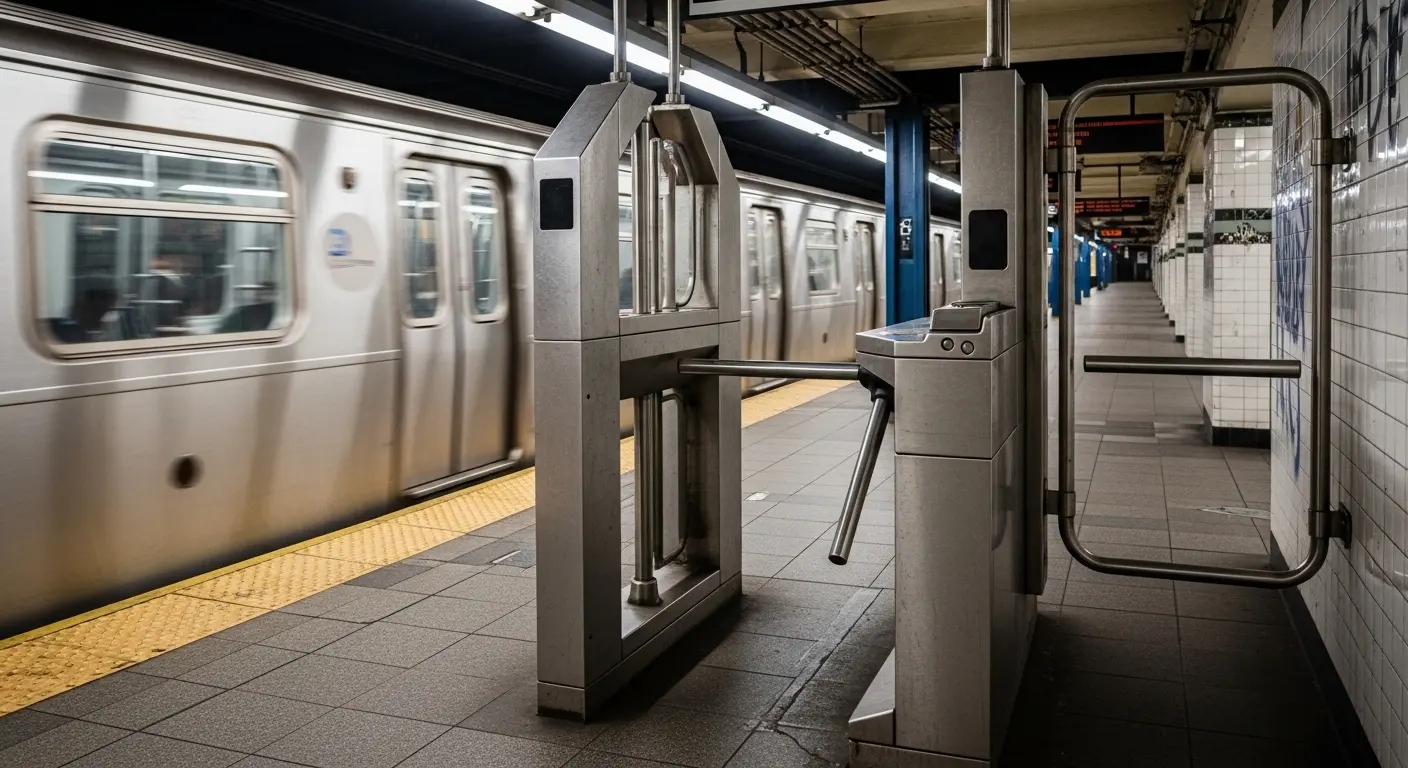
| Tripod Turnstile | 25–50 ppm | Moderate — mechanical arm | ADA bypass lane required | RFID, QR, barcode | High | Budget retrofit, secondary platform entrance | $200–$1,200 |
Flap Barrier and Wide-Aisle Paddle Gate — Standard and ADA Transit Fare Gates
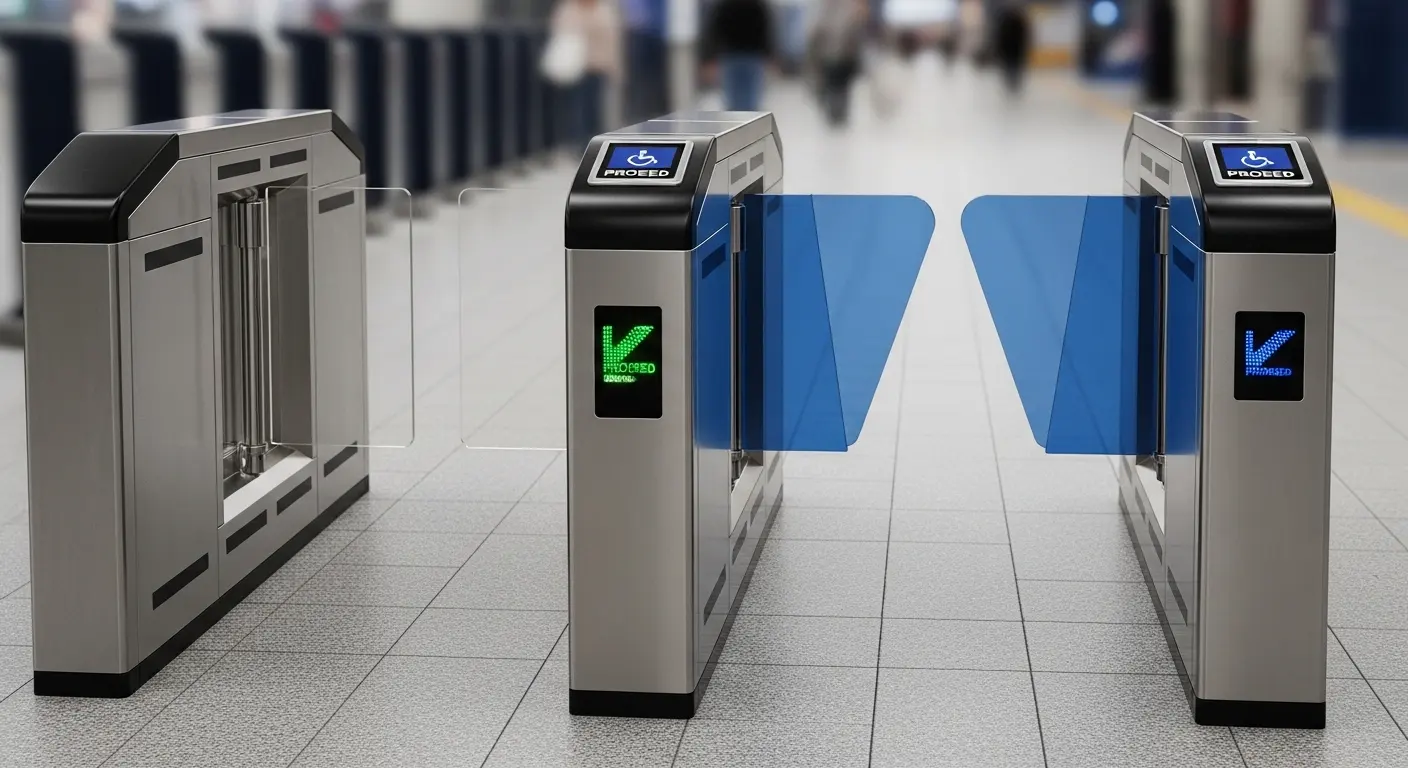
The flap barrier is the standard subway turnstile gate for high-volume metro platforms and standard fare gate lanes. At 40–55 ppm per lane, it handles the peak burst during a train dwell event without queue formation. Its sensor-based anti-tailgating triggers an alarm before a second person can complete passage — combining physical and electronic fare enforcement above what a tripod arm delivers alone.
The wide-aisle paddle gate, deployed by MTA New York at 20 stations as of 2024, adds a full door-sweep barrier at 48-inch+ aisle width. This solves ADA compliance, stroller and luggage access, and emergency exit lane fare evasion simultaneously — the single largest fare evasion point in most subway systems.
Full Height and Tripod — Outdoor and Budget Transit Deployments
Full height turnstiles suit outdoor exposed fare zones — BRT terminal perimeters, unstaffed secondary subway station entrances, and fare barrier perimeters. Their IP54–IP65 outdoor rating suits the exposed transit environment. A separate ADA lane must be provided where full height turnstiles form the primary access barrier. For the Ironman anti-tailgating configuration used in these positions, see the anti-tailgating AB turnstile gate page.
Tripod turnstiles remain the most cost-effective retrofit for secondary platform entrances and lower-volume transit stations. At $200–$1,200 per lane and 25–50 ppm, they deliver a mechanical fare barrier and RFID/QR integration at the lowest per-lane capital cost.
Subway Turnstile Gate by Station Type — Which Gate Belongs Where
The station type and peak load determine the gate type — not just the transit line category. A high-volume metro platform and an off-peak secondary entrance in the same system need different gate specifications.
| Station Type | Recommended Gate | Lanes | Credential | Key Requirement |
|---|---|---|---|---|
| High-volume metro (>200 ppm) | Flap barrier | 4–11 | RFID, QR, NFC | Max throughput, fare enforcement, ADA lane |
| Standard metro (100–200 ppm) | Flap barrier | 2–5 | RFID, QR | Throughput, fare enforcement, ADA lane |
| ADA / stroller / luggage lane | Wide-aisle paddle gate | 1–2 per bank | RFID, QR, NFC | 48-inch+ clear, ADA compliance |
| Emergency exit lane | Wide-aisle paddle gate + fail-safe | 1–2 | Alarm fail-safe open | Closes exit-lane fare evasion gap |
| Secondary / off-peak entrance | Tripod turnstile | 1–2 | RFID, QR | Low cost, fare control |
| Outdoor BRT terminal | Full height turnstile | 2–4 | RFID, biometric | IP65, maximum physical deterrent |
| Premium station mezzanine | Glass speed gate | 2–4 | RFID, NFC, QR | High throughput, station aesthetics |
High-Volume and Standard Metro Platforms
High-volume metro platforms need a minimum gate bank throughput of 200 passengers per minute across the full fare gate line. At 40–55 ppm per flap barrier lane, a bank of 4–5 lanes covers this requirement with one lane in reserve for maintenance periods. Based on our transit gate deployment analysis, the most common throughput failure in subway gate installations is sizing for the average hourly entry rate rather than the peak dwell-event burst — which concentrates 80–150 passengers into a 60–90 second window.
Standard metro platforms with 100–200 ppm capacity need 2–4 flap barrier lanes plus one ADA wide-aisle lane. The ADA lane must be in the same gate bank as the standard lanes — not at a separate location. For the Ironman flap barrier turnstile used in transit platform deployments, see the flap barrier turnstile page.
ADA, Emergency Exit, and Secondary Entrance Scenarios
The ADA / stroller / luggage lane is mandatory at every subway fare gate bank in the U.S. under ADA Standards for Accessible Design. The minimum clear width is 32 inches — but the preferred transit specification is 48 inches or wider, matching the MTA and LA Metro wide-aisle gate standard. For the Ironman glass sliding gate configuration used in premium station environments, see the glass sliding gate turnstile page.
Secondary and off-peak entrances represent the lowest footfall gate positions in a subway system. At these positions, a tripod at $200–$1,200 per lane delivers RFID/QR fare enforcement at the lowest capital cost. Pair it with one ADA bypass lane — either a wide-aisle paddle gate or a staffed manual override — to meet accessibility requirements.
Subway Turnstile Gate Fare Evasion Enforcement — What the Gate Must Do
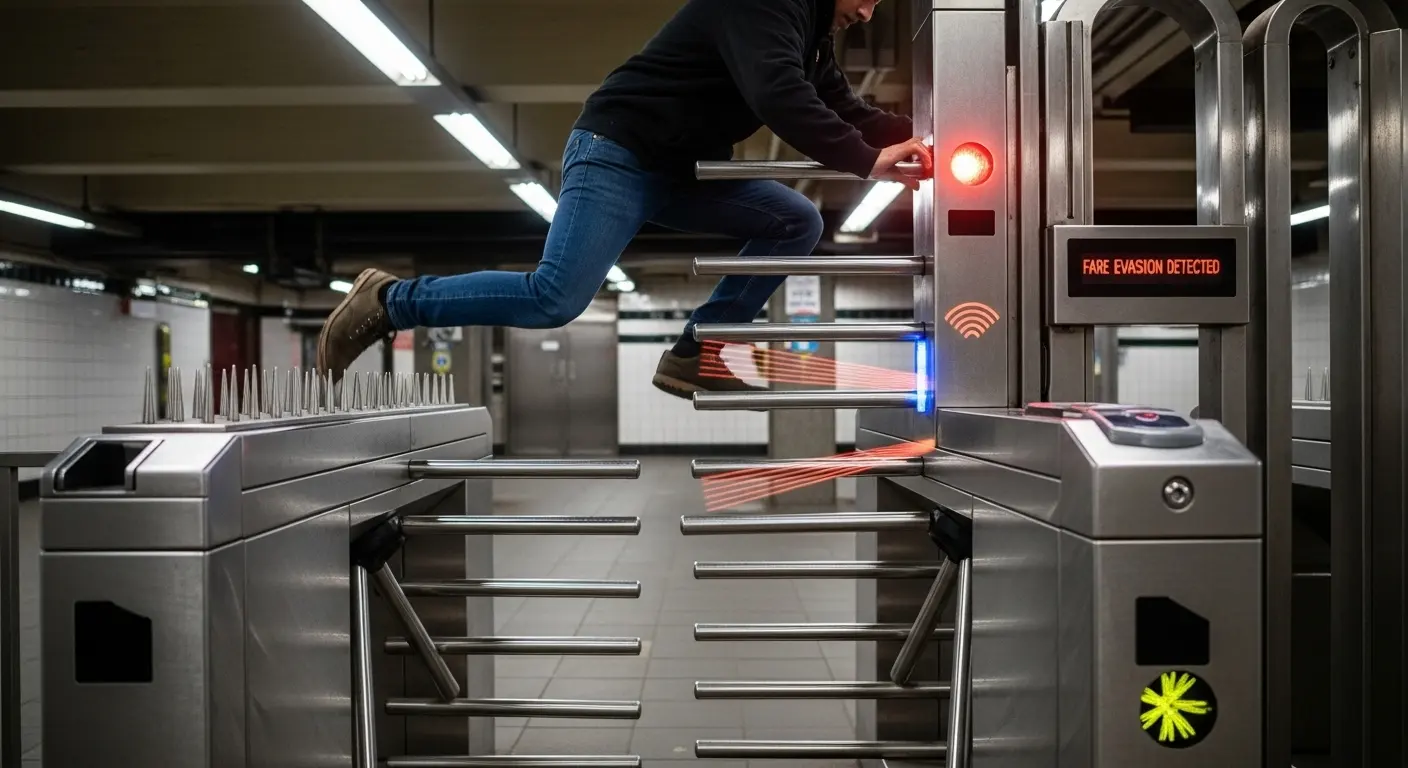
A subway turnstile gate's primary function is fare revenue protection — stopping unauthorized entry before it occurs. Per MTA data, more than half of all subway fare evasion occurs through emergency exit gates, not through the standard fare gate lanes.
Fare Evasion Enforcement by Gate Type
| Gate Type | Bypass Method | Enforcement Level | Revenue Recovery |
|---|---|---|---|
| Wide-aisle paddle gate | Full door sweep — no gap | Highest | Maximum |
| Flap barrier | Sensor + alarm | High | Strong |
| Full height turnstile | Physical cage | High | Strong |
| Tripod turnstile | Mechanical arm | Moderate | Moderate |
| Traditional emergency exit gate | Push bar — no barrier | None | Zero |
Three Enforcement Gaps Every Subway Gate Upgrade Must Close
Emergency exit lanes: Replacing standard push-bar emergency exit gates with ADA wide-aisle paddle gates removes the single largest fare evasion point in most transit systems. Per MTA data, this single change delivers more fare revenue recovery than replacing the same number of standard fare lane tripod turnstiles.
Jump-over gaps: Standard flap barriers with a 900 mm panel height deter most jump-over attempts. Full height turnstiles at standard fare lanes eliminate jump-over entirely for higher-risk positions.
Anti-tailgating sensor calibration: Transit-volume anti-tailgating sensors must be calibrated for the close-contact queuing pattern of a metro platform. Based on our transit deployment experience, standard pedestrian calibration produces false-alarm rates above 15% during peak hours at busy subway stations — leading operators to reduce sensitivity or disable the alarm. Specify transit-calibrated sensitivity at the point of order. BART's $90 million gate replacement contract — replacing approximately 715 gates with harder-to-bypass alternatives by 2026 — reflects the scale of investment transit authorities are committing to fare revenue recovery.
Peak-Hour Throughput Planning for Subway Turnstile Gates
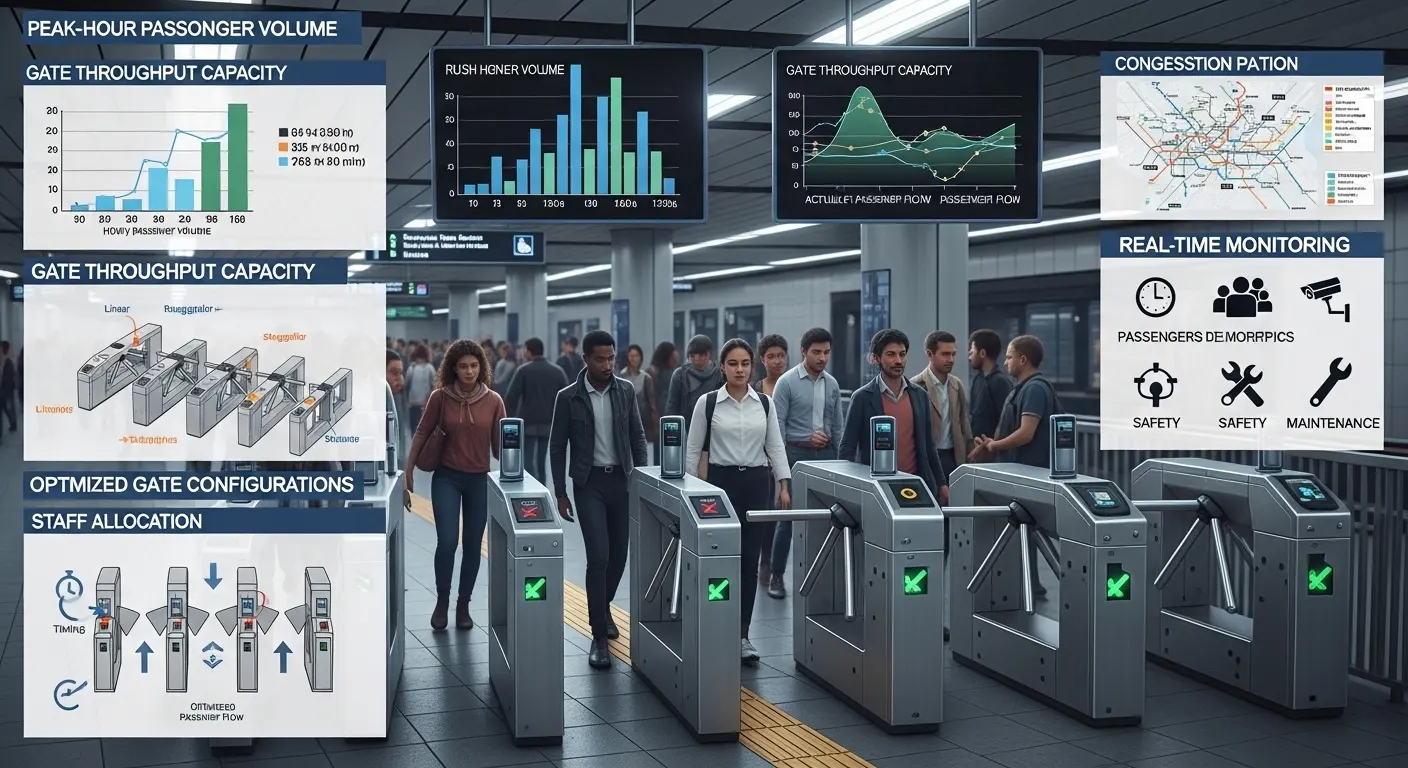
Under-specifying lane count is the most expensive subway turnstile gate specification error — a throughput bottleneck at peak hours delays passengers, creates platform crowding, and triggers safety interventions.
Subway Peak Throughput Formula — Train Dwell Event Method:
Lanes = Passengers per train ÷ Dwell window (seconds) × 60 ÷ Gate ppm
Example 1 — High-volume metro platform, 800-passenger train, 90-second dwell, flap barrier at 50 ppm:
800 ÷ 90 × 60 = 533 entries per minute. 533 ÷ 50 = 10.7 lanes → 11 flap barrier lanes minimum for the platform.
Example 2 — Standard metro, 300-passenger train, 90-second dwell, tripod at 35 ppm:
300 ÷ 90 × 60 = 200 entries per minute. 200 ÷ 35 = 5.7 lanes → 6 tripod lanes minimum.
| Station Load | Train Capacity | Dwell | Gate Type | Lanes |
|---|---|---|---|---|
| Light rail (200 pax) | 200 | 90 sec | Flap barrier | 4–5 |
| Standard metro (500 pax) | 500 | 90 sec | Flap barrier | 7–8 |
| High-volume metro (800 pax) | 800 | 90 sec | Flap barrier | 10–11 |
| BRT terminal (variable) | Variable | 120 sec | Tripod | 4–6 |
Size for the dwell-event peak. A station averaging 5,000 passengers per hour can experience 300 simultaneous gate entries in a 90-second dwell window. Average hourly rate as the throughput basis consistently under-specifies the lane count for high-volume transit deployments.
Transit Ticketing Integration for Subway Turnstile Gates
Ticketing system integration must be confirmed at the specification stage — not as a post-installation configuration. Each ticketing protocol requires specific reader hardware built into the gate unit.
| Ticketing Credential | Protocol | Gate Reader Hardware | Compatible Gate Types |
|---|---|---|---|
| Contactless EMV / RFID transit card | ISO 14443 | 13.56 MHz RFID reader | Flap barrier, paddle gate, speed gate, tripod |
| QR e-ticket (mobile or printed) | TCP/IP | 2D barcode scanner | Flap barrier, paddle gate, speed gate, tripod |
| NFC mobile pay | ISO 18092 / HCE | NFC reader | Flap barrier, paddle gate, speed gate |
| Face recognition | TCP/IP | IP camera module | Flap barrier, speed gate, paddle gate |
| Legacy magnetic stripe | RS232 | Magnetic swipe reader | Tripod (legacy systems only) |
Based on our transit gate deployment experience, the most common ticketing specification gap is the lack of a dual-reader configuration — a contactless RFID reader and a QR scanner in the same gate unit. This covers both existing transit card users and mobile app e-ticket users from one gate position. For the Ironman flap turnstile gate with multi-credential reader configuration, see the flap turnstile gate product page.
ADA and Fail-Safe Requirements for Subway Turnstile Gates
ADA compliance and NFPA 101 fail-safe egress are mandatory requirements for every subway turnstile gate deployment — not optional additions.
ADA Wide-Aisle Requirements
Under ADA Standards for Accessible Design (U.S. Access Board), every subway fare gate bank must include at least one accessible aisle with a minimum 32-inch clear width. The preferred modern transit specification is 48 inches or wider — matching the MTA New York and LA Metro wide-aisle gate standard. For international metro systems, ISO 21542 requires a minimum 900 mm (approximately 36 inches) accessible fare gate aisle width.
NFPA 101 Fail-Safe Egress
Per NFPA 101 Life Safety Code, every subway turnstile gate on a designated emergency egress path must retract to the open position within 3 seconds of fire alarm activation or mains power loss — and remain open for the duration of the emergency. The fail-safe trigger must connect directly to the fire alarm control panel via dry-contact input. A software command subject to network delay does not satisfy this requirement. For the Ironman sliding turnstile gate with fail-safe emergency egress configuration, see the sliding turnstile gate page.
Getting a Factory-Direct Quote for Your Subway Turnstile Gate
Four items are sufficient for a full factory-direct itemized quote within 12 business hours.
- Define your station type and load: high-volume metro / standard metro / BRT terminal / secondary entrance + train capacity and dwell window in seconds
- Calculate your lane count: apply the dwell-event formula — passengers per train ÷ dwell seconds × 60 ÷ gate ppm = lanes; add one ADA wide-aisle lane per gate bank
- Confirm ticketing integration: contactless EMV RFID / QR e-ticket / NFC mobile pay — confirm the transit authority's ticketing protocol and required reader hardware at point of order
- Submit your transit brief: visit the pedestrian speed gate page or the turnstile gate hub for a factory-direct transit gate quote within 12 business hours, with CE, ISO9001, FCC, and RoHS certification documentation included
Frequently Asked Questions
Q1: What type of turnstile gate is best for a subway station?
For a high-volume metro platform, a flap barrier is the best subway turnstile gate for standard fare lanes — 40–55 ppm per lane, sensor-based anti-tailgating, and contactless RFID/QR/NFC ticketing integration. A wide-aisle paddle gate is the correct specification for the ADA lane and emergency exit lane — it closes the emergency exit fare evasion gap that accounts for more than half of all transit fare beats at most systems. A tripod turnstile suits secondary and off-peak entrances at $200–$1,200 per lane — delivering mechanical fare enforcement and RFID/QR integration at the lowest capital cost. Full height turnstiles are appropriate for outdoor BRT terminal perimeters and unstaffed secondary entrances where maximum physical deterrence is the primary brief.
Q2: How does a subway turnstile gate prevent fare evasion?
A subway turnstile gate prevents fare evasion through three mechanisms: a physical barrier that blocks passage until a valid credential is presented (flap panel, paddle door, full height cage, or tripod arm), a sensor-based anti-tailgating system that detects a second person entering before the gate resets and triggers an alarm, and a fare system integration that validates the credential in real time against the transit authority's ticketing database before the gate opens. Per MTA data, more than half of all subway fare evasion occurs through emergency exit gates — replacing those with ADA wide-aisle paddle gates with fail-safe egress is the highest-impact single intervention for fare revenue recovery at most transit systems.
Q3: What throughput does a subway turnstile gate need to handle?
Use the dwell-event formula: passengers per train ÷ dwell window (seconds) × 60 ÷ gate ppm = lanes. For an 800-passenger high-volume metro train with a 90-second dwell and a flap barrier at 50 ppm, the minimum lane count is 11 lanes for that platform. For a 300-passenger standard metro train with a tripod at 35 ppm, the minimum is 6 lanes. Size for the dwell-event peak — not the average hourly entry rate. A station averaging 5,000 passengers per hour can experience 300 simultaneous gate entries in a 90-second window. Average-rate sizing consistently under-specifies lane count for high-volume transit deployments.
Q4: How does a subway turnstile gate integrate with contactless ticketing?
A subway turnstile gate integrates with contactless ticketing through specific reader hardware built into the gate unit: a 13.56 MHz ISO 14443 contactless RFID reader for transit cards and EMV bank cards, a 2D barcode scanner for QR e-tickets from mobile apps or printed tickets, and an ISO 18092 NFC reader for mobile pay. Most transit authorities now require dual-reader configuration — contactless RFID plus QR scanner — so one gate lane covers both transit card tapping and e-ticket scanning without separate lanes. Legacy magnetic stripe systems use an RS232 magnetic swipe reader, but these are being retired across most transit systems by 2026. Confirm the transit authority's required ticketing protocols at the specification stage.
Q5: What are the ADA requirements for a subway fare gate?
Under ADA Standards for Accessible Design (U.S. Access Board), every subway fare gate bank must include at least one accessible aisle with a minimum 32-inch (812 mm) clear width. For new construction and major alterations, the preferred transit specification is 48 inches or wider — this is the standard adopted by MTA New York and LA Metro for their wide-aisle fare gate upgrade programs. For international metro deployments, ISO 21542 requires a minimum 900 mm accessible aisle. The ADA lane must be part of the same fare gate bank — not at a separate location on the platform. A wide-aisle paddle gate is the standard hardware solution for this requirement, as it also closes the emergency exit fare evasion gap in the same installation.
Q6: What is the fail-safe requirement for a subway turnstile gate?
Per NFPA 101 Life Safety Code, every subway turnstile gate installed on a designated emergency egress path must retract to the fully open position within 3 seconds of fire alarm activation or mains power loss — and remain open for the duration of the emergency event. The fail-safe trigger must connect directly to the fire alarm control panel via a dry-contact input. A software-based fail-safe command is not compliant — it is subject to network delay and cannot be relied upon during a fire emergency. In addition, a single-action manual override must be accessible from both sides of the gate at all times. Confirm fire panel integration and fail-safe response time at the specification stage — before layout approval.
