


Swing Turnstile Gate: Planning Wide Access Without Losing Control
2026-07-24


Planning wide access without a loss of control, with a swing turnstile gate.
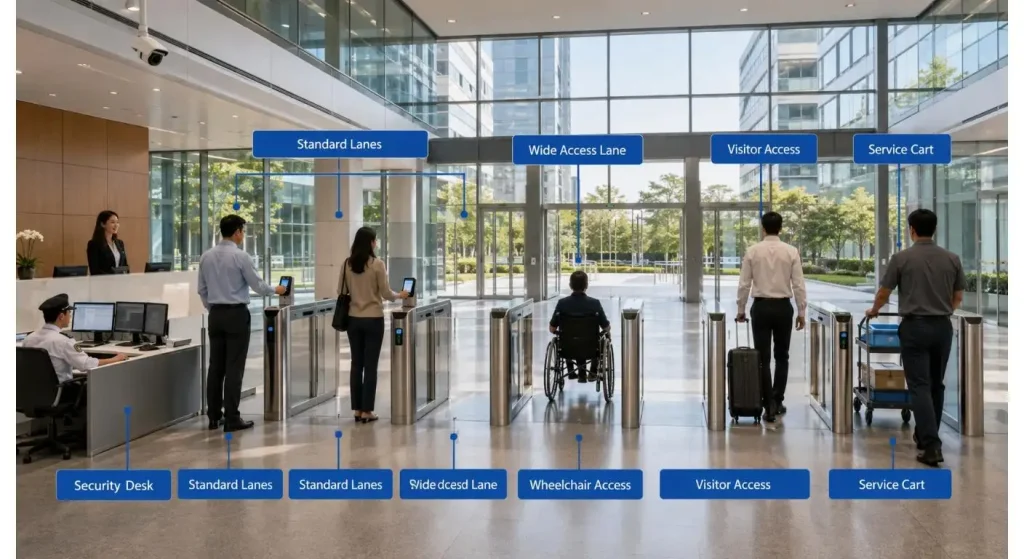
This guide is designed for the Office, Hospital, School, Factory, Residential Community, Public Building, the System Integrator and Procurement Teams involved in the planning process for a swing-gate entrance.
Build from the ground up using the residents of the area using the Lane
Similarly to the previous question, the first question should NOT be “Which cabinet design looks best?” It should read, 'Who shall enter through this door?
A corporate entrance or area is responsible for employees, visitors, delivery persons and wheelchair users. Medical carts and slower moving patients will likely also be required in a hospital setting. Tools or bulky protective clothing may be carried by workers coming in or out of the factory.
Identify the actual user groups and then define:
- A minimum of 210mm (8in) will be provided for required clear passage width.
- Peak arrival periods
- Typical credential
- You can trade on both sides market movements, both up and down.
- Luggage/carts for using
- Visitor assistance
- Security supervision
- Emergency movement
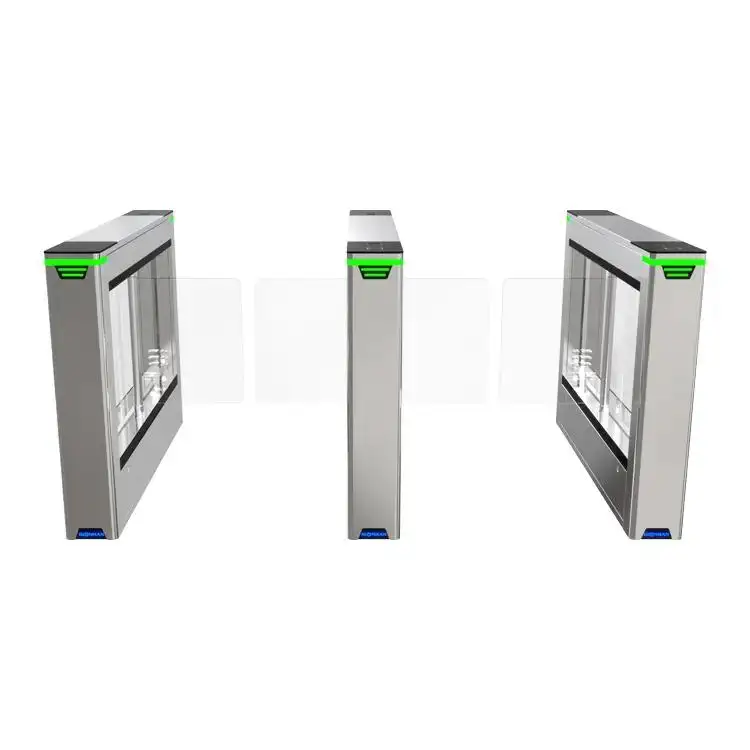
Ironman describes its swing barrier gate as a “silent” motorised barrier which is suitable for greater wheelchair, luggage and pedestrian clearances, and is suitable for RFID, biometric and QR card access. The latter features are beneficial but not sufficient to match end-to-end to the site and customer.
Recognize the strengths and limitations of the swing gate.Know how the swing gate works and what it can and cannot do.
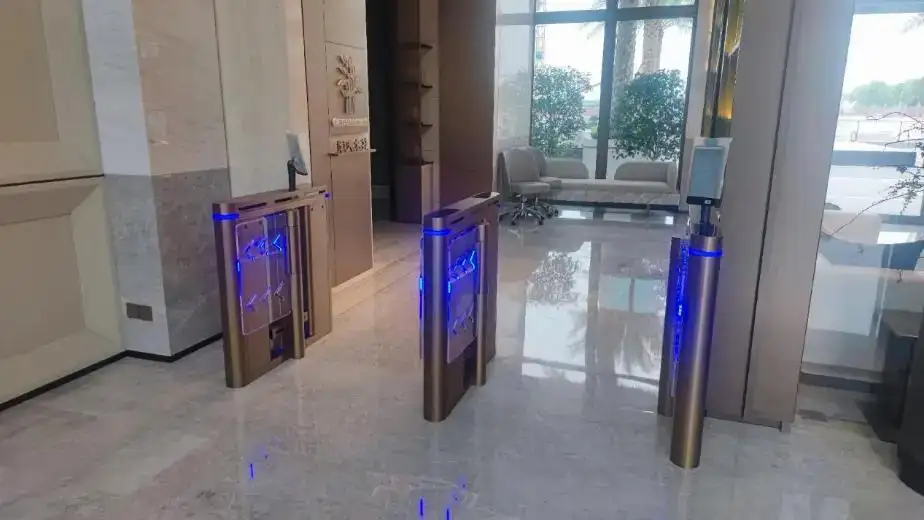
Instead of the rigid ambience of a full turnstile, the swing gate affords the user a sense of passing through while allowing for additional security at the same time. That's an ideal material for a building's entrance where security is an issue, but the owner wishes to project an open and welcoming image.
It has the following key advantages:
- Flexible passage width
- Quiet automatic movement
- Works with various types of readers
- A change in color or marked contrast when range open and closed
- Ability to incorporate all necessary aspects compared to a manned commercial or public entrance.
The alternative is that a swing barrier is not a fence per se. If you have a low panel, that might be easier to climb than a high panel, but if the lane runs so wide that it is very difficult to cover with sensors and control with barriers, then, of course, you can't climb it, either.
It is important that the supplier advises the user of the location of the product between a standard door, a compact turnstile, an anti-climb swing door and a full height security barrier.
Be careful about the choice of the passage width.
Bigger lanes aren't necessarily good lanes.
Commonly, the larger the opening, the longer the motor has to travel, the longer the length of the opening time, and the longer the closing time. A wider opening may necessitate extra covering for the sensors or also a various placement of the cabinets.
Ensure there is adequate clearance after Caboose Gates, Cabinets, Handles and surrounding objects are fitted. Avoid using only the name of the product dimension.
| Planning Area | Main Question | Evidence Needed |
| Passage width | Who needs the lane? | User review |
| Peak flow | How many arrive together? | Traffic estimate |
| Reader speed | How long does validation take? | Live test |
| Sensor coverage | Is the full lane monitored? | Sensor layout |
| Building space | Can panels and doors open safely? | Approved drawing |
| Maintenance | Can technicians reach components? | Service-space review |
This should also include the approach area on the layout. There must be sufficient room left between the queue barriers and furniture and between the users and other lane for a user to present a credential and await the opening of the panel and to pass without coming into contact with the queue barriers or furniture.
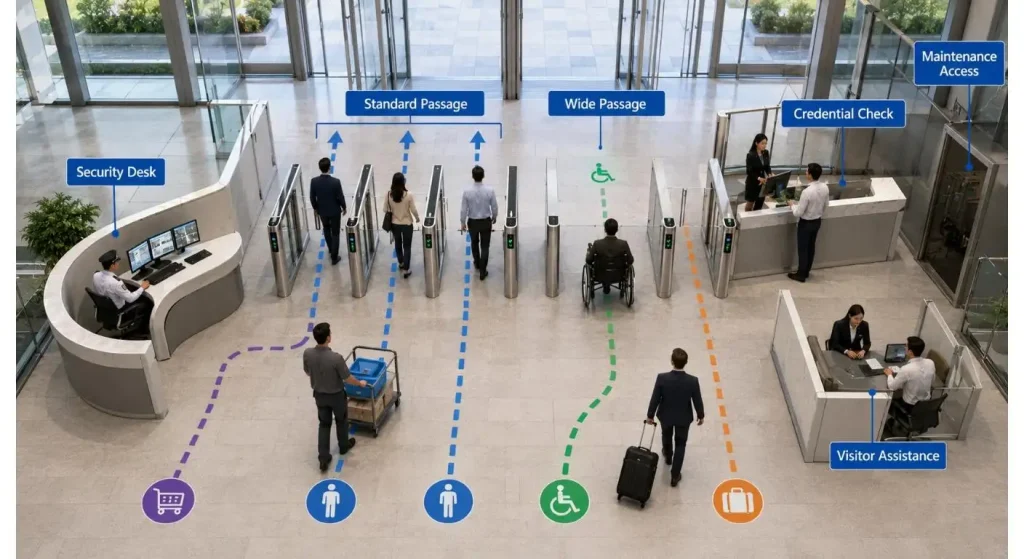
The U.S. Access Board designates turnstiles as not being part of an accessible route for projects subject to standards in the U.S. Accessible gate or door which is adjacent to the first one may be necessary and should follow a similar use pattern.
Connect the Reader, Controller and Gate Logic
Access-control system determines if the credential is valid. The physical passage that follows controlled by the turnstile.
The use of an RFID card, mobile credential, QR code, fingerprint, face recognition, visitor pass, or remote opening from a security desk are ways to identify a project.Identification of a project may include RFID cards, mobile credentials, QR, fingerprint, face recognition, visitor pass, or remote opening from a security desk. Before production, define:
- A model of a reader with its dimensions.A reader model and its dimension.
- Angle and level from which an item is mounted
- Opening signal
- Communication interface
- Access and exit rights.Entry/exit access rights.
- Offline behaviour
- Alarm outputs
- Event records
- Manual release
- The software integration team is responsible for configuring it.It is integrated via the software integration team.
Ironman's access control equipment and access control turnstile gate solutions demonstrate a variety of authentication methods, but it is important to verify compatibility with the approved reader, controller, software version and gate configuration.
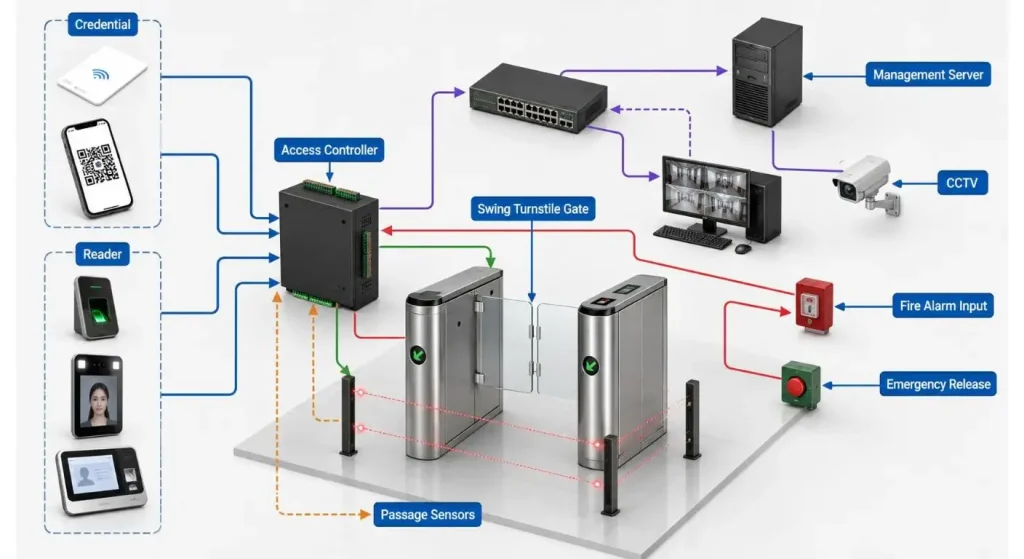
An order must have more than just “Supports access control”. The signal to start the gate, and how to proceed when a signal is not received, should be known by the project team.
Respond to sentences that have been edited
You should in general, get one controlled passage from a valid credential.
The sensor system might be required to sense:
- Entry before approval
- Tailgating
- Need more than a single pair to enter together.At least two persons should enter together.
- Wrong-direction movement
- A Self Interrupted Rhubarb (SIR)
- An object is close to the panel.There is an object close to the panel.
- Passage timeout
- Someone who returns an instrument that has been authorised for loan.Authorised user returned.
Request the construction and sequence of the sensors. Alarms and what causes the lane to close should be explained by the supplier, as should be the timing of the opening of the panel and how long the lane is available.
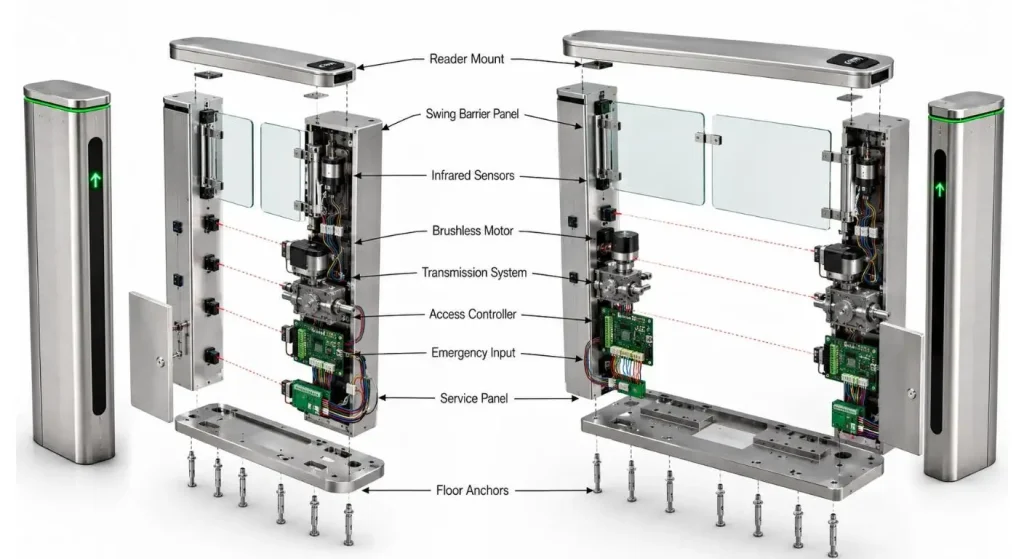
These should be the same as those of the real users. There may be a different time regime required for a fast corporate entrance, as opposed to a hospital, school or residential building.
The Independent Coordinator should work with the building map to fine-tune the Gate
Oftentimes, turnstiles are chosen before the last few details of a floor plan are determined. This can cause unnecessary issues in the future.
Make sure the gate is pushed against:
- Sightlines are able to be viewed from the reception and security-desk area.
- The locations of elevators and doors↓
- Floor conduits
- Anchor positions
- Queue barriers
- Visitor assistance space
- Maintenance-panel clearance
- Camera coverage
- Emergency routes
- Nearby furniture
All cabinets are directed to be placed using Ironman's installation guide and not before marking and/or drilling anchor holes. This allows spacing and alignment issues to be identified prior to making any permanent changes to the floor.
Approved final lane drawing prior to production, particularly if working with a custom cabinet length, reader brackets, glass panels or finishes.
Review and reinforce safety and emergency behaviours
This swing panel objects are in the pedestrian space, so be careful with the safety logic.
The system should sound the right signals through if a child, bag or wheelchair is in the way or an obstacle is left in the lane. The supplier should describe the range, closing speed, anti-pinch response, response to repeated obstructions etc. of the sensor.
The project team has to determine what will occur at each of the following:
- Power failure
- Network interruption
- Controller fault
- Fire-alarm input
- Emergency-button activation
- Manual security release
- The machine fails due to motor or sensor problems.Failure of motor/sensor.
Not one solution fits all the problems at all the sites. The manufacturer should provide which the gate is capable of doing and leave space for mention of the final approval from the architect, fire consultant, integrator, operator and local authority to approve the final strategy.
Check Outdoor Claims by Component
The basic term Swing turnstiles refers to outdoor but also for buildings are installed where there is a need for turnstiles. “Outdoor model” is too generic to be of assistance.
Review of protection of cabinet/reader, controller compartment, cable glands, motor area, fasteners, drainage system, anchorages and emergency controls.
The IEC defines the IP rating as a measure of enclosure's resistance to dust and liquids. If they added readers, displays, holes or cable entries, does this change the tested configuration?
Direct sunlight, condensation, salt air, cleaning water, temperature range for operations and wind force on large glass panels are all additional factors that need to be taken into account when used in outdoor applications.
Ensure that the Final configuration is tested prior to shipment
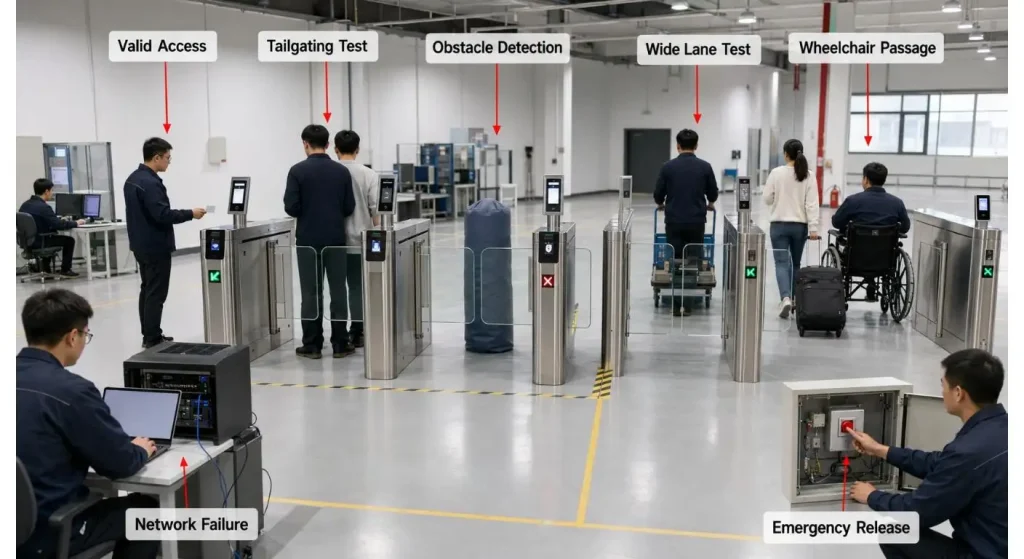
Any approved reader, controller, panel size, lane width, sensor setting and/or software signal should be used during factory acceptance testing if possible.
Recommended tests include:
- Valid and invalid credentials
- One-person passage
- Tailgating
- Wrong-direction movement
- Obstacle detection
- Passage timeout
- Network interruption
- Power recovery
- Manual release
- Emergency opening
- Alarm output
- Event recording
Ask to see test videos, inspection records, wiring diagrams, software versions and serial numbers and packaging photographs.
| Test Item | Expected Result |
| Valid credential | Gate opens once |
| Invalid credential | Access remains denied |
| Wide-lane passage | User clears safely |
| Tailgating attempt | Alarm is activated |
| Obstacle detection | Panel stops safely |
| Network failure | Approved fallback begins |
| Emergency input | Gate follows approved logic |
| Event recording | Correct data is stored |
Demonstrating one type of showroom unit is in no way indicative of how a customised system (using a different panel, controller or reader) might operate.
Conclusion
A swing turnstile gate can be used in an entry, if an entrance requires wider and a more comfortable passage combined with electronically operated access control.
It's more than meets the eyes – it's more than meets the panel and motor. The user group is important, as well as the width of passage, the integration with the reader, the sensor logic, emergency actions, environment protection, testing and maintenance plan.
The whole entrance and final configuration will be reviewed by a trusted supplier prior to delivery.
FAQs
Q1. In which places can you normally find swing turnstile gates?
They are very popular in office buildings, hospitals, schools, campuses, residential buildings and public buildings. They are particularly handy when more space is required for passing.
Q2. Does a Swing Gate Support RFID, QR Codes or Biometrics?
Yes, if the reader, controller, software interface and opening signal are all compatible. Test the approved devices with each other prior to shipment.
Q3. What if a Swing Turnstile can offer Wheelchair Access?
It can facilitate a wider passage, but it is only accessible if the entire route and local needs are to be met. An additional adjacent accessible gate or door may still be necessary.
Q4. Why does a Swing Gate Stop Tailgating?
After one authorisation, they are detected by infra red sensors and by the passage logic. No barrier panel is able to stop all tailgating attempts.
Q5. Which of the following information is needed for a quotation?
Give the entrance plan, the width of lane, the number of users, the type of credential, the software interface, the environment, the emergency requirements, the scope of testing and the testing schedule.
