


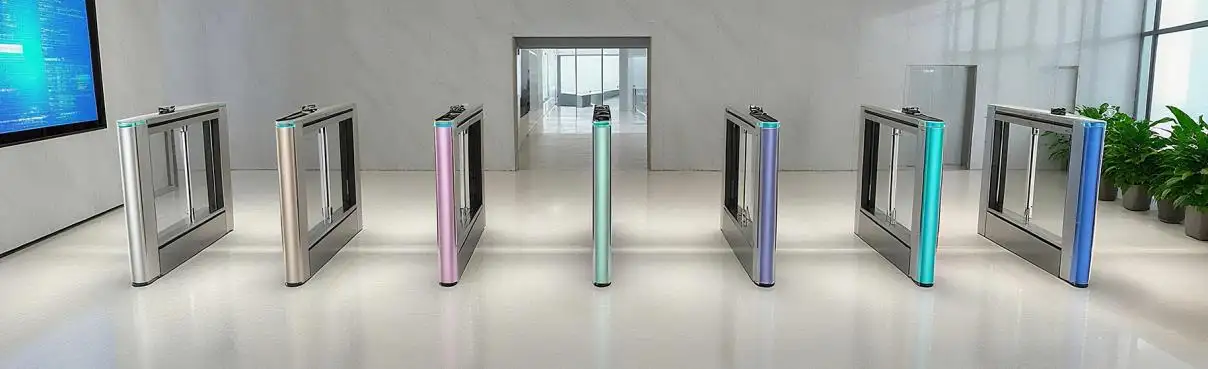
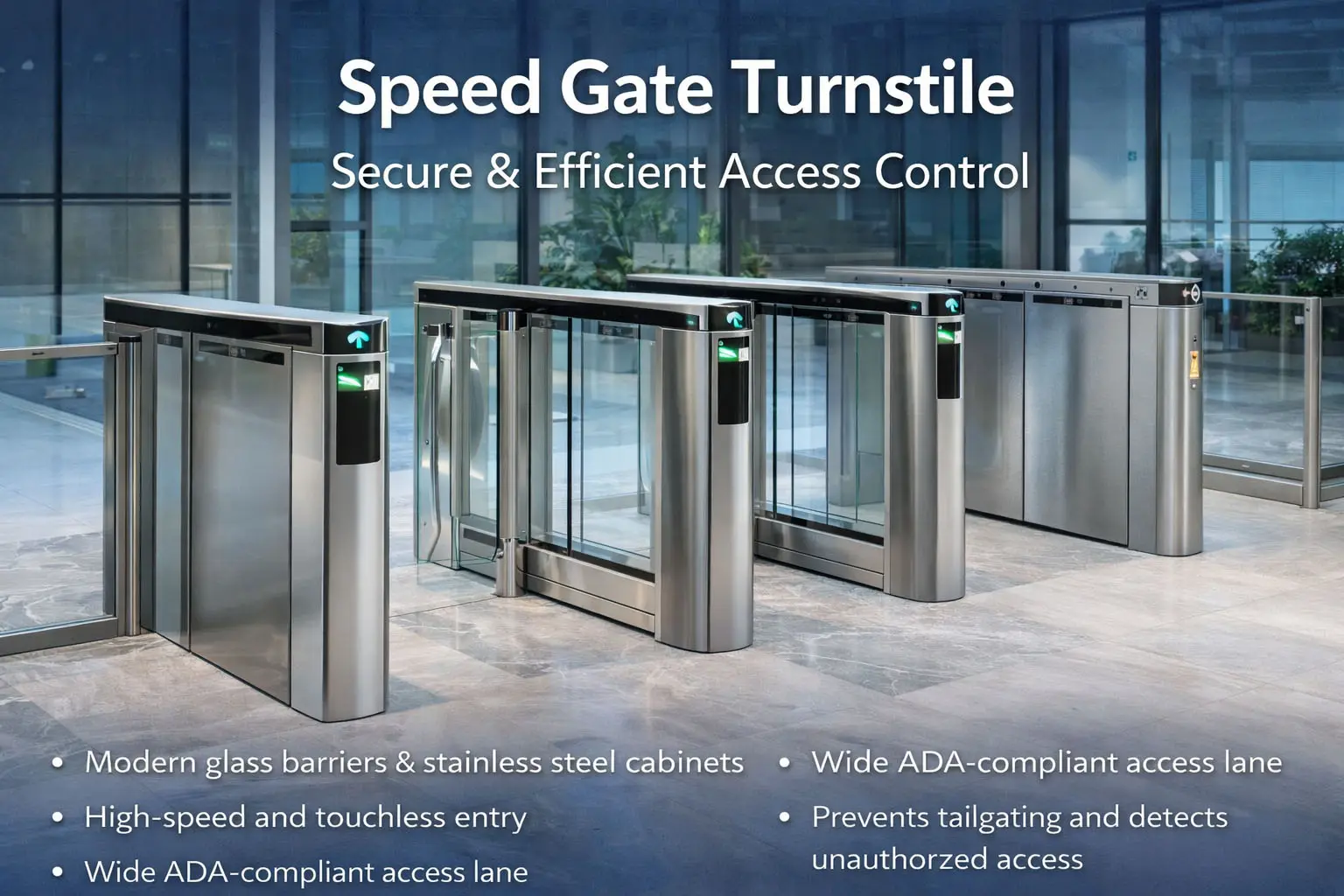
Pedestrian Speed Gate Access Control in the United States
2025-10-27


The flow of people is the lifeblood of any building in the United States. From the bustling corporate centers of New York and the sprawling tech campuses of California to secure government facilities and busy university quads, efficiently managing who goes where – and ensuring only authorized individuals proceed – is a fundamental challenge. Traditional methods like manual sign-ins or basic locked doors are increasingly inadequate, failing to provide the necessary security, speed, or compliance demanded by modern American facilities.
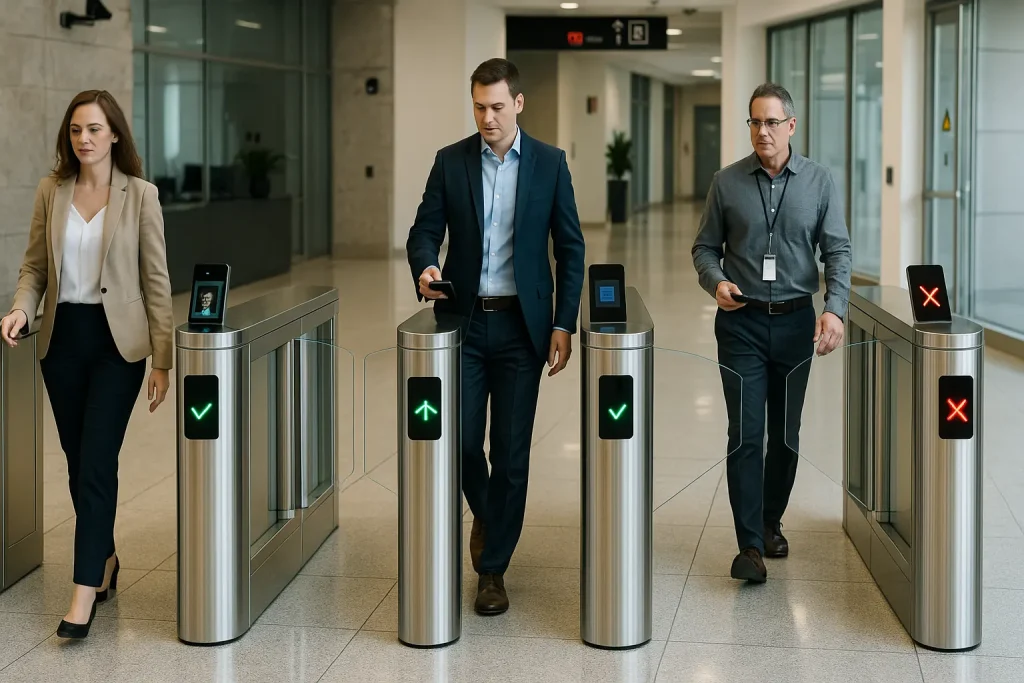
This is where sophisticated United States pedestrian speed gate access control systems come into play. These are not just simple barriers; they represent an integrated approach combining physical speed gates with electronic access control technologies, specifically tailored to meet the unique operational, regulatory, and security landscape of the USA. They are the intelligent gatekeepers designed to balance the often-competing demands of robust security, high-volume throughput, user convenience, and stringent compliance mandates like the Americans with Disabilities Act (ADA).
Understanding the nuances of implementing these systems within the US context is vital for anyone involved in designing, securing, or managing buildings. This guide provides an expert, comprehensive exploration of pedestrian speed gate access control in the United States, covering the technology, critical compliance factors, prevailing trends, and best practices for deploying effective and future-proof solutions.
What is Pedestrian Speed Gate Access Control?
Pedestrian speed gate access control is a system that integrates automated physical barriers (speed gates or turnstiles) with electronic identity verification methods to manage and control the movement of people into and within buildings, ensuring only authorized individuals can pass through designated checkpoints.
At its core, this system combines two key elements:
- The Physical Barrier: Typically a sleek, motorized speed gate (often with glass barriers like swing or flap types) designed for fast, automated operation. This is the "muscle" that physically controls passage.
- The Electronic Access Control System (ACS): This is the "brain," comprising readers (for cards, mobile phones, biometrics), control panels, and software that authenticates credentials and authorizes or denies entry based on pre-set rules.
Together, they create an automated checkpoint that validates identity and enforces access permissions far more reliably and efficiently than manual methods. While the concept is global, its implementation in the US involves specific considerations.
Why is This System Particularly Crucial in the USA?
Pedestrian speed gate access control is crucial in the USA due to high security awareness, the economic imperative for operational efficiency, the non-negotiable legal requirement for ADA compliance in public and commercial spaces, rigorous industry-specific compliance needs (e.g., healthcare, finance), and the expectation of modern, seamless experiences in premier facilities.
The US market presents a unique blend of drivers:
- Security Posture: Varying security needs across diverse sectors – from protecting intellectual property in tech firms to ensuring safety in public venues – necessitate robust physical control points. A typical USA speed gate turnstile must offer reliable security features.
- Efficiency Demands: The fast-paced nature of US business and the high cost of labor make automation essential. Eliminating lobby queues and streamlining entry directly impacts productivity and operational costs.
- ADA Compliance: Unlike many other Regional Markets, the Americans with Disabilities Act imposes strict, legally enforceable requirements for accessible design in nearly all public and commercial buildings. Speed gate systems must incorporate compliant solutions.
- Audit Trails & Compliance: Numerous US regulations (HIPAA, SOX, CJIS, etc.) mandate auditable records of physical access to sensitive areas. These systems provide automatic, detailed logs crucial for compliance.
- Modern Building Standards: Class-A office spaces and modern facilities are expected to feature sophisticated technology and design, including aesthetically pleasing and efficient access control at entrances.
How Does the System Work in a Typical US Facility?
The system reads a user's credential (commonly a smart card or mobile app in the US), sends the data to an access control panel or cloud service for verification against permissions, and if approved, rapidly opens the speed gate barriers. Sensors monitor passage for single entry and safety before the gate automatically closes.
Let's walk through a common scenario in a US office building:
- Credential Presentation: An employee approaches the gate line and presents their credential – often tapping a secure 13.56 MHz RFID card or using a mobile credential app (via NFC or Bluetooth) on their smartphone.
- Secure Validation: The reader communicates (ideally using the secure OSDP protocol) with the building's Access Control System (ACS). This ACS might be an on-premise server or, increasingly common in the US, a cloud-based platform (ACaaS).
- Permission Check: The ACS checks its database: Is this credential active? Does this user have access rights to this entrance at this specific time based on their role (RBAC)?
- Open Command: If authorized, the ACS sends an encrypted "open" command to the specific speed gate lane controller.
- Gate Actuation: The gate's motor activates, opening the barriers smoothly and quickly. A green light indicates permission to proceed.
- Passage Monitoring: High-density sensors within the gate pedestals track the employee's movement, confirming direction and ensuring only one person enters.
- Tailgating Detection: If a second person tries to follow without presenting a credential, the sensors detect this violation, triggering local alarms (sound and lights) and logging the event in the ACS.
- Safe Closure: Once the employee is clear, safety sensors verify the path is unobstructed, and the barriers close securely, ready for the next person.
My Experience: "The biggest shift I've seen in US implementations over the last 5-7 years is the rapid move towards mobile credentials and cloud-based ACS platforms. Clients want the flexibility to manage access remotely and ditch physical cards. This requires gates with readers that support BLE and NFC, and robust network integration – something you need to plan for from day one."
Key Components Tailored for the United States Market
While core speed gate technology is global, systems deployed in the USA require specific features and certifications focusing on ADA compliance, UL electrical safety, prevalent credential technologies, and integration with dominant North American ACS providers.
The Speed Gate Hardware: ADA and UL Focus
- ADA Lanes: Absolutely mandatory. This means providing at least one lane with a wider clear passage (typically 32-36 inches), accessible reader placement, appropriate sensor timing, and potentially distinct visual/audible cues. Non-compliance is a serious legal risk.
- UL Certification: Crucial for electrical safety and code compliance. Look for gates and associated power supplies listed under standards like UL 294 (Access Control System Units). Many US electrical inspectors require this listing.
- Material & Build: US applications often demand high-quality materials (e.g., 304 stainless steel) and robust construction suitable for high-traffic corporate or public environments. Customization options (finishes, top lids) are also frequently requested.
Access Control Integration: Openness is Key
- Platform Compatibility: The gates must integrate reliably with the major ACS software and hardware platforms used in the US (e.g., LenelS2, Genetec, Brivo, AMAG, Honeywell, etc.).
- OSDP Protocol: Specifying readers and controllers that support OSDP (Open Supervised Device Protocol) is increasingly important. It offers encrypted, bidirectional communication, far more secure than the older, easily compromised Wiegand standard.
- Cloud Readiness: Given the strong trend towards ACaaS, gates should ideally have native IP connectivity and support secure communication protocols required for cloud integration.
Credential Reader Technology: Supporting US Trends
- Mobile First: Readers absolutely need robust support for both Bluetooth Low Energy (BLE) and Near Field Communication (NFC) to handle the growing demand for smartphone-based access.
- Secure RFID: Must support encrypted 13.56 MHz standards (iCLASS, MIFARE DESFire). While legacy 125 kHz Prox readers might be needed for transition periods, relying solely on Prox for new installations is strongly discouraged due to security vulnerabilities.
- Biometrics (Contextual): While interest is growing, deployment requires careful consideration of US state-specific privacy laws (e.g., BIPA in Illinois, CCPA/CPRA in California) regarding consent and data handling. Facial recognition is gaining traction but needs transparent implementation.
- PIV/CAC Ready (If Applicable): For federal applications, readers must be FIPS 201 compliant.
Popular Types of Speed Gates Deployed Across the USA
Swing barrier gates are widely used in US corporate settings for their blend of elegance and accessibility features. Flap barrier gates are chosen for maximum throughput in high-traffic zones. Optical turnstiles cater to high-end lobbies prioritizing openness with staffed security.
- Swing Barrier Gates: Often the default choice for Class-A office buildings across the US. Their smooth motion is perceived as welcoming, and the design lends itself easily to creating compliant, aesthetically matching ADA lanes. Taller glass options provide a visible deterrent. Many systems similar to a typical office building pedestrian turnstile employ this type.
- Flap Barrier Gates: Popular in environments where speed is paramount – tech campuses, major corporate HQs with concentrated arrival/departure times, or facilities integrated with transit. The rapid retracting motion maximizes PPM. High-tech hubs might favor these, such as in California high-speed pedestrian turnstile applications.
- Optical Turnstiles: Found in prestigious corporate lobbies where aesthetics demand minimal physical obstruction and where 24/7 attentive guard staff are present to monitor passage and respond immediately to alarms generated by the sensors. More information on this barrier-free approach can be found via resources discussing Optical turnstiles.
Enhancing Security: The Role of Speed Gates in US Facilities
Speed gates are a critical layer in securing US facilities, primarily by physically preventing unauthorized "tailgating" – a major vulnerability. They provide consistent, automated enforcement of access rules and generate detailed event logs essential for security audits and incident response in the compliance-focused US environment.
- Solving the Tailgating Problem: In the US context, where politeness often leads to holding doors, automated anti-tailgating is crucial. Sensors ensure only one authorized individual passes per credential swipe, tap, or scan. This addresses a vulnerability exploited in numerous documented security breaches.
- 24/7 Policy Enforcement: Gates enforce access permissions tirelessly and impartially, ensuring restricted areas remain secure after hours or during periods of low staffing, unlike human guards who may be prone to fatigue or distraction.
- Data for Due Diligence: The detailed, immutable audit trail provided by these systems is vital. In case of a security incident or lawsuit, being able to prove exactly who accessed an area and when provides critical evidence and demonstrates due diligence in security practices. This data is far more reliable than manual sign-in sheets.
Boosting Efficiency: Managing Flow and Staffing in US Buildings
By automating pedestrian validation and passage at speeds far exceeding manual checks (30-40+ PPM per lane), speed gates eliminate lobby congestion, reduce wait times, and allow US businesses to optimize front-desk and security staffing, redirecting personnel to more complex or customer-centric tasks.
- Conquering the Rush Hour: The efficiency gains are most apparent during peak arrival, departure, and lunch times common in US work patterns. Automated gates prevent queues from forming, directly impacting employee productivity and reducing frustration.
- Optimizing Staff Roles: Instead of needing multiple guards or receptionists solely dedicated to checking IDs during busy periods, automation allows fewer staff to manage the lobby more effectively. Personnel can focus on visitor assistance, concierge services, or higher-level security monitoring, enhancing both efficiency and service quality.
- Improving the User Experience: In the competitive US commercial real estate market, tenant and employee experience is a key differentiator. A fast, seamless, modern entry process contributes significantly to a positive perception of the building and the companies within it. This is a key reason for upgrading from older systems.
The Americans with Disabilities Act (ADA): A Non-Negotiable Requirement
Compliance with the ADA is a fundamental legal requirement for nearly all public and commercial pedestrian access control installations in the United States. Speed gate systems MUST incorporate accessible lanes meeting specific dimensional, operational, and signaling standards to avoid discrimination and potential litigation.
My Experience: "I cannot overstate this: ADA is not optional. I've seen projects delayed for months or require costly rework because the initial gate layout didn't properly account for ADA approach clearances or maneuvering space. It's not just about the gate width; it's about the entire accessible route. Engaging an ADA consultant early in the design phase is essential for any US project."
Key ADA considerations for speed gates include:
- Clear Passage Width: Minimum of 32 inches, but 36 inches is often recommended for comfortable passage.
- Accessible Route: Clear floor space for approach and maneuvering on both sides of the gate.
- Reader Mounting Height: Within ADA-specified reach ranges.
- Operating Force (if applicable): Push-activated gates must meet force limitations.
- Sensor Timing: Must accommodate slower passage speeds.
- Clear Visual and Audible Signals: To indicate status.
Failure to comply can result in significant legal penalties and reputational damage.
Integration: Connecting Gates within the US Tech Landscape
Modern United States pedestrian speed gate access control thrives on integration. Systems must connect seamlessly with prevalent ACS platforms, Visitor Management Systems (VMS), fire alarm control panels (FACP) for life safety, and potentially elevator controls or video surveillance systems, often leveraging open standards.
- ACS Integration: As mentioned, compatibility with leading North American ACS providers via open protocols like OSDP is key.
- VMS Integration: Crucial for efficient visitor processing. Gates need to read temporary credentials (like QR codes) issued by the VMS, automating guest entry and host notification.
- Fire Alarm Integration (Life Safety): Mandatory per NFPA codes. The FACP signal must reliably trigger the gates to fail-safe (open) for emergency egress. This integration must be tested and approved by the Authority Having Jurisdiction (AHJ, typically the local fire marshal).
- Elevator Destination Dispatch: Increasingly popular in Class-A buildings, linking gate authentication to automatically call an elevator improves flow and efficiency.
- Video Surveillance (VMS): Linking gate alarms (tailgating, forced entry) to automatically trigger recording and display relevant camera feeds enhances situational awareness for security personnel.
Installation, Codes, and Best Practices in the USA
Proper installation by qualified technicians is paramount, ensuring adherence to the National Electrical Code (NEC), local building codes, fire safety regulations (NFPA), ADA standards, and potentially union labor requirements. Sensor tuning and system commissioning are critical for optimal performance.
- Certified Installers: Use technicians trained and certified by the gate manufacturer and knowledgeable about US codes.
- Code Compliance: Ensure all electrical work meets NEC and local requirements. Verify fire alarm integration meets NFPA 101 and local AHJ approval. Confirm ADA compliance with architectural plans.
- Sensor Tuning: This requires expertise. Technicians must calibrate anti-tailgating and safety sensors for the specific lobby environment (lighting, traffic patterns) to maximize security effectiveness while minimizing nuisance alarms.
- User Training: Provide clear instructions and potentially brief training for building staff and occupants, especially if introducing new credential types like mobile access.
- Maintenance Plan: Implement a regular preventive maintenance schedule to ensure long-term reliability, safety, and performance, especially given the high traffic volumes in many US facilities.
Future Trends for Pedestrian Access Control in the US
The future in the USA involves a continued push towards "frictionless" access using advanced mobile credentials (UWB) and biometrics (especially facial recognition, balanced by privacy laws), deeper integration with smart building platforms leveraging cloud connectivity and AI, and increased focus on data analytics for operational intelligence.
- Frictionless Journey: The goal is seamless movement. Expect wider adoption of long-range BLE, Ultra-Wideband (UWB), and sophisticated facial recognition allowing users to pass through gates without stopping or presenting anything. Adoption pace may vary by state due to privacy legislation, creating a more fragmented landscape than perhaps seen in regions like the Middle East fast access speed gate market.
- Cloud & AI Domination: Cloud-based ACS platforms will become the default, enabling easier management, scalability, and integration. AI will enhance sensor accuracy, enable predictive maintenance, and provide deeper insights from access data.
- Privacy as a Design Factor: Unlike some Regional Markets, US privacy laws and public sentiment will heavily influence the adoption of technologies like biometrics, requiring transparent policies, user consent, and robust data security measures.
- Unified Building Intelligence: Access control data will increasingly feed into broader smart building platforms, optimizing energy use, space utilization, and overall operational efficiency based on real-time occupancy and flow patterns.
The Final Verdict: Smart, Secure, Compliant Access for the USA
United States pedestrian speed gate access control systems are essential infrastructure for modern American facilities. They provide the necessary blend of security, efficiency, and user experience demanded by today's diverse building environments. However, successful implementation requires careful consideration of factors specific to the US market – particularly stringent ADA compliance, UL safety standards, prevalent technology trends like mobile access, and navigating the evolving landscape of privacy regulations.
By selecting high-quality hardware with advanced sensor technology, ensuring seamless integration with open ACS platforms, prioritizing compliance, and focusing on a positive user experience, building owners and managers can deploy intelligent gate solutions that not only secure their premises but also enhance operational flow and contribute to a smarter, more efficient built environment across the nation, whether in bustling hubs like New York speed gate turnstile system or innovative centers needing a California high-speed pedestrian turnstile.
