



USA Speed Gate Turnstiles: Advanced Access Control Solutions
2025-10-27


In the dynamic landscape of American commercial, governmental, and educational facilities, managing the flow of people while ensuring robust security is a paramount concern. From the soaring lobbies of corporate headquarters in New York to the sprawling tech campuses of California and the secure federal buildings across the nation, the need for intelligent, efficient, and compliant access control has never been greater. The traditional lock-and-key or the basic sign-in sheet are relics of a simpler time, inadequate for the complexities and risks of the modern era.
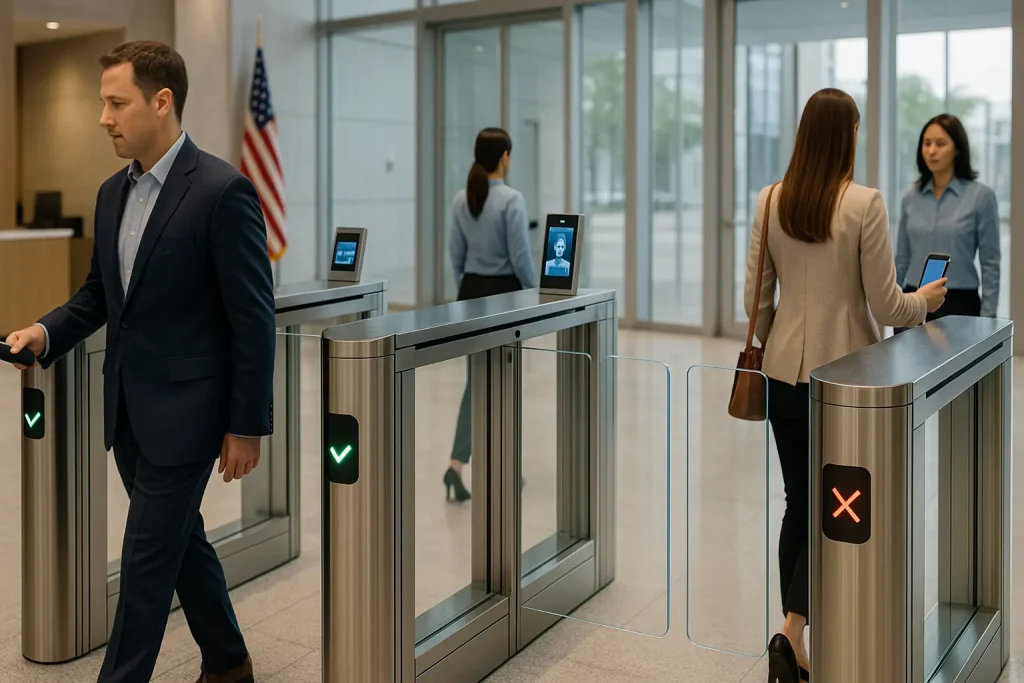
The definitive answer for managing pedestrian access in these demanding environments is the USA speed gate turnstile. This isn't just any automated barrier; it's a solution specifically engineered and adapted to meet the unique requirements of the United States market. It represents a sophisticated blend of high-speed throughput, advanced security features, adherence to stringent regulations like the Americans with Disabilities Act (ADA), and integration with the prevalent technology ecosystems found across the country.
Understanding the specific nuances of speed gate turnstiles designed for the USA is crucial for architects, security consultants, facility managers, and building owners aiming to implement effective, compliant, and future-proof access control. This guide provides an expert, in-depth exploration of these systems, covering their technology, benefits, types, compliance mandates, and how they serve as the intelligent gateway for modern American facilities.
What Defines a "USA Speed Gate Turnstile"?
A USA speed gate turnstile is an automated pedestrian access control barrier specifically designed, configured, and certified to meet the distinct regulatory, technological, and operational requirements prevalent in the United States market, including ADA compliance, UL safety standards, and common credential technologies.
While sharing core functionalities with speed gates used globally within various Regional Markets, the "USA" designation implies specific adaptations. These systems go beyond basic entry control; they are engineered to integrate seamlessly into the American built environment, addressing key concerns such as accessibility for all, electrical safety validation, and compatibility with the access control infrastructure commonly deployed by US organizations. They are the physical embodiment of secure, efficient, and compliant pedestrian flow management tailored for American facilities.
Why Are Speed Gates Crucial Across the USA?
Speed gates are crucial in the USA due to a confluence of factors: heightened security awareness across sectors, the demand for operational efficiency in high-traffic buildings, the non-negotiable legal requirement for ADA accessibility, the need for auditable access logs for compliance, and the expectation of modern, frictionless experiences in premier facilities.
From coast to coast, the drivers for adopting advanced speed gate turnstiles are clear:
- Diverse Security Needs: The US faces a wide spectrum of security challenges, from protecting corporate IP and ensuring student safety on campuses to securing critical infrastructure and government assets. Speed gates provide a necessary physical control layer. Consider the specific demands ranging from a bustling California high-speed pedestrian turnstile installation in Silicon Valley to a secure Texas entrance speed gate solution for an energy company HQ.
- Efficiency Imperative: In fast-paced American business environments, time is money. Eliminating lobby bottlenecks caused by manual checks or slow entry processes is a key driver for automation. High throughput is essential.
- Mandatory Accessibility (ADA): The Americans with Disabilities Act mandates equal access. Speed gate installations must include compliant accessible lanes, making ADA-ready designs a fundamental requirement, not an option.
- Compliance and Audit Trails: Regulations across various industries (finance, healthcare, government contracting) often require detailed, auditable logs of who accessed specific areas. Speed gates provide this data automatically.
- Modernization and Image: Class-A office buildings and modern facilities are expected to have sophisticated, aesthetically pleasing security measures. Sleek speed gates contribute to a high-tech, professional image.
How Do USA Speed Gate Turnstiles Work?
USA speed gate turnstiles operate by reading a user's credential (card, mobile phone, biometric), validating it against an access control system database, and if authorized, rapidly opening physical barriers. Integrated sensors monitor the passage to ensure single entry and prevent closure on users before automatically re-securing the lane.
The user experience is designed to be quick and intuitive:
- Credential Presentation: User presents their credential (e.g., taps an RFID card/fob, presents phone using NFC/BLE, scans face/fingerprint) at the reader integrated into the turnstile.
- Validation Request: The reader sends the credential data securely (ideally via OSDP protocol) to the local Access Control Panel (ACP) or potentially a cloud-based controller.
- Authorization Check: The ACP ("the brain") checks its database: Is this credential valid? Is it authorized for this location, date, and time according to programmed rules (often Role-Based Access Control - RBAC)?
- Open Command: If authorized, the ACP sends an "open" signal back to the specific turnstile lane's logic controller.
- Barrier Actuation: The turnstile's high-speed motor activates, smoothly retracting (flap) or swinging open (swing) the glass barriers. Green indicator lights signal permission to proceed.
- Passage Monitoring: As the user walks through, high-density infrared sensors track their movement, verify direction, and confirm it's a single individual.
- Tailgating Detection: If sensors detect an unauthorized follower, audible and visual alarms are triggered locally, and an alert is sent to the security monitoring system.
- Safe & Secure Closing: Once the authorized user is clear, safety sensors confirm the pathway is unobstructed, and the motor closes the barriers quickly to prevent further passage.
My Experience: "The difference between a well-integrated US system and a poorly implemented one is night and day. A good system feels effortless – the tap is instant, the gate opens before you have to pause, and it closes securely behind you. A bad system involves lag, awkward pauses, maybe even getting bumped by a barrier closing too soon. It's all about that seamless, sub-second handshake between credential, controller, and gate."
What Key Features Are Tailored for the US Market?
Key features distinguishing USA speed gate turnstiles often include rigorous ADA compliance features, mandatory UL electrical safety certifications, robust support for credential types prevalent in the US (including mobile and secure RFID), and flexible integration with leading North American access control platforms.
These aren't just minor tweaks; they are fundamental design and compliance considerations:
- Stringent ADA Compliance: This is paramount. US gates must offer:
- Wider Lanes: A clear passage width typically of 32-36 inches.
- Accessible Reader Height: Mounting points that meet ADA reach range requirements.
- Appropriate Sensor Logic: Tuning to accommodate slower passage speeds, wheelchairs, and service animals without false alarms or unsafe closures.
- Clear Visual & Audible Cues: Easily understandable status lights and optional audible signals. Failure to meet ADA requirements can lead to significant legal and financial consequences.
- UL Certification: Underwriters Laboratories (UL) listing (e.g., UL 294 for Access Control System Units) provides third-party validation of electrical safety and compliance with relevant codes. Many US jurisdictions and project specifications mandate UL-listed equipment, especially for components connected to mains power. This certification provides assurance against electrical hazards.
- US-Centric Credential Support: While global trends apply, the US market has specific needs:
- Mobile Credential Focus: Extremely high smartphone penetration drives strong demand for readers supporting BLE (Bluetooth Low Energy) and NFC.
- Secure RFID Migration: While legacy 125 kHz Prox cards are still unfortunately common, there's a strong push towards more secure 13.56 MHz smart cards (iCLASS, MIFARE DESFire). Readers often need to be multi-technology to support this transition.
- PIV/CAC Compatibility: For federal government applications, readers must be FIPS 201 compliant to handle PIV and CAC cards.
- Integration Flexibility: The US access control market features numerous established platform providers (e.g., LenelS2, Genetec, Brivo, AMAG, etc.). Gates must offer flexible integration options, ideally supporting open standards like OSDP, to connect seamlessly with these diverse systems. Proprietary, locked-down systems face significant disadvantages.
- Design & Material Preferences: While diverse, US corporate aesthetics often favor clean lines, high-quality brushed stainless steel (typically 304 grade), and integration of materials like tempered glass. Customization options for top lids to match lobby finishes are popular.
What Types of Speed Gates Are Most Popular in the USA?
In the USA, swing barrier speed gates are highly popular for corporate lobbies due to their elegant aesthetics and ease of ADA implementation. Flap barrier speed gates are favored in high-throughput environments like tech campuses or transit links. Optical turnstiles are also utilized in Class-A buildings with continuous lobby staffing.
The choice often reflects the specific application and desired balance:
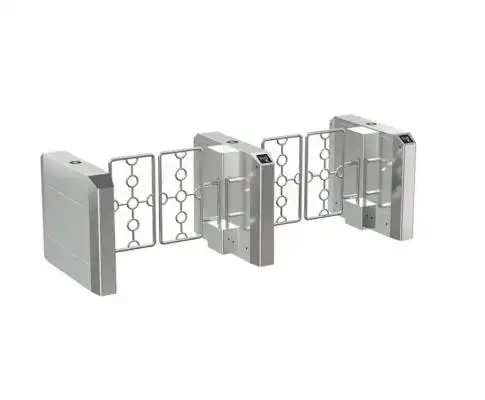
- Swing Barriers: The preferred choice for many US office buildings. Their smooth, welcoming motion and the availability of taller glass panels offer a good blend of aesthetics and perceived security. They are also the simplest design for creating wide, compliant ADA lanes. Many installations similar to an office building pedestrian turnstile will utilize swing barriers.
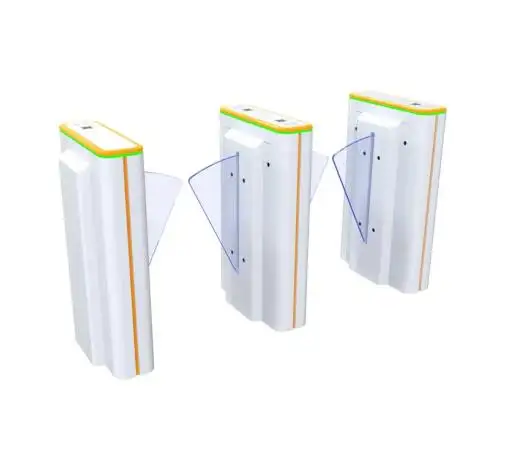
- Flap Barriers: Favored where maximizing speed and throughput is the absolute priority, such as large corporate campuses (common in areas like California high-speed pedestrian turnstile deployments), or potentially integrated into building links with public transit. Their modern, high-tech look also appeals to certain corporate cultures.
- Optical Turnstiles: Used in high-end buildings where maintaining a completely open lobby feel is desired and where dedicated security staff are always present to monitor passage and respond to alarms. They offer the highest possible throughput but zero physical deterrence. Learn more about the technology via resources discussing Optical turnstiles.
- Tripod/Full-Height: Generally considered too industrial or imposing for primary entrances in modern US commercial buildings. Their use is typically relegated to secondary employee entrances, recreation facilities, or perimeter security, more aligned with industrial or transit applications like a railway station pedestrian turnstile.
How Do Speed Gates Enhance Security in USA Facilities?
USA speed gate turnstiles enhance security by providing a reliable physical barrier against unauthorized entry, critically preventing tailgating attempts through sophisticated sensor technology. They ensure consistent enforcement of access policies 24/7 and generate detailed audit logs essential for security investigations and regulatory compliance common in the US.
- The Tailgating Solution: Tailgating remains a primary vulnerability. Speed gates directly address this by using sensors to ensure only one person passes per valid authorization. This is a massive upgrade over simple door readers.
- Consistent Policy Enforcement: Unlike human guards who can be distracted or inconsistent, the gate enforces the programmed rules every time, ensuring restricted areas remain secure.
- Indisputable Audit Trails: In the litigious US environment, having accurate, timestamped logs of who entered where is crucial for incident response, HR investigations, and meeting compliance mandates (e.g., HIPAA in healthcare facilities, SOX for public companies).
- Visible Deterrence: The presence of a modern speed gate system signals a strong security posture, deterring casual trespassers or opportunistic threats.
Boosting Efficiency: Managing Flow in USA Buildings
Speed gates dramatically improve operational efficiency in busy US buildings by processing pedestrians much faster than manual methods (typically 30-40+ PPM per lane). This eliminates lobby queues, creates a smoother flow during peak hours, and allows front desk or security staff to focus on more valuable, customer-facing tasks.
- Throughput is King: The speed difference is significant. Automating validation and passage cuts entry time per person from 5-10 seconds (manual) down to 1-3 seconds. This difference is critical for handling the concentrated morning, lunch, and evening rushes common in US work schedules.
- ROI Through Automation: By automating the repetitive task of checking IDs or badges, businesses can often optimize lobby staffing. Guards or receptionists are freed from being simple "checkers" and can provide better concierge services, manage visitors more effectively, or focus on higher-level security monitoring.
- Improved Tenant/Employee Satisfaction: Eliminating the daily frustration of waiting in line contributes positively to the workplace experience, a key factor in attracting and retaining talent and tenants in the competitive US market. The smooth "tap-and-go" or "walk-through" experience feels modern and efficient.
Integration with the US Access Control Ecosystem
Seamless integration is vital. USA speed gate turnstiles must be compatible with the leading Access Control System (ACS) platforms widely used in North America. Support for open standards like OSDP and APIs for connecting with Visitor Management Systems (VMS) are increasingly expected.
- Platform Compatibility: The gate controllers need to communicate reliably with ACS panels from major US players. Proprietary, closed systems are a disadvantage.
- OSDP Standard: Open Supervised Device Protocol (OSDP) is rapidly replacing older, insecure Wiegand wiring. OSDP provides encrypted, bi-directional communication between readers/gates and controllers. Specifying OSDP-compliant gates is a best practice for modern US installations.
- VMS Integration: Automating visitor access is crucial. The system should allow visitor credentials (like QR codes) issued by the VMS to be read by the gate, often requiring API-level integration between the ACS and VMS platforms.
- Cloud vs. On-Prem: The US market shows strong growth in cloud-based access control (ACaaS) for its flexibility and scalability, but many large enterprises still maintain on-premise systems. Gate solutions need to support both architectures.
Installation & Compliance Considerations in the USA
Installation in the US requires adherence to specific national and local codes. Key considerations include meeting strict ADA guidelines for accessible routes, ensuring UL listing for electrical safety, complying with NFPA fire codes for emergency egress, and often navigating union labor rules in certain municipalities.
- ADA is Law: Installers must be experts in creating compliant accessible routes, including proper lane width, approach clearances, and reader positioning. "Close enough" is not acceptable and can lead to lawsuits.
- Electrical Safety (UL Listing): Using UL-listed components and ensuring installation follows the National Electrical Code (NEC) is standard practice and often legally required.
- Fire Code Compliance (NFPA): Gates must integrate with the building's fire alarm system to ensure they fail-safe (open) and allow free egress during an emergency, complying with NFPA 101 (Life Safety Code) and local fire marshal requirements.
- Certified Installers: Using factory-certified technicians ensures the gates are installed correctly, sensors are properly tuned, and all integrations are functioning safely.
- My Anecdote: "On a project in a major US city, the electrical inspector wouldn't sign off because the low-voltage power supply for the gates wasn't UL-listed, even though the gates themselves were. We had to replace all the power supplies last minute. Always check all components for required certifications."
The Future of Speed Gates in the USA: Smarter, Faster, More Integrated
The trajectory for USA speed gate turnstiles points towards increased intelligence, truly frictionless experiences, and deeper integration into smart building ecosystems, while navigating evolving privacy regulations.
- Frictionless Credentials: Mobile credentials using BLE and UWB for hands-free access will likely become the norm. Facial recognition adoption will continue, but likely balanced by state-level privacy legislation (like BIPA, CCPA) requiring clear opt-in and data security protocols, perhaps differentiating the US market from regions with faster biometric uptake like Singapore smart speed gate turnstile system hubs.
- AI-Driven Analytics: Gates will leverage AI not just for security (better tailgating detection) but for operational insights – predicting lobby congestion, optimizing elevator dispatch based on real-time flow, and enabling predictive maintenance.
- Cloud Dominance: The shift to cloud-based access control platforms will accelerate, offering greater flexibility, scalability, and easier integration for US businesses of all sizes.
- Deeper Smart Building Integration: The speed gate will become a key sensor and actuator within the larger smart building network, interacting with lighting, HVAC, security cameras, and workplace management platforms to create a truly responsive and efficient environment.
The Final Verdict: Tailored Solutions for American Facilities
The USA speed gate turnstile is a critical component of modern facility management across the United States. It's a solution specifically adapted to meet the nation's unique blend of high-security needs, efficiency demands, stringent regulatory requirements (especially ADA and UL), and evolving technological preferences. Far more than just a barrier, it's an intelligent system that enhances security, streamlines operations, complies with legal mandates, and contributes to a positive building image.
Whether implementing a solution for a tech campus requiring a California high-speed pedestrian turnstile or a corporate headquarters needing a sophisticated Texas entrance speed gate solution, understanding the specific requirements and nuances of the US market is key. By prioritizing compliance, focusing on seamless integration, choosing future-ready technologies, and partnering with experienced providers, facilities can deploy speed gate solutions that provide effective, reliable, and intelligent access control for years to come, forming an essential part of comprehensive Regional Markets strategies.
