


Flap Barrier Access Control System: How 6-Point IR Stops Tailgating
2026-02-24


Flap Barrier Access Control System performance depends less on “how strong the flaps are” and more on how well the lane can sense human movement. That is why 6-Point IR detection has become a practical standard for anti-tailgating entrances in offices, transit hubs, campuses, and mixed-use facilities. From IRONMAN Intelligent’s manufacturing perspective, the barrier is only the visible part. The real value is the sensing logic that helps a site make fast, consistent decisions—allow, warn, or stop—without creating daily friction for compliant users.
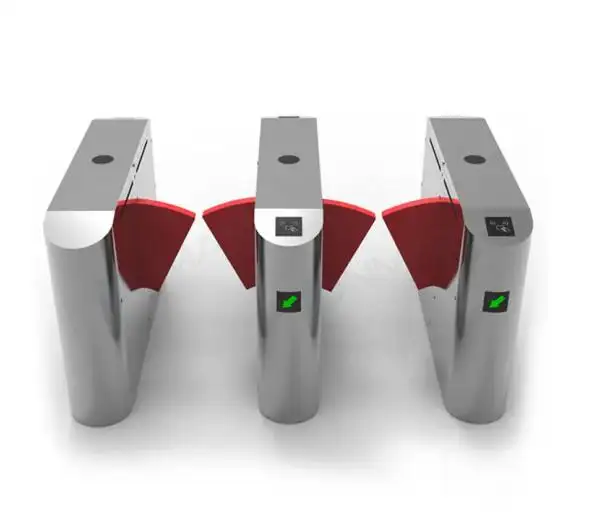
Modern entrances face a tough requirement: stop unauthorized access attempts while maintaining a professional user experience. In most sites, the problem is not a dramatic “break-in.” It is quiet, opportunistic behavior that happens during rush periods. A 6-Point IR grid is designed for that reality.
What 6-Point IR Detection Means in Real Use
Infrared sensing is sometimes described as a simple beam that breaks when someone passes. In practice, that model is too limited for today’s traffic conditions. With 6-Point IR, the Flap Barrier Access Control System uses multiple detection points across the lane. This creates a clearer picture of who is in the passage, how they are moving, and whether the movement pattern matches a normal, authorized entry.
Instead of reacting only at one line, the lane can read a person’s progress through zones. That difference is critical when people walk close together, pause unexpectedly, or attempt to slip in behind an authorized user.
Here is what the 6-Point IR grid helps confirm during normal operation:
✓ Position awareness: whether a user is at the entry, mid-zone, or exit area
✓ Motion consistency: forward movement versus hesitation, reversal, or crowding
✓ Single-person validation: whether one credential corresponds to one passing event
When sensing is stable, you get fewer exceptions, fewer arguments at the entrance, and less dependence on security staff to “judge” situations. When sensing is weak, even a strong barrier becomes a source of complaints and manual interventions.
Why Tailgating Keeps Happening at High-Traffic Doors
Tailgating is usually about timing, not force. A second person tries to enter while the lane is already opening for the first user. This behavior can occur in seconds, especially in crowded environments. Common tailgating patterns include:
• Following too closely behind an authorized user to avoid presenting a credential
• Entering the lane the moment the flaps retract, then keeping pace to look like one group
• Reversing direction or stopping suddenly to confuse the system and create a “gap”
A Flap Barrier Access Control System that relies mainly on mechanical resistance can still miss these behaviors. Worse, it may create a harsh experience for legitimate users—tight flaps, frequent stops, or excessive alarms—while unauthorized entrants still exploit timing and human hesitation.
6-Point IR detection shifts the strategy from “pushing back harder” to recognizing abnormal movement earlier. That produces outcomes that matter to facility operators:
✓ Reduced false alarms: the lane understands normal walking variation and spacing
✓ Earlier anomaly recognition: multiple IR points confirm abnormal presence sooner
✓ Lower staffing burden: alerts are triggered by consistent logic, not subjective judgment
For most managers, this is the real win: smoother flow with stronger control, rather than constant disputes over who “really” walked through.
How 6-Point IR Stops Tailgating Step By Step
A reliable Flap Barrier Access Control System behaves like a process, not a single event. The lane builds a “normal passing pattern,” then checks for deviations throughout the full crossing. In simple terms, the 6-Point IR grid helps the system stay aware from the moment a credential is validated until the person fully exits.
• Lane Entry Confirmation
After a credential is accepted—RFID, QR code, or biometric—the system expects one person to enter. Early detection points confirm that entry actually happens. This reduces a common operational issue: credential validation without real passage, which can confuse logs and staff monitoring.
• Continuous Zone Tracking
As the user moves forward, mid-zone detection points confirm a consistent movement pattern. This is where tailgating attempts become visible. When two bodies overlap in the lane, the IR grid can register abnormal spacing and timing, rather than treating it as a normal single-person pass.
• Tailgating, Intrusion, and Reversal Recognition
If the sensing pattern suggests a second person entering too soon, forced entry behavior, or reversal, the system can trigger an immediate response. That response can include alarms, flap control actions, and event records for review and operational tuning.
✓ Anti-tailgating response: based on multi-point confirmation, not one beam
✓ Intrusion response: when a second entry is detected without authorization
✓ Reversal detection: when direction changes do not match the expected flow
The point is consistency. A single sensor line can be influenced by user angle, speed, baggage, or crowding. A 6-Point IR grid reduces “guesswork” by verifying movement across the lane, so the system can react at the right time and for the right reason.
Where 6-Point IR Helps the Most: Flow, Experience, and Planning
Anti-tailgating solutions can fail if they slow down normal traffic. In busy locations, the entrance is part of the user experience. A lane that feels confusing or “always alarming” quickly becomes a staff problem.
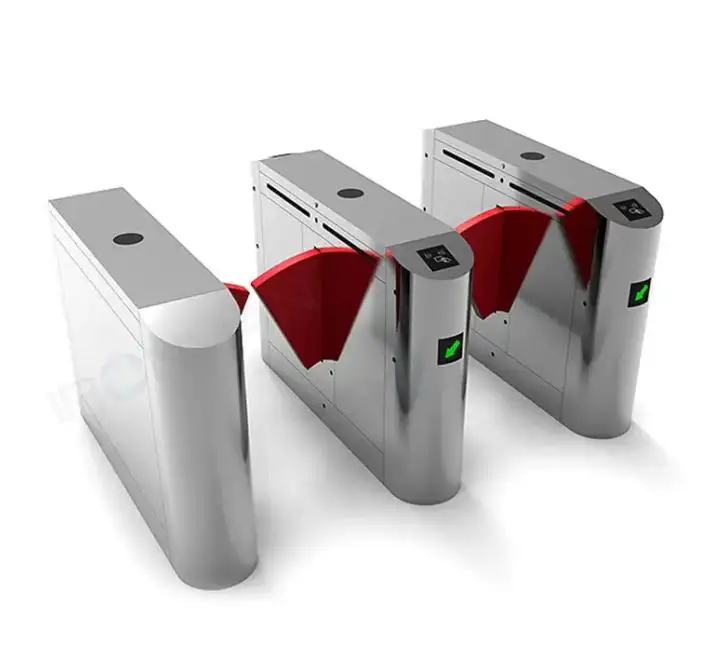
This is why throughput and sensing must work together. IM.Y302 is designed for stable pedestrian control during peak periods, with passing speed up to ≤ 40 people/min under suitable conditions. When sensing is accurate, you do not need to slow every user down to maintain security. The system can stay responsive while still being polite to normal traffic.
Space planning also matters. Many sites do not have unlimited lobby width. A 6-Point IR grid is especially valuable in narrow lanes because close passing is more likely. With a 550 mm passage width, IM.Y302 supports controlled lanes where space is tight but flow still needs to remain predictable.
IM.Y302 also uses user guidance to reduce preventable mistakes. LED indicators provide clear status, and voice prompts can guide visitors who do not know the entry procedure. That is not “extra decoration.” It is a practical way to reduce hesitation and wrong actions—which, in turn, reduces abnormal sensor triggers.
✓ Clear lane signals reduce confusion and stop-start behavior
✓ Better user compliance lowers the number of “false exception” events
✓ More stable daily operation because the lane spends less time in alarm states
When your entrance feels easy, security becomes less visible—but more effective.
Safety, Durability, and All-Weather Reliability With Smarter Sensing
A mature Flap Barrier Access Control System should protect people as well as property. In real environments, users may stop unexpectedly, children may move unpredictably, or objects may enter the flap path. A multi-point sensing grid can detect unusual conditions earlier and support safer behavior, including stopping movement to reduce harm.
Material choices also affect long-term reliability. IM.Y302 is built with Stainless Steel 304, supporting durability and a clean, professional appearance in high-use entrances. For semi-outdoor or weather-unstable settings—such as transit entrances or school yards—weather-resistant construction helps reduce performance drift over seasons.
Serviceability is another “hidden” requirement that buyers discover later. A modular internal structure and accessible maintenance design can shorten technician time, reduce downtime, and make upgrades easier as authentication methods evolve. For clients, that translates into a more stable total cost of ownership, not only a better day-one installation.
CTA: How to Specify a 6-Point IR Flap Barrier System for Your Site
If tailgating is your priority, specify the sensing logic first, then align the physical lane to your space and user behavior. The right Flap Barrier Access Control System should match your peak traffic, your user profile, and the way your teams respond to events.
CTA (Call-to-Action)
If you are sourcing a Flap Barrier Access Control System focused on 6-Point IR anti-tailgating performance, contact IRONMAN Intelligent with your site type (office, transit, campus, or public facility), estimated peak flow, lane quantity, and preferred credential method (RFID, QR, or biometric). We will recommend a practical IM.Y302 configuration, explain how the 6-Point IR grid makes decisions in real traffic, and provide a manufacturing-ready quotation path for stable installation and long-term operation.
