


Heavy Duty Parking Barrier Gate: What "Heavy Duty" Really Means
2026-02-23


Heavy Duty Parking Barrier Gate should be described as what the system can survive, how it keeps security tight, and how stable it stays when traffic is busy and weather is not friendly. From IRONMAN Intelligent’s manufacturing perspective, heavy duty is a practical promise: consistent lifting, safer entry control, and predictable maintenance over years of outdoor operation.
1) Heavy Duty Means Structural Strength You Can Measure
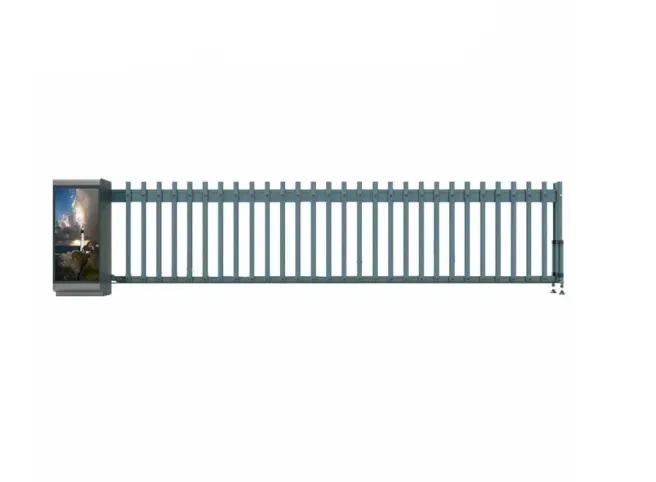
A Heavy Duty Parking Barrier Gate starts with the body. If the cabinet is too light, vibration increases. If the structure is too thin, alignment drifts and the arm becomes noisy. For our IM.D117Z fence-rod boom design, we build around a stable industrial form factor (460 × 341 × 1190 mm). This is not about looking "big." It is about housing the motor, control board, counterbalance system, and wiring in a layout that stays rigid under repeated cycles.
In real sites, heavy duty also means the boom design is matched to the environment. A straight boom works well for open lanes where speed and throughput are the priority. A fence-rod boom adds vertical rods that make the lane physically harder to bypass. In other words, "heavy duty" is not only mechanical strength. It is security strength built into the geometry.
✓ A rigid cabinet reduces vibration and arm wobble
✓ A security boom structure reduces bypass risk without extra fencing
✓ A stable internal layout improves long-term alignment and noise control
2) Heavy Duty Means Fast Cycles Without Rough Operation
Speed matters, but uncontrolled speed becomes risk. A true Heavy Duty Parking Barrier Gate should open fast enough to keep lanes moving, yet remain smooth enough to protect the vehicle flow and the equipment itself. IM.D117Z supports a lift time in the 3 to 6 second range. That range is important. It allows operators to tune the speed to the site.
For example, a logistics park may prefer faster opening to reduce queue buildup. A residential community may prefer a slightly slower setting for calmer, safer entry. Heavy duty is not "always fastest." Heavy duty is "stable at speed," because the system is designed to handle frequent start-stop cycles without harsh shaking.
The most visible difference is user experience. When the arm lifts smoothly, drivers trust the system. When it jerks, drivers hesitate, and hesitation creates congestion. Smooth motion is not cosmetic. It is a traffic efficiency factor.
3) Heavy Duty Means a Motor Built for High-Frequency Use
Inside a Heavy Duty Parking Barrier Gate, the drive system is the heart. IM.D117Z uses a 200W DC brushless drive. In practical terms, brushless drive is valuable because it supports steady torque and efficient operation with less mechanical wear compared with traditional brushed solutions.
For facilities, the benefit is not "motor technology." The benefit is uptime. When the motor runs cooler and smoother, the gate is less likely to drift out of calibration. It also keeps noise lower, which is meaningful in communities where entry lanes sit close to homes or offices.
Combined with a counterbalance system, the motor does not need to "fight gravity" alone. This reduces stress on components over time and supports repeatable lifting behavior during peak hours.
✓ Brushless drive supports stable torque under frequent cycles
✓ Counterbalance design reduces mechanical stress and vibration
✓ Quieter motion improves community acceptance and night-time operation
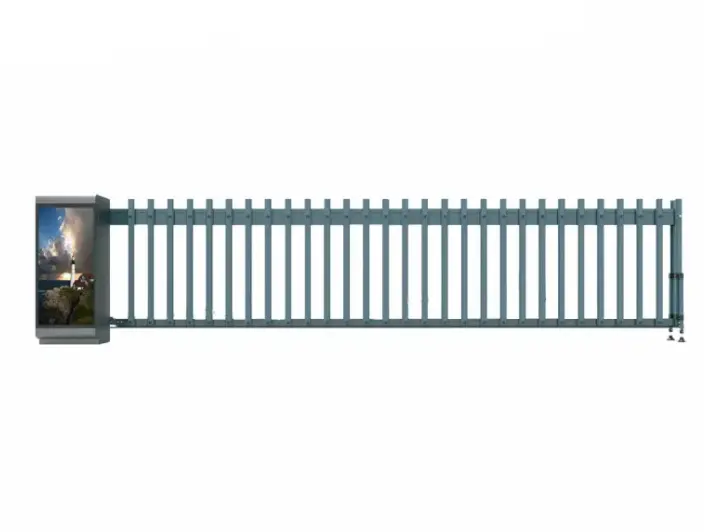
4) Heavy Duty Means Anti-Climb Security, Not Just a Blocking Arm
Many sites discover too late that a normal boom only blocks cars. People can still slip under or climb around it. That is where a fence-rod structure becomes a heavy duty security feature. IM.D117Z’s vertical rods create a physical barrier that discourages climbing and prevents simple pedestrian bypass.
The vertical rod clearance is 105 mm, which is designed to reduce "gap exploitation" while keeping the structure practical for installation and lane visibility. For high-security environments, this mechanical barrier works together with verification systems. It reduces the chance that a person follows a car into a restricted area.
This is why we describe heavy duty as "security + durability." You should not need to add extra gates, extra guards, or additional fencing just to fix a weak lane barrier design.
5) Heavy Duty Means All-Weather Reliability and Compliance Readiness
Outdoor access control fails most often due to weather and corrosion, not because the boom cannot lift. A Heavy Duty Parking Barrier Gate must protect both the metal structure and the electronics inside. IM.D117Z is designed for stable operation in heavy rain and dusty conditions through weather-resistant housing and sealed electronics.
On the material side, we use aluminum alloy plus steel, and the corrosion resistance has passed ISO 9227 salt spray testing for 2,000 hours rust-free. For buyers, this is more than a lab number. It reduces repainting, reduces rust-related downtime, and protects the total cost of ownership in coastal cities, industrial parks, and exposed roadside installations.
The system is also built for global deployment expectations. For projects that require compliance alignment, IM.D117Z supports CE and FCC readiness. This helps reduce procurement friction when the project involves international stakeholders or standardized approval procedures.
6) Heavy Duty Means Smart Verification and Easier Operations
Heavy duty is also operational. If entry depends on manual checks, even a strong gate becomes a weak process. IM.D117Z can integrate license plate recognition for automated access, and it also supports RFID and remote controls. This turns the Heavy Duty Parking Barrier Gate into a controlled verification point rather than a simple obstacle.
For managers, the payoff is simple and practical:
✓ Fewer people needed to run the gate
✓ Access rules that stay consistent across shifts
✓ Reports that make traffic patterns easier to understand
Maintenance is also part of what "heavy duty" should mean. Reliable access control depends on maintainability. A modular structure makes service fast and predictable. The boom arm, drive unit, and control board can be swapped with minimal downtime, while remote diagnostics track cycles and component health for preventive maintenance planning.
CTA (Call-to-Action)
For 2026 upgrades, contact IRONMAN Intelligent with your site basics—lane width, boom choice (straight or fence rod), verification method, and climate conditions. We will propose a practical IM.D117Z Heavy Duty Parking Barrier Gate setup and provide a stable, manufacturing-ready quotation path.
