


Flap Turnstile: Types, Specs, Use Cases, and How to Choose the Right One
2026-03-15


A flap turnstile is the most widely deployed pedestrian access gate in corporate offices, transit hubs, and premium commercial facilities worldwide — and for good reason. It combines fast throughput, a clean modern profile, and flexible credential compatibility in a single product that fits almost any high-traffic indoor environment.
If you're specifying a flap turnstile for the first time or comparing options for an upgrade, this guide gives you the technical grounding, product variants, and selection framework you need to make a confident decision.
What Is a Flap Turnstile?
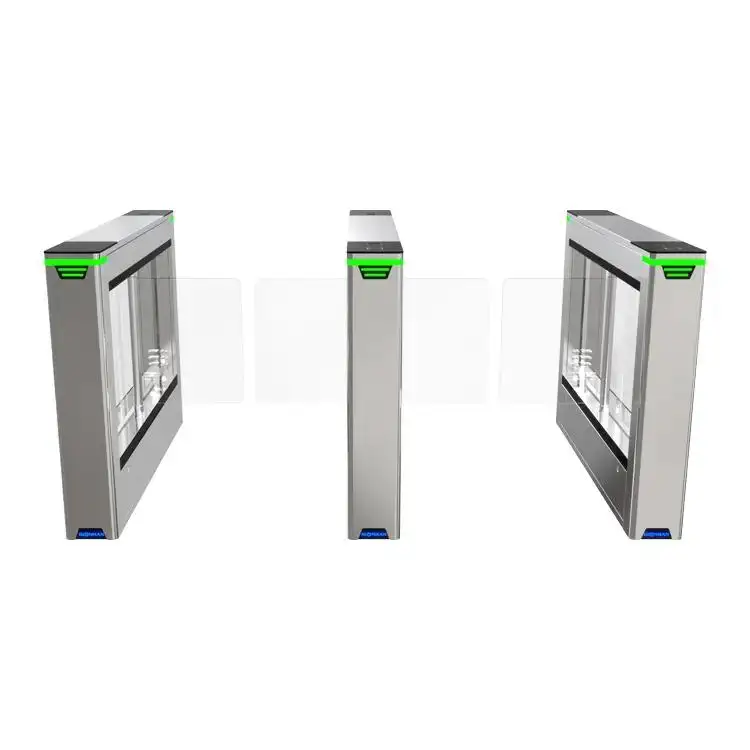
A flap turnstile is a waist-height access barrier that uses retractable wing panels — typically made from tempered glass, acrylic, or polycarbonate — to control pedestrian entry. When a user presents a valid credential, the wings retract horizontally to open the lane. After passage, they close automatically and re-lock within 0.3–1.0 seconds.
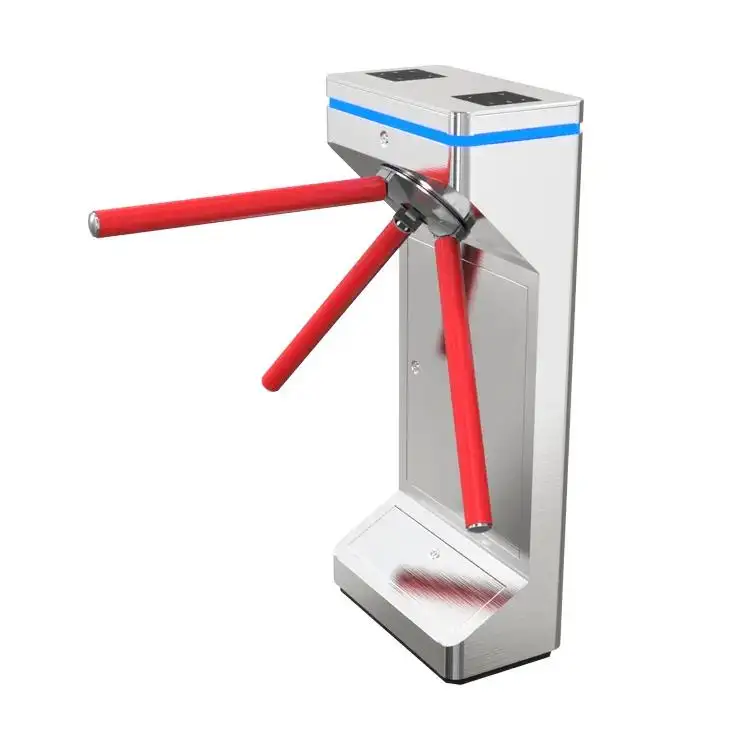
The key difference from a tripod turnstile is the wing mechanism. Instead of rotating arms, a flap turnstile uses flat panels that retract flush with the cabinet body. This creates a wider visible lane opening, a faster cycle time, and a significantly more premium appearance — which is why flap turnstiles dominate corporate lobbies, airports, and transit systems where aesthetics and throughput both matter.
Core components of every flap turnstile include:
- SUS304 stainless steel cabinet (1.2–2.0mm wall thickness for commercial grade)
- Retractable wing panels — tempered glass, acrylic, or polycarbonate
- Brushless DC or servo motor — the primary driver of cycle life and noise level
- Infrared sensor array — typically 4–8 pairs for anti-tailgating and anti-pinch detection
- Control board (PCB) — manages lane timing, access protocol, and alarm outputs
How a Flap Turnstile Works
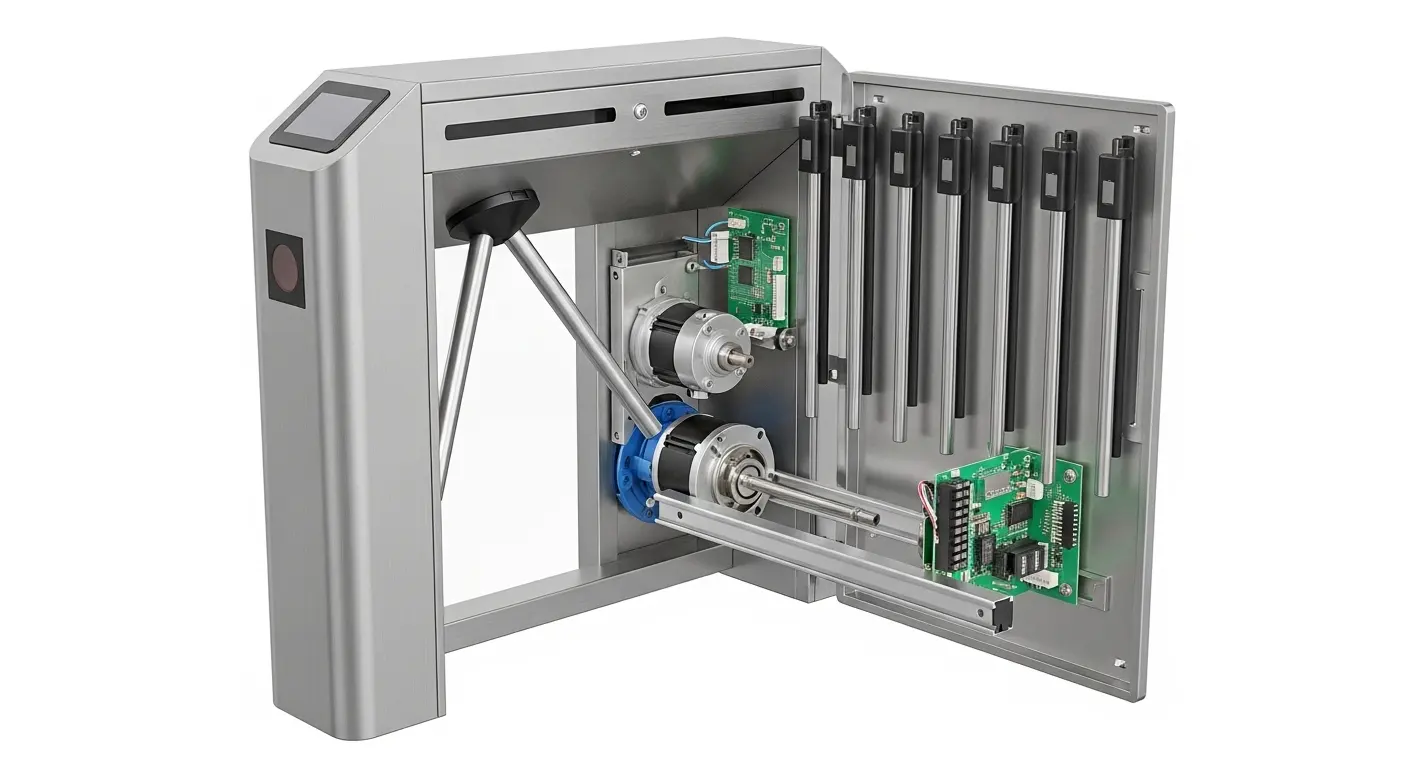
The operational sequence is straightforward. A user presents a credential — RFID card, QR code, barcode, fingerprint, or face — to the integrated reader. The reader validates it and sends a dry-contact or RS485 signal to the flap turnstile's control board. The motor then drives the wing panels to retract in 0.3–0.5 seconds. The person walks through the open lane. The wings automatically close and return to the locked position within 1.0 second of passage.
Two safety behaviors run continuously during operation:
- Anti-pinch protection: If an infrared beam detects an obstruction while the wings are closing, the motor stops and reverses immediately. Force on contact is kept below 2kg — below the threshold for injury in all major safety standards.
- Anti-tailgating detection: Multiple sensor pairs scan the passage zone. If a second person enters before the wings re-close, the system triggers an audible and visual alarm and can signal a security management platform in real time.
Fail-safe behavior on power loss: wings retract automatically to allow evacuation — a requirement for fire safety compliance in most commercial building codes.
Types of Flap Turnstile: Matching the Right Model to Your Environment
Not every flap turnstile suits every environment. The right choice depends on lane width, traffic volume, aesthetic requirements, and budget. Here's how the main categories break down.
Standard Flap Barrier Turnstile
The baseline commercial model. SUS304 cabinet, 550mm standard lane width, 40 persons per minute throughput, brushless DC motor, and RFID dry-contact reader compatibility. For corporate offices, co-working spaces, and mid-tier transit environments, the flap barrier turnstile covers all the core requirements at a competitive price point — without over-specifying for environments that don't need premium glass panels or servo motor drives.
Flap Turnstile Gate with Extended Lane Width
Standard flap turnstiles carry a 550mm lane width — adequate for single-file pedestrian flow but not for wheelchair users, luggage, or ADA compliance requirements. Extended-width models open to 850–1,000mm, accommodating accessible access without a separate swing gate lane. For environments that need a wider passageway in the same chassis footprint, the flap turnstile gate provides a 600–850mm lane option with the same brushless motor and infrared sensor array as the standard model.
High-Performance Flap Barrier Gate
High-performance models use servo motor drives instead of brushless DC motors, push throughput to 50–60 persons per minute, and typically carry MCBF ratings of 8–10 million cycles — compared to 3–5 million for standard commercial units. For airports, metro stations, and flagship corporate headquarters where the gate runs continuously across a full operating day, a high-performance flap barrier gate delivers the cycle life and speed that prevents bottlenecks at peak periods without accelerated wear.
Access Control Flap Barrier
For enterprises that need deep integration with an existing access control platform — employee ID systems, visitor management software, time-and-attendance platforms, or building management systems — an access control flap barrier model ships with TCP/IP and RS485 communication interfaces, Wiegand reader support, and open API compatibility. These aren't just standalone gates — they become active nodes in a connected security infrastructure.
Compact Flap Barrier
Standard flap turnstile cabinets run approximately 1,200–1,500mm in length and 150–300mm in width. For sites with tight corridors, narrow lobby footprints, or space-constrained security checkpoints, a compact flap barrier reduces the cabinet length and footprint without sacrificing throughput speed, sensor coverage, or credential compatibility. A common deployment scenario is a secondary staff entrance, server room access point, or elevator lobby where lane count is limited by physical space.
Key Specifications to Check Before Buying a Flap Turnstile
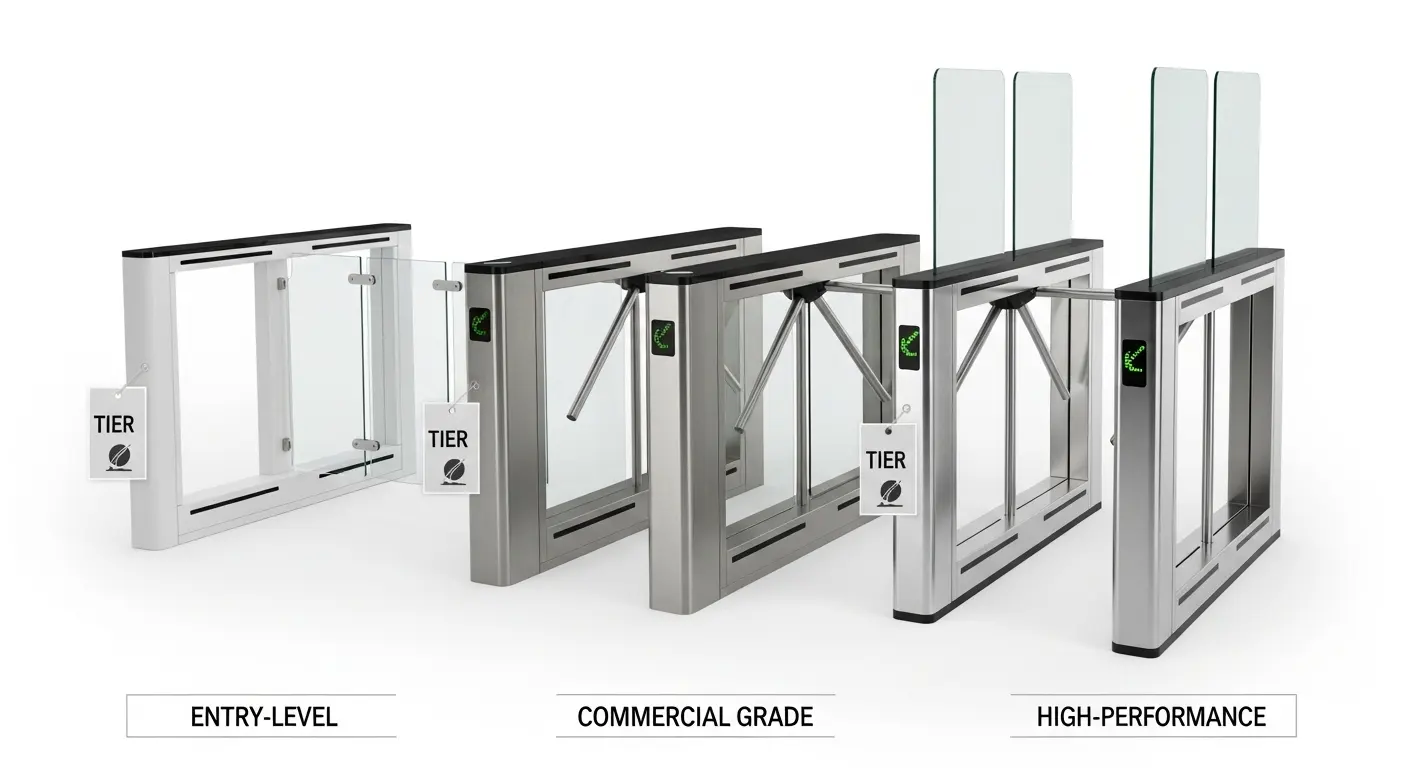
When comparing any two flap turnstile products, these are the technical parameters that determine long-term performance — not the product rendering:
| Specification | Entry-Level | Commercial Grade | High-Performance |
|---|---|---|---|
| Motor type | Basic DC motor | Brushless DC | Servo motor |
| MCBF | 1–3M cycles | 3–5M cycles | 8–10M cycles |
| Throughput | 30–35 ppm | 35–40 ppm | 50–60 ppm |
| Wing panel material | Acrylic | Tempered glass | Tempered glass (10mm+) |
| Cabinet material | SUS304, 1.2mm | SUS304, 1.5mm | SUS304, 2.0mm full-weld |
| IP rating | IP4X (indoor) | IP54 (semi-outdoor) | IP54–IP65 |
| Sensor pairs | 3–4 | 6–8 | 8–12 |
| Opening time | 0.5–1.0 seconds | 0.3–0.5 seconds | 0.2–0.3 seconds |
| Communication | Dry contact | RS485 + dry contact | TCP/IP + RS485 + Wiegand |
| Operating temp | 0°C to +50°C | -20°C to +60°C | -20°C to +70°C |
One specification buyers frequently overlook is sensor pair count. A 3-pair sensor array detects the presence of a person in the lane, but 6–8 pairs map the full passage zone — distinguishing between a single person, a tailgater, and a bag trailing behind the primary user. The difference between 3 pairs and 8 pairs is the difference between a gate that triggers false alarms and one that doesn't.
Flap Turnstile vs. Other Gate Types: Which One Do You Actually Need?
A flap turnstile is the right choice for most commercial indoor deployments. However, there are scenarios where a different gate type outperforms it.
| Feature | Flap Turnstile | Tripod Turnstile | Full Height Turnstile | Speed Gate |
|---|---|---|---|---|
| Throughput | 35–60 ppm | 25–45 ppm | 15–25 ppm | 50–80 ppm |
| Security level | Moderate-high | Moderate | Maximum | Sensor-based |
| Aesthetic | Premium | Industrial | Heavy-duty | Premium |
| Cost | Mid-range | Lowest | Higher | Highest |
| ADA compliance | Limited (std. lane) | Limited | Limited | Better |
| Best for | Offices, transit | Factories, schools | Prisons, military | Airports, HQ |
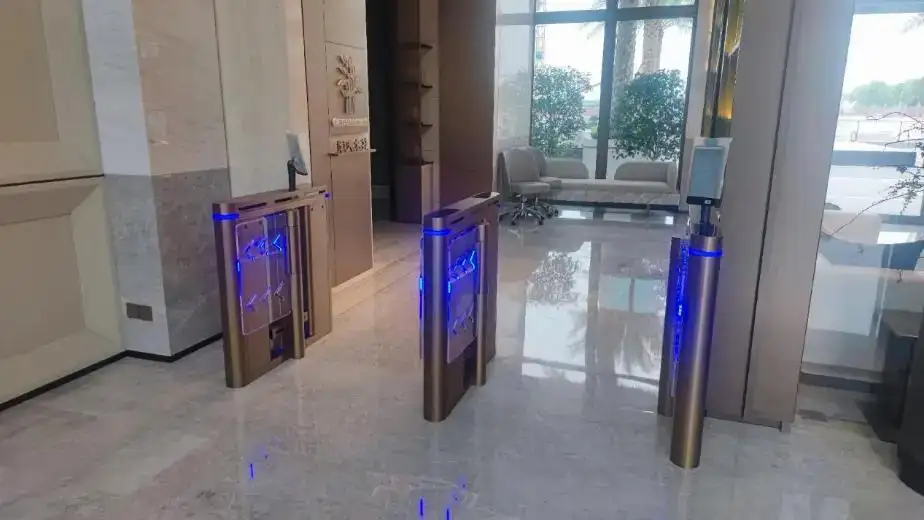
For facilities where visual appearance carries the same weight as security performance — premium hotel lobbies, financial institution headquarters, government ministry entry halls — the flap barrier gate delivers the combination of clean aesthetics, fast throughput, and access control depth that sets it apart from both tripod and full-height alternatives.
For any deployment where a standard-width flap turnstile and a wider ADA lane need to coexist in the same installation, a flap barrier turnstile gate configuration that includes a mixed-width lane arrangement covers both requirements without adding a separate swing gate product to the project scope.
Where Flap Turnstiles Are Deployed
The flap turnstile suits any high-traffic indoor environment where individual-credential access control is needed alongside a professional appearance. Here's how different facility types deploy them:
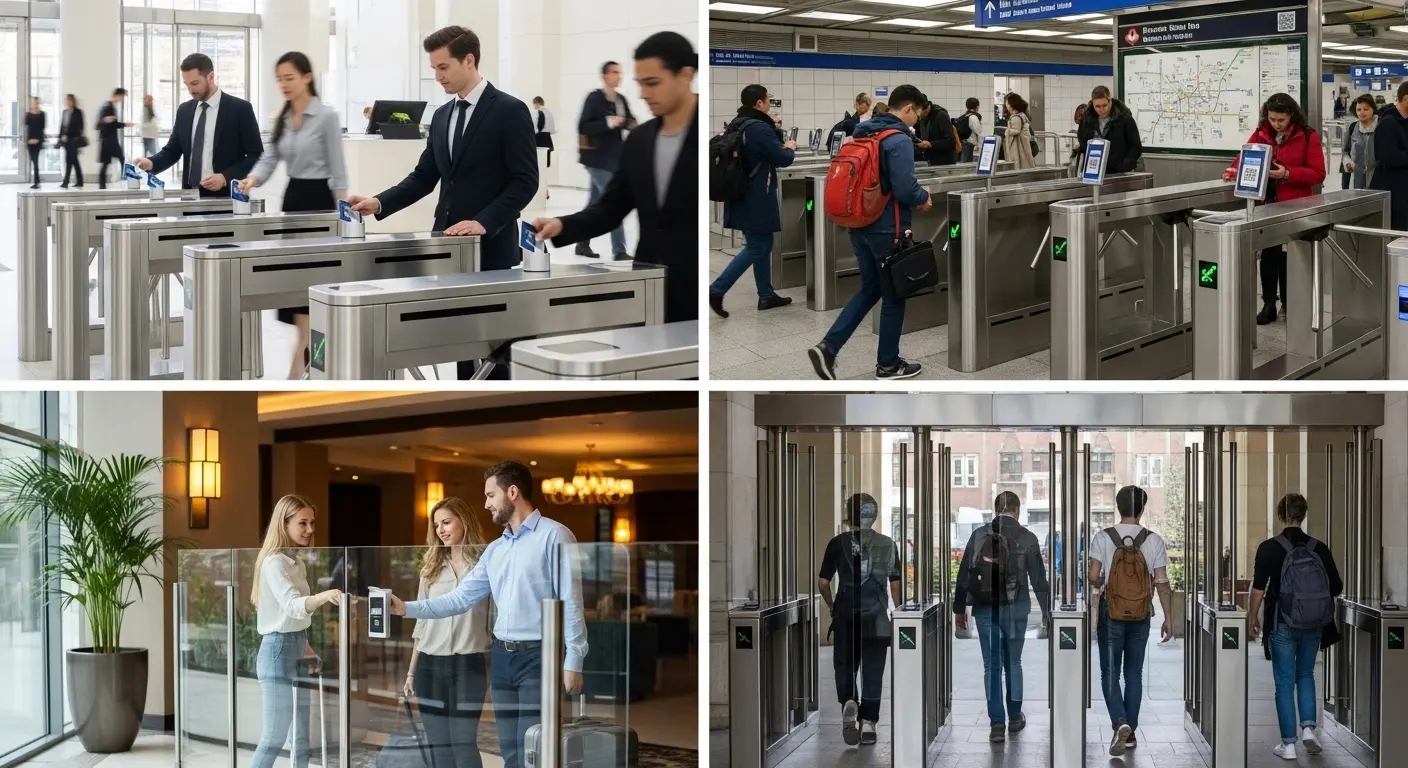
Corporate Offices and Headquarters
The dominant use case. Multiple lanes at lobby level with RFID card or face recognition, connected to the HR access management platform for real-time access logs and remote permission management.
Transit Stations and Metro Systems
High-throughput models at 40–60 ppm run continuously across 16–20 hour operating days. Barcode and QR code reader integration handles ticket validation without physical card issuance.
Airports
Staff access corridors, departure gate entry, and airside restricted zone access. High-performance models with 10M MCBF ratings handle the continuous daily traffic cycles of a major terminal.
Stadiums, Arenas, and Exhibition Halls
QR ticket scanning at high-volume entry points. Burst traffic absorption during the 30-minute pre-event window requires throughput rates of 50+ ppm per lane across multiple parallel lanes.
Schools and University Campuses
Student ID card or mobile credential access at campus gates and building lobbies. Anti-tailgating sensors prevent unauthorized entry during class changeover peaks.
Residential Communities and Hotels
Resident or guest QR/RFID access at lobby entry points. Low-noise brushless motors maintain a premium entrance experience without the mechanical click of tripod arm mechanisms.
How to Calculate How Many Flap Turnstile Lanes You Need
This is the question facility planners most frequently get wrong — leading to either bottlenecks or unnecessary hardware costs:
Step 1 — Identify your peak headcount
Count the number of people arriving in the busiest 15-minute window. If 200 employees arrive between 8:45–9:00 AM, that's your design constraint.
Step 2 — Apply the throughput formula
Divide peak headcount by throughput (ppm) × minutes available.
For example: 200 people ÷ (40 ppm × 15 min) = 0.33 lanes → round up to 1 lane.
Step 3 — Add a buffer lane
Add at least one additional lane to absorb uneven arrival distribution, credential read delays, and one-lane-down maintenance scenarios.
Step 4 — Confirm ADA compliance
If your facility is public-facing, at least one lane must accommodate wheelchair access. Factor this into your lane count — a standard 550mm flap turnstile lane doesn't meet ADA width requirements without a widened-lane or separate swing gate addition.
Frequently Asked Questions About Flap Turnstiles
Q: What is a flap turnstile and how does it differ from a tripod turnstile?
A: A flap turnstile uses retractable wing panels (glass or acrylic) that open horizontally when access is granted, then re-close automatically. A tripod turnstile uses three rotating arms at waist height. Flap turnstiles offer higher throughput (35–60 ppm vs. 25–45 ppm), a significantly more premium appearance, and faster cycle times — making them the preferred choice for corporate offices and transit environments where both speed and aesthetics matter.
Q: What throughput can I expect from a flap turnstile?
A: Standard commercial-grade flap turnstiles process 35–40 persons per minute. High-performance servo motor models reach 50–60 ppm. For lane count planning, use 35 ppm as a conservative calculation baseline for standard models and 50 ppm for high-performance variants.
Q: Can a flap turnstile be installed outdoors?
A: Standard flap turnstiles carry IP4X ratings — indoor use only. For outdoor or semi-outdoor installation, you need a model with IP54 minimum (protected against dust and directional water). For fully exposed environments, IP65 is required. Always request an independent IP test report — not just a spec sheet claim.
Q: What credential types work with a flap turnstile?
A: Modern flap turnstiles integrate with RFID cards (IC/ID/NFC), QR codes, barcodes, fingerprint scanners, face recognition cameras, and temperature detection systems. The control board accepts signals via dry contact, RS485, TCP/IP, or Wiegand reader interface — making it compatible with virtually all third-party access control and time-attendance platforms.
Q: What is the standard lane width of a flap turnstile?
A: Standard lane width is 550mm — suitable for single-file pedestrian flow. Extended-width models open to 600–900mm for users with luggage, wheelchairs, or large equipment. Custom widths beyond 900mm are available from manufacturers but require factory confirmation of structural modifications to the cabinet chassis.
