


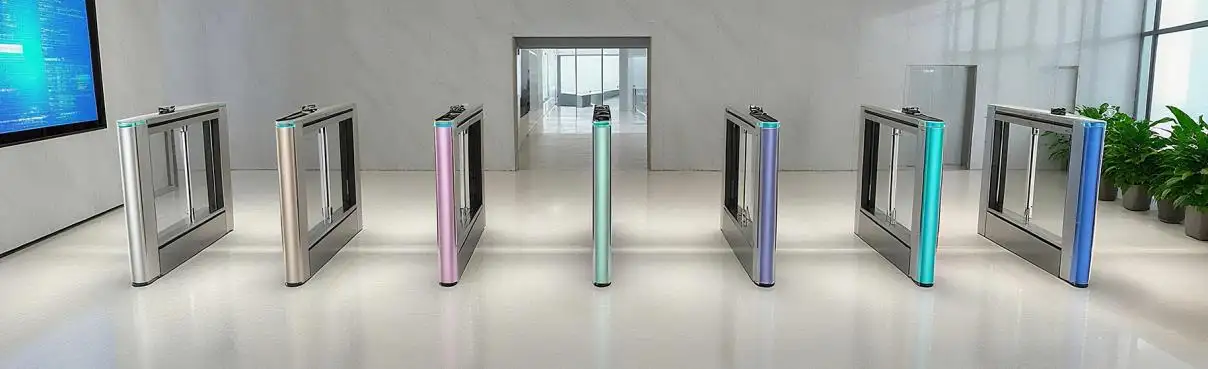
France Intelligent Speed Gate Entrance Systems for Smart Buildings
2025-10-27


France, a nation renowned for its rich history, cultural sophistication, and contributions to art and science, is also a modern powerhouse of technological innovation and stringent standards.1 From the iconic Haussmannian buildings of Paris and the dynamic business district of La Défense to cutting-edge research facilities and vital public infrastructure, French facilities demand security solutions that are not only effective but also compliant, aesthetically considered, and increasingly, intelligent.
The traditional paradigm of access control – relying on simple locks, basic badges, or manual oversight – falls short in meeting the complex demands of contemporary French environments. These methods struggle with efficiency in high-traffic areas, lack the necessary granularity for nuanced security policies, and often fail to integrate with the sophisticated building management systems prevalent in modern constructions.
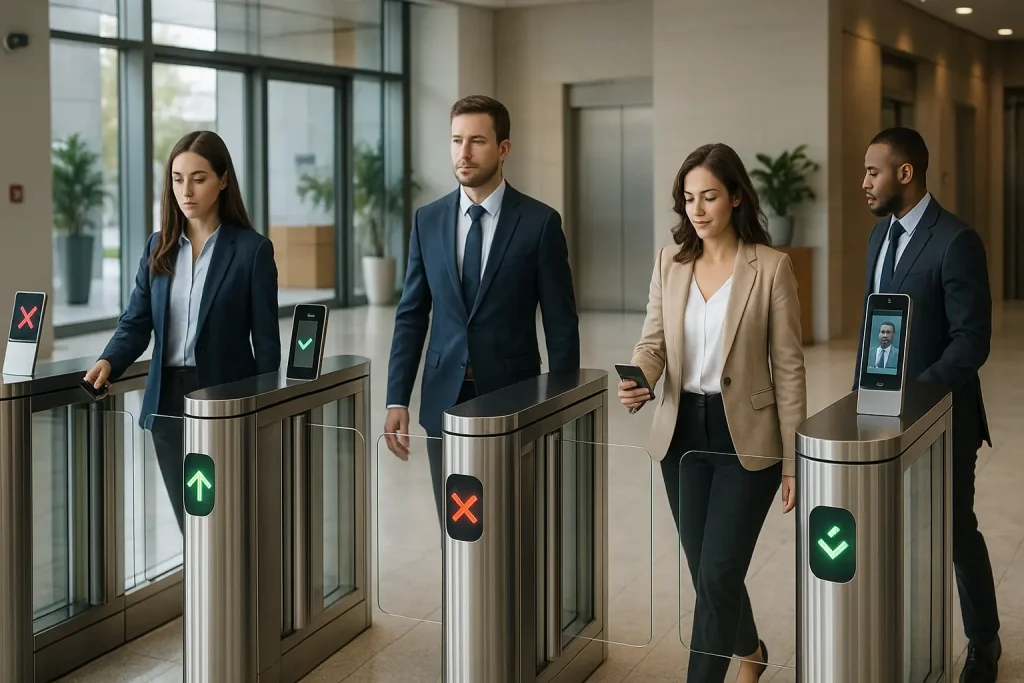
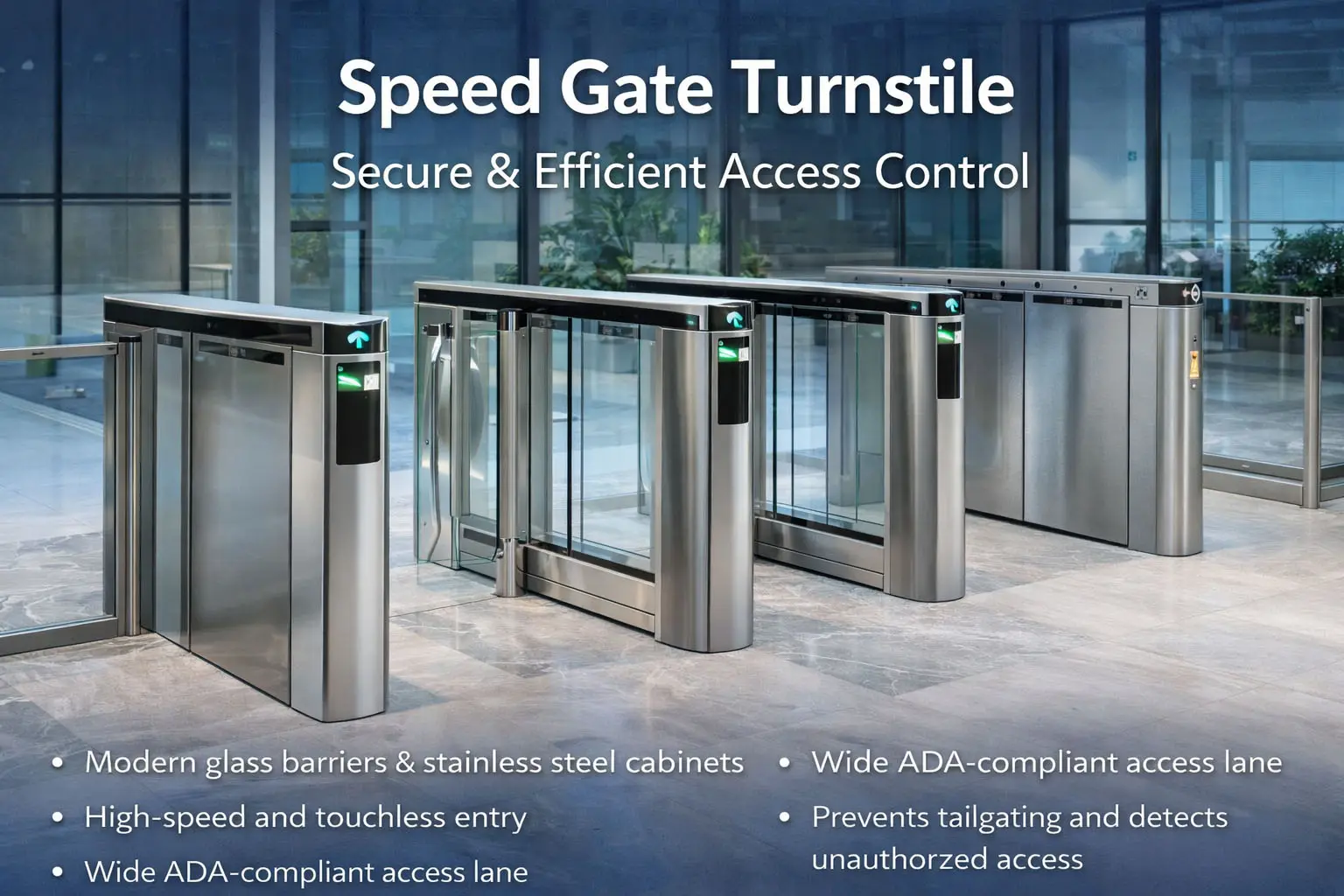
This is where the France intelligent speed gate entrance system emerges as a critical technology. This represents more than just an automated barrier; it signifies a move towards connected, data-driven, and adaptive access control. These systems are specifically engineered and implemented to navigate the unique French landscape, balancing robust security with high throughput, adhering to strict regulations (including GDPR and specific French building/fire codes), integrating seamlessly with smart building platforms (GTB/GTC), and often, meeting high expectations for design elegance. This guide offers an expert, in-depth exploration of these vital systems tailored for the French context.
What Defines an "Intelligent Speed Gate Entrance System" in France?
An intelligent speed gate entrance system in France is an advanced automated pedestrian barrier solution characterized by its connectivity, sophisticated sensor technology, onboard processing capabilities (local intelligence), and seamless integration with broader building management and security ecosystems, all while strictly adhering to French and EU regulations, particularly concerning data privacy and safety.
Unlike a basic automatic gate that simply reacts to an open signal, an intelligent system thinks, communicates, and adapts. Key characteristics relevant in the French context include:
- Connectivity & Integration: Designed to be a node within the building's network, communicating real-time data and integrating smoothly with Gestion Technique du Bâtiment (GTB) / Gestion Technique Centralisée (GTC) systems.
- Advanced Sensing & AI: Utilizing high-density sensors, often enhanced by AI algorithms, to accurately detect passage, prevent tailgating with minimal false alarms, and potentially analyze flow patterns or identify anomalies.
- Compliance Focused: Engineered and implemented with French/EU regulations (GDPR/CNIL, NF fire safety standards, accessibility laws) as core considerations, not afterthoughts.
- Data-Driven Operation: Capable of providing rich data logs for security audits, compliance reporting, and operational insights (e.g., occupancy), managed within strict data protection frameworks.
- Flexibility & Future-Readiness: Often built with open architecture (APIs) to allow integration with evolving technologies and smart building features favoured across various Regional Markets.
Why Are Intelligent Gates Crucial for Modern French Facilities?
Intelligent gates are crucial in France due to the need for robust security in diverse settings (from corporate HQs to public venues), the requirement to manage pedestrian flow efficiently in dense urban areas, the absolute necessity of complying with stringent EU/French regulations (GDPR, fire safety, accessibility), the increasing adoption of smart building technologies (GTB/GTC), and a cultural appreciation for well-designed, integrated solutions.
The specific drivers within France are multifaceted:
- Security & Vigipirate Context: France maintains a high level of security awareness, partly influenced by the ongoing Vigipirate national security alert system. Intelligent gates provide a reliable, automated layer of physical security for controlling access to sensitive areas.2
- Efficiency in Dense Cities: Cities like Paris require high-throughput solutions to prevent bottlenecks in office lobbies, metro interchanges, and public buildings during peak hours. Intelligent gates offer the necessary speed combined with control.
- GDPR & Data Privacy: The EU's General Data Protection Regulation (rigorously enforced by the CNIL in France) places strict controls on personal data, including access logs and especially biometrics.3 Intelligent systems offer features (like secure logging, data minimization options) that help achieve compliance, a stark contrast to approaches in less regulated markets.
- Smart Building Integration (GTB/GTC): France has a mature market for building management systems. Intelligent gates with open APIs are essential for integrating access control data (like occupancy) with systems managing HVAC, lighting, and elevators for optimized building performance.
- Regulatory Landscape: Strict fire safety norms for public access buildings (ERP - Établissement Recevant du Public) and accessibility mandates (Loi handicap) require access solutions that are explicitly compliant. Intelligent systems can often incorporate the necessary safety interlocks and operational modes.
- Aesthetics & Heritage: In a country valuing design and often dealing with historic architecture, access gates must be aesthetically sensitive and integrate well, whether in a modern La Défense tower or a renovated Haussmannian building.
How Does the Technology Powering Intelligent Gates Work?
Intelligent gates leverage a combination of high-performance motors, sophisticated multi-beam sensor arrays (often IR, sometimes fused with other tech), powerful onboard microprocessors running complex logic, and secure network interfaces for communication with central access control platforms and other building systems, all orchestrated for speed, security, and reliability.
Let's break down the core intelligence:
- Sensing the Environment: High-density infrared (IR) sensor arrays (often 30-60+ beams) create a detailed "light curtain." This isn't just for safety; it allows the gate's processor to:
- Accurately profile objects passing through.
- Detect tailgating (two people) with high reliability.
- Differentiate people from luggage or carts (reducing false alarms).
- Determine direction of travel.
- AI Enhancement: Increasingly, AI algorithms analyze this sensor data in real-time, learning patterns to improve accuracy and potentially identify unusual behaviour (loitering, attempts to force).4
- Making Decisions Locally: The onboard processor (the "local brain") runs sophisticated firmware. It receives the "open" command from the central ACS but then takes over:
- Controls the motor speed and profile for smooth, safe barrier movement.
- Executes the anti-tailgating logic based on sensor input.
- Manages safety protocols to prevent closure on users.
- Communicates status and alarms back to the central system.
- Connecting and Communicating: Secure network interfaces (typically Ethernet) allow the gate to:
- Receive commands from the central ACS (on-premise or cloud).
- Transmit detailed event logs and diagnostic data.
- Integrate with other systems (elevators, VMS, GTB/GTC) via APIs or standard protocols (like BACnet/IP, Modbus TCP might be relevant for GTB links).
- Acting Precisely: High-quality brushless DC motors provide the fast, quiet, and reliable barrier actuation needed for high throughput and a professional feel, responding instantly to the controller's commands.
My Experience: "The 'intelligence' really shines when dealing with exceptions. I recall an installation in a busy Paris office where the client was concerned about false alarms from employees carrying architect tubes or briefcases. We deployed gates with AI-enhanced sensor logic. After an initial 'learning' period, the system became incredibly adept at distinguishing legitimate accessories from actual tailgating attempts, dramatically improving user experience without compromising security. A basic automatic gate couldn't have achieved that nuance."
"Intelligent" vs. Basic Automatic Gates: The French Perspective
While a basic automatic gate opens on command, an intelligent gate in the French context adds crucial layers: advanced security analytics (reliable anti-tailgating), deep integration capabilities (GTB/GTC), enhanced compliance features (auditable, GDPR-conscious logging), and remote diagnostics, offering significantly more value beyond simple automation.
| Feature | Basic Automatic Gate | France Intelligent Speed Gate Entrance System |
| Primary Function | Opens/closes on signal | Analyzes, Connects, Learns, Acts |
| Sensors | Basic safety (2-4 beams) | High-density security array (20-60+), AI-enhanced |
| Security | Minimal (no tailgating detection) | High (Reliable anti-tailgating, behavioral alerts) |
| Connectivity | Limited/Siloed | Networked (IP), Open APIs |
| Integration | Minimal | Deep (ACS, GTB/GTC, VMS, Elevators) |
| Data & Compliance | Basic/None | Rich logs, GDPR-aware features, auditability |
| Management | Local/Manual | Remote diagnostics, configuration, updates |
| Maintenance | Reactive | Predictive potential |
For French facilities prioritizing security, efficiency, compliance, and smart building integration, the "intelligence" features are not just desirable; they are often essential.
Core Benefits for Organizations in France
Implementing a France intelligent speed gate entrance system delivers significant advantages tailored to the French operational and regulatory environment.
Enhanced Security & Compliance
- Reliable Tailgating Prevention: Addresses a key physical security vulnerability with high accuracy.
- Consistent Policy Enforcement: Ensures access rules are applied 24/7, crucial in large or complex organizations.
- Auditable Logs for GDPR & Security: Provides the detailed, secure event logs needed to demonstrate compliance with data access policies under GDPR and support security investigations. The ability to configure log retention and anonymization can be key.
- Integration with National Security Frameworks: Can be configured to support security postures required under frameworks like Vigipirate.
Operational Efficiency & Throughput
- Managing High Density: Essential for preventing queues and maintaining smooth flow in busy Paris offices, transport interchanges, or public buildings.5 Throughput rates of 30-40+ PPM are typical. Comparable needs are seen in other European hubs requiring a
Germany high-throughput speed-gate-pedestrian-accesssolution. - Staff Optimization: Automates routine checks, allowing reception or security personnel ("agents de sécurité") to focus on welcoming visitors, providing assistance, and managing exceptions.
- Reliability & Reduced Downtime: Features like predictive maintenance alerts and remote diagnostics minimize disruption, crucial for business continuity.6
Smart Building Integration & Data Insights
- GTB/GTC Synergy: Seamless integration provides real-time occupancy data, enabling smarter energy management (HVAC, lighting based on presence) and optimized building operations, aligning with French energy efficiency goals (RT 2012/RE 2020 context).
- Actionable Analytics: Flow data helps facility managers understand building usage patterns, optimize space allocation, and improve resource planning.7
User Experience & Aesthetics
- Seamless Access: Provides a fast, modern, often touchless entry experience expected in contemporary workplaces.
- Design Integration: Intelligent gates are available in designs that complement both modern and classic French architecture, maintaining aesthetic integrity.
Navigating French Regulations: GDPR/CNIL, Fire Safety, Accessibility
Compliance is paramount in France. Systems must strictly adhere to GDPR as interpreted by the CNIL (Commission Nationale de l'Informatique et des Libertés) regarding personal data (especially biometrics), rigorous fire safety norms for public buildings (ERP), and accessibility requirements under French law.
GDPR and CNIL: The Biometric Challenge
- Strict Interpretation: France's CNIL takes a particularly strict stance on biometric data processing. Using biometrics (like facial recognition) for general access control requires demonstrating necessity (not just convenience) and obtaining explicit, freely given consent.8 proportionality assessments are crucial.
- Practical Implication: Widespread biometric deployment for everyday employee access is rare and legally complex in France. Secure smart cards (often MIFARE DESFire) and mobile credentials are the strongly preferred, compliant options. Biometrics are typically reserved for specific high-security, opt-in scenarios.9 "My firm advises French clients that unless they have a specific, legally justifiable high-security need (e.g., securing a critical research lab), relying on secure cards or mobile access is far simpler from a GDPR/CNIL compliance perspective than navigating the complexities of biometric consent and data management."
Fire Safety (Normes de Sécurité Incendie - ERP)
- Critical Importance: Regulations for Établissements Recevant du Public (ERP - buildings open to the public) are stringent regarding emergency evacuation routes ("dégagements").
- Mandatory Fail-Safe: Speed gates forming part of an escape route must integrate with the fire detection system ("Système de Sécurité Incendie" - SSI) and automatically open (fail-safe) upon alarm or power loss, meeting relevant NF (Norme Française) and EN standards.
- Egress Width Calculations: The number and width of gates must ensure sufficient aggregate egress width based on the building's occupancy load ("effectif"), as calculated according to fire safety regulations (Code de la construction et de l'habitation, Règlement de sécurité contre l'incendie). Dedicated emergency exits might be required alongside gate arrays. Certification by bodies like CNPP may be relevant.
Accessibility (Loi Handicap & Accessibilité)
- Equal Access: French law requires accessibility for people with disabilities ("personnes à mobilité réduite" - PMR).10
- Compliant Lanes: Speed gate installations must include at least one lane meeting specific width requirements (often 900mm+ clear passage) and featuring accessible reader placement and clear signaling.
Popular Gate Types & Design Trends in France
Swing barrier gates are widely favored in French corporate and institutional settings for their elegant appearance and ease of integration into diverse architectural styles. Flap barriers are used where maximizing throughput is critical (e.g., transit).11 Design often emphasizes quality materials and seamless integration.
- Swing Barriers (The Preferred Choice): Their smooth, controlled movement and aesthetic versatility make them popular for Parisian office lobbies, museums, and public buildings. They integrate well into both modern and classic interiors and easily accommodate ADA/PMR requirements.
- Flap Barriers (For Speed): Essential for high-volume locations like metro stations (RATP/SNCF interchanges), airports, or very large corporate campuses where processing speed outweighs other considerations.
- Design Emphasis: French clients often appreciate high-quality construction, durable materials (good quality stainless steel, robust glass), clean lines, and subtle integration. Bespoke finishes or integration of specific materials might be requested for high-profile projects, showcasing a blend of Design & Technology.
- Optical Turnstiles: Used in some prestigious, continuously staffed lobbies (e.g., luxury hotels, corporate HQs) for an open feel, but less common than barrier gates due to the lack of physical deterrence. Explore via resources on Optical turnstiles.
Credential Technologies in the French Landscape
Secure smart cards (especially MIFARE family) have a strong foothold, influenced partly by public transport systems like the Navigo pass. Mobile credentials (NFC/BLE) are rapidly gaining popularity.12 Biometrics remain niche due to stringent GDPR/CNIL oversight.
- Smart Cards (Dominant): High-frequency (13.56 MHz) encrypted cards are the standard for secure access. Legacy 125 kHz Prox is considered insecure and should be avoided.13
- Mobile Access (Growing Fast): High smartphone adoption drives demand for convenience.14 NFC "tap-and-go" (similar to contactless payments) and BLE "hands-free" access are increasingly expected, particularly in modern workplaces.
- Biometrics (Highly Restricted): Use requires strong justification, explicit consent, and robust data protection measures, heavily scrutinized by the CNIL. Not typically used for general employee access. This cautious approach contrasts with trends in some Asian markets like
SingaporeorMalaysia.
Integrating Gates with GTB/GTC Systems in France
Integration with Building Management Systems (Gestion Technique du Bâtiment - GTB / Gestion Technique Centralisée - GTC) is a key aspect of deploying intelligent gates in France. This allows access control data to inform energy management, security monitoring, and overall building automation.15
- The Goal: Create a truly connected building where systems share data for efficiency and safety.
- How it Works: Intelligent gates with open APIs or standard protocols (like BACnet/IP, Modbus TCP) can send real-time occupancy data (derived from entry/exit counts) to the GTB/GTC.
- The Benefits:
- Energy Efficiency: GTB can automatically adjust lighting and HVAC on floors or zones based on actual occupancy reported by the gates, helping meet French energy regulations (RT 2012 / RE 2020).
- Enhanced Security: Gate alarms (forced entry, tailgating) can trigger actions in the GTB (e.g., activate specific CCTV cameras, notify security via the central dashboard).
- Operational Insights: Combined data provides a holistic view of building usage.
My Experience: "For a new 'smart building' project near Lyon, the GTB integration was specified from day one. The client wanted the speed gate counts to directly inform the HVAC zones. We used gates with BACnet/IP capability, allowing seamless communication with the Schneider Electric GTB system. The resulting energy savings projected were significant."
Installation & Maintenance in France: Quality and Compliance
Installation must be performed by qualified technicians adhering to French electrical norms (NF C 15-100), building codes, ERP fire safety regulations, and accessibility standards. High-quality installation and ongoing maintenance are crucial for ensuring the reliability and compliance expected in the French market.
- Qualified Installers: Essential for ensuring compliance with electrical safety (Consuel certificate might be needed), fire system integration (requiring specific competencies), and proper mechanical installation. Look for certifications like APSAD in the security field.
- Code Adherence: Strict adherence to the Code de la construction et de l'habitation and specific ERP fire safety rules ("Règlement de sécurité contre l'incendie") is mandatory.
- Local Support: Reliable, French-speaking technical support and readily available spare parts are important for minimizing downtime.
Modular speed gate designcan facilitate faster repairs.16 - Maintenance Contracts ("Contrat de Maintenance"): Standard practice in France to ensure regular inspections, preventive maintenance, and compliance checks (especially for fire safety elements), ensuring long-term performance and safety.
Future Trends for Intelligent Gates in France
The future in France involves leveraging AI within the strict bounds of GDPR, wider adoption of secure mobile credentials, deeper integration with GTB/GTC for hyper-efficient buildings, and a continued focus on design, sustainability, and user experience.
- AI for Efficiency & Security (GDPR-Compliant): AI will enhance sensor accuracy, enable predictive maintenance, and provide anonymized flow analytics without compromising privacy regulations. Behavioral analytics might be used, but require careful justification and transparency.
- Mobile Credential Dominance: Smartphones using NFC and BLE will likely become the primary credential, potentially incorporating digital identity wallets.
- Hyper-Integrated Smart Buildings: Gates become key sensors/actuators in highly integrated GTB/GTC systems optimizing energy, space, comfort, and security dynamically based on real-time data.
- Sustainability: Growing demand for energy-efficient gates, use of sustainable/recyclable materials, and designs supporting circular economy principles.
- Enhanced User Experience: Focus on even smoother, faster, and more intuitive interactions, potentially using advanced sensor technologies for completely frictionless passage (where security and privacy permit).
The Final Verdict: Intelligent, Compliant Gateways for France
The France intelligent speed gate entrance system is a sophisticated solution designed to meet the unique intersection of security needs, efficiency demands, stringent regulations, and aesthetic considerations found in modern French facilities. More than just automated barriers, these systems are connected, data-aware components crucial for secure operations, regulatory compliance (especially GDPR and fire safety), and enabling the vision of the smart building.
By prioritizing compliance, leveraging secure and convenient credentials (smart cards, mobile), ensuring deep integration capabilities (especially with GTB/GTC), and appreciating the importance of design, organizations in France can implement intelligent gate solutions that provide lasting value. They serve as reliable, efficient, and compliant guardians, reflecting France's commitment to both technological advancement and rigorous standards, setting them apart from solutions tailored for the high-volume needs of Germany or the specific requirements of the UK within the broader Europe commercial building speed gate solution landscape.
