


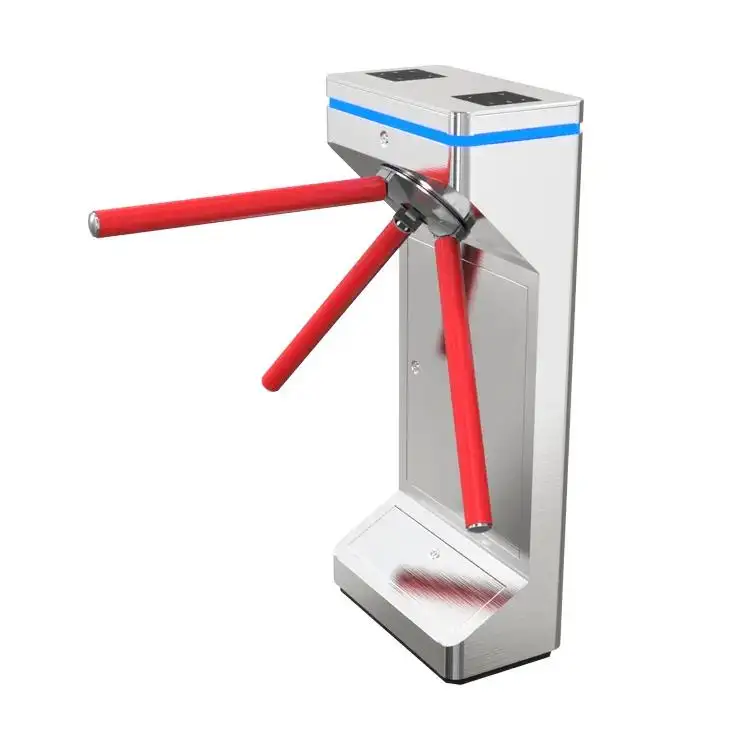
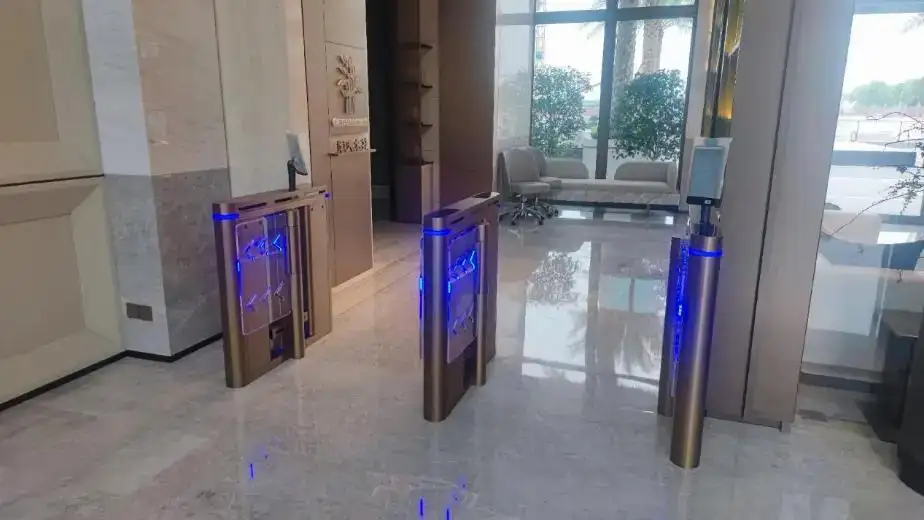
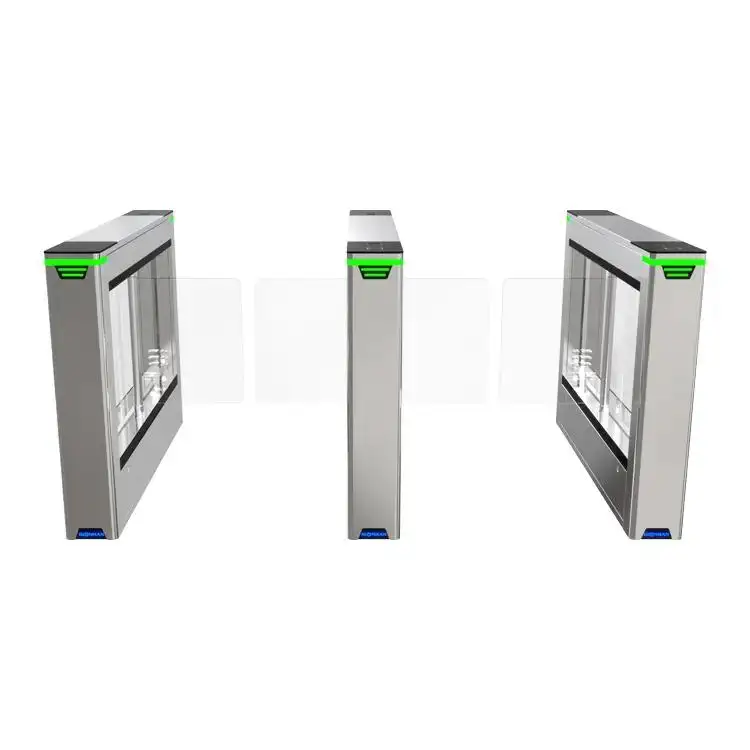
RFID Pedestrian Turnstiles Gate Supplier: Biometric + RFID Integration
2026-02-28


RFID Pedestrian Turnstiles Gate Suppliers are no longer only building about “letting people in”—they are about building a reliable identity layer that keeps your site secure, efficient, and easy to manage.
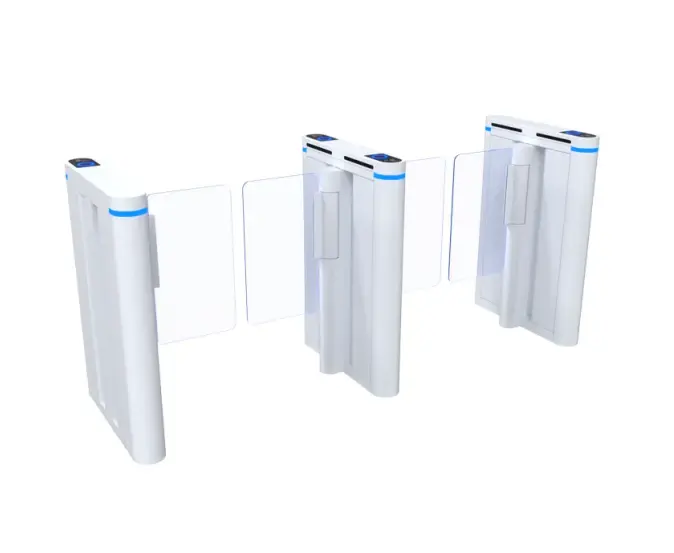
In real properties, access control is part security boundary, part daily customer experience. If it feels slow, people push through. If it feels loose, tailgating becomes normal. That is why more owners and integrators are moving toward RFID + biometric workflows: fast when traffic is heavy, more certain when risk is higher, and more traceable when management needs accountability.
From IRONMAN Intelligent’s manufacturing perspective, the goal is not to stack features. The goal is to create a coherent entry logic that stays stable across seasons, shifts, and user groups—without forcing your property team to invent workarounds.
Why Biometric and RFID Integration Matters in Real Sites
Access control often fails in two predictable ways.
First, it becomes too strict. The “secure” system slows everyone down, and the lobby turns into a friction point. Residents get annoyed. Office tenants complain. Guards become manual bottlenecks. Eventually, staff relax the rules just to keep flow moving—which defeats the purpose of the gate.
Second, it becomes too loose. A simple card-only approach can be fast, but it invites lost cards, shared credentials, and tailgating. In mixed-use buildings, it also creates permission chaos: the same RFID card ends up being used for parking, lobby entry, visitor access, and restricted areas without clear limits.
Integration is the practical middle path:
✓ RFID is fast and familiar: easy to distribute, quick to scan, and efficient at peak hours.
✓ Biometrics add identity certainty: the credential is the person, not the card.
✓ Combined workflows reduce admin burden: you can set smarter rules without rebuilding hardware.
At IRONMAN Intelligent, we design family-focused pedestrian access gates that balance security with convenience. We treat the gate as a long-term site asset, not a short-term hardware purchase. That is why we build RFID and biometric support as one integrated workflow—rather than separate add-ons that make systems harder to maintain later.
How Integration Works From Identity to Gate Action
A modern gate is not “hardware first.” It is logic first. The lane is the final step, not the starting point.
A typical integrated workflow looks like this:
Identity Input → Permission Check → Action Execution → Event Record
This sounds simple, but it changes everything in daily operations because you stop thinking in terms of “open/close” and start thinking in terms of rules.
Here is what a well-designed RFID + biometric integration should deliver on site:
✓ Two-factor flexibility: RFID for normal entry, biometrics for higher-security cases, restricted time windows, or sensitive doors.
✓ Centralized permission rules: one place to manage who can pass, when, and which lane they can use.
✓ Clear event logs: traceable records that support incident review, tenant disputes, and property accountability.
✓ Fail-safe design thinking: controlled behavior during network interruptions, power recovery, and emergency modes.
This matters because risk moments differ by project. A residential community may care most about morning flow and delivery convenience. A commercial complex may care more about anti-tailgating and audit trails. With integration, you can tune policy without replacing lanes or reworking the physical site.
For any RFID Pedestrian Turnstiles Gate Supplier, the question is not “Can the gate read RFID and biometrics?” The question is “Does the system stay understandable and stable when your rules get more complex?”
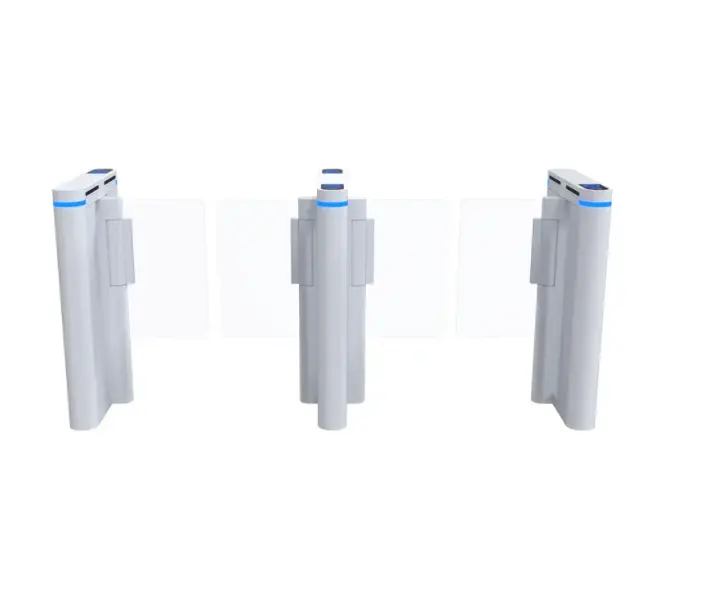
Key Scenarios for Communities, Campuses, and Commercial Complexes
Integration becomes most valuable when you operate multiple entrances, multiple lanes, or multiple user types. That is where card-only systems tend to break down and where biometric-only systems can feel too rigid for daily life.
Residential Communities
Communities want entry that feels smooth for families, elderly residents, and frequent deliveries. RFID keeps entry simple and predictable. Biometrics can be applied selectively where certainty matters more.
Common patterns include:
✓ Resident lanes optimized for speed with RFID
✓ Staff-only lanes with stronger verification
✓ Night access rules with biometric confirmation
✓ Delivery routines with controlled permissions and time windows
The practical goal is not “maximum control.” It is comfortable control—a system residents do not fight against.
Campuses and Multi-Building Sites
Campuses have one unique challenge: the same person may be legitimate in one zone and restricted in another. Staff, students, vendors, and visitors all have different patterns, and campus schedules change constantly.
Integration supports:
✓ Multiple user groups with different entry rights
✓ Zone-based permission planning
✓ Traceable entry logs for safety and management
✓ Controlled visitor access without manual gates
When campus operations are busy, an access lane must behave consistently across shifts. Otherwise, you end up with a “rules on paper” system that no one can follow in real time.
Commercial Complexes
Office towers, malls, and mixed-use buildings have the hardest traffic diversity. Tenants, visitors, service providers, and contractors do not share the same access logic.
Integration lets you create rule sets without turning your lobby into a manual checkpoint:
✓ Tenant flow: RFID for routine access, optional biometrics for higher-security floors
✓ Visitor flow: temporary credentials, clearly limited time windows
✓ Service flow: restricted schedules, specific lanes, stronger verification when needed
Across all scenarios, the key design goal is consistency: people should know what to do at the lane in one second, and administrators should not need “special exceptions” just to keep the system usable.
R And D That Turns Features Into Project-Ready Outcomes
Features do not matter if they do not reduce friction for your project delivery. Many sites have experienced this: the gate looks good in a brochure, but installation reveals missing interfaces, confusing logic, or policy limitations.
IRONMAN Intelligent’s R&D is built around practical delivery, backed by a core team with 10+ years of industry experience, 3,000+ project implementations, and 100+ independently developed products. We also hold 10+ patents in design and technology—evidence of long-term investment in both engineering and usability.
What this means for clients is direct:
✓ Tailored configuration: you are not locked into a one-size template when your site layout is unique.
✓ Balanced design: stability and aesthetics are planned together so the gate supports your architecture.
✓ Upgrade-ready thinking: products are continuously updated to match changing management needs.
For project owners, this reduces “integration surprises” and helps acceptance go smoother—especially when you scale from one entrance to multiple lanes across a larger site.
If you are comparing options, a practical test is simple: does the RFID + biometric design feel like one system, or does it feel like separate modules stitched together?
Quality Control for Durability, Reliability, and Approval Confidence
Access gates run every day, in real weather, with real behavior—rush hours, carts, children, delivery trolleys, and impatient users. Durability is not a marketing word. It is the difference between stable flow and repeated maintenance calls.
To support stable, repeatable delivery, IRONMAN Intelligent enforces military-grade production standards and a multi-layer inspection system from material intake to final QC. Backed by ISO9001 certification and an AAA enterprise credit rating, our facility operates with advanced capabilities designed to meet German, European, and American standards.
Instead of listing every inspection item, here is the buyer value:
✓ More predictable performance under high-frequency operation
✓ Lower downtime risk, protecting property image and tenant satisfaction
✓ Smoother procurement approval with recognized quality system support
✓ Longer service life, improving total cost of ownership (TCO)
When a gate becomes part of your daily safety boundary, QC is not a checkbox. It is a strategic requirement—especially when you are selecting an RFID Pedestrian Turnstiles Gate Supplier for multi-year site operation.
Service System and CTA From Design to Long-Term Support
A reliable RFID + biometric project is not finished at shipment. It is finished when your site runs smoothly and your team knows what to do when conditions change—staff turnover, policy updates, tenant changes, or peak-hour traffic shifts.
Our service philosophy is clear: quality-oriented, customer first, attentive service. We support you from design through production, and we continue after delivery with responsive after-sales support. In practical terms, we focus on helping your team keep the system predictable, so the gate stays an asset rather than a daily troubleshooting task.
CTA (Call-to-Action)
For tenders and procurement planning, choose an RFID Pedestrian Turnstiles Gate Supplier with project-ready integration support. Contact IRONMAN Intelligent with your site type, number of lanes, verification method, and management goals. We will provide a practical integration recommendation, confirm a suitable configuration, and support stable, repeatable supply for deployment.
