


Turnstile Gate For Research Institutes Explained: Why Labs Need Zoning
2026-02-27


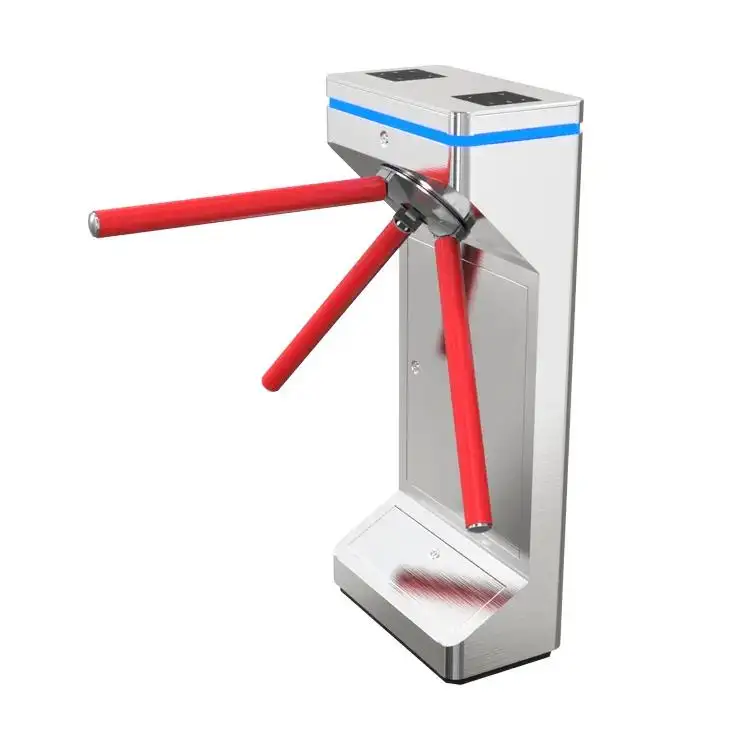
Turnstile Gate For Research Institutes is not just an “entrance machine”—it is a practical way to embed zoning into daily research operations, so people, samples, and visitors move with less risk and less friction. In many institutes, the real challenge is not “keeping everyone out.” It is guiding the right people to the right places, at the right time, with rules that stay consistent across shifts, teams, and building expansions.
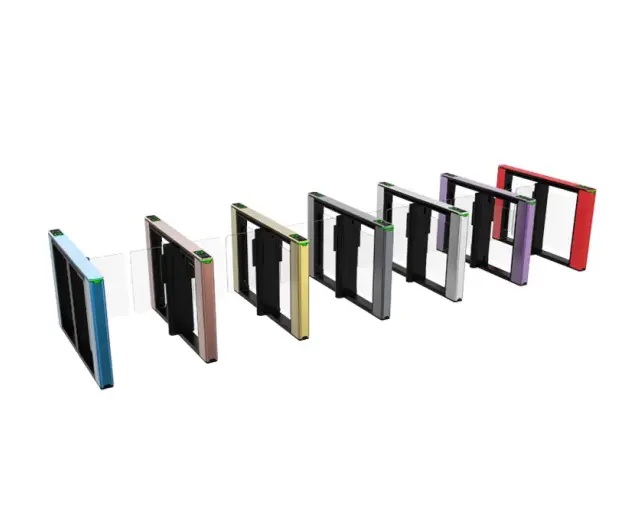
When zoning is done well, it protects sensitive work without turning access control into a daily obstacle course. From IRONMAN Intelligent’s manufacturing perspective, the most successful deployments treat turnstiles as workflow infrastructure: a visible boundary that makes policy repeatable, auditable, and easier to enforce—without asking staff to become security guards.
Why Labs Need Zoning Instead of One Door for Everyone
Research institutes are unlike typical office buildings. A single floor may hold public-facing meeting rooms, staff offices, shared corridors, instrument rooms, sample preparation areas, and restricted spaces such as chemical storage or data rooms. If everything is treated as one big open area, the building starts relying on memory and informal habits:
“Visitors should not walk past this corridor.”
“Deliveries usually take this route.”
“Only certain teams can access that room.”
These habits break easily when a new contractor arrives, a collaborator is guided by the wrong person, or staff rotate across shifts. Zoning is the system that prevents these small mistakes from stacking up into bigger issues.
A practical zoning plan typically separates four levels of access:
• Public/Visitor Zones (lobby, demo rooms, meeting rooms)
• Staff-Only Zones (office wings, internal corridors)
• Controlled Lab Zones (instrument rooms, sample prep, clean areas)
• High-Sensitivity Zones (restricted labs, data rooms, chemical storage)
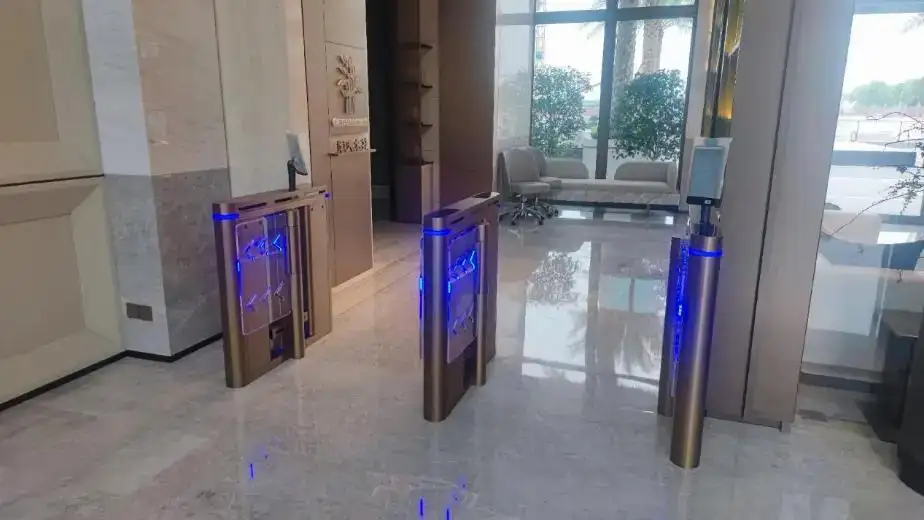
A Turnstile Gate For Research Institutes turns those zones into real boundaries. Instead of hoping people remember rules, you guide movement with clear lanes, visible authorization, and consistent enforcement.
What Zoning Means in Real Research Workflows
Zoning is often described as “security,” but in research settings it is also about quality habits and operational discipline. The goal is not to create fear or slow everyone down. The goal is to reduce accidental cross-traffic and keep daily routines stable.
Zoning Reduces Accidental Cross-Traffic
In research buildings, many risks begin as small errors:
• A visitor takes a wrong turn after a meeting,
• A new staff member follows a group into a controlled corridor,
• A delivery route cuts through a lab-adjacent hallway because it feels “shorter.”
Zoning prevents these events by design rather than by reminders.
✓ Clear visitor entry lanes help guests stay in approved spaces.
✓ Staff lanes keep routine movement smooth during peak times.
✓ Restricted lanes enforce authorization where consequences are higher.
Instead of constant human correction, the building itself “teaches” correct paths.
Zoning Makes Behavior Repeatable Across Shifts
Labs depend on repeatability: methods, calibration routines, documentation, and handover practices. Access control should match that mindset. If rules change depending on who is on duty, compliance becomes uneven and the site becomes harder to manage.
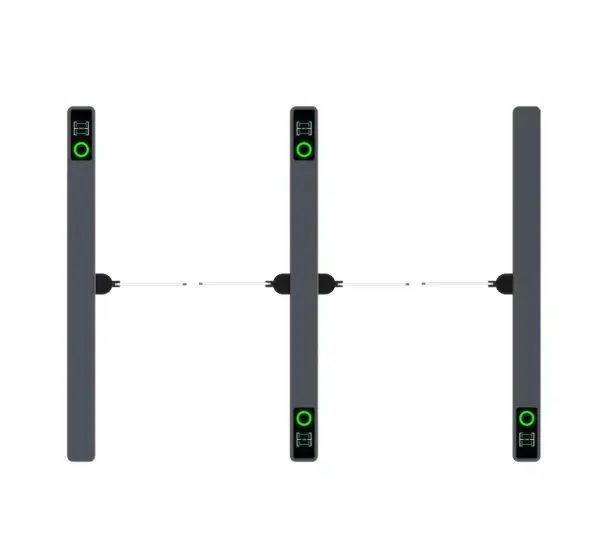
A well-configured Turnstile Gate For Research Institutes supports consistent enforcement with less training burden. Staff do not need to memorize complex “who goes where” rules. The boundary does the work, and the access record becomes part of operational clarity.
Where a Turnstile Gate Fits in a Research Institute Layout
From IRONMAN Intelligent’s manufacturing perspective, many institutes get better results by placing turnstiles at transition points between zones, not only at the main entrance. The “best” location is usually where behavior must change—where the building transitions from open movement to controlled movement.
Common boundary placements include:
• Lobby → Staff Corridors (first boundary)
• Staff Corridors → Controlled Lab Areas (second boundary)
• Controlled Labs → High-Sensitivity Rooms (third boundary)
This creates a layered access path. If someone lacks authorization, they stop at the correct boundary—not deep inside a sensitive area. That improves both safety and the quality of response when something goes wrong. It also reduces awkward moments where a visitor is corrected only after they are already near restricted spaces.
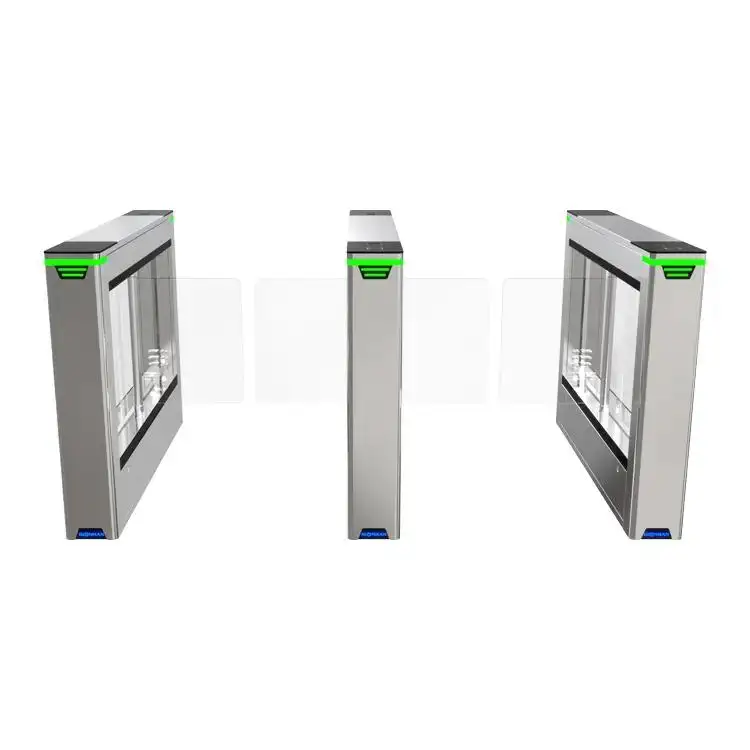
Throughput matters, too. Zoning only works when normal operations remain comfortable. IRONMAN Intelligent speed gate configurations are commonly positioned as high-throughput solutions, with passing speed up to ≤45 people per minute in suitable setups—helping zoning feel like a routine, not a bottleneck during shift changes or meeting rushes.
What to Look for in a Turnstile Gate for Research Institutes
Zoning only works when the gate is reliable, readable, and easy to integrate into daily management. Below are selection points that matter in lab environments—especially where compliance, visitor control, and stable routines are priorities.
1) Stable Detection For Tailgating And Mis-Entry
A lab environment needs predictable detection logic, not “sometimes it catches, sometimes it misses.” Tailgating (two people passing on one authorization) is especially damaging to zoning because it breaks the boundary rule without showing an obvious failure.
IRONMAN Intelligent’s smart speed gate designs highlight 8-point infrared sensing, with options to expand to 12 pairs, supporting stronger lane monitoring logic. In practical terms, this helps sites enforce single-person passing, reduce mis-entry, and keep boundary behavior consistent even when traffic gets busy.
2) Durable Materials For Continuous Use
Research institutes may have steady daily traffic across multiple shifts. A gate should not look worn after one year, and it should not become a high-maintenance “special device” that staff avoid.
IRONMAN Intelligent commonly specifies SUS 304 stainless steel with 1.5 mm thickness on speed gate configurations. For institutes, this is a practical baseline: it supports long-term appearance, durability against frequent contact, and stable structure in corridors where movement is constant.
3) Throughput That Does Not Punish Normal Operations
If an access system slows people down, the system gets bypassed. That defeats zoning. Staff will “hold the lane open,” route around the gate, or create informal exceptions that become the real process.
A passing speed up to ≤45 people/min supports smoother movement during:
• Shift changes,
• Meeting start times,
• Lunch peaks,
• Shared corridor surges between labs and offices.
Zoning should feel like traffic guidance, not traffic punishment.
4) Passage Width That Matches Real Users And Equipment
Research staff do not only carry laptops. They carry sample containers, PPE packs, small carts, and sometimes portable devices. If the passage width is too narrow, staff will reroute or treat the gate as “not for lab work.”
IRONMAN Intelligent lists a standard passage width range of 550–1300 mm, which helps planners match lanes to real movement needs. Many sites use a mixed layout: standard lanes for individuals, wider lanes for carts or accessibility, and controlled rules for what can pass through which boundary.
How Integration Makes Zoning Practical, Not Complicated
A Turnstile Gate For Research Institutes is only “smart” if it fits into your authentication and management process. Many institutes also need mixed identities, not one universal method.
From IRONMAN Intelligent’s product direction, typical integration paths include:
• RFID for daily staff access,
• Face recognition for higher-assurance entry where needed,
• QR scanning for approved visitors or temporary passes,
• Plus common interfaces such as RS485 and relay connections to support system integration.
This matters because research sites often have layered identity requirements:
✓ Staff badges for routine movement.
✓ Temporary QR codes for visitors, vendors, and collaboration teams.
✓ Higher-assurance checks for restricted zones where the risk is higher.
Drive stability is another “quiet” requirement that becomes very loud when it fails. IRONMAN Intelligent lists brushless DC motor or servo motor options, and highlights a 30M+ cycles maintenance-free drive on relevant speed gate products. For zoning, this is operational stability: fewer interruptions, fewer manual overrides, and less staff time spent managing exceptions.
Power compatibility also affects rollout speed. An input range such as AC110–220V (50/60Hz) supports international deployment without forcing unusual electrical redesign—useful for institutes with mixed building standards or multi-site planning.
Practical Rollout Plan and CTA for 2026 Projects
A zoning upgrade succeeds when it is rolled out in steps. In 2026, many institutes are upgrading access control while expanding lab footprints, reorganizing research teams, or hosting more external collaboration. IRONMAN Intelligent (established in 2014 in Shenzhen, per company positioning) focuses on pedestrian turnstile equipment and customized solutions—aligned with the reality that research sites are rarely “one-size-fits-all.”
A practical rollout approach is:
✓ Start with the first boundary (lobby → staff zone) to stabilize visitor routing and reduce wrong-turn events.
✓ Add controlled lab zone boundaries once staff habits are formed and the daily flow is stable.
✓ Upgrade high-sensitivity zones last, after you confirm peak traffic patterns, exception handling, and the best identity assurance level.
This step-by-step path reduces operational shock. It also helps your team learn what “good zoning” looks like in your specific building—because every institute has different movement patterns, collaboration intensity, and corridor geometry.
CTA (Call-to-Action)
If you are planning a Turnstile Gate For Research Institutes zoning upgrade in 2026, contact IRONMAN Intelligent with your site layout (zone boundaries), preferred authentication method (RFID/face/QR), target passage width (within 550–1300 mm), and expected peak throughput. We will recommend a lane strategy, share a configuration built around stable sensing and durable materials, and provide a manufacturing-ready quotation plan for repeatable deployment across your campus.
