


Turnstile Gate For Universities: Layout, ADA, And Throughput 101
2026-02-26


Turnstile Gate For Universities is no longer "just a gate." In 2026, it is a small, data-driven checkpoint that must balance campus openness with safety, accessibility, and peak-hour efficiency.
1) Why University Entrances Need a Different Layout Logic
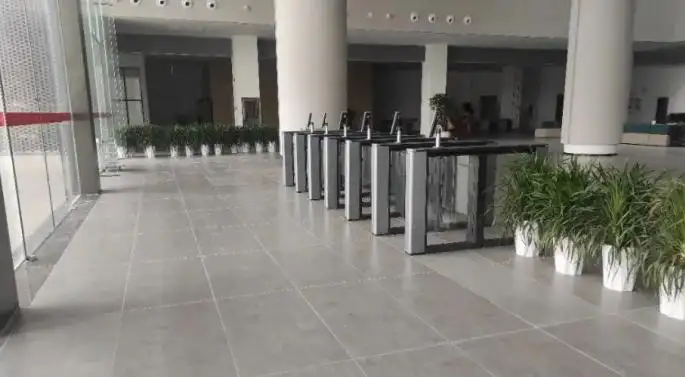
Universities are not like office towers. Traffic is bursty and schedule-driven: class changes, events, dining rush, and dorm access waves. A good Turnstile Gate For Universities layout starts with one question: Where will queues go when the peak hits? If the answer is "into a stairwell," "across a fire exit," or "blocking reception," the layout will fail in real use.
From IRONMAN Intelligent’s manufacturing perspective, layout success is usually decided by three practical zones:
✓ Approach zone: enough space for students to slow down, tap, and pass without sudden stops
✓ Decision zone: clear "in / out / accessible lane / visitor help" cues to reduce hesitation
✓ Recovery zone: space after passage so people do not stop immediately and cause backflow
You can reduce congestion simply by separating "fast repeat users" (students and staff) from "help-needed users" (visitors, deliveries, temporary passes). This is not about being strict. It is about keeping the flow calm and predictable.
2) Throughput 101: What "People Per Minute" Really Means
Throughput is often written as a headline number, but it is not a single truth. It depends on authentication time, behavior, lane design, and the "friction" created by alarms or unclear rules.
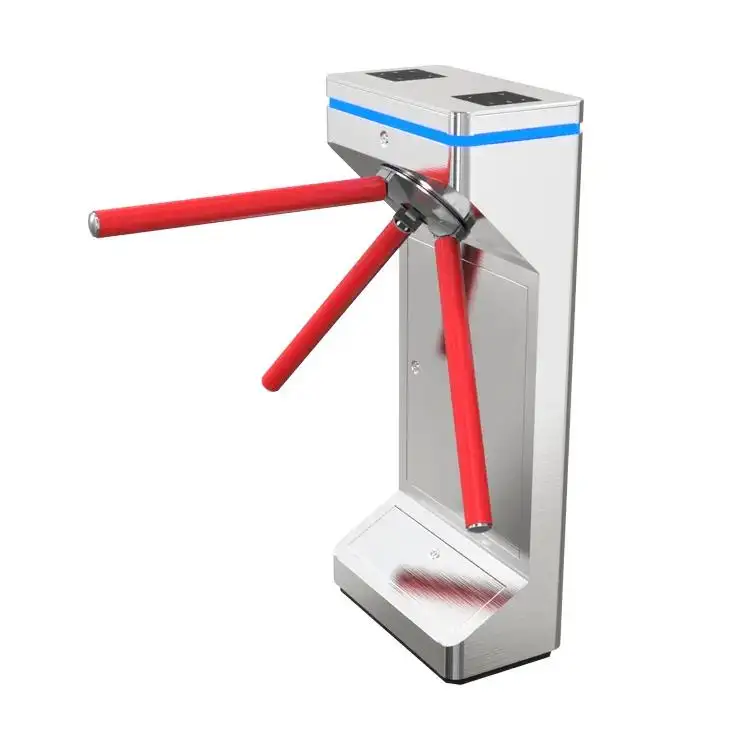
Industry references commonly describe tripod turnstiles around 30–40 passages per minute in suitable conditions, while optical/speed gate solutions can be higher depending on barrier style and workflow. For some deployments, a practical rule is to treat the stated throughput as a best-case rate, then plan capacity using a more conservative rate during peaks.
Here is the practical way to size a Turnstile Gate For Universities entrance:
• Estimate peak arrivals (for example, a lecture hall release or dorm return window).
• Decide the target queue time (many campuses aim to prevent lines from spilling into public walkways).
• Choose lane types based on security level and desired speed, then add at least one accessible lane (more on that below).
A high-throughput lane is not always the right answer. If false alarms rise, staff intervention increases, and the real throughput drops. A balanced design wins.
3) ADA And Accessible Route Basics You Cannot "Patch Later"
Accessibility is not a marketing checkbox. It is a design constraint that should be planned from day one.
The U.S. Access Board guidance for doors and gates under the ADA framework shows a minimum 32-inch clear width requirement, measured with the door/gate open 90 degrees, and notes that deeper openings may require 36 inches. This matters because an "accessible lane" is not only about a wider opening. It is also about approach, turning space, and operational ease.
Accessible Lane Rule: Provide a Real Alternative, Not a Token
The 2010 ADA Standards state that turnstiles shall not be part of an accessible route, which is why accessible access must be provided through a compliant opening or gate option. In campus terms, this means: if the main entry is controlled by standard turnstile lanes, you still need an accessible path that is equally clear and usable.
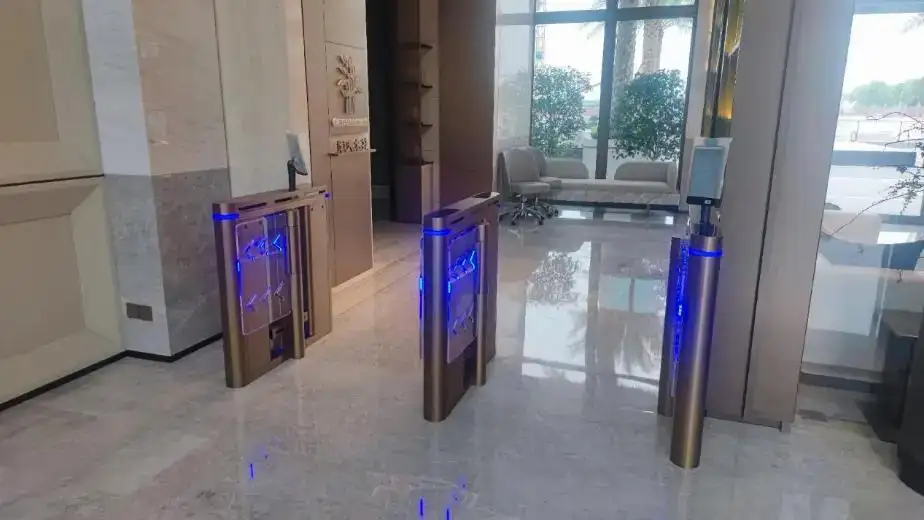
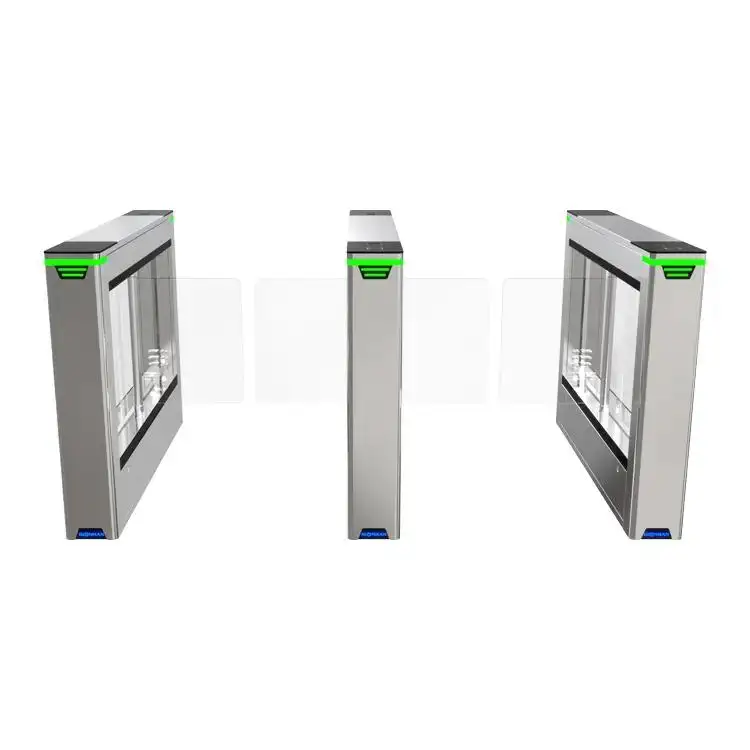
From a practical deployment view, campuses often choose an ADA-friendly swing gate lane paired with optical detection. Many swing gate solutions explicitly reference configuring lane width starting from the ADA minimum.
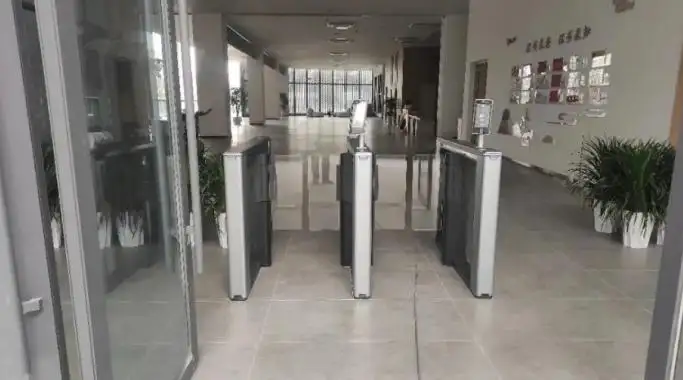
4) Layout Patterns That Work For Dorms, Libraries, and Sports Venues
A Turnstile Gate For Universities solution is rarely "one model fits all." Different buildings need different patterns.
Dorm Entrances (High Frequency, Repeat Users)
Dorms benefit from fast, quiet operation and clear anti-tailgating logic. Students pass many times per day. Your best layout is usually straight-line flow, minimal decision points, and strong "one credential, one entry" behavior.
✓ Put the help station on the side, not in front of the lanes
✓ Keep the recovery zone open so students don’t stop and chat right after passing
✓ Use lane indicators that are readable from a distance
Libraries and Academic Buildings (Mixed Users, Visitor Volume)
Libraries are a blend of students, faculty, guests, and sometimes community users. Here, the layout should reduce embarrassment and confusion. If visitors regularly trigger alarms, staff will override more often, and security becomes "soft."
A practical approach is to separate lanes by user type and signage, and keep an accessible lane clearly marked and equally convenient.
Stadiums and Event Venues (Short Peak Window, Maximum Burst)
Events are throughput stress tests. Even when equipment can process high rates, the credentialing step becomes the bottleneck. Plan for additional lanes, wide queue channels, and clear entry rules. Speed without clarity creates disorder.
5) Integration and Operations: The Hidden Part of Throughput
People often blame gates for slow entry, but delays are usually caused by "upstream" issues: slow card reads, inconsistent permissions, or unclear visitor processes.
IRONMAN Intelligent typically advises universities to treat the gate as one component in a system:
✓ Credential speed: stable RFID/QR/mobile workflows reduce hesitation and retries
✓ Permission logic: clear rules for staff, students, guests, and time schedules
✓ Alarm handling: define what staff should do when an alert triggers (ignore, verify, or block)
When policies are clear, throughput improves even without changing hardware. When policies are vague, even the best hardware becomes a choke point.
6) A Simple 2026 Checklist and a Practical CTA
When you plan Turnstile Gate For Universities, aim for three outcomes: predictable flow, compliant accessibility, and manageable operations.
A quick buyer checklist:
✓ Layout: approach + decision + recovery zones are physically protected from spillover
✓ ADA: accessible route is real, obvious, and meets clear-width expectations
✓ Throughput planning: choose lane types based on behavior and credential speed, not only brochure numbers
✓ Operations: visitor flow, exceptions, and alarm response are defined before commissioning
CTA (Call-to-Action)
If you are specifying a Turnstile Gate For Universities project for 2026—new campus buildings, dorm retrofits, library upgrades, or stadium entry—contact IRONMAN Intelligent with (1) your peak-hour entry estimate, (2) required accessible lane plan, (3) credential type (RFID/QR/mobile), and (4) available installation width and queue depth. We will recommend a practical lane layout, propose an ADA-ready access path, and provide a manufacturing-ready configuration that supports stable throughput and consistent daily operation.
