


Stainless Steel Turnstile Gate: Grades, Gate Types, and How to Specify the Right One
2026-03-20


A stainless steel turnstile gate is the standard for any access control deployment that must survive years of continuous use, daily cleaning, weather exposure, or public-facing traffic loads. But "stainless steel" on a spec sheet covers three meaningfully different material grades — SUS201, SUS304, and SUS316 — and choosing the wrong grade for your environment is one of the most common and most expensive specification mistakes in access control procurement.
This guide explains the grade differences, maps them to gate types and environments, and gives you a clear framework for selecting the right stainless steel turnstile gate for your specific deployment.
Why Stainless Steel — and Why Grade Matters
Stainless steel resists corrosion, handles cleaning chemical exposure, maintains a professional finish under daily public contact, and carries mechanical loads over millions of cycles without surface degradation that affects performance or appearance.
Powder-coated mild steel doesn't. After 12–18 months of daily use in a high-traffic lobby, powder-coated surfaces show chip marks, scratch lines, and surface rust at impact points. A stainless steel turnstile gate ages cleanly — surface finish degradation is minimal under normal cleaning regimes.
The grade decision matters because the three stainless steel grades used in turnstile gate manufacturing have different chemical compositions, different corrosion resistance profiles, and different appropriate environments:
- SUS201: Higher manganese content, lower nickel. Lower cost. Acceptable for arms and indoor internal components. Not appropriate for outdoor cabinets in humid or coastal environments
- SUS304: 18% chromium, 8% nickel. Commercial standard. Appropriate for indoor and semi-outdoor environments, and most industrial indoor deployments. The minimum acceptable cabinet grade for any commercial stainless steel turnstile gate
- SUS316: Adds molybdenum to the SUS304 formula. Dramatically higher chloride resistance. Required for coastal environments, marine facilities, food processing areas, and industrial sites with airborne chemical exposure
Stainless Steel Grade by Environment: The Right Match
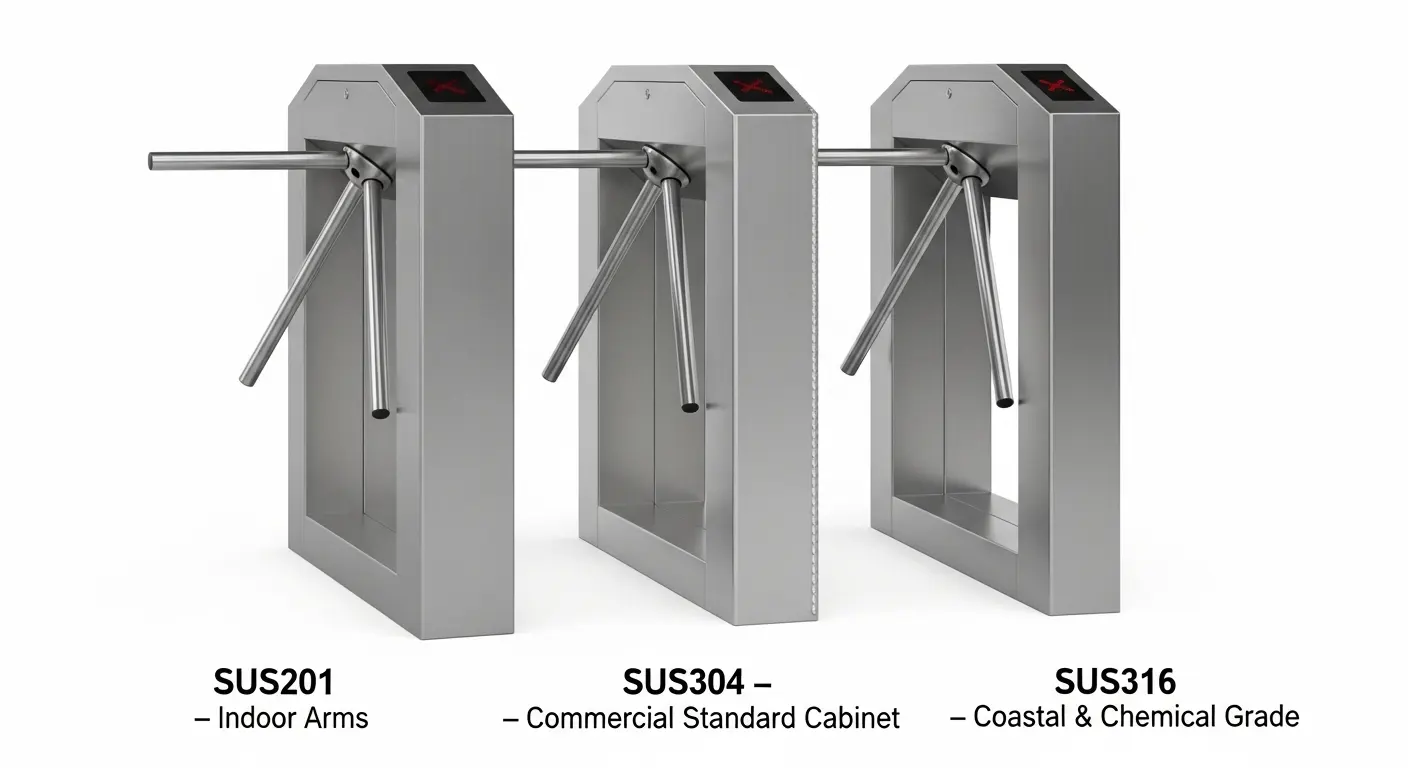
Use this matrix to confirm which grade suits your deployment:
| Environment | Cabinet Grade | Arms Grade | Why |
|---|---|---|---|
| Indoor commercial (office, hotel, mall) | SUS304, 1.2mm+ | SUS201 or SUS304 | Light chemical exposure, climate-controlled, moderate traffic |
| Indoor high-traffic (transit, hospital, gym) | SUS304, 1.5mm full-weld | SUS304 | High daily cycle count, cleaning chemical frequency, physical impact loads |
| Semi-outdoor (covered canopy, parking structure) | SUS304, 1.5mm full-weld | SUS304 | Humidity, airborne dust, temperature variation — needs stronger wall |
| Fully outdoor (uncovered) | SUS304, 1.5mm full-weld + IP54 | SUS304 | Direct rain, UV, temperature swing — wall thickness and IP sealing both critical |
| Coastal or marine | SUS316, 1.5mm full-weld | SUS316 | Salt air chloride attack — SUS304 will corrode within 2–5 years |
| Food processing / pharma / chemical industrial | SUS316, 1.5mm+ | SUS316 | Airborne chemicals, frequent high-pressure washdown |
| Winter outdoor (snow, ice cycling) | SUS304 or SUS316, 1.5mm full-weld + IP65 | SUS304 | Temperature cycling -30°C to +50°C, de-icing salt exposure |
Cabinet wall thickness is as important as grade. SUS304 at 1.0mm dents under impact and flexes under repeated mechanical loads — degrading IP sealing and misaligning sensor arrays over time. SUS304 at 1.5mm full-weld holds its form under industrial-grade use. Always request the wall thickness alongside the grade designation.
Types of Stainless Steel Turnstile Gate
Not every gate type is available in all three grades — and not every grade is necessary for every gate type. Here's how the major stainless steel turnstile gate types break down.
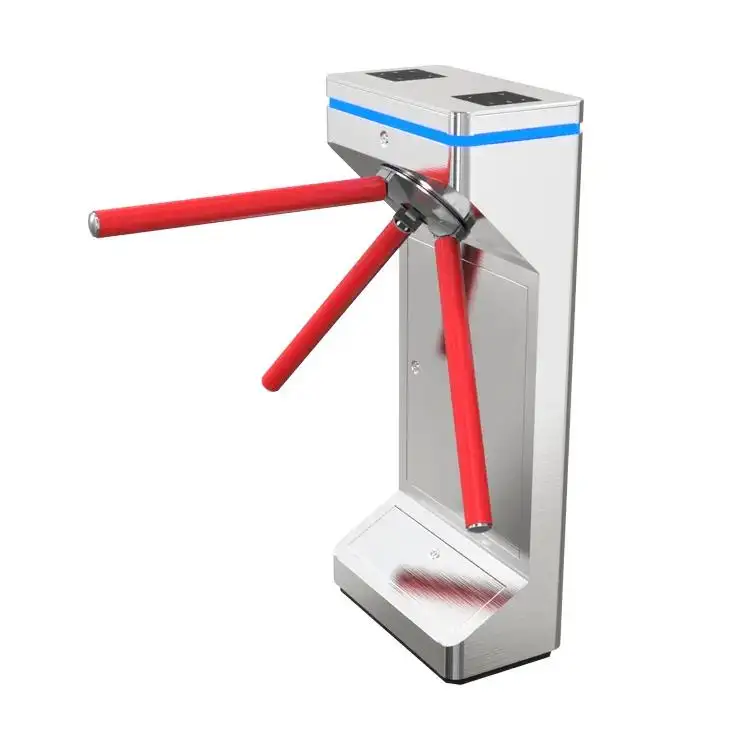
Stainless Steel Full Height Turnstile
A floor-to-ceiling rotating arm gate built from SUS304 or SUS316 full-weld construction. Used at the highest-security perimeter entry points — prisons, military facilities, power stations, pharmaceutical manufacturing sites. The stainless steel full height turnstile eliminates climb-over bypass through height rather than sensor detection — no amount of sensor sophistication prevents a determined climber the way a 2,100–2,300mm physical barrier does.
For full height models in coastal or outdoor industrial environments, SUS316 is the appropriate specification — SUS304 will develop surface corrosion on weld seams and arm pivot points within 3–5 years in chloride-heavy air, even with regular cleaning.
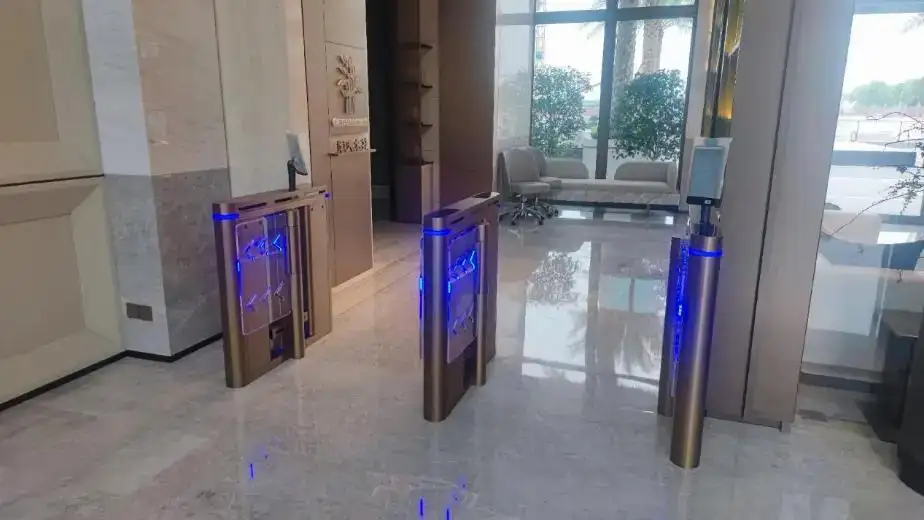
Stainless Steel Swing Barrier Gate
SUS304 full-weld cabinet with tempered glass or polycarbonate panels. The panel material choice affects appearance and impact resistance — tempered glass provides a premium finish for hotel and corporate lobby deployments; polycarbonate provides higher impact tolerance for public transport and sports venue deployments.
A stainless steel swing barrier gate in brushed SUS304 finish suits premium indoor environments where the turnstile gate is architecturally visible — lobby designers and interior architects frequently specify brushed SUS304 because it holds its appearance under direct lighting without glare, fingerprint marking, or surface finish drift.
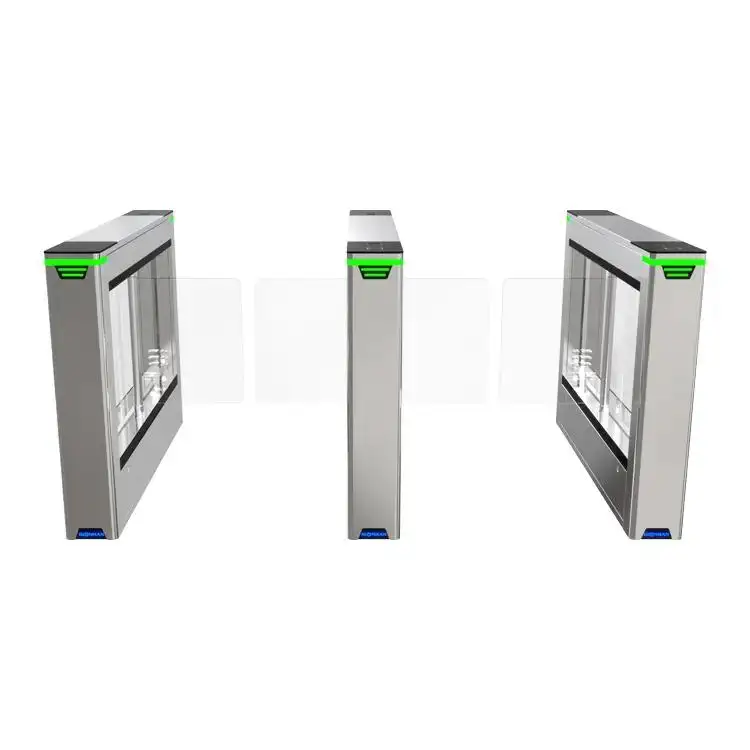
Stainless Steel Speed Gate
The premium lobbying aesthetic gate. SUS304 or SUS316 columns in a slim profile (typically 180–250mm column width) with tempered glass panels. A stainless steel speed gate processes 50–80 persons per minute and is the standard choice for financial services headquarters, premium hotel lobbies, government ministry entry halls, and premium co-working spaces where gate appearance and throughput both carry weight.
The stainless steel column profile on a speed gate is architecturally prominent — it sits at eye height and is physically touched by every passing user. For high-touch environments, SUS304 brushed finish at 1.5mm+ wall thickness holds up under years of daily cleaning without surface finish degradation.
An optical speed gate in stainless steel combines premium column construction with 10–16 infrared sensor pairs — giving the aesthetic of a designer installation the detection accuracy of an industrial-grade access control system.
Stainless Steel Turnstile Gate and Credential Options
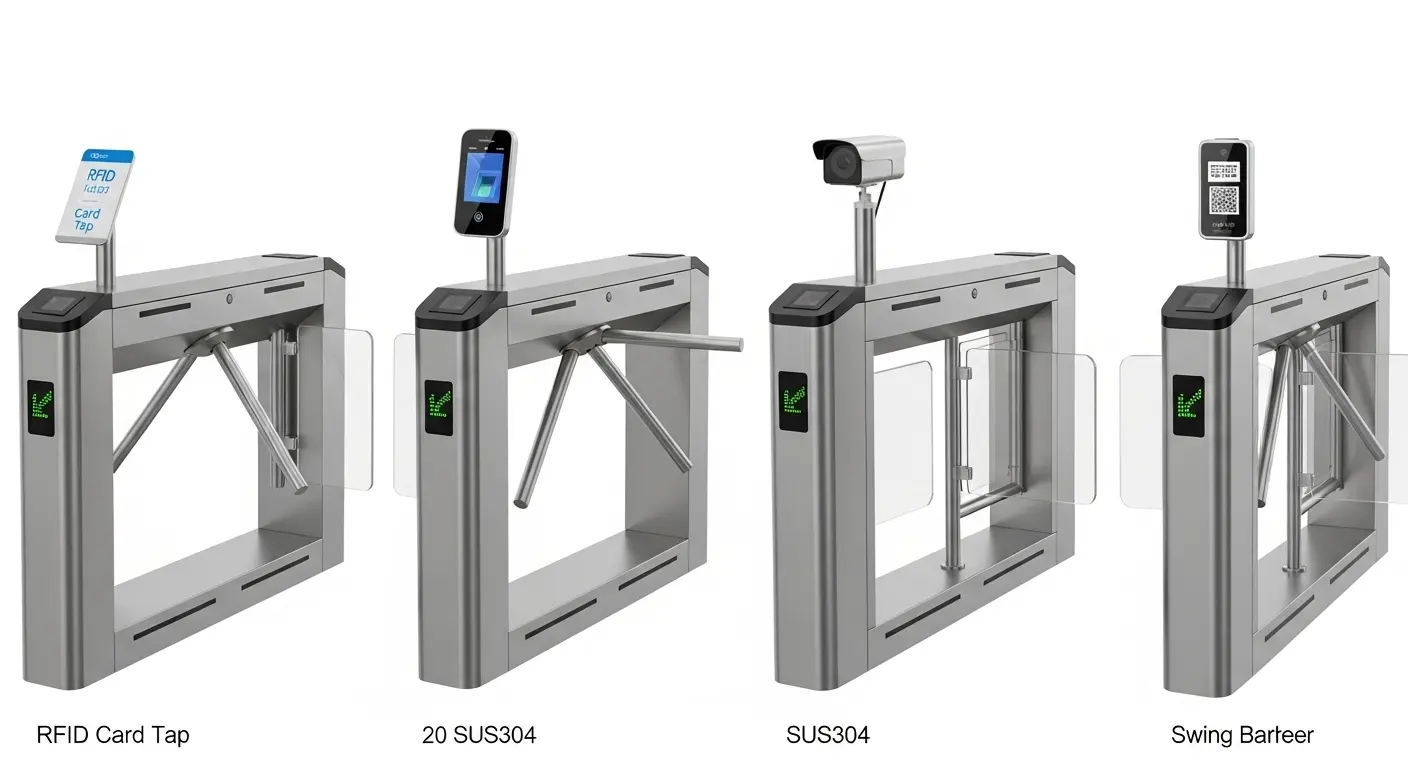
Material grade determines whether a stainless steel turnstile gate survives its environment. Credential type determines whether it suits the population passing through it.
The most common credential pairings with stainless steel turnstile gates:
RFID Card and Mobile Credential
The standard for corporate and campus deployments. The RFID reader mounts on or alongside the stainless steel cabinet, protected by the same IP rating as the gate. For industrial sites where workers wear PPE, UHF long-range RFID eliminates card-tap requirements.
Biometric (Fingerprint and Face Recognition)
For environments where individual identity verification is required alongside physical turnstile gate access — pharmaceutical facilities, data centers, financial clearing houses — a biometric turnstile gate with fingerprint scanner in a stainless steel cabinet combines the durability of SUS304 construction with credential verification that a shared RFID card cannot provide. Face recognition cameras mounted on the stainless steel column eliminate physical credential handling entirely.
Barcode and QR Code
For event venues, stadiums, tourist attractions, and transport hubs where single-use or limited-use tickets control access, a barcode turnstile gate in stainless steel handles high-volume transient traffic without the credential management overhead of a card-based system. Barcode readers are factory-fitted into the stainless steel column at the correct ergonomic height — one unit, one scan, one passage.
Stainless Steel Turnstile Gate for Outdoor and Seasonal Environments
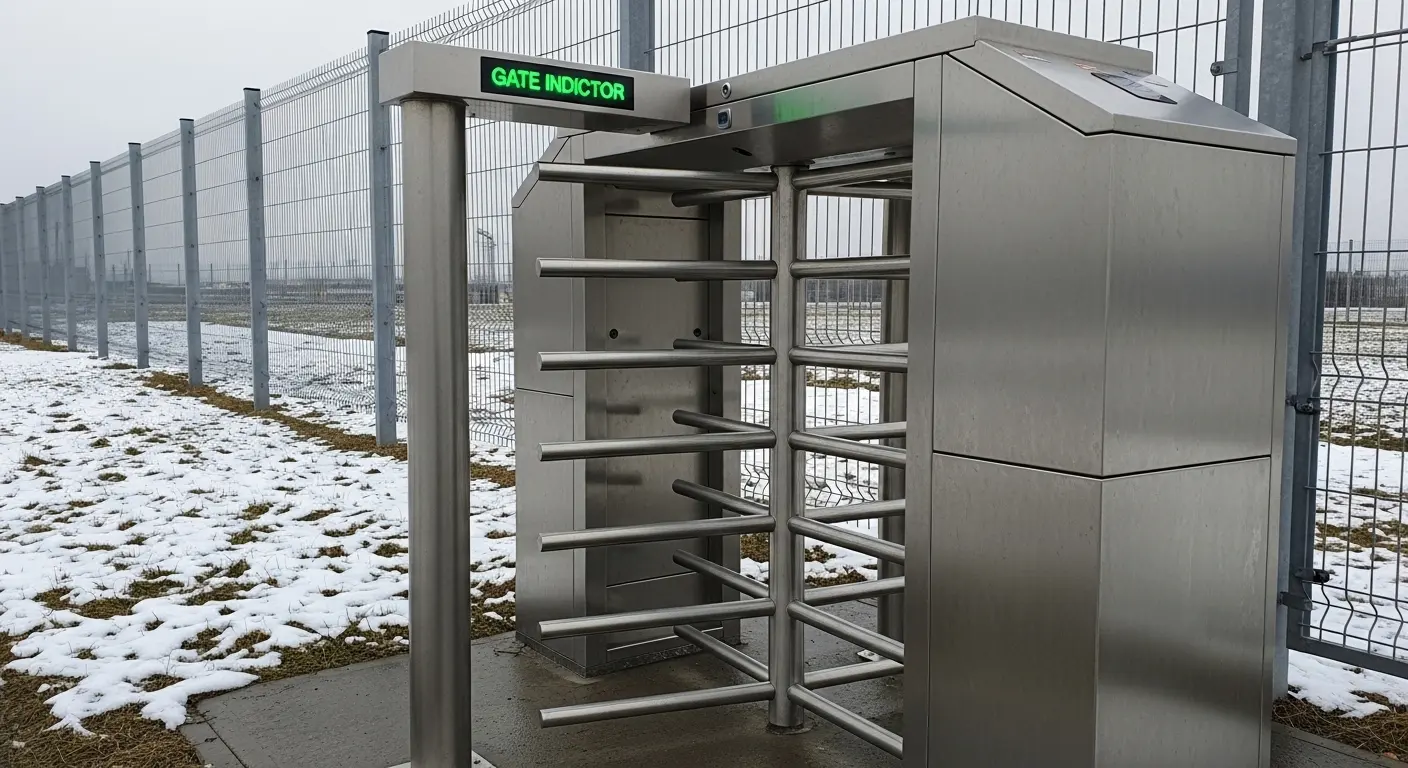
Most stainless steel turnstile gate content focuses on indoor corporate lobby applications. Outdoor and seasonal deployments have different demands — and the specification changes accordingly.
Winter and Snow Environments
A snow gate turnstile addresses the specific challenge of outdoor turnstile deployment in climates where temperatures drop to -20°C or below, where ice formation in panel mechanisms creates false-close events, and where de-icing chemicals (salt, calcium chloride) create aggressive corrosion conditions. In these environments, SUS304 1.5mm full-weld construction with IP65 rating and a heated electronics compartment is the correct specification — not a standard indoor SUS304 model relocated to an outdoor site.
Coastal and Marine Sites
Salt air attacks bare SUS304 along weld seams and at fastener points — creating surface rust at structural joints within 2–5 years depending on proximity to the sea. SUS316 with passivation treatment and full-weld construction is the baseline for any stainless steel turnstile gate within approximately 1km of a saltwater coastline. For sites directly on the seafront — ferry terminals, marine fuel stations, offshore facility access — SUS316 L (low carbon) with electropolishing is the appropriate specification.
Food Processing and Pharmaceutical Facilities
Daily high-pressure washdown with detergent and occasionally acidic cleaning agents requires SUS316 construction with fully sealed bearing assemblies and IP65 electronics. Exposed fasteners should be captive stainless steel — no mild steel bolts or zinc-plated fixings in the wetted zone.
Cloud-Connected Stainless Steel Turnstile Gate Management
A stainless steel turnstile gate is a long-term infrastructure investment — the cabinet material determines service life in years, but the software platform determines whether the gate produces useful operational data throughout its life.
A cloud-based turnstile gate management system connected to a stainless steel turnstile gate installation provides browser-based access to real-time passage counts, anti-tailgating alarm events, fire alarm override logs, time-and-attendance records, and individual gate health status — across all sites and all gates from a single interface, without requiring an on-site server.
For multi-site organizations — retail chains, campus networks, government departments — this means one platform manages stainless steel turnstile gate deployments across 10, 50, or 200 locations, with individual gate events pushing to a central database in real time. For security audits or compliance reviews, the complete access event history is exportable in standard formats without local data retrieval visits.
The stainless steel exterior survives decades. The management platform makes those decades operationally useful rather than just physically durable. For a complete look at the full range of turnstile gate types and configurations, the turnstile gate overview covers all current gate types with specification summaries and application guidance.
Frequently Asked Questions About Stainless Steel Turnstile Gates
Q: What is the best stainless steel grade for a turnstile gate?
A: SUS304 is the commercial standard — correct for indoor commercial, office, hotel, hospital, and standard outdoor deployments with an IP54 rating. SUS316 is required for coastal environments, marine sites, food processing facilities, and anywhere with regular chemical exposure or salt air. SUS201 is acceptable for rotating arms in indoor gates but should not be used for the cabinet in any environment where corrosion is a concern.
Q: What wall thickness should a stainless steel turnstile gate cabinet have?
A: Commercial-grade: minimum 1.2mm SUS304. Heavy duty and outdoor: 1.5mm SUS304 full-weld construction. Thinner walls (0.8–1.0mm) dent under impact loads, flex under repeated mechanical stress from the drive mechanism, and degrade IP sealing faster — leading to sensor misalignment and electronics moisture ingress before the mechanical components reach their rated cycle life.
Q: What is the difference between a full-weld and assembled stainless steel turnstile gate?
A: A full-weld cabinet is constructed as a single welded unit — all panels and joints are welded and then ground smooth. An assembled cabinet uses fasteners (bolts, rivets, and brackets) to join panels. Full-weld provides better structural rigidity, superior IP sealing (no fastener points for water ingress), and a cleaner surface finish. For any outdoor or high-cycle deployment, full-weld is the correct specification.
Q: Can a stainless steel turnstile gate be used outdoors without a canopy?
A: Yes, with the correct specification. An IP54-rated SUS304 1.5mm full-weld gate handles semi-outdoor conditions. For fully exposed outdoor environments, IP65 with sealed bearing assemblies is required. For coastal environments, SUS316 replaces SUS304 regardless of IP rating. A canopy extends electronics service life significantly by reducing direct rain and condensation exposure — even on a correctly rated outdoor stainless steel turnstile gate.
Q: How do I verify that a stainless steel turnstile gate is genuinely SUS304?
A: Request a material test report — a mill certificate or third-party material analysis certificate for the steel used in the cabinet. The certificate confirms the chemical composition (chromium %, nickel %, carbon %) against the SUS304 standard. Ask the supplier to include the certificate with the order. Any supplier unable to provide a mill certificate on a commercial order is either unable to trace their material supply or unwilling to disclose the actual grade.
