


Tempered Glass Speed Gates: Elegant Design Meets Security
2025-10-27


When you envision a modern, high-tech speed gate managing access in a sophisticated corporate lobby, what material comes to mind for the moving barriers? Almost invariably, it's glass. Sleek, transparent, and seemingly delicate, glass might initially appear counterintuitive for a security device. Yet, it has become the undisputed standard for the barriers in virtually all high-end speed gate systems.

This isn't just any ordinary window pane, however. The barriers of these advanced systems are crafted from a specific type of safety glass known for its remarkable strength and unique breakage pattern: tempered glass. The use of tempered glass is a deliberate choice, a perfect example of how innovative Design & Technology converge to create solutions that are simultaneously secure, safe, functional, and aesthetically pleasing.
Why tempered glass? What makes this material uniquely suited for the demanding environment of a busy access point? Understanding the properties, benefits, and applications of tempered glass is essential for anyone involved in specifying, installing, or managing modern speed gate systems. This guide provides an expert, comprehensive exploration of the tempered glass speed gate, delving into the science behind the material and its critical role in balancing elegance with robust security.
What Is a Tempered Glass Speed Gate?
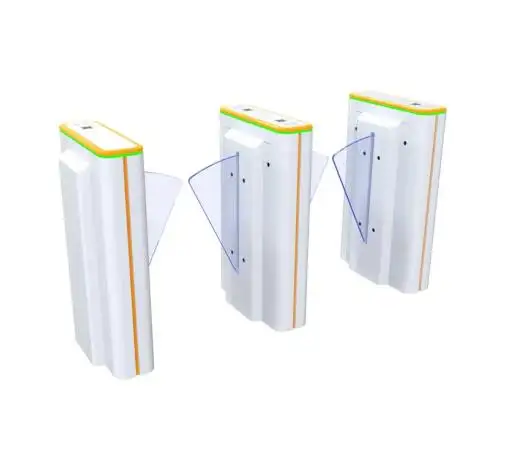
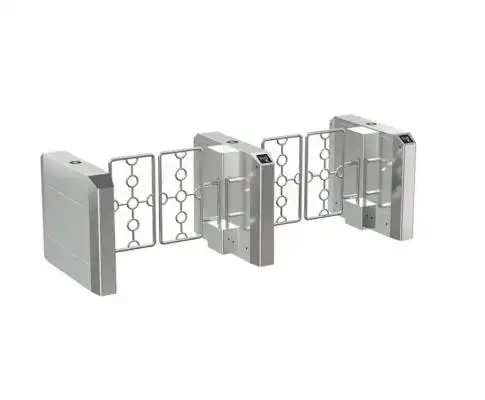
A tempered glass speed gate is an automated pedestrian barrier that utilizes panels made from tempered glass as its primary moving components (the wings, flaps, or arms). This specific type of safety glass is chosen for its significantly increased strength compared to standard glass and its characteristic way of shattering into small, relatively harmless pebbles upon breaking.
The use of tempered glass is fundamental to the gate's design, fulfilling multiple crucial roles. It provides a strong physical deterrent, maintains an open and welcoming aesthetic through its transparency, and, most importantly, ensures user safety in the unlikely event of a barrier shattering. It's the material that allows speed gates to be both secure obstacles and elegant architectural elements.
How Is Tempered Glass Different from Regular Glass?
Tempered glass is physically and thermally treated to be about four to five times stronger than standard annealed glass. Unlike regular glass which breaks into dangerous jagged shards, tempered glass is designed to shatter completely into small, dull-edged cubes when broken, significantly reducing the risk of injury.
The difference lies entirely in the manufacturing process:
- Cutting & Finishing: A piece of standard (annealed) glass is cut to the desired shape and size, and all edges are finished (polished or arrissed). Crucially, this must happen before tempering. Tempered glass cannot be cut or drilled after treatment.
- Heating: The glass is heated in a furnace to extremely high temperatures, typically above 600° Celsius (1112° Fahrenheit), past its annealing point.
- Rapid Cooling ("Quenching"): Immediately after heating, the outer surfaces of the glass are rapidly cooled with high-pressure air jets. The inner core of the glass cools much more slowly.
- Induced Stress: This differential cooling creates a state of high compression on the outer surfaces and high tension in the inner core. Think of it like a tightly wound spring held within a rigid outer shell.
This induced stress is what gives tempered glass its superpowers:
- Increased Strength: The high surface compression makes it much harder to break through bending, impact, or thermal shock.
- Safe Breakage Pattern: If an impact is strong enough to overcome the surface compression and penetrate to the inner tension layer, the stored energy is released catastrophically. The entire pane shatters instantly into those characteristic small, relatively harmless dice-like fragments (often called "dicing").
My Experience: "I once witnessed a (non-malicious) incident where a heavy piece of equipment accidentally struck a speed gate barrier hard enough to break it. Instead of terrifying shards flying everywhere, the entire tempered glass panel simply crumbled into a pile of small, granular pieces on the floor. It was a perfect demonstration of why this safety feature is absolutely non-negotiable in a public space."
Why Is Tempered Glass the Preferred Choice for Speed Gate Barriers?
Tempered glass is preferred due to its optimal combination of strength (resisting accidental impacts and minor vandalism), safety (shattering harmlessly if broken), clarity (maintaining an open aesthetic), and durability (resisting scratches better than acrylic). It provides the necessary physical barrier without creating a visually heavy or opaque obstruction.
Let's break down these advantages in the context of a busy lobby:
- Safety First: In a high-traffic pedestrian environment, safety is paramount. The risk of injury from broken glass shards is unacceptable. Tempered glass's unique dicing breakage pattern is its single most important attribute for this application.
- Necessary Strength: While not designed to stop a determined attacker with tools, the increased strength of tempered glass is sufficient to withstand accidental bumps from luggage, cleaning equipment, or careless individuals, preventing easy breakage and maintaining the security barrier.
- Aesthetic Imperative: In modern architectural design, particularly in Class-A office buildings or high-end commercial spaces, maintaining a sense of openness and light is crucial. Glass barriers achieve this perfectly, integrating security without creating a visually closed-off or "fortress-like" feel. Opaque materials like metal or wood would feel heavy and unwelcoming.
- Clarity and Visibility: Transparent barriers allow security personnel and reception staff to maintain clear sightlines across the lobby, enhancing situational awareness.
- Scratch Resistance: Compared to alternative transparent materials like acrylic or polycarbonate (which scratch very easily), glass offers superior surface hardness and retains its clarity much longer under normal use and cleaning.
- Cleanability: Glass is easy to clean and maintain using standard cleaning products, important for maintaining a professional appearance.
While other materials exist (like polycarbonate for extreme impact resistance, seen in high-security settings), tempered glass hits the "sweet spot" for the vast majority of commercial and public speed gate applications.
How Thick Is the Tempered Glass Used in Speed Gates?
The thickness typically ranges from 10mm (approx. 3/8 inch) to 12mm (approx. 1/2 inch) for standard speed gate barriers (like swing or flap wings). Taller barriers, such as those used in high-security sliding gates, may use thicker glass, potentially up to 15mm or even 19mm (3/4 inch), for increased rigidity and impact resistance.
The choice of thickness is an engineering decision balancing several factors:
- Barrier Size & Span: Larger or taller barriers require thicker glass to maintain rigidity and prevent flexing or warping during movement.
- Impact Resistance Requirements: Higher security applications may specify thicker glass to withstand greater potential force.
- Weight: Thicker glass is significantly heavier. This impacts the required motor torque, the speed of operation, and the overall stress on the drive mechanism. Engineers must balance strength with weight to ensure reliable, high-speed operation.
- Aesthetics: While subtle, the edge thickness can be a visual element. Some designs might favor a specific thickness for aesthetic reasons.
For standard waist-high or chest-high swing or flap barriers in a typical commercial building entrance gate, 10mm or 12mm tempered glass provides an excellent balance of strength, safety, and manageable weight for high-speed operation.
Are There Different Types or Styles of Tempered Glass Used?
Yes, beyond standard clear tempered glass, options include low-iron glass (for ultra-clarity), tinted glass (for aesthetic coordination), frosted or etched glass (for privacy or branding), and even laminated tempered glass (for enhanced security and containment).
The aesthetic and functional possibilities allow architects and designers to tailor the gate's appearance:
- Clear Tempered Glass: The most common option, offering maximum transparency.
- Low-Iron Tempered Glass (Ultra-Clear): Standard clear glass has a slight greenish tint (visible on the edge). Low-iron glass removes most of this tint, resulting in exceptional clarity and color neutrality, often preferred in high-end architectural designs.
- Tinted Tempered Glass: Body-tinted glass (e.g., bronze, grey, blue, green) can be used to match other architectural glazing or create specific visual effects.
- Frosted (Acid-Etched or Sandblasted) Tempered Glass: Creates a translucent, matte surface that obscures direct visibility while still allowing light transmission. Can be used for privacy or aesthetic effect. Often applied to only a portion of the glass (e.g., a central band).
- Patterned or Textured Tempered Glass: Various textures or patterns can be rolled onto the glass surface before tempering for decorative effects.
- Custom Etching/Printing: Logos, patterns, or wayfinding information can be permanently etched or ceramic frit printed onto the glass surface before tempering. This allows for branding integration directly onto the barriers.
- Laminated Tempered Glass: This involves bonding two sheets of tempered glass together with a clear interlayer (like PVB or SGP). If the glass breaks, the interlayer holds the fragments together, providing enhanced safety and security (similar to a car windshield). This is less common for standard speed gate barriers due to increased weight and cost but might be used in higher-security applications or where containment after breakage is critical.
These options demonstrate how the design & technology of the gate can be customized through material choice.
How Are Tempered Glass Barriers Integrated into the Gate Mechanism?
Tempered glass barriers are typically integrated using specialized clamps, mounting brackets, or channel systems attached to the gate's motorized drive shaft or linkage. The mounting method must be secure enough to handle the forces of rapid movement while allowing for relatively easy replacement if the glass is damaged.
The connection point is a critical piece of engineering:
- Clamping Systems: Often use metal (stainless steel or aluminum) clamps with protective rubber or synthetic gaskets that grip the glass securely near its pivot point or base. Bolts pass through precisely pre-drilled holes in the glass (remember, drilling must happen before tempering).
- Channel Mounts: The edge of the glass might slide into a secure metal channel attached to the drive mechanism, often bonded with specialized adhesives or secured with set screws.
- Direct Drive Couplings: In some designs, the drive shaft might connect directly to a fitting bonded or clamped onto the glass itself.
Regardless of the method, the connection must:
- Be Strong: Withstand the torque and inertia of the barrier starting and stopping potentially thousands of times a day.
- Be Precise: Ensure the barrier aligns perfectly when closed and moves smoothly without wobble.
- Protect the Glass: Use gaskets or padding to prevent metal-on-glass contact, which could create stress points leading to breakage.
- Allow for Replacement: While secure, the design should facilitate the removal and replacement of a broken glass panel by a technician without needing to dismantle the entire drive system. This is a key benefit enhanced by
modular speed gate designprinciples.
Safety Considerations with Glass Barriers
While tempered glass is a safety material, considerations include ensuring proper edge finishing before tempering (to prevent stress risers), using appropriate thickness for the size, and implementing advanced sensor technology in the gate to prevent impacts between the barrier and users.
Safety is paramount when using large, moving panels of glass in a public space.
- Edge Finishing: Sharp or chipped edges on the glass before tempering can create weak points where fractures might initiate. Reputable manufacturers ensure all edges are smoothly finished (arrissed or polished).
- Proper Thickness & Size: Using glass that is too thin for a large barrier could lead to excessive flexing or potential breakage under normal operational stress. Engineers must specify appropriate thickness based on size and expected loads.
- Advanced Safety Sensors: The gate's own sensor system is crucial. High-density sensor arrays detect if a person is lingering in the pathway, preventing the barriers from closing on them. Motor torque sensors can also detect resistance (if a barrier bumps someone) and immediately stop or reverse the motion.
- Rounded Corners/Edges: Barrier designs often incorporate rounded corners rather than sharp 90-degree angles to minimize potential injury if someone were to accidentally walk into the edge of a moving or stationary panel.
- Visibility: While transparency is an aesthetic benefit, completely invisible barriers can be a hazard. Subtle edge markings, frosting, or logos can help make the glass more apparent to approaching users, preventing accidental collisions.
Maintenance and Cleaning of Tempered Glass Gates
Tempered glass barriers are relatively low maintenance, requiring only regular cleaning with standard glass cleaners and soft cloths. Abrasive cleaners or tools should be avoided. Periodic checks for chips or deep scratches, especially near edges or mounting points, are recommended as these could potentially compromise the glass's integrity over time.
- Cleaning: Use ammonia-free glass cleaner and microfiber cloths for best results. Avoid scraping with metal tools (like razor blades for paint removal), as this can cause scratches that weaken the glass.
- Inspection: Regularly inspect the glass surfaces and edges for any deep scratches, chips, or "shells" (small, crescent-shaped fractures near the edge). While tempered glass is strong, a significant flaw can potentially become a failure point under stress or impact. Pay close attention to the areas around mounting hardware.
- Hardware Check: Ensure mounting clamps or brackets remain tight and secure. Loose hardware can cause vibration and stress on the glass.
- Professional Assessment: If significant damage (deep scratches, large chips) is observed, it's wise to have it assessed by a qualified technician or glass expert to determine if replacement is necessary for safety.
Can Tempered Glass Barriers Be Customized?
Yes, tempered glass offers significant customization potential. Options include custom shapes and sizes (cut before tempering), various tints, frosting or etching (full or partial), ceramic frit printing (for logos, patterns, colors), and different edge finishes (polished, beveled).
This customization allows the tempered glass speed gate to become a true design element:
- Shapes: While rectangular is standard, barriers can be cut with curves or specific angles to match design motifs (provided this is done pre-tempering).
- Frosting/Etching: Can create privacy bands, decorative patterns, or simply make the glass more visible for safety. Acid-etching provides a smoother, more uniform finish than sandblasting.
- Ceramic Frit Printing: A durable method where ceramic-based paint is fused to the glass surface during the tempering process. Allows for permanent application of logos, text, gradients, or solid colors, offering vast branding and design possibilities.
- Edge Finishes: Standard is a flat polish. Beveled edges can add a touch of sophistication.
These customizations allow architects and designers to integrate the speed gates seamlessly into their overall vision, reinforcing the link between design & technology.
What is the Future of Glass in Speed Gate Design?
The future likely involves "smart glass" technologies, potentially integrating dynamic displays (e.g., for passenger information or advertising), switchable privacy glass (clear to opaque), or even embedded sensors directly within the glass barriers, making the gate even more intelligent and interactive.
- Switchable Privacy Glass (PDLC): Imagine barriers that are normally clear but can instantly turn opaque (frosted) via an electrical current. This could be used for temporary privacy, displaying messages, or indicating lane status in a novel way.
- Integrated Displays (Transparent OLED/LCD): Embedding transparent display technology within the glass could allow barriers to show dynamic information – flight details, company announcements, directional arrows, advertisements – without obstructing visibility when off.
- Embedded Sensors: Research into embedding touch sensors, presence detectors, or even energy-harvesting photovoltaic cells directly into architectural glass could eventually find its way into speed gate barriers, making them even "smarter" components.
- Stronger, Lighter Glass: Ongoing advancements in glass manufacturing may yield even stronger, yet potentially thinner and lighter, tempered or chemically strengthened glass options, allowing for faster barrier speeds or more minimalist designs.
The Final Verdict: The Clear Choice for Modern Access
The tempered glass speed gate stands as a prime example of how material science, engineering, and industrial design can collaborate to solve complex challenges. Tempered glass provides the essential combination of safety, strength, and aesthetic clarity that allows automated barriers to secure modern spaces without making them feel like fortresses.
Its unique properties – particularly its safe breakage pattern – make it indispensable in high-traffic pedestrian environments. Coupled with the advanced motors, sensors, and logic of modern speed gates, and the flexibility offered by approaches like modular speed gate design, tempered glass enables solutions that are effective, reliable, elegant, and safe. As technology continues to push the boundaries of what's possible in Design & Technology, tempered glass remains the clear, indispensable material defining the look and function of sophisticated access control.
