


Tripod Turnstile Gate: Types, Specs, and How to Choose the Right One
2026-03-13


A tripod turnstile gate is the most widely deployed pedestrian access control barrier in the world. It earns that position by being mechanically simple, highly durable, and easy to integrate with nearly any credential system — from RFID cards to facial recognition. If you're evaluating access control options for a factory, school, gym, transit station, or corporate facility, this guide gives you everything you need to make the right choice.
You'll find the types, specifications, comparisons, and real-world use cases — no filler, just the practical information that matters.
What Is a Tripod Turnstile Gate?
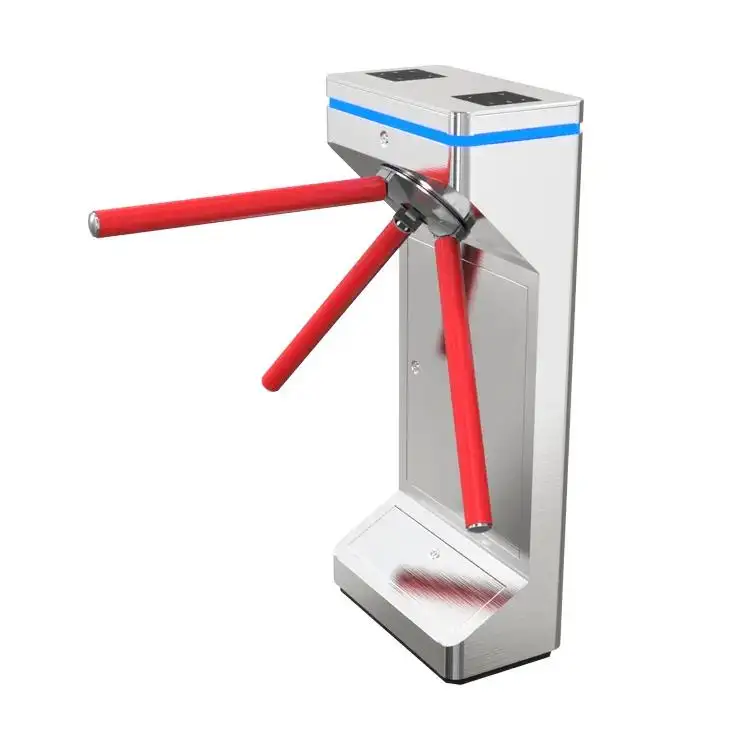
A tripod turnstile gate is a waist-height access barrier with three rotating arms, spaced 120 degrees apart. When a user presents a valid credential, one arm rotates forward to allow passage. The gate then resets and locks automatically. One credential equals one person through — and that's the core of its security value.
Unlike a door with a card reader, a tripod turnstile gate physically enforces individual entry. Tailgating is mechanically blocked by the arm itself, not just detected by software. Therefore, even in basic configurations without anti-tailgating sensors, the three-arm design provides a physical deterrent that no access-controlled door can replicate.
The key components inside every unit include:
- Stainless steel cabinet (chassis): SUS304 or SUS316, typically 1.0–1.2mm wall thickness for commercial grade
- Three rotating arms: Standard 500mm arm length, SUS304 steel
- Drive mechanism: Motor, gears, and transmission shaft — the most important component for long-term reliability
- Control board (PCB): Processes reader signals, manages arm timing, and handles access protocols
- Direction indicator lights: Green (access granted) or red (denied), visible instantly in busy lanes
How a Tripod Turnstile Gate Works
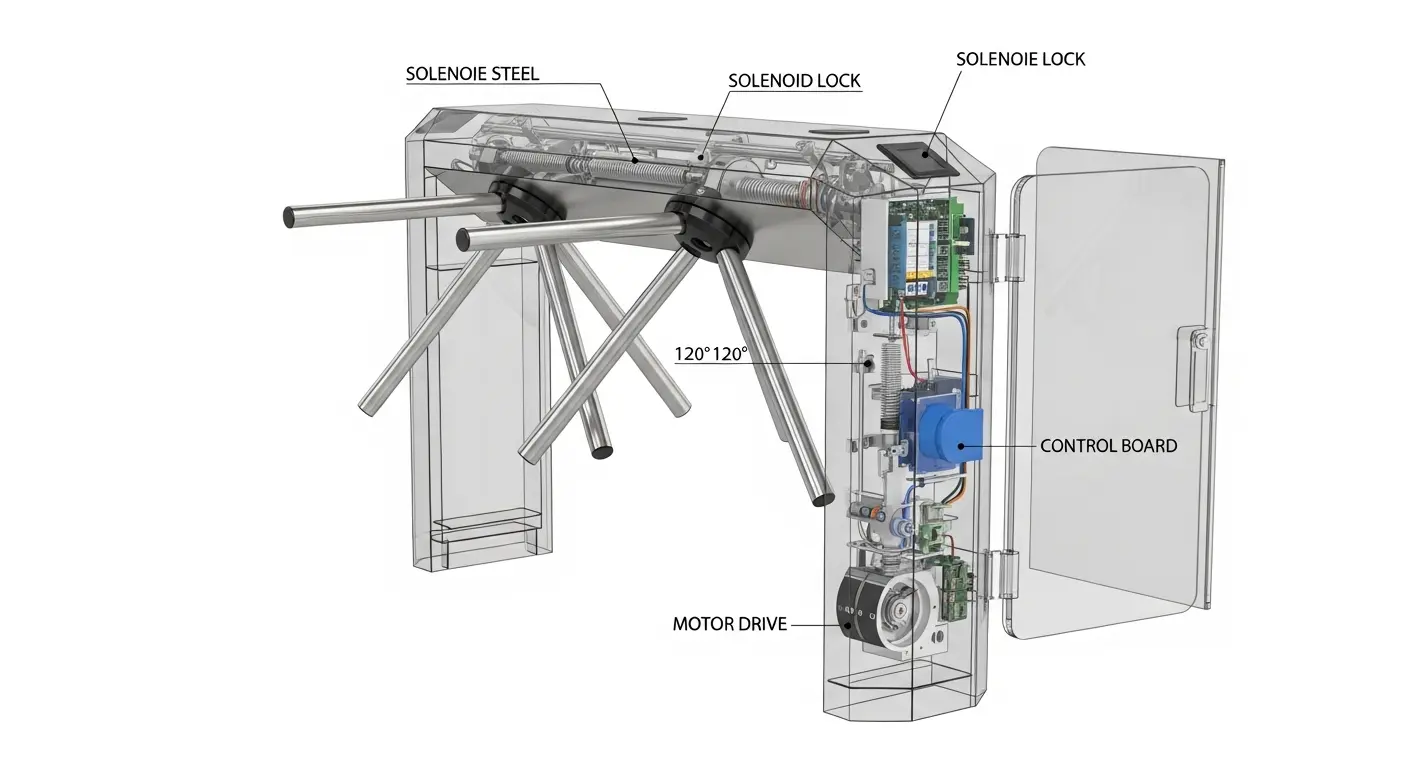
The operation is straightforward. A pedestrian presents a credential — RFID card, QR code, fingerprint, or face scan — to the reader mounted on the gate. The reader validates it and sends a signal to the control board. The board then either releases the solenoid lock (semi-automatic) or activates the drive motor (fully automatic). The arm rotates 120 degrees, the person passes through, and the gate resets and locks automatically.
Two safety modes determine behavior during a power failure:
- Fail-safe mode: Arms drop to horizontal automatically, allowing unrestricted evacuation. This is the standard for commercial buildings and is required by most fire codes.
- Fail-secure mode: Arms lock on power loss. Used only in restricted high-security zones where unauthorized access during an outage is a primary risk.
Modern tripod turnstile gates also support bi-directional passage. One unit can control both entry and exit lanes simultaneously, which saves hardware cost and reduces installation complexity in facilities with limited space.
Types of Tripod Turnstile Gate
Not all tripod turnstile gates are the same. The right type depends on your traffic volume, automation needs, and physical environment.
Semi-Automatic Tripod Turnstile Gate
This is the most common and most cost-effective configuration. An electromagnet or solenoid releases the arm lock when a valid credential is presented — but the user pushes through manually. Semi-automatic models suit offices, schools, factories, and gyms with moderate daily traffic. They're reliable, low-cost to maintain, and compatible with virtually every access control platform.
Fully Automatic Tripod Turnstile Gate
A brushless DC motor rotates the arms automatically after access is granted — no pushing required. This produces a smoother, more premium user experience and increases throughput to 35–50 persons per minute. For high-traffic corporate lobbies and transit environments, the automatic tripod turnstile provides motorized, hands-free passage with full integration for face recognition and multi-format reader support.
Inclined Arc Tripod Turnstile Gate
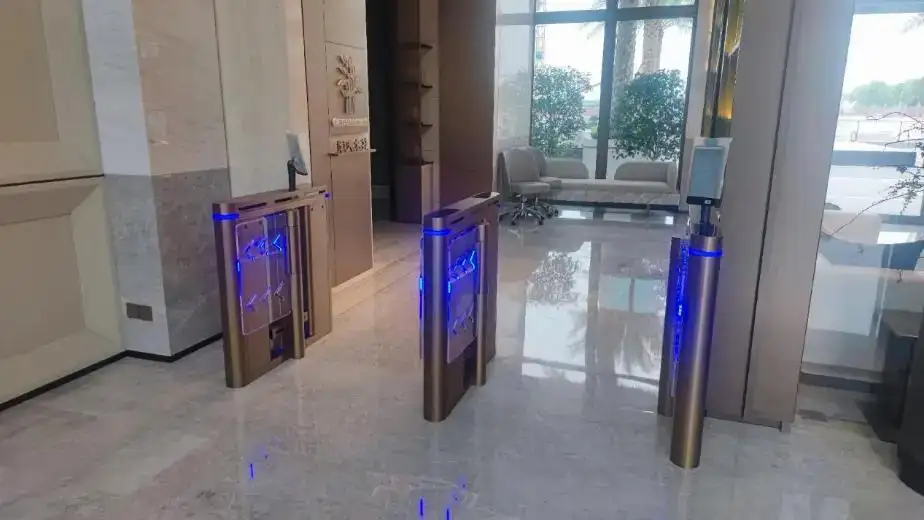
An inclined arc design features a curved arm configuration and a sloped cabinet profile that gives a more refined aesthetic than the standard upright box form. The inclined arc tripod turnstile suits corporate and hospitality environments where visual design matters alongside function — delivering access control without the industrial appearance of a standard tripod unit.
Inclined Octagonal Tripod Turnstile Gate
The octagonal cabinet design replaces the standard rectangular form with a multi-faceted profile, creating a distinctive look that stands out in modern architectural interiors. The inclined octagonal tripod turnstile brings design versatility to access control — an option for premium lobbies and commercial spaces that want something beyond the commodity tripod format.
Dual-Arm Tripod Turnstile Gate
A dual-arm configuration deploys two tripod gate heads in a paired bridge formation, effectively creating a defined passageway with barriers on both sides. The dual-arm tripod turnstile gate maximizes lane discipline and prevents side-entry tailgating in environments where single-head units leave a gap on the open side. It's especially effective in narrow corridor installations and factory gate checkpoints.
Key Specs That Actually Matter
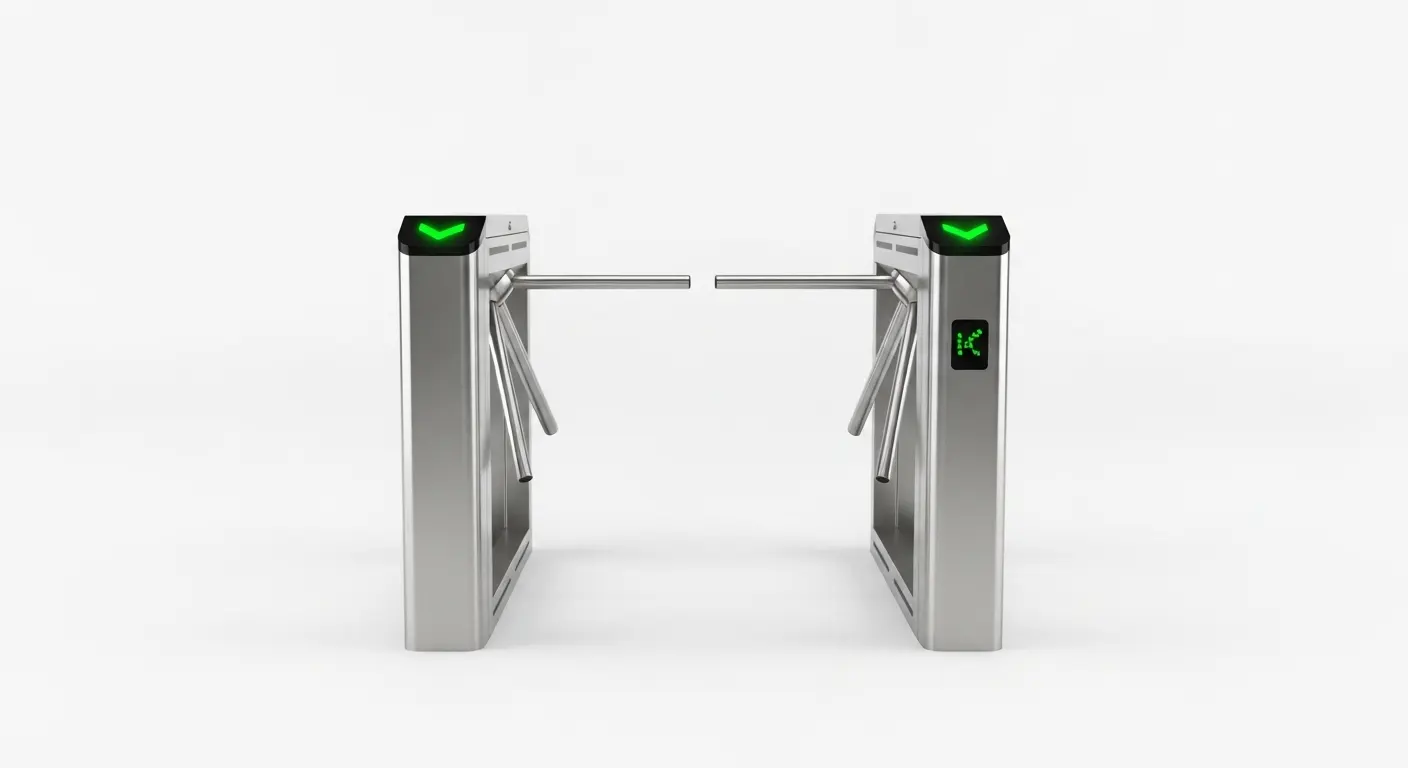
When evaluating any tripod turnstile gate, these are the technical parameters that determine long-term performance — not just the product photo:
| Specification | What to Look For | Why It Matters |
|---|---|---|
| Cabinet material | SUS304, 1.0–1.2mm wall thickness | Determines durability and corrosion resistance |
| IP rating | IP4X (indoor), IP54+ (outdoor) | Outdoor units need ingress protection |
| Pass rate | 25–35 ppm (semi-auto), 35–50 ppm (auto) | Must match your peak traffic volume |
| Mechanism cycle life | 3–5 million cycles | Higher cycle rating = longer service life |
| Communication | Dry contact + RS485 | Ensures compatibility with third-party readers |
| Fail-safe mode | Arms drop on power loss | Required for fire code compliance |
| Operating temperature | -20°C to +70°C | Confirms suitability for outdoor or extreme environments |
For outdoor installations specifically, always verify the IP rating with an independent test report — not just a specification sheet claim. IP65 or higher is appropriate for fully exposed environments.
Where Tripod Turnstile Gates Are Deployed
A tripod turnstile gate suits virtually any environment where individual-entry control is needed without the footprint or cost of full-height barriers.
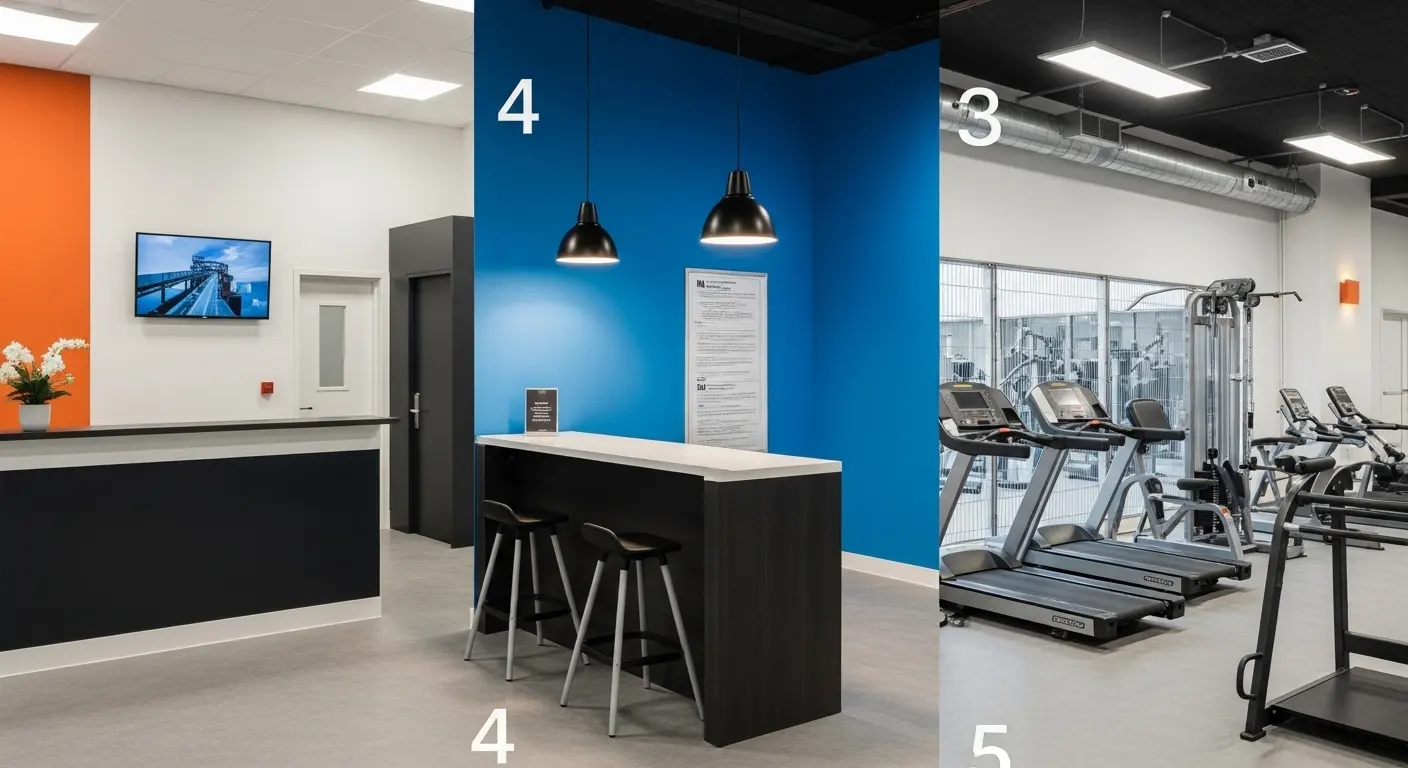
Here's how different industries deploy them:
Factories and Industrial Sites
Worker entry control, zone restriction enforcement, and payroll-linked attendance logging. Semi-automatic mechanisms handle thousands of daily cycles reliably. A turnstile purpose-built for this environment is the tripod turnstile for factory entrance, engineered with heavy-duty steel construction and sealed electronics for the demanding conditions of a manufacturing facility.
Schools and University Campuses
Student ID card, QR code, or mobile credential access at campus gates and building entries. Anti-tailgating prevents unauthorized entry during peak class changeovers. For a full campus access control strategy, a campus access control gate solution integrates tripod gates with building-level access management across multiple entry points under one unified platform.
Corporate Offices
Bridge-style models with face recognition or RFID card access create a professional entry experience. Automatic models eliminate the manual-push feel and project a modern image without slowing down arrival peaks.
Gyms and Recreation Centers
Member-only RFID or QR code access. The compact footprint of tripod models fits tight lobby corridors that larger flap barriers or speed gates can't accommodate.
Stadiums and Event Venues
QR or barcode ticket validation at multi-lane entry points. High-throughput automatic models process large crowds efficiently during the 30-minute pre-event arrival peak.
Transit Stations
Motorized automatic models with high-cycle mechanisms and vandal-resistant construction are the standard choice for mid-volume metro and bus station deployments.
Cloud-Based Management for Tripod Turnstile Gates
Modern tripod turnstile gates aren't standalone devices. The most effective deployments connect them to a centralized management platform that handles permissions, real-time access logs, and remote configuration — without requiring on-site servers or IT teams to maintain.
A cloud-based turnstile gate management system lets facility managers update credentials, monitor access events, and generate attendance or audit reports from any browser or mobile device. For multi-site organizations with tripod gates across several locations, cloud management eliminates the cost and complexity of running separate local access control servers at each site.
This integration capability — from a simple tripod turnstile gate through to a cloud-monitored enterprise access system — is one of the reasons tripod gates remain the most cost-effective starting point for facilities building out their access control infrastructure.
Tripod Turnstile Gate vs. Other Gate Types
Before committing to a tripod model, it's worth confirming it's the right choice for your environment. Here's how it compares:
| Feature | Tripod Turnstile Gate | Flap Barrier | Full Height | Speed Gate |
|---|---|---|---|---|
| Security level | Moderate (waist-height) | Moderate | High (full body) | Sensor-based |
| Throughput | 25–50 ppm | 40–60 ppm | 15–25 ppm | 50–80 ppm |
| Cost | Lowest | Mid-range | Higher | Highest |
| ADA compliance | Limited | Better | Limited | Best |
| Space required | Compact | Compact | Large | Mid-range |
| Best for | Factories, schools, gyms | Offices, transit | Prisons, perimeters | Airports, premium lobbies |
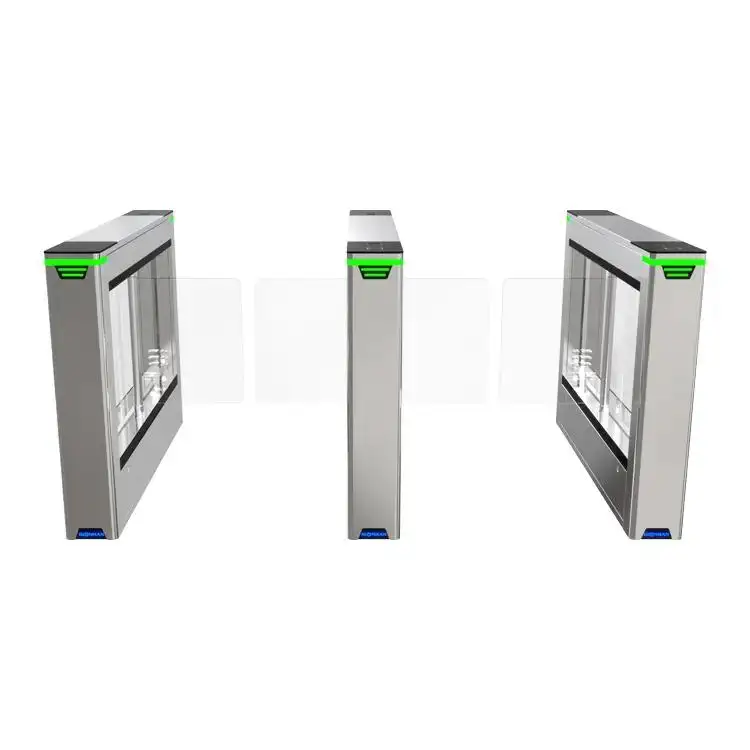
For facilities that need higher throughput with a more refined appearance, a pedestrian speed gate is the natural upgrade path from a tripod turnstile gate — offering 50–80 persons per minute throughput with glass panel aesthetics suited to corporate lobbies and premium environments.
How to Choose the Right Tripod Turnstile Gate
Use these four questions as your selection framework:
1. What is your peak traffic volume?
Semi-automatic handles up to 35 persons per minute reliably. For higher volumes, choose a fully automatic model. For 300+ people arriving in a 10-minute window, plan for multiple lanes rather than a single high-spec unit.
2. Indoor or outdoor?
Indoor standard models carry IP4X. Outdoor installations need at minimum IP54, ideally with a protective canopy to extend the controller's service life. Verify the IP rating with a test report, not just a spec sheet.
3. What credentials do you use?
Most modern tripod turnstile gates support RFID, QR, barcode, fingerprint, and face recognition via dry contact or RS485 input. Confirm compatibility with your existing readers before ordering — retrofitting a gate for a different reader protocol post-installation adds unnecessary cost.
4. What aesthetic fits your environment?
Standard rectangular cabinets suit industrial and institutional deployments. Inclined arc or octagonal designs suit hospitality and corporate environments. Glass panel variants or bridge configurations suit premium lobbies where visual design matters as much as function.
Frequently Asked Questions About Tripod Turnstile Gates
Q: What is a tripod turnstile gate and how does it work?
A: A tripod turnstile gate is a waist-height access barrier with three rotating arms spaced 120 degrees apart. When a valid credential is presented to the reader, one arm rotates to allow a single person through, then resets and locks automatically. It physically enforces one-person-per-credential entry, which door-based card readers cannot do on their own.
Q: What is the difference between a semi-automatic and a fully automatic tripod turnstile gate?
A: A semi-automatic tripod turnstile gate uses a solenoid to release the arm lock — the user pushes through manually after access is granted. A fully automatic model uses a DC motor to rotate the arms without any manual push. Automatic models deliver 35–50 persons per minute throughput and a premium user experience; semi-automatic models cost less and require simpler maintenance.
Q: Can a tripod turnstile gate be used outdoors?
A: Yes, provided you choose a model with the correct IP rating. Standard indoor units carry IP4X. Outdoor installations require IP54 or higher, which protects against dust and water splashing from any direction. For fully exposed environments, a protective canopy above the gate extends the service life of the control board and reader electronics.
Q: How many people can a tripod turnstile gate process per minute?
A: A semi-automatic tripod turnstile gate processes approximately 25–35 persons per minute. A fully automatic model reaches 35–50 persons per minute. For comparison, flap barriers handle 40–60 ppm and speed gates reach 50–80 ppm — making tripod gates the right choice for moderate-volume deployments rather than peak-hour transit stations.
Q: What credentials are compatible with a tripod turnstile gate?
A: Modern tripod turnstile gates integrate with RFID cards (IC/ID/NFC), QR codes, barcodes, fingerprint scanners, face recognition cameras, and temperature detection systems. The control board accepts signals via dry contact or RS485 — making it compatible with virtually all third-party access control and attendance management platforms.
