


Heavy Duty Tripod Turnstile: Industrial Specs, Use Cases, and How to Choose Right
2026-03-13


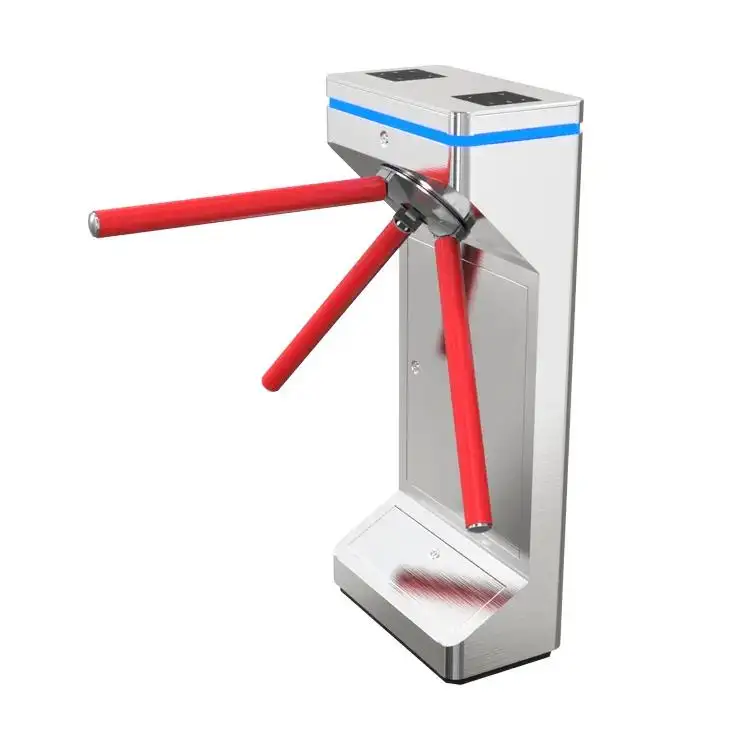
A heavy duty tripod turnstile isn't just a stronger version of an office lobby gate. It's a different category of product engineered for environments that would destroy a standard unit within months — outdoor industrial sites, transit stations, stadiums, construction projects, and any facility where thousands of people pass through daily under demanding physical conditions.
If you're specifying a heavy duty tripod turnstile for a serious deployment, this guide gives you the exact specifications to look for, the environmental classifications to match, and the clear framework to choose the right product the first time.
What Makes a Tripod Turnstile "Heavy Duty"?
The term gets used loosely by suppliers. However, a genuinely heavy duty tripod turnstile has measurable differences across six specific technical parameters — not just a thicker cabinet or a higher price tag.
1. Mechanism Cycle Life (MCBF)
Standard commercial tripod turnstiles carry an MCBF (Mean Cycles Between Failure) rating of 500,000 to 1 million cycles. A heavy duty tripod turnstile starts at 3 million cycles and extends to 5 million or beyond for premium industrial models. At a factory gate processing 300 workers per day, 1 million cycles lasts roughly 9 years. At 500 entries per day, a 5-million-cycle mechanism lasts 27+ years.
2. IP Rating
Standard indoor tripod turnstiles carry IP4X — protection against solid objects larger than 1mm but no water protection. A heavy duty tripod turnstile for outdoor or industrial use requires IP54 minimum (dust and directional water), and IP65 for fully exposed outdoor environments.
3. Cabinet Material and Wall Thickness
SUS304 stainless steel with a 1.2mm+ wall thickness is the commercial minimum. Heavy duty models use full-weld SUS304 construction — not assembled panels — and coastal or chemically aggressive environments warrant SUS316 for superior corrosion resistance.
4. Arm Impact Resistance
Premium heavy duty units like the Automatic Systems TL 2 publish impact resistance ratings — specifically 240 Joules applied to the center of the arm without damage. This matters for sites where vandalism, crowd pressure, or accidental impact is a realistic operational risk.
5. Operating Temperature Range
Standard units operate from 0°C to +50°C. A heavy duty tripod turnstile for industrial or outdoor use operates from -35°C to +60°C — covering harsh winter climates, high-heat manufacturing floors, and tropical outdoor environments.
6. Drive Mechanism
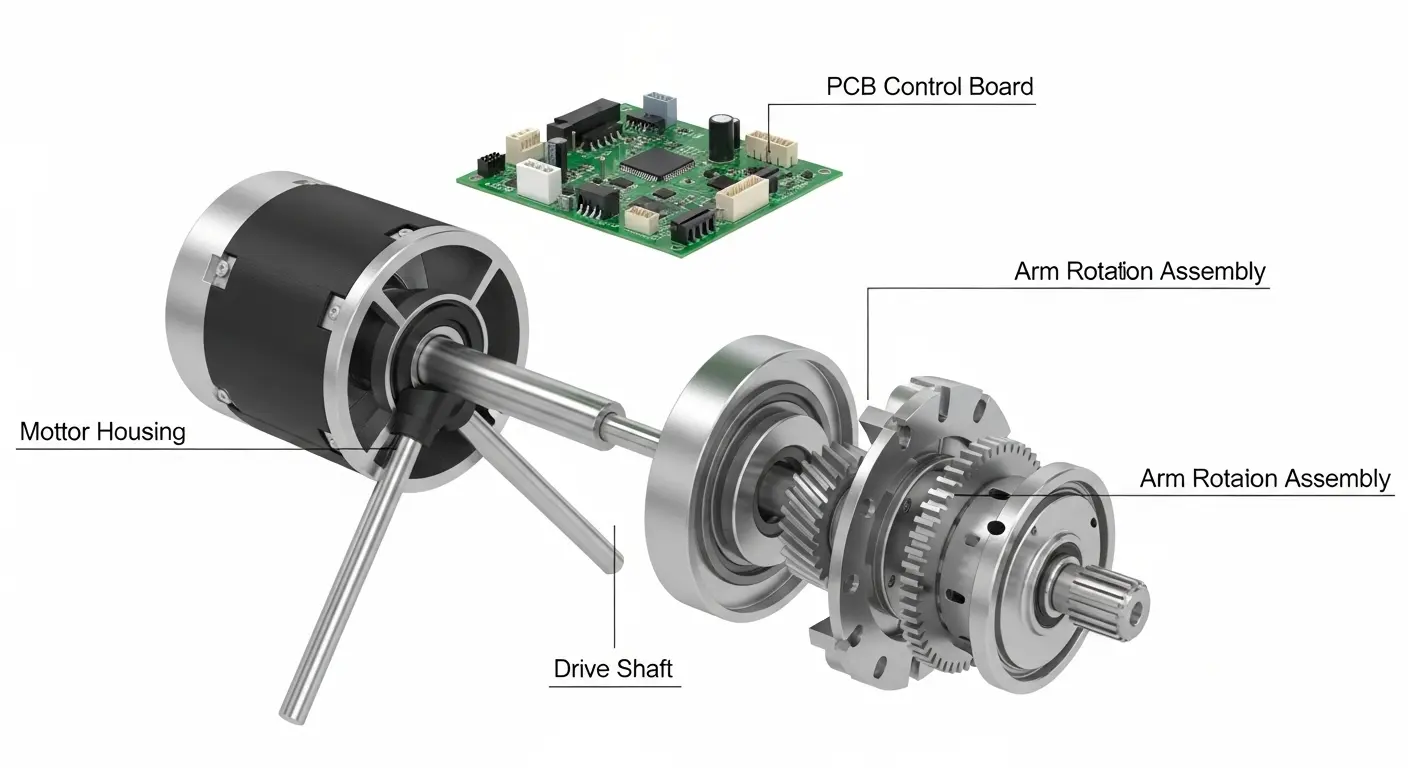
Heavy duty models use brushless DC motors instead of solenoid or basic DC motors. Brushless motors have no carbon brushes to wear down, produce less heat, require no scheduled brush replacement, and deliver significantly higher cycle life per service interval.
Heavy Duty Tripod Turnstile Specifications: What to Demand From Any Supplier
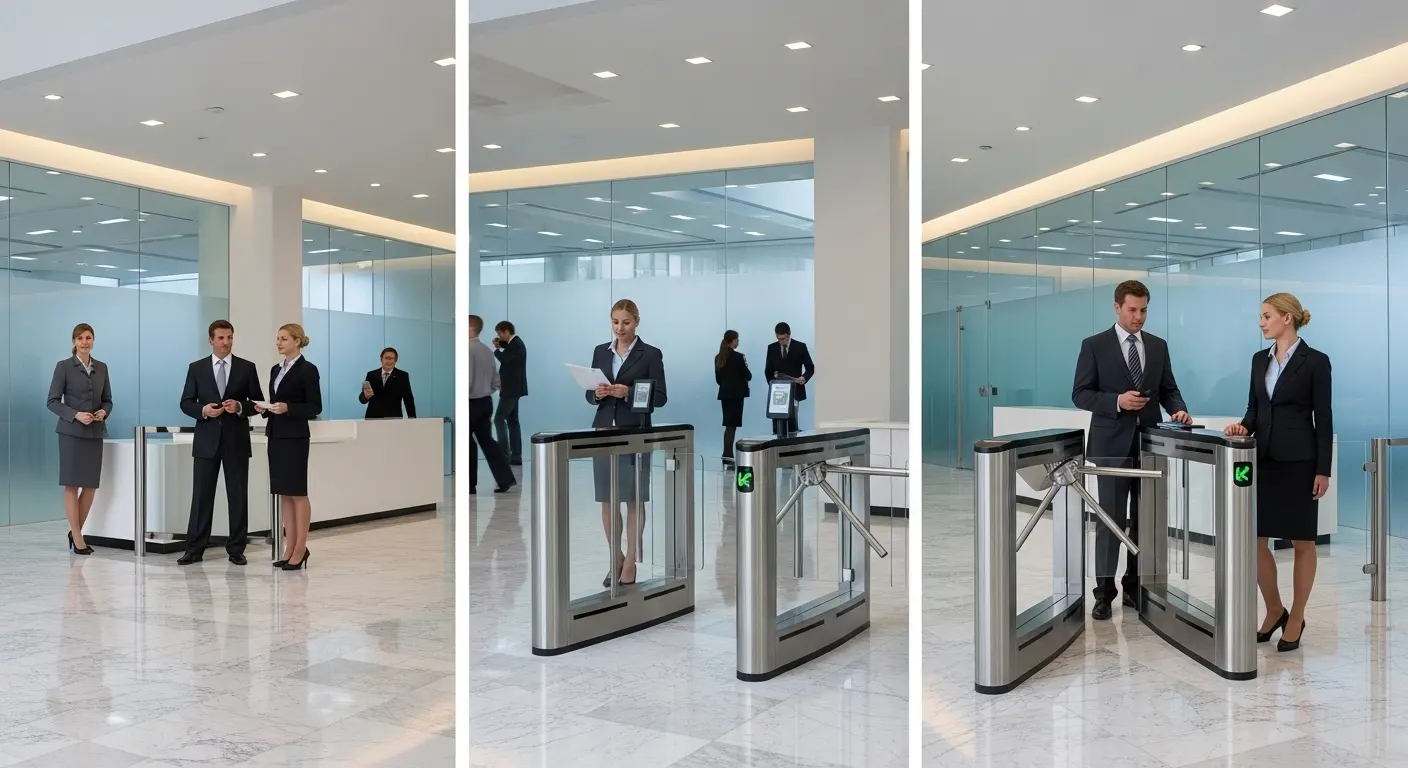
When evaluating a heavy duty tripod turnstile, request a formal specification sheet and verify these data points specifically:
| Specification | Entry-Level Tripod | Heavy Duty Tripod |
|---|---|---|
| MCBF | 500K–1M cycles | 3M–5M+ cycles |
| IP Rating | IP4X (indoor only) | IP54–IP65 |
| Cabinet material | SUS201 / mild steel | SUS304 full-weld (SUS316 for harsh) |
| Wall thickness | 0.8–1.0mm | 1.2–1.5mm |
| Drive mechanism | Solenoid / basic DC motor | Brushless DC motor |
| Operating temp | 0°C to +50°C | -35°C to +60°C |
| Arm load resistance | Unspecified | 100kg static / 240 Joules impact |
| Throughput (auto) | 20–25 ppm | 30–45 ppm |
| Duty cycle | Intermittent | 100% continuous |
One specification worth particular attention is duty cycle. A 100% duty cycle means the gate runs continuously without requiring cool-down time between uses — critical for shift-change rush periods or transit station peak hours where hundreds of passes occur in rapid succession.
Where Heavy Duty Tripod Turnstiles Are Deployed
A heavy duty tripod turnstile suits any environment where standard commercial units face accelerated wear. Here are the primary deployment scenarios:
Industrial Factories and Manufacturing Sites
The classic use case. Thousands of daily worker passes, dust and humidity exposure, frequent physical contact with the arms, and the need for time-and-attendance integration. IP54 minimum, SUS304 construction, brushless motor, and RS485 or TCP/IP output for payroll system integration.
Construction Sites
Temporary but demanding. Outdoor weather exposure, workers in heavy PPE, constant arm contact from large tool bags and equipment. IP65 is often appropriate, and remote credential management via a cloud-based turnstile gate system is ideal for construction sites where IT infrastructure is minimal and access permissions change frequently as contractors rotate in and out.
Stadiums and Event Venues
High burst traffic — thousands of people arriving in a 30-minute pre-event window. Maximum throughput and vandal-resistant arm construction are the primary requirements. Brushless automatic models at 35–45 ppm per lane, with non-removable arms and reinforced cabinet mounting, suit this environment.
Transit Stations and Metro Systems
Continuous daily operation across long operating hours. Duty cycle 100%, MCBF of 5 million+, and vandal-resistant construction are baseline requirements for any transit-grade heavy duty tripod turnstile.
Airports
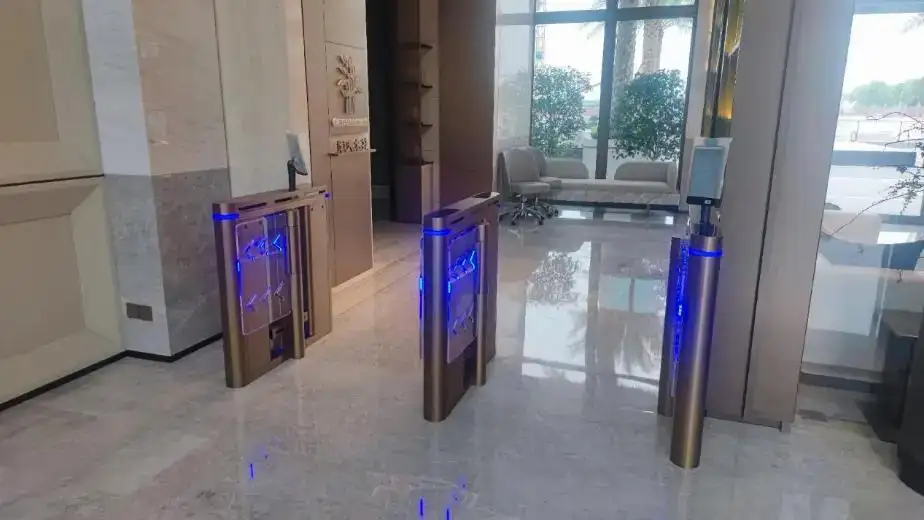
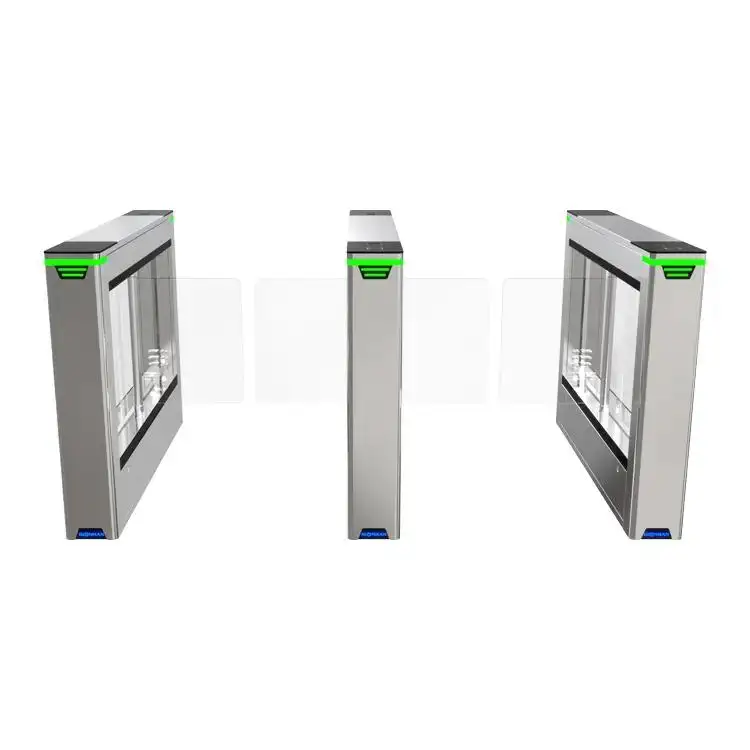
Airport deployments combine high throughput requirements with strict regulatory compliance. For airport security zones and passenger terminal access, an airport speed gate system represents the premium tier above heavy duty tripod models — offering higher throughput and glass panel aesthetics. However, heavy duty tripod turnstiles remain the right choice for staff entrances, service corridors, and airside access points where industrial durability outweighs aesthetic priority.
Automatic Heavy Duty Tripod Turnstile: The Right Mechanism Choice
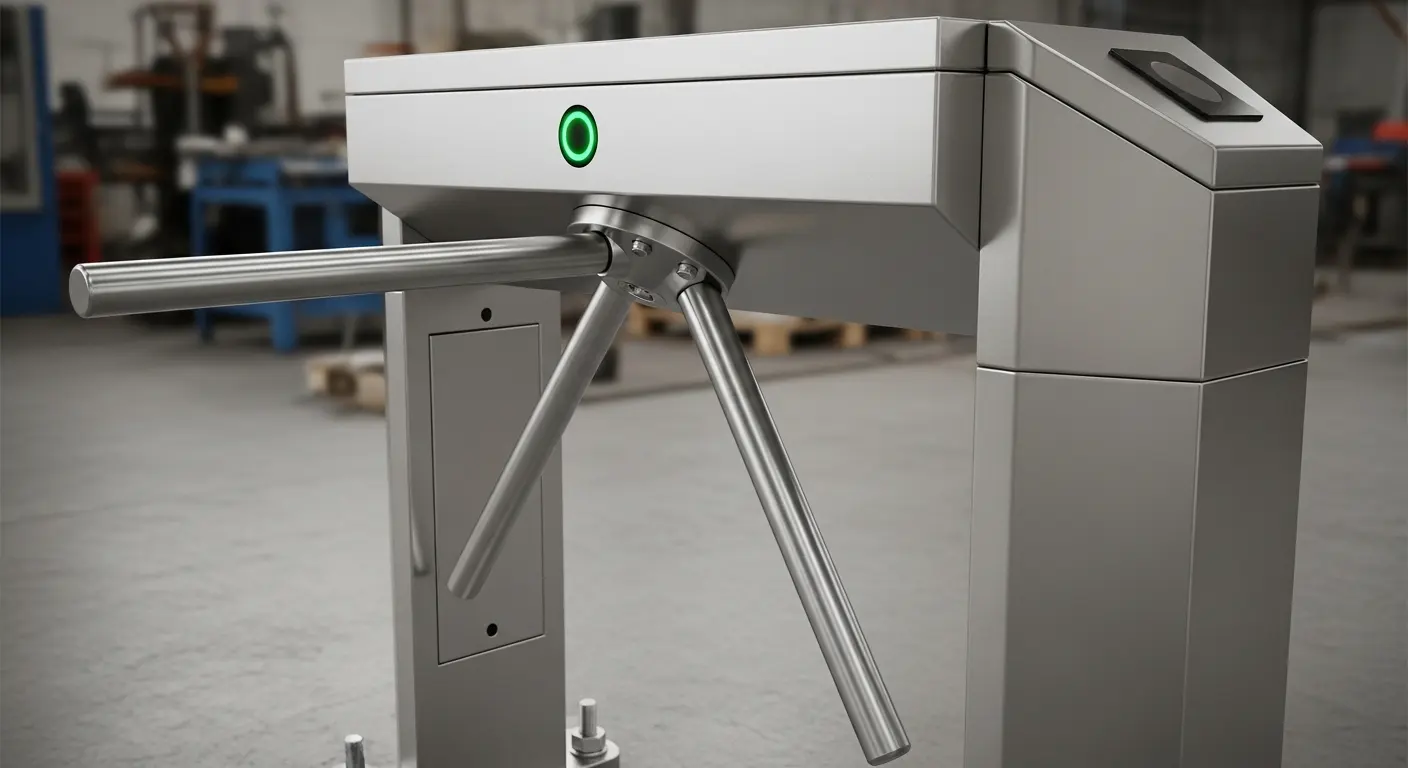
For any heavy duty deployment, the choice between semi-automatic and fully automatic mechanism is straightforward: choose automatic. The reasons are practical:
- Throughput: Brushless automatic models deliver 30–45 persons per minute. Semi-automatic models peak at 20–25 ppm. The gap matters enormously at shift changes and peak entry periods.
- User experience: Automatic rotation eliminates the physical push that wears down mechanism joints over time. Less physical force per cycle means longer service life.
- Reduced vandalism risk: Arms that rotate smoothly on their own attract less physical frustration from users — reducing the impact loads that accumulate on mechanism components.
An automatic turnstile with a brushless DC motor delivers the combination of throughput speed, low maintenance overhead, and long cycle life that heavy duty environments require. For facilities running two to four lanes at a single entrance, the per-lane cost difference between semi-automatic and fully automatic is typically $200–$500 — a small premium against the operational and maintenance gains over a 5–10 year service horizon.
Anti-Tailgating in Heavy Duty Deployments
Anti-tailgating technology is especially important in heavy duty industrial deployments, where tailgating attempts are more frequent and harder to monitor manually. Standard heavy duty tripod turnstiles physically block single-arm jumps with 500mm steel arms, but determined tailgaters can attempt to follow through the same arm rotation.
Advanced anti-tailgating sensor arrays use multiple infrared beams across the lane width to detect a second body following within the same arm cycle — and immediately trigger an alarm or reject the passage attempt. An anti-tailgating AB turnstile gate uses dual-sensor logic to distinguish between a legitimate single-person pass and a tailgating attempt — achieving near-zero false-positive rates without slowing the throughput below 30 ppm.
For factories and industrial sites, integrating anti-tailgating detection into the heavy duty tripod turnstile setup closes the gap between physical access control and digital audit trail accuracy — ensuring that every person logged by the time-and-attendance system actually passed through individually.
Heavy Duty Tripod Turnstile vs. Full Height Turnstile
The most common question for heavy duty deployments is whether to upgrade from a tripod to a full height model. Here's the honest answer:
A heavy duty tripod turnstile is the right choice when throughput speed matters, budget is a consideration, and your primary goal is controlled access with credential verification. Physical bypass — stepping over the waist-height arms — is theoretically possible, but practically rare in staffed or monitored industrial environments.
A full height turnstile is the right choice when physical bypass prevention is a hard requirement — prison perimeters, data center access points, chemical storage zones, or any location where an unauthorized person must be physically unable to enter regardless of monitoring.
For most industrial facilities, the practical model is a mixed deployment: heavy duty tripod turnstile gates at main worker entry points and canteen access where throughput is the priority, and full height turnstile gates at restricted zones where physical security is non-negotiable.
For sites that also need vehicle access management alongside pedestrian control, a boom parking barrier gate integrates with the same access control platform as your heavy duty tripod turnstile lanes — giving you a unified credential and audit system across both pedestrian and vehicle entry points without managing two separate access control platforms.
Choosing the Right Heavy Duty Tripod Turnstile: Decision Framework
Use this three-step framework before specifying any unit:
Step 1 — Define Your Environment Tier
- Covered indoor or semi-indoor: IP54, SUS304, standard temperature range
- Outdoor under canopy: IP54–IP65, SUS304 or SUS316 depending on climate
- Fully outdoor or harsh industrial: IP65, SUS316, -35°C to +60°C rated
Step 2 — Calculate Your Peak Throughput Requirement
Divide your peak headcount by 30–35 (automatic heavy duty ppm). That's your minimum lane count. Add one lane if the result is within 20% of your peak headcount — the buffer absorbs credential read delays, PPE interference, and uneven arrival distribution.
Step 3 — Confirm Integration Requirements
- Time-and-attendance: RS485 or TCP/IP output to payroll system
- Access control platform: Wiegand or OSDP reader interface
- Remote management: Cloud or local server? Confirm before ordering
For specialty industrial deployments — including an inclined octagonal tripod turnstile variant for environments that need industrial durability in a more architecturally refined cabinet — request factory confirmation that the chosen design variant meets IP54+ and carries the MCBF rating your site requires.
Frequently Asked Questions About Heavy Duty Tripod Turnstiles
Q: What makes a tripod turnstile "heavy duty" compared to a standard model?
A: A heavy duty tripod turnstile differs in six measurable ways: higher MCBF (3–5 million cycles vs. 500K–1M), higher IP rating (IP54–IP65 vs. IP4X), SUS304 full-weld construction, brushless DC drive motor, 100% duty cycle rating, and a wider operating temperature range (-35°C to +60°C). These aren't marketing terms — each is a specific, testable specification.
Q: What IP rating do I need for an outdoor heavy duty tripod turnstile?
A: For outdoor installations under a canopy or with partial weather protection, IP54 is the minimum — it protects against dust and directional water spray. For fully exposed outdoor environments, coastal sites, or heavy industrial atmospheres, IP65 is required — providing total dust exclusion and protection against direct water jets from any angle.
Q: How long does a heavy duty tripod turnstile last?
A: A brushless motor heavy duty tripod turnstile with a 5-million-cycle MCBF rating, operating at 500 passes per day, provides over 27 years of theoretical mechanism life. Real service life depends on maintenance schedule adherence, operating environment, and credential read speed. Industrial-grade models with proper maintenance routinely achieve 15–20 years of active service.
Q: Can a heavy duty tripod turnstile be installed without a canopy outdoors?
A: IP65-rated heavy duty tripod turnstiles are designed for direct outdoor exposure without canopy protection. IP54 models can operate semi-outdoors but benefit significantly from canopy coverage, which extends electronics and control board service life. Always confirm the IP rating with a third-party test report — not just a specification sheet claim.
Q: What is the throughput of a heavy duty tripod turnstile?
A: A brushless automatic heavy duty tripod turnstile processes 30–45 persons per minute depending on the model and credential type. Semi-automatic heavy duty units run 20–25 ppm. For shift-change calculations, use 30 ppm as your conservative planning figure for automatic models.
