


Turnstile Gate OEM: What It Covers, Which Gate Types Qualify, and How to Choose the Right Factory
2026-03-22


A turnstile gate OEM arrangement means a factory manufactures a gate product — mechanism, cabinet, electronics, and all — and delivers it under your brand. Your logo. Your documentation. Your warranty card. The factory stays invisible. You take the product to market as your own.
The appeal is clear: no manufacturing infrastructure, no engineering team, no component supply chain. The factory handles production. You handle sales, installation, and customer relationships. But choosing the wrong OEM factory costs far more than the per-unit savings it promises — in returns, warranty failures, and lost customer relationships.
This guide explains exactly what a turnstile gate OEM service covers, which gate types are available for OEM, what to verify before committing to a factory partner, and how the ordering process works.
What Turnstile Gate OEM Actually Covers
The word "OEM" on a supplier page can mean almost anything — from a logo sticker on a standard product to a complete white-label manufacturing service with rebranded documentation and support materials. Here's what a genuine turnstile gate OEM service should include:
1. Physical Branding
The factory removes its own logo from the cabinet surface and applies the buyer's — through laser engraving, LED backlit panel, frosted glass, or high-quality adhesive badge. On a proper OEM order, no factory branding appears anywhere on the finished product: not on the cabinet, not on the reader, not on the control board, not on the indicator LED housing.
2. Documentation Rebranding
Installation guide, wiring diagram, maintenance schedule, user manual, and warranty card — all reprinted or regenerated with the buyer's company name, logo, product model name, and contact details. The factory's identity doesn't appear in any document that ships with the product.
3. Packaging and Carton Labeling
The shipping carton carries the buyer's brand, product model number, and contact details. At point of delivery to the end customer, the factory's name is not visible on the carton, packing list, or internal packing materials.
4. CE Declaration of Conformity in Buyer's Name
For markets requiring CE marking, the factory issues a Declaration of Conformity naming the buyer's company as the responsible party — not the factory. The technical file (test reports, risk assessment, technical construction file) supports the buyer's CE declaration.
5. Firmware UI Branding
On gates with a management software interface or control panel display, the buyer's product name appears in the UI — not the factory's default product name. This matters for integrators who deliver the gate alongside a software management platform carrying their brand.
6. Spare Parts Packaging
For distributors who also sell spare parts and consumables, a full OEM service covers spare parts in buyer-branded packaging — the factory supplies the same mechanical and electronic components, but packaged and labeled as the buyer's product.
Turnstile Gate OEM by Gate Type
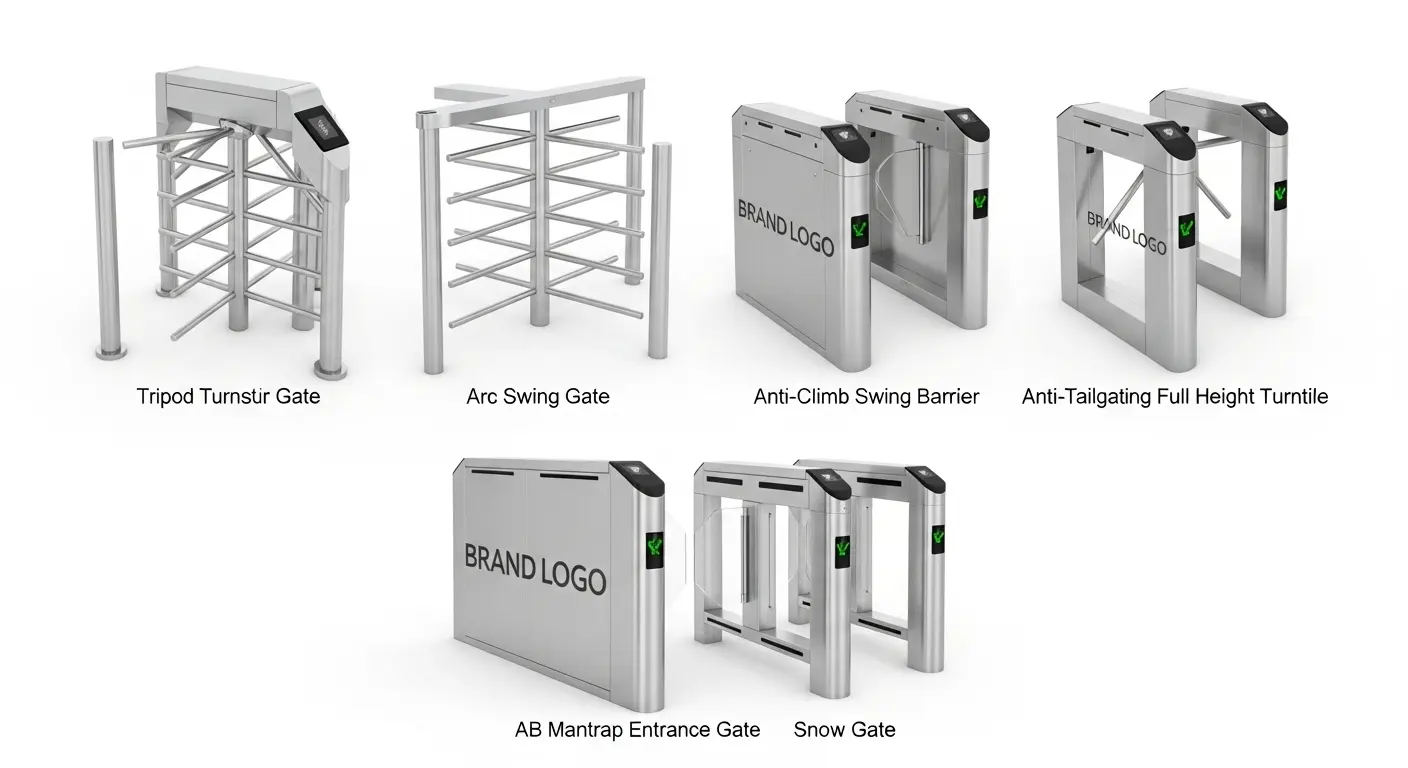
Not every gate type carries the same OEM flexibility. Here's how the main categories map to OEM availability:
Tripod Turnstile OEM
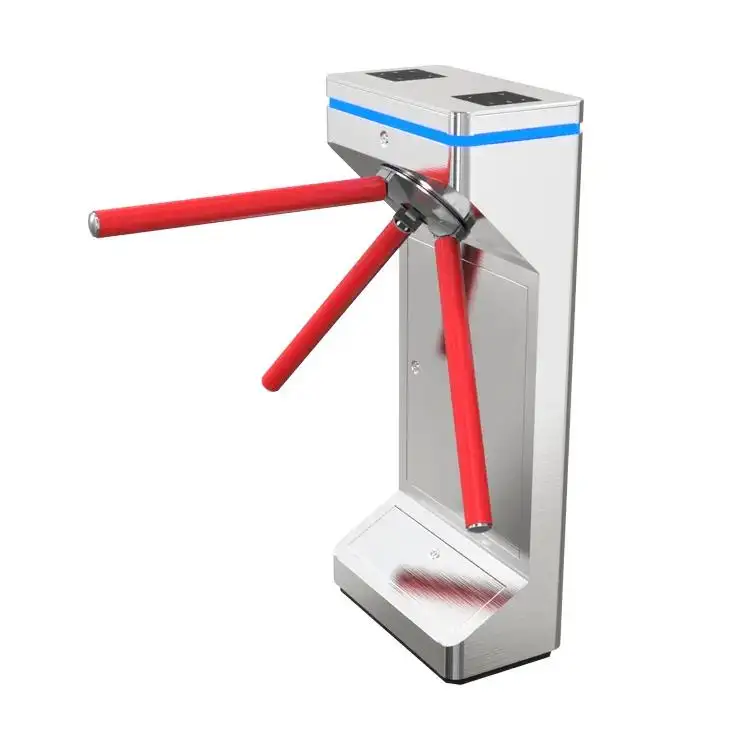
The most OEM-accessible gate type. The three-arm mechanism is standardized, production volumes are high, and MOQ for OEM orders starts at 5–10 units in most factories. Branding changes (logo, color, panel finish) apply without engineering modifications. For distributors entering the access control market, an OEM tripod turnstile is the lowest-risk starting point — proven mechanism, established supply chain, and straightforward branding scope.
Arc Swing Gate Turnstile OEM
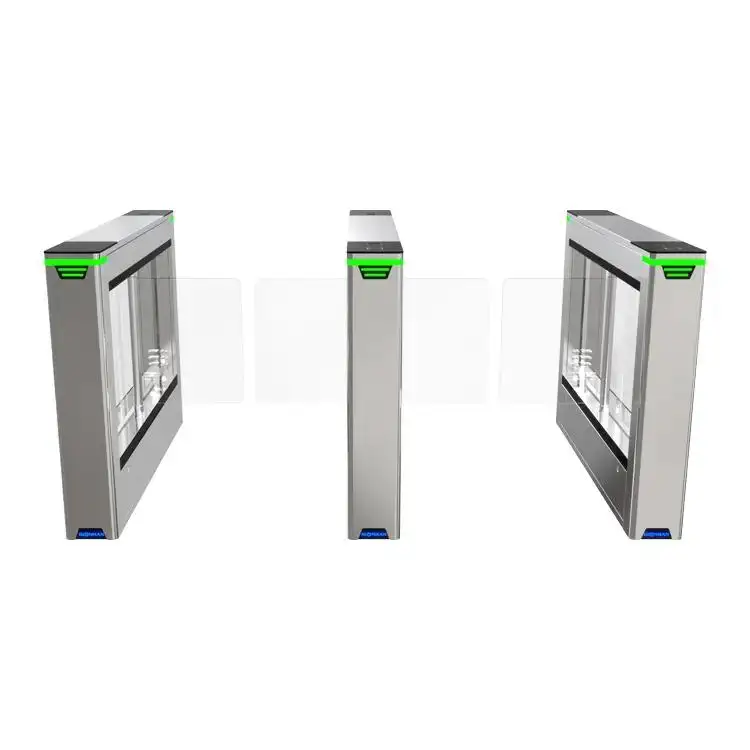
For distributors targeting premium lobby and corporate entrance markets, an arc swing gate turnstile in OEM configuration delivers a distinctive panel motion geometry — wider sweep radius than a standard swing barrier — that differentiates the buyer's product catalogue without requiring engineering development. The OEM package covers cabinet branding, panel finish, reader type, and documentation — the arc mechanism itself is the factory's proven design.
Anti-Climb Swing Barrier Gate OEM
For distributors serving perimeter security markets — campus, utility perimeter, infrastructure — an anti-climb swing barrier gate in OEM configuration provides extended barrier height (1,800mm+) under the buyer's brand label. The extended panel height is a stock configuration in a proper OEM factory — not a custom engineering change — making OEM availability straightforward for distributors targeting security-sensitive outdoor perimeter applications.
Anti-Tailgating Full Height Turnstile OEM
For distributors serving prison, military, and high-security industrial markets, an anti-tailgating full height turnstile in OEM configuration combines floor-to-ceiling physical security with a published anti-tailgating sensor specification under the buyer's brand. The anti-tailgating functionality — sensor pair count, detection accuracy, alarm output — is a factory-specified technical parameter that the buyer should request in writing as part of the OEM contract, not accept as a general marketing description.
AB Entrance Gate System OEM
The highest-security configuration available for OEM distribution. An AB entrance gate system — two-barrier sequential entry mantrap — in OEM configuration delivers pharmaceutical-grade, data center, and government checkpoint security under the buyer's label. MOQ for AB gate OEM typically runs 10+ units given the complexity of the interlocking logic and the longer factory testing protocol per unit.
Snow Gate Turnstile OEM
For distributors serving cold-climate markets — Northern Europe, Canada, Russia, high-altitude sites — a snow gate turnstile in OEM configuration includes heated drive mechanism, anti-freeze gaskets, and heated electronics as factory-fitted standard components. A buyer distributing in a sub-zero climate market needs this as a factory-standard OEM configuration, not a field modification — field-added heating elements in a non-designed position create IP seal violations and warranty complications.
What to Verify Before Signing an OEM Partnership
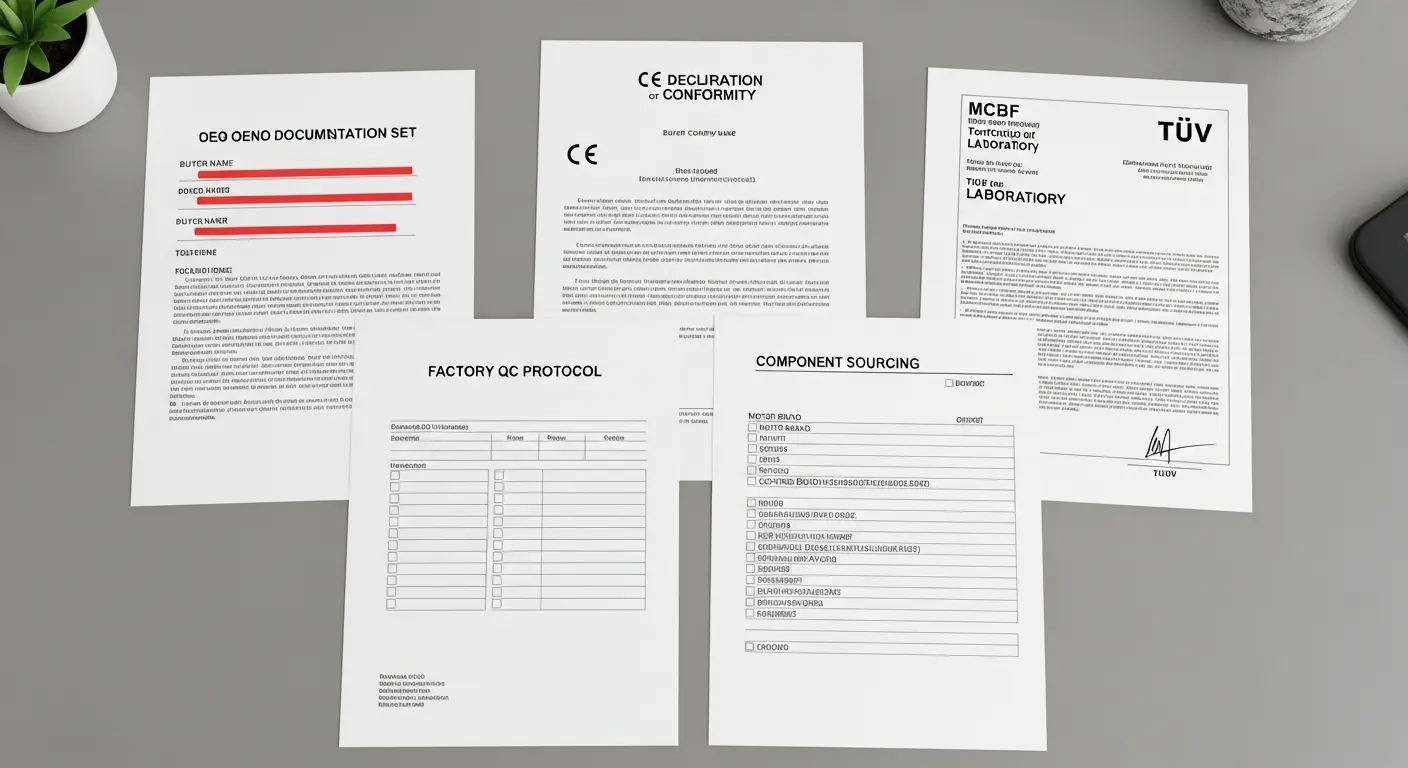
A factory that says "OEM available" on its website and a factory that runs a genuine white-label manufacturing service are not the same thing. These are the verification points to cover before committing to a turnstile gate OEM partnership:
1. Request a Sample OEM Documentation Set
Ask the factory to show you an existing OEM documentation set they've produced for another buyer (with the buyer's name redacted). A factory that has done this before can produce one immediately. A factory doing this for the first time will stall — which tells you exactly where you stand.
2. Confirm CE Declaration Transfer Process
Ask specifically: "Can you issue a CE Declaration of Conformity in my company name as the responsible economic operator?" A factory with proper OEM experience knows this process and has a template. A factory without OEM experience may issue their own CE declaration and offer to "let you use it" — which is not compliant with CE marking regulations.
3. Verify Mechanism Service Life Data
Request the MCBF (Mean Cycles Between Failure) test report for the mechanism used in your OEM product. This is a testable number, not a marketing claim. A factory that publishes 5 million MCBF should have a test report from an accredited lab to support it. This data becomes part of your technical file for CE compliance and your product warranty specification.
4. Confirm Factory QC Protocol Per OEM Spec
Your OEM product is tested against your specification — not the factory's default QC sheet. Ask to see the QC protocol document for your product before the first production run. Each unit shipped to you should carry a factory QC pass record specific to your configuration.
5. Check Component Sourcing Transparency
Ask for the brand and model of key components: motor (brushless DC or servo), control board chipset, infrared sensor emitter/receiver model. A factory confident in its supply chain answers this directly. Opacity about component sourcing is a quality risk indicator — factories that switch components between orders without notification are a documented problem in the OEM turnstile market.
Turnstile Gate OEM: Pricing, MOQ, and Lead Time
Understanding the commercial structure of a turnstile gate OEM relationship prevents the most common negotiation mistakes:
MOQ (Minimum Order Quantity)
- Surface branding OEM (logo, color on standard model): 5–10 units
- Documentation rebranding included: 10–20 units
- Full OEM (branding + documentation + CE declaration): 20–50 units
- OEM with firmware UI rebranding: 20+ units (requires software development time)
Pricing Structure
OEM pricing runs on three components: unit FOB price, NRE (non-recurring engineering) fee for first-run tooling and documentation preparation (typically $300–$1,500 depending on scope), and sample cost (factory typically charges for the first branded sample, credited against the production order).
Lead Time
- First OEM order (new documentation, branding setup): 20–35 working days
- Repeat OEM order (documentation and branding already established): 12–18 working days
- Rush production (confirmed factory capacity and complete spec): 10–15 working days at a premium
Anti-Tailgating OEM Pricing Note
Gates with higher sensor pair counts — 10–16 pairs for premium anti-tailgating performance — carry a higher unit cost than standard 4–6 pair configurations. For an anti-tailgating AB turnstile gate OEM order, confirm the sensor pair count in the specification and the detection accuracy in writing — both affect unit cost and both are your brand's product promise to the end customer.
OEM vs. Private Label vs. ODM: The Practical Distinction
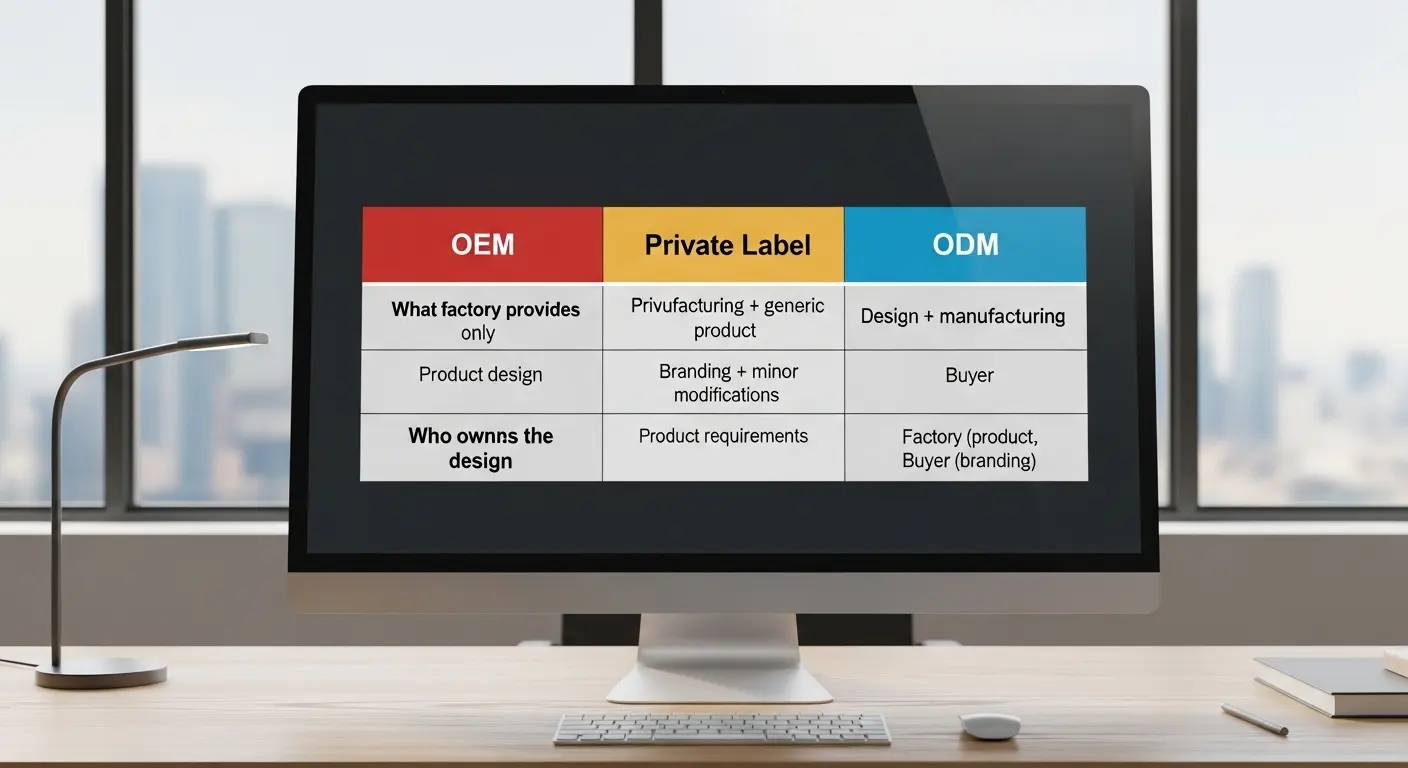
These three terms get conflated by suppliers who benefit from the confusion. Here's the practical difference for a turnstile gate buyer:
| Term | What the Factory Provides | What the Buyer Specifies | Who Owns the Design |
|---|---|---|---|
| OEM | Standard product, rebranded | Logo, color, reader type | Factory |
| Private Label | Standard product, fully unbranded | Brand identity, documentation | Factory (product), Buyer (brand) |
| ODM | Custom-engineered product | Full technical specification | Buyer or shared |
For most distributors, turnstile gate OEM or private label is the correct starting point — the factory's proven mechanism under the buyer's brand. ODM is appropriate when the buyer's market requires a specification that no factory's standard catalogue satisfies.
Frequently Asked Questions About Turnstile Gate OEM
Q: What is turnstile gate OEM?
A: Turnstile gate OEM (Original Equipment Manufacturing) is an arrangement where a factory manufactures a gate product to its own proven design and delivers it under the buyer's brand. The buyer's logo, documentation, packaging, and warranty materials replace the factory's — the mechanism, electronics, and structure remain the factory's standard design. This lets distributors, resellers, and integrators take a tested product to market under their own brand without building manufacturing infrastructure.
Q: What is the minimum order quantity for turnstile gate OEM?
A: For surface branding (logo and color) on a standard model: 5–10 units at most factories. For full OEM including rebranded documentation and CE Declaration of Conformity in the buyer's name: 20–50 units. For OEM with firmware UI rebranding: 20+ units, reflecting the software development time required. MOQ is negotiable for buyers committing to a longer-term supply relationship.
Q: How long does a first turnstile gate OEM order take?
A: A first OEM order — where documentation, branding assets, and CE declaration are being set up for the first time — typically takes 20–35 working days from signed-off specification. Repeat OEM orders on established configurations run 12–18 working days. The longest lead time component is usually the CE Declaration of Conformity preparation, particularly if the factory hasn't previously issued a declaration in a buyer's name for that product model.
Q: Can a turnstile gate OEM factory issue CE certification in my company name?
A: Yes — a properly equipped OEM factory can issue a CE Declaration of Conformity naming the buyer's company as the responsible economic operator, supported by the factory's existing technical file (test reports, risk assessment, technical construction file). The factory doesn't need to re-test the product for this — the existing CE test report supports the buyer's declaration as long as the OEM configuration doesn't change the safety-critical parameters covered in the original test.
Q: How do I evaluate a turnstile gate OEM factory before ordering?
A: Request a sample OEM documentation set from a previous buyer order (redacted). Ask for the CE Declaration transfer process in writing. Request MCBF test reports for the gate mechanism. Confirm the factory QC protocol is written specifically against your product specification — not the factory's default sheet. Ask for the brand and model of key components (motor, control board, sensors). A factory that answers all five questions promptly and completely with documentation is a factory worth ordering from.
