


Интеграция системы турникетных ворот: Протоколы, Платформы и способы соединить всё
2026-04-11


A standalone turnstile gate system integration project that stops at the gate hardware misses the point entirely. The gate's real value is not the physical barrier — it is the data the barrier generates: кто участвовал, когда, through which lane, with what credential, and whether the event was authorized or denied. Without turnstile gate system integration into the wider software ecosystem, that data sits in an isolated controller log that nobody reads, exports to a spreadsheet nobody updates, and connects to nothing that actually runs the building. The goal of a well-executed turnstile gate system integration is a connected system where every gate event flows automatically into the platforms that need it — access control, ЧАС, payroll, video management, and building management — with no manual data transfer at any step.
This guide covers the communication protocols that make gate-to-system connections possible, the full ecosystem of platforms a turnstile gate can connect to, cloud vs. on-premise architecture trade-offs, and the integration decisions most buyers get wrong the first time.
What Does Turnstile Gate System Integration Actually Mean?
Turnstile gate system integration is the process of connecting the turnstile gate's hardware controller to one or more external software platforms so that gate events, access permissions, and credential data move automatically between systems.
At the hardware layer, the gate controller manages the physical gate operation — reading credentials, verifying authorization, opening the barrier, logging events. At the software layer, access control platforms, HR-системы, Программное обеспечение для посещаемости, and video management systems consume and act on that event data. Integration connects these two layers through a communication protocol or API — removing the human intermediary that would otherwise be required to transfer data between them.
A practical example: an employee scans their RFID card at the gate. Ворота открываются. The access controller logs the event with timestamp and card ID. That event automatically updates the HR attendance system with a clock-in record. The payroll platform syncs the attendance data at shift end. The video management system attaches a 10-second CCTV clip to the entry event log. All of this happens without anyone touching a keyboard. That is what turnstile gate system integration actually delivers in a well-configured deployment.
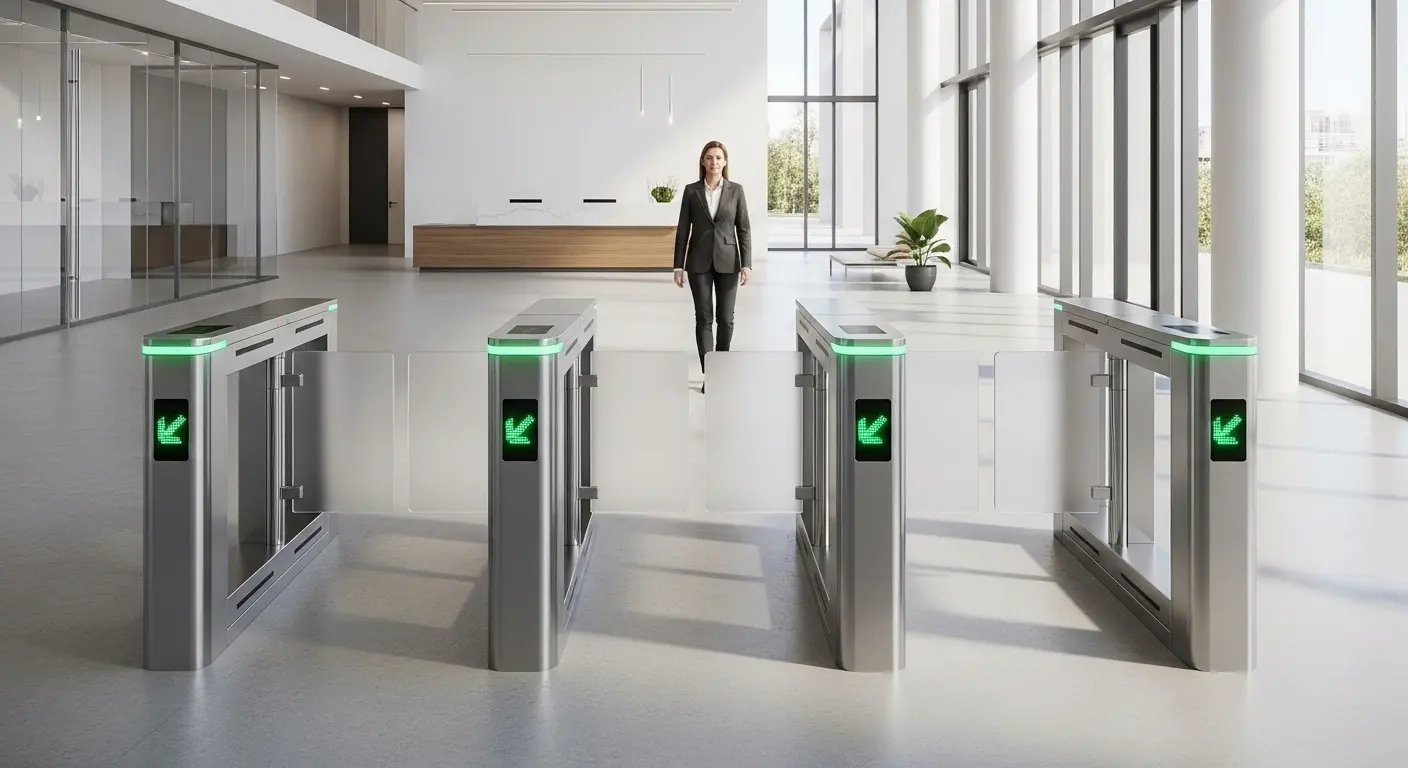
For an overview of available Ironman gate configurations and their integration capabilities, темturnstile gate main page and the Решения турникетов управления доступом page cover the full product and platform range.
Протоколы связи: The Foundation of Every Turnstile Gate System Integration
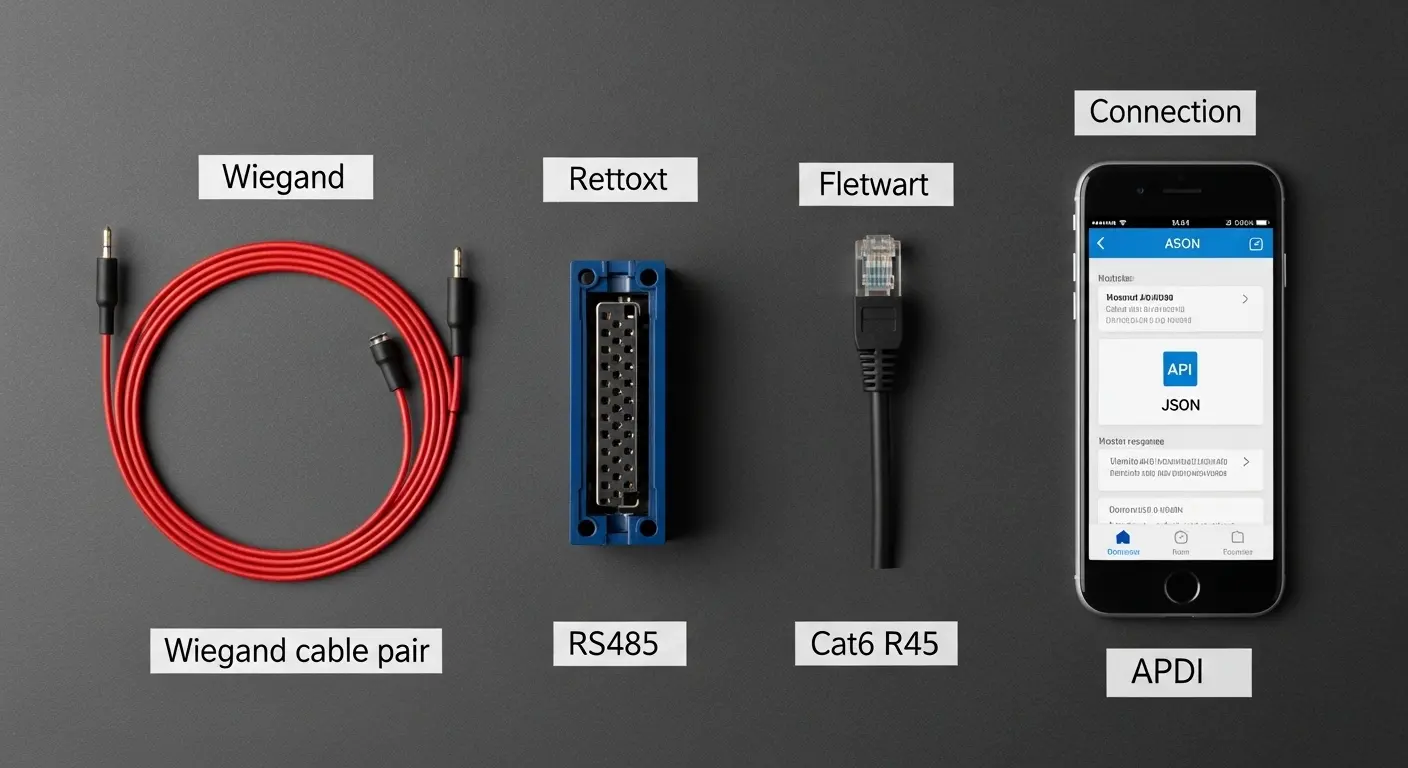
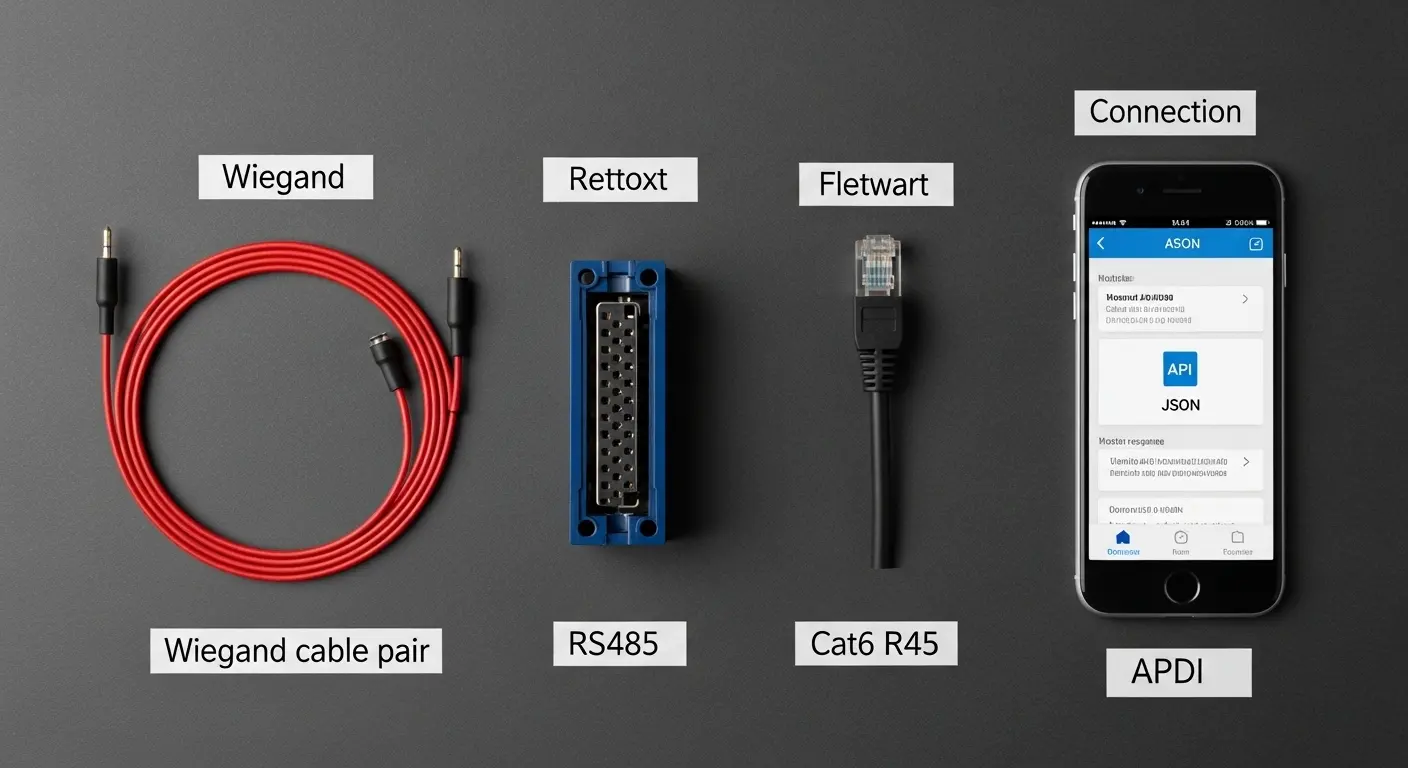
The communication protocol is the language the gate controller uses to talk to external systems. Choosing the wrong protocol for your environment creates compatibility problems that no amount of software configuration can fix.
Виганд
Wiegand is the legacy standard for access control communication. Most RFID card readers, Биометрические считыватели, and credential modules output Wiegand 26 или Виганд 34 format. Wiegand is a simple, однонаправленный, low-voltage signal — the reader sends credential data to the controller; the controller sends an open or close relay signal back. It is not a network protocol and carries no metadata beyond the credential ID.
Wiegand suits environments where existing infrastructure is built around Wiegand access control panels, where cable runs are short (under 150m), and where the integration requirement is simply credential-to-gate. It does not support two-way data exchange, Удалённое управление, or event data export natively.
RS485
RS485 is a differential serial bus protocol that supports cable runs up to 1,200 meters and multi-device topology on a single cable run. It allows two-way data communication between gate controllers and software systems — making it the first upgrade path from Wiegand for facilities that need event data export to attendance or access control software.
Most turnstile controllers with RS485 output can push timestamped event records to an attendance management platform or HR system in near-real time. For industrial environments, Производственные мощности, and any deployment with long cable runs between gate and control room, RS485 is the practical integration protocol.
TCP/IP
TCP/IP network connection turns the gate controller into a networked device. Each controller gets an IP address, connects to the building LAN or WAN, and communicates with the access control server or cloud platform using the building's existing network infrastructure. No additional signal cabling is required beyond a standard Cat5e or Cat6 network drop to the gate cabinet.
TCP/IP integration supports bidirectional data at high speed — real-time permission updates pushed to the gate, event logs pulled to the server, remote gate management from any location on the network. For multi-site deployments and cloud-connected systems, TCP/IP is the standard connection method.
Open API / REST API
Open API integration allows the gate system to exchange data with any third-party platform that supports REST API calls — HR systems, payroll software, Платформы управления посетителями, Системы управления зданиями, and custom in-house applications. The access control middleware or cloud controller exposes API endpoints that external platforms call to push credential updates or pull event logs.
For enterprise environments where the turnstile gate needs to connect to ERP systems, workforce management platforms, or custom applications, open API is the only protocol that enables this level of integration flexibility. Thecloud-based turnstile gate platform uses TCP/IP and open API architecture to support connections to third-party platforms without proprietary middleware requirements.
Protocol Comparison
| Protocol | Range | Направление | Скорость | Лучшее для |
|---|---|---|---|---|
| Виганд | Under 150m | Односторонний | Низкий | Legacy access control panels |
| RS485 | Up to 1,200m | Two-way | Умеренный | Attendance systems, Заводов |
| TCP/IP | Network range | Two-way | Высокий | Multi-site, облако, enterprise |
| Open API | Network range | Two-way | Высокий | ERP, ЧАС, custom platforms |
The Full Integration Ecosystem: What Can a Turnstile Gate Connect To?
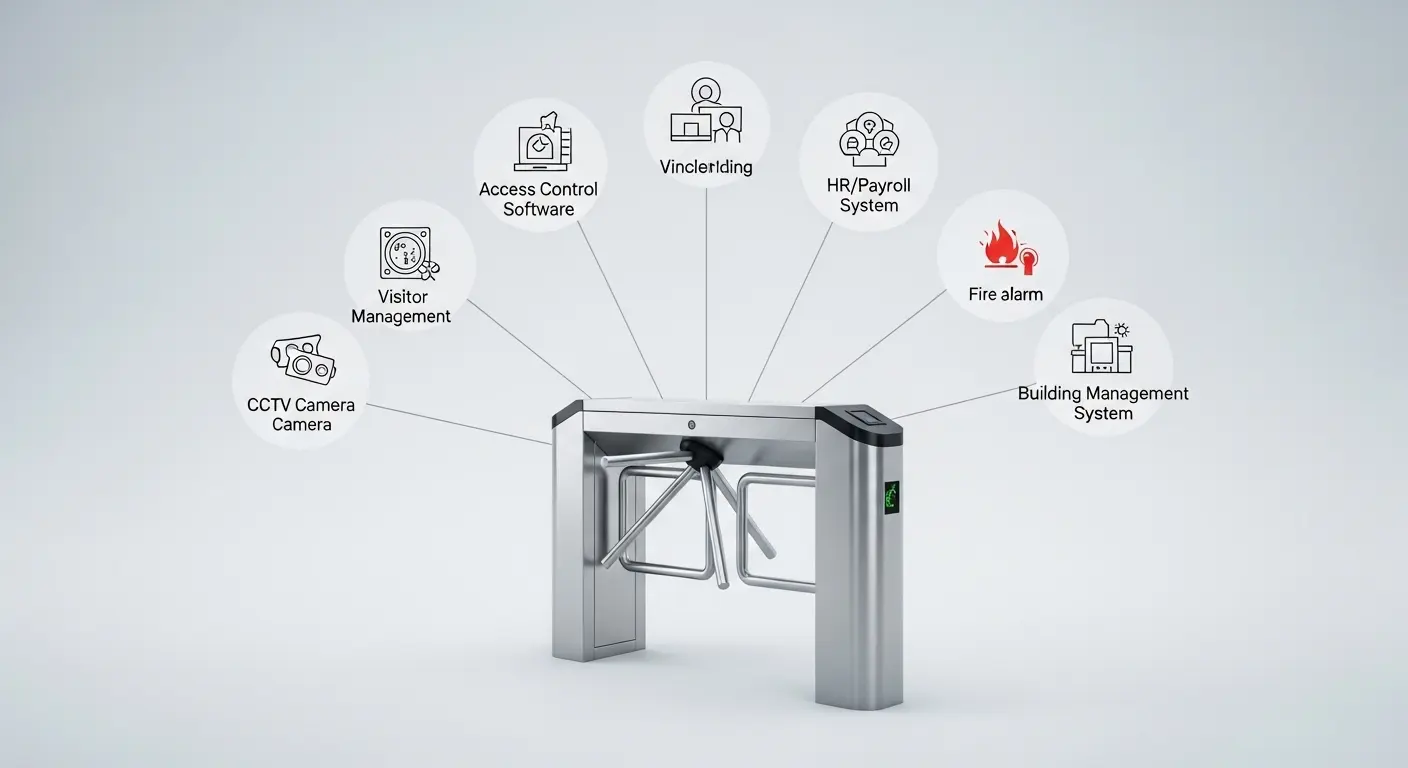
A well-specified turnstile gate system integration connects to more than just an access control panel. Here is the full ecosystem — and what each connection delivers in practice.
Программное обеспечение для контроля доступа
The core integration layer. The access control platform holds the credential database, permission rules, zone access definitions, и расписания времени. The gate controller receives permission data from the platform and returns entry event logs. When an employee's access is revoked in the platform, the change propagates to all connected gates immediately — no physical credential collection required.
HR and Payroll Systems
Turnstile entry and exit events are timestamped attendance records. With RS485 or TCP/IP connection, these events export automatically to attendance management software and onward to HR and payroll platforms. Shift start and end times are confirmed by actual gate scan events — eliminating buddy punching, estimated time entries, and manual timesheet reconciliation. TheШтрих-код турникета supports QR-based credential events that feed the same attendance export workflow for visitor and contractor populations alongside staff RFID events.
Системы управления посетителями (ВМ)
The VMS generates temporary visitor credentials, delivers them by email or SMS, and sends credential authorization data to the gate controller via API. On visitor arrival, the gate verifies the credential against the VMS authorization in real time, logs the visit record, and triggers the VMS to mark the visit as active. On exit, the exit scan marks the visit as completed and deactivates the credential automatically.
Видеонаблюдение (CCTV/VMS)
Video integration attaches a short camera clip to each gate event record — the 5 Кому 10 seconds of footage corresponding to the exact moment of a credential scan. When a security team reviews a flagged entry event, the camera clip is linked directly in the event log, eliminating the need to scrub through hours of unlinked CCTV footage to find the relevant moment. Для сред с высоким уровнем безопасности, this linked event-plus-video record is a significant audit and incident investigation capability.
Fire Alarm and Emergency Systems
Fire alarm integration opens all gate barriers automatically on fire alarm activation — removing any physical obstruction from emergency evacuation routes. This is a non-negotiable safety requirement in most jurisdictions. The gate controller monitors a dry-contact relay signal from the fire alarm panel; on alarm activation, the relay triggers all connected gates to free-passage or open mode, regardless of credential status. Emergency mode must be tested during commissioning and included in the site's regular fire safety testing cycle.
Системы управления зданиями (BMS)
BMS connection allows turnstile gate occupancy data to feed real-time building management decisions — HVAC zone activation based on confirmed occupancy, lighting control by floor, and energy management by actual vs. scheduled occupancy level. For large corporate campuses and government buildings, BMS-connected gate data replaces estimated occupancy models with actual counted entry and exit events.
Cloud vs On-Premise Integration Architecture
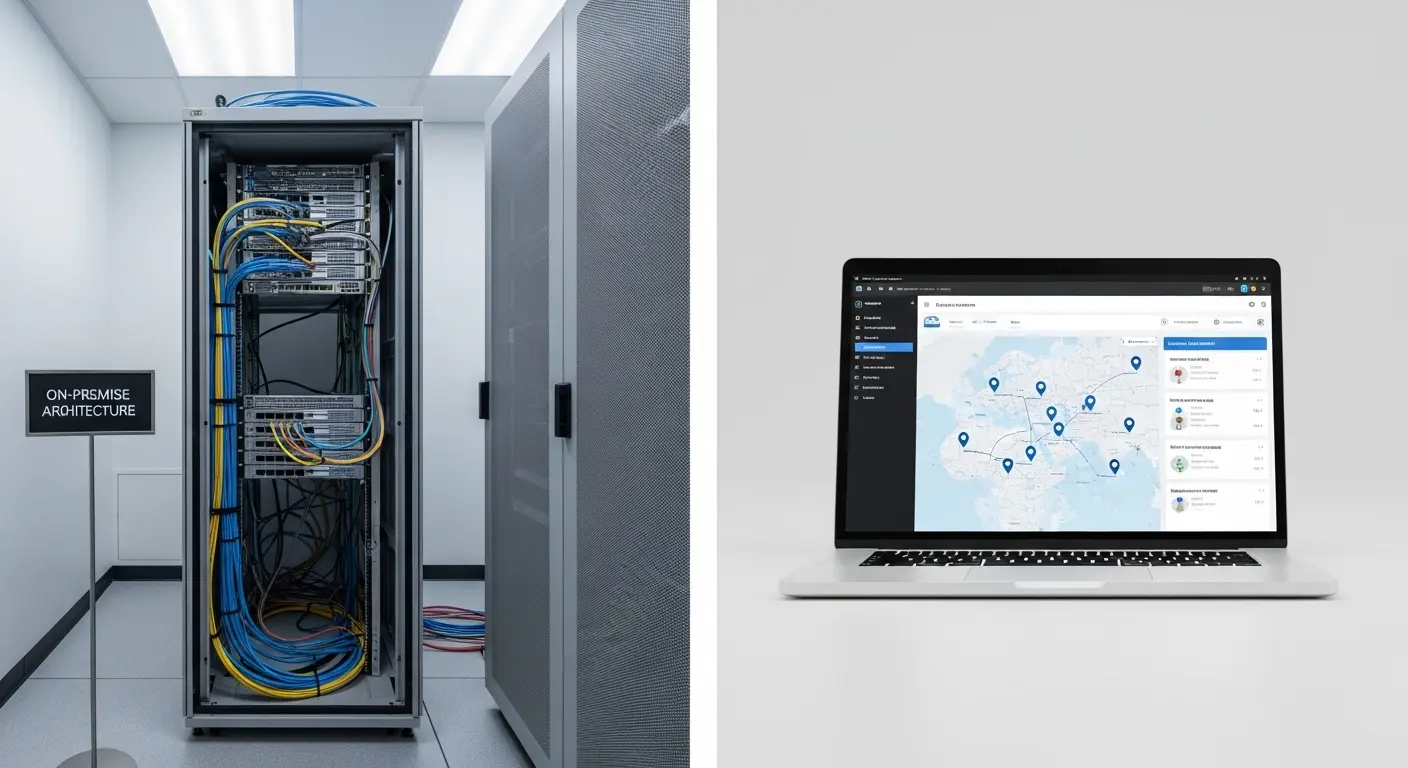
This decision determines how the integration system behaves during network outages, how credentials are managed across multiple sites, and what the total IT infrastructure cost looks like over time.
On-premise architecture stores the access control database, Журналы событий, and credential management platform on a local server within the facility. The gate controllers connect to the local server via TCP/IP or RS485. On-premise systems operate independently during internet outages — credential verification uses the locally cached database, not a remote cloud connection. For facilities with strict data sovereignty requirements, classified environments, or unreliable internet infrastructure, on-premise architecture is the correct specification. The limitation is that remote management, multi-site synchronization, and third-party API connections all require additional infrastructure investment.
Cloud architecture hosts the access control platform on a remote cloud server. Gate controllers connect via TCP/IP and communicate with the cloud platform over the internet. Credential management, Ведение событий, and system configuration are all accessible from any device with a browser. Multi-site deployments share a single management platform — one dashboard for 50 locations across three countries. Third-party API connections to HR and payroll software are typically simpler in cloud architecture because the API endpoint is a stable cloud URL rather than a local server IP.
The limitation is network dependency. A gate controller relying on a live cloud connection for every credential verification fails on network outage unless the controller maintains a local credential cache as a fallback. Confirm the failover behavior of any cloud-connected gate system before specifying it for an environment where network reliability is not guaranteed.
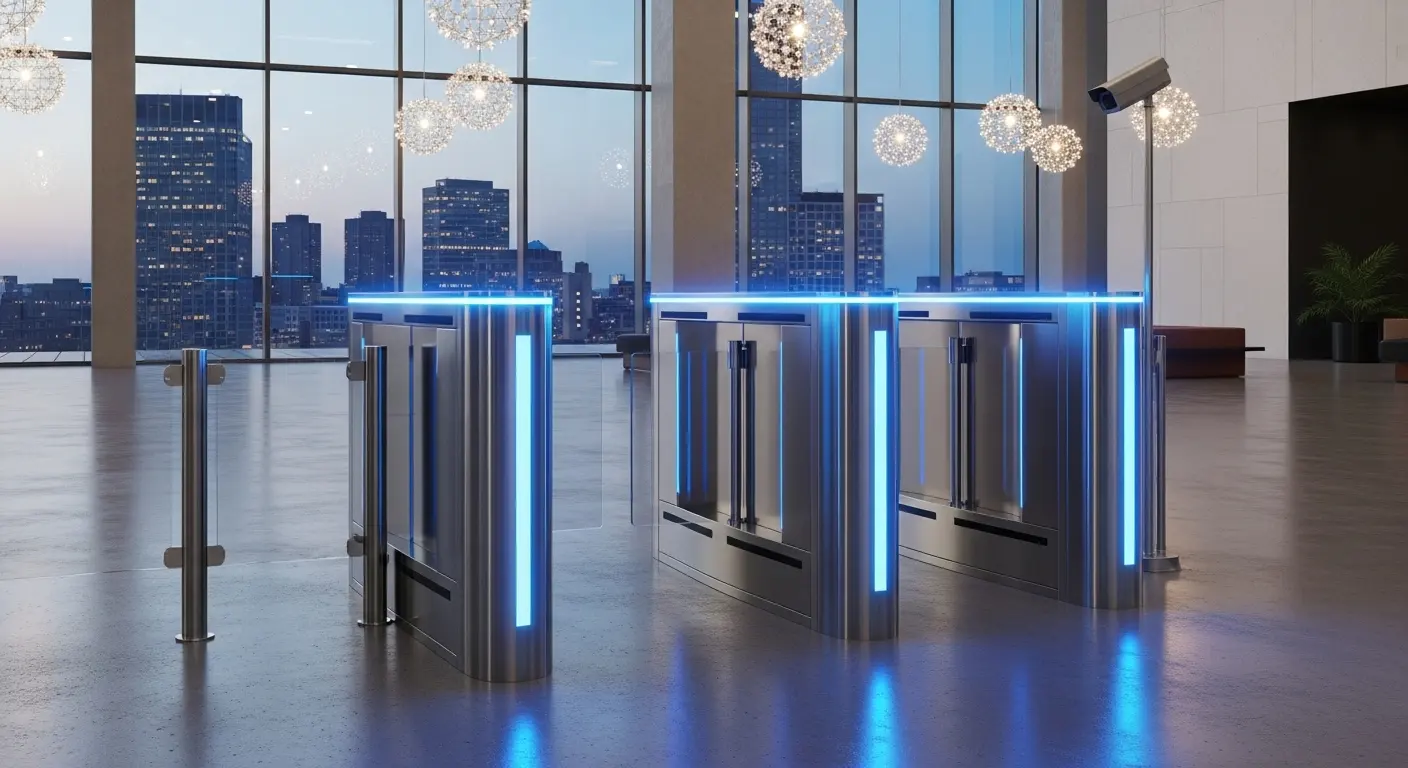
Hybrid architecture runs a local controller cache for fail-safe credential verification alongside cloud synchronization for management and reporting. This is the most practical architecture for most multi-site enterprise deployments — local resilience for gate operations, cloud convenience for management and integration. Железный человекcloud-based turnstile gate platform supports hybrid architecture with local cache failover and cloud-managed credential synchronization.
Anti-Passback Logic in Integrated Gate Systems
Anti-passback is one of the most frequently listed integration features — and one of the least understood by first-time buyers.
Anti-passback prevents a credential from being used to enter a zone that the system believes the credential holder has already entered — without an intervening exit record. На практике: an employee enters through Gate A with their card. A colleague asks to borrow the card to enter through Gate B. The system knows Card X is already inside Zone 1 and has not exited. Gate B denies the second entry attempt on that card, because the system shows Card X as already inside.
Hard anti-passback denies the entry attempt with a gate alarm. The user must contact security or use a self-release process to reset the record.
Soft anti-passback logs the anti-passback event and alerts the management dashboard but still opens the gate. This suits environments where enforcement must not physically block movement — hospitals and public facilities where blocking access could create a safety risk — but where the anomaly record still needs to be captured for audit purposes.
Time-based anti-passback reset clears the in/out status record for all credentials at a defined interval — midnight every day, Например. This prevents legacy anomalies (an employee who exited through an unmonitored emergency door) from permanently blocking a credential without requiring manual IT intervention.
Multi-Site Turnstile Gate Integration Management
For organizations with multiple sites — corporate campuses, Государственные ведомства, university faculties, or retail chains — turnstile gate system integration across locations requires a centralized management layer that handles credential synchronization, event log aggregation, and alert routing across all sites from a single interface.
In a multi-site architecture, each gate controller connects to the central access control platform via TCP/IP. Credential changes made at the central platform — new staff enrollments, permission updates, departures — propagate to all connected sites simultaneously. A staff member added to the system in one city is authorized at all connected sites within seconds of enrollment confirmation.
Event logs from all sites consolidate in the central platform — making it possible to see a complete movement record for any individual across all locations in a single report, without querying each site controller separately.
Alert routing at scale requires defined escalation rules: which events generate immediate alerts, which are logged for daily review, and which trigger physical security response. Without defined rules, a multi-site installation generates more alerts than any team can meaningfully process — undermining the audit value of the integrated system.
TheВорота контроля доступа к кампусу иДоступ к государственным учреждениям both support multi-site TCP/IP connectivity and centralized management for organizations managing multiple entry points across distributed physical locations.
Where Turnstile Gate System Integration Delivers the Most Value
Government and Secure Facilities
Government buildings require the most rigorous access event logging, zone enforcement, and audit trail capability of any deployment type. Turnstile gate system integration with the government facility's HR and security management platforms ensures that every credentialed entry is tied to a verified identity, that access windows match appointment or employment records, and that every event is logged to the standard required by compliance audits. Theturnstile gate for government buildings иДоступ к государственным учреждениям both support the full integration stack needed for compliance-grade deployment.
Corporate Campuses
Large corporate campuses manage hundreds to thousands of daily staff movements across multiple entry points, floors, and zones. Turnstile gate system integration with the HR platform automates attendance tracking across the entire campus — shift confirmations, zone access compliance, and departure records all flowing to the payroll system without manual intervention. BMS integration translates confirmed occupancy data into HVAC and lighting controls — reducing energy consumption in unoccupied wings without relying on time schedules.
Кейс-стади: Netherlands Speed Gate Lobby Deployment
Железный человекВестибюль здания турникетов с быстрыми воротами в Нидерландах case study shows how speed gate hardware connects to a multi-tenant access control platform in a European commercial building — where GDPR compliance, multi-tenant credential management, and real-time occupancy reporting are all required from the same gate system simultaneously. This deployment example reflects the typical enterprise integration scope for a modern commercial building in a GDPR-subject jurisdiction.
For the full range of environments where integrated gate systems are deployed, темsolutions overview covers sector-specific integration configurations.
GDPR and Data Compliance in Integrated Gate Systems
Когдаturnstile gate system integration connects gate event data to HR platforms, Системы посещаемости, and visitor management databases, it creates a personal data processing chain that falls within GDPR Article 5 and Article 6 requirements in EU-jurisdiction deployments.
Every entry event log that contains an identifiable credential ID, Название, or biometric reference is personal data. The legal basis for processing this data — typically legitimate interest for employee access management or explicit consent for biometric credentials — must be documented before the system collects data, not after.
Data retention rules must define how long gate event logs are kept, what happens to attendance records after an employment relationship ends, and how visitor visit records are anonymized or deleted at the end of the defined retention period. Most operational needs are satisfied by a 90-day rolling event log for access control audit purposes and a 12-month retention for attendance records tied to payroll compliance. Any retention beyond this window requires a documented justification.
For integrated systems that export event data to external HR or payroll platforms, a data processing agreement between the data controller (the facility operator) and the data processor (the HR software vendor) is required under GDPR Article 28. This must be in place before the API connection is activated and data begins to flow.
Common Integration Mistakes and How to Avoid Them
Specifying a protocol without checking controller compatibility. A TCP/IP-specified integration that arrives on site to find the gate controller only supports Wiegand requires an unplanned converter purchase and a commissioning delay. Confirm protocol support at the gate controller level — not just the access control platform level — before finalizing the specification.
Not testing the API connection under realistic event volumes. An API integration that works perfectly at 5 events per second fails under the 50 Кому 100 simultaneous events per second that a multi-lane morning peak generates. Load-test the full integration chain under simulated peak traffic before handing the system over to the client.
Building anti-passback rules without defining exception workflows. Anti-passback without a defined exception process — for emergency door exits, system restarts, and manual overrides — creates locked-out credentials that require IT intervention to reset. Define the exception workflow before go-live and give security staff the authority and tools to resolve passback anomalies without raising an IT ticket.
Connecting gate data to HR platforms without GDPR documentation. Starting data flows between the gate controller and an HR system before documenting the legal basis, data processing agreement, and retention policy creates retroactive compliance exposure. Complete GDPR documentation before the first API call activates.
Not planning credential synchronization latency across sites. In multi-site deployments, a credential revocation must propagate to all connected gates before the former holder can attempt access. The synchronization window — typically seconds for cloud systems, potentially minutes for on-premise multi-site setups — must be understood and factored into the off-boarding process. A terminated employee who can still badge in during a 10-minute sync window represents a real access risk in high-security environments.
FAQ: Интеграция системы турникетных ворот
What is turnstile gate system integration?
Turnstile gate system integration is the process of connecting a turnstile gate's hardware controller to external software platforms — such as access control software, HR and payroll systems, Платформы управления посетителями, видеонаблюдение, and building management systems — so that gate events, credential data, and access permissions move automatically between systems without manual data transfer. The connection runs through a communication protocol (Виганд, RS485, TCP/IP) or an open API, depending on the platform and infrastructure.
What communication protocols does a turnstile gate use for system integration?
The four main protocols are Wiegand (legacy, односторонний, short cable runs), RS485 (двусторонний, long cable runs, attendance system export), TCP/IP (network-connected, cloud and enterprise integration), and open API/REST API (flexible third-party platform connection for HR, ERP, and custom systems). The correct protocol depends on cable run length, existing infrastructure, integration target platforms, and whether the system needs to operate independently during network outages.
Can a turnstile gate integrate with HR and payroll software?
Да. A turnstile gate with RS485 or TCP/IP output exports timestamped entry and exit events to attendance management software, which syncs with HR and payroll platforms at defined intervals. This eliminates manual timesheet entry, confirms actual shift attendance against scheduled hours, and removes buddy-punching risk. Most standard HRM and payroll platforms accept attendance data via RS485 serial export or TCP/IP API connection. The integration is configured during commissioning and requires no manual data transfer once live.
What is anti-passback in a turnstile gate system?
Anti-passback is a logic rule in the access control system that prevents a credential from being used to enter a zone it is already logged as being inside — without an intervening exit record. It prevents credential sharing between users. Hard anti-passback denies entry and fires an alert. Soft anti-passback logs the event and alerts the dashboard but still opens the gate. Time-based anti-passback resets in/out status records at a defined interval to prevent legacy anomalies from permanently blocking credentials.
Should a turnstile gate system integration use cloud or on-premise architecture?
Cloud architecture suits multi-site deployments, remote management requirements, and environments where third-party API connections to HR and payroll platforms are a priority. On-premise architecture suits facilities with data sovereignty requirements, classified environments, or unreliable internet infrastructure where local failover is non-negotiable. Hybrid architecture — local cache for operational failover plus cloud synchronization for management — is the most practical choice for enterprise multi-site deployments that need both resilience and remote manageability.
