


Waterproof Turnstile Gate: IP Ratings Explained, Gate Types Compared, and Outdoor Installation Done Right
2026-03-20


A waterproof turnstile gate isn't defined by the word "outdoor" in a product brochure — it's defined by a specific IP (Ingress Protection) rating that tells you exactly how much water and dust the gate's electronics can withstand before failure. Choosing the wrong IP rating for your environment doesn't cause immediate problems. It causes progressive electronics degradation, intermittent sensor faults, control board corrosion, and eventually a gate that stops working reliably — months or years after installation.
This guide explains what the IP rating system actually means, which rating matches each outdoor environment, how different waterproof turnstile gate types compare, and what proper outdoor installation requires.
What "Waterproof" Actually Means: The IP Rating System
Every waterproof turnstile gate carries an IP rating — two digits that encode two separate protection levels. Understanding those two digits is the foundation of any outdoor gate specification:
The First Digit — Solid Particle Protection (0–6)
- IP4X: Protected against solid objects larger than 1mm (wire, screws)
- IP5X: Dust-protected — limited dust ingress, not enough to affect operation
- IP6X: Totally dust-tight — no ingress under any conditions
The Second Digit — Liquid Ingress Protection (0–9)
- IPX4: Protected against water splashes from any direction
- IPX5: Protected against water jets from any direction
- IPX6: Protected against powerful water jets from any direction
- IPX8: Protected against continuous immersion (specified depth and duration)
Combining these two digits:
- IP44: Solid objects >1mm + splashes — minimum indoor gate standard
- IP54: Dust-protected + water jets — semi-outdoor, covered canopy environments
- IP65: Totally dust-tight + water jets — standard outdoor rating for exposed turnstile gates
- IP66: Totally dust-tight + powerful water jets — heavy rain, pressure washing, coastal spray
For most outdoor waterproof turnstile gate deployments, IP65 is the baseline. IP54 is only adequate for covered positions — a gate under a permanent roof canopy that prevents direct rain on the cabinet.
IP Rating by Environment: Which One Does Your Site Actually Need?
Here's a straight mapping of environment type to required IP rating:
| Environment | Minimum IP Rating | Why |
|---|---|---|
| Indoor climate-controlled | IP44 | No water exposure beyond cleaning splash |
| Indoor high-humidity (gym, pool, hospital) | IP54 | Condensation and wet cleaning chemical spray |
| Semi-outdoor with permanent roof canopy | IP54 | Protected from direct rain, but exposed to humidity and wind-driven spray |
| Outdoor uncovered (urban) | IP65 | Direct rain from any angle — standard outdoor minimum |
| Outdoor coastal (within 1km of sea) | IP65 + SUS316 | Salt-spray water jet plus chloride corrosion at weld seams |
| Outdoor high rainfall or tropical | IP65–IP66 | Heavy rain volume and extended wet exposure |
| Outdoor pressure-wash environments (food processing perimeter) | IP66 | Direct high-pressure water jets from cleaning procedures |
| Snow and freezing environments | IP65 + heater kit | Freeze-thaw cycling causes gasket failure in lower-rated seals |
One critical installation point that most supplier spec sheets omit: an IP rating describes the sealed gate in its factory configuration. Drilling extra cable entry points, field-fitting an RFID reader in a non-factory position, or leaving a conduit entry unsealed during installation reduces the effective IP rating of the installed gate — regardless of what the product label says.
Types of Waterproof Turnstile Gate and Their Outdoor Suitability
Different gate types present different sealing challenges. The mechanism that moves the barrier — arm, panel, or wing — is the component most exposed to water ingress, and each gate type manages this differently:
Outdoor Tripod Turnstile Gate (IP54–IP65)
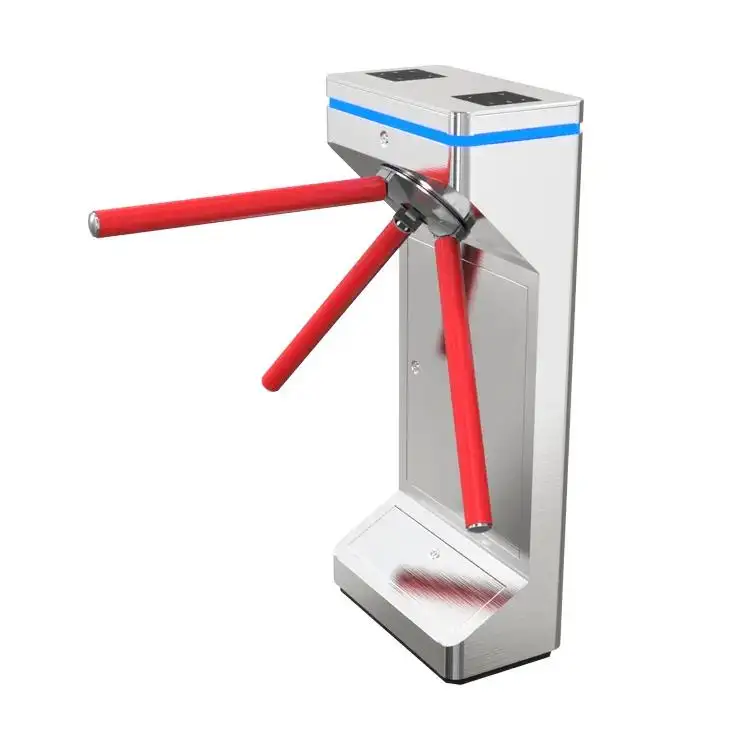
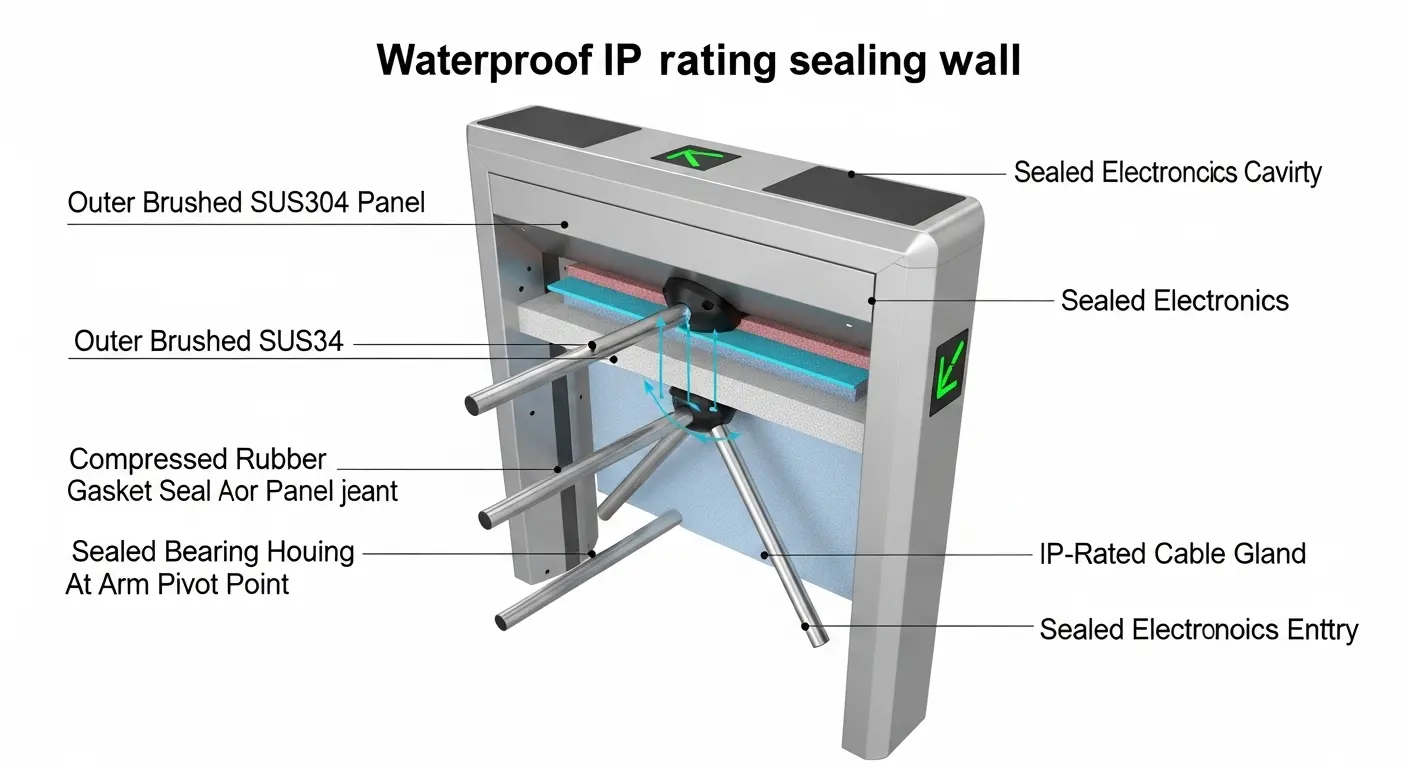
The simplest outdoor waterproof turnstile gate to seal reliably. The rotating arm mechanism sits inside the cabinet with only the arm pivot point breaking the cabinet surface. IP54 outdoor tripod turnstile models are well-established — a stainless steel cabinet with gasket-sealed panel joins and a sealed bearing assembly at the arm pivot provides reliable rain protection.
For higher exposure environments — direct rain, coastal sites, or construction projects without permanent canopies — an IP65 tripod model with a 100mm reinforced concrete base provides the correct outdoor waterproof standard. Per MairsTurnstile's outdoor installation guide, the concrete base must raise the gate above the maximum anticipated water accumulation level at the site — and the gap between the base and the cabinet must be sealed with weatherproof silicone.
Anti-Climbing Swing Barrier Gate (IP54–IP65)
The anti-climbing swing turnstile in outdoor configuration addresses a unique sealing challenge: the extended-height panel (1,800mm+) swings on a large-radius arc, requiring a sealed pivot assembly that handles both mechanical load and weather exposure simultaneously. For outdoor perimeter security applications — factory boundaries, school perimeters, research facility edges — an IP65-rated anti-climbing swing turnstile provides physical bypass prevention (height) combined with weather resistance, without requiring the full-canopy cover that a standard swing barrier gate needs in outdoor positions.
The automatic anti-climbing swing turnstile takes this further with a motorized drive and automatic credential validation — replacing a guard-operated gate at an outdoor checkpoint with a fully automated access control lane that operates in all weather conditions with no manual intervention.
Arc Swing Gate Turnstile (IP54–IP65)
An arc swing gate turnstile provides a wider pass-through radius than a standard swing barrier — the arc motion covers a larger geometric sweep, accommodating wider cargo, equipment, or mobility device users at outdoor access points. In waterproof configuration, the arc pivot assembly uses a sealed bearing housing and double-layer gasket sealing at the cabinet wall breakthrough point — the two components most exposed to water ingress during the swing cycle.
Compact Swing Gate Turnstile (IP54)
For outdoor installations with constrained floor space — a secondary building entrance, a rooftop access point, or a narrow outdoor corridor between buildings — a compact swing gate turnstile in IP54 configuration provides full swing barrier functionality in a reduced cabinet footprint. The reduced footprint also makes canopy installation simpler — a smaller canopy covers the gate adequately, making IP54 sufficient even in moderate rain environments.
Full Height Outdoor Turnstile Gate (IP54–IP65)
The most fully enclosed waterproof turnstile gate option. An access control full height turnstile with outdoor IP65 certification encloses the entire passage channel in a floor-to-ceiling structure — the rotating arm mechanism is fully enclosed, electronics sit in a sealed cavity at the base, and the only external moving part is the arm itself, which exits through a sealed wall port.
For outdoor full height installations in coastal environments, SUS316 construction is required alongside the IP65 rating — IP65 addresses liquid ingress at the seals, but SUS316 addresses the corrosion of the cabinet material itself under sustained salt-air exposure. Both specifications are needed, not either/or.
Smart Speed Gate in Outdoor Configurations
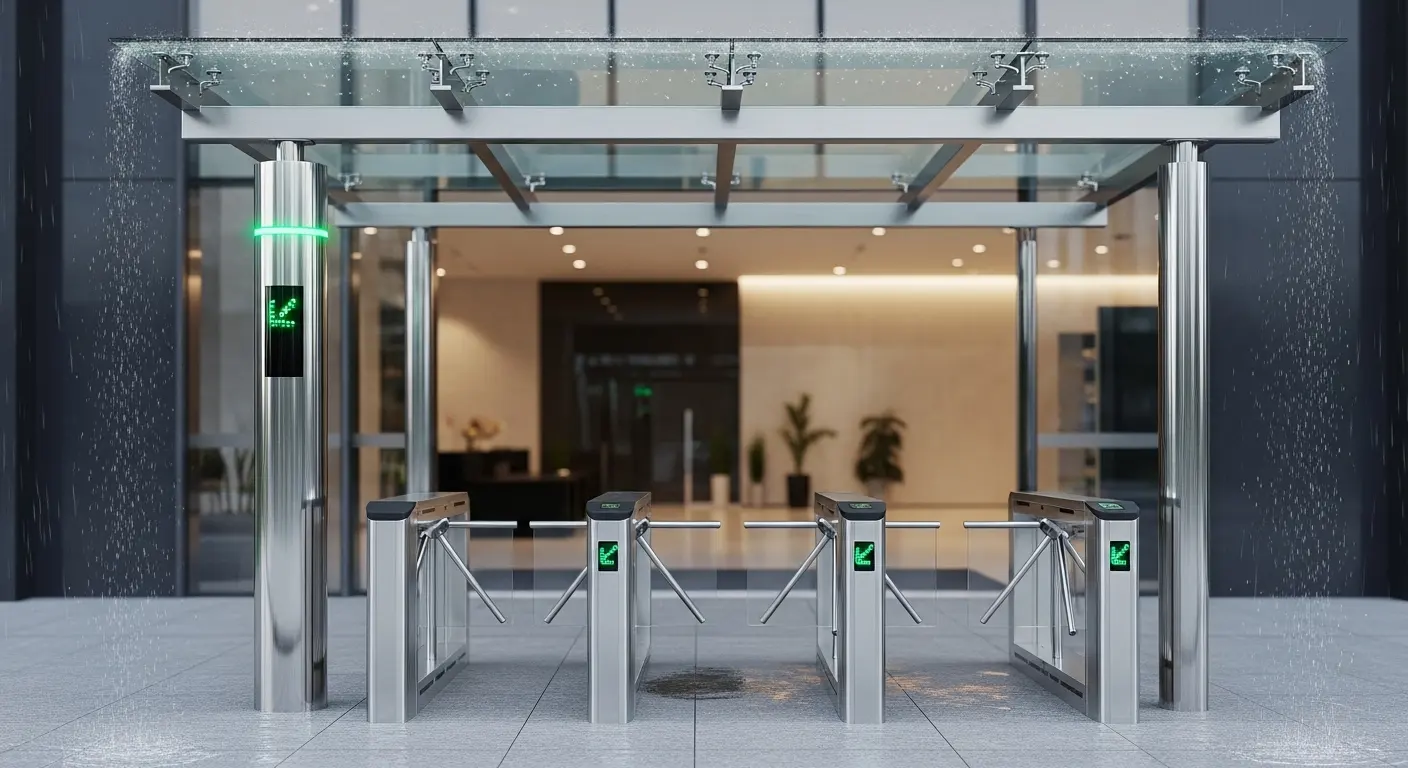
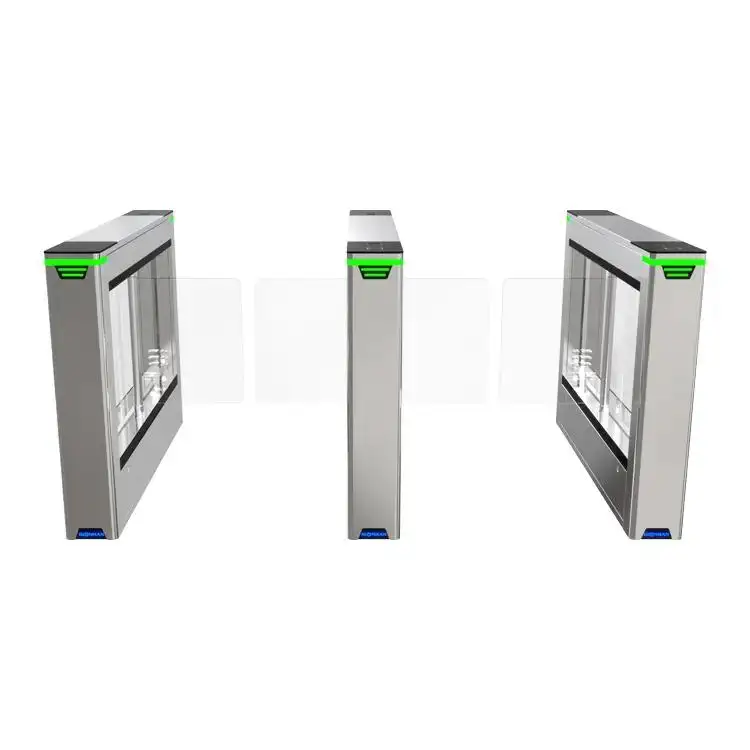
Speed gates present the greatest outdoor waterproofing challenge. The retractable glass panels sit in a slim-profile column with a large panel opening at the top — an inherently difficult geometry to seal against direct rain.
Most standard speed gates are IP44 — indoor only. For outdoor or semi-outdoor speed gate deployment, a specifically designed outdoor-rated model is necessary. A smart speed gate turnstile in outdoor configuration uses a double-sealed top panel closure, sealed column gaskets at panel entry points, and a drain channel at the column base to redirect water away from the electronics cavity.
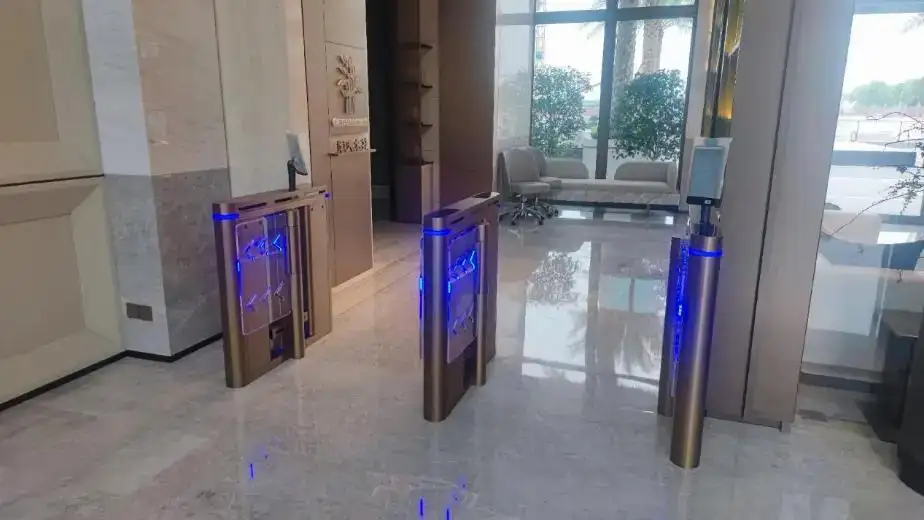
For covered semi-outdoor positions — a lobby entrance vestibule, a covered walkway between buildings, or a permanent canopy-protected entrance — an optical speed gate turnstile at IP54 handles the humidity and indirect water exposure of a covered outdoor position while maintaining the premium panel aesthetic appropriate for commercial building entrance deployments.
The key rule for speed gate outdoor positioning: if the gate is directly exposed to rain from any angle, IP65 in a specifically designed outdoor speed gate model is required. If the gate sits under a permanent roof canopy with full overhead coverage, IP54 is adequate.
Anti-Tailgating in Outdoor Waterproof Turnstile Gates
Outdoor access points frequently present higher tailgating risk than indoor lobbies — less visible from security desks, more frequent worker flow during shift changes, and more physical space for a second person to follow closely.
An outdoor waterproof turnstile gate with anti-tailgating detection requires the same sensor pair count as an indoor model — 6–12 pairs for reliable detection — but with an additional weather consideration: infrared sensor performance can degrade in direct sunlight, heavy rain, or condensation conditions that affect optical clarity at the emitter/receiver lens surface.
For outdoor deployments, confirm the following for anti-tailgating sensors:
- Lens protection: Factory-fitted polycarbonate or glass lens covers over the IR emitter/receiver pairs
- Solar compensation: Auto-gain control in the IR receiver to compensate for ambient infrared interference from direct sunlight
- Sealed sensor housing: IP rating applies to the full gate including sensor housings — not just the main cabinet
The anti-tailgating AB turnstile gate in outdoor-rated configuration uses sealed optical sensors with auto-gain IR compensation — maintaining anti-tailgating detection accuracy in direct sunlight and light rain conditions where uncompensated sensors generate false positives.
Outdoor Waterproof Turnstile Gate Installation Requirements
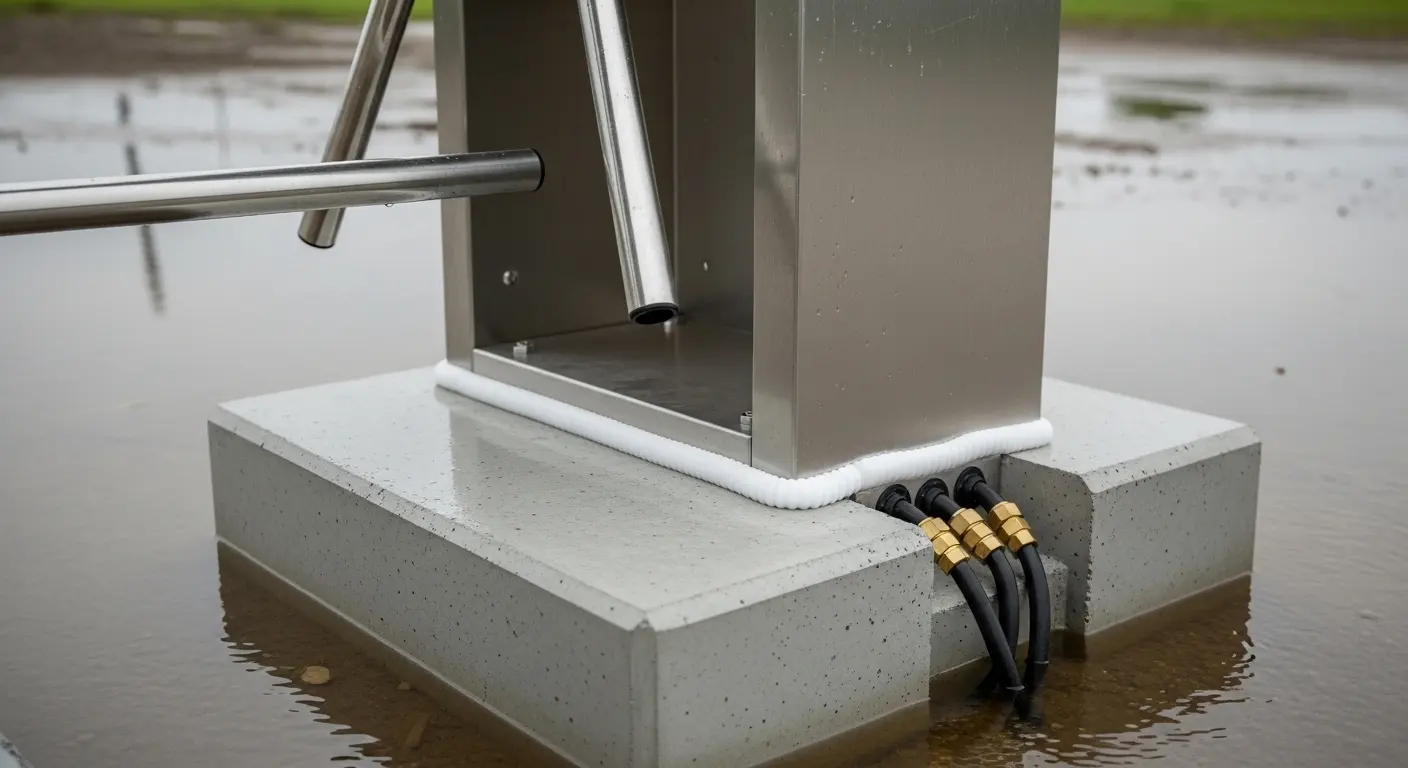
A correctly specified waterproof turnstile gate still fails in outdoor conditions if the installation doesn't address the site's specific water management requirements. These are the non-negotiable installation steps for any outdoor waterproof turnstile gate:
1. Concrete Base Height
Build the concrete base to a minimum of 100mm above the highest anticipated water accumulation level at the gate position. Measure standing water depth after the heaviest local rainfall event — not average rainfall. The gate cabinet sits on top of the base, keeping the sealed base panels above the waterline.
2. Base-to-Cabinet Sealing
Seal the interface between the concrete base and the gate cabinet base flange with weatherproof silicone — all four sides, continuously. Any gap allows water wicking up into the base cavity under capillary action, bypassing the IP seal entirely.
3. Cable Entry Point Sealing
Every cable entry point — power, data, reader, alarm — must use a factory-specified IP-rated cable gland. Field-drilled holes without cable glands reduce the effective IP rating of the installation, regardless of the gate's rated IP.
4. Condensation Management
In climates with high temperature variation between day and night, condensation forms inside the electronics cavity even in IP65-rated gates. A silica gel dessicant pack inside the electronics cavity, replaced annually, manages internal condensation. Some outdoor waterproof turnstile gate models include a factory-fitted heated electronics compartment — important for deployments in climates that drop below 0°C.
5. Snow Gate Configuration
For winter deployments with snow and ice, a snow gate turnstile addresses the specific challenge of ice formation in panel mechanisms. Standard IP65 seals prevent water entry but don't prevent mechanism freezing — a heated drive mechanism and heated arm pivot assembly prevent ice buildup that would otherwise lock the gate closed at sub-zero temperatures.
Frequently Asked Questions About Waterproof Turnstile Gates
Q: What IP rating does a waterproof turnstile gate need for outdoor use?
A: IP65 is the minimum for a fully outdoor waterproof turnstile gate exposed to direct rain from any angle. This rating provides total dust exclusion and protection against water jets from any direction. IP54 is adequate for semi-outdoor positions under a permanent roof canopy that prevents direct rain on the cabinet. For coastal sites within 1km of the sea, IP65 combined with SUS316 stainless steel is required — the IP65 seals address water ingress, while SUS316 addresses cabinet corrosion from salt air.
Q: What is the difference between IP54 and IP65 for a turnstile gate?
A: IP54 provides dust-protected (limited ingress) and splash-proof protection — suitable for covered outdoor positions, high-humidity indoor environments, and indirect water exposure. IP65 provides totally dust-tight and water-jet-resistant protection — the correct rating for direct outdoor rain exposure. The practical difference in a heavy rain event: an IP54-rated gate in direct rain will have water ingress at seams and cable entries within months; an IP65-rated gate handles the same exposure without moisture reaching the electronics.
Q: Can a standard indoor turnstile gate be used outdoors with a canopy?
A: A canopy significantly reduces water exposure but doesn't make a standard IP44 gate safe for any outdoor position. Wind-driven rain, humidity, and condensation still affect gate electronics without adequate IP sealing. For any covered outdoor position, IP54 minimum is the correct specification — not a standard indoor model under a canopy. For direct outdoor exposure, IP65 is required regardless of canopy presence.
Q: What installation steps protect a waterproof turnstile gate outdoors?
A: Five steps protect outdoor installations: (1) build a concrete base at least 100mm above maximum water accumulation level; (2) seal the cabinet-to-base interface with weatherproof silicone; (3) use IP-rated cable glands at every cable entry point; (4) manage internal condensation with silica gel or a heated electronics compartment; and (5) for snow climates, specify a snow gate model with a heated drive mechanism to prevent mechanism freezing at sub-zero temperatures.
Q: Do outdoor waterproof turnstile gates work in sub-zero temperatures?
A: Yes — if the operating temperature specification covers your climate and the model includes cold-weather provisions. Standard outdoor waterproof turnstile gates typically operate at -20°C to +60°C. For temperatures below -20°C, a heated electronics compartment and heated arm pivot assembly are required. IP-rated gaskets must also be specified for low-temperature flexibility — standard rubber gaskets stiffen at sub-zero temperatures and lose their sealing effectiveness.
