


How an Optical Pedestrian Access Gate "Reads" a Person's Walking Trajectory
2026-06-19


At the heart of every modern optical pedestrian access gate lies a sophisticated question: how does a machine distinguish between a single authorized person and someone attempting to follow closely behind? The answer lies not in an individual sensor, but rather in an intricate system of optics, logic and control. This article focuses on the engineering breakthroughs made by IRONMAN Intelligent and how the technology integrated within the turnstile system enables them to "see" and decipher the movements of pedestrians.
Evolving from Beams to Grids
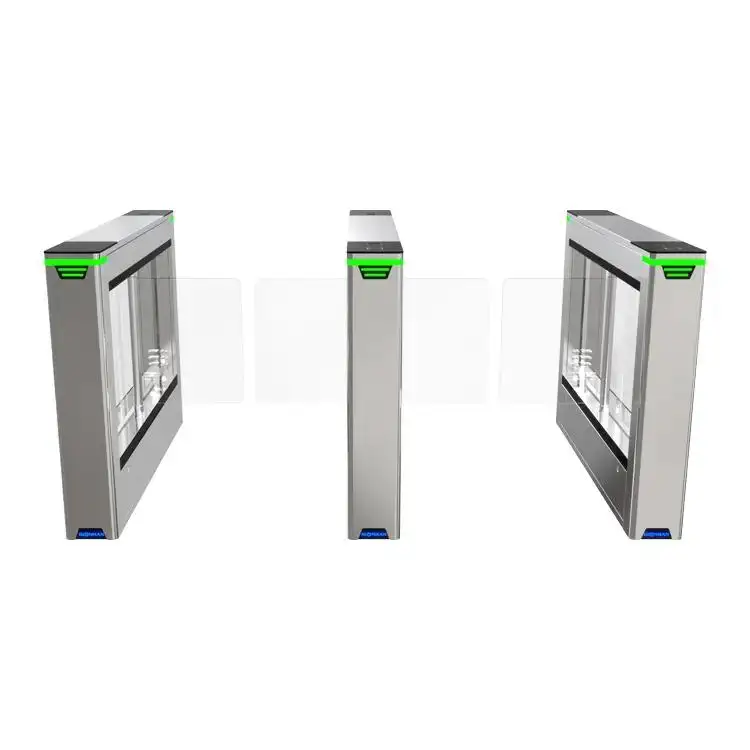
To detect the trajectory of a pedestrian in an optical speed gate, a grid of infrared (IR) sensors is utilized. A traditional design would encompass a single IR beam but today's optical pedestrian access gates utilize a grid of numerous IR beams. The optical speed gate turnstile from IRONMAN Intelligent, for example, is equipped with an 8-point infrared system and boasts the option of expanding to 12 pairs.
• How the grid operates: The pairs act as a team with one beam of infrared light and one sensor. The infrared transmitters each send a beam of light. If a pedestrian moves through, that light beam is obstructed by their body.
• Designing a "light curtain": With a high density of IR beams, a "light curtain" is formed. The optical speed gate turnstile not only recognizes the presence of an individual, it also tracks the specific order in which IR beams are broken.
• Advantages of multiple pairs: Having an IR grid allows the system to detect the act of tailgating. Some of the more sophisticated optical turnstile systems can even detect a person attempting to intrude from as close as 1/4 of an inch behind an authorized individual.
Analyzing Movement: Understanding the Trajectory
The data produced by an infrared matrix is insufficient without a system dedicated to interpreting that information. The "brain" of an optical speed gate turnstile contains a complex logic algorithm that interprets distinct pedestrian movement patterns from blocked laser beams.
The logic controller interprets a number of distinct features based on the pattern of beam obstructions:
| Feature | How It's Determined |
| Direction of Passage | Whether a user is entering or exiting the turnstile is determined by the pattern of beams that are blocked from left to right or right to left. |
| Speed of Passage | The turnstile system determines the speed of the user based on the time taken to traverse from the first beam to the last beam in the sequence. |
| Body Dimensions | The body dimensions of the user can be determined based on the beams that are blocked, and the patterns of obstructions can also suggest that the user is carrying a load such as luggage, or a stroller. |
| Path of Trajectory | Continuous monitoring of the matrix system allows the determination of the path of the turnstile user, |
also suggesting possible abnormal behaviors.
The Core Mission: Intelligent Anti-Tailgating
This security system is designed with sophisticated technology that helps to eliminate unauthorized facility access, primarily by tailgating. The IRONMAN Intelligent optical turnstile speed gate is uniquely designed with intelligent anti-tailgating technology.
• Real-time monitoring: With optical sensors, pedestrian movement is detected in real time.
• Identifying anomalies: The system is designed to understand the pattern of normal single authorized access. An interception of the beams, followed almost instantaneously by interference of a second pair of beams, is recognized by system to indicate a tailgating attempt.
• Immediate response: The gate control system, upon the detection of an anomaly, sends an alert and stops the gate from fully opening or closing to allow entry of the unauthorized individual. The gate deploys a high speed barrier to fully close to negatively reinforce an entry attempt.
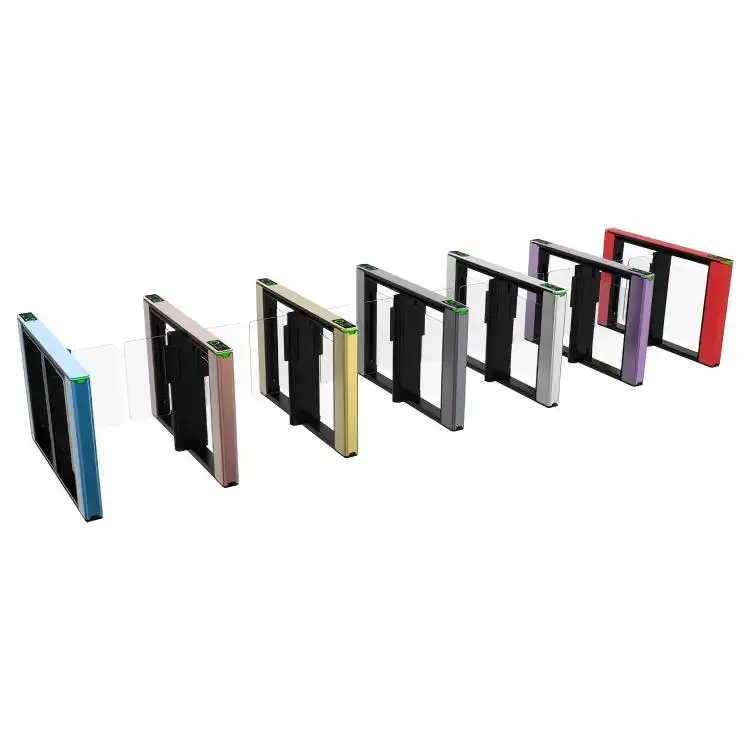
Advanced Safety and Inclusivity Features
The logic embedded into the system to ensure security is extended to safety and accessibility. A pedestrian access gate that is optical must be able to serve a broad range of users from those with different mobility needs to the very young.
• Obstruction detection: The embedded system logic includes a safety design. When a person, a mobility aid, or a piece of luggage, comes into contact with the barrier, injury or damage is prevented by the barrier wings flipping open because torque sensors are activated.
• Multi-zone sensing: To serve users like those in a wheelchair who are slower moving and those with strollers, the sensor logic can utilize a technology like LiDAR or multiple infrared sensors to ensure the gate does not close before an individual fully passes through the gate.
IRONMAN Intelligent's Holistic Approach
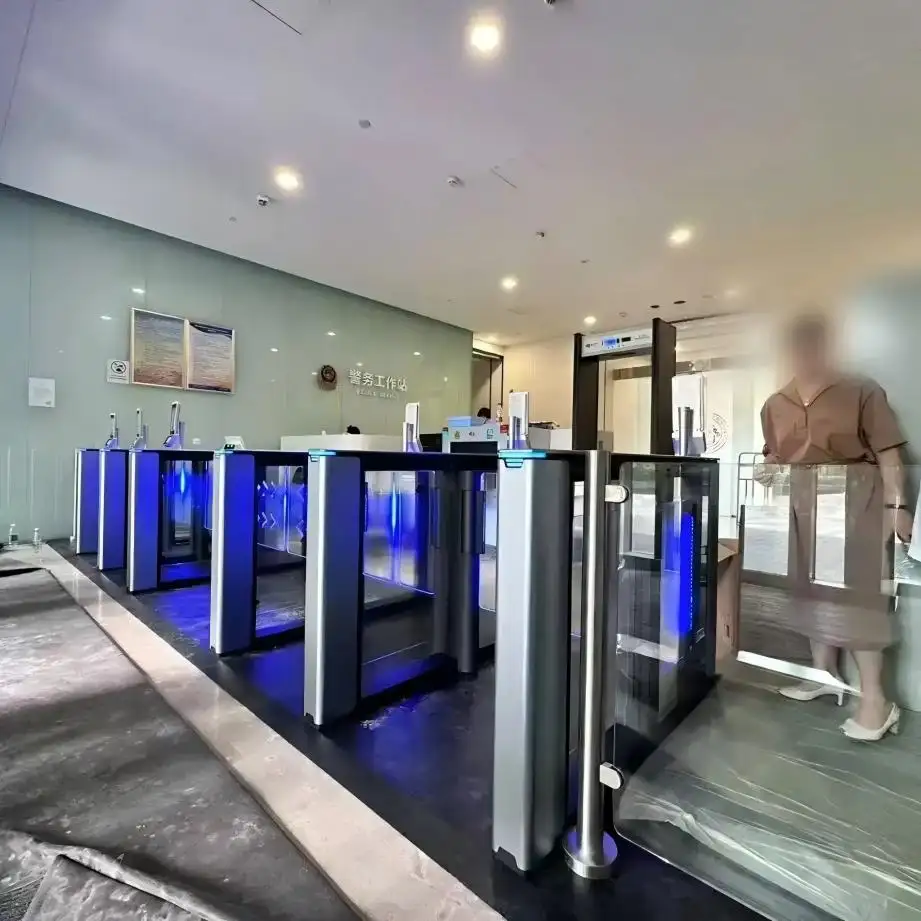
IRONMAN Intelligent creates an advanced, complete system with the ability to leverage complex logic. An excellent example of this is our optical speed gate turnstile. It is much more than a sensor array; it is a high-speed, sensor-dense access control node.
• High Speed Servo Control: The logic continues to our high-speed servo control system. An instant response is guaranteed for both the authorization and security status.
• Modular Control: Our control and communication systems are modular. Integration of new sensors and control boards is problem-free.
• Remote Diagnostics: The turnstile also has the capability to provide remote diagnostics for cycle count, sufficient sensor state monitoring, and overall device health diagnostics. This allows facility managers to schedule service in a timely manner to maintain the accuracy and reliability of the system.
Final Words
IRONMAN Intelligent's optical speed gate turnstile is a highly advanced access control system. Rather than simply being a barrier, it is a highly sophisticated "thinking" system that has the capacity to interpret the path and intents of an individual. Using a high-density infrared matrix, and advanced logic for path and intent for anti-tailgating, IRONMAN Intelligent has designed a system that is both highly secure and highly accommodating. This ensures that only those with proper authorization are permitted and allows the system to be used in the fastest and most crowded environments.
Frequently Asked Questions (FAQs)
Q1. What is an optical pedestrian access gate?
This system controls entry to a protected area using several infrared sensors. Unlike traditional gate security systems, this provides more assurance on preventing tailgating while allowing the pedestrian flow of authorized access.
Q2. How does the gate detect tailgating?
By creating a "light curtain," the gate allows sensors to monitor a pattern of infrared beams. When the monitored passage is interrupted by more than one person (i.e., two or more beams excited in quick succession) the system will trigger an alarm and keep the gate closed.
Q3. Can the gate tell the difference between an object and a person? What if the object is luggage?
The gate employs a logic controller that can adjust for luggage, strollers, and even mobility aids. The system will be able to determine the passage of smaller objects while also distinguishing body profiles.
Q4. What happens if the power goes out?
For modern optical speed gates, the power loss will trigger the wings of the barrier to remain in the open position to allow free passage. The wings can also be manually pushed open to facilitate an emergency evacuation.
Q5. How quickly can people pass through such a gate?The throughput for optical pedestrian access gates is generally a maximum of 45 people per minute. This makes it ideal for use in areas that experience a high volume of pedestrian traffic such as metro stations and office building lobbies.
