


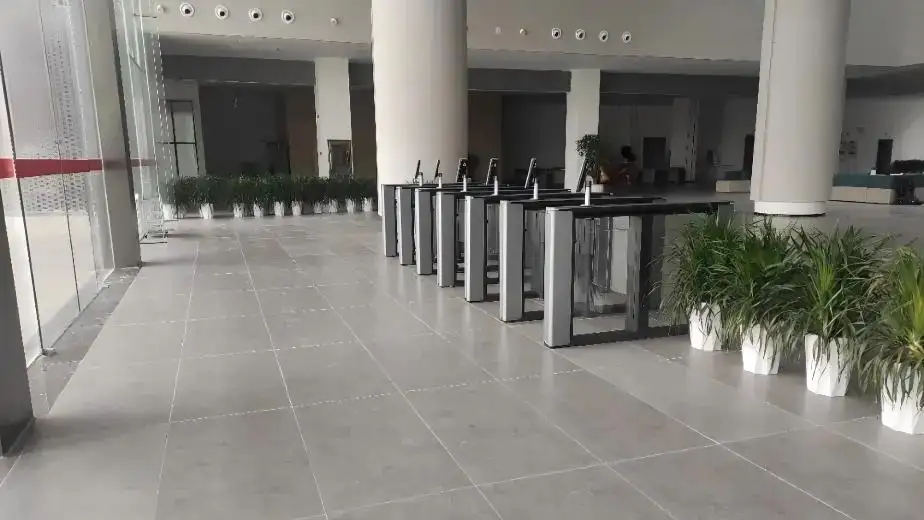
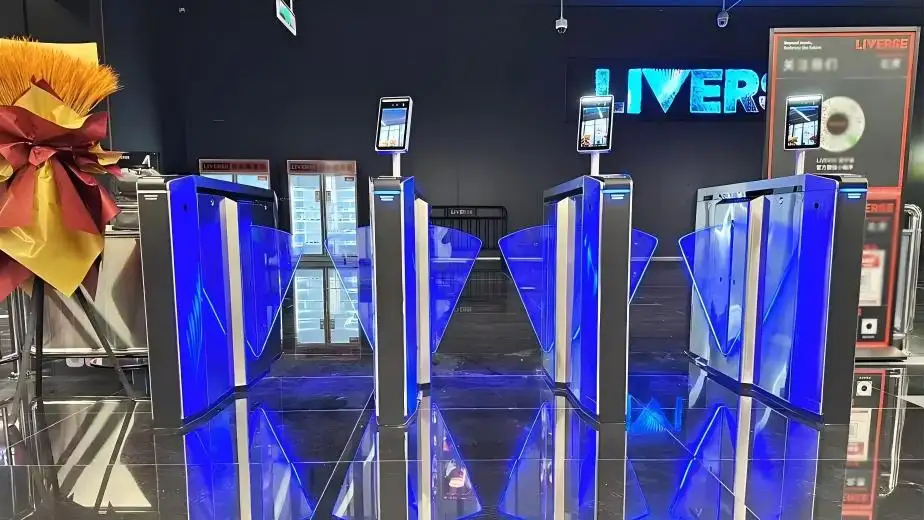
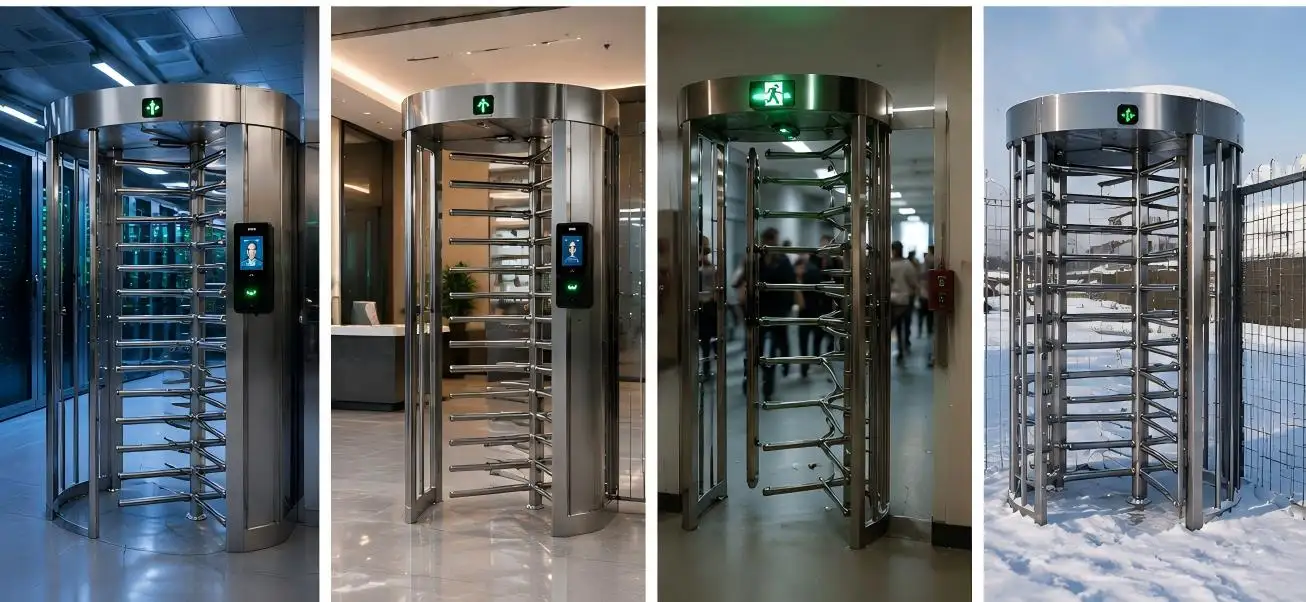
Top 5 Authentication Methods for Flap Barrier Gates in 2026 Office Buildings
2026-06-18


Modern office architecture recognizes the challenge of securing entry points: how can they be done without creating bottlenecks that frustrate employees and office visitors? The solutions to flap barrier turnstile gates for office buildings have greatly advanced, and the methods for authentication have also advanced. Now, levels of security can be determined along with the user experience and efficiency of operations.
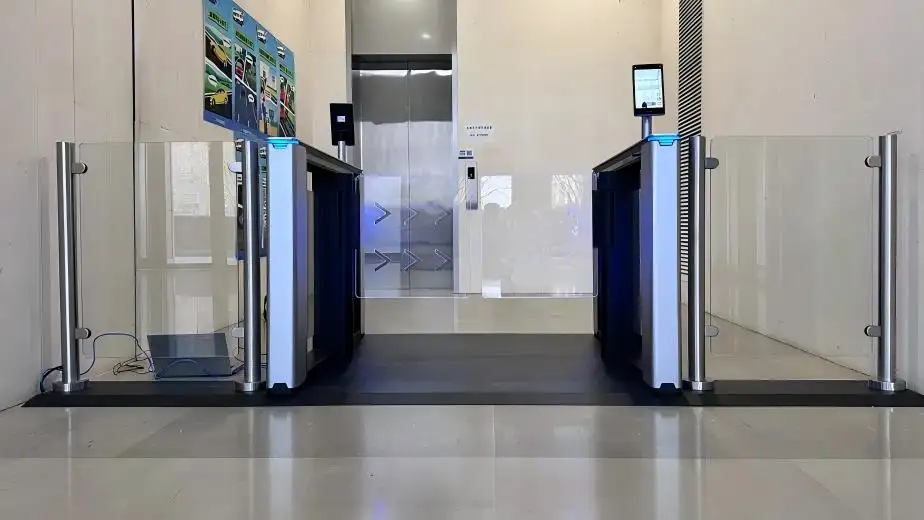
The following describes likely prominent office authentication systems in 2026 and their User Experience, Security, and Practicality aspects.
1. RFID and Proximity Cards: The Veteran Veteran
RFID (Radio Frequency Identification Technology) is, currently, the most widespread corporate credential technology. Staff are given ID cards or key fobs that, as long as they are within a certain distance, operate by way of proximity (no-touch necessary).
How it works:
•The flap barrier access control gate checks the credential (ID card or fob).
•The card has a chip and an antenna that, when it comes into proximity to the reader, is validated.
•Wings are opened by the control board signaling the motor.
Why it will still be in use in 2026:
•Economical for systems servicing large employee populations
•Users have no learning curve as it is a familiar technology
•Compatibility with older systems is high
•Reliability and durability are high, even in high demand areas
RFID systems will have and currently have a place in flap barrier solutions for office buildings as they incorporate standard interfaces (for example, RS485, TCP/IP, dry contact signals) with ease and without problem.
2. Biometric Authentication: Fingerprints and Facial Recognition
Of all the different authentication methods, biometric authentication is the most secure. Fingerprint recognition systems eliminate the credential sharing vulnerabilities present in other systems since one cannot lose, steal, or share physical characteristics.
Fingerprint recognition systems:
•Require users to place their fingers on either optical or capacitive sensors.
•The system verifies the match against a stored template and differing minutiae points.
•All of this occurs in a matter of milliseconds.
Facial recognition systems:
•Capture the features of a user's face using a high-resolution camera, which is built into the barrier housing.
•Facial recognition systems possess the ability to map facial features using an advanced algorithm and will compare the geometry to the stored facial profiles for authorization.
Biometrics for Office Buildings:
•Eliminates credential sharing and cloning.
•Provides audit trails for users.
•Assists in visitor management with registered accounts.
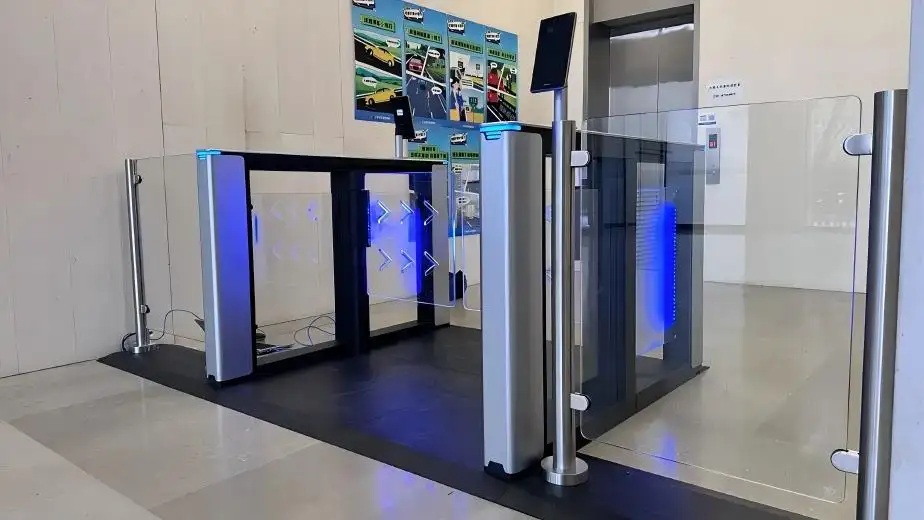
New office buildings are adopting turnstile gates along with fingerprint recognition and facial recognition systems and other biometric systems.
3. Barcodes and QR Codes: The Visitor Management Standard
As of today, QR Codes remain the most widely adopted visitor credentialing method. Unlike biometric templates and physical cards, QR Codes are a means of credentialing visitors with far greater flexibility. Credentialing using QR Codes allows time-sensitive access controls and can easily be created and revoked.
Here is how QR code access management functions:
•Visitor information is entered into a management system.
•The visitor information generates a QR code that is sent to the visitor via email or SMS.
•The visitor presents the QR code to a turnstile system.
•The system authenticates the QR code and opens the lane.
What are the advantages of QR Codes for office security?
•Exposure duration to security is diminished because codes expire.
•No special hardware is required to distribute security.
•QR Codes can be configured to specific floors or zones.
•Controlling elevators can be done via QR Codes.
Modern flap barrier turnstile gates offer office buildings a flexible QR code solution which integrates RFID and biometrics, while also providing smooth and combined access for employees, visitors, and contractors.
4. Mobile Credentials: Smartphones as Access Keys
This category of authentication is growing rapidly. Mobile credentials are now being used by employees to access their workplace as their smartphones are now being used as access devices instead of having to carry a separate card or fob.
Technologies used in mobile credential systems include:
• NFC (Near Field Communication) allowing tap to open
• Bluetooth Low Energy allowing proximity based unlocking
• Digital wallets to store credentials
• Dynamic credentials refreshed regularly via a mobile app
Operational efficiencies gained by mobile credential systems:
• Employee smartphones cannot be forgotten (unlike access badges)
• Credentials can be added or deleted wirelessly
• Multi-factor authentication is available
• Reduced costs for card issuances and replacements
Flap barrier turnstile systems can be integrated with multiple credential systems for mobile credentials.
5. Multi-Factor Authentication (MFA): Access Control Specification of 2026
Multi-Factor Authentication combines two or more means of verifiable user credentials. This method greatly reduces the risk of unauthorized access, which is why serious office security cannot do without it.
Multi-Factor Authentication systems used in office buildings can combine:
• RFID cards and fingerprint readers (something you have and something you are)
• QR codes and facial recognition (something you have and something you are)
• Mobile credentials and a PIN (something you have and something you know)
Why MFA is becoming a standard:
• Regulatory frameworks are establishing security requirements demanding MFA systems at physical access points
• Single-factor credential systems are easily compromised via cloning and sharing of credentials
• Companies are merging the physical and digital identity systems of their employees
• Centralized systems are managing multi-factor authentication for both identity systems
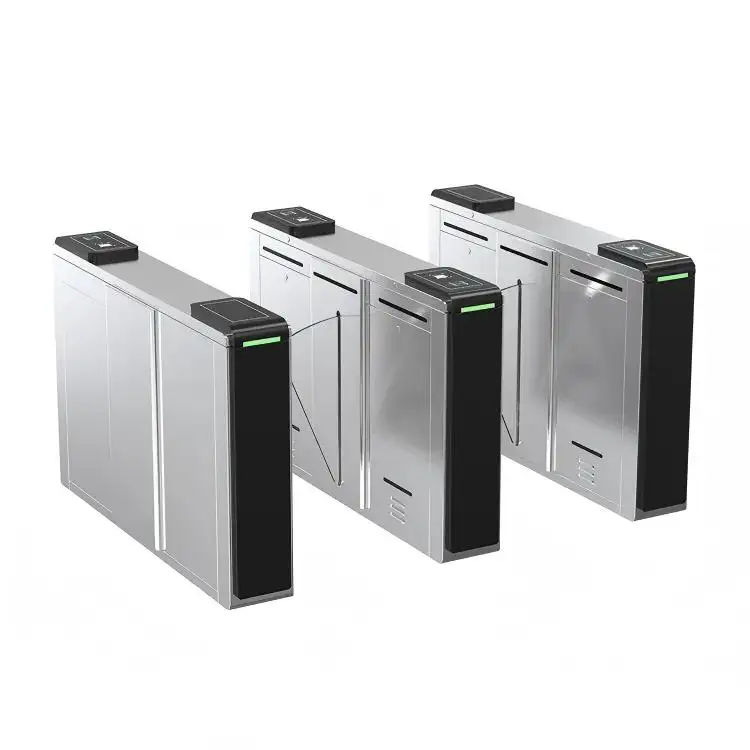
Flap barrier turnstile systems used in office buildings can be configured to support Multi-Factor Authentication systems and can have multiple readers integrated.
Authentication Method Comparison
| Method | Security Level | User Convenience | Deployment Cost | Best For |
| RFID Card | Medium | High | Low | Employees, daily commuters |
| Fingerprint | High | Medium | Medium | High-security zones |
| Facial Recognition | High | Very High | Medium-High | Contactless, high-traffic areas |
| QR Code | Medium-High | High | Low | Visitors, temporary access |
| Mobile Credential | Medium-High | Very High | Medium | Modern, tech-forward offices |
| MFA (Combination) | Very High | Variable | Medium-High | Regulated industries, sensitive facilities |
Integration and Infrastructure Considerations
The performance of authentication methods relies heavily on the underlying flap barrier infrastructure. Key technical factors include:
• Sensor precision: Advanced flap barriers will have six to eight pairs of infrared beams and multiple zones of passage monitored in real time. As a result, the system can identify authorized users and tailgating individuals.
• Throughput capacity: Flap barrier turnstile gate systems that service office buildings will be required to throughput 40 to 60 persons a minute, regardless of the authentication method.
• Communication protocols: Standard interfaces will be an industry requirement for integration to existing systems with the most common being RS485, TCP/IP, and dry contact.
• Fail-safe operation: Flap barriers will fail-safe to the extended position in an emergency or power loss condition. This is a requirement for commercial buildings.
• Environmental durability: Office installations will need to consider reliable operation and corrosion resistance over a wide temperature range. Provided sufficient finishes are employed, construction in SUS304 stainless steel ensures adequate service life.
The Future of Authentication Security Systems
The authentication industry is prioritizing convenient yet secure options. More people are beginning to rely on different types of mobile credentialing and biometic or multi-factor authentication solutions. For office building managers, an optimal flap barrier turnstile solution for office building would incorporate multiple access control methods, thereby allowing managers to strategically adopt RFID, QR Code, Biometric, or mobile credentialing solutions based on their specific requirements and financial considerations.
The visible barrier matters less than the sensing logic, credential flexibility, and integration capability that determine seamless entry versus daily friction.
For reliable, high-performance flap barrier turnstile gate solutions, IRONMAN Intelligent delivers 8-pair IR detection, multi-authentication support, and rugged SUS304 construction. Contact us for a free consultation and customized quote.
FAQs
Q1: What types of access control can flap barrier turnstiles be combined with?
You can integrate RFID, facial and fingerprint biometrics, QR codes, and mobile credentials (NFC/BLE) for access control.
Q2: How does the system prevent tailgating?
The gate uses multi-point infrared sensors to monitor and track passage continuously. An unauthorized follow-through generates an alarm and stops the flaps.
Q3: What happens to the turnstile if there is a power failure?
The fail-safe mechanism allows the flaps to open during a power failure to ensure safe evacuation.
Q4: Can the flaps be installed outdoors?
Yes, they can be installed in both indoor and outdoor locations due to the use of SUS304 stainless steel, salt-spray resistance, and a wide temperature range.
Q5: Will it work with our existing access control system?
Yes, it connects to your existing system through LAN, TCP/IP, RS485, and standard relay interfaces for remote access and control with real-time audit trails.
