


RFID Pedestrian Access Gate: Stable Control For High-Flow Entrances
2026-03-19


RFID Pedestrian Access Gates are optimum for locations requiring quick verification, seamless throughput, and dependable access control on a daily basis. For international customers, a primary consideration is, in addition to preventing unauthorized access, how access control can remain efficient, easy to control, and adaptable to evolving site conditions. For these reasons, and keeping in mind budgetary constraints, RFID technology is the best option for speed and control, as well as ease of integration. IRONMAN Intelligent applies these strengths in a durable tripod gate platform built for long service life, stable performance, and multi-system compatibility.
Why RFID Still Solves Real Industry Problems
In many entrance projects, the biggest issue is not security policy. It is user flow.
A gate can have a durable cabinet, solid mechanical structure, and attractive exterior design, yet still underperform if access verification slows people down or creates confusion during peak hours. This problem is especially common in workplaces, industrial sites, and institutional buildings where the same users enter and exit repeatedly throughout the day.
RFID addresses that pain point well because it supports fast, contactless verification with a simple user action. Staff, members, students, or authorized visitors can present a card, tag, or credential quickly, reducing friction at the entrance and helping the site maintain a more organized traffic rhythm.
Procurement teams literally make procurement simpler by having:
• More responsive throughput in day-to-day operations
• Reduced learning costs to end users
• Decreased physical contact wear
• Streamlined credentials issuance and replacement
• More consistent operational logic across multiple lanes
Regarding more complex authentication workflows, RFID provides a more dependable basis for initiatives where speed and uniformity take precedence over more innovative approaches.
The Core Advantage Is Operational Simplicity
One reason RFID continues to perform well in global access-control projects is that it is easy to deploy at scale.
In large facilities, access control is not only about verifying identity. It is also about managing permissions, staff changes, visitor access, and different movement rules between departments or zones. A technology that is difficult to issue, maintain, or update can quickly create hidden administrative cost.
This is where IRONMAN Intelligent's RFID Pedestrian Access Gate creates practical value. Instead of building the solution around one narrow credential method, the company uses RFID as a highly reliable core that fits into broader access management needs. That makes the gate suitable for projects where operators want stable daily entry control now, while keeping room for future system upgrades later.
For example, RFID-based control is especially useful in scenarios such as:
• Employee attendance and entry management in office buildings
• Controlled passage for workers in industrial sites
• Member access in gyms and clubs
• Student and staff access in schools and campuses
• Visitor authorization when linked with registration systems
Because RFID is already widely understood by facility managers and integrators, it also helps reduce training pressure after installation.
IRONMAN Intelligent Combines RFID With Durable Gate Engineering
Technology alone is not enough. For high-frequency pedestrian control, the mechanical platform behind the credential method matters just as much.
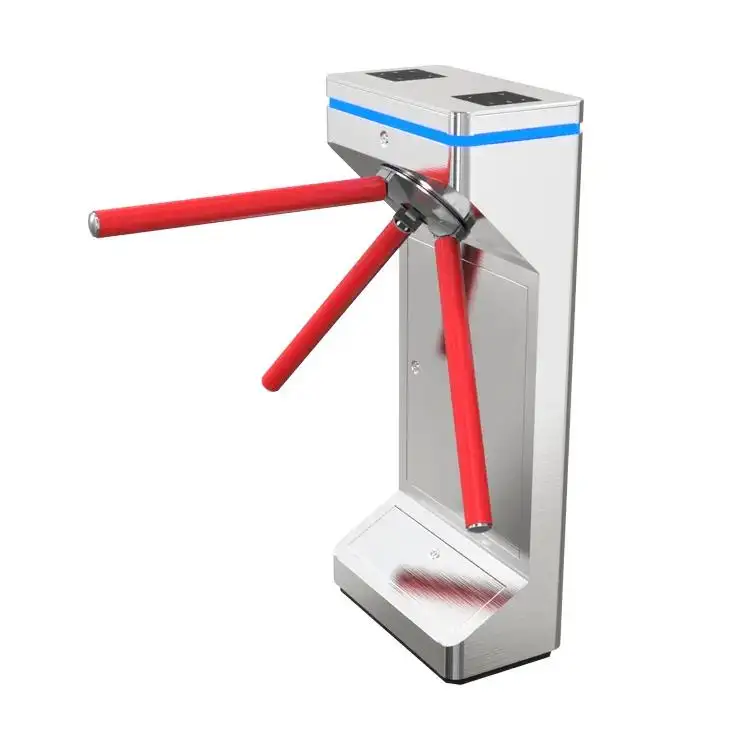
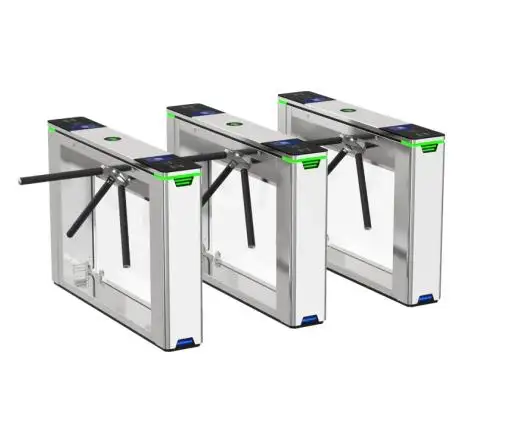
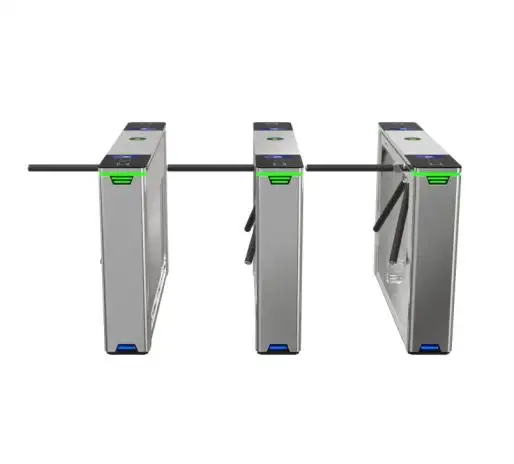
IRONMAN Intelligent supports RFID access through a tripod gate structure built from 1.5 mm 304 stainless steel, giving the product strong anti-corrosion performance for indoor and semi-outdoor environments. That material choice is important for buyers working in humid climates, mixed-use commercial sites, or industrial settings where surface durability affects long-term appearance and maintenance cost.
The gate is also designed for more than 8 million opening and closing cycles, which directly supports one of the biggest concerns in procurement: lifecycle value. Overseas buyers are increasingly cautious about entrance hardware that looks acceptable in the first year but becomes unstable or maintenance-heavy after repeated use. A longer service life helps reduce replacement frequency, labor disruption, and service risk.
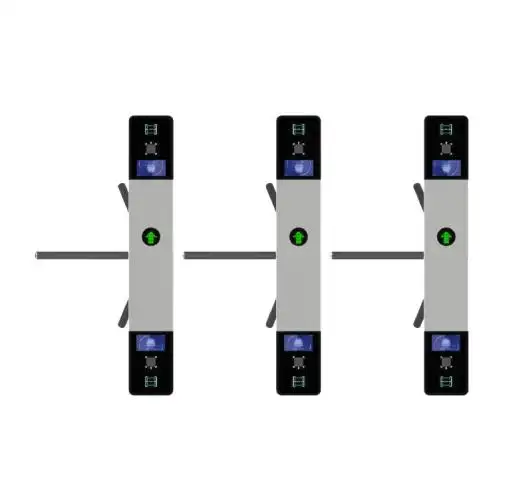
The standard passage width of 550–600 mm supports efficient single-person flow, while the customizable dimensions allow better fit across different project layouts. For single-lane and multi-lane installations alike, this makes the system easier to adapt during planning and installation.
RFID Does Not Mean Limited Flexibility
Some buyers assume that choosing RFID means sacrificing flexibility. In practice, the opposite is often true.
The ideal design for an RFID Pedestrian Access Gate should not imprison the client in a single, outdated model of customer authentication. A strong access gate should offer a flexible RFID experience and be open to other identification technologies as your site evolves or your operational needs shift.
IRONMAN Intelligent is an access gate that does this by supporting, among others, integration and contactless identification technologies.
• QR Code
• Facial Recognition
• Barcode
• Fingerprint
• Visitor Management
Additionally, the gate can interoperate with third-party access control systems more seamlessly through communication (RS485, Wiegand, and dry contact). For overseas buyers, this compatibility matters because many projects involve local integrators, existing software, or mixed-brand hardware environments. A gate that works only as an isolated device is much less valuable than one that can fit into a wider control system.
So while RFID remains the core theme, the real strength lies in how IRONMAN Intelligent uses RFID as a stable starting point rather than a technical limitation.
Better User Experience Matters More Than Many Buyers Expect
In pedestrian access control, user experience is often underestimated during procurement.
If a gate causes hesitation, creates unclear passage signals, or reacts poorly during rush periods, even a technically secure entrance can feel inefficient. That affects staff satisfaction, visitor perception, and front-desk workload.
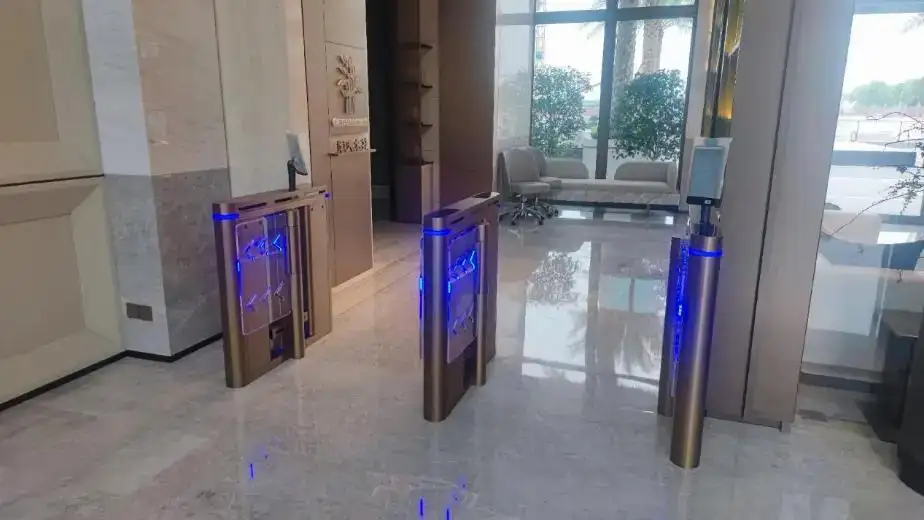
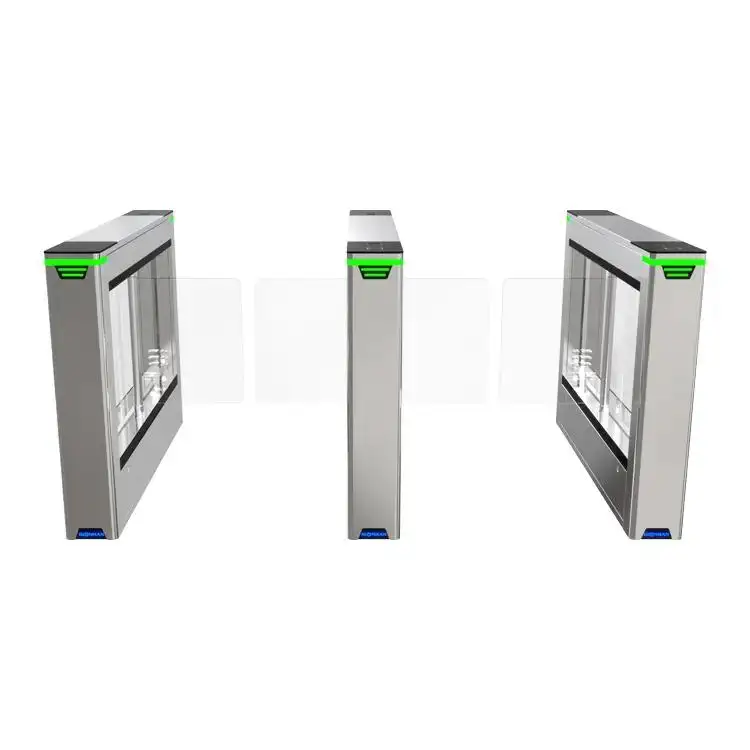
IRONMAN Intelligent improves this part of the experience with practical supporting features such as LED indicators and audio prompts, helping users understand passage status more clearly. The tripod mechanism also supports smooth operation with locking control and reset logic, helping maintain orderly one-person passage.
The result is not only stronger security, but also a cleaner and more predictable flow pattern. For offices, venues, and public-facing buildings, that has real operational value.
RFID Supports Safer Daily Management and Emergency Response
Another reason RFID remains commercially attractive is that it supports disciplined access without making emergency handling more difficult.
The gate includes an emergency fail-drop arm function, allowing the tripod arm to drop automatically during power failure or evacuation mode. In public and semi-public environments, life-safety criteria must be considered, making this feature critical for buyers.
During normal operation, RFID ensures daily flow of traffic is controlled and recorded. In emergency conditions, the system shifts toward safe egress support. That balance is exactly what many professional buyers want from modern entrance control: disciplined access in routine use, but safer release logic when conditions change.
Why RFID Remains a Smart Buying Decision
For many overseas projects, the best access-control solution is not the one with the most complex identity technology. It is the one that delivers the most reliable operational return.
RFID continues to stand out because it offers:
• Fast and familiar contactless verification
• Lower management complexity than many advanced alternatives
• Good cost control for medium and large user groups
• Strong compatibility with attendance and access systems
• Stable performance in repetitive daily use
• Easy expansion into hybrid authentication environments
IRONMAN Intelligent strengthens those advantages by combining RFID readiness with durable stainless-steel construction, long service life, practical integration interfaces, and adaptable deployment across commercial, institutional, and industrial sites.
Final Thought
As the access-control industry continues to evolve, not every site needs the most complex identity model from day one. Many facilities still need something more practical: a reliable entrance solution that keeps people moving, supports long-term management, and adapts to changing system requirements without unnecessary cost.
That is why RFID Pedestrian Access Gate solutions remain highly relevant in today's market. By applying RFID technology on a durable, integration-ready tripod platform, IRONMAN Intelligent gives overseas buyers a solution that aligns with both current operational needs and future access-control trends. For projects where efficiency, durability, and control must work together, RFID is still one of the smartest foundations to build on.
